
食品

Search documents
7月29日电,食品巨头西思科发布2026财年指引,预计2026年净销售额将增长约3%至5%,预计2026年调整后每股收益将增长约1%至3%。
news flash· 2025-07-29 12:08
智通财经7月29日电,食品巨头西思科发布2026财年指引,预计2026年净销售额将增长约3%至5%,预 计2026年调整后每股收益将增长约1%至3%。 ...

美媒:美国关税政策破坏全球贸易体系 为自身孤立埋下种子
Zhong Guo Xin Wen Wang· 2025-07-29 10:16
Group 1 - The U.S. government's tariff policy is perceived as a significant underestimation of its impact on American businesses and consumers, potentially undermining the stability of the global trade system [1][2] - Economists argue that trade policies, including tariffs, are not crucial determinants of a country's trade balance, contradicting claims made by U.S. President Trump regarding job returns in manufacturing [1] - The costs of tariffs are expected to be passed on to American consumers and businesses, with companies like Nestlé and an Italian fashion brand already considering price increases to offset additional costs [1] Group 2 - Tariffs introduce uncertainty to both the U.S. and global economies, negatively affecting output and employment in the U.S. and other regions [2] - The imposition of high tariff barriers by the U.S. undermines the rules of the World Trade Organization, severely damaging the global trade system and potentially leading to U.S. isolation [2]
以产业新特征为锚 重塑上市公司产业投资价值
申万宏源研究· 2025-07-29 07:08
Core Viewpoint - The article emphasizes the importance of industry investment value as a comprehensive measure of a company's collaborative ability, technological potential, and long-term development prospects within the industrial chain ecosystem, especially in the context of rapid digital economic growth and technological revolution in China [1][2]. Group 1: Understanding Industry Investment Value - Industry investment value is a core basis for evaluating and making decisions by industry investors, focusing on sustainable technological evolution and the ability to integrate into the industrial ecosystem [3][4]. - Many traditional industry-listed companies have not received reasonable industry investment valuations due to static categorization and labeling by investors, which often overlooks their innovative capabilities [4][5]. - The evaluation logic of industry investment value is evolving dynamically due to profound changes in the industrial landscape driven by technological innovation and the digital economy [4][5]. Group 2: Seizing Opportunities in the Digital Economy - The digital economy is reshaping industrial organization and competition, creating opportunities for companies to enhance their investment value by embedding themselves into the new industrial structure [6][7]. - Traditional companies should actively identify their roles within the new "three-stage" digital economy ecosystem, focusing on application scenarios to redefine their industry identity and expand their value boundaries [6][7]. Group 3: Adapting to New Demand Characteristics - The shift from a linear "demand leads supply" model to a dynamic interplay of "demand leads supply" and "supply creates demand" necessitates that companies actively engage with evolving consumer needs [8][9]. - Companies should align with terminal-driven industry chains, enhancing their value creation by embedding themselves within these chains and responding to market changes [9][10]. Group 4: Leveraging Network Hub Advantages - In the information age, companies must transform their flow resources into core competitive advantages, enhancing their investment value through effective flow management [12][13]. - Network hub companies should capitalize on their existing infrastructure and resource aggregation capabilities to transition towards digital value high grounds [12][13][14]. Group 5: Navigating the Transition Between Traditional and Emerging Industries - Traditional industry companies must redefine their identities and break free from outdated perceptions to adapt to the evolving landscape of new business models and high-value emerging industries [15][16]. - Emerging industry companies need to maintain their innovation momentum to avoid falling into the trap of becoming "new traditional industries" as they mature [18][19].

巴菲特撤退信号?卡夫亨氏(KHC.US)拟剥离世纪并购遗产
智通财经网· 2025-07-29 07:04
Group 1 - Kraft Heinz is considering a significant business split, planning to spin off most of its grocery business into an independent publicly traded entity due to years of sluggish growth and changing consumer preferences [1] - The grocery business being considered for separation is valued at approximately $20 billion and could become the largest deal in the consumer goods sector this year, potentially completing by the end of Q3 or Q4 [1] - The assets to be spun off include iconic American supermarket brands such as Oscar Mayer, Velveeta, Jell-O, Maxwell House, Planters, Lunchables, and Capri Sun, which, while deeply rooted in American households, struggle to adapt to the trend of fresher, healthier, and less processed foods [1] Group 2 - The largest shareholder, Berkshire Hathaway, currently holds about 27% of the outstanding shares, having invested in the acquisition of Heinz in 2013 and the subsequent merger with Kraft in 2015 [2] - Post-merger, Kraft Heinz has faced challenges including declining sales, goodwill impairment, and shifts in consumer tastes, resulting in a stock price drop of over 60%, significantly underperforming the market [2] - As of mid-2025, Berkshire's stake has decreased in value by approximately $4.5 billion, and the company has reduced its involvement in the board, signaling a potential exit from day-to-day operations [2]

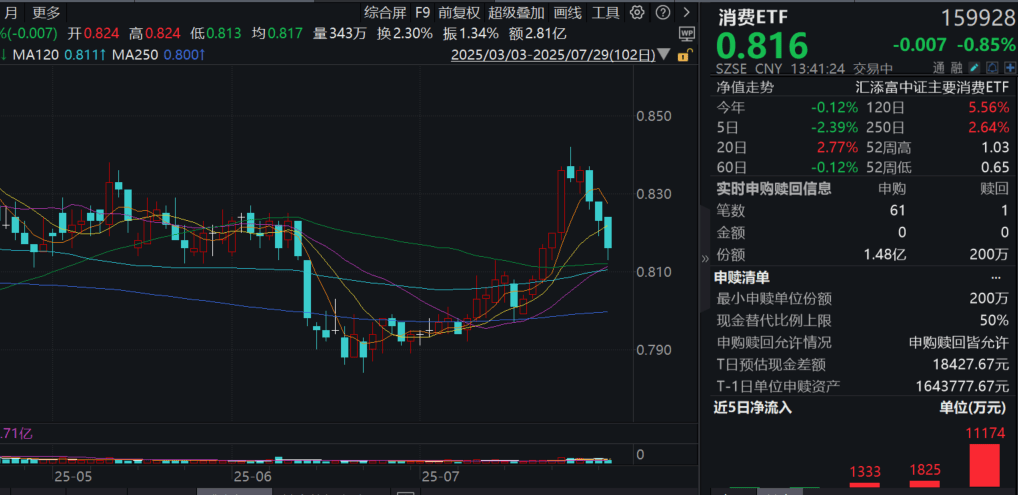
育儿补贴重磅落地,3周岁前每娃每年3600元!消费ETF(159928)跌近1%,盘中获的资金大举净申购超1.4亿份,连续第4日“吸金”!
Sou Hu Cai Jing· 2025-07-29 06:11
Group 1: Market Overview - A-shares mostly declined, with the consumer sector experiencing a third consecutive day of pullback [1] - The Consumer ETF (159928) fell nearly 1%, with a trading volume of nearly 300 million yuan [1] - The Consumer ETF has seen net subscriptions of 14.6 million units over the past four days, with a total scale exceeding 12.2 billion yuan, leading its peers [1] Group 2: Policy Announcement - On July 28, the national childcare subsidy policy was announced, providing an annual subsidy of 3,600 yuan for each child under three years old starting January 1, 2025 [3] - The policy aims to reduce the cost of raising children for families and is expected to benefit over 20 million families annually [3] - The implementation of this policy marks a significant shift from local pilot programs to a nationwide system [5] Group 3: Investment Opportunities - The childcare subsidy is expected to create opportunities in four sectors: dairy products, mother-baby chains, infant products, and postpartum care services [6] - The dairy sector, particularly infant formula and liquid milk, is likely to see direct demand benefits from the subsidy [6] - Mother-baby chains are expected to experience improved same-store sales performance due to increased birth rates [6] - The postpartum care market in mainland China has significant growth potential, with a current penetration rate of 17% compared to higher rates in Singapore, South Korea, and Taiwan [7] Group 4: Economic Impact - The annual subsidy scale is estimated to be around 100 billion yuan, which will directly increase disposable income for families [8] - The direct cash subsidy is expected to stimulate consumption, particularly in childcare-related spending and among the young adult demographic [8] - The policy is seen as a step towards investing in human capital, with potential long-term benefits for the economy [9]
雀巢2025年上半年有机增长2.9%,CEO称加速品类增长、提高市场份额
Sou Hu Cai Jing· 2025-07-29 02:06
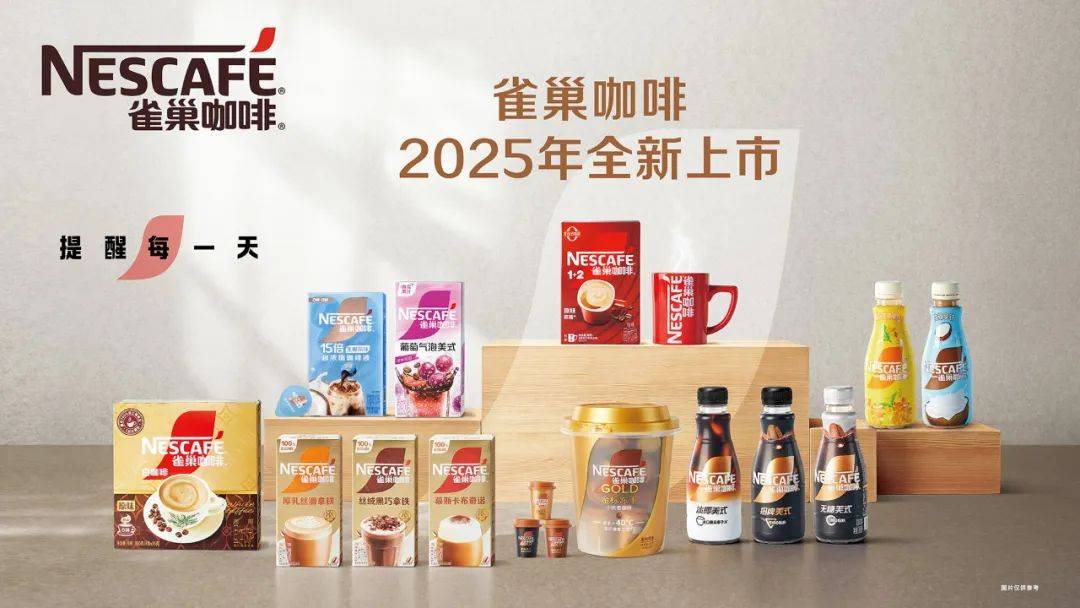
Core Insights - Nestlé's CEO, Mark Schneider, emphasizes the company's strategic execution to accelerate performance and transformation for the future, focusing on efficiency and increased investment to drive category growth and market share [2][4] - The company's organic growth in the first half of 2025 is attributed to pricing strategies, innovation projects, channel diversification, and mergers and acquisitions, despite challenges in the Greater China region [2][3] Financial Performance - Nestlé reported sales of approximately 44.228 billion Swiss francs in the first half of 2025, reflecting a year-on-year decrease of about 1.8% due to currency effects, but an organic growth rate of around 2.9% indicates strong core business momentum [2][3] - The net profit for the first half of 2025 reached approximately 5.065 billion Swiss francs, a decrease of 10.3% year-on-year, yet still demonstrating good profitability given significant investments in business expansion, R&D, and marketing [3] Marketing and Innovation - Marketing investments increased, with advertising and marketing expenses accounting for 8.6% of sales, aimed at brand promotion, new product launches, and market activities, effectively enhancing brand awareness and product reputation [3] - Six major innovation projects generated over 200 million Swiss francs in sales during the first half of 2025, meeting consumer demand for new products and experiences [3][4] Regional Performance - The organic growth rate in the Greater China region was -4.2%, with actions taken to improve performance expected to yield results in the coming year [4] - Nestlé maintains a strong business foundation and localized teams in Greater China, with long-term potential still considered significant [4] Channel Performance - Nestlé's diverse channel strategy showed strong organic growth across all three major channels: retail (2.6%), out-of-home (5.8%), and e-commerce (12.3%) [11] - The company continued its acquisition strategy, including the full acquisition of the candy company Xu Fu Ji and increased stakes in Orgain, a leader in plant-based nutrition [11][12]

帮主郑重:新高背后暗流汹涌,超级周定调下半年!
Sou Hu Cai Jing· 2025-07-29 00:24
Group 1 - The U.S. stock market has reached new historical highs, with the S&P 500 hitting 6401 points and the Nasdaq reaching 21202 points, yet the market reaction has been surprisingly calm [1][3] - The recent 15% tariff agreement between the U.S. and EU is perceived as a temporary pause rather than a resolution, with the U.S. benefiting significantly from the deal [3][4] - The S&P 500 has experienced a remarkable V-shaped recovery, gaining 23% in just 89 trading days, resulting in a market capitalization increase of $10 trillion, driven largely by Nvidia's performance [4][6] Group 2 - 83% of S&P 500 companies exceeded earnings expectations in Q2, indicating strong corporate profitability despite economic challenges [4][5] - The forward P/E ratio of the S&P 500 has surged to 23, significantly above historical averages, raising concerns about market complacency and potential risks [5][6] - Major tech companies, including Meta, Microsoft, Amazon, and Apple, are set to report earnings this week, which could significantly influence market sentiment [6][7] Group 3 - The U.S. LNG producers are among the first winners from the U.S.-EU tariff agreement, with stock prices soaring due to a $750 billion energy procurement commitment from the EU [7] - Tesla has secured a $16.5 billion chip contract with Samsung, indicating strong demand for its AI chips and further solidifying its market position [7] - European companies are facing mixed results, with some experiencing sales declines due to retail price wars and rising production costs from tariffs [7]
大消费行业2025年8月金股推荐
Changjiang Securities· 2025-07-28 14:46
Investment Rating - The report recommends a "Buy" rating for the highlighted stocks in the consumer sector, indicating a positive outlook for their performance in the coming years [11][15][17]. Core Insights - The report identifies nine key advantageous sectors within the consumer industry, including agriculture, retail, social services, automotive, textile and apparel, light industry, food, home appliances, and pharmaceuticals, with specific stock recommendations for each sector [3][7]. - The report emphasizes the long-term growth potential of these sectors, driven by market dynamics and company-specific strategies, suggesting that investors should actively consider these opportunities [10][12][14][15][17]. Summary by Sector Agriculture - Recommended Stock: Muyuan Foods (牧原股份) - The company is expected to benefit from an optimized competitive landscape and improved profitability, with a target average cost of 12 RMB/kg for 2025 [10]. Retail - Recommended Stock: Maogeping (毛戈平) - The company is expanding its product lines and has shown strong performance during recent sales events, with projected adjusted net profits of 11.9, 15.4, and 19.1 million RMB for 2025-2027 [11]. Social Services - Recommended Stock: Core International (科锐国际) - The company is leveraging AI to enhance efficiency and is expected to see significant profit growth, with projected net profits of 2.87, 3.99, and 5.23 million RMB for 2025-2027 [12]. Automotive - Recommended Stock: Minth Group (敏实集团) - The company is well-positioned to benefit from the growing penetration of new energy vehicles in Europe, with significant revenue growth anticipated [13]. Textile and Apparel - Recommended Stock: HLA (海澜之家) - The company is expected to maintain strong growth through its direct sales model and e-commerce expansion, with projected net profits of 23.9, 26.3, and 30.1 million RMB for 2025-2027 [14][15]. Light Industry - Recommended Stock: Baiya (百亚股份) - The company is focusing on e-commerce growth and is expected to see substantial profit improvements, with projected net profits of 3.8 and 5.1 million RMB for 2025-2026 [15]. Food - Recommended Stock: Guoquan (锅圈) - The company is enhancing operational efficiency and aims to open 10,000 new stores in the next five years, with projected net profits of 4.50, 5.89, and 7.31 million RMB for 2025-2027 [16]. Home Appliances - Recommended Stock: Gree Electric Appliances (格力电器) - The company is expected to benefit from strong market demand and has projected net profits of 355.19, 384.52, and 420.86 million RMB for 2025-2027 [17]. Pharmaceuticals - Recommended Stock: China National Pharmaceutical Group (中国生物制药) - The company is advancing its innovative product pipeline and is expected to see significant revenue growth from its new products, with projected revenues of 120.6 billion RMB in 2024 [19].




拼多多或二次上市;阿里将发自研AI眼镜;欧莱雅任命印度公司总裁
Sou Hu Cai Jing· 2025-07-28 13:19
Listing Dynamics - Pinduoduo is reportedly seeking a secondary listing in Hong Kong, having engaged Ernst & Young for the review of its financial statements, which is a common step for companies planning to list in Hong Kong [3] - This move aligns with previous strategies employed by Alibaba and JD.com before their Hong Kong listings, indicating a substantial preparatory step despite Pinduoduo's official denial of such plans [3] Brand Dynamics - Pernod Ricard has agreed to sell its Imperial Blue business to Indian liquor manufacturer Tilaknagar for €412.6 million, focusing on streamlining its operations and concentrating on more profitable brands [5] - Alibaba is set to launch its first self-developed AI glasses, which will feature advanced hardware specifications and will be part of its A1toC strategy [7] - The beauty brand Kose has opened its first overseas store in Singapore, showcasing popular products and introducing new shades tailored for local consumers [12] Personnel Dynamics - Santa Maria Novella appointed Ludivine Pont as CEO, who has extensive experience in luxury brand marketing, aiming to enhance the brand's visibility [15] - L'Oreal's Indian subsidiary has restructured its management, promoting Aseem Kaushik to president, reflecting the company's ambition in the dynamic Indian beauty market [18] - Coty announced several personnel changes, including the appointment of Beatrice Ballini as lead independent director, amidst a strategic restructuring [20] - Yves Rocher appointed Philippe Duchossois as CEO for the Asia region, leveraging his extensive experience to drive growth [22] - Magnum has established a new legal leadership team, which is expected to accelerate its independent listing timeline [25][26]



菏泽市工业和信息化局:以工业领域的提质增效为消费市场注入动能
Qi Lu Wan Bao Wang· 2025-07-28 11:50
今年以来,市工信局锚定市委、市政府促消费工作部署,紧扣"稳生产、优供给"双轮驱动,以工业领域 的提质增效为消费市场注入强劲动能,相关工作取得扎实成效。 筑牢供给根基,让消费"有物可选" 齐鲁晚报·齐鲁壹点 马璐璐 7月28日,菏泽市召开2025年上半年菏泽市促消费工作新闻通气会。市工业和信息化局党组成员、市中 小企业发展促进中心副主任赵宝杰就2025年上半年市工业和信息化局促消费工作情况做介绍。内容如 下: 激活创新动能,让消费"有质可品" 通过技改升级提品质。围绕食品、服装等产业加大技术改造力度,通过技术迭代重塑产品价值,形 成"品质提升-消费认可-市场扩容"的正向循环。 今年上半年,菏泽市实施500万元以上的技改项目273项,项目计划总投资676.2亿元,今年已投资135.2 亿元。 通过政策红利促升级。郓城泰和纺织等4家企业项目获得2025年工业领域设备更新和技术改造奖补资 金,以政策"活水"推动企业提质增效,为消费市场提供更高品质产品。 制定《关于工业稳产优供助力提振消费工作方案》,从设备更新、品牌培育、新消费挖掘等维度细化举 措,为消费市场提供优质供给"路线图"。组建10个调研组深入全市工业企业摸实 ...