
农产品

Search documents
巴西大宗商品出口周期与雷亚尔的兴衰
Guo Tai Jun An Qi Huo· 2025-11-06 13:17
Group 1: Report Overview - The report focuses on the relationship between Brazil's commodity export cycle and the fluctuations of the Brazilian Real, aiming to reveal the transmission logic and influencing mechanisms between the two [9]. - By analyzing Brazil's economic structure, commodity export cycle, and the historical trends of the Real, the report provides insights for commodity research and investment strategies [2][50]. Group 2: Understanding the Brazilian Economy Economic Aggregate - Brazil is an emerging market country with a GDP of over $2 trillion and ranks 10th among the world's largest economies, accounting for about 2.0% of the global GDP in 2024 [11][13]. - Historically, Brazil's GDP growth has experienced rapid development, debt crises, and periods of slowdown, with the current growth rate gradually declining [15]. Economic Structure - In terms of industrial structure, Brazil's economy is dominated by the service sector, followed by industry, and agriculture serves as the foundation. In 2024, the service, industry, and agriculture sectors accounted for 59.31%, 21.33%, and 5.58% of GDP, respectively [17]. - From a demand - side perspective, Brazil's economic structure is characterized by stable consumption growth, significant fluctuations in investment and trade. In 2024, final consumption expenditure accounted for about 82.6% of GDP, capital formation accounted for about 16.9%, and the net export of goods and services accounted for about 0.5% [22][24]. - Commodity exports play a crucial role in Brazil's economy, with a strong correlation between net exports and commodity net exports. In 2024, the net export of goods was about $742 billion, while the net import of services was about $546 billion [27]. Group 3: Brazil's Commodity Export Cycle Commodity Export Structure - Brazil's commodity exports are highly dependent on commodities, with iron ore, soybeans, crude oil, and sugar being the top four export products. In 2024, these major commodities contributed over $1800 billion in foreign exchange earnings [34][36]. - The underlying reason for Brazil's high - commodity export dependence is its abundant natural resources, including significant agricultural and mineral resources [38][39]. Commodity Export Quantity and Price - The sources of quantity and price contributions vary among different commodities. For sugar, crude oil, and beef, changes in export volume contribute more to export revenue growth, while for iron ore, soybeans, coffee, and others, changes in export prices contribute more [42]. - Historically, the price fluctuations of commodities have had a more significant impact on Brazil's export revenue than changes in export volume, and the RJ/CRB commodity index is positively correlated with Brazil's commodity export revenue [42][48]. Group 4: Real's Rise and Fall and Commodity Export Cycle Review 2001 - 2011: Rising Export Revenue and Appreciating Real - Due to the rapid growth of Chinese and global demand, Brazil's commodity export revenue increased by $1954 billion from 2001 to 2011, with exports to China increasing by $424 billion, accounting for 22% of the total increase [50]. - The Real strengthened due to the commodity super - cycle and the Lula government's macro - economic policies. The demand - pull effect was stronger than the negative impact of currency appreciation on export competitiveness [50][52]. 2011 - 2016: Declining Export Revenue and Depreciating Real - Affected by the slowdown of global and Chinese economic growth, oversupply of major commodities, and the expected shift in the Fed's monetary policy, Brazil's commodity export revenue decreased by about 29% from 2011 to 2016 [62]. - The Real depreciated significantly due to the deterioration of Brazil's domestic economic fundamentals and the shift in the Fed's monetary policy. The depreciation of the exchange rate did not significantly promote commodity exports [62]. 2016 - Present: Rising Export Revenue and Depreciating Real - Since 2016, with the global economic recovery, the stable growth of the Chinese economy, and the J - curve effect of the Real's depreciation, Brazil's trade balance has improved, and commodity export revenue has increased rapidly [76]. - From 2016 to 2024, Brazil's total commodity export revenue increased by $1575 billion, with an increase of $592 billion in the Chinese market, accounting for about 38%. The export revenue of crude oil has increased significantly [76]. Group 5: Insights for Commodity Research - The global commodity demand cycle is the decisive factor for commodity prices and Brazil's export performance, with a far greater impact than exchange - rate fluctuations [4][5]. - The boosting effect of exchange - rate depreciation on Brazil's exports has limitations and lag, and the magnification effect on local - currency earnings can support the expansion of commodity production capacity and provide hedging opportunities [5]. - When the US dollar price of a specific commodity strengthens and the local currency depreciates simultaneously, one can focus on short - selling opportunities for commodities with clear downward drivers in fundamentals and a high proportion of Brazilian production capacity in global supply. Conversely, when the local currency appreciates and commodity prices remain low, one can focus on long - buying opportunities for commodities with clear upward drivers in fundamentals and a high proportion of Brazilian production capacity [6]. Group 6: Appendix: Real's Historical Review and Influencing Factors Historical Review of the Real's Trends - Since the 1970s - 1980s, Brazil has experienced periods of hyperinflation, currency reforms, and exchange - rate regime changes. The Real has gone through cycles of appreciation and depreciation, affected by factors such as the global economic environment, commodity prices, and domestic policies [96]. Influencing Factors of the Real - International financial environment and external monetary policies: Cross - border capital risk preferences, Fed's monetary policy, and commodity prices all affect the exchange rate of the Real. For example, during the 2008 financial crisis and the 2020 pandemic, the Real depreciated rapidly due to the decrease in cross - border capital risk preferences [99][100][102]. - Brazil's economic fundamentals: Economic growth prospects, debt risks, and monetary policies also influence the Real. Brazil's current economic prospects are not very optimistic, with high debt risks and an inflation - targeting monetary policy framework [106][113][120].
建信期货豆粕日报-20251106
Jian Xin Qi Huo· 2025-11-06 10:36
行业 豆粕 日期 2025 年 11 月 6 日 021-60635732 yulanlan@ccb.ccbfutures.com 期货从业资格号:F0301101 021-60635740 linzhenlei@ccb.ccbfutures.co m期货从业资格号:F3055047 021-60635727 wanghaifeng@ccb.ccbfutures.c om期货从业资格号:F0230741 021-60635572 hongchenliang@ccb.ccbfutures .com 期货从业资格号:F3076808 021-60635570 liuyouran@ccb.ccbfutures.com 期货从业资格号:F03094925 农产品研究团队 研究员:余兰兰 研究员:林贞磊 研究员:王海峰 研究员:洪辰亮 研究员:刘悠然 请阅读正文后的声明 #summary# 每日报告 | 表1:行情回顾 | | | | | | | | | | | | --- | --- | --- | --- | --- | --- | --- | --- | --- | --- | --- | | 合约 | 前结算价 ...
外媒聚焦进博会:中国坚定承诺引全球共鸣,贸易合作持续升温
Zhong Guo Xin Wen Wang· 2025-11-06 10:09
Core Points - The 8th China International Import Expo (CIIE) opened in Shanghai on November 5, attracting global attention and emphasizing China's commitment to promoting trade freedom and global economic cooperation [1][2] Group 1: Event Overview - The CIIE features participation from over 155 countries, regions, and organizations, with more than 4,100 overseas enterprises exhibiting [2] - The event runs from November 5 to November 10, showcasing a wide range of products and services [2] Group 2: International Participation - 78 Russian companies are participating in the expo, representing the "Made in Russia" section, which spans 1,380 square meters and includes food, agricultural products, consumer goods, and industrial information technology [2] - The Belarusian pavilion is hosting various cultural activities to showcase its national traditions, highlighting the expo as an effective platform for Belarusian exports to China [2] - Malaysia's Deputy Prime Minister attended the opening ceremony, marking the sixth high-level participation since the expo's inception in 2018 [2][5] Group 3: Regional Highlights - Cambodian officials emphasized the expo's role in demonstrating quality products and services to Chinese and international consumers [5] - Iranian enterprises are increasingly participating, aligning with Iran's economic strategy of resilience and diversification [5] - African participation has notably increased, with a reported 80% year-on-year growth in the number of exhibitors, showcasing products like Nigerian cashews and Burundian coffee [5][6] Group 4: Success Stories - The expo has significantly boosted demand for previously lesser-known products, such as Nigerian cashews, and has transformed Rwanda's chili pepper industry into a key export sector benefiting local farmers [6]


大幅走强!中美大豆贸易破冰,美豆站上1100美分关口
证券时报· 2025-11-06 09:06
Core Viewpoint - The article discusses the recent surge in U.S. soybean prices driven by expectations of increased trade with China, following a consensus reached between the two countries to expand agricultural trade [1][3]. Group 1: Trade Developments - On November 5, the Chinese government announced adjustments to tariffs on U.S. imports, coinciding with a meeting between Chinese and U.S. agricultural trade representatives [1][3]. - The U.S. has indicated that China will purchase at least 12 million tons of soybeans this year and a minimum of 25 million tons annually over the next three years [3]. Group 2: Market Reactions - Following the trade discussions, U.S. soybean prices reached a 15-month high, with the main contract surpassing 1100 cents per bushel [1]. - Domestic soybean meal futures in China also saw a significant increase, with the main contract rising by 1.92% to nearly 3050 yuan per ton, marking a new high in one and a half months [4]. Group 3: Supply and Demand Dynamics - China typically imports 20 to 30 million tons of U.S. soybeans annually, and the recent agreement is expected to significantly reduce U.S. soybean ending stocks by shifting from oversupply to a balanced market [6]. - Brazil has become the largest supplier of soybeans to China, with expectations of increased production, but there may be a supply gap for China in late 2025 to early 2026 due to seasonal export limitations from Brazil [7]. Group 4: Future Considerations - Analysts suggest that the nature of future soybean purchases by China—whether policy-driven or commercial—will significantly impact pricing dynamics and the competitiveness of U.S. soybeans compared to Brazilian imports [7].

济宁:10月肉禽蛋价格涨跌互现,蔬菜价格延续涨势
Zhong Guo Fa Zhan Wang· 2025-11-06 07:22
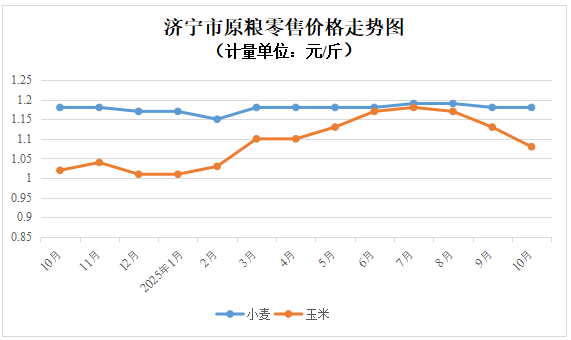
Core Insights - The price trends of major commodities in Jining, Shandong Province, for October show a mixed performance, with grain and oil prices declining slightly, meat and egg prices fluctuating, vegetable prices continuing to rise, and agricultural production material prices remaining stable with some changes. Group 1: Grain and Oil Prices - Grain and oil prices are stable with a slight decline; the average retail prices for wheat and corn are 1.18 yuan/kg and 1.08 yuan/kg, respectively, with corn down 4.42% month-on-month [1] - The average retail prices for japonica rice and premium flour are 2.55 yuan/kg and 1.87 yuan/kg, with japonica rice stable and premium flour up 0.54% [1] - The average retail prices for peanut oil and soybean oil are 159.34 yuan/5L and 60.76 yuan/5L, showing decreases of 0.08% and 0.18% respectively [1] Group 2: Meat and Egg Prices - Prices for pork continue to decline, with average retail prices for five-flower pork and lean pork at 11.36 yuan/kg and 12.92 yuan/kg, down 5.41% and 4.79% respectively [3] - Beef and lamb prices are slightly up, with average retail prices at 32.16 yuan/kg and 35.07 yuan/kg, increasing by 0.06% and decreasing by 1.21% respectively [3] - Chicken and egg prices show mixed trends, with chicken at 8.18 yuan/kg (up 1.24%) and eggs at 3.52 yuan/kg (down 5.38%) [3] Group 3: Vegetable Prices - Vegetable prices continue to rise, with a composite average price of 3.13 yuan/kg, up 4.55% month-on-month; notable increases include tomatoes and eggplants, which rose by 21.88% and 14.80% respectively [4][6] - The price increase is attributed to seasonal, climatic, and market factors, including a supply shortage during the transitional period between summer and autumn crops [6] - Adverse weather conditions, such as continuous rain, have impacted vegetable growth and transportation, further contributing to price increases [6] Group 4: Agricultural Production Materials - The prices of agricultural production materials show minor fluctuations; average retail prices for ammonium bicarbonate and urea are 1.17 yuan/kg and 1.86 yuan/kg, down 2.42% and 3.02% respectively [7] - The prices for diammonium phosphate and compound fertilizers are 4.20 yuan/kg and 3.13 yuan/kg, both showing slight changes [9] - Prices for agricultural films and pesticides remain stable, with average retail prices for greenhouse film and ground film at 13.25 yuan/kg and 12.33 yuan/kg, respectively [9]
广发期货日评-20251106
Guang Fa Qi Huo· 2025-11-06 06:38
Report Industry Investment Ratings No relevant content provided. Core Views of the Report - A-shares show strong resilience and stage a phased stabilization and rebound. After the quarterly reports, the A-share market is in a repricing adjustment, with trading sentiment cold and the direction unclear. It is recommended to wait and see [2]. - The overall market sentiment has improved. It is expected that the bond interest rate fluctuation range will generally decline. The short-term fluctuation range of the active 10-year treasury bond 250016.IB may be between 1.75% - 1.8%. The capital supply is loosening, and treasury bond futures are fluctuating narrowly. The restart of the central bank's treasury bond trading has strengthened the interest rate ceiling and the bottom of treasury bond futures. It is recommended to go long on dips for the unilateral strategy and pay attention to the positive arbitrage strategy due to the rising IRR [2]. - The short-term international gold price has stabilized at $3900 (¥900) and is mainly in a sideways consolidation trend, with an operating range of $3900 - $4030. Silver follows the gold price and fluctuates between $47 - $49 [2]. - The container shipping index (European line) EC main contract is oscillating upward. It is recommended to go long on dips for the December contract [2]. - For the steel market, the iron element supply for the January contract is abundant. It is advisable to hold a long position in coking coal and a short position in hot-rolled coils. For iron ore, with shipping volume declining, arrivals increasing, port inventory rising, and pig iron production dropping significantly, the iron ore price has retreated after a surge. It is recommended to wait and see for the unilateral strategy, with a reference range of 760 - 810, and an arbitrage strategy of long coking coal and short iron ore. For coking coal, the local coal price is strong, and the Mongolian coal price is firm. Although steel mills' production cuts are negative for restocking demand, it is recommended to go long on dips for the January 2601 contract, with a reference range of 1200 - 1350, and an arbitrage strategy of long coking coal and short coke. For coke, with the third round of price increases by mainstream coke enterprises implemented and coking coal providing cost support, it is recommended to go long on dips for the January 2601 contract, with a reference range of 1700 - 1850, and an arbitrage strategy of long coking coal and short coke [2]. - The strong US dollar index suppresses the copper price. The main contract should pay attention to the support level around 84000 and the resistance level around 86500. The aluminum price is restricted by fundamentals and has retreated after a surge. The main contract reference range is 20800 - 21600. The aluminum alloy price has weak spot trading at high prices and continuous tight raw material supply, with a main contract reference range of 20400 - 21000. The zinc price is oscillating at a high level due to concerns about the LME zinc squeeze, with a main contract reference range of 22300 - 23000. The tin price has declined due to macro negative factors, and it is recommended to hold existing long positions and go long on dips. The nickel price has little fundamental change and is under macro pressure, maintaining a weak oscillation, with a main contract reference range of 118000 - 124000. The stainless steel price is maintaining a weak operation, with the macro driving force weakening and fundamentals still under pressure, and the main contract reference range is 12500 - 13000 [2]. - For the chemical market, the PX rebound space is limited due to weak supply - demand expectations and limited cost support. It is recommended to reduce long positions above 6600 and try to narrow the PX - SC spread. The PTA rebound space is also limited for similar reasons. It is recommended to reduce long positions above 4600 and treat the TA1 - 5 spread as a rolling reverse arbitrage. The short - fiber price is under pressure to rebound due to limited cost support, with a similar strategy to PTA, and the disk processing fee is expected to oscillate between 800 - 1100, and it is advisable to narrow the spread on highs. The bottle - chip supply - demand pattern remains loose in November, and its price and processing fee follow the cost side. The strategy is similar to PTA, and the main contract disk processing fee is expected to fluctuate between 350 - 450 yuan/ton. The MEG supply is abundant, and there is an expectation of inventory accumulation, so it is recommended to hold out - of - the - money call options with a strike price not lower than 4100 and conduct a high - level reverse arbitrage for EG1 - 5. The caustic soda price is under pressure due to general downstream acceptance and weak spot trading, with a bearish view. The PVC market's supply - demand contradiction has not improved, and the disk is weakening, so it is recommended to short on rebounds. The benzene market has a relatively loose supply - demand situation, low valuation, and limited price drivers, so BZ2603 should follow the oil price and be shorted on highs. The styrene market is expected to be in a tight balance, and attention should be paid to the device shutdown situation. The EB12 price should be shorted on rebounds. The LLDPE trading is okay, and the East China basis is strengthening, so attention should be paid to the inventory depletion inflection point. The PP trading has improved, and the basis is maintained, so it is recommended to wait and see. The methanol port basis is strengthening, and the trading is okay, so attention should be paid to the positive spread arbitrage opportunity between March and May. The synthetic rubber market is expected to be weak in oscillation, so it is recommended to short BR2601 on highs [2]. - In the agricultural product market, due to the State Council's decision on US tariffs, the internal and external markets have risen in tandem, and it is recommended to hold long positions in M2601 and RM601 cautiously. The pig market has a loose supply - demand situation, and the pig price is oscillating weakly, so it is recommended to hold a 3 - 7 reverse arbitrage. The corn market still has supply pressure, and the disk rebound is limited, so attention should be paid to the pressure around 2160. The palm oil market has production growth according to MPOA, and the palm oil price is maintaining a weak operation, with the main contract possibly testing the support at 8500 yuan. The sugar market has a loose overseas supply, and the raw sugar price has dropped significantly, so a bearish trading strategy is recommended. The cotton market's new cotton cost is gradually fixed, and the price is oscillating between 13500 - 13800. The egg market is short - term strong but still has a loose supply, so attention should be paid to the inter - month reverse arbitrage opportunity. The apple market's Shandong ground fruit price has declined, and the price is expected to adjust in the short term, with attention paid to the support at 8800 yuan. The jujube market's spot price has weakened, and the disk is oscillating weakly. The pure film market has a continuous surplus pattern, and the disk is under pressure and weakening, so a bearish view is maintained. The glass market's production line changes affect the disk, and attention should be paid to the continuous performance of spot sales, so attention should be paid to the spot side to capture short - term long opportunities. The rubber market has generally falling commodity prices, and the rubber price is continuing to weaken, so it is recommended to wait and see. The industrial silicon market is expected to rebound due to supply contraction, with the price oscillating between 8500 - 9500. The polysilicon market has stable spot prices, falling silicon wafers, and a rising futures premium, with the price oscillating between 50000 - 58000. The lithium carbonate market's disk is maintaining a weak oscillation, and the trading logic has changed, with a weak adjustment and the main contract reference range of 78,000 - 82,000 yuan [2]. Summaries by Relevant Catalogs Stock Index Futures - IF2512, IH2512, IC2512, IM2512: The market has a slight correction after reaching a high and fulfilling expectations, with volatility decreasing and waiting for stabilization. The A - share market shows strong resilience and a phased rebound. After the quarterly reports, the market is in a repricing adjustment, with cold trading sentiment and an unclear direction. It is recommended to wait and see [2]. Treasury Bond Futures - T2512, TF2512, TS2512, TL2512: The overall market sentiment has improved. The bond interest rate fluctuation range is expected to decline. The short - term fluctuation range of the 10 - year treasury bond active bond 250016.IB may be between 1.75% - 1.8%. The capital supply is loosening, and treasury bond futures are fluctuating narrowly. The restart of the central bank's treasury bond trading strengthens the interest rate ceiling and the bottom of treasury bond futures. For the unilateral strategy, it is recommended to go long on dips; for the cash - and - carry strategy, due to the rising IRR, positive arbitrage opportunities can be considered [2]. Precious Metals - AU2512, AG2512: The short - term international gold price has stabilized at $3900 and is mainly in a sideways consolidation trend, with an operating range of $3900 - $4030. Silver follows the gold price and fluctuates between $47 - $49 [2]. Shipping Index - EC2512: The container shipping index (European line) EC main contract is oscillating upward. It is recommended to go long on dips for the December contract [2]. Black Metals - RB2601: The iron element supply for the January contract is abundant. It is advisable to hold a long position in coking coal and a short position in hot - rolled coils [2]. - I2601: With shipping volume declining, arrivals increasing, port inventory rising, and pig iron production dropping significantly, the iron ore price has retreated after a surge. It is recommended to wait and see for the unilateral strategy, with a reference range of 760 - 810, and an arbitrage strategy of long coking coal and short iron ore [2]. - JM2601: The local coal price is strong, and the Mongolian coal price is firm. Although steel mills' production cuts are negative for restocking demand, it is recommended to go long on dips for the January 2601 contract, with a reference range of 1200 - 1350, and an arbitrage strategy of long coking coal and short coke [2]. - J2601: With the third round of price increases by mainstream coke enterprises implemented and coking coal providing cost support, it is recommended to go long on dips for the January 2601 contract, with a reference range of 1700 - 1850, and an arbitrage strategy of long coking coal and short coke [2]. Non - ferrous Metals - CU2512: The strong US dollar index suppresses the copper price. The main contract should pay attention to the support level around 84000 and the resistance level around 86500 [2]. - AO2601: The aluminum price is restricted by fundamentals and has retreated after a surge. The main contract reference range is 20800 - 21600 [2]. - AL2512: The aluminum alloy price has weak spot trading at high prices and continuous tight raw material supply, with a main contract reference range of 20400 - 21000 [2]. - ZN2512: The zinc price is oscillating at a high level due to concerns about the LME zinc squeeze, with a main contract reference range of 22300 - 23000 [2]. - SN2512: The tin price has declined due to macro negative factors, and it is recommended to hold existing long positions and go long on dips [2]. - NI2512: The nickel price has little fundamental change and is under macro pressure, maintaining a weak oscillation, with a main contract reference range of 118000 - 124000 [2]. - SS2512: The stainless steel price is maintaining a weak operation, with the macro driving force weakening and fundamentals still under pressure, and the main contract reference range is 12500 - 13000 [2]. Chemicals - PX2601: The PX rebound space is limited due to weak supply - demand expectations and limited cost support. It is recommended to reduce long positions above 6600 and try to narrow the PX - SC spread [2]. - TA2601: The PTA rebound space is limited for similar reasons. It is recommended to reduce long positions above 4600 and treat the TA1 - 5 spread as a rolling reverse arbitrage [2]. - PF2512: The short - fiber price is under pressure to rebound due to limited cost support, with a similar strategy to PTA, and the disk processing fee is expected to oscillate between 800 - 1100, and it is advisable to narrow the spread on highs [2]. - PR2601: The bottle - chip supply - demand pattern remains loose in November, and its price and processing fee follow the cost side. The strategy is similar to PTA, and the main contract disk processing fee is expected to fluctuate between 350 - 450 yuan/ton [2]. - EG2601: The MEG supply is abundant, and there is an expectation of inventory accumulation, so it is recommended to hold out - of - the - money call options with a strike price not lower than 4100 and conduct a high - level reverse arbitrage for EG1 - 5 [2]. - SH2601: The caustic soda price is under pressure due to general downstream acceptance and weak spot trading, with a bearish view [2]. - V2601: The PVC market's supply - demand contradiction has not improved, and the disk is weakening, so it is recommended to short on rebounds [2]. - BZ2603: The benzene market has a relatively loose supply - demand situation, low valuation, and limited price drivers, so BZ2603 should follow the oil price and be shorted on highs [2]. - EB2511: The styrene market is expected to be in a tight balance, and attention should be paid to the device shutdown situation. The EB12 price should be shorted on rebounds [2]. - L2601: The LLDPE trading is okay, and the East China basis is strengthening, so attention should be paid to the inventory depletion inflection point [2]. - PP2601: The PP trading has improved, and the basis is maintained, so it is recommended to wait and see [2]. - MA2601: The methanol port basis is strengthening, and the trading is okay, so attention should be paid to the positive spread arbitrage opportunity between March and May [2]. - BR2512: The synthetic rubber market is expected to be weak in oscillation, so it is recommended to short BR2601 on highs [2]. Agricultural Products - M2601, RM601: Due to the State Council's decision on US tariffs, the internal and external markets have risen in tandem, and it is recommended to hold long positions cautiously [2]. - LH2601: The pig market has a loose supply - demand situation, and the pig price is oscillating weakly, so it is recommended to hold a 3 - 7 reverse arbitrage [2]. - C2601: The corn market still has supply pressure, and the disk rebound is limited, so attention should be paid to the pressure around 2160 [2]. - P2601, Y2601: The palm oil market has production growth according to MPOA, and the palm oil price is maintaining a weak operation, with the main contract possibly testing the support at 8500 yuan [2]. - SR2601: The sugar market has a loose overseas supply, and the raw sugar price has dropped significantly, so a bearish trading strategy is recommended [2]. - CF2601: The cotton market's new cotton cost is gradually fixed, and the price is oscillating between 13500 - 13800 [2]. - JD2512: The egg market is short - term strong but still has a loose supply, so attention should be paid to the inter - month reverse arbitrage opportunity [2]. - AP2601: The apple market's Shandong ground fruit price has declined, and the price is expected to adjust in the short term, with attention paid to the support at 8800 yuan [2]. - CJ2601: The jujube market's spot price has weakened, and the disk is oscillating weakly [2]. - SA2601: The pure film market has a continuous surplus pattern, and the disk is under pressure and weakening, so a bearish view is maintained [2]. - FG2601: The glass market's production line changes affect the disk, and attention should be paid to the continuous performance of spot sales, so attention should be paid to the spot side to capture short - term long opportunities [2]. - RU2601: The rubber market has generally falling commodity prices, and the rubber price is continuing to weaken, so it is recommended to wait and see [2]. New Energy - Si2601: The industrial silicon market is expected to rebound due to supply contraction, with the price oscillating between 8500 - 9500 [2].
广发早知道:汇总版-20251106
Guang Fa Qi Huo· 2025-11-06 05:36
Report Industry Investment Rating No relevant information provided. Core Viewpoints of the Report The report comprehensively analyzes various financial derivatives and commodity futures, including stock index futures, Treasury bond futures, precious metals, shipping index futures, and multiple metal and agricultural product futures. It provides market conditions, influencing factors, and operation suggestions for each category, highlighting market trends and potential investment opportunities and risks in different sectors. Summary by Directory Financial Derivatives - Financial Futures Stock Index Futures - Market condition: A-shares showed resilience, with major indices rebounding after an early decline. Most major contracts of the four stock index futures closed higher, and the basis discount of the main contracts widened. Power resource-related industries performed well, while technology sectors corrected [2][3]. - News: The State Council Tariff Commission adjusted tariff measures on US imports. Overseas, the Bank of Japan's meeting minutes indicated potential interest rate hikes [3][4]. - Capital: On November 5, the trading volume in the A-share market decreased slightly. The central bank conducted reverse repurchase operations, resulting in a net withdrawal of funds [4]. - Operation suggestion: With unclear market directions and cold trading sentiment, it is recommended to wait and see [4]. Treasury Bond Futures - Market performance: Most Treasury bond futures closed lower, with minor changes in the yields of major interest rate bonds in the interbank market [5]. - Capital: The central bank conducted reverse repurchase operations, resulting in a net withdrawal of funds. The interbank liquidity was loose, and the overnight repurchase rate remained stable [5][6]. - Operation suggestion: The upward trend of Treasury bond futures driven by the central bank's bond purchases has paused. It is recommended to buy on dips for the 10-year Treasury bond active bond 250016.IB and consider positive arbitrage strategies [6]. Financial Derivatives - Precious Metals - Market review: The US Supreme Court debated the legality of Trump's large-scale tariffs. US employment data improved slightly, and the government shutdown affected market liquidity [7][8]. - Market situation: Precious metals stopped falling and rebounded. Gold closed at $3,978.75 per ounce, up 1.21%, and silver closed above $48 per ounce, up 1.79% [9]. - Outlook: In the medium to long term, precious metals are expected to enter a bull market, but there may be a 2 - 3 month consolidation period after reaching new highs. Short-term gold is expected to trade between $3,900 - $4,030, and silver between $47 - $49 [9][10]. - Operation suggestion: Hold long positions at low levels and buy on dips [32]. Financial Derivatives - Shipping Index (European Route) - Spot price: As of November 4, the freight quotes for Shanghai - Europe routes varied among different shipping companies [11]. - Shipping index: As of November 3, the SCFIS European route index decreased, while the US West route index increased. As of October 31, the SCFI composite index increased [11]. - Fundamentals: As of November 4, the global container shipping capacity increased year-on-year. The eurozone's October composite PMI was 52.2, and the US October manufacturing PMI was 48.7 [11]. - Logic: The futures market oscillated upward, and the main contract is expected to fluctuate between 1,800 - 2,000 points [12]. - Operation suggestion: Buy on dips for the December contract in the short term [12]. Commodity Futures - Non-ferrous Metals Copper - Spot: As of November 5, the average price of electrolytic copper decreased, and the premium/discount showed mixed changes. Market sentiment was still cautious [12]. - Macro: The US dollar index strengthened, suppressing copper prices. The US October ISM manufacturing PMI was lower than expected, and the Trump tariff case was under review [13]. - Supply: The spot TC of copper concentrate remained low. In October, the production of electrolytic copper decreased, and it is expected to decline slightly in November [13]. - Demand: The downstream demand for copper showed strong resilience, with more purchase orders released after price corrections [14]. - Inventory: LME, COMEX, and domestic social inventories of copper increased [15]. - Logic: The short - term rise in copper prices may suppress demand, but the long - term supply - demand contradiction supports the upward movement of the price bottom. - Operation suggestion: Pay attention to the support at 84,000 and the resistance at 86,500 [16]. Aluminum Oxide - Spot: On November 5, the spot prices of aluminum oxide in different regions showed mixed trends, with a generally loose supply pattern and a weakening price [16]. - Supply: In October, the production of metallurgical - grade aluminum oxide increased year - on - year. The operating capacity decreased slightly, and it is expected to remain in a supply - surplus situation in November [17]. - Inventory: In October, the inventories of aluminum oxide at ports, factories, and electrolytic aluminum plants increased [17]. - Logic: The price of aluminum oxide is expected to remain weakly volatile, with the main contract trading between 2,750 - 2,900 yuan/ton [18]. - Operation suggestion: The main contract is expected to operate between 2,750 - 2,900 yuan/ton [18][19]. Aluminum - Spot: On November 5, the average price of A00 aluminum decreased, and the premium/discount also declined, with limited actual transactions [20]. - Supply: In October, domestic electrolytic aluminum production increased slightly year - on - year and month - on - month. The aluminum - water ratio increased, and the operating capacity remained stable. It is expected that the daily output of aluminum ingots may decline slightly in November [20]. - Demand: In the traditional peak season, the weekly operating rates of downstream aluminum processing products declined [20]. - Inventory: Domestic social inventories of aluminum ingots increased, while LME inventories decreased [21]. - Logic: The short - term price of aluminum will fluctuate between event - driven factors and weak fundamentals. Pay attention to the resistance at 21,500 yuan/ton [22]. - Operation suggestion: The main contract is expected to operate between 20,800 - 21,600 yuan/ton [23]. Aluminum Alloy - Spot: On November 5, the average price of aluminum alloy ADC12 decreased, with weak spot trading [23]. - Supply: In September, the production of recycled aluminum alloy ingots increased, and the operating rate rose. It is expected that the operating rate will remain stable in October [23]. - Demand: In October, demand showed a mild recovery, but the transmission of terminal demand was not smooth, and high prices suppressed purchasing willingness [24]. - Inventory: In October, the social inventory of aluminum alloy increased slightly, and the registered warehouse receipts increased [24]. - Logic: The price of ADC12 is expected to remain strongly volatile, with the main contract trading between 20,400 - 21,000 yuan/ton [25][26]. - Operation suggestion: The main contract is expected to operate between 20,400 - 21,000 yuan/ton. Consider arbitrage strategies [26]. Zinc - Spot: On November 5, the average price of zinc ingots decreased, and downstream procurement was mainly for rigid demand [26]. - Supply: The processing fees of domestic and imported zinc concentrates decreased. From January to October, the cumulative production of refined zinc increased. It is expected that the processing fees will continue to decline in November [27]. - Demand: The operating rates of primary zinc processing industries were generally stable, and overall demand showed no significant improvement [28]. - Inventory: Domestic social inventories of zinc decreased, while LME inventories remained stable [28]. - Logic: Zinc prices are expected to be volatile and strong in the short term, but the fundamentals may limit further upward movement. It may continue to trade within a range [29]. - Operation suggestion: The main contract is expected to operate between 22,300 - 23,000 yuan/ton [29]. Tin - Spot: On November 5, the price of tin decreased, and the spot premium remained unchanged. The market transaction improved slightly [29]. - Supply: In September, domestic tin ore imports decreased, and tin ingot imports also declined. The supply from Myanmar showed signs of improvement [30]. - Demand: The demand for tin remained weak, with a decline in orders in the solder industry. Although some new fields drove tin consumption, it was not enough to make up for the shortfall [31][32]. - Inventory: LME inventories increased, while domestic social inventories decreased [31]. - Logic: Considering the strong fundamentals, it is recommended to hold long positions at low levels and buy on dips. Pay attention to the supply recovery in Myanmar [32]. - Operation suggestion: Hold long positions at low levels and buy on dips [32]. Nickel - Spot: As of November 5, the average price of electrolytic nickel decreased, and the import price also declined [32]. - Supply: In the capacity expansion cycle, the production of refined nickel decreased slightly in October but remained at a high level [33]. - Demand: The demand from electroplating and alloy industries was stable, while the demand from stainless steel was average. The demand for nickel sulfate showed signs of improvement in the short term but faced challenges in the medium term [33]. - Inventory: LME inventories remained high, while domestic social inventories decreased slightly, and bonded area inventories declined [33]. - Logic: The nickel market is expected to remain weakly volatile, with the main contract trading between 118,000 - 124,000 yuan/ton. Pay attention to macro - level changes and Indonesian policies [34]. - Operation suggestion: The main contract is expected to operate between 118,000 - 124,000 yuan/ton [34][35]. Stainless Steel - Spot: As of November 5, the prices of 304 cold - rolled stainless steel in Wuxi and Foshan showed different trends, and the basis increased [36]. - Raw materials: The price of nickel ore remained firm, while the price of nickel iron decreased. The chromium iron market was weak, and the cost support declined [36]. - Supply: In September and October, the production of stainless steel increased. The production of the 300 - series remained at a high level [37]. - Inventory: Social inventories decreased slightly, and the number of warehouse receipts declined [37]. - Logic: The stainless steel market is expected to remain weakly volatile, with the main contract trading between 12,500 - 13,000 yuan/ton. Pay attention to macro - level changes and steel mill supply [38]. - Operation suggestion: The main contract is expected to operate between 12,500 - 13,000 yuan/ton [38][39]. Lithium Carbonate - Spot: As of November 5, the prices of battery - grade and industrial - grade lithium carbonate decreased, and the trading volume was weak [39]. - Supply: In October, the production of lithium carbonate increased. Recently, the output of lithium carbonate from spodumene decreased slightly, while that from mica remained stable [40][42]. - Demand: The overall demand was optimistic, with an increase in production schedules in the iron - lithium and ternary sectors. Pay attention to the demand after November [40][42]. - Inventory: The overall inventory decreased, with a reduction in smelter and downstream inventories [41]. - Logic: The short - term fundamentals support the price, but the trading logic has shifted. The price is expected to fluctuate between 78,000 - 82,000 yuan/ton [42]. - Operation suggestion: The main contract is expected to operate between 78,000 - 82,000 yuan/ton [42][43]. Commodity Futures - Black Metals Steel - Spot: The spot price of steel was weak, and the basis strengthened [43]. - Cost and profit: The cost of iron elements had weak support, while the cost of carbon elements had support. Profits from high to low were billet > hot - rolled coil > rebar > cold - rolled coil [43]. - Supply: From January to September, the production of iron elements increased. In October, the growth rate slowed down, and the output of the five major steel products increased slightly [43]. - Demand: Domestic demand expectations were weak, while exports remained high. The apparent demand for steel increased [44]. - Inventory: The inventory of the five major steel products decreased, and it is expected that the inventory center will increase year - on - year but decrease month - on - month [44]. - Viewpoint: The 1 - month contract has a loose supply of iron elements. It is recommended to hold the strategy of going long on coking coal and short on hot - rolled coils [44]. Iron Ore - Spot: As of November 5, the prices of mainstream iron ore powders decreased [46]. - Futures: The main contract of iron ore increased slightly, while the far - month contract decreased. The 1 - 5 spread widened [47]. - Basis: The basis of different iron ore varieties was positive [48]. - Demand: The daily consumption of imported iron ore decreased, and the profitability of steel mills declined [49]. - Supply: Global iron ore shipments decreased, while the arrivals at 45 ports increased significantly [50]. - Inventory: Port inventories increased, the daily port clearance volume increased, and steel mill inventories decreased [51]. - Viewpoint: The iron ore market is expected to be weakly volatile. It is recommended to wait and see on a single - side basis and consider the strategy of going long on coking coal and short on iron ore [52]. Coking Coal - Spot and futures: As of November 5, coking coal futures rebounded, and the prices of Shanxi and Mongolian coking coal were strong [53]. - Supply: The production of coking coal increased slightly, and the inventory decreased [54]. - Demand: The production of coke increased slightly, while the iron - making output decreased significantly. The demand for coking coal from steel mills weakened [55]. - Inventory: The overall inventory of coking coal decreased slightly, with inventory reductions in mines, ports, and washing plants, and inventory increases in coking plants and steel mills [55]. - Viewpoint: It is recommended to go long on coking coal 2601 on dips and consider the strategy of going long on coking coal and short on coke [55]. Coke - Spot and futures: As of November 5, coke futures rebounded, and the third round of price increases by mainstream coke enterprises was implemented [56]. - Profit: The average profit per ton of coke for independent coking plants was negative, but the loss narrowed after the price increase [56]. - Supply: The price of coking coal increased, providing cost support for coke. The production of coke increased slightly [57]. - Demand: Due to environmental restrictions, the iron - making output decreased, and the demand for coke from steel mills was suppressed [57]. - Inventory: The overall inventory of coke increased slightly, with inventory increases in coking plants and ports and inventory decreases in steel mills [57]. - Viewpoint: It is recommended to go long on coke 2601 on dips and consider the strategy of going long on coking coal and short on coke [58]. Commodity Futures - Agricultural Products Meal - Spot market: On November 5, the prices of domestic soybean meal and rapeseed meal increased, and the trading volume of soybean meal increased [59]. - Fundamentals: The State Council adjusted tariff measures on US imports. Bangladesh agreed to purchase US soybeans, and the estimated soybean yield in the US was adjusted [59][60]. - Market outlook: The adjustment of tariffs on US imports boosted the prices of US soybeans and domestic futures. The cost support for domestic soybean meal has increased [60][61]. Live Pigs - Spot: The spot price of live pigs was weak, with a decline in prices in various regions [62]. - Market data: The profit of live pig breeding decreased, and the average slaughter weight decreased slightly [62]. - Market outlook: The market supply is loose, and the pig price is expected to be weakly volatile. It is recommended to hold the 3 - 7 reverse spread and operate with caution [63]. Corn - Spot price: On November 5, the prices of corn in Northeast China and North China showed different trends, with light market transactions [64]. - Fundamentals: The grain inventory in Guangzhou Port decreased slightly, while the corn inventory increased [64]. - Market outlook: The supply pressure remains, and the upward movement of the corn price is limited [64].
西南期货早间评论-20251106
Xi Nan Qi Huo· 2025-11-06 05:04
1. Report Industry Investment Ratings No relevant content provided. 2. Core Views of the Report - For Treasury bonds, it is expected that there will be no trending market, and caution should be maintained [6][7]. - For stock index futures, the risk of a significant decline is low, and one can choose an opportunity to go long [9][10]. - For precious metals, the short - term pricing is relatively full. After taking profits on previous long positions, one can wait and observe [11][12]. - For rebar and hot - rolled coils, the medium - term weakness of rebar prices may be difficult to change. One can focus on shorting opportunities at high levels during rebounds [14]. - For iron ore, the market supply - demand pattern has weakened. One can focus on shorting opportunities at high levels [16]. - For coking coal and coke, they may continue to be strong in the short term. One can focus on buying opportunities during pullbacks [19]. - For ferroalloys, the short - term supply may remain in excess. After a decline, one can consider low - level long positions when the spot falls into the loss range again [22]. - For crude oil, the main contract should be temporarily observed [25]. - For fuel oil, one can focus on shorting opportunities for the main contract [28]. - For polyolefins, one can focus on shorting opportunities [30]. - For synthetic rubber, it is expected to oscillate [33]. - For natural rubber, one can focus on going long opportunities [35]. - For PVC, one should focus on changes in the supply side [37]. - For urea, the downward space is limited [38]. - For p - xylene (PX), it may oscillate and adjust in the short term. One should participate within a range and pay attention to controlling positions [42]. - For PTA, it may oscillate in the short term. One should be cautious, control risks, and pay attention to oil price changes [43]. - For ethylene glycol, it may oscillate weakly in the short term. One should pay attention to port inventory and supply changes [46]. - For staple fiber, it may oscillate following the cost. One should control risks and pay attention to cost changes and macro - policy adjustments [47]. - For bottle chips, it is expected to oscillate following the cost side. One should control risks [48]. - For lithium carbonate, pay attention to the sustainability of consumption [50]. - For copper, it is in a phase of adjustment [52]. - For aluminum, it will run at a high level [55]. - For zinc, it is expected to continue to oscillate within a range [57]. - For lead, one should be cautious about chasing long positions [59]. - For tin, it may oscillate strongly [60]. - For nickel, it may oscillate [61]. - For soybean oil and soybean meal, one can consider taking profits on long positions in soybean meal when it continues to rise. One can temporarily observe soybean oil [63]. - For palm oil, one can consider going long during pullbacks [66]. - For rapeseed meal and rapeseed oil, one can consider buying near - term contracts and selling far - term contracts for rapeseed meal [68]. - For cotton, the upside space is expected to be limited. The price is under pressure [72]. - For sugar, there is certain support at the bottom [75]. - For apples, one should wait and observe [78]. - For live pigs, one can consider shorting opportunities during rebounds [79]. - For eggs, one can continue to hold short positions and pay attention to adding short positions during subsequent rebounds [83]. - For corn and starch, it is advisable to wait and observe for corn. Corn starch may follow the corn market [86]. 3. Summaries by Relevant Catalogs Treasury Bonds - On the previous trading day, most treasury bond futures closed down. The 30 - year, 10 - year, and 2 - year main contracts declined, while the 5 - year main contract remained flat. The central bank conducted 655 billion yuan of 7 - day reverse repurchase operations, with a net withdrawal of 492.2 billion yuan on the day. The US ADP employment data in October was better than expected [5]. - The macro - economic recovery momentum needs to be strengthened. It is expected that the monetary policy will remain loose. The treasury bond yield is at a relatively low level. The Chinese economy shows a steady recovery trend, and there is room for domestic demand policies to exert force. The market risk preference has significantly increased. Therefore, it is expected that there will be no trending market for treasury bond futures [6]. Stock Index Futures - On the previous trading day, stock index futures showed mixed performance. The main contracts of CSI 300, CSI 500, and CSI 1000 stock index futures rose, while the main contract of SSE 50 stock index futures declined slightly [8][9]. - The domestic economy remains stable, but the macro - economic recovery momentum is not strong, and the corporate profit growth rate is at a low level. However, the domestic asset valuation is at a low level, and there is room for valuation repair. The Chinese economy has sufficient resilience. Recently, market sentiment has significantly warmed up, and incremental funds have continued to enter the market. The uncertainty in Sino - US economic and trade relations has eased. It is expected that the risk of a significant decline is low [9]. Precious Metals - On the previous trading day, the gold main contract closed down, and the silver main contract closed up. The global trade and financial environment is complex. The trends of "anti - globalization" and "de - dollarization" are beneficial to the allocation and hedging value of gold. Central bank gold - buying behavior also supports the gold price. The U.S. labor market has further slowed down, and the Federal Reserve is expected to continue to cut interest rates, which is also beneficial to precious metals. However, the recent increase in precious metals has been large, the pricing is relatively full, the heat is too high, and the volatility has increased [11]. Rebar and Hot - Rolled Coils - On the previous trading day, rebar and hot - rolled coil futures continued to correct. In the medium term, the price of finished products is dominated by the industrial supply - demand logic. On the demand side, the long - term downward trend of the real estate industry has not reversed, and the demand for rebar is still declining year - on - year. In the medium term, it is the traditional peak demand season, and downstream demand has slightly improved. On the supply side, the over - capacity situation remains unchanged, but due to the deterioration of steel mill profitability, the weekly output of rebar has declined month - on - month. Currently, the rebar inventory is significantly higher than that of the same period last year, and the inventory pressure is obvious. The basic logic of hot - rolled coils is similar to that of rebar [13][14]. Iron Ore - On the previous trading day, iron ore futures continued to correct. The national daily pig iron output has dropped below 2.4 million tons, which is negative for the iron ore price. On the supply side, the import volume of iron ore and the output of domestic mines have continued to increase month - on - month after the second quarter. It is expected that the iron ore supply will turn to a year - on - year growth trend in the fourth quarter. Since October, the iron ore port inventory has continued to rise, and the current inventory is close to that of the same period last year [16]. Coking Coal and Coke - On the previous trading day, coking coal and coke futures opened low and closed high. For coking coal, production in major producing areas is restricted due to underground and environmental inspections, and the supply is slightly tight. On the demand side, some downstream coking enterprises and intermediate links have appropriately replenished their inventories, and market transactions are performing well. For coke, the third - round increase in the spot purchase price has been initiated but has not been fully implemented. Coking enterprise production is also affected by environmental factors. Due to the significant increase in coking coal prices recently, some coking enterprises have incurred losses and carried out centralized maintenance, resulting in a month - on - month decline in coke supply. Whether downstream steel mills will accept a new round of coke price increases remains to be observed after the compression of blast furnace profits [18][19]. Ferroalloys - On the previous trading day, the main contracts of manganese - silicon and silicon - iron rose. The shipping volume of manganese ore from Gabon has rebounded, and the supply of Australian ore has increased since June. The port manganese ore inventory has slightly rebounded, and the port manganese ore quotation has stabilized at a low level. The main - producing area electricity price has stabilized, and the prices of coke and semi - coke have recovered from a low level. The cost of ferroalloys has increased from a low level. The output of rebar by sample building material steel mills last week was lower than that of the same period in 2024. The long - process gross profit of rebar in September declined. The production of manganese - silicon and silicon - iron has remained at a high level, and the demand for ferroalloys is weak. The short - term supply is still in excess. The exchange warehouse receipts have started to be registered rapidly, and the supply surplus has continued to drive inventory accumulation [21]. Crude Oil - On the previous trading day, INE crude oil opened low and closed high, closing above the 5 - day moving average. The U.S. government shutdown has suspended the release of the CFTC position report. The number of U.S. oil and gas rigs has increased for the second consecutive week, reaching the highest level since June. India's largest Russian oil buyer will comply with Western sanctions on Moscow while maintaining relationships with existing oil suppliers [23]. - Although the number of Baker Hughes rigs has increased again, it is still a long way to go for the U.S. to increase crude oil production. U.S. sanctions on Russian oil companies are positive for crude oil prices. OPEC will suspend production increases next year, which gives confidence to the crude oil market and supports the oil price increase [24]. Fuel Oil - On the previous trading day, fuel oil oscillated downward and broke below the moving average group. The delay in the resumption of the crude oil unit of Kuwait's al - Zour refinery has boosted the fuel oil market. The crack spread of Asian ultra - low - sulfur fuel oil has reached the highest level in more than three weeks. It is expected that the supply of the Asian fuel oil market will be abundant in November, but the fundamentals may potentially support a moderate price increase. The east - west arbitrage spread has narrowed, and the amount of fuel oil arbitrage from Europe in December will decrease, reducing the Asian fuel oil supply. The Asian high - sulfur fuel oil market is supported by the robust downstream marine fuel oil demand, but the increase in the sales of marine fuel oil loaded in the second half of November may drag down the spot spread [26][27]. - The market expects sufficient fuel oil supply, which is negative for the fuel oil price. Sanctions on Russia and the reduction of Sino - US trade frictions are positive for the fuel oil price [27]. Polyolefins - On the previous trading day, the offer in the Hangzhou PP market declined. The global economic environment is weak, and merchants are cautious about the future market and offer discounts to promote transactions. In the Yuyao market, the price of LLDPE partially decreased. Merchants are actively selling goods to maintain the de - stocking rhythm, and the transaction center of gravity has continued to move down [29]. - On the supply side, the impact of maintenance in November is expected to be 416,000 tons, still at a high level of maintenance within the year. On the inventory side, the social inventory and downstream factory inventory are lower than the same period last year. Currently, the market sentiment is cautious, but there may be a collective replenishment in the future. On the demand side, the peak season for the start - up of agricultural films and packaging films in November is not prosperous, which exerts pressure on prices [29]. Synthetic Rubber - On the previous trading day, the main contract of synthetic rubber declined. The cost side is weak, which has continuously pressured the negotiation center of gravity on the spot side. The price on the futures market has oscillated downward, and the price difference with natural rubber has widened to 4,000 yuan. It is expected that the downward space is limited. One should pay attention to the raw material market and supply - side changes in the future [31]. - The domestic butadiene market has accelerated its decline, reaching a new low for the year. The impact of the maintenance of the cis - butadiene units of Qilu Petrochemical and Yangzi Petrochemical has emerged, and the weekly production and capacity utilization rate have decreased slightly. The start - up rate of tire sample enterprises has declined this cycle, and the end - of - month shipments are relatively concentrated, which is conducive to inventory digestion. It is expected that the inventory of sample production enterprises and sample trading enterprises will slightly decrease next week [31][32]. Natural Rubber - On the previous trading day, the main contracts of natural rubber and 20 - standard rubber declined. The spot price in Shanghai has been adjusted downward, and the basis has remained stable. Last week, the price on the futures market oscillated, and there was a correction at the end of the week. In the future, one should focus on the phenological conditions in the producing areas and demand expectations [34]. - Overseas producing areas such as southern Thailand and Vietnam, as well as Hainan in China, have been affected by typhoons and heavy rainfall, resulting in不畅 raw material release and high raw material procurement prices. The start - up rate of tire sample enterprises has declined this cycle, and the end - of - month shipments are relatively concentrated, which is conducive to inventory digestion. The natural rubber inventory has continued to decline in both deep - and light - colored rubber, with a significant decline in light - colored rubber. The latest data shows that Thailand's natural rubber exports (excluding compound rubber) in the first three quarters of 2025 totaled 1.993 million tons, a year - on - year decrease of 8% [34]. PVC - On the previous trading day, the main contract of PVC declined, and the spot price was adjusted downward. The basis remained stable. The current situation of oversupply in the PVC market continues, but the space for a further significant downward movement may be limited. It still needs to wait for the fundamentals to further improve. After the holiday, one should focus on exports and supply reduction [36]. - According to Longzhong data, the capacity utilization rate of PVC production enterprises this week has increased month - on - month and decreased year - on - year. Some downstream enterprises in the north have entered the off - season of demand, and their start - up rates are planned to be reduced. Affected by Indian holidays and anti - dumping duties, exports are mainly in a wait - and - see state and are expected to continue to decline. The overall digestion of PVC has decreased. In terms of cost and profit, coal prices have corrected, and semi - coke prices have increased. Due to unstable power supply and peak - shifting production, the calcium carbide price is relatively firm. The social inventory of PVC has decreased month - on - month but increased year - on - year [36][37]. Urea - On the previous trading day, the main contract of urea rose. The price in Shandong Linyi remained stable. The basis has slightly narrowed. In the short term, one should pay attention to changes in export policies and signals of seasonal recovery in agricultural demand. It is expected that urea will fluctuate within a narrow range this week [38]. - Some previously shut - down urea production devices have gradually resumed operation this week, but they have not fully recovered, and production has increased slightly. The tail orders of autumn fertilizers are coming to an end, and some start - up rates may be affected. Coal prices have remained stable, and the cost side has basically remained the same. The factory quotes of urea this period first decreased and then increased slightly, but the overall average price has decreased, and the urea profit has continued to narrow. Only the new coal gasification process has a small profit, while the fixed - bed natural gas process is significantly in the red. The total inventory of Chinese urea enterprises has decreased compared with last week [38]. p - Xylene (PX) - On the previous trading day, the main contract of PX rose slightly. The PXN spread has been adjusted, and the PX - MX spread has declined. The operating rate of PX has increased to 87%. Fujia Dahua restarted at the end of October and produced products at the beginning of November. In September, the mainland's PX import volume decreased both month - on - month and year - on - year. The oil price is still in a volatile and stalemate rhythm after the rebound from sanctions on Russia. One should pay attention to the situation in Venezuela [39]. - In the short term, the PX supply - demand structure has improved, the PXN spread is relatively firm, and the supply has slightly decreased. The cost - side crude oil is in a volatile adjustment. Therefore, PX may oscillate and adjust in the short term. One should participate within a range, control positions, be vigilant about crude oil changes, and pay attention to macro - policy changes [40][42]. PTA - On the previous trading day, the main contract of PTA2601 rose slightly. On the supply side, Yisheng Dahua has slightly reduced its load, and the PTA operating rate has been adjusted to around 78%. Dushan Energy's 4th - phase 3 - million - ton PTA project has been put into production in October and is currently operating on two lines. In November, the planned PTA maintenance is expected to be more than restarts. Many PTA production facilities have planned maintenance. On the demand side, the polyester device has changed little, and the polyester operating rate is 91.7%. The start - up rate of Jiangsu and Zhejiang terminals has increased, and factory raw material inventory has increased. In terms of efficiency, due to the mismatch between upstream and downstream, profits have been concentrated upstream, and the PTA processing fee has continued to decline [43]. - In the short term, the PTA processing fee is still low, the inventory is maintained at a low level, and the
金融期货早评-20251106
Nan Hua Qi Huo· 2025-11-06 03:24
1. Report Industry Investment Ratings No specific industry investment ratings are provided in the report. 2. Core Views - The "15th Five - Year Plan" draft can help identify future key focus areas. The Sino - US trade talks in Kuala Lumpur reached a phased consensus, which will reduce the impact of tariff policies on the market and improve market risk appetite [2]. - It is expected that the USD/CNY spot exchange rate will operate in the range of 7.09 - 7.14 this week, with a potentially stronger overall trend. Enterprises are advised to conduct exchange - rate risk management [4]. - The stock index is expected to continue to fluctuate in the short term as the Fed's rate - cut expectation has cooled, but there is support below [5]. - For treasury bonds, a long - term bullish view is maintained, and mid - term long positions should be held [6]. - The short - term bullish trend of container shipping futures on the European line will continue, but the widening basis between futures and spot prices increases volatility risk [10]. - Precious metals are in a short - term adjustment phase. In the long - term, the price center of gravity is expected to rise, and investors can look for mid - term buying opportunities on dips [15]. - Copper prices are under pressure from the rising US dollar index, but there is support below. Aluminum prices are expected to be in an upward channel in the long - term, while alumina prices may be weak in the short - term [17][18]. - Zinc prices are expected to be in a strong and volatile state, and tin prices have sufficient bottom support [20][21]. - Carbonate lithium is expected to be in a volatile and strong state, while industrial silicon and polysilicon are expected to be in a wide - range volatile state [23][25]. - Lead prices are expected to be in a high - level volatile state in the short - term [26]. - Rebar and hot - rolled coils are expected to be in a weak and volatile state, challenging previous lows [28]. - Coking coal and coke are suitable as long - positions in the black market, and their prices are expected to rise [30]. - Ferroalloys are expected to be in a volatile state, with high inventory and weak demand [31]. - Crude oil prices are expected to oscillate in the range of 60 - 65 US dollars this week, with limited upward or downward breakthrough potential [35]. - LPG is expected to be in a weak and volatile state, with limited fundamental support [37]. - PX - PTA is expected to be in a strong and volatile state along with the cost side, but the oversupply expectation of PTA still exists [40]. - Ethylene glycol is expected to be in a wide - range volatile state, and a short - selling strategy is recommended on rallies [44]. - Methanol 01 may continue to decline, and it is recommended to hold previous short - call positions [46]. - PP and PE are in a state of strong supply and weak demand, and their prices are expected to be weak [49][51]. - Pure benzene and styrene are expected to be weak and prone to decline, and short - selling opportunities after rallies are recommended [53][54]. - High - sulfur fuel oil cracking is expected to be weak, and profit - taking is recommended. Low - sulfur fuel oil's fundamentals have improved [55][57]. - Asphalt is in a weak state. Short - term waiting or short - selling on rallies is recommended [59]. - Rubber and 20 - number rubber are expected to be in a range - bound and volatile state, with support below but no strong upward drivers [62]. - Urea is expected to be in a weak and volatile state, facing pressure due to weak domestic demand [63]. - For glass, soda ash, and caustic soda, soda ash is expected to be weak, glass may decline towards the end of the 01 contract, and caustic soda's market pressure is increasing [64][66][67]. - Pulp and offset paper are expected to be in a relatively volatile state in the short - term [68]. - Logs are in a weak state, and short - selling on rallies and 01 - 03 reverse arbitrage opportunities are recommended [69][70]. - Propylene is expected to be in a weak state, with an overall loose supply situation [72]. 3. Summaries by Relevant Catalogs Financial Futures - **Macro**: US employment data exceeded market expectations. The "15th Five - Year Plan" draft was released, and the Sino - US trade talks reached a phased consensus. The US government has been shut down for 36 days [1][2]. - **Renminbi Exchange Rate**: It is expected that the USD/CNY spot exchange rate will operate in the range of 7.09 - 7.14 this week, with a potentially stronger overall trend. Enterprises are advised to conduct exchange - rate risk management [4]. - **Stock Index**: The Fed's rate - cut expectation has cooled, and the stock index is expected to continue to fluctuate in the short term [5]. - **Treasury Bonds**: A long - term bullish view is maintained, and mid - term long positions should be held [6]. - **Container Shipping on the European Line**: The short - term bullish trend will continue, but the widening basis between futures and spot prices increases volatility risk [10]. Commodities Non - ferrous Metals - **Gold & Silver**: They are in a short - term adjustment phase. In the long - term, the price center of gravity is expected to rise, and investors can look for mid - term buying opportunities on dips [15]. - **Copper**: Copper prices are under pressure from the rising US dollar index, but there is support below. Some downstream orders have improved [17]. - **Aluminum Industry Chain**: Aluminum prices are expected to be in an upward channel in the long - term, while alumina prices may be weak in the short - term. Cast aluminum alloy has strong follow - up to aluminum prices [18][19]. - **Zinc**: It is expected to be in a strong and volatile state, with support at the bottom in November [20]. - **Tin**: It has sufficient bottom support, and a long - term bullish view is maintained [21]. - **Carbonate Lithium**: It is expected to be in a volatile and strong state, with a relatively stable supply increment and strong demand in November [23]. - **Industrial Silicon & Polysilicon**: Industrial silicon has a supply reduction expectation, and polysilicon's fundamentals are still weak [25]. - **Lead**: It is expected to be in a high - level volatile state in the short - term due to supply disturbances [26]. Black Metals - **Rebar & Hot - Rolled Coil**: They are expected to be in a weak and volatile state, challenging previous lows. The anti - dumping investigation on hot - rolled coils may affect far - month contracts [28]. - **Coking Coal & Coke**: They are suitable as long - positions in the black market, and their prices are expected to rise due to downstream replenishment and supply restrictions [30]. - **Ferroalloys**: They are in a state of high inventory and weak demand, and are expected to be in a volatile state [31]. Energy and Chemicals - **Crude Oil**: It is expected to oscillate in the range of 60 - 65 US dollars this week, with limited upward or downward breakthrough potential [35]. - **LPG**: It is expected to be in a weak and volatile state, with limited fundamental support [37]. - **PTA - PX**: It is expected to be in a strong and volatile state along with the cost side, but the oversupply expectation of PTA still exists [40]. - **MEG - Bottle Chip**: Ethylene glycol is expected to be in a wide - range volatile state, and a short - selling strategy is recommended on rallies [44]. - **Methanol**: Methanol 01 may continue to decline, and it is recommended to hold previous short - call positions [46]. - **PP and PE**: They are in a state of strong supply and weak demand, and their prices are expected to be weak [49][51]. - **Pure Benzene and Styrene**: They are expected to be weak and prone to decline, and short - selling opportunities after rallies are recommended [53][54]. - **Fuel Oil**: High - sulfur fuel oil cracking is expected to be weak, and profit - taking is recommended. Low - sulfur fuel oil's fundamentals have improved [55][57]. - **Asphalt**: It is in a weak state. Short - term waiting or short - selling on rallies is recommended [59]. - **Rubber & 20 - number Rubber**: They are expected to be in a range - bound and volatile state, with support below but no strong upward drivers [62]. - **Urea**: It is expected to be in a weak and volatile state, facing pressure due to weak domestic demand [63]. - **Glass, Soda Ash, and Caustic Soda**: Soda ash is expected to be weak, glass may decline towards the end of the 01 contract, and caustic soda's market pressure is increasing [64][66][67]. - **Pulp and Offset Paper**: They are expected to be in a relatively volatile state in the short - term [68]. - **Logs**: They are in a weak state, and short - selling on rallies and 01 - 03 reverse arbitrage opportunities are recommended [69][70]. - **Propylene**: It is expected to be in a weak state, with an overall loose supply situation [72].
南华期货玉米、淀粉产业日报-20251106
Nan Hua Qi Huo· 2025-11-06 03:12
Report Information - Report Title: Nanhua Futures Corn & Starch Industry Daily Report - Date: November 06, 2025 - Analyst: Dai Hongxu (Investment Consulting License No.: Z0021819) - Investment Consulting Business Qualification: CSRC License [2011] No. 1290 [1] Investment Rating - No investment rating information provided in the report Core Viewpoints - Northeast corn prices are stable after new - season supply shock, with state - reserve purchases limiting downside; North China prices fluctuate due to selling pressure and acquisition competition; corn prices are still affected by new - season selling pressure but have stopped falling [2] - On Wednesday, the corn futures market had a narrow - range shock, while the starch market was strong; the CBOT corn futures rose due to high US ethanol production [2] - The market is affected by both positive and negative factors, and the price may show a bottom - consolidation and potential rebound trend [2] Summary by Category Market Situation - **Domestic Corn and Starch Futures**: On Wednesday, the corn futures main 01 contract closed at 2134 yuan, with slightly reduced trading volume, slightly increased open interest, and 66351 registered warrants; the starch main 01 contract closed at 2451 yuan, with decreased trading volume and slightly increased open interest [2] - **CBOT Corn Futures**: On Wednesday, CBOT corn futures closed higher. As of October 31, US ethanol daily production reached a record high of 1.123 million barrels, and strong domestic demand offset the pressure of a bumper harvest [2] Factors Affecting the Market - **Positive Factors**: Selling pressure is dispersed, reducing price pressure; state - reserve purchases in the Northeast support prices; rising prices of surrounding agricultural products indirectly support the corn market [2] - **Negative Factors**: The pig industry's capacity regulation affects long - term corn feed demand, although short - term demand remains good; late - harvested corn will be listed in mid - to - early November, and there is a risk of concentrated selling pressure; market rumors of wheat auctions and increased grain imports may increase pressure on the corn market [2][3] Price Forecast - **Monthly Price Range**: Corn is predicted to be in the range of 2050 - 2200 yuan, with a current volatility of 9.43% and a volatility percentile of 53.2%; starch is predicted to be in the range of 2350 - 2550 yuan, with a current volatility of 10.61% and a volatility percentile of 42.30% [3] Price and Spread Data - **Domestic Futures Price Changes**: From November 4th to 5th, most corn and starch futures contracts had small price changes, with some rising and some remaining flat; the wheat average price decreased by 3 yuan to 2511 yuan [5] - **US Agricultural Futures and Import Data**: CBOT corn, soybean, and wheat main contracts all rose on the 5th; the US Gulf and West Coast corn import duty - paid prices increased slightly, with import profits of 96.03 yuan and 212.15 yuan respectively [24] Seasonal Charts - The report also includes multiple seasonal charts, such as corn futures month - spread (01 - 05), corn and starch main - contract closing prices, corn and starch futures open interest, corn and wheat price spreads, and corn basis spreads, which can be used to analyze historical price trends and seasonal patterns [6][7][12]