新能源汽车

Search documents
臻驱科技拟港股上市 中国证监会要求补充说明国有股标识办理进展情况等
Zhi Tong Cai Jing· 2026-01-23 12:28
Core Viewpoint - The China Securities Regulatory Commission (CSRC) has issued supplementary material requirements for three companies, including Zhenqu Technology, which is seeking to list on the Hong Kong Stock Exchange. The CSRC has requested clarifications on various legal and compliance matters related to the company's shareholding structure and corporate governance [1][2]. Group 1: Regulatory Requirements - Zhenqu Technology is required to provide details on the compliance of shareholding arrangements involving key individuals and the legality of past capital increases and share transfers [1][2]. - The company must clarify the impact of special shareholder rights on control and provide information on major shareholders holding over 5% of shares [2]. - The CSRC has requested a review of the company's stock incentive plans to ensure there are no conflicts of interest or improper benefits [2]. Group 2: Business Operations - Zhenqu Technology is a technology-driven supplier of electric control solutions, primarily targeting the electric vehicle sector, focusing on efficient and reliable vehicle performance [3]. - According to Frost & Sullivan, Zhenqu Technology holds leading positions in the Chinese market for various electric control solutions, ranking first in the main drive power bricks and third in dual motor controllers as of September 30, 2025 [4].
有色新能源周度报告-20260123
中盛期货· 2026-01-23 12:10
中盛期货 有色新能源周度报告 中盛期货 20260123 中盛期货 国内主要金属现货价格走势 | 品种 | | | 期货主力合约收盘价格 | | | | 现货价格 | | | | | --- | --- | --- | --- | --- | --- | --- | --- | --- | --- | --- | | | 主力合约 | 2026.01.16 | 2026.01.23 | 周变动 | 周涨跌幅 | 现货指标 | 2026.01.16 | 2026.01.23 | 周变动 | 周涨跌幅 | | 铜 | CU2603 | 100770 | 101340 | 570 | 0.57% | 平均价:1#铜:上海现货 | 101780 | 100920 | -860 | -0.84% | | 铝 | AL2603 | 23925 | 24290 | 365 | 1.53% | 平均价:A00铝:上海现货 | 24010 | 241000 | 90 | 0.37% | | 锌 | ZN2603 | 24750 | 24585 | -165 | -0.67% | 平均价:0#锌:上海现货 | 24840 | 2 ...
威迈斯:公司积极践行全球化战略,参与全球新能源汽车市场的竞争
Zheng Quan Ri Bao Wang· 2026-01-23 11:42
证券日报网讯1月23日,威迈斯在互动平台回答投资者提问时表示,公司积极践行全球化战略,参与全 球新能源汽车市场的竞争。2025年上半年,按全集团向注册地位于境外的客户销售所实现的收入口径统 计,公司主营业务收入中境外收入为14286.31万元,占公司主营业务收入的4.92%。目前公司主要境外 客户包括Stellantis集团、雷诺、法拉利、阿斯顿马丁等,公司对境外客户的销售模式包括但不限于以境 内主体直接向境外客户出口、通过境外子公司销售等方式。 ...

湖北去年GDP总量6.26万亿,新能源汽车产销两旺
Di Yi Cai Jing· 2026-01-23 11:26
Economic Performance - Hubei's GDP reached 62,660.90 billion yuan in 2025, growing by 5.5%, which is 0.5 percentage points higher than the national average [1] - The industrial added value increased by 6.9%, and the service industry revenue grew by 11.4%, both exceeding the national growth rates [1] Industrial Growth - High-tech manufacturing led the growth with an added value increase of 15.5%, contributing 35.6% to the industrial growth [1] - Production of new energy vehicles, computers, integrated circuit wafers, lithium-ion batteries, and smartphones grew by 33.3%, 46.0%, 21.9%, 18.8%, and 16.5% respectively [1] Investment Trends - The number of investment projects exceeding 100 million yuan increased by 8.8%, with manufacturing investment growing by 7.4%, surpassing the national rate of 6.8% [2] - Automotive manufacturing investment surged by 30.6%, while real estate development investment declined by 7.3% [2] Retail and Consumption - Hubei's total retail sales of consumer goods reached 27,938.62 billion yuan in 2025, with a year-on-year growth of 2.7% [2] - Retail sales of new energy vehicles increased by 14.4%, driven by the "self-care economy" and emotional consumption [2] Trade Performance - Hubei's total import and export volume was 8,340.1 billion yuan, growing by 18.2% [2] - High-tech product exports rose by 25.9%, accounting for 19.7% of total exports [2] Financial Sector - By the end of 2025, Hubei's financial institutions had a total deposit balance of 101,824.24 billion yuan, an increase of 8.3% year-on-year [3] - The loan balance reached 93,844.52 billion yuan, growing by 7.7% [3]
【招银研究|政策】政策协同发力,着力扩大内需——2026年1月20日财政新闻发布会点评
招商银行研究· 2026-01-23 10:59
Core Viewpoint - The article discusses six fiscal and financial support policies aimed at stimulating private investment and promoting consumer spending, utilizing tools such as fiscal interest subsidies, financing guarantees, and risk-sharing mechanisms to lower financing costs for enterprises and reduce the consumption burden on residents [1][2]. Policy Content: Three Additions and Three Optimizations - Three new policies include: - Implementation of interest subsidy policy for loans to small and micro enterprises, with a 1.5% annualized subsidy for fixed asset loans, capped at 50 million per entity, focusing on key industries such as new energy vehicles and pharmaceuticals [2]. - Establishment of a special guarantee plan for private investment, with a total amount of 500 billion over two years, supporting loans for equipment purchases and business upgrades, including mid-sized enterprises for the first time [2]. - Creation of a risk-sharing mechanism for private enterprise bonds, providing credit enhancement support and loss compensation for bond issuances [3]. - Three optimized policies include: - Expansion of the equipment update loan interest subsidy policy to include more sectors and extend the support period, maintaining a 1.5% subsidy [4]. - Extension of the service industry loan interest subsidy policy until December 31, 2026, increasing the loan cap from 1 million to 10 million [4]. - Optimization of personal consumption loan interest subsidy policy, extending the support period and including credit card installment payments, with a 1% subsidy rate [4]. Policy Effectiveness: Expanding Demand and Credit Expansion - The fiscal interest subsidies are expected to significantly increase in scale from 60-90 billion in 2025 to 1,000-1,300 billion in 2026, with specific allocations for small and micro enterprises, equipment updates, service industry loans, and personal consumption loans [6][8]. - The combination of fiscal interest subsidies and fiscal subsidies is anticipated to effectively stimulate investment and consumption, with a notable impact on sectors like equipment upgrades and durable consumer goods [7][8]. Credit Impact: Demand Release and Differentiated Effects - The policy is expected to improve financing willingness and release credit demand, with differing effects between enterprises and residents [9]. - For enterprises, the policy is projected to significantly boost medium and long-term loans, with estimated savings of 1.75% in financing costs due to combined interest subsidies and structural policy rate cuts [10]. - For residents, despite the expanded support for non-housing consumption loans, conservative financial behavior may limit the effectiveness of the policy, leading to a focus on refinancing existing high-interest loans rather than increasing new loans [10].

氪星晚报|蚂蚁国际:Alipay+连通意大利数字钱包;蚂蚁数科与同方全球人寿签约保险AI创新应用;最高奖励100万元,浙江出台细则,支持举办演唱会、音乐节等
3 6 Ke· 2026-01-23 10:51
Group 1: Major Companies - IKEA partners with JD.com to launch instant retail services in nine cities, allowing consumers to order IKEA products for delivery within one hour [1] - Ant Group's Alipay+ connects with Italy's digital wallet Tinaba, enabling seamless QR code payments for Italian tourists in China [2] - Ant Group collaborates with Tongfang Global Life to enhance AI applications in the insurance sector, achieving a claims processing efficiency improvement of nearly 100% [3] - The "Sweet Snow Extreme Dream Society" opens dual stores in Harbin and Hangzhou, with the Harbin store achieving over 10,000 yuan in daily sales [4] - Didi Autonomous Driving and GAC Aion deliver the new generation Robotaxi model R2, which has received road testing licenses in Guangzhou [5] - Yimuyuan Group signs an intention agreement to acquire Hunan Jiufeng Agriculture, aiming to enhance its agricultural ecosystem through technology [6] - Li Auto plans to close underperforming retail centers, focusing on efficiency and profitability [7] Group 2: Financing and Investment - EquipmentShare.com, a U.S. construction technology company, raises $747.3 million in its IPO, highlighting strong demand for startups entering the public market [8] - Quadruped robot company "Juwei Technology" completes nearly 100 million yuan in Series A financing, aimed at product development and team expansion [9] - "Yinshi New Materials" secures several million yuan in angel round financing, with funds directed towards capacity expansion and technology upgrades [10] - Japanese AI startup Sakana AI announces a strategic partnership and investment from Google to leverage advanced models in its technology development [11] Group 3: Regulatory and Policy Developments - The China Securities Regulatory Commission intensifies scrutiny on private equity violations, with over 1,750 institutions undergoing self-assessment and more than 30 cases under investigation [12]
智联招聘平台数据显示:新质生产力蓄势赋能 人才市场开新局
Zheng Quan Ri Bao Wang· 2026-01-23 10:48
本报记者 朱宝琛 值得关注的是,传统机械类岗位在融合智能化设计、数字化仿真等新技术后,其内涵不断丰富,对人才复合能力的要求显 著提升,岗位价值得以重估。 新材料是支撑战略性新兴产业发展的基石。2025年第四季度行业整体实现28.1%的招聘增长,研发型与工艺型人才成为竞 相争夺的焦点。 研发端,高分子材料等前沿领域的工程师岗位因其对原始创新的核心作用,成为行业薪酬标杆。工艺端,材料工艺工程师 需求呈现爆发式增长,职位增速高达83.1%,凸显了将实验室成果转化为稳定量产能力的极端重要性,工艺创新已成为产业竞 争力的关键环节。 与此同时,随着产业规模扩大和质量要求提升,质量体系管理、检测分析等岗位需求同步增长,质量体系工程师需求提升 30.7%,形成了覆盖"基础研发—工艺转化—质量管控"的全链条人才格局。 航空航天是技术尖端、系统复杂的战略性产业,低空经济作为新兴经济形态,正成为培育新质生产力的重要领域。航空/ 航天研究与制造行业招聘实现12.3%的同比增长,产业链条持续延伸拓展,释放出多元化、高层次的人才需求。 记者从智联招聘了解到,智联招聘平台数据显示,以新一代信息技术、高端装备、新材料、新能源汽车、航空航天等 ...
华商新能源汽车混合A:2025年第四季度利润2838.7万元 净值增长率6.86%
Sou Hu Cai Jing· 2026-01-23 10:32
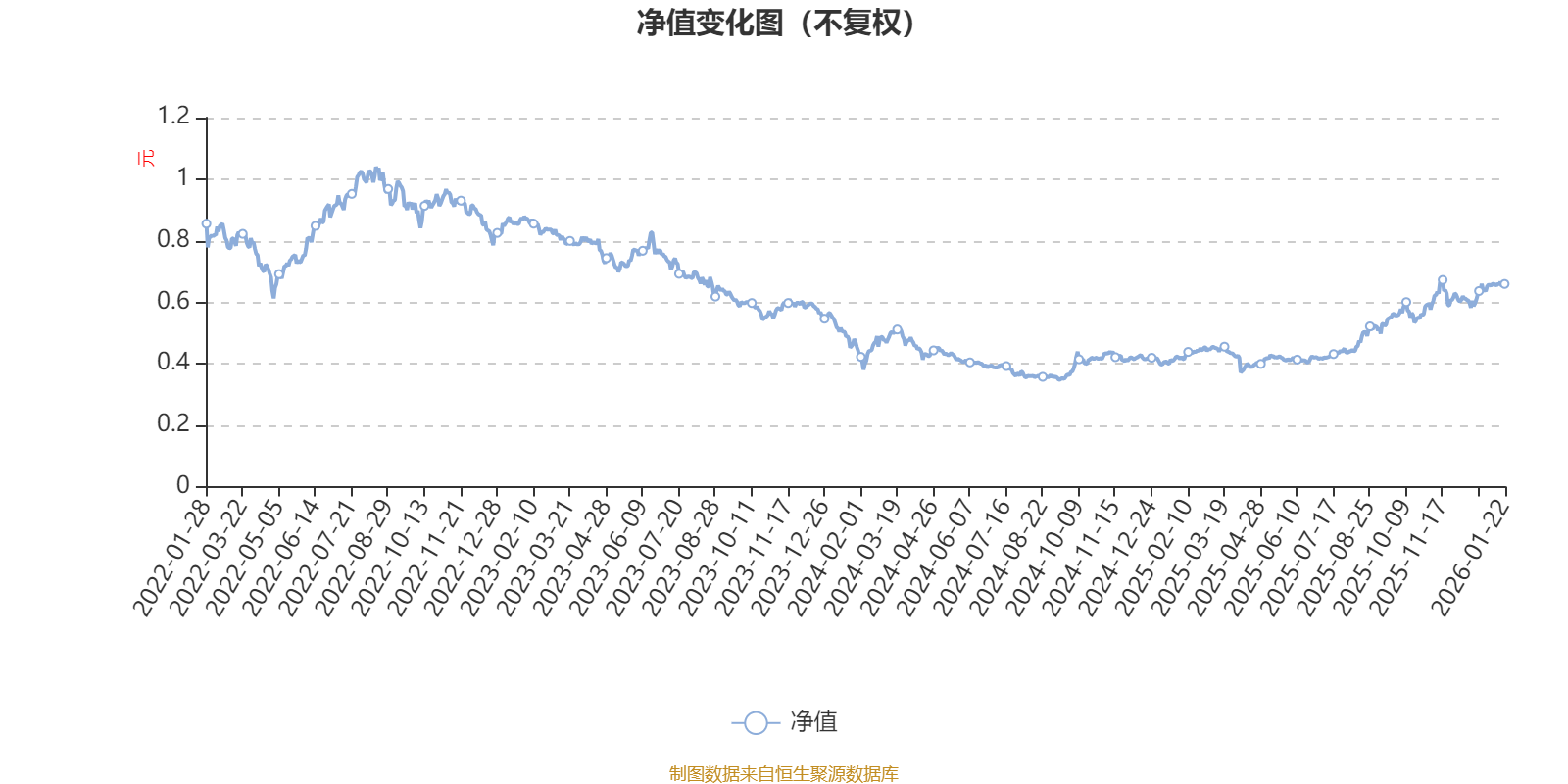
Core Viewpoint - The AI Fund Huashang New Energy Vehicle Mixed A (013886) reported a profit of 28.387 million yuan for Q4 2025, with a weighted average profit per fund share of 0.0407 yuan. The fund's net value growth rate was 6.86%, and its total size reached 448 million yuan by the end of Q4 2025 [2][15]. Fund Performance - As of January 22, the unit net value of the fund was 0.659 yuan. The fund manager, Chen Xiaoqiong, oversees three funds, all of which have shown positive returns over the past year. The highest growth rate among these funds was 105.95% for Huashang High-end Equipment Manufacturing Stock A, while the lowest was 56.95% for Huashang New Energy Vehicle Mixed A [2][3]. Market Overview - In Q4 2025, the A-share market experienced fluctuations, with the Shanghai Composite Index oscillating between 3,800 and 4,030 points, briefly surpassing the 4,000-point mark in October. The Shanghai Composite Index, CSI 300, ChiNext Index, and STAR Market Index saw respective changes of 2.22%, -0.23%, -1.08%, and 10.1% [3]. Investment Strategy - The fund's investment strategy focuses on two main themes: growth and quality. Growth investments are centered around sectors such as lithium batteries, energy storage, solid-state batteries, and AIDC power equipment, with an emphasis on tracking industry developments and selective stock picking. The quality investments are directed towards assets with strong competitive advantages and sustainable profitability [3]. Fund Rankings - As of January 22, the fund's performance over various time frames ranked as follows among comparable funds: 20.14% growth over the last three months (40/621), 51.01% over the last six months (54/621), 56.95% over the last year (141/613), and -24.00% over the last three years (524/535) [3]. Risk Metrics - The fund's Sharpe ratio over the last three years was 0.0231, ranking 495 out of 526 comparable funds. The maximum drawdown during this period was 60.46%, with the largest single-quarter drawdown occurring in Q1 2024 at 32.7% [9][11]. Portfolio Composition - The average stock position of the fund over the last three years was 87.3%, slightly above the comparable average of 85.83%. The fund reached its highest stock position of 92.85% at the end of Q3 2025 and its lowest of 74.26% at the end of H1 2024 [14]. Top Holdings - As of the end of Q4 2025, the fund's top ten holdings included Ningde Times, Sunshine Power, Tianci Materials, Duofluor, Huasheng Lithium, Huayou Cobalt, Guocheng Mining, Xian Dao Intelligent, Penghui Energy, and Nord Shares [18].





特斯拉新使命背后的生死时速
虎嗅APP· 2026-01-23 10:16
Core Viewpoint - Tesla has updated its mission to "build a world of extraordinary abundance," where people can achieve high income without the need to work [2][5]. Group 1: Tesla's Mission Evolution - Initially, Tesla's mission was to "accelerate the world's transition to sustainable energy," with a clear path outlined in the first three chapters of the "Master Plan" [3][4]. - The first chapter focused on producing high-end sports cars to fund the development of more affordable vehicles, which has been completed with models like Roadster, Model S, Model X, and Model 3 [4]. - The second chapter aimed to provide solar energy solutions and expand the electric vehicle lineup, with partial completion noted by 2025 [4]. - The third chapter, released in 2023, set a goal for 100% sustainable energy by 2050, which is still considered far from realization [4]. Group 2: Future Vision of Abundance - The concept of a world of extraordinary abundance is based on a productivity explosion driven by robots and AI, with the Optimus robot expected to surpass human capabilities in various fields [8][9]. - In this envisioned world, people would not need to work for income, and the cost of goods and services would approach zero, rendering money less significant [9]. - The future may allow for extended lifespans, but concerns about societal challenges and the potential loss of human dominance over superintelligent AI are raised [11][12]. Group 3: Current Challenges and Expectations - Tesla's focus on AI and robotics, particularly the Optimus robot and autonomous driving, is seen as crucial for achieving its new mission [16]. - The company aims to produce the Cybercab, a low-cost autonomous vehicle, with a target production capacity of 2 million units by April 2024 [16]. - However, there are concerns about Tesla's ability to meet these commitments, especially given past delays and the current decline in vehicle sales, which dropped by 8.6% year-on-year in 2025 [21]. - Investors are increasingly wary, as the company's market narrative may overshadow its fundamental performance, and 2026 is viewed as a critical year for demonstrating tangible progress [21].


“海南富豪”的千亿棋局:创维大分拆,再造一个“资本帝国”
Xin Lang Cai Jing· 2026-01-23 10:14
Core Viewpoint - The company is undergoing a significant transformation by initiating a share buyback, privatization, and the spin-off of its solar business, Skyworth Solar, for independent listing, aiming to highlight its independent value and attract new energy investments [1][22][23]. Group 1: Company Strategy and Financials - Skyworth Group announced plans for a share buyback and privatization while spinning off its solar business, Skyworth Solar, which is expected to enhance its independent valuation [4][6][27]. - Following the announcement, Skyworth Group's stock price surged over 43%, with a market capitalization exceeding HKD 100 billion [1][23]. - The company will distribute Skyworth Solar shares to shareholders, with an estimated value of approximately HKD 6.13 per share of Skyworth Group [4][27]. - The total value of cash and solar shares per Skyworth Group share is projected to be around HKD 10.16, representing a premium of about 96.15% compared to its last trading price before suspension [6][34]. Group 2: Business Performance and Market Position - Skyworth Solar, established in 2020, has rapidly expanded its market presence, contributing significantly to the group's revenue, with solar business revenue reaching CNY 138.36 billion, accounting for 38.2% of the total revenue [9][11][32]. - The solar business has shown strong growth, with a revenue increase of 53.5% year-on-year, making it a key driver of profit for the group [11][32]. - As of mid-2025, Skyworth Solar has constructed over 800,000 power stations, generating over 410 billion kWh of electricity [9][30]. Group 3: Future Outlook and Expansion Plans - The founder of Skyworth Group, Huang Hongsheng, indicated that the solar business is expected to surpass traditional television revenue for the first time in 2025, with plans to expand into the energy storage sector [14][35]. - The company is focusing on international markets, particularly in regions with high electricity prices and weak infrastructure, such as Europe, the Middle East, and South America [14][35]. - Skyworth Group aims to achieve a revenue target of CNY 100 billion by 2024, with a strong emphasis on global expansion and partnerships with international brands [41][42].