
交通

Search documents
海南新基建:撬动开放的新支点
Hai Nan Ri Bao· 2025-12-14 01:40
Core Viewpoint - The construction of infrastructure in Hainan is accelerating, aiming to support the establishment of the Hainan Free Trade Port and enhance its role as a new pivot for opening up the economy [1][2]. Group 1: Infrastructure Development - Hainan's infrastructure is crucial for the Free Trade Port's construction, with a focus on major projects to improve network connectivity and smart capabilities [2][6]. - The port infrastructure features significant characteristics such as functional integration, with Haikou Port being a major hub capable of handling 35 million passengers and 5.6 million vehicles annually [3]. - The capacity of Yangpu International Container Hub Port has increased from 1.02 million TEUs to 3.1 million TEUs, marking a 204% growth [3]. Group 2: Transportation Network - A comprehensive "Five Ring" transportation network has been established, enhancing connectivity within the island and with international destinations [3][4]. - The completion of four highways and the "Two Ring" tourism road has facilitated smoother transportation, with 93 international routes now operational [3][4]. Group 3: Utility Infrastructure - The construction of the electricity, gas, and water networks is progressing alongside transportation infrastructure, creating a resilient support system for openness [4][5]. - Hainan has achieved "Gigabit City" status in three major cities, and the new power system in Boao has been recognized as a national demonstration zone [4][5]. Group 4: Future Development Plans - The "15th Five-Year Plan" emphasizes the need for proactive infrastructure development to enhance connectivity and stability [6][7]. - The focus is on achieving coordinated development across the island, improving logistics networks, and advancing "new infrastructure" initiatives [8][9]. - The aim is to elevate the capabilities of Hainan as a hub for international trade and transportation, ensuring efficient movement of people and goods [9].
首届中国会长圆桌会(第三期)在京举办——共商绿色基建与循环经济协同发展新路径
Xin Lang Cai Jing· 2025-12-14 00:29
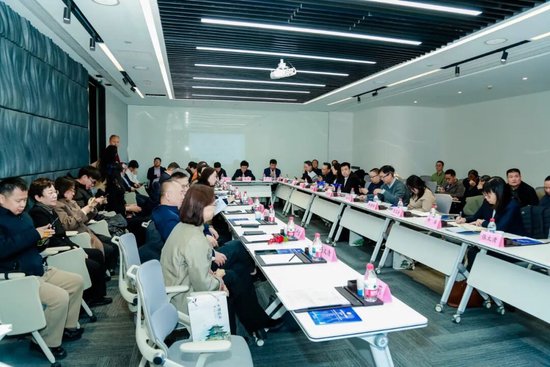
来源:世界晋商论坛 12月12日,首届中国会长圆桌会(第三期)在北京成功召开。本次会议以"双碳目标下,绿色基建与循 环经济的创新实践与协同路径"为主题,由中国社会组织促进会主办,中国社会组织促进会行业协会商 会分会承办,喜跃发集团协办。 会议汇聚了来自公路建设、市政工程、房地产、煤炭、交通、机械工业、民用机场、节能环保及饭店业 等15个行业的国家级协会负责人,以及交通部、住建部、发改委等有关部委及科研院所的专家领导,共 话绿色基建与循环经济的发展趋势与实践路径。中国社会组织促进会会长杨岳出席并讲话,副秘书长贾 卫主持会议。中国社会组织促进会行业协会商会分会总干事李有生介绍活动背景、意义及出席嘉宾,中 国社会组织促进会副会长、喜跃发集团董事长刘跃代表主办单位致辞。 中国社会组织促进会会长杨岳讲话 中国社会组织促进会副秘书长贾卫主持会议 中国社会组织促进会行业协会商会分会总干事李有生介绍活动背景、意义及出席嘉宾 2 案例分享:技术创新推动产业循环 喜跃发集团副总经理李俊锋分享了企业在绿色基建领域的实践成果。集团通过100%固废冷拌冷铺技 术、工业固废资源化利用,从源头降低碳排放;推广预防性养护等低碳工艺,减少施工 ...

AI会引发能源危机吗?
Cai Jing Wang· 2025-12-11 12:34
Core Insights - The article discusses the dual role of AI as both an energy consumer and an energy efficiency enhancer, highlighting the potential for AI applications to significantly reduce energy consumption over time despite its immediate energy demands [1][2]. Group 1: AI's Energy Consumption - AI's energy demand is growing rapidly, with data centers projected to consume 1.5% of global electricity by 2024, amounting to approximately 415 TWh, with the U.S. accounting for 45% of this consumption [4]. - The International Energy Agency forecasts that global data center electricity consumption will more than double by 2030, reaching around 945 TWh, driven primarily by AI and other digital services [4]. - In the U.S., data centers are expected to contribute nearly half of the electricity demand growth from now until 2030, surpassing the total electricity consumption of energy-intensive industries like aluminum and cement [4][5]. Group 2: AI's Role in Energy Efficiency - AI can act as a "savings tool" in the real economy by optimizing energy supply systems, improving industrial processes, and enhancing efficiency in sectors like transportation and construction [1]. - AI technologies are being developed to reduce energy consumption during model training and inference, with innovations such as the "Mixture of Experts" (MoE) architecture leading to a 70% reduction in training energy consumption [1][6]. - Companies like Tencent and Google are actively pursuing green energy initiatives, with Tencent aiming for 100% renewable energy by 2030 and Google exploring hourly matching of renewable energy supply [9][10]. Group 3: Innovations in Energy Supply and Consumption - AI is enhancing energy supply systems by improving predictive accuracy and operational strategies, particularly in renewable energy sectors [11][12]. - In industrial applications, companies are using AI to optimize processes, resulting in significant energy efficiency gains, such as a 3% improvement in energy use at ArcelorMittal's Luxembourg plant [14]. - AI applications in transportation and building management are also yielding substantial energy savings, with logistics companies reducing fuel costs by 20% through route optimization [15][16]. Group 4: Future Prospects and Challenges - The relationship between AI's energy consumption and its potential for energy savings is complex, with short-term increases in energy use expected before long-term savings materialize [19][20]. - The development of fusion energy technology is seen as a potential long-term solution for providing zero-carbon energy to support AI's growth [21]. - The article emphasizes the need for a balanced approach to AI deployment, ensuring that energy efficiency gains are realized while managing the immediate energy demands of AI systems [23].
长株潭发布73项重点合作事项
Chang Sha Wan Bao· 2025-12-11 03:19
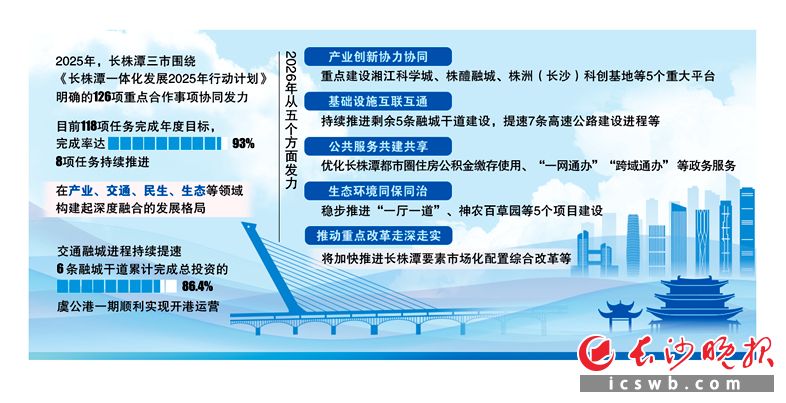
Core Viewpoint - The Longzhutan integrated development initiative is making significant progress, with a focus on collaboration among the three cities of Changsha, Zhuzhou, and Xiangtan, aiming for a more interconnected and sustainable urban ecosystem by 2026 [2][3][4][5] Group 1: Key Cooperation Matters - In 2025, the three cities will focus on 126 key cooperation matters, with 118 tasks already meeting their annual goals, achieving a completion rate of 93% [2] - The transportation integration process is accelerating, with 6 urban integration roads having completed 86.4% of total investment, and the first phase of the Yugu Port successfully commencing operations [2] Group 2: Infrastructure Development - The three cities will work on 16 key infrastructure items to establish a multi-level comprehensive transportation network, focusing on rail transit and road networks [3] - Ongoing projects include the construction of 5 remaining urban integration roads, 7 expressways, and several rail projects, including the Changsha-Liuyang Express Line and the Changsha-Ganzhou High-speed Railway [3] Group 3: Public Services and Community Benefits - The initiative will focus on 18 key public service items to enhance the integration benefits for citizens, including extending quality education and healthcare resources from Changsha to surrounding areas [4] - Efforts will be made to optimize housing fund services and explore joint law enforcement in transportation and quality sectors to improve governance efficiency [4] Group 4: Environmental Protection - The three cities will implement 17 key environmental protection measures, emphasizing the joint management of ecological green spaces and strict adherence to planning and regulatory requirements [4] - Collaborative mechanisms for pollution control and ecological protection will be established to promote harmony between humans and nature [4] Group 5: Reform and Innovation - The initiative will advance 6 reform measures to stimulate internal development dynamics, including market-oriented reforms in resource allocation and cross-regional cooperation [5] - Notably, the collaboration between Xiangjiang New Area and surrounding regions is seen as an innovative practice to enhance the competitive capacity of the Longzhutan urban agglomeration [5]
江门:从“硬联通”到“软对接” 打造大湾区西翼枢纽门户
2 1 Shi Ji Jing Ji Bao Dao· 2025-12-09 14:23
Core Viewpoint - Since the "14th Five-Year Plan," Jiangmen has actively implemented various decisions from central, provincial, and municipal levels, leveraging its unique geographical position as the "Western Wing Hub of the Greater Bay Area" to enhance regional collaborative development [1] Infrastructure Development - Jiangmen has continuously strengthened infrastructure connectivity, with the opening of direct high-speed rail services to Hong Kong, accelerating its integration into the "Railway of the Greater Bay Area" [1] Policy Initiatives - The city has made significant progress in "soft connectivity," with three initiatives, including a special reform pilot for facilitating investment from overseas Chinese, receiving recognition from the National Development and Reform Commission [1] - Two cases, namely cross-border enterprise credit rating recognition and cross-border government service facilitation with Hong Kong and Macau, have been selected as typical examples in the first batch of the Greater Bay Area regulatory alignment mechanism [1]
宏观|《2026年财政收支展望》
2025-12-08 00:41
Summary of Key Points from Conference Call Records Industry Overview - The records primarily discuss the macroeconomic outlook for China and Japan, focusing on fiscal revenue and monetary policy implications for 2026 [1][2][3][4][5][8][10]. Key Insights and Arguments 1. **China's Fiscal Revenue Outlook for 2026**: - China's broad fiscal revenue is expected to stabilize and increase, driven by stable macro tax burdens, anti-involution policies, performance of special taxes, and enhanced tax collection measures [1][2][3][4]. - The overall fiscal revenue is projected to show uncertainty but trend towards stability [4]. 2. **Factors Influencing China's Fiscal Revenue**: - **Stable Macro Tax Burden**: Emphasis on maintaining a reasonable macro tax burden and regulating tax incentives to address the ongoing decline in macro tax levels [3]. - **Anti-Involution Policies**: These policies are anticipated to help improve prices in 2026, particularly benefiting domestic value-added tax revenues from manufacturing and wholesale sectors [3]. - **Performance of Special Taxes**: The shift towards domestic demand may reduce the drag from export tax refunds, while higher trading volumes in the securities market could enhance stamp duty contributions [3]. - **Strengthened Tax Collection Measures**: Increased coverage and regulation of personal income tax and compliance requirements for local government investment incentives are expected to improve fiscal stability [3]. 3. **Japan's Economic Stimulus and Fiscal Challenges**: - Japan's government has introduced a ¥21.3 trillion economic stimulus plan, primarily targeting inflation and social subsidies, which is expected to raise the fiscal deficit to 3.0% in 2026 [1][8]. - The effectiveness of Japan's fiscal expansion is anticipated to be weaker compared to the U.S. and Germany, with a projected GDP impact of only 0.5 percentage points [8][9]. 4. **Market Risks and Volatility**: - The combination of fiscal expansion and monetary tightening in Japan has raised risks of a reversal in yen carry trades, particularly as the Bank of Japan shifts towards a hawkish stance [8][10]. - Current market conditions show a balanced position in yen trading, with net long positions emerging, indicating a more stable environment compared to previous extremes [11][12]. 5. **U.S. Economic Data and Implications**: - Recent U.S. economic data, including a decline in ADP employment figures and stagnant PCE consumption growth, suggest a weakening labor market and potential for a rate cut by the Federal Reserve in December [7]. Other Important but Overlooked Content - The records highlight the importance of monitoring the interplay between U.S. and Japanese monetary policies, particularly during periods of contrasting stances, which could create volatility in the markets [10]. - The potential for Japan's fiscal measures to lead to increased inflationary pressures, despite initial subsidies aimed at reducing costs, is a critical consideration for future economic stability [9][12].
扩准入通堵点强保障 精准施策释放民间投资活力
Jing Ji Ri Bao· 2025-12-06 01:44
Core Insights - Private investment is a crucial indicator of economic activity, significantly impacting growth, employment, and expectations. Despite a slowdown in private investment this year due to international environmental changes and real estate market adjustments, private project investment excluding real estate has shown a stable growth of 2.1% year-on-year in the first three quarters [1] Group 1: Policy Measures - The State Council has issued 13 policy measures to promote private investment, focusing on expanding market access, addressing bottlenecks, and strengthening guarantees. Seven of these measures specifically relate to market access, allowing private capital to hold more than 10% in qualifying projects [2][3] - The measures encourage private capital participation in key sectors such as railways and nuclear power, and promote involvement in urban infrastructure projects with profit potential [2] Group 2: Market Participation - In the energy sector, 20 private enterprises have participated in newly approved nuclear power projects, with private capital share increasing from approximately 10% last year to between 10% and 20% this year. Private investment in gas storage and oil pipeline projects has also exceeded 10% [3] - The government is actively removing unreasonable restrictions on service industry access and enhancing support for small and medium enterprises through procurement policies [3] Group 3: Project Promotion - A recent conference in Changsha showcased 252 projects aimed at attracting private capital across various sectors, including manufacturing and logistics. This initiative aims to create market entry points for green and digital transformation [4] - The selection of projects for promotion considers market size, profit expectations, and technological barriers, facilitating targeted investment opportunities for private capital [4] Group 4: Financial Support - By the end of October, 500 billion yuan in new policy financial tools have been fully allocated to support eligible private investment projects, with 14 infrastructure REITs issued, totaling nearly 30 billion yuan [5] - The establishment of a comprehensive service platform aims to guide policy, connect projects, and empower financing, thereby enhancing private investment vitality [5] Group 5: Legal Framework - The implementation of the Private Economy Promotion Law in May has established a legal basis for promoting private investment, with a notable case demonstrating its impact by compensating a private enterprise for losses due to government actions [6] - Regular communication mechanisms between the National Development and Reform Commission and private enterprises have been established to address practical issues hindering private sector growth [6] Group 6: Future Outlook - The current trend indicates a shift in private investment towards new and superior sectors, contributing significantly to industrial transformation and innovation in major national projects [7] - With ongoing policy innovations and the advantages of a large-scale market, private investment is expected to enter a new development phase, particularly in emerging industries such as new energy and smart manufacturing [7]
新质服务风起:产业转型升级催生万亿市场需求
2 1 Shi Ji Jing Ji Bao Dao· 2025-12-05 10:55
Group 1 - The core viewpoint of the article emphasizes the acceleration of innovation capabilities in China's industries, driven by policy support for cultivating new productive forces, leading to the upgrading of traditional industries and the rapid development of emerging industries [1][3]. - The emergence of new quality services is identified as a crucial engine for cultivating new productive forces, characterized by new dynamics through innovative production factors like information technology and AI, new ecosystems relying on collaborative partnerships, and new paradigms promoting deep industry integration [2][3]. Group 2 - The demand for new quality services is closely linked to China's focus on developing new productive forces, as highlighted in the "14th Five-Year Plan," which aims for significant breakthroughs in high-quality development and the construction of a modern economic system [4][5]. - Since the "14th Five-Year Plan," the average annual growth rate of the added value of high-tech manufacturing has been 9.2%, with projections indicating that by 2024, it will account for 16.3% of the total industrial added value [5]. - The "Two New" policies, which include large-scale equipment updates and the replacement of consumer goods, are expected to release market potential worth trillions, marking a significant step in the comprehensive deepening of these policies [5][6]. Group 3 - The new quality service market is entering a trillion-level explosive growth phase, with key sectors such as industrial, electronics, transportation, medical, and construction serving as core areas for this development [6][7]. - In the industrial sector, the demand for equipment updates is driving the foundation of the new quality service market, with policies promoting upgrades in high-end equipment and digital transformation [6][7]. - The medical sector's new quality services focus on intelligent equipment upgrades, digital diagnosis, and green construction, supported by increasing policy backing and rapid market growth [7]. Group 4 - The transportation sector is a key application area for equipment updates and dual transformation, with the shift to new energy vehicles and the development of smart logistics driving the new quality service market [7]. - In the construction sector, new quality services are centered on the renovation of old buildings, smart building construction, and the application of green materials, driven by urban renewal initiatives and carbon neutrality requirements [7][8]. - Overall, new quality services are seen as an inevitable trend in economic development, serving as a vital support for optimizing and upgrading the economic structure, driven by technological innovation and user demand [8].
应用:绿氢远期需求超9400万吨,绿氨、交通领域预计率先平价
2025-12-04 15:36
应用:绿氢远期需求超 9400 万吨,绿氨、交通领域预计 率先平价 20251204 摘要 绿氢制合成氨成本为 4,139 元/吨,较传统工艺高 22%-36%。实现平价 需碳价升至 192 元/吨或绿氢成本降至 13.7 元/千克,或碳价涨至 100 元/吨且绿氢成本降至 15 元/千克。 绿色甲醇生产成本约 3,900 元/吨,比灰色甲醇高 42%。实现平价需碳 价涨至 100 元/吨且绿氢成本降至 9.5 元/千克,电力成本降至 0.08-0.1 元/千瓦时,短期内实现难度大。 炼化行业对绿氢需求较少,因多数炼厂位于东部且有副产蓝氢,经济性 更优。中短期内,仅在缺乏蓝氢支持时才可能出现部分绿氢需求。 轻冶金行业到 2050 年绿氢需求预计超 900 万吨,实现平价需绿氢成本 降至 10.5 元/千克。气基直接还原竖炉减碳幅度大,宝武湛江正推进相 关项目。 钢铁领域碳中和需氢冶金,2050 年氢冶金比例提升至 10%-11%,需 求量为 903-1,053 万吨。目前氢冶金成本高 80%-100%,需补贴。平 价需碳价涨至 100 元/吨且滤芯成本降至 10.5 元/千克。 Q&A 绿氢在合成氨领域的应用 ...
破解赤泥综合利用难题 推动工业绿色转型和循环经济发展
Zheng Zhou Ri Bao· 2025-12-04 00:54
Core Viewpoint - The implementation plan aims to systematically address the challenges of red mud utilization, promoting industrial green transformation and circular economy development in Henan Province [1] Group 1: Overview of Red Mud Utilization - Red mud is a major solid waste from the alumina industry, with significant production and storage volumes, making its comprehensive utilization crucial for ecological protection and resource efficiency [1] - The plan sets phased goals: by 2027, achieve a 15% increase in red mud utilization rate; by 2030, reach a 25% utilization rate with a mature innovation system [1] Group 2: Action Plans - Four major actions with 11 specific tasks are outlined to achieve the goals [2] - "Source Control Action" aims to reduce red mud output through clean production and technological upgrades, targeting a reduction of at least 5% in output by 2030 compared to 2024 [2] - "Comprehensive Utilization Expansion Action" focuses on expanding existing utilization, supporting applications in iron extraction, building materials, and new material development in various sectors [2] - "Technological Innovation Enhancement Action" emphasizes key technologies for reducing red mud generation and improving utilization efficiency, alongside building platforms for innovation and commercialization [2] - "Industrial Collaborative Development Action" encourages regional coordination in red mud utilization, promoting cross-industry collaboration and information sharing [2]