娱乐

Search documents
高盛:预计到2027年底中国股市还有38%的上涨空间
Zheng Quan Ri Bao Wang· 2025-12-23 11:10
Group 1 - Goldman Sachs holds an optimistic view on the Chinese stock market, citing supportive policies and structural changes such as AI, globalization, consumption upgrades, and "anti-involution" policies as potential upward drivers for the market [1] - The Chinese stock market has achieved positive returns for two consecutive years, with A-shares and H-shares expected to rise by 16% and 29% respectively by 2025, primarily driven by valuation recovery [1] - By the end of 2027, the Chinese stock market is projected to have an additional 38% upside, with the driving factors shifting towards profit growth [1] Group 2 - Strong performance in service consumption and new consumer sectors, such as entertainment and specialty retail, has outpaced traditional consumer stocks in terms of profit growth and stock returns [2] - The "anti-involution" policy is expected to improve profit margins in industries facing overcapacity, such as solar energy and cement, through supply-side structural reforms and industry consolidation [2] - Domestic and foreign investment interest in the Chinese market is increasing, with record inflows from southbound funds and heightened participation from institutional investors and individual investors [2] Group 3 - The Chinese stock market offers diversification value for global investors, as it has a low correlation with US stocks and is deeply undervalued, making it a good choice for risk diversification [2] - The policy environment has established a solid foundation against downside risks, with macroeconomic and stock market policies effectively supporting growth and compressing equity risk premiums [2]
盘锦“九九消费季”惠民消费活动来啦!
Sou Hu Cai Jing· 2025-12-23 03:11
Group 1 - The "99 Consumption Season" in Panjin City aims to stimulate the winter economy and enhance the consumer market through government and enterprise collaboration [1][3] - The event is rooted in traditional customs and focuses on winter consumption, running until March next year, offering a diverse range of activities including culture, shopping, dining, and entertainment [3] - The launch event featured various promotional measures, including discounts and special offers from local businesses, creating a vibrant atmosphere for community engagement [3] Group 2 - The city’s Commerce Bureau plans to implement actions to boost consumption, focusing on the integration of culture, tourism, and commerce to enhance the quality and volume of consumer spending [3] - Efforts will be made to optimize the consumption environment and tap into consumer potential, contributing to the high-quality development of the local economy [3]


深夜!暴雷!
Zhong Guo Ji Jin Bao· 2025-12-22 16:25
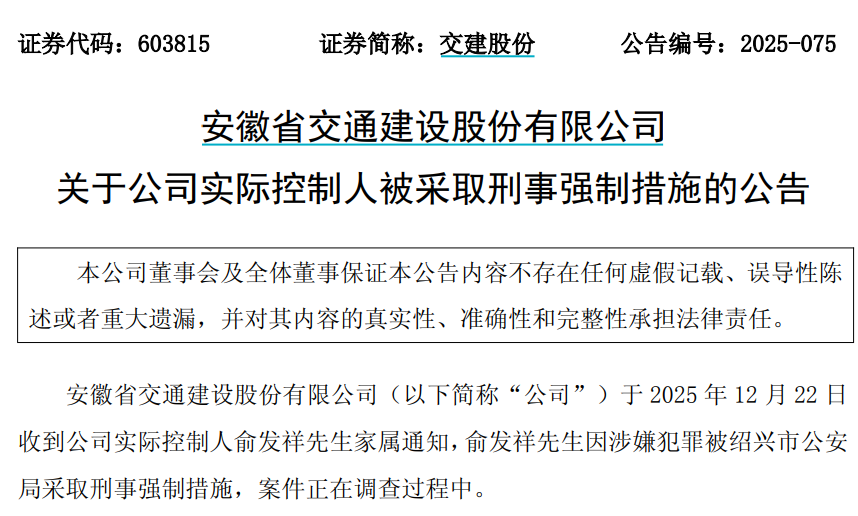
【导读】祥源文旅、交建股份同步公告,公司实控人俞发祥涉嫌犯罪,被绍兴市公安局采取刑事强制措施;美股小幅上涨 中国基金报记者 泰勒 大家好,今晚继续关注海内外市场的消息。 暴雷!三家公司同时发布公告 实控人被采取刑事强制措施 12月22日晚间,A股两家上市公司——交建股份、祥源文旅,港股公司海昌海洋公园,同步发布公告,公司实控人俞发祥因涉嫌犯罪,被绍兴市公安局采 取刑事强制措施,案件正在调查过程中。 自11月28日起,浙江浙金资产运营股份有限公司(原名浙江金融资产交易中心股份有限公司,以下简称浙金中心)平台上,由祥源控股及其实控人俞发祥 提供连带责任担保的多款金融资产收益权产品陆续出现到期无法兑付或无法兑付收益的情况。 据多家媒体报道,这些待兑付资金规模达百亿元以上。涉及产品数量超过200款,总交易规模超过百亿元,产品到期日为今年12月至明年4月不等。 12月16日,祥源文旅和交建股份公告称,前者超6亿股、后者2.74亿股股份被司法冻结、轮候冻结及司法标记,均因祥源控股债务纠纷。绍兴市已组建工 作组进驻祥源控股帮扶。两公司均表示实控人及控股股东与公司保持独立,但股份高比例冻结可能影响公司控制权稳定性。 美股上涨 ...
宜宾江安:文商旅融合消费季启幕 将持续至明年3月
Sou Hu Cai Jing· 2025-12-20 09:46
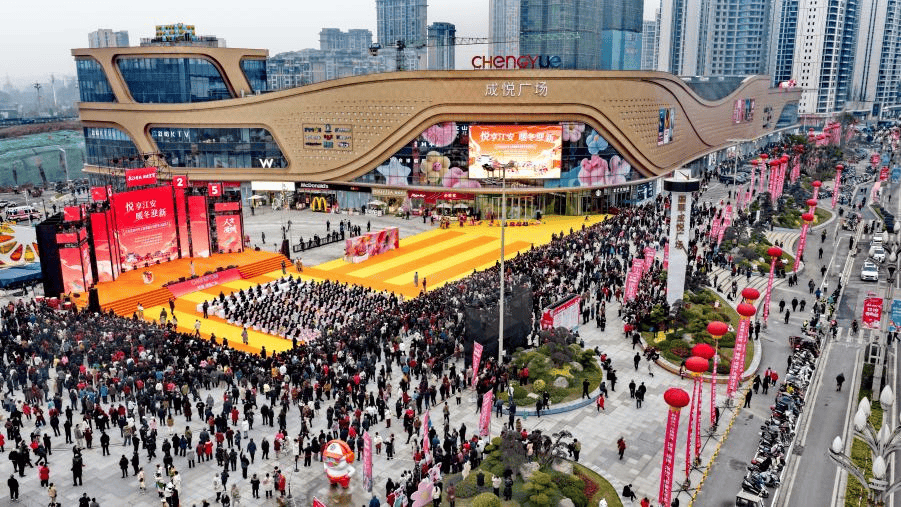
Core Viewpoint - The "Enjoy Jiang'an · Warm Winter Welcoming New Year" cultural and commercial tourism integration consumption season in Jiang'an County, Yibin City, is set to run from December to March, featuring a variety of activities and the opening of a new commercial landmark, Chengyue Plaza [1][4]. Group 1: Event Overview - The consumption season framework includes a launch ceremony, four thematic chapters, fifteen key county activities, and various township特色活动, covering concerts, intangible cultural heritage markets, New Year goods exhibitions, folk performances, and fitness events [1][2]. - Chengyue Plaza, the largest and most comprehensive commercial complex in the area with a total construction area of approximately 70,000 square meters, has opened, featuring over 130 brands, more than 100 of which are entering the local market for the first time [1][3]. Group 2: Thematic Activities - The key county activities are divided into four themes: "Fine Wine and Cuisine · Taste Jiang'an," "Quality Life · Shopping Jiang'an," "Joyful Festival · Happy Jiang'an," and "Health and Wellness · Vitality Jiang'an," including events like the New Year's Eve concert, a thousand-person street banquet, and various cultural and fitness activities [2]. - Townships in Jiang'an County will also host特色活动, such as the year pig banquet in Xiaochang Town and the food corridor in Tieqing Town, showcasing the diverse local culture [2]. Group 3: Economic Impact - Since the beginning of the year, Jiang'an County has conducted over 150 promotional activities, distributing more than 18 million yuan in consumer vouchers and subsidies, directly driving consumption of 250 million yuan [4]. - The consumption season is part of the "Jiang'an Action" to promote consumption, aiming to benefit citizens and enterprises while stimulating economic growth through diverse promotional and cultural tourism experiences [4].
港股通50ETF(159712)涨超1.1%,景气成长与红利策略受关注
Sou Hu Cai Jing· 2025-12-19 05:23
Group 1 - The core viewpoint emphasizes a "growth and dividend" strategy in industry allocation, favoring high-quality large internet companies, particularly in e-commerce, media, and entertainment sectors, with a focus on leading AI enterprises [1] - There is a strong demand in technology hardware supply sectors driven by global AI infrastructure capital expenditure growth, particularly in areas like optical modules, PCBs, and AI data center cooling [1] - The "anti-involution" policy is expected to optimize industry supply and demand, leading to potential profit margin recovery in sectors such as photovoltaics, batteries, and chemicals [1] Group 2 - The Hong Kong Stock Connect 50 ETF (159712) tracks the Hong Kong Stock Connect 50 Index (930931), which selects the 50 largest listed companies within the Stock Connect range, covering 18 industries and primarily focusing on large-cap leading stocks [1] - The index exhibits a balanced industry distribution, incorporating characteristics of both new and traditional economies, including finance, discretionary consumption, and communication services, reflecting the overall performance of large-cap leading enterprises in the Hong Kong Stock Connect [1]
周受资内部信曝TikTok美国方案;海南封关首日iPhone最高可减2000多元;腾讯辟谣元宝背后由真人运营丨邦早报
创业邦· 2025-12-19 00:08
Group 1 - TikTok CEO Zhou Shuzi announced the establishment of a new joint venture, TikTok USDS Joint Venture LLC, to handle data protection and algorithm security in the U.S. while ByteDance retains control over e-commerce and advertising [1] - The new joint venture is expected to be finalized by January 22, 2026, and will focus on content review and software security [1] Group 2 - Hainan Free Trade Port officially launched its full island closure operation, leading to significant discounts on iPhone products, with prices reduced by over 2,000 yuan for certain models [3] - The iPhone 17 Pro Max 256GB version is priced at 9,299 yuan, which is 700 yuan cheaper than e-commerce platforms [3] Group 3 - OpenAI is in preliminary talks for a new funding round, aiming for a valuation of approximately $750 billion, with potential funding reaching hundreds of billions [3] - This valuation represents a 50% increase from the previous funding round in October 2022 [3] Group 4 - Elliott Investment Management has accumulated over $1 billion in shares of Lululemon and is advocating for a former Ralph Lauren executive to become the new CEO [12] - Lululemon's current market capitalization is around $25 billion [12] Group 5 - Apple announced adjustments to its iOS rules in Japan, allowing developers to use third-party app stores and payment methods, in compliance with new regulations [12] - This change enables developers to add alternative payment options within their apps [12] Group 6 - Honda confirmed a temporary suspension of production at its joint venture factory in China due to supply chain issues, specifically related to semiconductor shortages [16] - The suspension will last for three days starting December 29, 2023 [16] Group 7 - Xiaomi's founder announced the official release of the Xiaomi 17 Ultra next week, following leaked images of the device [7] - The new model is expected to generate significant consumer interest [7] Group 8 - Amazon is restructuring its AI team, integrating chip and model development under a new business unit led by a veteran from its cloud computing division [18] - This move aims to enhance Amazon's capabilities in artificial intelligence and maintain competitiveness in the market [18]






「抖音生活长沙嘉年华|越夜越长沙」“湘”当出彩——长沙好店2.0正式出道!
Zhong Guo Shi Pin Wang· 2025-12-18 08:16
摘要:长沙好店2.0承包你的夜间吃喝玩乐 当夜幕随着微凉的晚风降临湘江,长沙街巷间飘起的不止烟火气,还有属于秋冬的暖意。在这座 以"夜"闻名的城市,灯火可亲的季节才刚刚开始。抖音生活长沙嘉年华以"越夜越长沙"为名,推出"湘"当 出彩长沙好店榜单,为市民与游客打造一份秋冬必打卡的长沙好店清单,让这座城市的夜间魅力愈发璀 璨。 三阶段冲榜,甄选长沙优质好店 "湘"当出彩——长沙好店出道计划2.0 以42天三阶段冲榜赛事为核心,用公平公正的评选机制挖掘城市 优质商户。活动自10月21日启动,至12月1日收官,覆盖餐饮、娱乐、购物三大核心消费场景,层层筛 选出实力与口碑兼具的佼佼者。 阶段一面向长沙全量商户,通过上线专属产品、布置入店扫码物料等方式开放冲榜通道,让各类商户都 能参与竞争、展示特色。阶段二则进入40天集中打榜期,商户通过直播、短视频、到店扫码等多元形 式提升消费增量与排名,排名靠前的商户可解锁明星探店、流量补贴等阶段性资源。最终阶段聚焦榜单 宣发与颁奖,以"长沙C位出道"为核心概念,发布"湘"当好吃、"湘"当好玩、"湘"当好逛三大维度C位出 道榜,并联合政府部门举办颁奖典礼,为优质商户与合作达人授奖。 ...

8点1氪丨被罗永浩指责收高价“祸害客人”,涉事酒店回应;全国劳动力人口平均年龄达39.66岁;马斯克或成全球首位万亿美元富豪
3 6 Ke· 2025-12-14 23:57
Group 1: Company Performance - Huayi Brothers has reported a cumulative loss of 8.2 billion yuan over the past seven years, with its current market value being less than one-tenth of its peak [3] - In Q3, Huayi Brothers achieved a revenue of 62.6 million yuan, a year-on-year decline of 31.61%, and a net loss attributable to shareholders of 39.5 million yuan [3] - Lululemon's stock price has dropped by 46.40% this year, resulting in a market value loss of approximately 25 billion USD, leading to the resignation of CEO Calvin McDonald [8] Group 2: Industry Developments - The average age of the labor force in China has reached 39.66 years, indicating a gradual maturity in the aging process of the population [2] - The global largest automotive safety testing center has been put into operation in Ningbo, Zhejiang, featuring multiple Guinness World Records [6] - The National Market Supervision Administration has issued guidelines prohibiting car manufacturers from selling vehicles at a loss, aiming to enhance price compliance in the automotive industry [4] Group 3: Strategic Moves - Kweichow Moutai has introduced a volume control policy to alleviate financial pressure on distributors, halting product distribution until January 1, 2026 [4] - SpaceX is reportedly seeking to go public with a target valuation of approximately 1.5 trillion USD, which could make Elon Musk the world's first trillionaire [2] - OpenAI has adjusted its compensation policy to prevent talent outflow by removing the "vesting cliff" for stock options [11]





行业周报:迪士尼联合OpenAI定义“AI+IP”新范式,在线情感社区公司冲击上市-20251214
KAIYUAN SECURITIES· 2025-12-14 15:22
Investment Rating - Investment rating: Positive (maintained) [1] Core Insights - The report highlights the rapid growth of the emotional economy market, with China's market expected to reach RMB 24.253 trillion in 2024 and grow at a CAGR of 22.2% until 2030, while the global market is projected to reach RMB 14.7 trillion in 2024, with a CAGR of 20.9% [38][43] - The report emphasizes the strong performance of the leading companies in the African hygiene products market, particularly LeShuShi, which has seen significant revenue and profit growth due to cost optimization and market expansion [45][46] - The report discusses the emergence of AI-driven social platforms, such as Soul and MiLian Technology, which are capitalizing on the emotional economy by offering unique user experiences and demonstrating strong financial performance [21][27] Summary by Sections Emotional Economy - The emotional economy is shifting consumer demand from material goods to experiences and emotional fulfillment, with consumers willing to pay for platforms and products that provide joy and stress relief [38] - The emotional economy market in China is expected to grow significantly, with a projected market size of RMB 24.253 trillion by 2024 and a CAGR of 22.2% from 2024 to 2030 [38][41] AI-Driven Social Platforms - Soul, a leading social app targeting Gen Z, reported a revenue of RMB 16.83 billion in the first eight months of 2025, a 17.8% increase year-on-year, with an adjusted net profit of RMB 2.86 billion, reflecting a 73.1% growth [21][23] - MiLian Technology, focusing on a more mature demographic, achieved a revenue of RMB 19.2 billion in the first half of 2025, marking an 85.9% year-on-year increase, with an adjusted net profit of RMB 2.97 billion, up 285% [27][33] African Hygiene Products Market - LeShuShi is the market leader in Africa's hygiene products sector, holding a 20.3% market share in baby diapers and a 15.6% share in sanitary napkins by volume [45] - The company's revenue grew from USD 320 million in 2022 to USD 454 million in 2024, with a CAGR of 19.2%, and its adjusted net profit increased from USD 1.839 million to USD 9.767 million during the same period, achieving a CAGR of 130.5% [45][46] - LeShuShi's product range includes over 340 SKUs, with a focus on multi-brand strategies to cater to various consumer segments [51]

广州宝业路“宵夜一条街”改造后开业,宵夜食肆营业至次日
Nan Fang Du Shi Bao· 2025-12-12 10:34
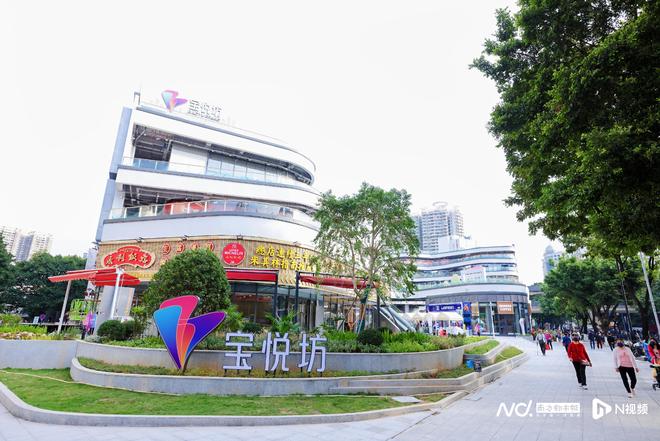
Core Viewpoint - The "Baoyuefang" project, a transformation of the popular "Xiaoye Street" on Baoye Road, officially opened on December 12, with a focus on late-night dining and a high occupancy rate of 90.5% for tenants [1][10]. Group 1: Opening Details - The opening event attracted many locals, leading to long queues at some stores [3]. - The current occupancy rate of Baoyuefang stands at 90.5%, with an opening rate of 62.5% [1]. - Notable brands include traditional restaurants and popular dining spots, such as "Yue·Xiangqun Restaurant" and "Hong Kong Xi Ji Abalone Crab" [1]. Group 2: Operational Philosophy - The operational philosophy emphasizes "night economy" and "all-day service," with many stores open until 4 or 5 AM [7]. - The design includes a three-story building with ample outdoor space, which is considered important by local diners [8]. Group 3: Community Engagement - The first floor has space for events and stalls, featuring local delicacies and cultural displays during the opening ceremony [8]. - A local vendor, known for his unique performances, attracted attention and engagement from the community [10]. Group 4: Future Plans - Baoyuefang is part of a larger urban renewal initiative in the Haizhu District, with plans for further phases that will introduce high-end brands and diverse experiences [10]. - The second phase aims to create a "city-level lifestyle experience," while the third phase will focus on family entertainment and trendy activities [10].