
氯碱

Search documents
瑞达期货烧碱产业日报-20251224
Rui Da Qi Huo· 2025-12-24 09:08
1. Report Industry Investment Rating - No information provided 2. Core Viewpoints of the Report - The industry is in a situation of strong expectations and weak reality. In the short - term, SH2603 is expected to show a volatile trend, with the range around 2100 - 2300. Due to relatively loose supply and weak downstream demand, liquid caustic soda factory inventories have accumulated. Although the supply of caustic soda is expected to be high in December, the negative factors cannot be realized in the short - term. The planned commissioning of alumina plants in the first half of 2026 gives some support to the long - term price. Non - aluminum downstream may maintain rigid procurement [3][4] 3. Summary by Related Catalogs 3.1 Futures Market - The main contract closing price of caustic soda is 2250 yuan/ton, up 31 yuan; the main contract position is 159,783 lots, down 5,156 lots; the net position of the top 20 futures is - 19,516 lots, down 4,283 lots; the main contract trading volume is 492,973 lots, up 149,306 lots. The closing price of the January contract is 2150 yuan/ton, up 12 yuan; the closing price of the May contract is 2358 yuan/ton, up 34 yuan [3] 3.2 Spot Market - The price of 32% ion - membrane caustic soda in Shandong is 720 yuan/ton, unchanged; in Jiangsu, it is 790 yuan/ton, down 30 yuan. The converted 100% price of 32% caustic soda in Shandong is 2250 yuan/ton, unchanged; the basis is 0 yuan/ton, down 31 yuan [3] 3.3 Upstream Situation - The mainstream price of raw salt in Shandong is 247.5 yuan/ton, unchanged; in the Northwest, it is 220 yuan/ton, unchanged. The price of steam coal is 643 yuan/ton, down 1 yuan [3] 3.4 Industry Situation - The mainstream price of liquid chlorine in Shandong is 75.5 yuan/ton, unchanged; in Jiangsu, it is 200 yuan/ton, up 25 yuan [3] 3.5 Downstream Situation - The spot price of viscose staple fiber is 12,900 yuan/ton, unchanged; the spot price of alumina is 2,665 yuan/ton, down 10 yuan [3] 3.6 Industry News - From December 12th to 18th, the average capacity utilization rate of Chinese caustic soda sample enterprises with a capacity of 200,000 tons and above was 84.7%, a week - on - week decrease of 1.5%. From December 13th to 19th, the alumina operating rate decreased by 1.11% week - on - week to 85%. From December 12th to 18th, the viscose staple fiber operating rate remained stable at 89.62%, and the printing and dyeing operating rate decreased by 0.69% week - on - week to 62.06%. As of December 18th, the factory inventory of fixed liquid caustic soda sample enterprises with a capacity of 200,000 tons and above in the country was 464,700 tons (wet tons), a week - on - week increase of 1.66% and a year - on - year increase of 52.34%. From December 11th to 18th, the average weekly profit of Shandong chlor - alkali enterprises was 216 yuan/ton, an increase from the previous week [3] 3.7 Outlook - A 300,000 - ton unit in East China will restart this week, and a 160,000 - ton unit in Southwest China will be under maintenance. The capacity utilization rate of caustic soda is expected to increase slightly. There are few maintenance plans for chlor - alkali plants in winter, and the supply of caustic soda is expected to be high in December. The winter storage of aluminum plants downstream of alumina has ended and the raw material inventory is high, and the imbalance between supply and demand in the industry is expected to intensify. However, since enterprises have no large - scale inspection plans, the negative factors for caustic soda cannot be realized in the short - term. There are many alumina plants planned to be commissioned in the first half of 2026, which gives some support to the long - term price. Non - aluminum downstream may maintain rigid procurement with little change [3][4]

中泰化学涨2.17%,成交额1.14亿元,主力资金净流入1019.19万元
Xin Lang Cai Jing· 2025-12-24 06:49
Core Viewpoint - Zhongtai Chemical's stock has shown a mixed performance in recent trading, with a year-to-date increase of 9.05% and a recent uptick of 2.17% on December 24, 2023, indicating potential investor interest in the company [1]. Group 1: Stock Performance and Market Activity - As of December 24, 2023, Zhongtai Chemical's stock price reached 4.70 CNY per share, with a trading volume of 1.14 billion CNY and a turnover rate of 0.95%, resulting in a total market capitalization of 12.173 billion CNY [1]. - The net inflow of main funds was 10.19 million CNY, with large orders accounting for significant buy and sell activities, indicating active trading interest [1]. - The stock has experienced a 3.07% increase over the last five trading days, a slight decrease of 0.63% over the last 20 days, and a modest increase of 0.43% over the last 60 days [1]. Group 2: Company Overview and Financial Performance - Zhongtai Chemical, established on December 18, 2001, and listed on December 8, 2006, is located in Urumqi, Xinjiang, and specializes in the production and sales of chemical products, including polyvinyl chloride resin and ion-exchange membrane caustic soda [1]. - The company's revenue composition includes polyvinyl chloride (39.69%), chlor-alkali products (14.99%), viscose yarn (14.83%), and other chemical products, indicating a diversified product portfolio [1]. - For the period from January to September 2025, Zhongtai Chemical reported a revenue of 21.246 billion CNY, a year-on-year decrease of 5.55%, while the net profit attributable to shareholders was -179 million CNY, reflecting a significant year-on-year increase of 48.51% [2]. Group 3: Shareholder and Dividend Information - Since its A-share listing, Zhongtai Chemical has distributed a total of 2.222 billion CNY in dividends, with 259 million CNY distributed over the last three years [3]. - As of September 30, 2025, the number of shareholders reached 90,300, with a slight increase of 0.22%, while the average circulating shares per person decreased by 0.22% to 28,515 shares [2]. - Notable new shareholders include Dongfanghong New Power Mixed A and Hong Kong Central Clearing Limited, indicating growing institutional interest [3].

航锦科技涨2.03%,成交额1.13亿元,主力资金净流入14.54万元
Xin Lang Cai Jing· 2025-12-24 06:13
Core Viewpoint - The stock of Hangjin Technology has shown fluctuations with a recent increase of 2.03%, while the company has faced a decline in stock price over the year and significant changes in shareholder composition [1][2]. Group 1: Stock Performance - As of December 24, Hangjin Technology's stock price is 19.06 CNY per share, with a market capitalization of 12.58 billion CNY [1]. - The stock has decreased by 0.21% year-to-date, increased by 2.86% over the last five trading days, but has dropped by 5.60% over the last 20 days and 17.35% over the last 60 days [1]. - The company has appeared on the trading leaderboard 12 times this year, with the most recent instance on February 25, where it recorded a net buy of -540.63 million CNY [1]. Group 2: Business Overview - Hangjin Technology, established on September 16, 1997, operates in the semiconductor electronics and basic chemical raw materials sectors [2]. - The revenue composition includes: electronic computing power (34.41%), liquid alkali (26.25%), other chemicals (10.89%), epoxy propane (10.63%), polyether (9.53%), electronic components (6.91%), and other electronics (1.38%) [2]. - The company is classified under the basic chemical industry, specifically chemical raw materials, and is associated with concepts such as integrated machine, DeepSeek, artificial intelligence, venture capital, and computing power [2]. Group 3: Financial Performance - For the period from January to September 2025, Hangjin Technology reported a revenue of 3.287 billion CNY, reflecting a year-on-year growth of 1.38%, while the net profit attributable to shareholders decreased by 62.72% to 15.19 million CNY [2]. - The company has distributed a total of 641 million CNY in dividends since its A-share listing, with 74.48 million CNY distributed over the last three years [3]. Group 4: Shareholder Composition - As of September 30, 2025, the number of shareholders increased by 5.16% to 124,100, with an average of 5,302 shares held per shareholder, a decrease of 4.91% [2]. - Notable shareholders include Penghua CSI Sub-Segment Chemical Industry Theme ETF, which is the fourth largest shareholder with 7.9641 million shares, and Hong Kong Central Clearing Limited, which has reduced its holdings by 715,690 shares [3].

PVC:短期反弹空间或有限
Guo Tai Jun An Qi Huo· 2025-12-24 01:38
Report Summary 1. Report Industry Investment Rating - The report does not explicitly provide an overall investment rating for the PVC industry, but the trend strength of PVC is 0, indicating a neutral view [4] 2. Core View of the Report - The short - term rebound space of PVC is limited due to the high - yield and high - inventory structure in the PVC market that is difficult to change in the short term, high PVC warehouse receipts and large future long - position receiving pressure, and the large - scale inventory accumulation during the Spring Festival and the contango structure restricting the market's trading of low - valuation factors. However, the supply - side production cut in the maintenance peak season next year may exceed expectations, which is beneficial for the profit repair of the chlor - alkali industry. It is recommended to enter the market on the right side after seeing substantial large - scale maintenance plans on the supply side [3] 3. Summary by Relevant Catalogs 3.1 Fundamental Tracking - **PVC Fundamental Data**: The 01 contract futures price is 4450, the East China spot price is 4420, the basis is - 30, and the 1 - 5 month spread is - 288 [2] - **Spot News**: Domestic PVC spot transactions are mainly at a fixed price. The intraday price rose significantly driven by the policy atmosphere, but the market's rigid demand is cautious, and the purchasing enthusiasm is poor. The short - term supply - demand fundamentals are weak, and the trading confidence is insufficient. The ex - warehouse cash - on - delivery quotation of calcium carbide - based type 5 PVC in East China is 4400 - 4550 yuan/ton, and the ethylene - based PVC price is stuck at 4450 - 4600 yuan/ton [2] 3.2 Market Condition Analysis - Although the low valuation of PVC, factors such as anti - involution trading in the market, policy emphasis on stabilizing the real estate market, and large - scale stop - profit of short positions in the near - month contracts can drive a phased rebound of PVC. But this rebound space is limited because the high - yield and high - inventory structure of the PVC market is difficult to change in the short term. The winter is the off - season for chlor - alkali enterprise maintenance, and the scale of partial device maintenance and production reduction is limited. The futures contracts before the 03 contract still face a pattern of high start - up and weak demand. The expectation of large - scale production reduction may be after the 03 contract. The large - scale inventory accumulation during the Spring Festival and the contango structure will also limit the market's trading space for low - valuation factors. In addition, PVC warehouse receipts are still at a high level, and the future long - position receiving pressure is still large [3] - The comprehensive profit of chlor - alkali is at a historically low level. The supply - side production cut in the maintenance peak season next year may exceed expectations, which is beneficial for the profit repair of the chlor - alkali industry. It is recommended to enter the market on the right side after seeing substantial large - scale maintenance plans on the supply side [3] 3.3 Trend Strength - The trend strength of PVC is 0, with a range of [- 2, 2] for integer values. - 2 means the most bearish, and 2 means the most bullish. A value of 0 indicates a neutral view [4]
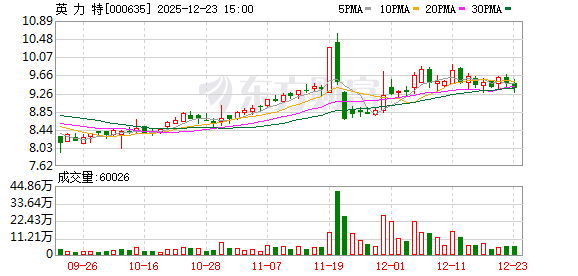
英力特最新股东户数环比下降6.43% 筹码趋向集中
Zheng Quan Shi Bao Wang· 2025-12-23 09:02
Group 1 - The core point of the article indicates that Yinglite has experienced a continuous decline in the number of shareholders for three consecutive periods, with a decrease of 1,473 shareholders as of December 20, representing a 6.43% decline compared to the previous period [2] - As of the latest closing, Yinglite's stock price is 9.37 yuan, reflecting a decrease of 1.16%, and the stock has cumulatively dropped 1.58% since the concentration of shares began, with 4 days of increase and 5 days of decrease in the trading period [2] - The company's third-quarter report shows that it achieved a total operating revenue of 1.28 billion yuan, a year-on-year decrease of 6.97%, and a net profit of -247 million yuan, which is a year-on-year increase of 4.07%, with basic earnings per share at -0.7850 yuan [2]


关注宏观情绪
Hua Tai Qi Huo· 2025-12-23 02:57
Report Industry Investment Rating - PVC: Cross - period: Wait - and - see; Cross - variety: None [4] - Caustic Soda: Unilateral: Neutral; Cross - period: Wait - and - see; Cross - variety: None [4] Core Viewpoints - PVC is affected by macro - sentiment and rebounds, with a marginal improvement in supply - demand. The overall supply decreases slightly, but the supply end is still abundant. The downstream starts to decline slightly, and the export orders remain resilient. The comprehensive production profit of upstream PVC has some repair, but the overall improvement in supply - demand is limited [3]. - Caustic soda rebounds due to anti - involution sentiment, and the supply - demand improves slightly. The spot price is mainly stable, and the inventory pressure is partially relieved. The supply - end start - up rate decreases slightly, and the demand side has different performances in different sectors [3]. Summary by Related Catalogs Market News and Important Data PVC - Futures price and basis: The closing price of PVC main contract is 4591 yuan/ton (- 61), the East China basis is - 231 yuan/ton (+ 21), and the South China basis is - 191 yuan/ton (+ 31) [1]. - Spot price: The East China calcium carbide method quotation is 4360 yuan/ton (- 40), and the South China calcium carbide method quotation is 4400 yuan/ton (- 30) [1]. - Upstream production profit: The semi - coke price is 780 yuan/ton (+ 0), the calcium carbide price is 2830 yuan/ton (+ 0), the calcium carbide profit is - 84 yuan/ton (+ 0), the production gross profit of PVC calcium carbide method is - 986 yuan/ton (+ 116), the production gross profit of PVC ethylene method is - 469 yuan/ton (+ 51), and the PVC export profit is - 5.6 US dollars/ton (+ 3.6) [1]. - Inventory and start - up: The in - factory inventory of PVC is 32.9 tons (- 1.6), the social inventory is 51.1 tons (- 0.7), the start - up rate of PVC calcium carbide method is 77.01% (- 2.12%), the start - up rate of PVC ethylene method is 74.06% (- 2.61%), and the overall start - up rate of PVC is 76.12% (- 2.27%) [1]. - Downstream order situation: The pre - sales volume of production enterprises is 76.2 tons (+ 11.4) [1]. Caustic Soda - Futures price and basis: The closing price of SH main contract is 2181 yuan/ton (+ 17), and the basis of 32% liquid caustic soda in Shandong is 69 yuan/ton (- 17) [1]. - Spot price: The quotation of 32% liquid caustic soda in Shandong is 720 yuan/ton (+ 0), and the quotation of 50% liquid caustic soda in Shandong is 1140 yuan/ton (+ 0) [1]. - Upstream production profit: The single - variety profit of caustic soda in Shandong is 1229 yuan/ton (+ 0), the comprehensive profit of chlor - alkali in Shandong (0.8 tons of liquid chlorine) is 585.0 yuan/ton (+ 0.0), the comprehensive profit of chlor - alkali in Shandong (1 ton of PVC) is - 376.96 yuan/ton (- 20.00), and the comprehensive profit of chlor - alkali in the Northwest (1 ton of PVC) is 310.39 yuan/ton (- 20.00) [2]. - Inventory and start - up: The inventory of liquid caustic soda factories is 46.47 tons (+ 0.76), the inventory of flake caustic soda factories is 3.51 tons (+ 0.06), and the start - up rate of caustic soda is 84.50% (- 1.70%) [2]. - Downstream start - up: The start - up rate of alumina is 85.00% (- 1.11%), the start - up rate of printing and dyeing in East China is 62.06% (- 0.68%), and the start - up rate of viscose staple fiber is 89.62% (+ 0.00%) [2]. Market Analysis PVC - Affected by macro - sentiment, PVC rebounds, and the supply - demand marginally improves. The supply decreases slightly, but the supply end is still abundant. The downstream start - up decreases slightly, and the export orders remain resilient. The comprehensive production profit of upstream PVC has some repair, but the overall improvement in supply - demand is limited [3]. Caustic Soda - The caustic soda futures price rebounds due to anti - involution sentiment, and the supply - demand improves slightly. The spot price is mainly stable, and the inventory pressure is partially relieved. The supply - end start - up rate decreases slightly, and the demand side has different performances in different sectors [3].
英力特跌2.00%,成交额1294.69万元,主力资金净流入2.83万元
Xin Lang Cai Jing· 2025-12-23 02:07
Core Viewpoint - Yinglite's stock price has experienced fluctuations, with a year-to-date increase of 19.41% but a recent decline of 1.48% over the last five trading days [2]. Group 1: Stock Performance - As of December 23, Yinglite's stock price was 9.29 CNY per share, with a market capitalization of 3.662 billion CNY [1]. - The stock has seen a 5.21% increase over the last 20 days and a 12.61% increase over the last 60 days [2]. - The trading volume on December 23 was 12.9469 million CNY, with a turnover rate of 0.46% [1]. Group 2: Financial Performance - For the period from January to September 2025, Yinglite reported a revenue of 1.28 billion CNY, a year-on-year decrease of 6.97%, while the net profit attributable to shareholders was -247 million CNY, an increase of 4.07% year-on-year [2]. - Yinglite has cumulatively distributed 608 million CNY in dividends since its A-share listing, with no dividends paid in the last three years [3]. Group 3: Business Overview - Yinglite, established on November 12, 1996, and listed on November 20, 1996, is located in Shizuishan, Ningxia, and its main business includes the production and sale of calcium carbide, lime nitrogen, dicyandiamide, caustic soda, polyvinyl chloride resin, liquid chlorine, and hydrochloric acid [2]. - The revenue composition of Yinglite's main business includes PVC (52.21%), caustic soda (28.20%), E-PVC (12.83%), and other chemical products (2.35%) [2]. - Yinglite is classified under the basic chemical industry, specifically in chemical raw materials and chlor-alkali [2].
氯碱周报:SH:需求端支撑乏力,预计价格反弹后重回弱势,V:供需仍存压力,价格延续底部震荡-20251222
Guang Fa Qi Huo· 2025-12-22 02:53
氯碱周报 S H :需求端支撑乏力 , 预计价格反弹后重回弱势 V :供需仍存压力 , 价格延续底部震荡 广发期货研究所 蒋诗语 投资咨询资格:Z0017002 本报告及路演当中所有观点仅供参考,请务必阅读此报告倒数第二页的免责声明 观点及策略建议 ◼ 烧碱主要观点:烧碱行业供需仍存一定压力,虽然部分区域企业库存去库,部分区域下游采买存积极性,但库存水平依然偏高,短期暂无明显利好显现,下周价格仍偏看空。 华东地区下周供应存恢复预期,供量增加下且需求未有实质性改善,预估下周华东区域液碱价格延续弱行。山东地区需求端利好尚未显现,企业开工高位维持,出货情况一般,预 计整体山东市场弱势维持。整体看需求端支撑较弱,长期看供需仍有压力。预计烧碱价格偏弱运行。 ◼ 期货策略建议:偏空思路 ◼ 期权策略建议:暂观望 ◼ PVC主要观点:供应端本周压力不减,但受到海外装置停产提振盘面大幅反弹。下周开工率预计小幅下降,需求端内外存压,持续低迷,淡季下硬制品开工低位,软制品相对稳 定。成本端支撑预期松动,预期PVC市场继续维持区间整理运行。当前处于传统需求淡季,北方进入冬季室外施工逐渐减少,整体地产需求减量仍形成利空影响。出口方面 ...
PVC:趋势偏弱,烧碱:后期仍有压力
Guo Tai Jun An Qi Huo· 2025-12-21 14:18
1. Report Industry Investment Rating No information provided in the content. 2. Core Views of the Report 2.1烧碱 - The later stage of caustic soda still faces pressure. The supply side has high production and inventory, and the winter is the off - season for chlor - alkali enterprise maintenance, resulting in large supply pressure. The demand side is affected by the low profit of alumina, seasonal decline in non - aluminum downstream demand, and weak export, making it difficult to support the overall demand. The valuation of caustic soda is suppressed by the alumina production reduction expectation, and it is difficult to rebound significantly without production reduction by manufacturers [5][6]. 2.2 PVC - The trend of PVC is weak. The high - production structure of PVC is difficult to change in the short term. The export market competition pressure increases in 2025, and the domestic demand related to real estate is weak. Although there may be phased rebounds, the space is limited. The high - production and high - inventory structure is difficult to change in the short term, but the supply - side production reduction in the maintenance peak season in the next year can be expected [9][10]. 3. Summary According to the Directory 3.1 Caustic Soda Price and Spread - The main logic of short - sellers includes high supply, high inventory, continuous expectation of alumina production reduction, new capacity in the next year, slowdown in export growth, and changes in delivery areas and delivery premiums. The main logic of long - sellers includes anti - deflation and anti - involution trends, large losses in integrated profits of caustic soda and PVC, and expansion of the export market due to overseas plant shutdowns [13]. - The basis of caustic soda 01 fluctuates, and the 1 - 5 month spread weakens [16]. - The export market of caustic soda still has support but also faces structural adjustment. In October 2025, China's liquid caustic soda export volume was 330,000 tons, with a year - on - year increase of 10.39% and a month - on - month decrease of 8.90%. The cumulative export volume from January to October was 2.944 million tons, a year - on - year increase of 41.93%. The cumulative export of caustic soda from January to October was 3.49 million tons, a year - on - year increase of 41.7%. It is expected that the annual export in 2025 will increase by at least 30% year - on - year and exceed 4 million tons [20][23]. - The regional arbitrage space between Shandong and Guangdong is acceptable, and the spread between flake caustic soda and liquid caustic soda declines, which is negative for caustic soda. The spread between 50% caustic soda and 32% caustic soda also declines, which is negative for caustic soda [31][34][36]. 3.2 Caustic Soda Supply - The market structure shows a decline in production and an increase in inventory. The average capacity utilization rate of caustic soda sample enterprises with a capacity of 200,000 tons and above in China is 84.7%, a week - on - week decrease of 1.5%. The inventory of fixed liquid caustic soda sample enterprises with a capacity of 200,000 tons and above in the country is 464,700 tons (wet tons), a week - on - week increase of 1.66% and a year - on - year increase of 52.34% [43][44][45]. - Attention should be paid to the significant reduction in maintenance after December. There are many enterprises in different regions with maintenance plans [49]. - Caustic soda will continue to be put into production in 2025 and 2026, with a capacity growth rate of over 3%. In 2025, the planned production capacity is 1.9 million tons, and in 2026, the planned and under - construction production capacity that can be put into production is 2.56 million tons [51]. - In December, the large - scale industrial electricity price in Shandong Province is reduced, and the cost of caustic soda is difficult to support. The price of liquid chlorine does not provide significant subsidies, and the cost support for caustic soda is limited [52][56]. 3.3 Caustic Soda Demand - In 2025, the alumina capacity expands greatly, with an expected new capacity of 9.5 million tons. As of November 2025, 8.3 million tons of new alumina production capacity has been put into operation. It is expected that there will still be 1.7 million tons of capacity to be put into operation in 2025, but the specific progress needs to be followed up. In 2026, the new alumina production capacity is expected to reach 13.9 million tons, with 76% in the southern market and 24% in the northern market [74][75][76]. - The alumina industry has a negative impact on caustic soda. The low profit of alumina leads to cautious procurement of caustic soda by alumina plants, a decrease in inventory levels, and difficulty in transferring caustic soda inventory downstream, resulting in a decline in caustic soda prices [90]. - The demand in the pulp industry is in the off - season, and the terminal profit is continuously compressed. The new capacity of pulp continues to be put into production, with 3.901 million tons in 2025 and 3.496 million tons in 2026 [91][97]. - The开工 rate of viscose staple fiber and printing and dyeing industries declines, the water treatment industry has stable operation, and the output of the ternary precursor industry declines [103][105][107]. 3.4 PVC Price and Spread - The main contract of PVC changes, the basis fluctuates and strengthens, and the 1 - 5 month spread fluctuates and weakens [112]. 3.5 PVC Supply and Demand - The PVC production enterprises' capacity utilization rate is 77.38%, a week - on - week decrease of 2.05% and a year - on - year decrease of 2.23%. The ethylene - based method is 76.54%, a week - on - week decrease of 2.36% and a year - on - year increase of 0.22%. The calcium carbide - based method is 77.74%, a week - on - week decrease of 1.92% and a year - on - year decrease of 3.04% [118][119]. - In December 2025, the maintenance of PVC decreases. There are long - term parking, maintenance, and temporary parking, as well as later - planned maintenance situations in different regions [121]. - As of 2025, 2.2 million tons of new PVC production capacity has been put into operation, and there is no new production capacity in 2026 [122]. - The chlor - alkali plants in Shandong are in a loss situation, reaching the cash - flow cost. The integrated profit of the northwest chlor - alkali plants is at a low level, and the impact of profit on supply is weakened in winter [124][127]. - PVC production enterprises have a slight inventory build - up, and the social inventory is at a high level. The real - estate terminal demand has not significantly recovered, and the overall downstream PVC开工 rate decreases month - on - month [128][133][139]. - In October 2025, the PVC export volume is 312,100 tons, and the cumulative export volume from January to October is 3.2338 million tons. The single - month export volume decreases by 9.91% month - on - month, increases by 34.28% year - on - year compared with the same month of last year, and the cumulative export volume increases by 48.88% year - on - year. India is still the most important destination for China's PVC exports [146]. - The PVC warehouse receipts decline but are still at a high level [148].
国投期货化工日报 2025年12月19日-20251219
Guo Tou Qi Huo· 2025-12-19 11:29
1. Report Industry Investment Ratings - Propylene: ★☆☆ (One star, indicating a bullish/bearish bias with limited trading opportunities on the market) [1] - Plastic: ★☆☆ [1] - Polypropylene: ★☆☆ [1] - Pure Benzene: ☆☆☆ (White star, suggesting a relatively balanced short - term trend and poor trading opportunities) [1] - Styrene: ☆☆☆ [1] - PX: ☆☆☆ [1] - PTA: ☆☆☆ [1] - Ethylene Glycol: ☆☆☆ [1] - Short - fiber: ☆☆☆ [1] - Bottle Chips: ☆☆☆ [1] - Methanol: ★☆☆ [1] - Urea: ★☆☆ [1] - PVC: ★☆☆ [1] - Caustic Soda: ★☆☆ [1] - Soda Ash: ★☆☆ [1] - Glass: ★☆☆ [1] 2. Core Views - The overall chemical market shows a mixed trend, with some products facing downward pressure and some having potential for short - term strength or long - term improvement [2][3][5][6][7][8] 3. Summary of Each Section Olefins - Polyolefins - Propylene futures dropped significantly. Production enterprises faced inventory pressure and increased the incentive to sell at a discount. The demand was negatively affected by the increase in the number of shutdown or planned shutdown of polypropylene plants [2] - Plastic and polypropylene futures may enter an accelerated downward phase. The supply pressure of polyethylene increased due to high - load operation and slow inventory digestion, and the demand was weak. The cost support of polypropylene weakened, and the demand was relatively weak [2] Pure Benzene - Styrene - The price of pure benzene rebounded slightly from a low level. The import pressure decreased slightly, and the supply - demand pressure may ease. It is recommended to consider long - term positive spreads on dips [3] - Styrene futures showed a weak consolidation. The cost support was insufficient, the de - stocking slowed down, and the market was in a weak downward trend [3] Polyester - PX and PTA increased in positions and prices, and the basis weakened. PX is expected to be bullish in the medium - term, and PTA's processing margin is expected to recover [5] - Ethylene glycol rebounded and then weakened. Although the supply may shrink, the long - term pressure remains due to expected new production capacity [5] - Short - fiber's supply - demand seasonally weakened, and its long - term supply - demand pattern is relatively good. Bottle chips' demand faded, and the long - term pressure comes from over - capacity [5] Coal Chemicals - Methanol futures prices fell. The port continued to de - stock, and the short - term port market is expected to be strong [6] - Urea prices corrected slightly. The daily production decreased, and the demand was strong. The short - term price may fluctuate strongly within a range [6] Chlor - alkali - PVC prices dropped. The supply pressure eased, but the demand was low. It is expected to fluctuate with macro - sentiment in the short - term [7] - Caustic soda prices declined. The supply pressure was high, and the profit is expected to be compressed in the long - term [7] Soda Ash - Glass - Soda ash prices fell again. The supply pressure was high, and it is recommended to short on rebounds in the long - term [8] - Glass prices also declined again. The inventory pressure was large, and the demand was insufficient. It is advisable to wait and see [8]