
零食

Search documents
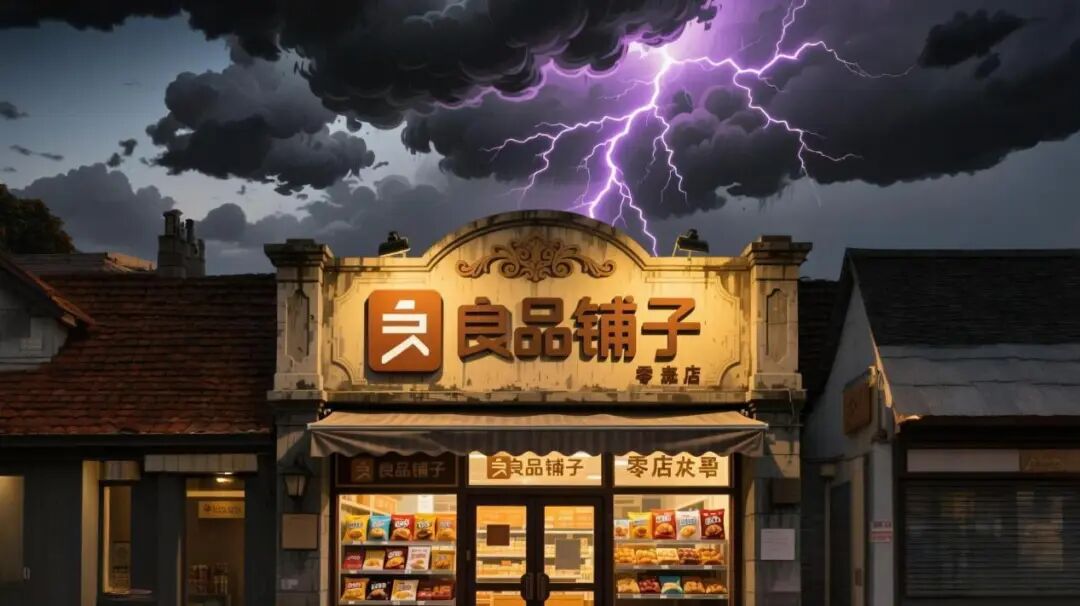
良品铺子“惊雷”:突遭2000万索赔!
Xin Lang Cai Jing· 2025-12-17 12:59
Core Viewpoint - The ongoing control dispute over the snack brand Liangpin Puzi has intensified, with the controlling shareholder, Ningbo Hanyi, facing a lawsuit from Guangzhou Light Industry, which has shifted its request from continuing the agreement to immediate termination and compensation of 20.7386 million yuan [2][18]. Group 1: Timeline of Events - The dispute originated when Ningbo Hanyi sought to sell shares to alleviate its debts, leading to a partnership with Guangzhou Light Industry in May, which was formalized in an agreement [4][20]. - Guangzhou Light Industry was granted a priority purchase right until May 28, but Ningbo Hanyi failed to sign the contract, prompting Guangzhou to file a lawsuit on July 14 [4][20]. - On July 17, Ningbo Hanyi signed a share transfer agreement with Changjiang International Trade Group to transfer 21% of the company for approximately 1.046 billion yuan, making Changjiang the new controlling shareholder [5][21]. Group 2: Legal and Financial Implications - The lawsuit from Guangzhou Light Industry led to the freezing of shares held by Ningbo Hanyi, preventing the share transfer to Changjiang from proceeding [6][22]. - On October 16, Liangpin Puzi announced the termination of the share transfer agreement due to unmet conditions by the deadline of October 15 [6][22]. Group 3: Financial Performance and Market Position - Liangpin Puzi reported a revenue of 4.14 billion yuan for the first three quarters of 2025, a year-on-year decline of 24.45%, with a net profit of -122 million yuan, a staggering drop of 730.83% [8][24]. - The company initiated a significant price reduction campaign in late 2023, with an average price cut of 22% across 300 products, but this strategy has not effectively improved profitability [10][26]. - As of September 30, the total number of stores decreased to 2,227, down from a peak of 3,293, reflecting a net reduction of 1,066 stores [11][27]. Group 4: Future Outlook and Strategic Recommendations - The brand, once hailed as the "first high-end snack stock," has seen its market value plummet over 80%, with shares trading at 11.83 yuan, down from a peak of over 80 yuan [13][29]. - To regain market position, the company is advised to refocus on its core strengths, enhance product quality, and cater to the health-conscious preferences of the Z generation [14][29]. - Strengthening brand trust and quality control is crucial for the company's recovery, as it navigates through its current challenges [15][31].


双旦营销突围:舆情监测是快消品牌的“导航仪”
Sou Hu Cai Jing· 2025-12-17 10:27
Core Insights - The holiday season of Christmas and New Year has intensified competition in the fast-moving consumer goods (FMCG) market, with brands launching collaborations and limited-time promotions to cater to the increasingly diverse demands of Generation Z consumers [1] Group 1: Consumer Demand Insights - Public opinion monitoring has evolved from a supportive tool to a decision-making hub, enabling brands to accurately capture consumer needs and mitigate risks, ensuring effective marketing investments [1] - During the holiday period, consumer comments and shares on social media platforms contain valuable purchasing insights, which can be captured through tools like Shuo Zhiku Insights [3] Group 2: Competitive Analysis - Real-time tracking of competitors' brand presence, selling points, and user feedback allows for more precise differentiated marketing strategies, as brands can identify and focus on their unique advantages [3] - A beauty brand optimized its gift box design based on trending keywords like "ceremonial packaging" and "ingredient safety," leading to a sell-out on the first day of pre-sales [3] Group 3: Risk Management - A brand's ability to monitor public sentiment serves as a critical lifeline for risk prevention, especially during high-pressure logistics and complex promotional rules [4] - A snack brand effectively managed a potential crisis by intervening within five minutes of a negative post regarding foreign objects found in their products, thus preventing escalation [4] Group 4: Marketing Effectiveness - The effectiveness of marketing campaigns can be dynamically optimized through public opinion monitoring, which quantifies topic popularity, emotional sentiment, and dissemination paths [4] - A beverage brand increased engagement by three times by adjusting its advertising content to focus on nostalgic themes after identifying high interaction rates with keywords related to childhood memories [4] Group 5: Strategic Importance of Data Insights - The success of holiday marketing campaigns increasingly relies on data insight capabilities, with public opinion monitoring enabling brands to hear genuine consumer voices and understand competitive strategies [4] - In a time of scarce traffic, leveraging public opinion tools to extract data value is essential for brands to navigate holiday marketing challenges and gain market favor [4]

德芙携手品客:玛氏360亿美元豪购背后的零食帝国野心
Xin Lang Cai Jing· 2025-12-16 10:05
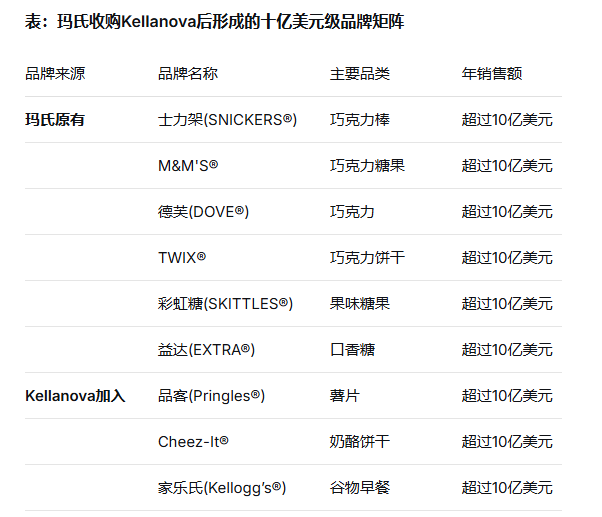
Core Insights - Mars Inc. has completed the acquisition of Kellanova, the parent company of Pringles, for a total consideration of $35.9 billion, marking one of the largest deals in the global packaged food sector in the past decade [1][2][10] - This acquisition sets a new record for Mars in terms of merger and acquisition scale, with the deal being finalized after 16 months and requiring approvals from 28 global regulatory bodies [2][11] Financial Overview - The acquisition price of $83.50 per share represents a 44% premium over Kellanova's weighted average stock price over the previous 30 trading days, significantly higher than the industry average [2][11] - Post-acquisition, Mars' snack business revenue is expected to rise to approximately $36 billion, with the combined entity featuring nine brands that each generate over $1 billion in annual sales [3][12] Market Positioning - The merger will create a complementary product portfolio, combining Mars' strengths in sweet snacks with Kellanova's expertise in savory snacks and breakfast foods, enhancing market coverage [3][12] - Following the acquisition, Mars will become the third-largest player in the global snack industry, with a combined market share of 26% alongside PepsiCo and Mondelez [6][15] Business Structure Changes - The acquisition will shift Mars' business structure, with the snack segment's revenue increasing from $17.92 billion (33% of total revenue) to $36 billion (45% of total revenue), while the pet care segment's share will decrease from 60% to approximately 48% [7][16] - The integration of Kellanova will also expand Mars' health and nutrition product offerings, including RXBAR and Nutri-Grain energy bars [4][12] Regional Impact - In China, which accounted for 18% of Mars' 2024 sales, the acquisition will allow for better integration of Kellanova's products into Mars' established distribution network [8][17] - Kellanova's Pringles brand holds a 10% market share in China's snack market, and local production is expected to begin by 2026, potentially reducing prices by 20% [8][17] Integration Challenges - Despite the strategic significance of the acquisition, Kellanova has faced challenges, with a 0.2% year-over-year increase in organic sales and a 4.1% decline in adjusted operating profit in the first three quarters of 2025 [9][18] - Mars plans to increase Kellanova's R&D budget by 30% and retain its core management team to navigate the integration process [9][18]
健康零食方兴未艾,量贩之风蒸蒸日上 - 零食行业2026年投资策略
2025-12-16 03:26
Summary of the Snack Industry Conference Call Industry Overview - The snack industry is experiencing significant differentiation in performance among companies, with leading firms benefiting from health-oriented product categories, while others face challenges due to high raw material costs and low-priced competition [1][2] - The market is dominated by two major players in the bulk snack segment, with "Very Busy" focusing on store expansion and "Wancheng" emphasizing profitability per store [1][2] Key Companies and Performance - **Hecha Food**: Under pressure due to high costs of sunflower seeds and nuts, as well as competition from private label brands [1][2] - **Jinzai and Ganyuan**: Focused on e-commerce and retail channels, but increased channel costs are suppressing short-term profits [1][2] - **Very Busy**: Over 21,000 stores, leading in store count [2] - **Wancheng**: 19,000 stores, focusing on single-store profitability [2] - **Market Share**: The two leading companies hold nearly 80% of the C22 market share [2] Investment Recommendations - **Focus on Leading Brands**: There is a recommendation to pay attention to Wancheng Group and Very Busy due to their potential for category expansion and supply chain efficiency [1][4] - **Innovative Categories**: The potential for innovation in konjac and oat products is highlighted, with companies like Weilong, Yanjin, and Ximai expected to perform well [1][4] - **Profitability Trends**: The snack industry is entering a phase of profit elasticity release, with net profit margins expected to improve through reduced subsidies, upstream price negotiations, and scale effects [3][6] Market Dynamics - **Consumer Demand**: The snack industry remains highly fragmented with diverse consumer demands, leading to two main investment themes: expansion of product categories by leading brands and innovation in specific product lines [4] - **Konjac Market**: The konjac snack market is currently valued at approximately 18 billion yuan, with potential growth to 30-80 billion yuan, indicating sustained high growth in the coming years [5] Competitive Landscape - Concerns about new brands entering the konjac market and the impact of declining raw material prices are deemed manageable, as established brands like Weilong and Yanjin are expected to maintain their market positions through brand and shelf competition [5] - The focus on brand loyalty and market expansion is anticipated to continue, with both companies likely to lead industry growth [5] Future Outlook - The snack industry is expected to continue its growth trajectory, with emphasis on multi-category models, store operations, membership systems, and private label development as key areas for future development [6] - Recommendations for investment include Ximai, Wancheng, Yanjin, and Weilong, with a note on the potential for Very Busy’s IPO to catalyze investment returns [3][6]
食品饮料2026年度策略:大年起点,持旧迎新
2025-12-16 03:26
Summary of the Food and Beverage Industry Conference Call Industry Overview - The food and beverage industry is entering a pivotal year in 2026, characterized as a "starting point for a big year" with expectations for absolute returns across the sector [2][3] - The industry has seen a decline in valuations to reasonable levels, with performance being the core issue [3] Key Insights and Arguments - **Consumer Demand Trends**: Anticipated L-shaped recovery in consumer demand driven by the repair of household balance sheets and economic structural transformation [3] - **Traditional vs. New Consumption**: Both traditional and new consumption are expected to coexist, with traditional consumption showing signs of bottoming out and potential recovery [2][8] - **Investment Recommendations**: - Prioritize investments in frozen food companies, followed by the liquor sector [5] - Companies like Anjuke, Qianqianwei, and Sanquan in the frozen food sector are expected to optimize competition through B-end transformations [5] - High market share beer companies such as Yanjing and Zhujiang are seen as having good growth potential [5] New Consumption Opportunities - The new consumption sector is expected to benefit from structural dividends, with significant growth potential for companies like New Dairy and Yanjing Zhujiang [4][10] - New channels and product categories are anticipated to drive performance growth in beverages and snacks, even in the current economic environment [6][12] Liquor Industry Insights - The liquor sector, characterized by strong commercial barriers and high inventory accumulation, is expected to see improvements in Q1 2026 as inventory levels decrease [7] - The stability of liquor prices or an L-shaped trend is viewed as an attractive investment opportunity, with companies like Wuliangye, Yanghe, and Moutai being highlighted as good choices [7][9] Market Characteristics and Future Outlook - The future consumer market in China is expected to exhibit three main characteristics: large market size, high innovation in channels and categories, and a trend towards international expansion to address supply-demand imbalances [11] - Structural dividends are anticipated to arise from new channels, new product categories, and new markets [11] Specific Investment Targets - In the snack sector, companies with strong channel adjustment and category expansion capabilities, such as Weilong and Yanjin, are recommended [12] - In the beverage sector, functional drinks and sugar-free tea segments are highlighted, with companies like Dongpeng and Nongfu Spring expected to maintain leading growth [12] Strategic Recommendations - The investment strategy for 2026 emphasizes that the food and beverage sector is likely to rise, with a focus on performance recovery, particularly in the liquor sector [13] - The strategy includes holding traditional consumption while embracing new consumption, indicating a balanced approach to investment [14]
万辰集团:拟更名并变更经营范围
Bei Jing Shang Bao· 2025-12-15 12:35
Core Viewpoint - Wancheng Group is changing its name from "Fujian Wancheng Biotechnology Group Co., Ltd." to "Fujian Wancheng Food Group Co., Ltd." to better reflect its business focus and strategic direction as its snack food business has grown significantly [1] Group 1: Company Name Change - The company will retain its stock abbreviation and code despite the name change [1] - The name change aims to clarify the company's industry layout and business characteristics [1] Group 2: Business Focus and Revenue - The revenue from the snack food business has surpassed that of the edible fungus business in recent years [1] - The change in name and business scope is intended to enhance the company's brand effect and advantages [1] Group 3: Business Scope Adjustment - The company plans to add "general cargo warehousing services (excluding projects requiring licensing and approval for hazardous chemicals)" and "information technology consulting services" to its business scope [1] - The adjustments are made based on the company's actual operational needs [1]
食品饮料周报(25年第46周):消费场景平稳修复,茅台释放稳价预期-20251215
Guoxin Securities· 2025-12-15 06:23
Investment Rating - The report maintains an "Outperform the Market" rating for the food and beverage sector [4][5][10]. Core Views - The food and beverage sector is expected to see a recovery in consumer scenarios, with a stable price expectation for Moutai [1][3]. - The sector is entering a left-side layout phase, with high-quality companies expected to gain greater growth potential [2][10]. - The report highlights the differentiation in the fundamentals of various categories, with beverages outperforming food and alcohol [2][10]. Summary by Relevant Sections 1. Sector Overview - The food and beverage sector experienced a cumulative decline of 1.52% this week, with A-shares down 1.63% and H-shares up 0.07% [1]. - The top five gainers in the food and beverage sector this week were Yanjinpuzi (5.11%), Huikaishan (4.85%), New Dairy (3.22%), Chenguang Biological (3.09%), and Anji Food (3.08%) [1]. 2. Alcohol Sector - In the liquor segment, the report recommends focusing on leading companies like Luzhou Laojiao, Shanxi Fenjiu, Guizhou Moutai, and Yingjia Gongjiu, while also monitoring the reform pace of Wuliangye and Yanghe [2][10]. - The report notes that the current market is in a left-side layout phase, with positive signals expected from both demand and supply sides [10]. 3. Beverage Sector - The beverage industry is experiencing a sustained boom, with leading companies significantly outperforming the market [14]. - Recommendations include Nongfu Spring and Dongpeng Beverage, which are accelerating their national and platform expansion [14]. 4. Food Sector - The snack segment is advised to focus on strong alpha stocks, particularly in the konjac snack category, where leading companies like Weilong and Yanjinpuzi show strong competitive advantages [11][12]. - The restaurant supply chain is showing signs of stabilization, with recommendations for leading companies like Yihai International and Haitian Flavoring [12]. 5. Earnings Forecasts and Investment Ratings - Key companies such as Guizhou Moutai, Nongfu Spring, Wuliangye, Shanxi Fenjiu, and Luzhou Laojiao are rated as "Outperform the Market" with projected earnings per share (EPS) growth for 2025 and 2026 [4][10]. - The report provides detailed earnings forecasts for these companies, indicating a positive outlook for the sector [4][15].




行业周报:中央经济工作会议积极定调,飞天批价或止跌触底-20251214
KAIYUAN SECURITIES· 2025-12-14 09:43
食品饮料 2025 年 12 月 14 日 投资评级:看好(维持) 行业走势图 数据来源:聚源 -19% -10% 0% 10% 19% 29% 2024-12 2025-04 2025-08 食品饮料 沪深300 相关研究报告 《白酒短期批价扰动,西麦新品值得 关注—行业周报》-2025.12.7 《茅台韧性凸显,建议长期配置布局 —行业周报》-2025.11.30 《乳制品供需拐点可期,三大机会驱 动行业成长—行业周报》-2025.11.23 中央经济工作会议积极定调,飞天批价或止跌触底 ——行业周报 张宇光(分析师) 张思敏(分析师) zhangyuguang@kysec.cn 证书编号:S0790520030003 zhangsimin@kysec.cn 证书编号:S0790525080001 核心观点:政策红利提振消费情绪,贵州茅台加码控价 12 月 8 日-12 月 12 日,食品饮料指数跌幅为 1.6%,一级子行业排名第 21,跑输 沪深 300 约 1.5pct,子行业中其他食品(+0.0%)、乳品(-1.1%)、啤酒(-1.3%) 表现相对领先。本周中央经济工作会议将"坚持内需主导,建设强大 ...
2025年零食行业消费趋势洞察
Sou Hu Cai Jing· 2025-12-14 09:25
Core Insights - The Chinese snack market is undergoing a significant transformation, shifting from traditional consumption focused on satiety to a new era driven by health, personalization, and emotional value [1][7] - Young consumers, making up over 70% of the market, exhibit a dual focus on "rational health" and "stress relief," indicating a complex consumer behavior that emphasizes snacks as emotional and social facilitators [1][7] Consumer Trends - Key factors influencing snack selection include taste, ingredient quality, and consumption context, with rising interest in low-sugar, low-fat, low-calorie, high-protein, and clean-label products [2][7] - Diverse consumption scenarios have emerged, extending from casual snacking to specific contexts like late-night binge-watching, outdoor camping, and travel gifts, highlighting snacks as solutions for various life moments [2][7] - The demand for snacks designed to alleviate stress and anxiety has surged, with related social media content experiencing significant growth [2][7] Regional and Social Dynamics - Local specialty snacks are revitalizing through cultural recognition and national trends, leveraging traditional craftsmanship and regional flavors, amplified by social media [3][7] - The "social currency" aspect of snacks is increasingly important, with consumers actively engaging in creative consumption methods, DIY snacks, and sharing experiences, transforming consumption into a social activity [3][7] Marketing Strategies - Xiaohongshu (Little Red Book) has emerged as the primary platform for snack brand marketing, showing significant year-on-year growth in commercial posts and user engagement around health and clean ingredients [4][7] - In contrast, Douyin (TikTok) has seen a contraction in snack marketing, focusing more on narrative-driven content and price-oriented promotions, indicating a differentiated marketing ecosystem [4][7] Competitive Landscape - Competition among snack categories is intensifying, with mixed nuts remaining a key focus despite a decline in overall social media engagement, while meat snacks and baked goods are experiencing stable growth [5][7] - Brands that can identify niche demands and create standout products are gaining market traction, exemplified by companies like Wang Xiaolu and Hema, which have successfully launched innovative products [5][7] - The current snack market is characterized by a shift towards consumer-driven, emotional, and social values, necessitating brands to enhance product quality and understand consumer emotional needs [5][7]
2500亿,网红薯片被卖了
投资界· 2025-12-13 07:39
Group 1 - Mars has completed the acquisition of Kellanova, the parent company of Pringles, for approximately $35.9 billion (about 253.4 billion RMB), marking the largest food industry acquisition of the year [2][5] - The acquisition signifies the merging of well-known brands, with Mars owning brands like Dove and Snickers, while Kellanova is recognized for Pringles and Kellogg's cereals [2][4] - The deal was in the works for a long time, with regulatory approval received in December, leading to Kellanova's delisting from the New York Stock Exchange [5][6] Group 2 - Pringles, launched in 1968, was the first canned potato chip brand and gained popularity through unique flavors and marketing strategies [4][6] - The brand initially struggled in sales but became a hit in the 1980s after taste adjustments and effective advertising [6] - Kellanova's history dates back to 1894, and it became the second-largest snack company globally after acquiring Pringles from Procter & Gamble for $26.95 billion (about 188 billion RMB) in 2012 [6][7] Group 3 - Mars CEO Paul Wehrrauch described the acquisition as historic, emphasizing the opportunity for innovation and reaching more consumers [7] - Mars is a well-known company with a diverse portfolio, including brands like M&M's and Skittles, and has a history of significant acquisitions [8][9] - The acquisition is expected to boost Mars' snack food business revenue to approximately $36 billion, positioning it as the third-largest player in the global snack industry [9] Group 4 - The article highlights a broader trend of mergers and acquisitions in the consumer sector, with companies like Starbucks and Burger King also engaging in strategic partnerships and sales [10][12] - The competitive landscape in the consumer market is prompting brands to adjust strategies, with many familiar brands choosing to sell parts of their businesses [13] - The food and beverage sector is viewed as resilient and attractive for investment, especially during economic fluctuations, leading to increased merger activity [13]
