
医药

Search documents
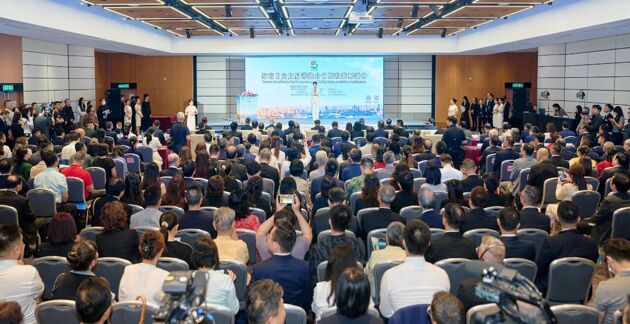
海南入港推介,亮出自贸港建设最新“成绩单”
Mei Ri Jing Ji Xin Wen· 2025-09-10 06:36
Core Viewpoint - Hainan's Free Trade Port is accelerating its construction with the official announcement of the full island closure operation starting on December 18, marking a significant step towards expanding openness and attracting investment [1] Group 1: Tax Policies - Hainan is expanding the "Double 15%" tax policy to attract high-end talent, with ongoing revisions to management measures to ensure the policies effectively benefit key enterprises and individuals [2][4] - The introduction of a progressive personal income tax rate of 3%, 10%, and 15% is being explored to simplify tax benefits for market participants [4] - The "zero tariff" policy is being promoted, with plans to adjust the list of taxable imported goods and implement pilot programs for zero tariffs on consumer goods for residents [5] Group 2: Industry Cooperation - Hainan aims to enhance cooperation with Hong Kong, leveraging its open market and international network to connect with global markets, while Hong Kong can benefit from Hainan's resources and policies [6] - The establishment of cross-border industrial clusters is being considered, particularly in electronics and pharmaceuticals, to create a "Hong Kong orders - Hainan production - global sales" supply chain [6][7] - There has been a notable increase in Hong Kong investment in Hainan, with 382 new Hong Kong-funded enterprises established from January to July, reflecting a 7.3% year-on-year growth and a 99.3% increase in actual utilized capital [7]

博时基金曾豪:平衡好节奏和结构,警惕三大利空因素
Zhong Guo Jing Ji Wang· 2025-09-10 06:19
Group 1 - The market has surpassed 3800 points, reflecting the positive outcomes of China's capital market reforms and the continuous recovery of the economic fundamentals [1] - The market is expected to present a "stable and improving" pattern, driven by ongoing policy benefits, economic resilience, and existing valuation advantages [2] - A "structural slow bull" market characteristic is anticipated, with investment strategies suggesting a "core + satellite" allocation approach [2][3] Group 2 - In an optimistic market environment, it is crucial to balance the rhythm and structure of investments, with a focus on adding positions during market pullbacks to control volatility [3] - Key indicators for assessing fundamental trends include net profit growth rates and return on equity (ROE), which are essential for evaluating long-term stock returns [3] - Investors should remain vigilant about three major downside risks, including structural economic risks, the potential shift from a "slow bull" to a "fast bull" market, and uncertainties in international policies [3][4]
最新!2025河北省民营企业100强榜单公布!
Sou Hu Cai Jing· 2025-09-10 05:51
Core Points - The 2025 list of the top 100 private enterprises in Hebei Province was released by the Hebei Federation of Industry and Commerce on September 9 [1] - The list includes various sectors, highlighting the diversity and strength of private enterprises in the region [6] Group 1: Top 100 Private Enterprises - The list features companies such as Yuhua Steel Co., Ltd., Tangshan Ganglu Steel Co., Ltd., and Jinko Solar Technology Co., Ltd. [2][3][4] - Notable mentions include Longcheng Automotive Co., Ltd. and Hebei Construction Group [4][6] Group 2: Manufacturing Sector - The top 100 private manufacturing enterprises include companies like Jingye Group Co., Ltd. and Hebei Xinhua United Metallurgical Holding Group [6][7] - The manufacturing sector showcases a strong representation of steel and automotive industries [6][20] Group 3: Service Sector - The top 100 private service enterprises feature Hebei Qianxihe Food Co., Ltd. and Xinlian Logistics Group [13][14] - This indicates a growing service industry alongside traditional manufacturing [13] Group 4: R&D Investment - The top 100 private enterprises in R&D investment include Changcheng Automotive Co., Ltd. and Shijiazhuang Yiling Pharmaceutical Co., Ltd. [20][26] - This highlights the emphasis on innovation and technology development within Hebei's private sector [20] Group 5: Patent Holdings - The top 100 private enterprises for invention patents are led by Changcheng Automotive Co., Ltd. and New Hope Liuhe Co., Ltd. [26][27] - This reflects the commitment to intellectual property and innovation among leading companies in Hebei [26]




牛市中的主线轮动和切换
2025-09-09 14:53
Summary of Conference Call Records Industry or Company Involved - The discussion primarily revolves around the A-share market and its cyclical behavior, focusing on various sectors such as semiconductors, photovoltaics, lithium batteries, coal, and financial stocks. Core Points and Arguments 1. **Economic Cycle Impact on A-share Styles** The economic cycle influences A-share styles, with large-cap growth and value stocks performing well in an upturn, while small-cap growth or thematic growth performs better towards the end of a profit downturn [1][2][3] 2. **Investment Methodologies** The main methodologies for market style rotation are top-down and bottom-up approaches. The top-down approach categorizes macroeconomic scenarios to select investment directions, while the bottom-up approach focuses on the growth or value phase of different sectors based on ROE trends [2][4] 3. **Historical Performance of Leading Sectors** Historically, leading sectors during economic upturns include semiconductors, photovoltaics, lithium batteries, and coal. These sectors exhibit strong performance during their respective growth phases [2][5] 4. **Current Market Drivers** The primary drivers of the current market are the profit cycle and event-driven catalysts. The market is currently at the tail end of a profit downturn, favoring dividend or thematic investments, with small-cap stocks performing well [3][9] 5. **Market Environment Assessment** The current market environment can be assessed through macroeconomic scenarios. In an upturn, large-cap growth and value stocks yield excess returns, while small-cap growth performs well towards the end of a profit downturn [4][10] 6. **Lessons from Historical Market Trends** Key lessons from historical market trends indicate that sectors in a growth phase are more likely to lead the market. If a sector's financial data does not show significant improvement, any short-term market changes are likely thematic rather than systemic [5][6] 7. **Recent Style Rotations** Since 2025, the A-share market has experienced notable style rotations, shifting from growth stocks (robotics, AI) to financial stocks (banks), and then to large-cap value stocks [7][8] 8. **Indicators for Future Market Trends** Investors should monitor several key indicators, including the margin financing balance exceeding historical highs, low relative valuations of small-cap stocks, and the status of the PPI. These factors will influence the overall market style and potential investment opportunities [11][13][14] Other Important but Possibly Overlooked Content 1. **Systemic Style Change Likelihood** A systemic style change is unlikely in the short term, with the market remaining biased towards growth or technology styles until PPI turns positive [12] 2. **Sector-Specific Opportunities** Different sectors such as TMT, pharmaceuticals, and new energy may experience varying degrees of development, indicating potential investment opportunities within the growth framework [12][14]
中银量化多策略行业轮动周报–20250904-20250908
Bank of China Securities· 2025-09-08 01:41
Core Insights - The report highlights the current industry allocation of the Bank of China’s multi-strategy system, with significant positions in non-ferrous metals (15.3%), non-bank financials (12.9%), and comprehensive sectors (7.3%) [1] - The average weekly return for the CITIC primary industries was -3.0%, while the average return over the past month was 3.1% [3][10] - The report identifies the top-performing industries for the week as electric equipment and new energy (2.4%), food and beverage (0.8%), and pharmaceuticals (0.5%), while the worst performers were defense and military (-11.9%), computers (-9.8%), and electronics (-9.7%) [3][10] Industry Performance Review - The report provides a detailed performance review of CITIC primary industries, indicating that the average weekly return was -3.0% and the average monthly return was 3.1% [10] - The top three industries by weekly performance were electric equipment and new energy (2.4%), food and beverage (0.8%), and pharmaceuticals (0.5%) [11] - The bottom three industries were defense and military (-11.9%), computers (-9.8%), and electronics (-9.7%) [11] Valuation Risk Warning - The report employs a valuation warning system based on the PB ratio over the past six years, identifying industries with a PB ratio above the 95th percentile as overvalued [14][15] - Currently, the industries triggering high valuation warnings include retail, media, computers, and defense and military, all exceeding the 95th percentile in PB valuation [15][16] Strategy Performance - The report outlines the performance of various strategies, with the composite strategy yielding a cumulative return of 20.2% year-to-date, outperforming the CITIC primary industry benchmark by 2.3% [3] - The highest excess return strategy was the industry profitability tracking strategy (S1), with an excess return of 5.1% compared to the benchmark [3] - The report indicates a shift in strategy allocations, increasing positions in upstream cyclical and pharmaceutical sectors while reducing exposure to TMT, consumer, and midstream cyclical sectors [3] Current Industry Rankings - The report ranks industries based on profitability expectations, with non-ferrous metals, non-bank financials, and agriculture being the top three [18] - The implied sentiment momentum strategy ranks communication, non-ferrous metals, and electronics as the top three industries based on market sentiment indicators [22] - The macroeconomic style rotation strategy identifies comprehensive finance, computers, communication, defense and military, electronics, and media as the top six industries based on macroeconomic indicators [25]
向日葵涨12%后公告停牌 拟收购兮璞材料等两公司股权
Zhong Guo Jing Ji Wang· 2025-09-08 01:13
Core Viewpoint - The company Sunflower (300111.SZ) announced a significant asset restructuring plan involving the acquisition of controlling stakes in Zhangzhou Xipu Material Technology Co., Ltd. and 40% of Zhejiang Beid Pharmaceutical Co., Ltd. [1][2] Group 1: Asset Restructuring Details - The company plans to acquire the controlling stake in Xipu Material through the issuance of shares and/or cash payments [2] - The acquisition of 40% of Beid Pharmaceutical will also be conducted through share issuance [2] - The final valuation of both Xipu Material and Beid Pharmaceutical has not yet been determined, and the transaction is expected to be classified as a major asset restructuring under relevant regulations [1][2] Group 2: Stock Suspension and Disclosure - The company's stock will be suspended from trading starting September 8, 2025, to ensure fair information disclosure and protect investor interests [1] - The company anticipates disclosing the transaction plan within 10 trading days following the suspension [1]

经济景气水平继续保持扩张
Xin Hua Wang· 2025-09-07 23:26
Group 1 - The manufacturing Purchasing Managers' Index (PMI) rose to 49.4% in August, indicating a slight improvement in manufacturing sentiment, up 0.1 percentage points from the previous month [2][6] - The production index reached 50.8%, marking a 0.3 percentage point increase, and has remained above the critical point for four consecutive months, suggesting accelerated manufacturing production [2][6] - The new orders index was at 49.5%, also showing a 0.1 percentage point increase, with notable performance in the pharmaceutical and computer communication sectors [2][6] Group 2 - The non-manufacturing business activity index increased to 50.3%, up 0.2 percentage points, indicating continued expansion in the non-manufacturing sector [4][5] - The service sector business activity index reached a year-high of 50.5%, rising 0.5 percentage points, with strong growth in capital market services and transportation sectors [4][5] - The business activity expectation index for the service sector was at 57.0%, reflecting optimistic market expectations among service enterprises [4][5] Group 3 - The comprehensive PMI output index rose to 50.5%, indicating overall expansion in enterprise production and operational activities, with manufacturing and non-manufacturing indices at 50.8% and 50.3% respectively [6][7] - The market price index has shown an upward trend due to increased raw material procurement and stabilized market demand, alongside the effects of policies addressing "involution" competition [3][7] - The overall sentiment in the non-manufacturing sector remains stable, with expectations for continued growth driven by policy support and market self-recovery [5][7]
经济景气水平继续保持扩张(锐财经)
Ren Min Ri Bao Hai Wai Ban· 2025-09-07 22:16
Group 1: Manufacturing Sector - The manufacturing PMI for August is reported at 49.4%, showing a slight increase of 0.1 percentage points from the previous month, indicating an improvement in manufacturing sentiment [2] - The production index for August stands at 50.8%, up by 0.3 percentage points, marking the fourth consecutive month above the critical point, suggesting accelerated production expansion [2] - The new orders index is at 49.5%, reflecting a 0.1 percentage point increase, with notable performance in sectors like pharmaceuticals and electronics [2] Group 2: Price Indices - The main raw material purchase price index is at 53.3%, and the factory price index is at 49.1%, both showing increases of 1.8 and 0.8 percentage points respectively, indicating a general improvement in market price levels [2] - Industries such as black metal smelting and metal products have seen their purchase and factory price indices rise above 52.0%, suggesting an overall increase in raw material procurement and product sales prices [2] Group 3: Non-Manufacturing Sector - The non-manufacturing business activity index is reported at 50.3%, up by 0.2 percentage points, indicating continued expansion in the non-manufacturing sector [4] - The service sector business activity index reaches a year-high of 50.5%, increasing by 0.5 percentage points, with strong growth in capital market services and transportation sectors [4] - The business activity expectation index for services is at 57.0%, up by 0.4 percentage points, reflecting optimistic market expectations among service sector enterprises [4] Group 4: Overall Economic Outlook - The comprehensive PMI output index is at 50.5%, up by 0.3 percentage points, indicating an overall acceleration in production and business activities [6] - The manufacturing and non-manufacturing indices are reported at 50.8% and 50.3% respectively, suggesting stable expansion in both sectors [6] - Analysts predict that the economic recovery will continue into September and the fourth quarter, driven by stable demand and supportive policies [7]
从GDP到GNP:产能出海新机遇
2025-09-07 16:19
Summary of Key Points from Conference Call Records Industry Overview - The discussion revolves around the **Chinese manufacturing industry** and its strategic shift towards **capacity relocation** in response to rising trade tensions and geopolitical challenges [1][2][5][6][8]. Core Insights and Arguments - **Trade Surplus and Capacity Relocation**: China faces a high trade surplus, prompting the need for capacity relocation to mitigate trade friction and adjust the domestic economic structure. Industries with higher overseas revenue ratios tend to have better Return on Equity (ROE) [1][2][8]. - **Impact of Globalization Trends**: The increasing trend of de-globalization, characterized by rising tariffs and geopolitical conflicts, necessitates a shift in supply chain strategies towards regionalization and localization. Chinese companies must optimize their supply chains and expand overseas to maintain competitiveness [1][6][8]. - **Labor Cost Dynamics**: The diminishing labor cost advantage in China and intense domestic competition make capacity relocation a viable solution. Foreign markets show higher tolerance for Chinese capacity relocation compared to product exports [1][8][9]. - **Lessons from Japan**: Japan's historical experience in the 1980s, where it successfully addressed trade issues through overseas direct investment (OFDI), serves as a model for China. Japanese companies improved profitability and supported technological advancements through profit repatriation from overseas subsidiaries [1][10][11]. - **Industry Selection for Capacity Relocation**: A scoring model was developed to evaluate industries suitable for capacity relocation based on urgency, overseas demand potential, and industry lifecycle. Key sectors identified include high-tech electronics, renewable energy equipment, and certain consumer goods [4][17]. Additional Important Insights - **Challenges of Exporting vs. Relocating Capacity**: The current tariff landscape poses significant challenges for Chinese exports, with countries like the U.S. imposing average tariffs of approximately 40% since 2018. This has led to an increase in anti-dumping investigations against Chinese products [5][6]. - **Employment Implications**: Capacity relocation can alleviate domestic employment pressures, as seen in Japan, where overseas employment has significantly increased. This trend indicates a need for more long-term expatriate staff to manage overseas operations [13][15]. - **Service Industry Growth**: The shift from manufacturing to production-related services is emerging as a trend, with increased demand for technical services and support as companies invest abroad. This transition highlights the importance of service sectors in offsetting manufacturing job losses [16]. Conclusion - The strategic shift towards capacity relocation is essential for Chinese companies to navigate the current global trade environment. By learning from Japan's experiences and focusing on high-potential industries, China can enhance its competitiveness and adapt to the evolving economic landscape [1][11][17].
周期&医药&科技专场 - 洞察价值,共创未来——2025研究框架线上培训
2025-09-07 16:19
Summary of Key Points from the Conference Call Industry Overview - The conference call primarily discusses the **coal industry** in China, focusing on supply and demand dynamics, pricing forecasts, and investment strategies related to coal companies. Core Insights and Arguments 1. **Supply and Demand Dynamics**: - In 2025, the coal market is expected to face tight supply with domestic production limited and imports decreasing, leading to an overall supply reduction of 100-150 million tons [1][6][19]. - Domestic coal production is projected to remain stable at approximately 2.35-2.4 billion tons for the year, with a monthly production of 380-400 million tons in the second half [6][19]. 2. **Price Forecasts**: - The average coal price for 2025 is expected to be between 650-680 RMB/ton, with a potential increase of 10-15% in 2026, reaching around 700-720 RMB/ton [1][12][19]. - Coal prices have risen from a low of 620 RMB/ton to approximately 720 RMB/ton, marking a 30% increase [11]. 3. **Investment Strategy Shift**: - The investment logic in the coal sector has shifted from a traditional cyclical approach to a focus on high dividends and stable returns, emphasizing the importance of companies with strong dividend capabilities [1][16][19]. - Recommended companies include China Shenhua and China Coal Energy, which are seen as having robust resource backgrounds and state support [13][15]. 4. **Impact of Weather and Economic Conditions**: - Extreme weather conditions in summer 2025 are expected to drive electricity demand significantly higher than anticipated, with electricity consumption growth exceeding initial forecasts [9][10]. - The overall electricity consumption growth for 2024 is projected at 6.4%, with a notable increase in thermal power generation [5]. 5. **Market Sentiment and Economic Outlook**: - Market sentiment has been pessimistic regarding the medium to long-term economic outlook, contributing to a decline in coal prices [7][8]. - The anticipated warm winter has also led to concerns about reduced electricity demand, further impacting coal prices [7]. 6. **China Shenhua's Acquisition Plans**: - China Shenhua's acquisition of assets from the State Energy Group is expected to enhance its performance by removing underperforming assets and supporting state-owned enterprise reforms [14]. Other Important but Potentially Overlooked Content 1. **Geographical Supply and Demand Disparities**: - Coal production is concentrated in the northwest regions of China, while consumption is primarily in the southeast, leading to significant transportation costs that affect import decisions [2]. 2. **Demand Composition**: - Coal demand is categorized into thermal coal (60%) and coking coal (20%), with the remaining demand coming from construction and chemical industries [3]. 3. **Long-term Trends**: - The coal industry is expected to experience a prolonged period of low supply elasticity, with capacity utilization rates increasing significantly, indicating a potential for sustained price increases in the coming years [19]. 4. **Investment Recommendations**: - Investors are advised to focus on high-stability, high-dividend coal enterprises, particularly those with strong fundamentals and state backing, as these are likely to perform better in the current market environment [13][15][16]. 5. **Future Market Conditions**: - The coal sector is anticipated to enter a new historical configuration phase after a potential second bottoming out, with expectations for a new peak in investment opportunities [19].