劳动密集型产业

Search documents
固收|从“外汇占款到“资金中枢”央行“两难的变与不变
2025-11-16 15:36
Summary of Key Points from Conference Call Industry Overview - The discussion primarily revolves around the Chinese economy, focusing on the impact of currency exchange rates, particularly the renminbi (RMB), on exports and monetary policy [1][2][3]. Core Insights and Arguments - **Export Surplus Accumulation**: China's export surplus has accelerated, attributed to price differences between China and the US, as well as other countries. This trend reflects a long-term shift in competitiveness due to China's low inflation amidst global inflation [1][2]. - **Increase in Corporate Foreign Exchange Settlement**: There has been a significant increase in corporate foreign exchange settlement surplus, indicating a shift from hoarding US dollars to converting them into RMB assets. This trend may lead to upward pressure on the RMB and requires the central bank to consider increasing monetary supply to meet market demand [1][3]. - **RMB Appreciation and Economic Transition**: RMB appreciation plays a crucial role in China's economic transition. Historical examples from Japan and South Korea suggest that currency appreciation can indicate successful economic transformation. High-tech industries may benefit, while labor-intensive sectors could face challenges [1][5]. - **Impact on Domestic Demand and Prices**: RMB appreciation has complex effects on domestic demand and prices. It may lower import prices while simultaneously increasing domestic prices for goods, leading to a dual effect on inflation [3][9]. - **Central Bank's Monetary Policy Strategy**: The central bank's strategy has evolved through different market phases, focusing on nominal GDP growth and balancing monetary supply with market changes. The current phase of RMB appreciation presents a dilemma between supporting exports and allowing natural currency appreciation [10][11]. Additional Important Insights - **Shift in Corporate Behavior**: The current trend of increasing foreign exchange settlements suggests a growing confidence among enterprises in the RMB, which could indicate a long-term shift in currency dynamics [6]. - **International and Domestic Environment Changes**: The changing international landscape, including US interest rate cuts and a weaker dollar, alongside rising domestic asset returns, influences corporate preferences for holding RMB assets [7][8]. - **Future Monetary Policy Predictions**: Depending on nominal GDP trends, two scenarios for monetary policy and their impact on the bond market can be anticipated for 2026. A rebound in nominal GDP may lead to tighter monetary policy, while continued low GDP may necessitate more accommodative measures [12][13].
今年前10个月上海市进出口值同比增长5.2%
Zhong Guo Xin Wen Wang· 2025-11-14 08:24
Core Insights - Shanghai's import and export value increased by 5.2% year-on-year in the first ten months of this year, reaching 3.71 trillion yuan, which is 1.6 percentage points higher than the national average [1] - Exports amounted to 1.64 trillion yuan, growing by 10.5%, while imports reached 2.07 trillion yuan, with a growth of 1.3% [1] - In October alone, the total import and export value was 367.98 billion yuan, marking a 3.1% increase [1] Export Performance - The export of "new three items" including electric passenger vehicles, solar cells, and lithium batteries totaled 131.43 billion yuan, an increase of 11.7% [2] - Green shipping equipment exports, particularly liquid cargo ships, saw a remarkable growth of 115%, amounting to 27.46 billion yuan [2] - Labor-intensive products also showed stable growth, with exports reaching 164.57 billion yuan, up by 2.9% [2] Import Performance - Key imports included metal ores and unrefined copper, which totaled 177.41 billion yuan and 50.67 billion yuan respectively, with growth rates of 8.6% and 17.2% [2] - High-tech product imports experienced significant growth, with semiconductor manufacturing equipment, computers and components, and aircraft and parts increasing by 29.6%, 18.3%, and 92.4% respectively [2] - Consumer goods imports showed positive trends, with dairy products, fresh and dried fruits, and beef increasing by 16.2%, 15.3%, and 10.8% respectively, indicating a gradual release of domestic consumption vitality [2]
10月出口数据点评:出口为何超预期转负?
Soochow Securities· 2025-11-07 07:13
Export Data Overview - In October, China's exports (in USD) recorded a year-on-year decline of -1.1%, down from +8.3% in September, marking the first negative growth since March 2025[3] - Exports to the US saw a significant drop of -25.2%, slightly improving from September's -27.0%[3] - Exports to ASEAN maintained resilience with a growth rate of +11.0%, down from +15.6% in September[3] Regional Export Performance - Exports to the EU grew by only +0.9%, a sharp decline from +14.2% in September[3] - Exports to Africa and Latin America still showed positive growth but decreased significantly, from +56.4% and +15.2% in September to +10.5% and +2.1% respectively[3] Product Category Insights - Labor-intensive products like clothing, bags, and footwear experienced substantial declines, with growth rates of -16.0%, -25.7%, and -21.0% respectively[3] - High-tech manufacturing exports remained strong, with mobile phone exports dropping from -1.7% in September to -16.6% in October, while integrated circuits, automobiles, and ships recorded growth rates of +26.9%, +34.0%, and +68.4% respectively[3] Seasonal and Trade Relationship Factors - October's export data reflects seasonal trends, with a historical average month-on-month decline of -3.8% due to the National Day holiday[3] - The easing of US-EU trade tensions has contributed to the decline in exports to the EU, with a month-on-month decrease of -8.6% in October[3] - The phenomenon of "export rush" appears to be waning, impacting growth rates to ASEAN and other emerging markets[3] Future Outlook and Risks - There is a potential risk of further decline in export growth rates in Q4, with the possibility of turning negative due to higher base effects in November and December[3] - Ongoing uncertainties in US-China trade relations and a potential slowdown in global economic growth pose additional risks to export performance[3]
上海市前三季度外贸“阶梯式”上行 9月份规模突破4000亿元大关
Xin Hua Cai Jing· 2025-10-22 13:46
Core Insights - Shanghai's total import and export value reached 3.34 trillion yuan in the first three quarters of the year, marking a 5.4% increase year-on-year, with the growth rate accelerating by 0.9 percentage points compared to the first eight months of the year [1] Trade Performance - Exports totaled 1.48 trillion yuan, reflecting an 11.3% year-on-year increase, while imports amounted to 1.86 trillion yuan, showing a 1.1% growth [1] - The quarterly import and export values were 1.01 trillion yuan, 1.14 trillion yuan, and 1.19 trillion yuan respectively, with year-on-year changes of -2.5%, +7.2%, and +11.3% [1] - In September alone, the import and export value reached 405.9 billion yuan, surpassing the 400 billion yuan mark, with a year-on-year growth of 12.5% [1] Private Sector Contribution - Private enterprises accounted for 1.32 trillion yuan in import and export value, a 27.1% increase year-on-year, contributing 8.9 percentage points to the overall foreign trade growth [1] - The share of private enterprises in the total import and export value rose to 39.5%, an increase of 6.7 percentage points from the previous year, marking a historical high [1] Market Diversification - Imports and exports to emerging markets such as ASEAN, the Middle East, and Africa reached 474.82 billion yuan, 121.13 billion yuan, and 112.85 billion yuan respectively, with year-on-year growth rates of 12.5%, 22.9%, and 32.5% [2] - Trade with India and Mexico also saw significant increases, with import and export values of 74.14 billion yuan and 60.69 billion yuan, reflecting year-on-year growth of 33% and 17.4% respectively [2] - Trade with the EU slightly declined by 0.4%, totaling 600.31 billion yuan [2] Export Products - Key export products included integrated circuits, general machinery, and electrical control devices, with export values of 150.54 billion yuan, 29 billion yuan, and 27.72 billion yuan, showing year-on-year growth of 10%, 25%, and 20.5% respectively [2] - The export of green shipping equipment, particularly liquid cargo ships, surged by 82.7% to 20.63 billion yuan [2] - Emerging products like electric passenger vehicles, lithium batteries, and solar cells reached an export value of 112.17 billion yuan, a 6.3% increase, with lithium battery exports alone growing by 20.7% to 32.15 billion yuan [2] Import Trends - High-tech product imports totaled 601.58 billion yuan, a 6.4% increase, outpacing overall import growth by 5.3 percentage points [3] - Significant growth was observed in the import of semiconductor manufacturing equipment, computers and components, and aircraft, with increases of 22.6%, 16.1%, and 1.2 times respectively [3] - Consumer goods imports amounted to 358.54 billion yuan, despite a 6.5% decline overall, with essential items like dairy, fruits, and meat showing growth rates of 19.7%, 15.3%, and 2.8% respectively [3] Bulk Commodity Imports - Bulk commodity imports reached 214.81 billion yuan, reflecting a 2.5% year-on-year increase, with metal ore imports growing by 10.4% [4]
印度网友询问:印度有巨大的发展潜力,为什么中国人不在印度投资了
Sou Hu Cai Jing· 2025-09-05 01:23
Core Insights - The article discusses the paradox of India's vast development potential and the hesitance of foreign investors, particularly from China, to invest in the country [1][3]. Group 1: Investment Challenges - Investing in India is complicated by local requirements that mandate not only the establishment of assembly plants but also the relocation of entire supply chains, which poses high sunk costs and operational risks for investors [5]. - The "all or nothing" approach to foreign investment reflects a desire for complete industrial relocation rather than genuine investment attraction, creating a sense of insecurity among potential investors [5][8]. Group 2: Business Environment - The Indian business environment is characterized by frequent sanctions and unpredictable policy risks, leading to a lack of trust among foreign investors [6]. - The perception that India seeks to monopolize the benefits of foreign investment, while being reluctant to allow foreign companies to profit, contributes to the reluctance of labor-intensive industries to invest in India despite lower labor costs compared to Southeast Asia [8]. Group 3: Market Potential - The notion that a large population equates to a vast market is challenged, as a significant portion of India's population lacks the purchasing power to drive market demand, making the effective market smaller than anticipated [10]. - The inability of a large segment of the population to become consumers of industrial products undermines the potential for real commercial profits, which is critical for modern manufacturing reliant on scale [10].


美国失去“施压筹码”,印度面临出口困难,美印关系“跌至低点”
Huan Qiu Shi Bao· 2025-08-28 00:23
Core Viewpoint - The imposition of a 50% tariff by the U.S. on Indian products has officially taken effect, marking a significant escalation in trade tensions between the two countries, primarily due to India's continued purchase of Russian oil, which undermines decades of U.S.-India relations [1][6]. Group 1: U.S.-India Trade Relations - The 50% tariff is the highest imposed by the U.S. on any Asian country, aimed at penalizing India for its oil purchases from Russia [1]. - The tariff follows five rounds of failed negotiations between the two nations, attributed to political misjudgments and a lack of communication [3]. - The Indian government is reportedly focused on self-reliance and is not willing to yield to U.S. pressure, emphasizing a stance of "country first, business second" [5]. Group 2: Domestic Reactions in India - The ruling party, Bharatiya Janata Party (BJP), downplays the impact of the tariffs, asserting that India can withstand U.S. pressure and continue its growth trajectory [3]. - Opposition parties criticize the tariffs as a significant diplomatic failure for Prime Minister Modi, suggesting that it poses a serious challenge to labor-intensive industries in India [3]. Group 3: Strategic Implications - Analysts suggest that the deterioration in U.S.-India relations may stem from deeper issues, including differing approaches to China and Trump's diplomatic style, which has led to increased Indian skepticism towards U.S. intentions [6][7]. - The potential for reconciliation exists, with upcoming meetings such as the "Quad Security Dialogue" providing opportunities for direct discussions between Trump and Modi [7].
生意红火、成果丰硕!多个地理视角透视外贸亮眼“成绩单” | 解析↓
Yang Shi Wang· 2025-06-09 07:48
Group 1 - The core viewpoint of the articles highlights the strategic importance of the Beibu Gulf as a gateway to ASEAN and its role in facilitating trade between China and ASEAN, which has seen continuous growth over the past nine years [1][7][13] - The Beibu Gulf Port, consisting of Qinzhou, Beihai, and Fangchenggang ports, has been recognized as a national logistics hub, enhancing its connectivity with ASEAN and global markets [6][9] - The logistics efficiency from Qinzhou Port to ASEAN countries, such as the direct shipping route to Haiphong, Vietnam, reflects the increasing demand for streamlined trade operations [11][13] Group 2 - The trade relationship between China and ASEAN is characterized by mutual resource advantages and complementary industrial structures, leading to significant growth in trade volume [14][16] - In the first quarter of 2025, over 90% of the trade between China and ASEAN consisted of manufacturing products, with notable growth in exports of flat panel display modules, automotive parts, and lithium batteries [18] - Agricultural cooperation has also flourished, with ASEAN being China's largest trading partner for agricultural products for eight consecutive years, significantly impacting the fruit trade [20][21] Group 3 - The infrastructure connectivity between China and ASEAN has improved, with substantial growth in various transportation modes, including rail, road, and maritime, indicating a robust trade framework [25] - The China-ASEAN Free Trade Area has been upgraded, providing new momentum for regional prosperity and economic collaboration [23][26] - The combined population of China and ASEAN exceeds 2 billion, representing a significant market potential that continues to foster cooperation amidst global challenges [22] Group 4 - The Yangtze River Delta region has seen a remarkable increase in foreign trade, with a total import and export value of 5.29 trillion yuan in the first four months of 2025, marking a historical high [34][52] - The region's export structure is evolving towards high-end, intelligent, and green products, reflecting a shift in trade dynamics [53][58] - The robust performance of private enterprises in the Yangtze River Delta, particularly in labor-intensive sectors, contributes significantly to the region's export growth [41][39]
产业发展所需是技能提升所重
Jing Ji Ri Bao· 2025-05-28 18:41
Group 1 - The core viewpoint emphasizes the importance of skill enhancement in driving local economic development and aligning with industry needs, advocating for a targeted approach rather than a broad one [1][2] - Local governments are encouraged to implement specialized skill training initiatives tailored to their unique resource advantages, focusing on six key industries in Yunnan Province: highland characteristic agriculture, traditional Chinese medicine, cultural tourism, elderly care services, green energy, and labor-intensive industries [1][2] - The integration of skill training with employment promotion is crucial, aiming for full employment while addressing the mismatch between skills and job requirements through differentiated strategies [1][2] Group 2 - The article highlights the need for a deep integration of human resources and industrial development, balancing short-term employment needs with long-term economic growth [2] - In western regions, the establishment of local job opportunities through industrial transfer and the development of related industries necessitates concurrent skill enhancement for workers [2] - Skill development is positioned as a key factor in enhancing regional competitiveness, with a focus on leveraging skills to elevate industries along the value chain [2][3] Group 3 - The importance of training in emerging industries, such as drone operation and live-streaming sales, is underscored as a means to boost efficiency and market expansion for local industries [3] - Regions are advised to adopt a tailored approach to skill enhancement, emphasizing the role of enterprises and creating incentive mechanisms to foster collaboration between industry and education [3]
胡晓炼:国际货币体系改变从三个方向推进 加密数字货币将被重视
Cai Jing Wang· 2025-05-18 08:02
Group 1 - The forum highlighted the impact of the Trump administration's tariff policies, aiming to reduce trade deficits and increase U.S. fiscal revenue, while potentially restructuring the international trade and investment system with a more prominent U.S. role [1] - The rebalancing of trade and investment costs is creating more opportunities for developing countries in the Global South, as companies face greater uncertainty and seek cost-effective locations for operations [2] - Major economies are undergoing profound internal economic adjustments due to global trade rebalancing, with a focus on domestic economic structure to effectively address trade imbalances [2] Group 2 - The global monetary system is expected to evolve towards a more diverse and inclusive framework, with potential changes driven by the inclusion of more currencies and increased attention to digital currencies [3] - China's cross-border investments have significantly increased, with over $3 trillion in direct investment stock from 2014 to 2024, indicating strong participation in international markets and supply chains [4] - Chinese companies are increasingly establishing industrial parks abroad, creating industrial clusters that contribute to local economic development and infrastructure improvements [5]

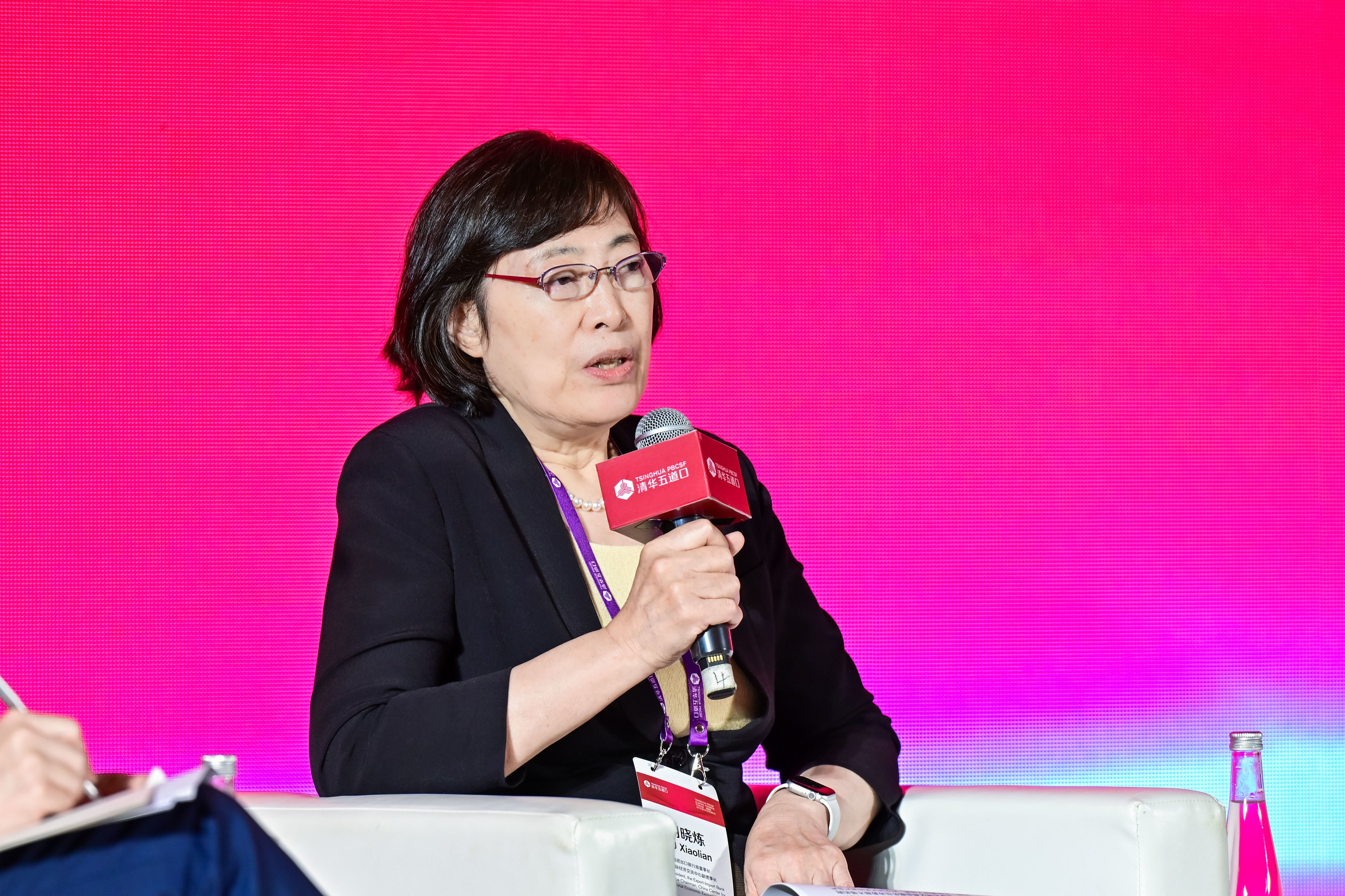
胡晓炼:劳动密集型产业缺乏竞争力,关税政策难促美国制造业回流
Feng Huang Wang Cai Jing· 2025-05-17 10:29
Group 1 - The 2025 Tsinghua Wudaokou Global Financial Forum was held in Shenzhen, focusing on building an open and inclusive economic and financial system [1] Group 2 - Hu Xiaolian, former chairman of the Export-Import Bank of China, emphasized that the U.S.-led tariff policies are unlikely to achieve their intended goals, and the fundamental solution to trade imbalances requires adjustments in each country's economic structure [5] - The core objectives of the U.S. tariff policies include reducing trade deficits, increasing fiscal revenue, and restructuring the international economic order, but the actual return of manufacturing to the U.S. is uncertain and challenging [5] - Hu noted that the U.S. lacks competitiveness in general processing and labor-intensive industries, leading companies to prefer relocating to regions with lower tariffs and better cost structures, particularly in global South and emerging market countries [5] Group 3 - Hu further stated that the rebalancing of global trade will lead to profound adjustments in the internal economic structures of major economies, highlighting the need for countries to focus on domestic economic adjustments to effectively address trade imbalances [6] - Historical experience suggests that trade imbalances can only be effectively resolved when a country's internal economic structure develops in a more balanced manner [6]