
公用事业

Search documents
投资策略专题:牛市颠簸期,“守正”投资为先
KAIYUAN SECURITIES· 2026-02-07 08:57
Group 1 - The report emphasizes that the bull market is still ongoing, encouraging confidence while suggesting a reduction in the slope expectation of the market, indicating that the lower limit of the market is continuously rising [2][12] - The report highlights that over 20% of companies in six industries, including utilities, non-ferrous metals, and automotive, are expected to see strong profit growth, indicating a positive outlook for these sectors [3][21] - The report identifies three categories of companies to focus on: those with accelerating profit growth, those experiencing a turnaround from negative to positive profits, and those with profit growth transitioning from negative to positive [4][26] Group 2 - The report outlines a "net profit gap" strategy that has significantly outperformed the market since 2025, with two portfolios achieving returns over 100%, particularly in the coal and non-ferrous metals sectors [5][29] - The top five industries with the highest proportion of stocks showing net profit gaps include coal (8.1%), non-ferrous metals (5.1%), and communications (4.8%), indicating strong performance potential in these areas [5][32] - The report suggests that the A-share market is currently in a relatively safe environment, with room for expansion in the securities ratio, particularly in the TMT sector, which is expected to maintain its profitability advantage [6][34] Group 3 - The report recommends focusing on industries that are benefiting from PPI improvements and broad anti-involution trends, such as non-ferrous metals, chemicals, and power generation [6][35] - It also suggests a dual focus on technology and cyclical sectors, highlighting opportunities in AI applications, military industry, and core AI hardware [6][35] - The report indicates that the overall annual profit forecast for A-share companies shows a continuous improvement, with 52.3% of companies expected to report profit growth [17][18]




四维共振驱动春季行情 多元策略适配不同风险偏好
Zhong Guo Zheng Quan Bao· 2026-02-06 20:24
Core Viewpoint - The current A-share market is characterized by a blend of upward continuation and short-term volatility, necessitating investment strategies that align with risk preferences and market dynamics [1][2]. Market Conditions - Analysts believe that the market is poised for an upward trend driven by four key factors: ample liquidity, policy catalysts, calendar effects, and the interplay of valuation and earnings [3][4]. - The upcoming Spring Festival is seen as a critical period for investment decisions, with historical data indicating a strong performance of the market during this time [2][4]. Investment Strategies - Analysts recommend focusing on two main lines: technology growth and resource products, while also diversifying into cyclical consumption, price increases, and defensive assets [6][7]. - For medium-risk investors, a balanced approach involving profit-taking and a "barbell strategy" is suggested, combining dividend and technology assets [2][3]. Sector Insights - The technology sector is expected to be a core focus for long-term investments, particularly in AI and related fields, with a shift from hardware to application-based investments anticipated in 2026 [6][7]. - The cyclical and resource sectors are highlighted for their potential price increases and recovery opportunities, with specific attention to industrial metals and energy products [7][8]. Defensive Assets - High-dividend assets are recommended as a core component of defensive strategies, with sectors such as utilities, banks, and consumer staples being favored for their stability and yield [8]. - Analysts emphasize the importance of maintaining a diversified portfolio that balances offensive and defensive assets to mitigate risks associated with market fluctuations and external uncertainties [8].
加拿大1月就业人数意外下滑 失业率降至16个月低点
Xin Lang Cai Jing· 2026-02-06 13:44
Group 1 - The Canadian economy experienced an unexpected decrease in employment by 24,800 jobs in January, while the unemployment rate fell to 6.5%, the lowest level in 16 months [1] - The manufacturing sector lost 27,500 jobs, primarily concentrated in Ontario, where key industries were impacted by U.S. tariffs [1] - Overall employment declines in manufacturing, educational services, and public administration outpaced job growth in information, business services, agriculture, and utilities [1] Group 2 - The employment rate decreased by 0.1 percentage points to 60.8%, marking the first decline since August 2025 [1] - The year-on-year growth rate of average hourly wages for permanent employees dropped to 3.3%, the lowest in seven months, down from 3.7% in December [1]
中法创新“双向奔赴”锚定深圳,共探AI变革与产业融合
Nan Fang Du Shi Bao· 2026-02-06 05:20
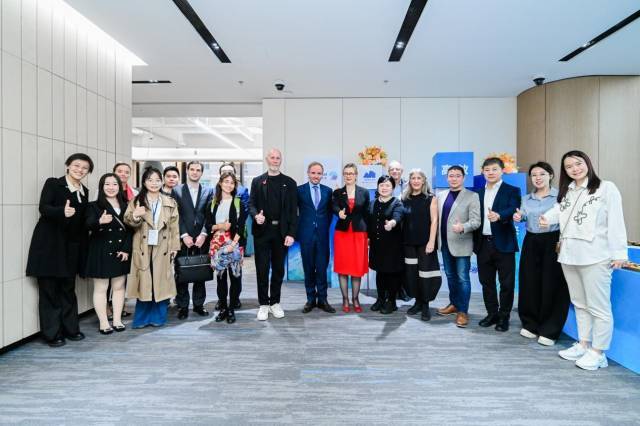
Core Insights - The event "China-France Enterprises Entering Shenzhen Innovation Exchange Conference" gathered over 130 entrepreneurs from both countries to discuss future cooperation [1] - The 12th China-France Committee Innovation Award has officially opened its application channel, aiming to recognize outstanding Sino-French collaborative innovations [3] Group 1: Event Overview - The conference was supported by the China Bank and the Global Service Center, featuring prominent French companies like Veolia, EDF, and BNP Paribas, alongside local leaders in AI and renewable energy [4] - The agenda focused on how AI can innovate business operations from structural to commercial levels, emphasizing the importance of deepening Sino-French innovation dialogue amid changing circumstances [4][6] Group 2: Innovation Award - The Innovation Award, established in 2014, aims to discover and reward exceptional innovations developed by Sino-French teams, covering three categories: R&D Award, Innovative Product Award, and Originality Award [15] - The award has received official support from various French ministries and has a strong partnership network across both countries, ensuring a high standard and credibility in the evaluation process [15] Group 3: Strategic Importance of Shenzhen - Shenzhen was chosen for its unique combination of French "process thinking" and Chinese "pragmatic thinking," allowing for rapid transformation of ideas into products [15] - The Global Service Center, established about ten months ago, has quickly integrated over 330 professional service institutions and aims to connect Chinese and global enterprises [16] Group 4: Future Cooperation - The timing of the event aligns with a period of active international cooperation with China, focusing on green energy and digital economy [17] - Recommendations for French startups entering the Chinese market include embracing rapid development, not fearing risks, and building long-term partnerships with Chinese counterparts [19]

精准施策 聚力攻坚,济宁多举措提升国有经济高质量发展动能
Qi Lu Wan Bao· 2026-02-06 01:18
Core Viewpoint - The Jining State-owned Assets System aims to enhance the effectiveness of state-owned enterprises (SOEs) during the 14th Five-Year Plan period, focusing on key sectors to drive high-quality development of the state economy [1] Group 1: Enhancing Development Quality and Efficiency - The city-managed enterprises are expected to significantly improve their quality and efficiency, with a goal to create leading enterprises in industries such as port and shipping trade, cultural tourism, and public utilities [1] - The target is to achieve an annual growth rate of total assets and operating income that exceeds the average growth rate of the city's GDP [1] Group 2: Optimizing Capital Layout - The focus will be on core responsibilities, directing state-owned capital towards critical sectors including important mineral resources, infrastructure, port logistics, cultural tourism, salt chemical industry, modern agriculture, and public services [1] - There will be an accelerated cultivation of new productive forces, with increased investment in areas such as next-generation information technology, high-end equipment manufacturing, new energy materials, and energy conservation and environmental protection [1] Group 3: Deepening State-owned Enterprise Reform - The integration of party leadership and corporate governance will be strengthened, leading to a more robust modern corporate governance structure [1] - Ongoing reforms will enhance the state capital authorization and market-oriented operation mechanisms, improving capital liquidity and maximizing the function of state capital [1] Group 4: Focusing on Technological Innovation - Technological innovation will be prioritized as the primary driver of enterprise development, with steady growth in R&D investment [2] - New high-tech enterprises and innovation platforms will be established, alongside deepened collaboration between city-managed enterprises and higher education institutions and research institutes [2] - The aim is to increase the number of R&D personnel year by year, fostering high-level innovation teams [2]
北交所日报:震荡盘整,主线轮动加速-20260205
Western Securities· 2026-02-05 11:15
Investment Rating - The report does not explicitly provide an investment rating for the industry or specific companies [23] Core Insights - The North Exchange A-share trading volume reached 22.508 billion yuan on February 4, an increase of 0.958 billion yuan from the previous trading day, with the North Exchange 50 Index closing at 1,538.571, down 0.71% [1][7] - The market exhibited characteristics of "few leading stocks declining, many individual stocks diverging," with notable rebounds in undervalued stocks like Kaiter Co., while weighted stocks like Liancheng CNC dragged down the index [3] - The report highlights ongoing positive factors for the North Exchange market, including policy support from the central bank for technology and green sectors, and successful IPOs of national-level specialized and innovative "little giant" enterprises [3] Market Review - On February 4, among 292 companies listed on the North Exchange, 113 stocks rose, 9 remained flat, and 170 declined [15] - The top five gainers were *ST Yunchuang (24.1%), Haitai New Energy (14.1%), Oputai (13.0%), Kaiter Co. (8.7%), and Tress (8.4%) [15] - The top five decliners were Liancheng CNC (-9.1%), Tianli Composite (-8.8%), Meibang Technology (-7.6%), Meideng Technology (-6.9%), and Liujin Technology (-5.8%) [15] Important News - Elon Musk's teams from SpaceX and Tesla are exploring China's photovoltaic industry, with the Tesla team currently in the factory inspection phase and SpaceX having placed orders with a leading heterojunction equipment manufacturer [2][17] - The first satellite launch technology facility for commercial aerospace has been established, which is expected to double the efficiency of single-rocket launches and reduce network costs by over 30% [2][18] Company Announcements - Yizhi Magic Yam announced the completion of a share buyback of 17,521 shares, accounting for 0.0170% of the total share capital before the buyback [19] - Tress plans to repurchase shares primarily to reduce registered capital, with a total repurchase amount between 10 million and 20 million yuan, representing 0.41%-0.82% of the current total share capital [20]
港股“老登”,熬出头了?
Ge Long Hui· 2026-02-05 11:04
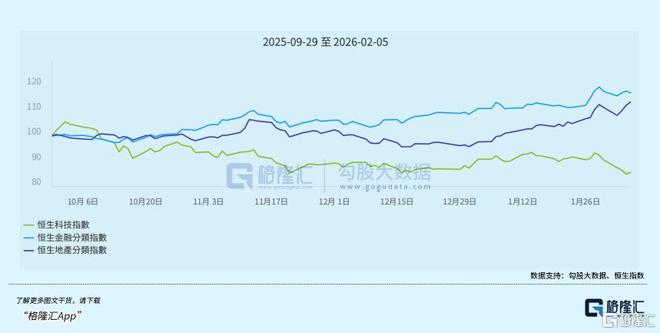
Market Overview - The A-share market has seen a rotation of hotspots this year, while the Hong Kong stock market has also experienced a shift in focus, with the Hang Seng Tech Index down nearly 20% since its peak in October last year [1] - In contrast, stable and dividend-paying local giants in Hong Kong have been on the rise recently [1] Sector Performance - The energy, real estate, and financial sectors have shown the highest gains in the recent uptrend of the Hong Kong stock market [2] - Bank, insurance, real estate, and public utility stocks in Hong Kong have seen a significant increase in popularity and valuation recovery since last year [3] Financial Sector Insights - The financial sector's strong performance is attributed to multiple favorable factors, including the implementation of new regulations for the Renminbi cross-border payment system (CIPS), which positions Hong Kong as a "Renminbi offshore pricing center" [11] - The Hong Kong Monetary Authority reports double-digit growth in Renminbi deposits and cross-border settlement volumes, enhancing the business potential for financial institutions [11] - The active IPO and refinancing market in Hong Kong has created a wealth effect, boosting demand for wealth management services and benefiting brokerage and investment banking businesses [11] Real Estate Sector Insights - The rise in the Hong Kong real estate sector is influenced by both mainland and local property companies, with recent policies from the mainland stabilizing market expectations [12] - The Hong Kong real estate market has shown signs of recovery, with the total number of property sale contracts reaching a four-year high in 2025, and residential prices increasing for seven consecutive months [13][20] - The overall private residential sales volume in Hong Kong is expected to rise by 18% in 2025, marking two consecutive years of growth [20] Rental Market Dynamics - The rental market in Hong Kong is experiencing strong demand due to an influx of professionals and students, leading to rising rental prices [24] - The rental index has shown continuous growth, with a 4.26% increase in 2025, indicating a robust rental market compared to the sales market [24][27] Future Outlook - The Hong Kong real estate market is projected to see a 10% increase in property prices in 2026, the largest annual increase since 2017 [35] - Despite the positive outlook, there are still risks associated with geopolitical uncertainties and the presence of financially troubled companies in the sector [36]
滨海投资(02886)2月5日斥资1.12万港元回购1万股
智通财经网· 2026-02-05 09:27
Group 1 - The company Binhai Investment (02886) announced a share buyback plan [1] - The company will spend HKD 11.2 million to repurchase 10,000 shares [1]
【宏观策略】理性降温,风格暂回稳健——2026年2月资产配置报告
华宝财富魔方· 2026-02-05 09:08
Macro Overview - The U.S. labor market remains weak, with the Federal Reserve likely to maintain interest rates in the short term and a low probability of balance sheet reduction [3] - December's non-farm payrolls showed weakness, and previous data was revised down, indicating a deteriorating labor market despite a "virtually low" unemployment rate [3] - Inflation in December was moderate, reflecting previous market concerns about tariff transmission effects, which may be "one-off"; future inflation will depend more on rental prices, service industries, and energy prices [3] - The Federal Reserve is expected to keep interest rates unchanged until at least June 2026, influenced by fiscal stimulus measures supporting the economy and inflation [3] - The nomination of Kevin Warsh as the next Fed Chair suggests a preference for policy independence through balance sheet reduction, but this view lacks consensus and empirical support within the Fed [3] Domestic Macro - Economic downward pressure is increasing, with Q4 GDP growth slowing to 4.5%, but the annual growth target of 5% is expected to be met [3] - Domestic consumption, investment, and real estate continue to decline, with investment growth slowing due to debt reduction and subsidy withdrawal, leading to increased pressure on consumption [3] - External demand and production remain strong, providing important support for economic growth [3] - Price indices are stabilizing, showing the effects of anti-inflation measures, but internal demand remains insufficient, with a divergence in pressures between upstream high-tech manufacturing and lower-tier sectors [3] - Policies are still focused on proactive measures, with a relatively mild overall intensity; 2026 policies are expected to be more pragmatic, with many local targets set lower than last year [3] A-share Strategy - The market is returning to rationality, with a short-term shift towards stability; investment and consumption are declining, while price indicators are stabilizing [3] - A-share trading volume has decreased, but overall sentiment remains high; medium to long-term policies are increasingly focused on technological innovation, with national subsidies continuing but at a reduced intensity [3] - External geopolitical risks, particularly from Trump, have increased but have a limited impact on the domestic market [3] - The spring market rally may be nearing its end, with expectations for a more rational market in February; the early spring rally has progressed quickly, and regulatory measures are cooling the market [3] - Investors are advised to consider taking profits or shifting to a more stable investment style before the Spring Festival, as the market is expected to experience increased volatility [3] Industry/Style - Investors are encouraged to take profits in high-growth technology sectors before the Spring Festival and shift to a more defensive style [3] - Focus on large-cap indices such as the Shanghai Composite, CSI 300, and A500, as market volatility is expected to rise [3] - Short-term strategies should include high-dividend stocks and sectors like banking, utilities, consumption, and real estate for potential opportunities [3] - Mid-term outlook suggests support for commodity-based sectors like non-ferrous metals and chemicals, while technology hardware sectors should be monitored for guidance from earnings reports [3] Asset Allocation Views - A-shares: Neutral [5] - Hong Kong stocks: Neutral [5] - Interest rate bonds: Neutral [5] - Credit bonds: Neutral [5] - Convertible bonds: Neutral [5] - U.S. stocks: Relatively optimistic [5] - U.S. bonds: Relatively optimistic [5] - U.S. dollar: Neutral [5] - Japanese stocks: Relatively optimistic [5] - Gold: Neutral [5] - Oil: Relatively cautious [5] - Currency/deposits: Neutral [5]

调研报告:中国内地市场投资吸引力逐渐回升
Zhong Guo Jing Ying Bao· 2026-02-05 03:50
Group 1 - The core viewpoint of the report indicates that Chinese CEOs have a higher confidence in global economic growth for the upcoming year compared to their global counterparts, with a confidence index of 67% versus the global average of 61% [1][2] - The report highlights that despite facing revenue pressures, Chinese entrepreneurs are optimistic about revenue growth over the next three years, reflecting their recognition of the long-term resilience of the Chinese market [1] - Factors contributing to this long-term optimism include a stable and predictable business environment in China, as well as the agility and continuous innovation capabilities of companies [1] Group 2 - The investment attractiveness of mainland China is gradually recovering, positioning it as a significant anchor for global capital allocation [1] - Over 20% of surveyed entrepreneurs from countries like Indonesia, South Korea, Germany, and Switzerland listed China as one of their top three investment destinations [1] - In terms of industry distribution, 14% of respondents from the global industrial and service sectors identified mainland China as a top investment destination, an increase from the previous year; the energy, utilities, and resources sector saw an increase from 10% to 13% by 2025, while the consumer market percentage remained stable [1]