
汽车制造

Search documents
中国新四大豪华势力出炉
汽车商业评论· 2026-03-25 23:07
Core Viewpoint - The article discusses the emergence of a new luxury automotive segment in China, represented by companies like Huawei, NIO, Li Auto, and Zeekr, which are challenging traditional luxury brands such as BMW, Mercedes-Benz, Audi, and Porsche in the electric vehicle market [3][5][12]. Traditional Luxury Brands - In 2025, traditional luxury brands in China are projected to have the following sales: BMW 62.55 million units (down 12.5%), Mercedes-Benz 57.5 million units (down 19%), Audi 61.75 million units (down 5%), and Porsche 4.19 million units (down 26.3%) [4][5]. - The total sales for these brands will be approximately 185.99 million units, a decrease of about 260,000 units compared to 2024, returning to levels seen in 2017 [5]. New Luxury Brands - The new luxury brands, including Huawei's HarmonyOS, Li Auto, NIO, and Zeekr, are expected to achieve total sales of 154.55 million units in 2025, with NIO at 32.6 million units (up 46.9%), Li Auto at 40.63 million units (down 18.8%), and Zeekr at 22.41 million units (up 0.9%) [5][12]. - The new luxury segment is gaining traction, with Huawei's HarmonyOS leading the way with 58.91 million units sold [4][5]. Price Wars - In early 2026, traditional luxury brands initiated a price war, with BMW reducing prices on 31 models by over 10%, including a significant drop of 30.1 million yuan for its flagship model [7][9]. - Mercedes-Benz and Audi followed suit with substantial discounts on various models, indicating a shift in pricing strategies due to sales pressures [9][10]. Changing Consumer Preferences - The average age of luxury car consumers in China is significantly lower at 35 years, with 62% of luxury car purchases made by individuals under 35, who prioritize technology and experience over brand heritage [15][16]. - Young consumers are redefining luxury, focusing on smart features, comfort, and performance rather than traditional brand prestige [16]. Competitive Landscape - Traditional luxury brands are adapting by collaborating with Chinese tech companies to enhance their smart vehicle offerings, indicating a shift in strategy to compete with new entrants [18][20]. - Despite the challenges posed by new luxury brands, traditional players still hold advantages in mechanical reliability and global supply chain management [20][22]. Financial Performance - New luxury brands are beginning to achieve profitability, with NIO and Zeekr reporting quarterly profits in late 2025, while Li Auto faced a loss during its transition to pure electric vehicles [20][22]. - The financial sustainability of new luxury brands remains a concern, as they navigate the challenges of a rapidly evolving market [22].




梅赛德斯-奔驰与索尼电影 联合呈现动画电影《奇迹梦之队》
Mei Ri Shang Bao· 2026-03-25 22:21
Group 1 - Mercedes-Benz and Sony Pictures have jointly released the animated film "Miracle Dream Team," showcasing several Mercedes-Benz vehicles including the all-new electric CLA and the all-new electric GLC SUV [2] - The all-new electric CLA features a design that embodies the beauty of Mercedes-Benz coupes, offering a new experience in design, efficiency, intelligence, and safety [2] - The vehicle is equipped with a unique electric two-speed transmission, achieving an ultra-low energy consumption of 10.9 kWh per 100 kilometers and a solid range of 866 kilometers under CLTC conditions [2] Group 2 - The all-new electric CLA is marketed as "the smartest Mercedes," featuring an AI-powered intelligent cockpit that utilizes ByteDance's Doubao large model [2] - It includes a navigation assistance system developed in collaboration with Momenta, tailored specifically for Chinese customers to enhance their intelligent travel experience [2]

国泰海通|汽车:油价刺激海外NEV需求,看好自主品牌出海
国泰海通证券研究· 2026-03-25 14:27
Core Viewpoint - The article discusses the impact of rising global oil prices due to military conflicts, particularly between the US and Iran, and highlights the opportunities for the passenger vehicle industry, especially in the context of electric and hybrid vehicles [1][2]. Group 1: Oil Price Impact - On February 28, 2026, a large-scale military action by the US against Iran led to the blockade of the Strait of Hormuz, significantly disrupting oil exports from the Gulf and causing a sharp increase in global oil prices [1]. - According to IEA estimates, global oil supply may decrease by 8 million barrels per day in March, which is 18.5% of February's OPEC+ production, while demand is expected to decrease by only 1 million barrels per day [2]. Group 2: Historical Context and Vehicle Industry Opportunities - Historical oil price surges have previously led to increased market penetration of Japanese brands like Toyota and Honda in the US, as seen during the oil crises of the 1970s and 1990s, where oil prices rose significantly [2]. - The current oil price increase has highlighted the cost-effectiveness of New Energy Vehicles (NEVs), with significant potential for market penetration in regions with high oil prices [3]. Group 3: NEV Economic Advantages - In the EU, the cost of fuel for traditional vehicles has increased significantly due to rising oil prices, with costs per 100 kilometers rising by 115-178 euros [3]. - The cost of energy for various vehicle types has been compared, showing that NEVs (HEV, PHEV, BEV) have lower energy costs per kilometer compared to traditional fuel vehicles [3]. Group 4: Export Opportunities for Domestic Brands - The current oil price cycle is expected to enhance the economic advantages of HEVs, PHEVs, and BEVs, potentially increasing their market penetration in high oil price regions, which may benefit domestic brands in terms of export opportunities [4]. - Data from the China Automobile Association indicates that passenger vehicle exports from China increased by 53.3% year-on-year in January-February 2026, with NEV exports growing by approximately 110% [4].

车企出海,谁来补齐最短的一块板?
虎嗅APP· 2026-03-25 14:11
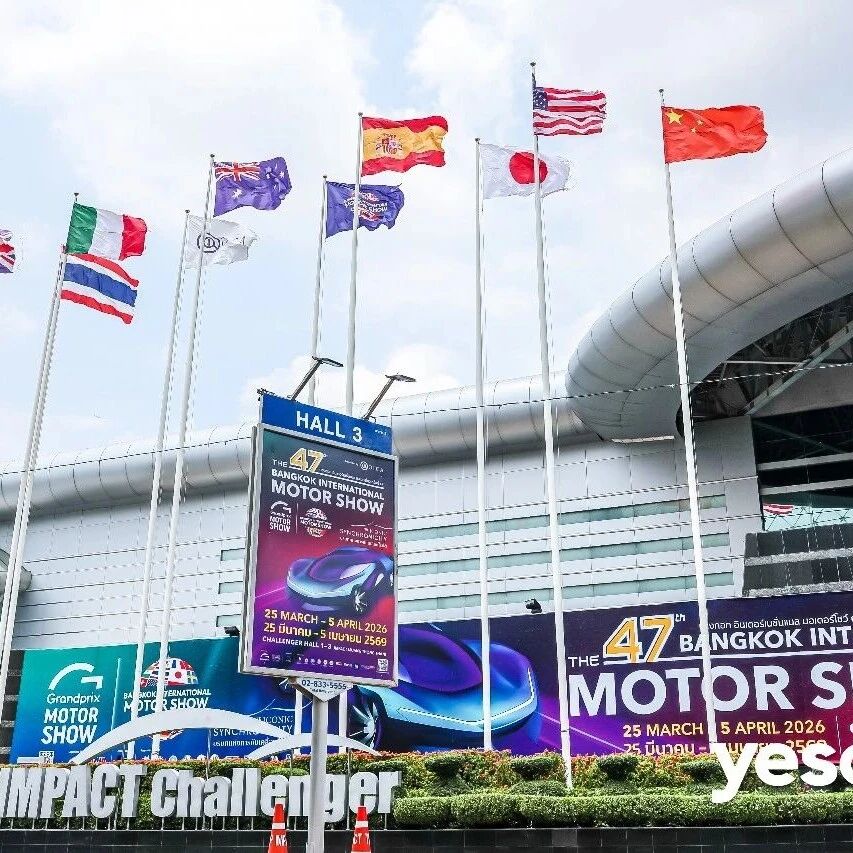
Core Viewpoint - Chinese automotive companies are making significant strides in the Southeast Asian market, particularly in Thailand, but face challenges such as entrenched competition from Japanese brands and the need for better localization strategies [2][3][6]. Group 1: Market Presence and Competition - The 2025 market share in Thailand shows Japanese brands holding 69.3%, with Toyota at 36.2%, while Chinese brands have risen to 21.5%, indicating a gap to overcome [3]. - Chinese automotive brands are transitioning from being mere participants to becoming key players in the Southeast Asian market, as evidenced by their strong presence at the Bangkok International Motor Show [2]. Group 2: Challenges Faced by Chinese Brands - Chinese brands are struggling with brand perception issues, often associated with low prices and poor resale value, which complicates their efforts to establish a positive image [7][12]. - The strategy of aggressive price cuts and capacity expansion has backfired in Thailand, leading to consumer dissatisfaction and a decline in brand reputation [6][7]. Group 3: Role of Media and Localization - Automotive platforms like Autohome are crucial in bridging the gap between Chinese brands and Southeast Asian consumers, providing localized content and insights [10][13]. - The launch of YesAuto Thailand aims to create a comprehensive ecosystem that integrates local resources and enhances brand storytelling through localized narratives [13][17]. Group 4: Future Strategies and Goals - Autohome plans to establish a local team and operational platform in Thailand, aiming for a comprehensive service experience rather than just media coverage [20]. - The strategic roadmap includes three phases: establishing a local presence in 2026, upgrading services in 2027, and expanding the successful model to other regions by 2028 [21].

李想不再沉默:从股份回购到新品周期,理想的主动定价时刻
美股研究社· 2026-03-25 11:50
Core Viewpoint - The article argues that a company in a growth cycle, like Li Auto, engaging in a significant stock buyback is a proactive move to assert pricing power rather than a defensive strategy to stabilize stock prices [1][5]. Group 1: Buyback Strategy - Li Auto's decision to authorize a $1 billion stock buyback signals confidence in its valuation, suggesting that the current stock price does not reflect the company's potential [3][5]. - The buyback is framed as a narrative reconstruction, shifting from a passive response to market pressures to an active stance on pricing [5][8]. - This capital operation is seen as a hedge against cyclical fluctuations, aiming to lock in valuation bottoms ahead of expected liquidity improvements in the market [7][8]. Group 2: Product Cycle and Market Position - The timing of the buyback coincides with the end of an old product cycle and the upcoming launch of new products, which is expected to set the stage for future growth [9]. - The focus will shift to key variables such as the launch of the Li L6, which is crucial for penetrating the broader family user market [9][10]. - The company is also expected to address its pure electric vehicle strategy, particularly following the MEGA model's challenges, to ensure it can compete effectively in the evolving market landscape [10][11]. Group 3: Long-term Vision - Li Auto aims to transition from merely selling cars to becoming a high-frequency smart terminal, focusing on user experience and intelligent features [12][13]. - This strategic shift aligns with a broader vision of redefining its market position, similar to how Apple redefined its business model beyond just selling devices [13][14]. - The success of this strategy will depend on sustained improvements in customer loyalty and the company's ability to evolve into a platform-oriented technology company [14]. Group 4: Future Outlook - The effectiveness of the buyback will ultimately depend on the company's ability to translate this proactive move into tangible growth through product performance and market validation [16]. - The upcoming months will be critical in determining whether this buyback is a strategic advantage or merely a defensive measure [16].
马斯克称特斯拉将很快远推出比小型货车更酷炫的产品;小米汽车公布车辆碰撞检测专利,可提升车辆安全性和应急处理能力丨汽车交通日报
创业邦· 2026-03-25 10:44
Group 1 - Elon Musk announced that Tesla will soon launch a product that is "cooler than a small truck," with features like three ISOFIX child safety seat interfaces in the Cybertruck's rear seats, accommodating three child seats or adults [2] - Xiaomi Auto has published a patent for a "vehicle collision detection method, device, vehicle, server, and system," which aims to enhance vehicle safety and emergency response capabilities by identifying collision events based on historical data and enabling rapid responses like notifying rescue services [2] - Toyota is recalling over 144,200 vehicles in the U.S. due to a rearview camera malfunction that may prevent image display when the vehicle is in reverse, affecting specific Lexus and RX models from 2022 to 2026 [2] Group 2 - The UK government has launched a £1 billion initiative to support the electrification of trucks and commercial vehicles, aiming to encourage more businesses to switch to electric options by 2030 [2]

未来的理想车保险杠翼子板将不怕石子钥匙树枝硬币
理想TOP2· 2026-03-25 08:37
Core Viewpoint - The article discusses the launch of a new material process called Colorform, which is considered a potentially disruptive body manufacturing technology in the automotive industry, following integrated die-casting [2]. Group 1: Colorform Technology - Colorform will cover all injection-molded exterior parts such as bumpers and fenders, excluding metal parts like hoods, doors, and tailgates [3]. - The Colorform in-mold coating process reduces the production time by 30% compared to traditional injection molding followed by painting, with fully automated production leading to increased efficiency and yield [4]. Group 2: Industry Position and Innovations - The company is recognized as having the most diverse range of self-developed materials and the widest application in mass production among automotive manufacturers [5]. - The company has been a pioneer in replacing aluminum battery pack covers with fiberglass composite materials, achieving significant cost and weight reductions in battery pack materials [5].
【周度分析】车市扫描(2026年3月16日-3月22日)
乘联分会· 2026-03-25 08:35
Market Overview - From March 1 to 22, the national passenger car market retail sales reached 920,000 units, a year-on-year decrease of 16%, but a month-on-month increase of 19%. Cumulative retail sales for the year reached 3.498 million units, down 18% year-on-year [2] - During the same period, wholesale sales of passenger cars reached 1.084 million units, a year-on-year decrease of 14%, but a month-on-month increase of 62%. Cumulative wholesale sales for the year reached 4.578 million units, down 11% year-on-year [2] New Energy Vehicles - Retail sales of new energy passenger cars from March 1 to 22 totaled 495,000 units, a year-on-year decrease of 17%, but a month-on-month increase of 66%. Cumulative retail sales for the year reached 1.556 million units, down 23% year-on-year [2] - Wholesale sales of new energy passenger cars during the same period reached 543,000 units, a year-on-year decrease of 15%, but a month-on-month increase of 71%. Cumulative wholesale sales for the year reached 2.133 million units, down 10% year-on-year [2] - The penetration rate of new energy vehicles in the retail market was 53.9%, while the wholesale penetration rate was 50.1% [2] Production Trends - In the first three weeks of March, production of pure fuel light vehicles was 637,000 units, a year-on-year decrease of 19%, but a month-on-month increase of 58%. Production of hybrid and plug-in hybrid vehicles totaled 245,000 units, a year-on-year decrease of 23%, but a month-on-month increase of 87% [3] Weekly Sales Performance - Daily average retail sales for the first week of March were 31,000 units, down 24% year-on-year and down 25% month-on-month. The second week saw an increase to 45,000 units, down 19% year-on-year but up 42% month-on-month. The third week recorded 51,000 units, down 7% year-on-year but up 62% month-on-month [5] - The overall market performance in March is characterized as relatively stable, with expectations for a gradual recovery in the following weeks [5] Inventory and Market Sentiment - As of the end of February 2026, the national passenger car industry inventory was 3.33 million units, a decrease of 240,000 units from the previous month, indicating a positive trend in inventory control [11] - The industry is experiencing pressure from high raw material prices and geopolitical uncertainties, which are negatively impacting fuel vehicle sales [6] - The market is currently in a challenging phase, with dealers under pressure and waiting for new product launches and clearer market conditions [6][9] Battery Market Analysis - In February, the production of power and other batteries reached 142 GWh, a year-on-year increase of 19%. The cumulative production for January and February was 310 GWh, up 22% year-on-year [10] - The penetration rate of new energy commercial vehicles has shown significant growth, with a notable increase in the penetration rate of heavy trucks and light trucks [13]

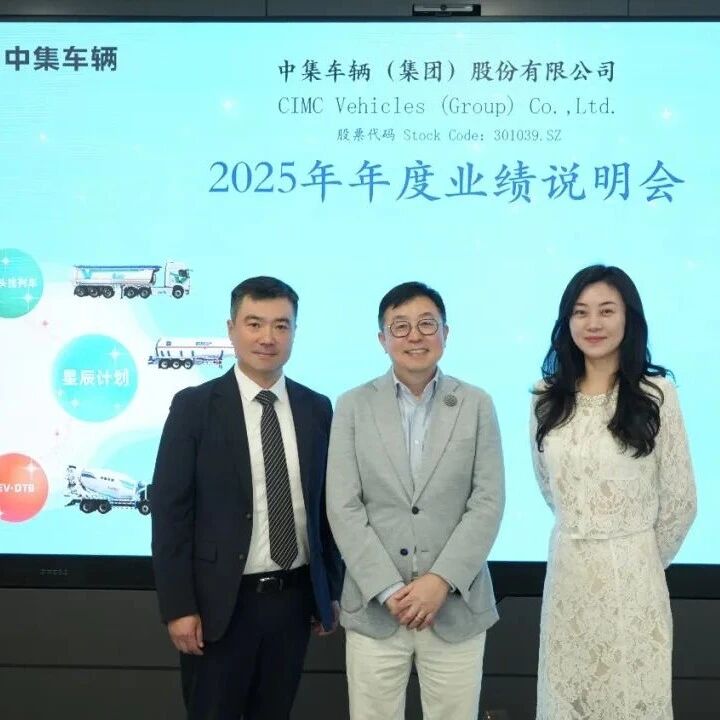
中集车辆2025年营收201.8亿元:“星链计划”圆满收官 “星辰计划”扬帆起航
新财富· 2026-03-25 08:06
Core Viewpoint - CIMC Vehicles aims to become a top performer among listed companies by implementing the "Starlink Plan," which has successfully concluded, leading to improved operational quality and industry development [1][21]. Group 1: Financial Performance - In 2025, CIMC Vehicles achieved a revenue of 20.18 billion RMB, with a gross margin of 15.9% and a net cash flow from operating activities of 1.58 billion RMB. The cash reserves reached 6.6 billion RMB, and the net profit attributable to shareholders increased by 28.7% quarter-on-quarter in Q4 [1]. - The profit distribution plan for 2025 includes a cash dividend of 0.21 RMB per share (tax included) [2]. Group 2: Business Segments - The company produced over 110,000 various types of semi-trailers globally in 2025, generating 14.372 billion RMB in revenue from the semi-trailer business, contributing a gross profit of 2.44 billion RMB. CIMC Vehicles ranked first in global semi-trailer manufacturers by sales for the thirteenth consecutive year [4]. - The semi-trailer and liquid tank sales in the Chinese market increased by 15% and 14.65% year-on-year, respectively, with gross margins improving by 3.3% [4][6]. Group 3: Market Expansion - In the global southern market, the semi-trailer business revenue reached 3.09 billion RMB, a year-on-year increase of 17.7%, with sales volume rising by 29.1%. Key markets like Vietnam and Thailand saw growth exceeding 70% [7]. - The Australian business was upgraded to direct management under the global southern business, maintaining a strong market position [10]. Group 4: Product Innovation - In 2025, CIMC Vehicles launched several innovative products, including the "Starlink" series semi-trailers and high-end liquid tankers, with annual model sales accounting for approximately 40% of the total sales in the Chinese and southern global markets [6]. - The company has made significant advancements in the EV-RT head trailer business, marking a milestone in defining industry standards and creating a new paradigm [16][19]. Group 5: Strategic Initiatives - The "Starlink Plan" has laid a solid foundation for future growth, with the company planning to launch the "Starry Plan" (2026-2030) to further enhance its competitive edge and increase R&D investment [21][22]. - The Starry Plan aims to expand the "full value chain" operational model and enhance production capabilities across various markets, including North America and Europe [22].
资金面平稳宽松,债市小幅回暖
Dong Fang Jin Cheng· 2026-03-25 08:03
Report Summary 1. Industry Investment Rating No investment rating information is provided in the report. 2. Core Viewpoints On March 24, the capital market was stable and loose, the bond market showed a slight recovery, the main indices of the convertible bond market rose collectively, most convertible bond individual securities increased, the yields of US Treasury bonds across various maturities generally rose, and the yields of 10 - year government bonds in major European economies generally increased [1][2]. 3. Summary by Directory 3.1 Bond Market News - **Domestic News**: The central bank will conduct a 500 - billion - yuan 1 - year MLF operation on March 25, resulting in a net injection of 50 billion yuan after considering the maturity amount. In addition, a 1.3 - trillion - yuan outright reverse repurchase was carried out, with a net withdrawal of 300 billion yuan after offsetting the maturity. In total, the medium - term liquidity in March had a net withdrawal of 250 billion yuan. The Ministry of Industry and Information Technology plans to promote the introduction of policies for data elements to empower new - type industrialization, and the National Data Bureau will take a series of measures to promote the high - quality development of the digital economy [4][5]. - **International News**: The US March composite PMI unexpectedly dropped to 51.4, with the manufacturing expansion accelerating and the service industry growth slowing. The data signals "slowing growth and rising inflation", and the US may face the risk of "stagflation" [7]. - **Commodities**: On March 24, WTI May crude oil futures rose 4.79% to $92.35 per barrel, Brent May crude oil futures rose 4.55% to $104.49 per barrel, COMEX gold spot price rose 1.15% to $4459.60 per ounce, and NYMEX May natural gas futures price fell 0.48% to $2.898 per million British thermal units [8]. 3.2 Capital Market - **Open Market Operations**: On March 24, the central bank conducted a 17.5 - billion - yuan 7 - day reverse repurchase operation at a fixed interest rate, with a net withdrawal of 3.35 billion yuan due to the maturity of 51 billion yuan of reverse repurchases [10]. - **Capital Interest Rates**: On March 24, the capital market remained stable and loose. DR001 rose 0.25bp to 1.323%, and DR007 fell 1.43bp to 1.412%. Other interest rates also showed corresponding changes [11][12]. 3.3 Bond Market Dynamics - **Interest - rate Bonds** - **Spot Bond Yield Trends**: On March 24, with the release of news about the easing of the US - Iran conflict overseas, the bond market fluctuated and recovered. As of 20:00, the yield of the 10 - year Treasury bond active bond 250022 fell 0.80bp to 1.8310%, and the yield of the 10 - year China Development Bank bond active bond 250220 fell 0.30bp to 1.9730% [14]. - **Bond Tendering Situation**: Various bonds such as 26Guokai02 (Increment 3), 26Guokai03 (Increment 4), etc., were tendered, with different issuance scales, winning yields, full - field multiples, and marginal multiples [16]. - **Credit Bonds** - **Secondary - market Transaction Abnormalities**: On March 24, the transaction prices of 3 industrial bonds deviated by more than 10%. "H2 Vanke 04" fell 20%, "H2 Vanke 02" rose more than 14%, and "H1 Vanke 06" rose 17% [17]. - **Credit Bond Events**: Companies such as Zhongnan Construction, Rongsheng Development, and China Aoyuan announced relevant events such as bond principal repayment extensions, guarantee provisions, and overseas debt restructuring progress [18]. - **Convertible Bonds** - **Equity and Convertible Bond Indices**: On March 24, the A - share market rebounded strongly, with more than 5100 stocks rising. The Shanghai Composite Index, Shenzhen Component Index, and ChiNext Index rose 1.78%, 1.43%, and 0.50% respectively. The main indices of the convertible bond market also rose collectively, with the CSI Convertible Bond Index, Shanghai Convertible Bond Index, and Shenzhen Convertible Bond Index rising 2.19%, 2.14%, and 2.24% respectively. Most convertible bond individual securities rose [19]. - **Convertible Bond Tracking**: On March 26, Xianghe Convertible Bond will be listed. Some companies' ratings were terminated, and Jinhong Convertible Bond announced that it was about to trigger the early redemption clause [20][21][22]. - **Overseas Bond Markets** - **US Bond Market**: On March 24, the yields of US Treasury bonds across various maturities generally rose. The 2 - year US Treasury bond yield rose 7bp to 3.90%, and the 10 - year US Treasury bond yield rose 5bp to 4.39%. The yield spreads between 2 - year and 10 - year, and 5 - year and 30 - year US Treasury bonds narrowed [23][24]. - **European Bond Market**: On March 24, the 10 - year German government bond yield fell 1bp to 3.01%, while the 10 - year government bond yields of other major European economies generally rose [26]. - **Daily Price Changes of Chinese - funded US - dollar Bonds**: As of the close on March 24, the prices of Chinese - funded US - dollar bonds showed different changes, with some rising and some falling [28].