
芯片半导体

Search documents
祥峰二期天使基金完成超5亿元募集,持续支持高潜力中国初创科技发展
IPO早知道· 2025-05-20 10:44
重点关注天使轮和pre-A轮的早期项目,聚焦于硬科技和医疗科技领域。 本文为IPO早知道原创 作者| Stone Jin 微信公众号|ipozaozhidao 据 IPO早知道消息, 祥峰二期天使基金 日前完成 超 5亿元人民币 募集 。本期基金的成功募集,除 了一期天使基金老 LP的大规模复投,也得到了产业投资人和地方政府的大力支持。 祥峰中国重点关注创新科技和医疗科技。旗下有多支美元和人民币基金,管理规模合计约 200亿人 民币,已投资超过160家创业公司 ,代表项目包括 宇树科技、曦智科技、和铂医药 ( 2142.HK ) 、芯驰科技、地平线 ( 9660.HK ) 、 SES AI麻省固能 ( NYSE: SES ) 、微芯生物 ( 688321.SH ) 、慧智微电子 ( 688512.SH ) 、云英谷、摩拜单车 (美团收购)、极智嘉、精锋 医疗等 。 向前追溯,祥峰天使一期基金于 2020年成立,截至目前已投资朗力半导体、冠华、松灵、万勋等 20多家优质且稳健成长的创新企业。近三分之二的基金项目已经完成了下一轮融资,并已在2023年 完成了首个项目的退出。 2024年,祥峰投资刚刚成立规模近36 ...


喝点VC|创业者实录:拿到这家深度共情无对赌的天使投资是一种什么体验
Z Potentials· 2025-05-13 02:44
Core Viewpoint - The article highlights the unique approach of Chenhui Venture Capital (晨晖创投) in the investment landscape, emphasizing their commitment to building strong relationships with entrepreneurs and providing support beyond financial investment [1][18]. Group 1: Investment Strategy - Chenhui Venture Capital has established itself as a cornerstone investor in an early-stage fund, distinguishing itself from traditional corporate venture capital (CVC) by acting solely as a limited partner (LP) [1]. - The firm has a management scale of approximately 1 billion yuan and has invested in over 70 companies over the past decade, focusing primarily on technology [3]. - Chenhui does not sign performance-based clauses in investment agreements, which is uncommon in the industry, reflecting their belief that such terms can create adversarial relationships with entrepreneurs [4][7]. Group 2: Entrepreneurial Support - Entrepreneurs have praised Chenhui for their deep understanding of technology and products, often describing the team as friends who provide unwavering support during challenging times [3][10]. - The firm actively engages with portfolio companies, offering strategic advice and assistance, which has been crucial in navigating industry challenges [9][10]. - Chenhui's investment philosophy emphasizes partnership and trust, aiming to accompany entrepreneurs through both successes and difficulties [18]. Group 3: Case Studies - The article provides several case studies of companies that have benefited from Chenhui's support, such as Nanchip Technology (南芯科技), which received timely funding during critical phases of development [5][6]. - EMQ, a provider of open-source IoT data infrastructure, experienced significant challenges in 2019 but received crucial follow-up investment from Chenhui, allowing them to stabilize and grow [12][13]. - The experiences of various entrepreneurs illustrate Chenhui's commitment to being a supportive and understanding investor, often going beyond financial contributions to ensure the success of their portfolio companies [10][12]. Group 4: Team Composition - Chenhui's investment team is composed of individuals with entrepreneurial backgrounds, which facilitates effective communication and understanding with the companies they invest in [15][16]. - The firm prioritizes hiring team members who have previously founded companies, ensuring they can empathize with the challenges faced by entrepreneurs [15][16]. Group 5: Current Focus - Chenhui is actively investing in cutting-edge technology sectors, including semiconductor chips, smart hardware products, foundational software, and new applications driven by artificial intelligence [19].

全球财经连线|三大指数齐涨,A股或迎多重利好共振
2 1 Shi Ji Jing Ji Bao Dao· 2025-05-12 15:35
Group 1 - A-shares market sentiment is recovering, with major indices showing significant gains, including a nearly 1% increase in the Shanghai Composite Index and over 2% in both the Shenzhen Component Index and the ChiNext Index on May 12 [2] - The overall profit of all A-share listed companies grew by 3.5% year-on-year in the first quarter, indicating a potential alignment between market sentiment and fundamental improvements [2][4] - The recent policy measures, including a 10 basis point cut in policy rates and a 50 basis point reduction in the reserve requirement ratio, have exceeded market expectations, enhancing market certainty [3] Group 2 - The first quarter results show a turning point in corporate earnings, with a net profit growth rate of 3.2% for all A-shares and 4.5% for non-financial and petroleum sectors, reflecting the effectiveness of policy measures [4] - The improvement in operating cash flow, capital expenditure, and free cash flow for A-share companies indicates a revaluation of intrinsic value, with the CSI 300's free cash flow yield surpassing 5% [4] - The market is expected to shift towards industry trends and thematic investments, with a focus on technology and small-cap stocks, as risk appetite increases [4] Group 3 - The capital market is anticipated to enter an upward trend, with technology stocks leading the charge and positively impacting other sectors, including consumer goods [6][7] - The AI sector, particularly humanoid robots and smart driving technologies, is expected to benefit from macroeconomic opportunities, making it a key investment focus [8] - Long-term funds, including social security and pension funds, have significantly increased their holdings in A-shares, exceeding 600 billion yuan, indicating growing confidence in the market [9][10] Group 4 - Policy optimization aimed at encouraging long-term capital inflow into the stock market is underway, with plans to increase the investment rights of social security and pension funds in equities [10] - The market is expected to focus on new production capabilities, consumption themes, and structural opportunities in technology, dividend blue chips, and military industries in the second half of 2025 [11] - The valuation of A-shares remains attractive compared to international markets, which may further enhance long-term investment appeal [11]
ETF收评:标普油气ETF领涨2.96%,军工龙头ETF领跌3.0%
news flash· 2025-05-09 07:01
Group 1 - The S&P Oil and Gas ETF (159518) and the S&P Oil and Gas ETF (513350) both led the gains with an increase of 2.96% [1] - The Bank ETF Preferred (517900) rose by 1.47% [1] - The Military Industry Leader ETF (512710) experienced the largest decline, falling by 3.0% [1] Group 2 - The Sci-Tech Chip ETF (588200) decreased by 2.79% [1] - The Sci-Tech Semiconductor ETF (588170) dropped by 2.77% [1] - The market trend suggests that buying index ETFs is a strategy for capitalizing on rebounds [1]
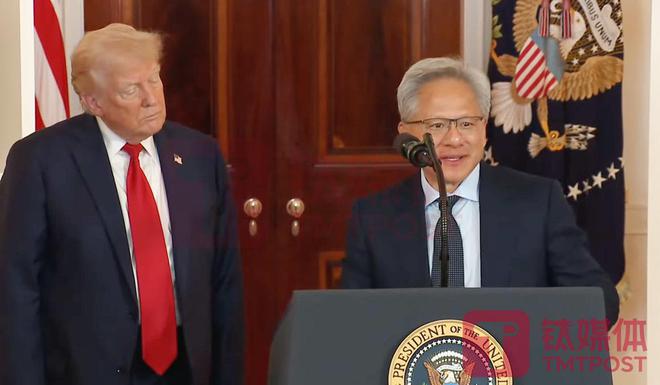
“如果英伟达无法进入中国,美国等同把3600亿AI市场拱手让给华为”|钛媒体AGI
Tai Mei Ti A P P· 2025-05-08 01:54
Core Insights - The article discusses the impact of the upcoming AI export control framework in the U.S. on NVIDIA's business, particularly its access to the Chinese AI market valued at approximately $360 billion [2][3][11] - Jensen Huang, CEO of NVIDIA, emphasizes the importance of the Chinese market and the potential losses for the company if it cannot operate there [3][11][12] Group 1: NVIDIA's Strategy and Market Position - Jensen Huang's visit to China aimed to reassure the market about NVIDIA's commitment to optimizing its product offerings in compliance with U.S. regulations [2] - NVIDIA plans to invest $500 billion in U.S. manufacturing over the next four years, with the next generation of chips to be produced entirely in the U.S. [2][3] - The company is developing a "special version" of its AI chips for China that complies with U.S. export regulations, with production expected to start as early as June [2][3] Group 2: Market Dynamics and Competition - Huang warns that if the AI export rules take effect without significant changes, NVIDIA may have to exit other markets, highlighting the competitive threat from companies like Huawei [3][11] - The Chinese AI market is projected to reach $50 billion in the next few years, making it crucial for U.S. companies to maintain access to this market [3][11][12] - The article notes that the technological gap between the U.S. and China in AI is narrowing, with Chinese companies making significant advancements [5][11] Group 3: Financial Implications - NVIDIA's revenue from China reached $17.108 billion in the fiscal year ending January 2024, marking a 66% increase from the previous year [6] - The company faces potential losses of $5.5 billion in quarterly revenue due to the ban on its H20 chip sales to China, with estimates suggesting total losses could range from $14 billion to $18 billion for the year [8][12] - NVIDIA's stock has declined over 15% year-to-date, reflecting market concerns over its ability to navigate the regulatory landscape [8] Group 4: Regulatory Environment - The Biden administration's AI export control framework has faced criticism for being overly complex and potentially stifling innovation [4][15] - Reports indicate that the Trump administration may seek to repeal the current export controls and establish a new framework that could ease restrictions on AI chip exports [14][15] - The article highlights the ongoing debate about the balance between national security and economic opportunity in the context of AI technology [10][12]

干翻19个省会!这座弹丸小城,创造中国最隐秘的经济奇迹
Qian Zhan Wang· 2025-04-29 14:36
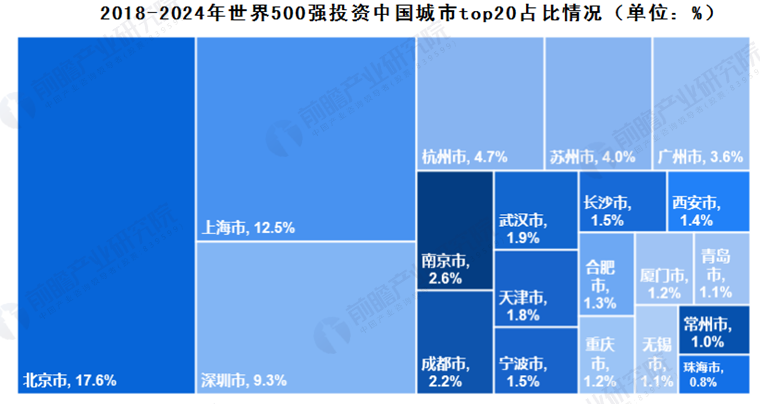
Core Insights - The article discusses the profound changes in urban landscapes due to the restructuring of global supply chains, accelerated industrial adjustments, and explosive growth in new productive forces. It emphasizes the importance of investment as a trust vote for future urban growth potential, as highlighted in the upcoming report by the Forward Industry Research Institute [1]. Investment Trends - Beijing, Shanghai, and Shenzhen are the top investment choices in China, benefiting from superior business environments, industrial support, and infrastructure, maintaining the top three positions in regional investment by Fortune Global 500 companies [2]. - Guangzhou is the only first-tier city experiencing a decline in investment attractiveness, with its share dropping from 10% in 2018 to 4.9% in 2024, while Hangzhou and Suzhou have rapidly ascended to the fourth and fifth positions [5]. - Overall, the investment inclination of Fortune Global 500 companies correlates positively with city rankings, with first-tier and new first-tier cities capturing 70% of the investment volume [5]. Regional Investment Patterns - Investment is increasingly concentrated in the Yangtze River Delta and eastern coastal provinces, indicating a geographical trend in investment preferences [8]. - The report identifies key industries attracting investment from Fortune Global 500 companies, primarily in AI, semiconductor, and new energy sectors, with semiconductors and new energy being the most attractive since 2021 [11]. City-Specific Insights - Shenzhen has seen explosive growth in the semiconductor and AI sectors due to proactive planning and systemic innovation, making these the top two industries for investment from Fortune Global 500 companies [12]. - Changzhou has emerged as a dark horse city, leveraging its new energy industry to attract significant investment, with 87 investments from Fortune Global 500 companies between 2018 and 2024 [13]. - In contrast, Guangzhou's declining investment attractiveness is attributed to structural issues and a lag in industrial transformation, with its investment events being only one-third of Shenzhen's [13]. Investment Logic and Strategies - The investment logic of Fortune Global 500 companies is shifting towards focusing on "irreplaceable nodes" in the industrial chain and achieving value multiplication through urban ecosystems [26]. - Cities are encouraged to deepen their regional advantages, anchor high-potential sectors, and cultivate headquarters economies to attract investment [27][28]. Conclusion - The report serves as a critical guide for local governments to position themselves strategically in the global industrial division and for companies to gain market insights for optimizing resource allocation and achieving sustainable development [1].
为什么日本创新力不如韩国?
虎嗅APP· 2025-04-29 00:12
| | | | Bloomberg 2021 Innovation Index | | | | | | | | | | --- | --- | --- | --- | --- | --- | --- | --- | --- | --- | --- | --- | | 2021 | 2020 | YoY | | Total | R&D | Manufacturing | | High-tech | Tertiary | Researcher | Patent | | Rank | Rank | Change | Economy | Score | Intensity | Value added | Productivity | Density | Efficiency | Concentration | Activity | | | 2 | +1 | S. Korea | 90.49 | 2 | 2 | 36 | ને | 13 | 3 | 1 | | 2 | 3 | +1 | Singapore | 87.76 | 17 | | ୧ | 18 | 1 | 13 | 4 | | 3 | ને | +1 | Sw ...
“申”度解盘 | 多路资金助力A股市场筑底企稳
申万宏源证券上海北京西路营业部· 2025-04-14 02:26
Core Viewpoint - The A-share market is expected to stabilize at the support levels of 3100 points for the Shanghai Composite Index and 9200 points for the Shenzhen Component Index, leading to a structural market trend favoring domestic demand, domestic substitution, and high-dividend sectors [2][5][6]. Market Overview - The A-share market experienced significant adjustments due to escalating trade tensions with the United States, but showed signs of stabilization in the latter half of the week [3]. - Early in the week, the Shanghai Composite Index fell by 7.34% and the Shenzhen Component Index dropped by 9.66%, with over 5200 stocks declining and nearly 3000 hitting the daily limit down [4]. - Sectors heavily reliant on exports to the U.S., such as the Apple supply chain, automotive parts, and communication equipment, faced the largest declines, while technology stocks showed some recovery later in the week [4]. - The agricultural sector became a market highlight following the release of a policy aimed at advancing agricultural technology and promoting independent innovation in seed industries, leading to active stock performance in related companies [4]. - The high-speed rail sector saw significant gains, and the duty-free segment of consumption benefited from new tax refund measures aimed at attracting foreign tourists [4]. Market Outlook - In the context of overseas market declines and ongoing trade tensions, the health and stability of the A-share market are deemed crucial [5]. - Institutions such as Central Huijin, China Chengtong, and China Guoxin announced plans to increase their holdings in A-shares starting April 7, indicating confidence in the market [5]. - The National Financial Regulatory Administration's announcement to adjust the regulatory ratio of insurance funds to equity assets aims to enhance support for the capital market and the real economy [5]. - A number of A-share companies have also announced stock repurchases, reflecting their confidence in future growth prospects [5]. - The resilience and potential of the Chinese economy are highlighted, with a focus on companies that are becoming globally competitive as key stabilizing forces in the market [5].

57.91亿元资金流向:先进制造赛道吸金超10亿元,蔚来能源完成25亿元战略融资|21私募投融资周报
2 1 Shi Ji Jing Ji Bao Dao· 2025-03-26 06:39
Group 1 - The total financing scale in the PE/VC sector decreased to 5.791 billion RMB from over 10 billion RMB in the previous week, with NIO Energy completing a strategic financing of 2.5 billion RMB [1][3][34] - The advanced manufacturing sector attracted over 1.01 billion RMB through 6 financing deals, while the semiconductor sector raised over 360 million RMB through 5 financing deals [5][6] - The most active regions for financing were Zhejiang Province, Beijing, and Guangdong Province, with 7, 6, and 5 deals respectively [7][9] Group 2 - NIO Energy, established in 2017, focuses on providing charging and battery swap services and aims to offer efficient energy solutions for B-end customers [35] - Guangdong Dongqin Technology completed a strategic financing of 720 million RMB, which will help enhance market competitiveness and accelerate development [29] - Electric Butler Group completed over 100 million RMB in C round financing to support rapid growth in the power service sector [18] Group 3 - The healthcare sector saw significant activity, with Shenzhen Fowo Pharmaceutical completing a 100 million RMB B+ round financing led by Wuhan Optics Valley [16] - Starry Technology completed nearly 100 million RMB in angel financing to advance its iPSC regenerative medicine platform [12] - OneLink Technology secured seed round financing to accelerate the production and clinical research of its second-generation suspension system [13] Group 4 - The semiconductor sector is gaining traction, with companies like Chen Zhi Semiconductor completing A round financing, focusing on high-performance automotive-grade chips [21][22] - RockFlow, a financial technology company, raised 10 million USD in A round financing to enhance its AI capabilities for young investors [39] - Deep Principle, an AI for Chemistry/Materials company, completed a significant Pre-A round financing to accelerate its technology platform's industrialization [40]

