
基建

Search documents
中国宏观数据点评:实体经济数据10月增速放缓,但或尚不足以触发显著政策刺激
SPDB International· 2025-11-14 10:39
Economic Growth and Projections - October economic data indicates a slowdown in growth, with a projected Q4 GDP growth rate of 4.2%[1] - The annual GDP growth target of around 5% is expected to be achieved, with policies focusing on implementation[1] - Anticipated budget deficit rate for next year is expected to remain at 4%[1] Consumer Spending and Retail - Retail sales growth in October decreased to 2.9%, slightly better than the market expectation of 2.8%[2] - Durable goods consumption showed mixed results, with communication equipment sales rising to 23.2% while home appliances fell by 14.6%[2] - The "Double Eleven" shopping festival did not generate as much excitement as in previous years, indicating weak consumer demand[1] Industrial Production and Investment - Industrial production growth fell to 4.9%, below the expected 5.5%, influenced by a holiday effect[5] - Fixed asset investment growth declined significantly to -1.7%, lower than the market expectation of -0.8%[3] - Real estate investment continued to weaken, with a year-on-year decline of 14.7% in October[3] Employment and Inflation - The urban unemployment rate improved slightly to 5.1%, better than the expected 5.2%[5] - October CPI inflation rate increased to 0.2%, surpassing the market expectation of -0.1%[6] External Demand and Trade - Export growth turned negative at -1.1% in October, influenced by high base effects and holiday timing[7] - The contribution of net exports to GDP is expected to decline, with a forecasted export growth drop to 3.0% next year[11]
中国交通建设(01800)11月14日斥资749.31万元回购85万股A股
智通财经网· 2025-11-14 10:22
Group 1 - The company, China Communications Construction Company, announced a share buyback plan for 850,000 A-shares at a total cost of RMB 7.4931 million [1] - The buyback price per share is set between RMB 8.78 and RMB 8.84 [1]
2025年10月经济数据点评:10月经济放缓:稳投资还是稳消费?
Minsheng Securities· 2025-11-14 09:16
Economic Performance Overview - In October, the industrial added value increased by 4.9% year-on-year and 0.17% month-on-month[1] - The total retail sales of consumer goods reached 46,291 billion yuan, growing by 2.9% year-on-year and 0.16% month-on-month[1] - From January to October, fixed asset investment (excluding rural households) totaled 408,914 billion yuan, showing a year-on-year decline of 1.7%[1] Investment and Consumption Trends - Historical data suggests that investment growth typically rebounds first during economic stabilization periods, as seen in 2008-09 and 2020-21[2] - Manufacturing investment saw a significant decline, with a year-on-year drop from -1.9% in September to -6.7% in October[3] - Infrastructure investment growth decreased from -4.6% in September to -8.9% in October, indicating a low level of infrastructure activity[3] Consumer Behavior Insights - The retail sales growth rate slightly declined to 2.9% in October, influenced by a high base from the previous year and the waning effects of the "old-for-new" policy[4] - The early "Double Eleven" shopping festival helped mitigate the decline in retail sales growth, which did not significantly worsen despite multiple pressures[4] Real Estate Market Dynamics - From January to October, real estate investment cumulative growth fell to -14.7%, down from -13.9% previously, reflecting weak demand and high base effects from last year[5] - The need for further policy support in the real estate sector is emphasized to balance supply and demand and promote high-quality development[5] Risk Factors - Potential risks include policies falling short of expectations, unexpected changes in the domestic economic situation, and fluctuations in exports[6]
10 月份经济数据解读:需求内生动能有待增强
Yin He Zheng Quan· 2025-11-14 08:27
Economic Growth - GDP growth is projected at 3.9% for 2023, with expectations of 4.8% in 2024 and 4.9% in 2025[1] - The GDP growth rate for 2022 was 6.5%, indicating a significant slowdown[1] Consumption - Overall consumption growth is expected to be 2.9% in 2023, with a slight increase to 3.0% in 2024[3] - Retail sales in the service sector are recovering, while goods retail continues to weaken, with a decline of 6.6% in certain categories[6] - The share of consumption in GDP is projected to be 37.6% in 2023, down from 23.2% in 2022[6] Manufacturing - Manufacturing sector shows a clear weakening trend, with a decline of 1.3 percentage points in growth rate[11] - Manufacturing investment is expected to decrease significantly, with a drop of 6.7% noted in recent reports[11] Infrastructure Investment - Infrastructure investment is accelerating its decline, with a reported decrease of 0.1% in the first ten months of 2023[20] - The expansionary investment policy is expected to stabilize infrastructure investment growth around 0% for the year[20] Real Estate - Real estate investment continues to weaken, with new home sales declining by 14.7% in 2023[2] - The sales volume of commercial housing has decreased by 22.97% compared to the previous year[2] Industrial Production - Industrial production is under pressure due to weakening demand in "two new" sectors and exports, with a growth rate of only 4.9%[33] - The overall industrial output is expected to face challenges, reflecting a broader economic slowdown[33]
宏观数据观察:东海观察10月经济增速继续放缓且低于预期
Dong Hai Qi Huo· 2025-11-14 07:30
1. Report Industry Investment Rating - No information provided in the given content 2. Core View of the Report - In October, China's economic growth continued to slow down and was lower than expected. The overall domestic demand economic data in October continued to slow down, with the decline in investment continuing to widen and falling short of market expectations, the consumption growth rate continuing to decline but slightly higher than market expectations, and industrial production significantly slowing down in the short term. The short - term investment side continued to slow down. The real estate market continued to slow down and bottom out, infrastructure investment continued to slow down, and manufacturing investment also faced challenges. The short - term domestic commodity supply - demand side showed weak demand and relatively abundant supply. The released data was significantly lower than market expectations, which was short - term negative for the domestic demand - type commodity market. In the medium - to - long term, the "anti - involution" work entering the substantial promotion stage was positive for the recovery of the domestic market. Overseas, the prices of external demand - type commodities such as non - ferrous metals and energy oscillated, and the support for precious metals increased due to the resurgence of safe - haven demand [3][5]. 3. Summary by Relevant Catalogs 3.1 Industrial Production - In October, the year - on - year growth rate of the added value of large - scale industrial enterprises was 4.9%, with an expected 5.5% and a previous value of 6.5%, a significant decline from the previous value and far lower than market expectations. This was mainly due to holiday factors and the slowdown in external demand orders, which led to a slowdown in the increase of industrial enterprise operating rates. Among the three major categories, the added value of the mining industry increased by 4.5% year - on - year, the manufacturing industry by 4.9%, and the production and supply of electricity, heat, gas, and water by 5.4%. High - end manufacturing such as the automobile manufacturing, railway, ship, aerospace, and other transportation equipment manufacturing, and computer, communication, and other electronic equipment manufacturing industries still had relatively fast growth rates. In the fourth quarter, with the gradual weakening of the US replenishment demand, the overall growth rate of domestic industrial production might decline but was expected to remain at a relatively high level [3][4]. 3.2 Consumption - In October, the year - on - year growth rate of total retail sales of consumer goods was 2.9%, with an expected 2.7% and a previous value of 3.0%, a 0.1 - percentage - point decline from the previous value but slightly higher than market expectations. The slowdown was due to the withdrawal of the consumer goods trade - in policy, the high base of categories such as automobiles, and weak holiday consumption. The growth rate of total retail sales of consumer goods further slowed down under the influence of the trade - in policy withdrawal. The retail sales of consumer goods such as household appliances, furniture, automobiles, and communication equipment showed significant slowdowns, while service - related consumption growth accelerated with policy support. In the short term, the growth rate of commodity consumption was expected to continue to decline, but in the later stage, with the implementation of service consumption stimulus policies and the recovery of residents' wealth effect, domestic consumption would continue to recover [4]. 3.3 Fixed - Asset Investment - From January to October, fixed - asset investment decreased by 1.7%, with an expected - 0.8% and a previous value of - 0.5%, and the decline widened by 1.2% and was far lower than expected. The decline rates of manufacturing, infrastructure, and real estate investment all further widened [3][4]. - **Real Estate**: In October, the year - on - year growth rate of real estate development investment was - 23.2%, with a 1.9 - percentage - point increase in the decline from the previous month. The year - on - year growth rates of the floor area of commercial housing sold and sales volume were - 19.6% and - 25.1% respectively, with significant increases in the decline rates from the previous values. This was mainly due to the high - base effect of the "9.24 real estate new policy" last year and the mild real estate stimulus policies this year. The real estate market continued to adjust and bottom out, with the transaction activity in the housing market decreasing, and the investment side remaining weak. The year - on - year growth rate of real estate development funds in October was - 21.4%, with a 10.4 - percentage - point increase in the decline. The floor area of newly started construction, construction, and completion of real estate all faced challenges [4]. - **Infrastructure**: In October, the year - on - year growth rate of infrastructure investment was - 8.9%, with a 4.3 - percentage - point increase in the decline from the previous value. Considering the continuous decline after the end of the photovoltaic rush - to - install market and the constraints of local debt resolution on project reserves and funds for traditional infrastructure, the growth rate of infrastructure investment continued to decline [4][5]. - **Manufacturing**: The year - on - year growth rate of manufacturing investment in October was - 6.7%, with a 4.8 - percentage - point increase in the decline from the previous value. It continued to slow down due to the high - base effect last year and the decline in investment willingness caused by "anti - involution". High - tech industries maintained a high level of prosperity, but factors such as tariff uncertainty, the marginal decline in policy funds for large - scale equipment renewal and transformation, and the slowdown in US replenishment demand in the fourth quarter affected manufacturing investment. However, with the support of 500 billion yuan in new policy - based financial instruments and the implementation of relevant policies, there might be some support for manufacturing investment in the future [4][5]. 3.4 Impact on Commodities - On the demand side, the short - term investment side continued to slow down, and domestic commodity demand as a whole slowed down and was lower than market expectations. On the supply side, industrial production slowed down due to factors such as the decline in foreign demand orders and the slowdown in the increase of industrial enterprise operating rates. The short - term domestic commodity supply - demand side showed weak demand and relatively abundant supply. The "anti - involution" policy had a certain supporting effect on the prices of domestic demand - type commodities. The released data was significantly lower than market expectations, which was short - term negative for the domestic demand - type commodity market. In the medium - to - long term, the "anti - involution" work entering the substantial promotion stage was positive for the recovery of the domestic market. Overseas, due to the overall easing of US trade policies, the impact on the economy weakened, but the short - term government shutdown affected the economy. The prices of external demand - type commodities such as non - ferrous metals and energy oscillated and showed significant differentiation, and the support for precious metals increased due to the resurgence of safe - haven demand [3][5].
前10月固定资产投资降幅扩大,政策支持下投资端有望迎来修复
Sou Hu Cai Jing· 2025-11-14 02:45
Group 1: Fixed Asset Investment - National fixed asset investment decreased by 1.7% year-on-year from January to October, with a decline of 1.2 percentage points compared to January to September [1] - Infrastructure investment (excluding electricity, heat, gas, and water production and supply) fell by 0.1% year-on-year, down from a 1.1% increase in the previous period [2] Group 2: Infrastructure Investment Outlook - Analysts expect infrastructure investment to rebound due to ongoing growth stabilization policies, with a potential increase in investment speed by the end of the year [3] - Full-year infrastructure investment growth is projected to reach around 3.0%, a slowdown of 1.4 percentage points compared to the previous year [3] Group 3: Real Estate Investment - Real estate development investment dropped by 14.7% year-on-year from January to October, with the decline widening by 0.8 percentage points compared to the previous period [5] - The area of housing under construction decreased by 9.4%, while new commercial housing sales fell by 6.8% [6] Group 4: Manufacturing Investment - Manufacturing investment grew by 2.7% year-on-year, a decline of 1.3 percentage points from the previous nine months [7] - The downward trend in manufacturing investment is attributed to increased external environment volatility and the implementation of policies affecting overcapacity industries [7][8]

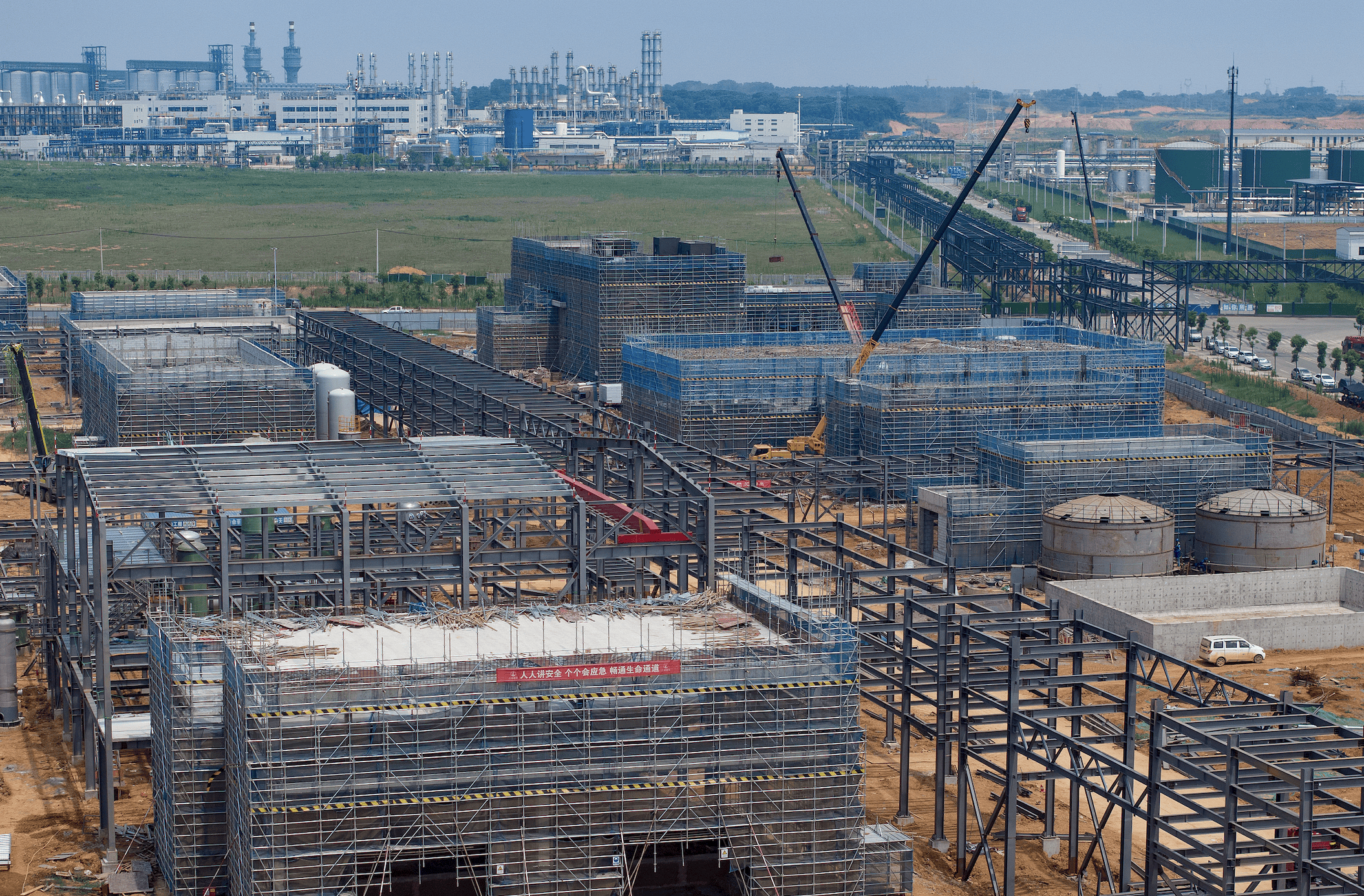
帮主郑重:油价反弹金价跌,大宗商品异动,A股中长线机会藏这了!
Sou Hu Cai Jing· 2025-11-13 23:26
Group 1: Oil Market Insights - Oil prices are currently experiencing a tug-of-war between supply and demand, with a short-term rebound seen as a temporary relief rather than a reversal [3] - The International Energy Agency has indicated a supply surplus for oil next year, while U.S. crude oil inventories increased by 6.4 million barrels, the largest rise since July [3] - The market is reacting to increased sanctions on Russian oil companies and a decline in refined oil inventories, suggesting that demand remains resilient [3] Group 2: Copper Market Dynamics - Copper prices have stabilized after four consecutive days of increases, driven by the end of the U.S. government shutdown, which had previously hindered the release of key economic data [3] - Copper is viewed as an "industrial barometer," closely tied to infrastructure and manufacturing, with domestic growth initiatives supporting demand [3] Group 3: Gold Market Trends - The recent decline in gold prices is primarily attributed to changing expectations regarding interest rate cuts by the Federal Reserve, with the probability of a December rate cut now at 50% [4] - Gold's appeal diminishes when interest rates do not decrease or rise, but its long-term value is still linked to inflation and global risk sentiment [4] Group 4: Investment Strategies - Companies in the energy sector should focus on those with reasonable valuations and stable cash flows, particularly in oil and gas extraction and refining [5] - For copper-related investments, attention should be given to firms tied to domestic infrastructure and new energy projects, as demand is expected to remain strong [5] - In the gold sector, a wait-and-see approach is recommended until interest rate expectations become clearer or global risk sentiment increases [5]

179家A股上市川企三季报披露完毕 消费龙头稳健前行新兴产业强势突围
Si Chuan Ri Bao· 2025-11-13 07:33
近日,A股上市公司三季度财报发布收官,四川179家A股上市公司的"成绩单"披露。记者依据 Wind数据初步统计,2025年前三季度,川股上市公司合计实现营业总收入8231亿元,归母净利润821.5 亿元。川股整体经营成色如何?不同行业的发展又呈现出怎样的差异?记者带着问题梳理了川股三季 报。 营收盈利分化显著 技术突破驱动业绩爆发 在部分传统行业承受经营压力的同时,以通信、军工为代表的新兴产业板块正成为川股增长的"新 引擎"。例如,新易盛的爆发式增长就很引人瞩目。 作为通信模块龙头企业,新易盛前三季度交出了一份亮眼的"成绩单"。财报数据显示,公司前三季 度营收165.05亿元,同比飙升221.70%;净利润63.27亿元,增幅达355.77%,凭借这一业绩表现,新易 盛直接跻身川股盈利榜第四位,成为川股新兴产业中的"领军者"。 华丰科技的业绩表现同样可圈可点。前三季度实现营收16.59亿元,较去年同期增长121.47%;实现 归母净利润2.23亿元,较去年同期实现扭亏为盈,盈利能力显著提升。记者了解到,在全球数字化进程 加速及能源结构转型的驱动下,华丰科技通过技术创新与市场拓展,实现了业绩的突破性增长。 31 ...
宏观日报:中游开工分化-20251112
Hua Tai Qi Huo· 2025-11-12 05:06
Industry Overview Upstream - Black: Iron ore and rebar prices declined [2] - Agriculture: Egg prices rebounded [2] - Energy: International oil prices declined and fluctuated recently [2] Midstream - Chemical: PTA operating rate decreased, urea operating rate increased slightly, and PX operating rate remained stable at a high level [2] - Energy: Coal consumption of power plants was at a low level [2] - Infrastructure: Asphalt operating rate was at a low level [2] Downstream - Real estate: Seasonal rebound in commercial housing sales in second - and third - tier cities [3] - Services: Domestic flight frequencies increased slightly [3] Key Events Production Industry - From November 10, 2025, to November 9, 2026, the US will suspend the implementation of the export control penetration rule [1] Service Industry - The People's Bank of China requires the implementation of a moderately loose monetary policy to maintain a relatively loose social financing environment [1] Key Price Indicators | Industry | Indicator | Price | YoY | | --- | --- | --- | --- | | Agriculture | Spot price of eggs | - | +5.69% | | | Spot price of palm oil | 8714.0 yuan/ton | +0.32% | | | Average wholesale price of pork | 18.1 yuan/kg | +0.61% | | | Spot price of zinc | 22558.0 yuan/ton | +1.03% | | Non - ferrous metals | Spot price of aluminum | 21503.3 yuan/ton | +0.25% | | | Spot price of nickel | 122233.3 yuan/ton | +0.01% | | Black metals | Spot price of rebar | 3133.0 yuan/ton | -1.42% | | | Spot price of iron ore | 789.4 yuan/ton | -3.25% | | Non - metals | Spot price of natural rubber | 14675.0 yuan/ton | +0.69% | | Energy | Spot price of WTI crude oil | 59.8 dollars/barrel | -2.02% | | | Spot price of Brent crude oil | 63.6 dollars/barrel | -2.21% | | | Spot price of liquefied natural gas | 4242.0 yuan/ton | -1.81% | | | Coal price | 826.0 yuan/ton | +1.10% | | Chemical | Spot price of PTA | 4645.7 yuan/ton | +1.91% | | | Spot price of urea | 1627.5 yuan/ton | +2.36% | | | Spot price of soda ash | 1207.9 yuan/ton | +0.30% | | Real estate | Building materials composite index | 112.0 points | -0.88% | | | Concrete price index | 90.9 points | -0.10% | [37]
侨力涌动中东 共拓合作新蓝海
Ren Min Ri Bao Hai Wai Ban· 2025-11-12 01:37
Group 1: China-Arab Cooperation - Recent events indicate a surge in cooperation between China and Arab countries, including forums and trade meetings [1][2] - China has achieved visa-free access for all members of the Gulf Cooperation Council (GCC), enhancing travel and business opportunities [3][2] - The bilateral trade volume between China and Arab countries reached a record $101.8 billion in 2024 [2] Group 2: Business Opportunities in UAE and Bahrain - The UAE has become China's largest export market in the Middle East, with a significant increase in trade activities [2][5] - Business leaders in the UAE are actively seeking to introduce innovative Chinese companies to the region, capitalizing on high investment returns [2][3] - Bahrain is experiencing a transformation towards a diversified economy, moving beyond oil dependency, creating new business opportunities [5][4] Group 3: Saudi Arabia's Economic Transformation - Saudi Arabia is emerging as a key investment destination for Chinese companies, driven by its economic transformation and large market size [6][8] - The "Vision 2030" initiative aims to reduce oil dependency and promote economic diversification, aligning with China's Belt and Road Initiative [8][6] - Chinese enterprises are increasingly focusing on sectors such as infrastructure, biomedicine, photovoltaic, digital economy, and environmental protection in Saudi Arabia [8][6] Group 4: Networking and Community Engagement - The Chinese community in the Middle East, particularly alumni from Zhejiang University, is actively involved in various sectors, enhancing business connections [9][6] - Local Chinese entrepreneurs are leveraging their networks to facilitate business opportunities for Chinese companies in the region [9][8] - Events like the China International Import Expo serve as platforms for promoting bilateral trade and cultural exchange [5][4]