新能源

Search documents
【广发宏观王丹】3月6日经济主题记者会的十大增量信息
郭磊宏观茶座· 2026-03-07 04:08
Group 1 - The "14th Five-Year Plan" outlines 109 major engineering projects, including 28 for leading new productivity, 23 for modern infrastructure, 9 for urban-rural integration, 25 for improving people's livelihoods, 18 for green transformation, and 6 for security in key areas [1][8][10] - Key projects include large-scale energy projects like the Yaxia Hydropower and offshore wind farms, transportation projects such as the new channels for the Three Gorges waterway and the southern section of the Beijing-Guangzhou high-speed railway, and future industry projects like AI computing clusters and satellite internet [1][10][11] Group 2 - The "Six Networks" and key area constructions will be the main focus for expanding effective investment in 2026, with an estimated investment exceeding 7 trillion yuan [2][12] - The "Six Networks" include water, electricity, computing power, new communication, urban underground pipelines, and logistics networks, aimed at improving production conditions and living environments [2][12] Group 3 - A 100 billion yuan "fiscal-financial collaborative policy tool" has been introduced to stimulate domestic demand, focusing on loans, guarantees, and risk compensation [3][13] - The policy includes six measures, with four supporting private investment and two supporting consumer spending, aiming to enhance the overall investment environment [3][13][14] Group 4 - The "6+3" service consumption policy aims to boost consumption in sectors like transportation, housekeeping, and entertainment, while also expanding service sector openness [4][16] - The focus is on encouraging new fields and scenarios to release consumption potential, with specific measures to enhance consumer and business benefits [4][16] Group 5 - The six emerging pillar industries identified include integrated circuits, aerospace, biomedicine, low-altitude economy, new energy storage, and intelligent robotics, with a projected output of nearly 6 trillion yuan by 2025, expected to exceed 10 trillion yuan by 2030 [5][17] - The six future industries include quantum technology, biomanufacturing, green hydrogen energy, brain-computer interfaces, embodied intelligence, and 6G technology, indicating a shift towards new growth drivers [5][17] Group 6 - The implementation of the Beidou application project and the "AI+" initiative is crucial for developing new pillar industries, with targets of a 1 trillion yuan Beidou industry and a 10 trillion yuan AI industry by the end of the "14th Five-Year Plan" [6][18] - These initiatives are expected to create significant infrastructure-level industry chains [6][18] Group 7 - A national-level merger fund will be established to support innovation and provide essential resources, with an expected leverage of over 1 trillion yuan [7][19] - This fund aims to address challenges in venture capital exits and enhance industry concentration [7][19] Group 8 - The central financial company will play a role similar to a "stabilization fund" to support capital market stability, alongside structural monetary policy tools [8][19] - This approach aims to create a comprehensive liquidity support framework for the capital market [8][19] Group 9 - The reform of the ChiNext board will focus on supporting innovative enterprises in new consumption and modern service sectors, with more inclusive listing standards [9][20] - This reform aims to enhance the adaptability of the capital market to support new industries and business models [9][20] Group 10 - The refinancing mechanism will be optimized to support high-quality technology innovation enterprises, with a focus on "supporting the excellent and the scientific" [10][21] - This includes expanding the recognition standards for strategic investors and improving the refinancing process for innovative companies [10][21]


【广发宏观王丹】当前中观景气度的行业分布是怎样的
郭磊宏观茶座· 2026-03-07 04:08
Core Viewpoint - The article analyzes the February PMI data from a mid-level perspective, highlighting the seasonal characteristics of various manufacturing sectors and the impact of the Spring Festival on consumer activity. Group 1: Manufacturing Sector Analysis - In February, the PMI for high-tech manufacturing, equipment manufacturing, and high-energy-consuming industries decreased by 0.5, 0.3, and 0.1 points respectively, aligning with the seasonal characteristics of the manufacturing sector [1][6] - The consumer goods manufacturing PMI increased by 0.5 points, indicating a seasonal uptrend due to the Spring Festival's influence on consumer activities [1][6] - The three-month average PMI shows that industries such as non-ferrous metals, computer communication electronics, and pharmaceuticals are performing above the average, while automotive and specialized equipment sectors are also experiencing high levels of activity [1][8] Group 2: Marginal Changes in February - Among 17 sub-manufacturing sectors, the non-metallic mineral products PMI rose by 1.8 points, with export orders and product orders increasing by 10.6 and 2.0 points respectively [2][12] - The decline in sectors like non-ferrous metallurgy and petroleum processing is attributed to significant fluctuations in commodity prices at the beginning of the year [2][12] - The computer communication electronics sector saw a notable decrease, primarily due to the impact of the long holiday, although retail sales of electronic products showed rapid growth [2][12] Group 3: Price Trends - In February, prices in the petrochemical, black metal, and pharmaceutical sectors generally increased, while prices in non-ferrous metals, textiles, and food decreased [3][16] - The factory price index remained stable compared to the previous month, with most industries experiencing price increases, particularly in petroleum processing, which saw a rise of 15.5 points [3][16] Group 4: Emerging Industries - The new energy sector led the emerging industries with a PMI above 50, increasing by 5.2 points, while the energy-saving and environmental protection sector also saw a rise of 3.1 points [3][21] - The new generation information technology sector, despite being in a contraction phase, showed minimal deviation from seasonal averages, likely due to accelerated applications in artificial intelligence [3][21] Group 5: Construction and Service Industries - The construction sector's PMI decreased by 0.6 points to 48.2, with a slight recovery in housing construction PMI by 1.3 points, indicating optimism among construction firms regarding the upcoming working season [4][22] - The service sector's PMI increased significantly by 10.9 points, driven by strong performance in accommodation, catering, and cultural entertainment sectors, reflecting the positive impact of the long holiday [4][27]

郑栅洁主任在十四届全国人大四次会议经济主题记者会上答记者问
国家能源局· 2026-03-07 02:20
Core Viewpoint - The article discusses the strategic focus of China's economic development, emphasizing the establishment of six emerging pillar industries and six future industries, alongside significant investments in energy and infrastructure projects to support modernization and enhance living standards [4][5][6]. Group 1: Emerging and Future Industries - The six emerging pillar industries include integrated circuits, aerospace, biomedicine, low-altitude economy, new energy storage, and intelligent robotics, with an estimated output value approaching 6 trillion by 2025 and potentially doubling to over 10 trillion by 2030 [5]. - The six future industries encompass quantum technology, biomanufacturing, green hydrogen energy, nuclear fusion energy, brain-computer interfaces, embodied intelligence, and the nascent 6G technology, which are on the brink of technological breakthroughs [5]. Group 2: Major Energy Projects - The "14th Five-Year Plan" outlines 109 major projects, including the continued advancement of significant energy projects such as the Yaxia Hydropower, "Shagao Desert" new energy base, and offshore wind power bases, each involving investments exceeding 1 trillion [6]. - These projects aim to ensure national modernization and improve the quality of life for citizens, while also focusing on energy conservation and carbon reduction initiatives [6]. Group 3: Infrastructure and Investment - The construction of the "Six Networks" (water network, electricity network, computing power network, new communication network, urban underground pipeline network, and logistics network) is prioritized, with an estimated investment exceeding 7 trillion [8]. - The government aims to enhance domestic consumption and investment, implementing new policies to stimulate consumption and increase government investment while encouraging private sector participation [8].

江西“十五五”规划建议
Zhong Shang Chan Ye Yan Jiu Yuan· 2026-03-07 00:05
Investment Rating - The report does not explicitly provide an investment rating for the industry Core Insights - The "14th Five-Year Plan" period has seen significant achievements in Jiangxi's economic and social development, with GDP reaching approximately 3.6 trillion yuan and per capita GDP surpassing 10,000 USD, indicating a solid foundation for high-quality development [7][8] - The "15th Five-Year Plan" period is characterized by complex changes in the development environment, with both opportunities and challenges present, but the long-term positive trend remains unchanged [9][10] - The overall goal for the "15th Five-Year Plan" period is to achieve high-quality development, with key indicators expected to grow faster than the national average, and a focus on innovation and modernization of the industrial system [12][11] Summary by Sections Economic and Social Development - Jiangxi's economic growth has been steady, with a focus on high-quality development and modernization of the manufacturing sector through the "1269" action plan [7][12] - The province aims to enhance its innovation capabilities, with significant increases in the number of high-value patents and the establishment of national-level innovation centers [8][12] Industrial Development - The report emphasizes the need to optimize traditional industries and promote emerging sectors such as electronic information, new energy, and biomedicine, aiming to create new economic growth points [16][17] - There is a strong focus on developing industrial clusters and enhancing the integration of manufacturing and services to improve overall competitiveness [18][19] Technological Innovation - The report outlines plans to strengthen the technological innovation system, enhance research capabilities, and promote the integration of technology and industry [20][21] - It highlights the importance of fostering a collaborative environment between enterprises, research institutions, and universities to drive innovation [22][23] Infrastructure and Investment - The report calls for the construction of a modern infrastructure system, focusing on transportation, energy, and digital infrastructure to support economic growth [29][30] - It emphasizes the need for effective investment strategies to stimulate economic activity and enhance public services [28][31] Agricultural Modernization - The report stresses the importance of agricultural modernization and rural revitalization, aiming to improve agricultural productivity and rural living conditions [42][43] - It highlights the need for policies that support farmers and enhance the agricultural value chain [44][46] Regional Development - The report advocates for a coordinated regional development strategy, promoting collaboration among different regions to leverage their comparative advantages [48][49] - It emphasizes the importance of urbanization and the development of county economies to enhance overall regional competitiveness [50][51]
吉林“十五五”规划建议
Zhong Shang Chan Ye Yan Jiu Yuan· 2026-03-07 00:05
Investment Rating - The report does not explicitly provide an investment rating for the industry Core Insights - The "14th Five-Year" period has seen significant achievements in Jilin's revitalization and development, with stable economic growth and structural optimization [8][9] - The "15th Five-Year" period is crucial for building a modern socialist Jilin, focusing on high-quality development and overcoming challenges [10][11] - Jilin's development environment is complex, with both opportunities and risks, necessitating strategic efforts to address deep-seated issues [12][13] Summary by Sections Economic and Social Development Goals - The guiding ideology emphasizes Marxism, socialism with Chinese characteristics, and the importance of high-quality development [13][14] - Key principles include the Party's leadership, prioritizing people's needs, and promoting comprehensive reform [15][16] - Major goals include significant advancements in high-quality development, technological innovation, and social civilization [17][18] Modern Industrial System - The focus is on strengthening the real economy, optimizing traditional industries, and fostering strategic emerging industries [21][22] - Emphasis on nurturing new industries such as renewable energy, advanced manufacturing, and biotechnology [23][24] - Future industries like artificial intelligence and hydrogen energy are prioritized for development [26][27] Infrastructure and Technological Innovation - Infrastructure development will balance new construction and upgrades, with a focus on digital and smart technologies [25][30] - Technological innovation is seen as a key driver for revitalization, with efforts to enhance original innovation and integrate technology with industry [26][28] Demand Expansion and Economic Reform - Expanding effective demand is crucial, with strategies to boost consumption and investment [31][32] - Economic reforms aim to enhance market vitality and improve the business environment [34][35] Open Economy and Regional Development - Jilin aims to deepen integration into the Belt and Road Initiative and enhance its role as a hub for Northeast Asia [39][40] - Regional coordination is essential for overall revitalization, focusing on urbanization and border area development [47][48]
任泽平带你看前沿科技:2026研学计划
泽平宏观· 2026-03-06 16:00
Core Viewpoint - The article emphasizes the importance of practical learning experiences in cutting-edge technology sectors, highlighting the value of direct engagement with leading companies and experts to enhance investment insights and opportunities [12][24]. Schedule Overview - The schedule for 2025 includes visits to major technology companies such as Huawei, BYD, Tencent, and others, focusing on sectors like artificial intelligence, new energy, and biotechnology [23][24]. - Specific events are planned, including closed-door investment research meetings and thematic explorations in various cities, showcasing advancements in robotics, autonomous driving, and digital ecosystems [8][9][10]. Learning Experience - Participants will engage in deep explorations of technology companies, gaining insights into the full chain of technology development from laboratory to industrialization [12]. - The program includes top-level dialogues with founders and executives, providing firsthand insights into strategic decisions and industry disruptions [12]. Participant Feedback - Feedback from participants highlights the transformative impact of the program on their understanding of macroeconomic trends and investment strategies, emphasizing the importance of learning from industry leaders [46][47]. - Participants express appreciation for the practical approach of the program, which combines theoretical knowledge with real-world applications in leading technology firms [44][48].

速读政府工作报告关键词:这些部署如何影响你的生活?
21世纪经济报道· 2026-03-06 14:44
Group 1 - The core focus of the government work report is to strengthen the domestic market and expand new spaces for domestic demand, emphasizing the importance of boosting consumption [1] - A special long-term bond of 250 billion yuan will be allocated to support the consumption of old goods, indicating a continued push for the "old for new" policy [1] - The report highlights the need to increase residents' property income through investments in stocks, bonds, insurance, and financial products, with a commitment to improve the mechanisms for long-term capital entering the market [1] Group 2 - The report aims to promote high-quality and full employment by stabilizing jobs in traditional labor-intensive industries and increasing job opportunities in emerging sectors like new energy and artificial intelligence [2] - There will be a 20 yuan increase in the minimum pension standard for urban and rural residents, contributing to overall income growth [2] - The government plans to enhance education by increasing the supply of high school places and improving vocational education, supporting lifelong learning initiatives [2] Group 3 - The report addresses the "silver economy," aiming to improve the quality of life for the elderly, who represent a significant consumer group [3] - Measures will be introduced to strengthen housing security for newly married and childbearing families, which could stimulate demand in the real estate market [3] - The economic growth target is set in a range of 4.5%-5%, with continued fiscal policy support and increased spending on public welfare and infrastructure projects [3]
碳酸锂月报:区域局势扰动,投机情绪降温-20260306
Wu Kuang Qi Huo· 2026-03-06 12:43
1. Report Industry Investment Rating No relevant information provided. 2. Core Viewpoints of the Report - Recently, the situation in Iran has intensified, leading to increased macro - concerns and a significant cooling of speculative sentiment. The commodity market has shown differentiation this week, with oil and chemical products rising, while previously rebounding varieties such as lithium carbonate, silver, and tin have corrected. The total open interest of lithium carbonate contracts on the Guangzhou Futures Exchange decreased by 83,000 lots this week, returning to a recent low. Fundamentally, the repeated disruptions of the mineral ban in Zimbabwe have been fully digested. This week, the upstream operating rate increased, and the destocking of domestic lithium carbonate inventory narrowed. The spot market remains tight during the peak season of lithium batteries. A decline in lithium prices may release spot buying, but before the end of the downward trend, it is advisable to be cautiously bullish. Future attention should be paid to the downstream stocking rhythm, changes in the spot market premium/discount, and the atmosphere in the commodity market [12]. 3. Summary According to the Table of Contents 3.1 Monthly Assessment and Strategy Recommendation - **Spot and Futures Market**: On March 6, the morning quote of the Mysteel MMLC lithium carbonate spot index was 154,373 yuan, down 11.15% week - on - week and 3.0% lower than the end of January. The average price of MMLC battery - grade lithium carbonate was 154,800 yuan. On the same day, the closing price of LC2605 on the Guangzhou Futures Exchange was 156,160 yuan, down 11.29% week - on - week and up 5.37% compared to the end of January [12][20]. - **Supply**: On March 5, SMM reported the weekly domestic lithium carbonate output at 22,590 tons, a 3.5% increase from the previous week. In February 2026, the domestic lithium carbonate output was 83,090 tons, a 15.1% decrease from the previous month but a 29.7% increase year - on - year. The output from January to February increased by 43.0% year - on - year. The export volume of lithium carbonate in February was 26,849 tons, and the import volume from other countries to China was 22,380 tons [12]. - **Demand**: The first quarter is a critical window period for battery "export rush". The demand in the off - season has been adjusted upwards, and the decline in material production scheduling is narrower than previously expected. According to Zeyan Consulting, the output of lithium iron phosphate in February 2026 was 380,700 tons, only a 3.6% decrease from the previous month [12]. - **Inventory**: On March 5, the weekly domestic lithium carbonate inventory was reported at 99,373 tons, a decrease of 720 tons (- 0.7%) from the previous week. The inventory days of lithium carbonate were approximately 27.9 days. On the same day, the registered warehouse receipts of lithium carbonate on the Guangzhou Futures Exchange were 36,840 tons [12]. - **Cost**: On March 6, the SMM quoted the price of Australian imported SC6 lithium concentrate at 2,150 - 2,250 US dollars per ton, with a weekly decline of 7.76% [12]. 3.2 Spot and Futures Market - The average discount of the exchange - standard electric carbon trading market is - 200 yuan (referring to the main contract LC2605). - The net positions of the top ten major seats in lithium carbonate contracts fluctuate. - The price difference between battery - grade and industrial - grade lithium carbonate is 3,500 yuan. - The price difference between battery - grade lithium carbonate and lithium hydroxide is 4,000 yuan [23][26]. 3.3 Supply Side - On March 5, the weekly domestic lithium carbonate output was 22,590 tons, a 3.5% increase from the previous week. In February 2026, the domestic lithium carbonate output was 83,090 tons, a 15.1% decrease from the previous month but a 29.7% increase year - on - year. The output from January to February increased by 43.0% year - on - year [31]. - In February, the output of lithium carbonate from spodumene was 50,200 tons, a 16.5% decrease from the previous month but a 41.8% increase year - on - year. The output of lithium carbonate from lepidolite in February was 11,320 tons, a 12.1% decrease from the previous month, and the output from January to February decreased by 6.7% year - on - year [34]. - In February, the output of lithium carbonate from salt lakes decreased by 9.7% to 13,940 tons. The output of lithium carbonate from the recycling end in February was 7,640 tons, a 19.5% decrease from the previous month [37]. - In January 2026, the total export of lithium carbonate from Chile was 22,900 tons, a 24.83% increase from the previous month but a 10.59% decrease year - on - year. Among them, the export to China was 16,950 tons, a 44.82% increase from the previous month but an 11.35% decrease year - on - year. In January 2026, Chile exported 27,800 tons of lithium sulfate to China, a 475.29% increase from the previous month and a 1222.90% increase year - on - year. The export volume of lithium carbonate from Chile in February was 26,849 tons, and the export volume to China was 22,380 tons [40]. 3.4 Demand Side - The battery field dominates lithium demand. In 2024, it accounted for 87% of global consumption. The main growth point of future lithium salt consumption still depends on the growth of the lithium - battery industry, while the traditional application fields have limited and weak growth [44]. - According to the China Association of Automobile Manufacturers, in January, the domestic production of new - energy vehicles was 1.041 million, a 2.5% increase year - on - year; the sales volume was 945,000, a 0.1% increase year - on - year, and the sales volume of new - energy vehicles accounted for 40.3% of the total sales volume of new vehicles [47]. - In January 2026, about 289,000 new - energy vehicles were sold in Europe, a 20% increase year - on - year. In January 2026, about 86,000 new - energy vehicles were sold in the United States, a 25% decrease year - on - year [50]. - According to the China Automotive Power Battery Industry Innovation Alliance, in January, the total output of power and energy - storage batteries in China was 168.0 GWh, a 16.7% decrease from the previous month but a 55.9% increase year - on - year. In January, the domestic installed capacity of power batteries was 42.0 GWh, a 57.2% decrease from the previous month but an 8.4% increase year - on - year [53]. - According to Zeyan Consulting, the output of lithium iron phosphate in February 2026 was 380,700 tons, a 3.6% decrease from the previous month [56]. 3.5 Inventory - On March 5, the weekly domestic lithium carbonate inventory was 99,373 tons, a decrease of 720 tons (- 0.7%) from the previous week. The inventory days of lithium carbonate were approximately 27.9 days. On the same day, the registered warehouse receipts of lithium carbonate on the Guangzhou Futures Exchange were 36,840 tons [63]. - Driven by the "export rush" demand, the inventory of cathode materials has decreased. The inventory of energy - storage batteries has reached a new low, while the inventory of power batteries has slightly increased in the off - season [66]. 3.6 Cost Side - On March 6, the SMM quoted the price of Australian imported SC6 lithium concentrate at 2,150 - 2,250 US dollars per ton, with a weekly decline of 7.76% [74]. - In December, the domestic import of lithium concentrate was 628,000 tons, a 30.2% increase year - on - year and a 7.3% decrease from the previous month. In 2025, the domestic import of lithium concentrate was 6.209 million tons, a 9.0% increase compared to the previous year. In 2025, the import of lithium concentrate from Australia increased by 8.0% year - on - year, and the import from Africa increased by 14.3% year - on - year. The supply of high - cost hard - rock mines is accelerating, and the import of lithium mines has significantly supplemented the supply [77].
2026年政府工作报告学习:稳中求进,科技引领
Guoxin Securities Co., Ltd· 2026-03-06 11:29
Group 1 - The core viewpoint of the report emphasizes a pragmatic and flexible economic target for 2026, with a GDP growth expectation of 4.5% to 5%, aiming for better results in practice [3][4][13] - The report outlines key tasks focusing on expanding domestic demand, nurturing new momentum, promoting reforms, improving people's livelihoods, and preventing risks [15][18] - The government aims to enhance macroeconomic governance effectiveness by integrating existing and new policies, with a focus on expanding domestic demand and boosting consumption [18][19] Group 2 - The report highlights the importance of technology innovation, with a focus on emerging industries such as quantum technology, AI, and 6G, aiming to create a new form of intelligent economy [5][21][22] - It mentions that by the end of the 14th Five-Year Plan, the core industries of the digital economy are expected to account for 12.5% of GDP, up from 10.5% in 2025 [21] - The report indicates that China has made significant advancements in AI, with the performance gap between Chinese and US AI models narrowing significantly [22][24] Group 3 - Investment recommendations suggest a focus on sectors such as AI, robotics, satellite internet, and new energy, driven by high-quality development and technological innovation [6][28] - The report anticipates that the stabilization of prices and the deepening of anti-involution measures will benefit investment in cyclical industries [28] - It notes that fluctuations in international markets may create better investment opportunities in commodities like precious metals and industrial metals [28]
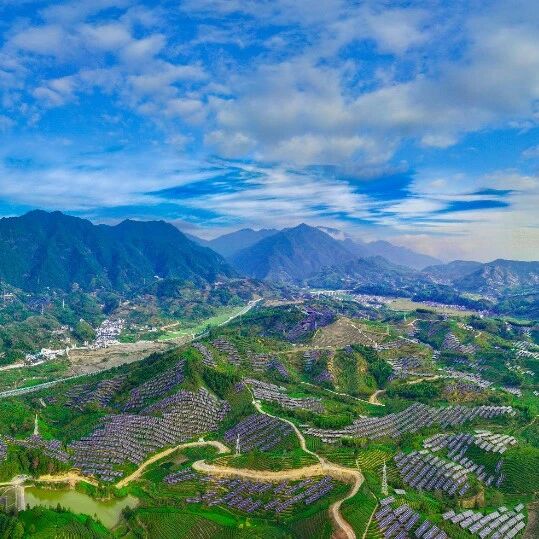
开局之年看浙江新能源发展
中国能源报· 2026-03-06 10:37
Core Viewpoint - The article emphasizes the rapid development of renewable energy in Zhejiang, highlighting the province's commitment to achieving carbon neutrality by 2060 and peak carbon emissions by 2030, while addressing the challenges of integrating high proportions of renewable energy into the grid [4][5][6]. Group 1: Renewable Energy Development - Zhejiang has implemented the "Wind and Solar Doubling Plan," aiming to double the installed capacity of wind and solar power within five years, achieving a fourfold increase in just two and a half years [5][6]. - By the end of 2025, the total installed capacity of wind and solar energy in Zhejiang is expected to reach 71 million kilowatts, accounting for 39% of the province's total installed capacity, with a generation share of 14.7% [6]. - The rapid increase in renewable energy capacity presents challenges for grid stability and energy consumption, necessitating a shift from merely increasing installed capacity to ensuring effective integration and consumption [7][9]. Group 2: System Integration and Upgrades - The National Energy Administration has called for a shift from isolated renewable energy development to integrated and collaborative approaches [8]. - Zhejiang is focusing on system upgrades to ensure that energy can be effectively integrated, transmitted, and consumed, moving from "building well" to "integrating well" [9]. - The province is exploring various integration strategies, including distributed solar power, offshore wind energy clusters, and innovative energy consumption models in urban areas [10][11]. Group 3: Energy Supply and Infrastructure - Zhejiang's energy supply strategy involves both long-distance electricity transmission and local generation capabilities, addressing the need for a dual approach to energy supply [15]. - The approval of the Zhejiang UHV AC ring network project and the construction of the Gansu to Zhejiang UHV DC project are key developments in enhancing the province's energy transmission capacity [15][16]. - The local energy structure is being optimized with significant projects like nuclear power and offshore wind energy, aiming to utilize the province's extensive coastline for renewable energy generation [17]. Group 4: Market Dynamics and Challenges - The transition from policy-driven to market-driven dynamics in the renewable energy sector is creating both challenges and opportunities, with companies focusing on improving operational efficiency and cost control [21]. - The market environment in Zhejiang is relatively stable, encouraging companies to enhance their capabilities in power generation forecasting, energy storage, and participation in virtual power plant aggregations [21]. - The industry is experiencing a phase of capacity clearing, prompting companies to innovate and focus on differentiated products suitable for various environments [21]. Group 5: Future Outlook and Ecosystem Development - Looking ahead, Zhejiang aims to increase its renewable energy installed capacity to 120 million kilowatts by the end of the 14th Five-Year Plan, with an expected share of 43% [23]. - The future energy development should focus on deep integration and collaboration across various sectors, moving away from single-mode approaches [24][25]. - The energy consumption model is expected to evolve into a more collaborative framework, integrating renewable energy with industrial processes and enhancing the flexibility of the power market [26][28].