贵金属

Search documents
【财经分析】贵金属市场节后高开进入高位震荡 向上趋势能否持续?
Xin Hua Cai Jing· 2026-02-27 06:01
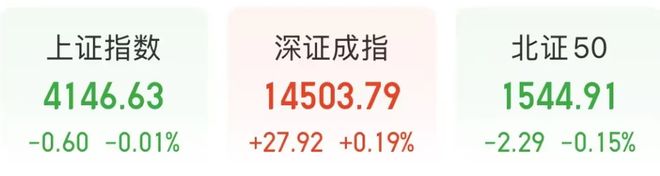
新华财经北京2月27日电(记者王小璐)在迎来马年首个交易日股期联动上涨后,贵金属市场涨势逐渐 放缓,步入高位震荡格局。 春节期间,国际贵金属价格走出"先抑后扬",节后国内市场一度强势跟涨,多重因素博弈下,贵金属这 波行情能走多远?2026年的长期价值又是否依然稳固? 王露晨指出,贵金属近期的涨势能否持续主要关注中东地缘情况,如果美伊间通过谈判能够达成一致, 则短期内黄金的风险溢价或将暂时消退。以对美股为代表的风险资产偏好的提升是否能够持续也值得观 察,若再次出现负面冲击和抛售潮,流动性问题仍可能在短期内拖累金银走势。 景川则提示,近期贵金属市场面临一定风险。由于前期快速拉升导致过度杠杆和过热,一旦利多因素钝 化、大型机构调整仓位,或将引发回调风险。如果美联储降息节奏不及预期、美元指数阶段性反弹也会 对金银价格形成压制。 尽管短期波动在所难免,但市场对2026年全年的贵金属价格仍保持乐观态度。 马年首个交易日,国内贵金属市场呈现股期双涨的态势。据统计,近三个交易日,A股市场贵金属行业 指数累计上涨6.23%,多只金银个股上涨。 回顾春节假期期间的国际贵金属市场,行情并非一帆风顺,而是呈现典型的"V"字走势。 对 ...
锂矿禁令引爆有色板块,有色ETF景顺(560290)盘中最高涨超3%,跟踪指数成分股东方锆业10cm涨停
Xin Lang Cai Jing· 2026-02-27 05:16
Group 1 - The core viewpoint of the news is that the non-ferrous metal sector is experiencing significant activity, driven by supply constraints and new demand dynamics, particularly in lithium due to Zimbabwe's export suspension [1] - As of February 27, 2026, the non-ferrous ETF Invesco (560290) rose by 1.59%, with a peak increase of over 3% during the trading session [1] - Key stocks in the sector, such as Dongfang Zirconium and Xiamen Tungsten, saw substantial gains, with increases of 10%, 8.20%, and 7.96% respectively [1] Group 2 - Zimbabwe announced a suspension of all raw mineral and lithium concentrate exports on February 25, 2026, aiming to enhance mineral regulation and promote local processing [1] - According to CICC analysis, this move will significantly tighten global lithium supply, with Zimbabwe's lithium concentrate exports to China in 2025 estimated at 148,800 tons, accounting for 18% of China's average monthly lithium carbonate production [1] - The overall logic for the non-ferrous metal industry in 2026 is characterized by "rigid supply + explosive new demand," supported by global liquidity easing and risk aversion due to geopolitical conflicts, indicating a strong upward momentum in the sector [1] Group 3 - The Invesco non-ferrous ETF closely tracks the CSI Non-Ferrous Metals Mining Theme Index, which includes 40 listed companies with non-ferrous metal mineral resource reserves [2] - The top three weighted industries in the index are industrial metals (48.51%), minor metals (21.52%), and precious metals (18.56%) [2] - The index encompasses leading companies in various sub-sectors, including Zijin Mining, Northern Rare Earth, Zhongjin Gold, and Ganfeng Lithium [2]

铂钯数据日报-20260227
Guo Mao Qi Huo· 2026-02-27 03:37
Report Summary 1. Report Industry Investment Rating No specific investment rating for the industry is provided in the report. 2. Core View of the Report - On February 26, 2026, the trends of platinum and palladium slightly diverged. The PT2666 contract closed up 2.0% at 589.5 yuan/gram, and the PD2006 contract closed up 2.27% at 446.55 yuan/gram [7]. - At the macro - level, the uncertainty of tariff policies and the tense geopolitical situation in the Middle East are the main supports for the entire precious metals market. However, in terms of fundamentals, short - term attention should be paid to the exemption of key minerals in Trump's new tariff policy, which may have a greater impact on palladium and weaken the short - term sustainability of the upward movement of the market [7]. - In the long run, the global platinum supply - demand bottleneck persists, and the global palladium supply - demand balance sheet is expected to improve. Therefore, platinum and palladium prices are still supported in the long term. - In the short term, platinum and palladium are expected to maintain a volatile trend, but the volatility may still be large. It is recommended that investors mainly buy on dips [7]. 3. Summary by Relevant Catalogs Domestic Prices - Platinum: The spot price of platinum (99.95%) has a certain value; the platinum futures main contract closed at 589.5 yuan/gram, up 0.60% from the previous value; the platinum basis (spot - futures) was - 2 yuan, down - 88.89% [5]. - Lithium: The lithium futures main contract closed at 446.55 yuan/gram, down - 2.49% from the previous value; the spot price of lithium (99.95%) was 443.5 yuan/gram, down - 2.21% from the previous value; the lithium basis (spot - futures) was - 3.05 yuan, down - 31.46% [5]. International Prices - London spot platinum was at 2306.064 dollars/ounce, up 1.23% from the previous value; London spot palladium was at 1795.576 dollars/ounce, down - 0.58% from the previous value [5]. - NYMEX platinum was at 2309.2 dollars/ounce, up 0.94% from the previous value; NYMEX palladium was at 1846.5 dollars/ounce, up 0.52% from the previous value [5]. Internal - External 15 - point Spreads - The dollar/renminbi central parity rate was 6.9228, down - 0.13% from the previous value. The spread between domestic platinum and London platinum was 9.51 yuan/gram, down - 22.52% from the previous value; the spread between domestic platinum and NYMEX platinum was 8.72 yuan/gram, down - 11.74% from the previous value [5]. Ratios and Inventory - The ratio of Guangzhou Futures Exchange platinum to palladium was 1.3201, with a change of 0.0405 from the previous value. The ratio of London spot platinum to palladium was 1.2843 [6]. - NYMEX platinum inventory was 186,269 ounces, with a change of 0.00% from the previous value; NYMEX palladium inventory was 578,195 ounces, with a change of 0.00% from the previous value [6]. Positions - NYMEX total platinum positions were 69,291, up 0.33% from the previous value; non - commercial net long positions in platinum were 12,347, up 2.18% from the previous value [6]. - NYMEX total palladium positions were 16,538, down 1.52% from the previous value; non - commercial net long positions in palladium were 513, down - 4.09% from the previous value [6].
国泰君安期货商品研究晨报-贵金属及基本金属-20260227
Guo Tai Jun An Qi Huo· 2026-02-27 01:51
2026年02月27日 | 黄金:震荡上行 | 2 | | --- | --- | | 白银:震荡格局 | 2 | | 铜:库存持续增加,限制价格回升 | 4 | | 锌:关注地缘扰动 | 6 | | 铅:缺乏驱动,价格震荡 | 8 | | 锡:震荡偏强 | 9 | | 铝:区间震荡 | 10 | | 氧化铝:供应压力未缓解 | 10 | | 铸造铝合金:跟随电解铝 | 10 | | 铂:箱体震荡 | 12 | | 钯:高频数据偏弱 | 12 | | 镍:沪镍投机情绪仍存,持续关注镍矿矛盾 | 14 | | 不锈钢:成本支撑重心上移,淡季累库约束弹性 | 14 | 国 泰 君 安 期 货 研 究 所 请务必阅读正文之后的免责条款部分 1 期货研究 商 品 研 究 商 品 研 究 2026 年 2 月 27 日 国泰君安期货商品研究晨报-贵金属及基本金属 观点与策略 产 业 服 务 研 究 所 白银:震荡格局 刘雨萱 投资咨询从业资格号:Z0020476 liuyuxuan023982@gtjas.com 【基本面跟踪】 贵金属基本面数据 | | | 昨日收盘价 | 日涨幅 | 昨日夜盘收盘价 | 夜盘涨幅 | ...
3天,人民币升值600点!中国AI调用量首超美国,四款大模型霸榜全球前五;恒生科技指数成份股一个多月市值蒸发2.3万亿
Jin Rong Jie· 2026-02-27 01:22
Market Dynamics - International crude oil futures experienced a slight decline, while gold futures fell by 0.45% to $5202.8 per ounce, and silver futures dropped by 2.74% to $89.12 per ounce. Positive signals regarding indirect negotiations between the U.S. and Iran were noted, with U.S. Navy personnel in Bahrain being reduced to "critical mission" levels in response to potential Iranian attacks [1] - The onshore RMB against the USD closed at 6.8397, appreciating by 275 points, marking a new high since March 23, 2023. The RMB appreciated nearly 600 basis points over three trading days, surpassing key levels of 6.87, 6.85, and 6.83 [1] Industry Trends - Chinese models surpassed U.S. models in token usage for the first time, with a calling volume of 4.12 trillion tokens compared to 2.94 trillion tokens. The following week saw a further increase to 5.16 trillion tokens, a 127% rise over three weeks, while U.S. models dropped to 2.7 trillion tokens. Four out of the top five models by usage were from Chinese manufacturers [2][2] - A report indicated that the U.S. profited $19.35 billion from exploiting global virtual currency assets, with two cases highlighted as examples of this technological hegemony [2] - The World Gold Council noted that financial speculation could lead to increased demand for gold as a safe haven, supported by stronger inflation hedging needs and enhanced correlations between stocks and bonds [2] Stock Market Movements - Following Nvidia's earnings report, U.S. tech stocks saw a significant drop, with Nvidia falling over 5%, marking its largest single-day decline since April 16 of the previous year. Despite Nvidia's optimistic outlook, concerns about an "AI bubble" persist [5] - The Hang Seng Tech Index saw a decline in total market capitalization from HKD 17.15 trillion to HKD 14.85 trillion within a month, losing HKD 2.3 trillion. This decline is attributed to the impact of the HALO trading strategy on both U.S. and Hong Kong stocks [6] - South Korea's stock market reached a new high, with the composite index up 49.67% year-to-date. Major stocks like Samsung Electronics and SK Hynix surged over 7% [6] Corporate Developments - Huawei Cloud launched the public beta of its CodeArts intelligent coding platform, integrating various AI coding technologies to enhance developer efficiency [7] - Broadcom announced the shipment of the industry's first 2nm custom computing SoC based on its 3.5D XDSiP platform, aimed at meeting the demands of large-scale AI clusters [7] - Luxshare's new AI terminal project commenced in Kunshan, with an expected annual output value exceeding RMB 100 billion upon reaching full production [7] Commodity Price Movements - Tungsten raw material prices have surged post-holiday, with tungsten powder exceeding RMB 1800 per kilogram, prompting price increases in the cutting tool industry [8] - Dispersed dyes have continued to rise in price, with specific products increasing by RMB 4000 per ton since the Spring Festival [8] Regulatory and Economic Updates - The Chinese Ministry of Commerce indicated ongoing communication with the U.S. regarding trade negotiations, aiming to maintain stable economic relations [12] - Local governments in China have issued over RMB 2 trillion in bonds to fund major projects post-Spring Festival, aiming to stabilize investment and economic growth [12] - The National Energy Administration emphasized accelerating the construction of renewable energy bases and revising the Renewable Energy Law [12]

美伊谈判扰动市场情绪,铂钯震荡运
Zhong Xin Qi Huo· 2026-02-27 01:19
Group 1: Report Overview - The report is a daily report on non - ferrous metals by CITIC Futures Research, dated February 27, 2026 [1] Group 2: Market Performance - On February 26, 2026, the platinum main contract on the Guangzhou Futures Exchange rose 2.00% to 589.5 yuan/gram, while the palladium main contract fell 2.27% to 446.55 yuan/gram [2] Group 3: Platinum Analysis Core View - The price of platinum is expected to be volatile and moderately strong in the medium to long term due to healthy supply - demand fundamentals and positive macro expectations [3] Main Logic - The US Supreme Court's ruling on tariffs and Trump's attitude towards tariffs have raised market risk - aversion sentiment, strengthening the precious metals sector. The progress of US - Iran negotiations also affects market sentiment. In the long run, the US is in an interest - rate cut channel, and factors like the Fed's impaired independence and the loosening of the global political and economic order weaken the US dollar's credit, which is conducive to the release of platinum's long - term price elasticity [3] Group 4: Palladium Analysis Core View - The price of palladium is expected to be volatile and moderately strong in the medium to long term, supported by short - term spot shortages and a better macro - environment [4] Main Logic - On the supply side, the US's anti - dumping preliminary ruling on Russian unforged palladium and Europe's consideration of new sanctions on Russian palladium have led to supply uncertainties and a tight spot market, supporting prices. On the demand side, palladium still faces structural pressure. Although the long - term supply - demand situation tends to be loose, short - term spot shortages and the Fed's interest - rate cut expectations provide clear support for prices [4] Group 5: Index Performance Special Index - The commodity index was 2434.44, up 0.12%; the commodity 20 index was 2790.14, up 0.23%; the industrial products index was 2314.11, down 0.02% [51] Sector Index (Non - ferrous Metals) - On February 26, 2026, the non - ferrous metals index was 2719.10, with a daily increase of 0.33%, a 5 - day increase of 0.26%, a 1 - month decrease of 3.26%, and a year - to - date increase of 1.23% [53]
英伟达大跌,总市值蒸发逾1.77万亿元
Zhong Guo Zheng Quan Bao· 2026-02-26 23:55
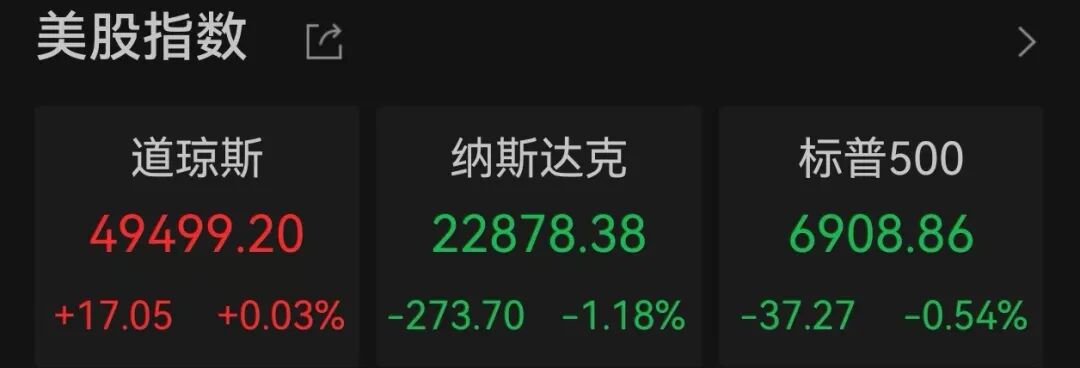
Group 1: Market Overview - Major U.S. tech stocks experienced a pullback, with the Nasdaq dropping over 1% and the Dow Jones showing a slight increase [2][4] - Nvidia saw a significant decline of over 5%, resulting in a market cap loss of nearly $26 billion, equivalent to over 177 billion RMB [4] - Dell Technologies reported record revenue for fiscal year 2026, with Q4 revenue reaching $33.379 billion, a 39% year-over-year increase, and total revenue for the fiscal year at $113.538 billion, a 19% increase [4] Group 2: Commodity Market - Gold prices showed a slight increase, while silver futures declined; as of February 27, gold was priced at $5,187.68 per ounce, up 0.45%, and silver at $89 per ounce, down 2.87% [5][7] - Oil prices also saw a minor increase, with NYMEX WTI crude at $65.45 per barrel and ICE Brent crude at $71 per barrel [6][8] - Analysts predict that gold prices may continue a strong oscillating trend due to ongoing geopolitical risks and the impact of de-globalization on the U.S. dollar's credit system [5][8]

金银价全线走强!黄金持稳、白银大涨超2%,后市该怎么走?
Sou Hu Cai Jing· 2026-02-26 18:08
Core Insights - The prices of gold and silver are experiencing a strong upward trend, with silver's increase outpacing that of gold, making it a focal point in the global financial market [1][3]. Price Movements - On February 26, 2026, the London spot gold price reached $5169.02 per ounce, up 0.44% from the previous day, while silver surged to $89.048 per ounce, marking a daily increase of 2.10% [1]. - In the domestic market, the Shanghai Gold Exchange reported gold T D at 1149.48 yuan per gram, up 0.32%, and silver T D at 22418 yuan per kilogram, with a rise of 2.62% [1]. - The international gold price briefly surpassed $5200, peaking at around $5217 before settling above $5160, indicating active buying alongside profit-taking [6]. Market Drivers - Expectations of potential interest rate cuts by the Federal Reserve are influencing market sentiment, leading to a weaker dollar, which in turn lowers the cost of purchasing gold and silver for holders of other currencies [3]. - Geopolitical tensions, particularly between the U.S. and Iran, are driving investors towards gold and silver as safe-haven assets amid fears of escalating conflicts [3]. Silver's Unique Demand - Silver's performance is bolstered by its dual role as both a precious metal and an essential industrial material, particularly in the rapidly growing solar energy sector and emerging technologies [4]. - The demand for silver in industries such as solar energy and electric vehicles is increasing, contributing to its price rise alongside investment demand [4]. Supply and Demand Dynamics - The global silver market has been in a state of supply shortage for several years, with consumption exceeding mining and recycling supply, and this gap is expected to widen in 2026 [9]. - The decline in visible silver inventories at major metal exchanges indicates a weak buffer against sudden demand spikes or supply disruptions, further intensifying price volatility [9]. Institutional Perspectives - Major financial institutions like Goldman Sachs and UBS are optimistic about gold prices, predicting gradual increases to around $5400 and $6200 respectively by the end of 2026, driven by macroeconomic risks and geopolitical factors [7]. - For silver, Bank of America suggests that despite potential short-term corrections, prices could challenge the $100 per ounce mark within 2026 due to supply-demand imbalances [7]. Market Sentiment and Behavior - The increasing participation of retail investors in precious metals through ETFs is noted, which may amplify short-term market volatility due to the direct impact of ETF transactions on the spot market [12]. - Market sentiment indicators show a rise in bullish options trading as gold and silver prices climb, reflecting strong investor expectations [18]. Technical Analysis - Gold faces technical resistance in the $5100 to $5200 range, while key support is identified around the psychological level of $5000 [13]. - Silver exhibits higher volatility, with its price showing a tendency to enter overbought territory, indicating potential for short-term corrections while maintaining a long-term upward trend [15]. Asset Allocation Trends - In a volatile environment for traditional assets like stocks and bonds, gold and silver are attracting interest as alternative assets due to their low correlation with mainstream asset classes [16].
国际油价大涨 黄金白银直线飙升 美股跳水!伊朗、美国谈判 传出大消息
Mei Ri Jing Ji Xin Wen· 2026-02-26 16:52
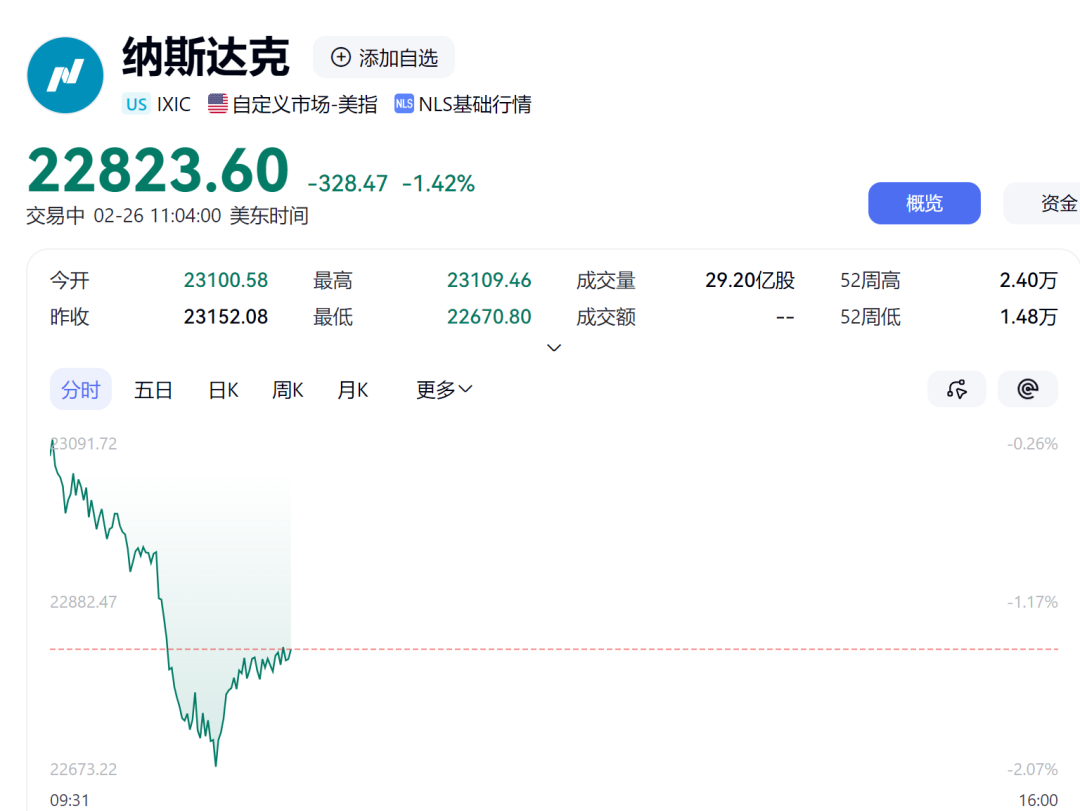
Market Overview - Global capital markets are experiencing significant volatility, with the Nasdaq index dropping by 1.42% as of the report [1] - Gold prices have rebounded, trading at $5185.348 per ounce, up 0.41%, while silver has narrowed its decline to 2.3% [3] Oil Market - Brent crude oil futures increased by 1.26% to $71.58 per barrel, and WTI crude rose by 0.76% to $65.92 per barrel, indicating a sharp upward movement from recent lows [3] US-Iran Negotiations - The US is expected to present strong demands in indirect negotiations with Iran, focusing on the dismantling of key nuclear facilities and the transfer of remaining enriched uranium to the US [3] - The US insists that any nuclear agreement must be "permanently effective," contrasting with the phased approach of the 2015 nuclear deal [3] Military Developments - The US is increasing military pressure on Iran, with the deployment of the USS Gerald R. Ford aircraft carrier to the Middle East, expected to arrive in Israel within 24 hours [9] - Iran is reportedly preparing for potential military conflict by significantly increasing its oil exports and repositioning missile and radar systems [5][7]
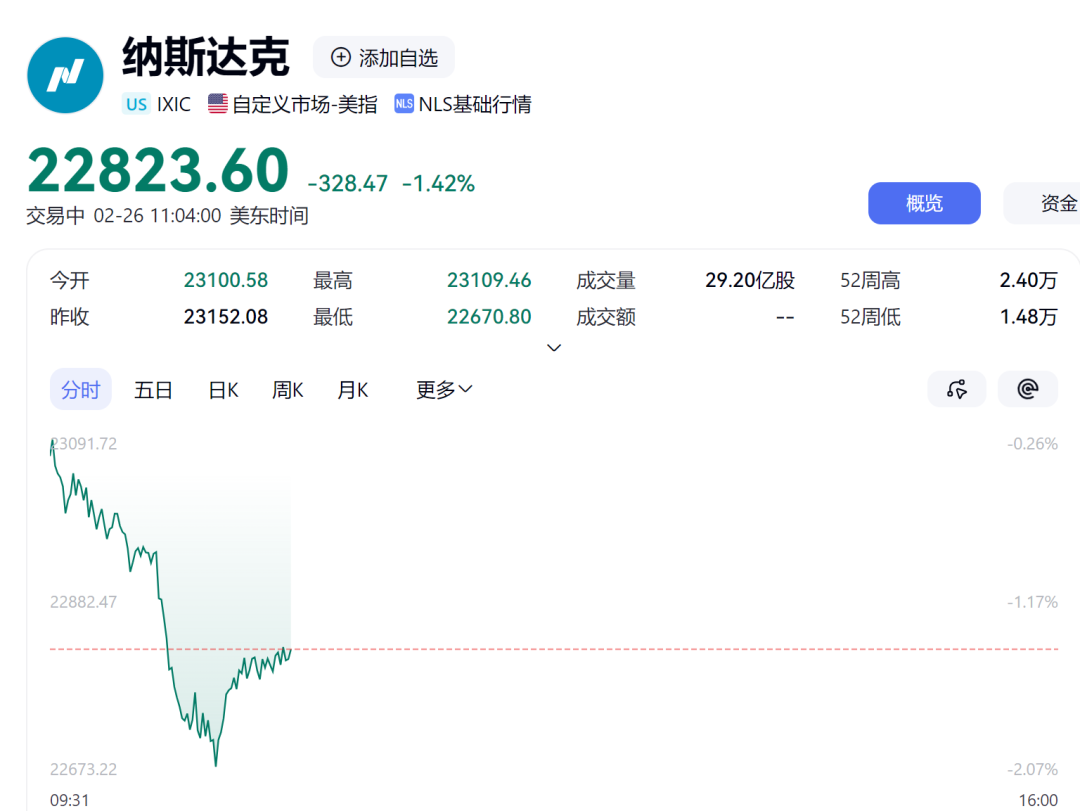
突发!国际油价大涨,黄金白银直线飙升,美股跳水!伊朗、美国谈判,传出大消息
Mei Ri Jing Ji Xin Wen· 2026-02-26 16:29
Market Overview - Global capital markets are experiencing significant volatility, with the Nasdaq index dropping by 1.42% as of the latest update [1] - Gold prices have rebounded, currently at $5185.348 per ounce, reflecting an increase of 0.41% [4][5] - Brent crude oil futures have risen by 1.26%, now priced at $71.58 per barrel, while WTI crude oil has increased by 0.76% to $65.92 per barrel [7][8] Geopolitical Developments - The U.S. is expected to take a hardline stance in negotiations with Iran, demanding the dismantling of key nuclear facilities and the transfer of remaining enriched uranium to the U.S. [11] - The negotiations are focused on nuclear weapons issues, with the U.S. insisting on a permanent agreement rather than a temporary one [11] - Iran has signaled military readiness, with reports of increased oil exports and strategic military deployments in response to U.S. pressure [13][15] Military Movements - The U.S. Navy's largest aircraft carrier, the USS Gerald R. Ford, has departed for the Middle East, expected to arrive in Israel within 24 hours [17] - This deployment is part of a broader military buildup in the region, coinciding with ongoing negotiations with Iran [17]