人形机器人

Search documents
摩根士丹利邢自强:2040年将迎来中国医药界的DeepSeek时刻
Xin Lang Cai Jing· 2026-01-15 11:31
Core Insights - China is demonstrating significant breakthroughs in technological innovation, characterized by three core advantages: industrial chain clusters, a surplus of STEM graduates, and a vast market scale that is difficult for other economies to replicate [1][6]. Industrial Chain Clusters - In regions like the Yangtze River Delta and the Pearl River Delta, thousands of suppliers and engineers are concentrated within a short distance, providing a competitive edge that countries like Mexico, India, and Southeast Asia lack [3][8]. - China graduates nearly 5 million STEM students annually, surpassing the combined total of Europe and the United States [3][8]. AI and Technology - Chinese companies are achieving technological catch-up in the AI sector with only 1/10 of the investment compared to the U.S., and they account for a significant portion of global AI talent [3][8]. - By 2027-2028, China is projected to achieve a 50% domestic production rate in GPU technology, marking a significant advancement [3][8]. Robotics and Automotive Industry - China holds a 60% share of the global leading companies in humanoid robotics, with a strong cost advantage in components like arms and hydraulic systems [4][9]. - It is estimated that 30% of the global increase in humanoid robot supply may come from China in the future [4][9]. Smart Driving and Biopharmaceuticals - China leads globally in smart driving adoption and is experiencing explosive growth in the biopharmaceutical sector [4][10]. - By 2040, it is projected that over one-third of new innovative drugs approved by the U.S. FDA will originate from China [4][10]. Traditional Industries and Export Market - China monopolizes the global refining and processing of rare earths and lithium batteries, continuously enhancing its industrial chain competitiveness [4][10]. - Currently, China accounts for approximately 14% of global exports, with projections suggesting this could rise to nearly 16% or higher in five years, potentially exceeding 17% [4][10]. - The three core advantages and innovations in emerging industries are expected to solidify China's position in the global export market [4][10].


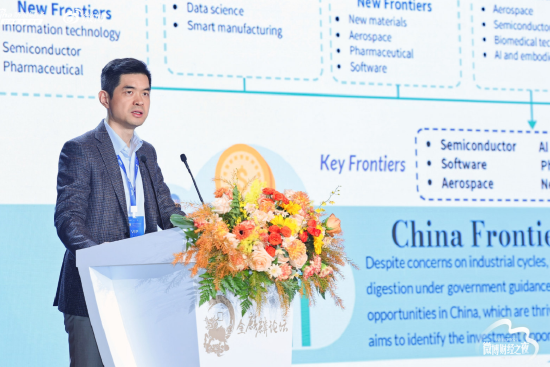
摩根士丹利邢自强:中国每年理工科毕业生接近500万,超过欧洲和美国总和
Xin Lang Cai Jing· 2026-01-15 11:25
Core Viewpoint - China is demonstrating "starry sea" breakthroughs in technological innovation, supported by three core advantages: industrial chain clusters, a surplus of STEM graduates, and a vast market scale, which are difficult for other economies to replicate [1][6]. Industrial Chain Clusters - In regions like the Yangtze River Delta and the Pearl River Delta, thousands of suppliers and engineers are available within a short distance, providing a competitive edge that countries like Mexico, India, and Southeast Asia lack, as they typically engage in only one segment of processing and design [3][8]. - China graduates nearly 5 million STEM students annually, surpassing the total from Europe and the United States combined [3][8]. AI Sector - Chinese companies are achieving technological catch-up in AI with only 1/10 of the investment compared to the U.S., and they account for a significant portion of global AI talent [3][8]. - The focus is on deploying lightweight models for rapid commercial application, which aligns with China's economic realities, and there is optimism that computational limitations will be overcome [3][8]. - Projections indicate that by 2027-2028, China could achieve a 50% domestic production rate in GPU technology [3][8]. Robotics and Automotive Industry - China holds a 60% share of the global leading companies in humanoid robotics, benefiting from cost advantages in components like arms and hydraulic systems [4][9]. - It is estimated that 30% of the global increase in humanoid robot supply may come from China [4][9]. Smart Driving and Biopharmaceuticals - China leads globally in smart driving adoption and is experiencing explosive growth in the biopharmaceutical sector [4][10]. - By 2040, it is projected that over one-third of new innovative drugs approved by the U.S. FDA will originate from China, marking a significant moment for the Chinese pharmaceutical industry [4][10]. Traditional Industries and Export Market - China monopolizes the global refining and processing of rare earths and lithium batteries, continuously enhancing its industrial chain competitiveness [4][10]. - Currently, China accounts for one-seventh of global exports, with expectations to rise to nearly one-sixth or more, potentially exceeding 17% in five years [4][10]. - The three core advantages and innovations in emerging industries are expected to solidify China's position in the global export market, which is anticipated to remain a crucial pillar for economic growth in the coming years [5][10].
协同发展 打造中部对外开放桥梁
Xin Lang Cai Jing· 2026-01-15 05:03
2025年,在中国贸促会的支持以及湖北省委、省政府的坚强领导下,湖北省贸促会坚持以习近平新时代 中国特色社会主义思想为指导,深入学习贯彻党的二十届四中全会精神,认真贯彻落实习近平总书记考 察湖北重要讲话精神,落实中国贸促会"协同发展年"工作部署,立足湖北加快建成中部地区崛起的重要 战略支点实际,担当作为、锐意进取,各项工作实现多点突破、创新发展。 品牌活动出新出彩 在中国贸促会的指导帮助下,第三届链博会期间,湖北搭建全场唯一人形机器人全产业链主题展区,举 办湖北省人形机器人产业链对接会,多家人形机器人企业发布最新技术和产品,达成多项战略合作协 议;同时组织企业参展"六链一区",指导市州开展专题活动。中国贸促会会长任鸿斌巡视专题展区,湖 北省贸促会荣获金牌组织单位。任鸿斌还专程赴湖北调研,出席第四届链博会湖北推介会暨签约仪式, 就湖北企业参加链博会、拓展国际合作开展实地调研。组织百人团组出访日本、韩国,利用世博会最高 国际舞台,全面展示湖北开放发展成就,推动湖北省与世博会参展国家多层次交往合作,达成40多个合 作意向,成功签约项目金额3.2亿元。组织50余人代表团赴瑞士举办第二届"两湖对话",并在瑞士、意 大利 ...
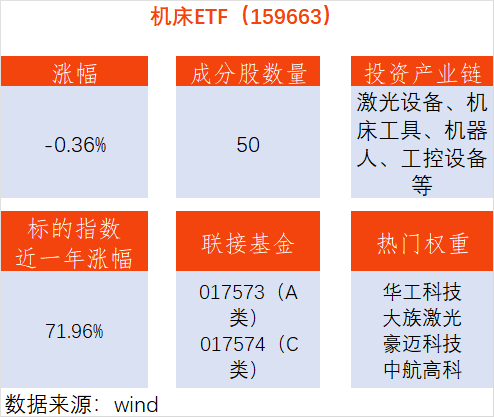
CES 2026中国人形机器人企业集体亮相,机床ETF(159663.SZ)下跌0.36%
Mei Ri Jing Ji Xin Wen· 2026-01-15 02:58
Group 1 - The A-share market showed mixed performance on January 15, with the Shanghai Composite Index down by 0.03%, while sectors like non-ferrous metals, transportation, and basic chemicals saw gains [1] - The machine tool sector experienced a decline, with the Machine Tool ETF (159663.SZ) dropping by 0.36%, and key stocks such as Hezhong Intelligent down by 6.86%, East China CNC down by 3.32%, and Sifangda down by 3.18% [1] - Some individual stocks were active, with Zhongtung High-tech rising by 3.94% and Huichuan Technology increasing by 2.00% [1] Group 2 - At CES 2026, over 4,000 companies participated, with nearly a quarter being Chinese exhibitors, particularly in the humanoid robot sector, where 28 Chinese companies showcased their products, representing over half of the exhibitors in that category [3] - Zhiyuan Robotics made its debut in the U.S. by showcasing its complete product line, including the Lingxi X2, Yuanzheng A2, and Jingling G2, while Yushu Technology's G1 humanoid robot attracted significant attention with live demonstrations [3] - The humanoid robot industry is entering a critical 0-1 phase, with electronic companies positioned advantageously in the robotics sector, particularly in components like structural parts, dexterous hands, sensors, and machine vision [3]

摩根资产管理:中国科技领域将迎来“更多DeepSeek时刻”,中国科技股将继续受益于技术突破
Ge Long Hui· 2026-01-15 02:14
年初至今,一项衡量中国内地科技股的指数已上涨12%,表现跑赢香港以及美国的同类指数,因投 资者纷纷涌入。从芯片到人形机器人再到商用火箭等领域的每日进展,以及大量计划中的股票上市,共 同推动了这股热潮。 展望未来,Rasid认为人工智能支出和更有利的政策将成为推动中国科技股的关键催化剂。 "我们确实认为中国在科技领域仍然有很多机会。"该公司的全球市场策略师Raisah Rasid在新加坡 的一次简报会上表示:"你们将会看到越来越多机器人技术的进步,以及更多DeepSeek时刻。" 摩根资产管理表示,随着中国加大力度创建更多类似DeepSeek的公司,中国科技股将继续受益于 技术突破。 ...


利空也砸不下大A
虎嗅APP· 2026-01-15 00:29
Core Viewpoint - The A-share market is experiencing extreme enthusiasm, prompting regulatory measures to cool down the market, indicating a shift towards a "slow bull" market rather than a "crazy bull" market, emphasizing the need for investors to focus on fundamentals rather than emotions [5][6]. Market Sentiment and Regulatory Response - On January 14, the exchange announced an increase in the minimum margin ratio for financing from 80% to 100%, leading to an immediate market downturn [5]. - The regulatory stance is clear: the market can rise, but it should not be driven solely by emotions, and investors must return to fundamentals [6]. Investment Opportunities and Risks - The focus should be on identifying key sectors that are likely to perform well while avoiding those that may pose risks [7][8]. - The analysis will cover 13 high-interest sectors to provide insights on potential investment opportunities [9]. AI Computing Power - The rise of AI infrastructure is supported by increased investments from cloud vendors, with companies like "易中天" (New Yizhong, Zhongji Xuchuang, Tianfu Communication) showing significant stock price increases [11]. - However, the current high valuations may be unsustainable, and without new positive developments, there is a risk of a bubble burst in this sector [11]. Space Computing Industry - The space computing industry is expected to emerge as a significant market, with technologies deploying data centers in space to address ground-based limitations [13][15]. - China's advancements in space computing are supported by government initiatives, with plans for a comprehensive deployment strategy by 2025 [17][18]. Humanoid Robots - The humanoid robot sector is anticipated to see differentiation by 2026, with industrial applications being the primary focus, while household robots remain underdeveloped [20][22]. - Companies like 优必选 (UBTECH) are ramping up production, with expectations of significant output increases in the coming years [22][23]. Semiconductor Equipment - Domestic wafer fabs are planning expansions to meet AI chip demand and enhance production capacity, which will benefit semiconductor equipment suppliers [25][26]. Controlled Nuclear Fusion - The commercialization of controlled nuclear fusion is accelerating, with multiple technological pathways being explored [28][30]. - China is making significant strides in fusion energy, with projects like EAST and BEST expected to lead to practical applications by 2027 [32][33]. Commercial Aerospace - The commercial aerospace sector is experiencing a surge, driven by fears of missing out on investment opportunities, although there are concerns about the sustainability of this growth [41][42]. - China's satellite deployment is rapidly increasing, positioning the country as a major player in the global space race [44]. Photovoltaics - The photovoltaic sector is expected to reach a turning point in 2026, driven by supply-side adjustments and improved fundamentals [47][51]. - The cancellation of export tax rebates is likely to increase costs for exporters, benefiting larger firms with economies of scale [51][52]. Consumer Sector - The consumer sector is seen as a safe haven during market volatility, with specific focus areas including media, service consumption, and premium goods like liquor [66][70]. - The overall consumer demand is expected to recover gradually, but structural changes may lead to a lack of strong support for broad-based growth [67]. Banking Sector - The banking sector has shown resilience despite fundamental pressures, with attractive dividend yields drawing in long-term investors [72][73]. - However, the sector is unlikely to lead the market due to its lower growth potential compared to technology and growth stocks [74]. Insurance Sector - The insurance sector has outperformed banks, benefiting from stock market recovery and expected growth in both asset and liability sides [76]. - The aging population is likely to increase the importance of insurance companies in key areas like healthcare and retirement [76]. Brokerage Firms - Brokerage firms have seen strong earnings growth but face challenges in maintaining investor interest due to perceived volatility and lack of long-term growth [77].

制造成长周报(第 42 期):中国新增 20 万颗卫星申请,Meta 达成数 GW 数据中心核能供电协议-20260114
Guoxin Securities· 2026-01-14 11:07
Investment Rating - The report maintains an "Outperform" rating for the industry [5][12]. Core Insights - The report highlights significant developments in the commercial aerospace and AI infrastructure sectors, indicating strong long-term investment opportunities [2][3]. - The Chinese government has prioritized satellite frequency resource applications, with over 200,000 satellite applications submitted to the International Telecommunication Union (ITU) [2][19]. - Meta has signed multiple nuclear power supply agreements to meet the energy demands of AI data centers, totaling 6 GW [3][20]. Summary by Relevant Sections Commercial Aerospace - China applied for over 200,000 satellite frequency resources, with more than 190,000 from the newly established Radio Innovation Institute, emphasizing the strategic importance of satellite frequency resources [2][19]. - The report suggests focusing on core suppliers in the commercial aerospace sector, including companies like Guangdian Measurement, Yingliu Co., Shanghai Huguang, and others [2]. AI Infrastructure - Meta's collaboration with companies like Vistra, Oklo, and TerraPower for nuclear power supply indicates a robust demand for AI infrastructure, which will continue to drive energy needs [3][20]. - The report recommends focusing on the gas turbine and liquid cooling sectors, highlighting the importance of gas turbines as primary and backup power sources for data centers [3]. - Key companies in the gas turbine supply chain include Yingliu Co., Wanzhe Co., and others, while liquid cooling solutions are gaining traction as a trend in data centers [3]. Key Company Earnings Forecast and Investment Ratings - The report provides earnings forecasts and investment ratings for several companies, all rated as "Outperform," including: - Yingliu Co. (44.76 CNY, market cap 30.4 billion CNY, EPS 0.42 for 2024A) [12][28]. - Hengli Hydraulic (115.20 CNY, market cap 154.5 billion CNY, EPS 1.87 for 2024A) [12][28]. - Longxi Co. (26.98 CNY, market cap 10.8 billion CNY, EPS 0.31 for 2024A) [12][28].
国泰海通晨报-20260114
国泰海通· 2026-01-14 02:35
Group 1: Non-ferrous Metals Industry - The non-ferrous metals sector is experiencing a tight supply-demand balance, with macroeconomic factors such as monetary policy, geopolitical tensions, and supply disruptions significantly impacting metal prices [2][3] - Precious metals are supported by geopolitical factors, with gold prices expected to be bolstered by central bank purchases and rising ETF holdings in 2026 [3][4] - Copper prices are expected to remain strong due to supply constraints and positive macroeconomic expectations, with a focus on the impact of U.S. Federal Reserve leadership changes on prices [4] - Aluminum prices are experiencing upward momentum driven by strong macroeconomic performance and easing liquidity, with domestic production and demand recovering [4] - Tin prices are supported by supply bottlenecks, with ongoing tight supply conditions expected to continue due to production delays in key regions [5] Group 2: Jiangsu Guotai Company - Jiangsu Guotai is positioned as a leading player in the textile and chemical sectors, benefiting from global supply chain restructuring and the recovery of the new energy industry [7][8] - The company is expected to achieve net profits of 1.19 billion, 1.25 billion, and 1.31 billion RMB from 2025 to 2027, with a target market value of 18.75 billion RMB based on a 15x PE ratio for 2026 [7] - Jiangsu Guotai's core trading business is supported by a global production layout, which helps mitigate external disruptions and maintain stable growth [8] Group 3: Automotive Industry - The humanoid robot sector is entering a phase of commercialization, with significant advancements showcased at CES 2026, indicating a potential acceleration in the global commercialization process [9][10] - Chinese humanoid robot companies demonstrated strong capabilities at CES 2026, with a notable presence and innovative product showcases [10][11] - The automotive sector is witnessing increased interest in humanoid robots, with several companies making significant technological advancements and product launches [9][10]

生成式搜索兴起,AI应用催化密集
Mei Ri Jing Ji Xin Wen· 2026-01-14 00:26
Group 1 - The core viewpoint is that during the "14th Five-Year Plan" period, the Chinese economy will enter a transformation phase dominated by new quality productivity, with a downward shift in the growth center and intensified external geopolitical competition [1] - Industry investment will focus on four main lines: technology self-reliance driven by new quality productivity, green transformation during the carbon peak period, the silver economy driven by population aging, and strategic resource allocation under the coordination of development and security [1] - Non-ferrous metals are expected to maintain strong performance, with gold being a core safe-haven asset under the "de-dollarization" pricing logic, while copper and aluminum will benefit from energy transition and supply constraints [1] Group 2 - The asset allocation strategy suggested is a dual-peak strategy: defensive allocation in high-dividend assets (such as hydropower, telecom operators, and state-owned banks) to secure stable cash flow returns, and offensive allocation in hard technology growth assets (such as semiconductor equipment, industrial software, and humanoid robots) to capture excess returns from domestic substitution and industrial upgrading [1] Group 3 - The AI industry is experiencing continuous catalysis, with significant commercial development potential for AI applications, particularly in generative search (GEO) [2] - In addition to content generation, content interaction is becoming an important breakthrough point, enhancing user engagement significantly, especially in gaming and other content sectors [2] Group 4 - The chemical industry, characterized as a typical cyclical industry, usually follows a five-year cycle consisting of four stages: profit upturn, capacity expansion, profit bottoming, and capacity clearance/improvement in demand expectations [3] - With capital expenditure growth turning negative, anti-involution, overseas interest rate cuts, and domestic demand expansion, the chemical industry is viewed positively at the beginning of the "14th Five-Year Plan" as it enters a "dawn" phase [3] - The ongoing global technological revolution is accelerating, presenting new opportunities for material transformation [3]

国泰海通 · 晨报260114|有色金属、汽车
国泰海通证券研究· 2026-01-13 13:20
Precious Metals - Geopolitical factors are supporting gold prices, with the situation in Venezuela and the Middle East playing a significant role. Strong U.S. unemployment data is also noted. Central bank gold purchases and rising gold ETF holdings are expected to continue supporting gold prices through 2026 [2] - Silver prices are following gold trends, with a decrease in London silver leasing rates and an increase in inventory [2] - Platinum prices are expected to strengthen due to anticipated U.S. tariffs [2] Copper - U.S. employment data shows mixed results but reflects economic resilience. Ongoing strikes at the Mantoverde copper mine in Chile are causing supply disruptions, leading to a bullish outlook for copper prices. The market is advised to monitor the impact of Trump's nomination for the next Federal Reserve chair on copper prices [3] - Supply constraints are expected to persist, while demand may be affected by high prices. However, low inventory levels in non-U.S. regions and a return to Monroe Doctrine strategies are likely to enhance price elasticity [3] Aluminum - Strong macroeconomic performance is driving aluminum prices to maintain high levels. Increased daily production due to new projects in China and Indonesia is noted, alongside a slight increase in operating rates for domestic aluminum processing companies [3] Tin - Supply bottlenecks remain, providing strong support for tin prices. Delays in the resumption of mining in Myanmar and uncertainties in Indonesia's RKAB approval process are limiting supply elasticity. Despite adjustments in the Federal Reserve's interest rate path, tin prices are supported by liquidity expectations and demand from the semiconductor industry [3] Energy Metals - Lithium inventory accumulation and rising production are noted, with marginally weakening demand. A reduction in export tax rebates for battery products may lead to front-loaded demand, making seasonal demand stronger than expected [4] - Cobalt prices remain high due to tight upstream raw material supplies, while cobalt companies are extending their reach into downstream electric new energy sectors to enhance competitive advantages [4] - Rare earth prices are rebounding due to policy support and pre-holiday stocking demand, with significant increases in medium and heavy rare earth prices [4] Robotics Industry - Chinese humanoid robot companies showcased significant advancements at CES 2026, with over 28 companies participating, highlighting China's technological capabilities in this field [9] - Notable products included the full range of offerings from Zhiyuan Robotics and interactive demonstrations from other companies, indicating a strong presence in the global market [9] - International competitors like LG and Boston Dynamics also made strides in humanoid robotics, showcasing innovative applications and capabilities [10] Company Developments - Xinjian Transmission has initiated its listing guidance with CITIC Securities as the advisory institution. The company specializes in manufacturing gear components and is a core supplier for Tesla's humanoid robot [11]