便利店

Search documents
报告:便利店行业遇客流减少等多重压力 差异化价值策略是破局之路
Zheng Quan Shi Bao Wang· 2025-06-03 11:41
Core Insights - The convenience store industry in China is evolving from traditional retail to include dining services, driven by increasing consumer demand for immediacy, convenience, and quality [1][3] - The report indicates that nearly 90.4% of convenience stores are now selling fresh food, and many are exploring the "convenience store + cafeteria" model to enhance their value proposition [1] - Instant retail is gaining traction, with almost 40% of convenience store businesses expected to launch instant retail services by 2024, leading to an 11.4% year-on-year increase in sales from this segment [1][2] Industry Trends - The rise of "front warehouse" models allows convenience stores to expand without significant investment in large retail spaces, reducing logistics costs and improving delivery speed [2] - Despite challenges such as declining foot traffic and average transaction value, the number of convenience stores continues to grow, with a focus on 24-hour and community-based locations [2] - The average daily revenue per store is projected to slightly decrease to 4,634 yuan in 2024, reflecting the pressures on the industry [2] Product and Brand Strategy - Convenience stores are shifting their private label strategies from being perceived as low-cost alternatives to offering high-quality products, enhancing brand image and competitiveness [3] - The sales share of cigarettes and private label products is expected to increase by 1.4% and 0.7% respectively in 2024, while fresh food and coffee sales may see a slight decline [3] - Membership programs are becoming more significant, with average transaction values for members growing by 2.0% annually over three years, compared to just 0.3% for non-members [3]
便利店“赛点”仍是商品力
3 6 Ke· 2025-05-30 03:36
Core Insights - The convenience store industry is shifting from standardized operations to a more refined "thousand stores, thousand faces" approach, focusing on localized product offerings and enhanced category management strategies [1][2][11] - The industry is experiencing significant changes, including stronger competitive advantages for companies with solid fundamentals, widening gaps between leading and mid-tier firms, and a shift in focus from market expansion to deepening regional markets [2][11] Industry Trends - The convenience store sector is facing challenges from the rapid rise of discount snack stores, leading to a decline in store operational capabilities despite ongoing expansion [1][2] - Companies are increasingly prioritizing product quality and safety over high margins in their selection criteria, reflecting a shift in consumer expectations [2][11] Category Management - Category management is becoming essential in retail, focusing on customer needs and optimizing product offerings to enhance sales contributions and customer value [3][6] - The introduction of analytical tools like the BCG and Ansoff matrices is helping companies reassess product positioning and develop forward-looking selection and promotion strategies [6][10] Challenges in Category Management - Companies face multiple challenges in category management, including declining product strength, the pressure to eliminate inefficient SKUs, and competition from cross-industry players [4][13] - Effective category management requires a comprehensive approach, integrating sales data analysis, market research, and competitive benchmarking to inform product selection and promotional strategies [4][6] Strategic Frameworks - The BCG matrix helps companies evaluate product positioning based on market growth and share, guiding resource allocation and strategic decisions [7][10] - The Ansoff matrix provides a framework for planning growth strategies by categorizing products and markets, allowing for targeted market penetration and product development [9][10] Implementation of Localized Strategies - The concept of "store ledger" is crucial for aligning product offerings with local market characteristics, enhancing store efficiency and customer loyalty [11][12] - The dynamic adjustment of product offerings based on local demand is a key challenge, requiring effective management of product lifecycle and inventory [13][14] Comprehensive Management Approach - The evolution of product management in convenience stores now encompasses category design, lifecycle strategies, and market-specific adaptations, moving towards a more integrated management system [17][18] - The focus on precision in product offerings and alignment with consumer needs is essential for driving overall operational performance and customer engagement [18]

盒马、罗森淄博首店相继官宣
Qi Lu Wan Bao· 2025-05-29 23:43
Group 1 - Hema Fresh is set to open its first store in Zibo, marking a significant expansion into third and fourth-tier cities, with plans to open nearly 100 new stores by the end of 2025 [1][2] - The first Hema store in Shandong opened in December 2018 in Qingdao, and since then, the company has focused on expanding in first and second-tier cities, creating a consumption siphon effect in surrounding areas [2] - Other retail developments in Zibo include the upcoming openings of Lawson convenience stores and 7-ELEVEn, indicating a competitive retail environment in the region [3] Group 2 - Lawson, a leading foreign convenience store chain, is also expanding in Zibo, with its first store expected to open in June 2025 [3] - The retail landscape in Zibo is becoming increasingly dynamic, with multiple new store openings planned for 2025, including the first POD commercial complex [3] - The strategic adjustments of local retailers, such as the closure of Shenghao Supermarket, highlight the shifting dynamics in Zibo's retail market [2]

地方商务丨小小便利店燃旺“烟火气”,贵阳1600余家便利店跑出消费新活力
Sou Hu Cai Jing· 2025-05-29 04:42
Core Insights - Guiyang has the highest growth rate of convenience stores in China at 4.9% according to the 2024 China Urban Convenience Store Development Index [1] - The convenience store industry in Guiyang has evolved from traditional small shops to vibrant consumer spaces, catering to a younger demographic and enhancing consumer experience [3][8] Industry Overview - As of the end of 2024, there are over 1,600 convenience stores in Guiyang and Gui'an, with a brandization rate of 70%, serving over 500,000 customers daily and generating consumption exceeding 3 billion yuan [3] - The convenience store model in Guiyang is characterized by high density, all-time service, and multiple business formats, contributing to urban livelihood and stimulating new retail industry growth [3] Consumer Behavior - Consumers increasingly prefer convenience stores for their diverse offerings, including snacks, meals, and local specialties, which align with their fast-paced lifestyles [5][8] - The convenience store format meets the demand for quick, easy access to food and daily necessities, especially for working individuals and families [13][17] Technological Integration - The adoption of smart payment systems and self-service kiosks has improved operational efficiency and consumer experience in convenience stores [22] - Younger generations, particularly Gen Z and Millennials, favor fragmented and digital shopping experiences, driving the trend towards smaller, ready-to-eat, and health-conscious product offerings [22][23] Market Trends - The development of "night economy" in Guiyang has led to increased foot traffic in convenience stores during late hours, with some stores reporting daily sales exceeding 10,000 yuan [11][15] - Convenience stores are evolving into multifunctional service providers, breaking traditional retail boundaries and adapting to the "15-minute living circle" initiative [20]
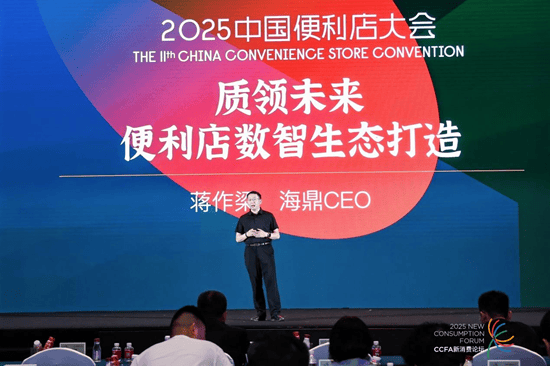
2025便利店大会海鼎CEO蒋作梁:质领未来,便利店数智生态打造
Sou Hu Cai Jing· 2025-05-28 16:09
Core Insights - The speech by CEO Jiang Zuoliang at the 2025 China Convenience Store Conference emphasized the theme of "Quality Leading the Future, Building a Smart Ecosystem for Convenience Stores," showcasing Haiding's achievements and future prospects in the field of convenience store digitization [1][8]. Group 1: Industry Insights - The convenience store industry is experiencing intense competition, with new technology applications, upgraded business models, and a focus on detail becoming key drivers of development [3]. - Haiding has demonstrated a keen market insight by identifying industry pain points through high-frequency customer inquiries, addressing demands in AI applications, overseas market expansion, and cost reduction [3]. Group 2: Innovative Solutions - Haiding has continuously iterated its comprehensive business solutions to meet the diverse needs of the convenience store industry, including advancements in light meal operations, fresh food processing, and global expansion [4]. - The company has developed a system that supports multi-language, multi-tax, and multi-currency capabilities, facilitating its products' application in over 80 countries and regions [4]. Group 3: Operational Efficiency - Haiding has introduced innovative applications to enhance supply chain collaboration and store operations, ensuring significant performance improvements [6]. - Specific applications include intelligent replenishment, which has improved stock management, and digital guidance for operational decision-making, both of which have received high customer recognition [6]. Group 4: AI Empowerment - The company is deepening the application of AI in retail, with systems in place for store inspections that enhance operational efficiency and customer experience [7]. - Haiding focuses on high-frequency operational tasks, leveraging software, hardware, and big data to provide effective solutions that significantly boost work efficiency [7]. Group 5: Strategic Commitment - Haiding remains committed to its mission of enhancing business efficiency and prioritizing customer satisfaction, celebrating its 30th anniversary with a user seminar to reflect on its journey and future [8]. - The speech highlighted Haiding's substantial contributions to the digitization of the convenience store ecosystem, offering valuable insights for industry development [8].
武汉黄陂:“沉浸式驻店”激活商户发展新动能
Zhong Guo Chan Ye Jing Ji Xin Xi Wang· 2025-05-28 08:10
Core Insights - The article discusses the "immersive in-store support" initiative organized by the marketing department of Huangpi District in Wuhan, aimed at enhancing the operational capabilities of local merchants through targeted strategies, scientific inventory management, and spatial optimization [1] Group 1: Targeted Strategies - The marketing team developed tailored solutions for merchants based on actual sales data, such as "breakfast combo promotions" for community convenience stores and "holiday-themed marketing" for specialty shops [2] - Merchants reported significant sales increases, with one store's weekend sales doubling due to the implementation of a "family package" designed by the marketing team [2] Group 2: Scientific Inventory Management - Merchants were guided to establish a scientific inventory management system, which included the "first in, first out" principle for product display and "limited-time promotions" to clear near-expiry items [3] - One store owner noted a 20% increase in inventory turnover speed and an 18% reduction in loss rates due to the new inventory management techniques [3] Group 3: Spatial Optimization - The marketing team restructured store layouts to enhance customer experience, creating dedicated areas for high-frequency items and themed displays to attract customers [4] - Following the redesign, one store experienced a 15% increase in customer return rates and an 8% rise in average transaction value [4] Group 4: Overall Impact - The initiative involved comprehensive support from the marketing team, including store diagnostics, implementation of strategies, and tracking of results, leading to improved efficiency and revenue for retail businesses [4]
便利店的减脂餐,吃完「10天胖5斤」?
36氪· 2025-05-27 14:06
Core Viewpoint - The article discusses the paradox of convenience store food, which is perceived as healthy and low-calorie but often leads to weight gain due to inaccurate labeling of calories and portion sizes [5][30][41]. Group 1: Convenience Store Dynamics - Convenience stores are seen as a go-to option for urban workers seeking quick meals, often leading to unintended weight gain despite calorie counting efforts [5][30][75]. - The popularity of convenience stores in Japan and China has led to the emergence of a "convenience store diet," where consumers believe they can manage their caloric intake effectively [16][18]. Group 2: Misleading Caloric Information - Many convenience store foods are found to be heavier than labeled, with examples showing discrepancies of up to 30% more weight than indicated [41][42]. - A study revealed that out of six convenience store food items tested, five had excessive fat content, and four exceeded their labeled energy values [71][72]. Group 3: Consumer Behavior and Perception - Urban workers often resort to convenience stores due to budget constraints and limited time, viewing them as a practical solution for meals [76][81]. - Despite health concerns, the convenience store offers a sense of security and reliability for consumers in fast-paced urban environments, providing a temporary escape from their hectic lives [90][96].

东莞便利店之王,狂飚540亿
创业邦· 2025-05-26 03:22
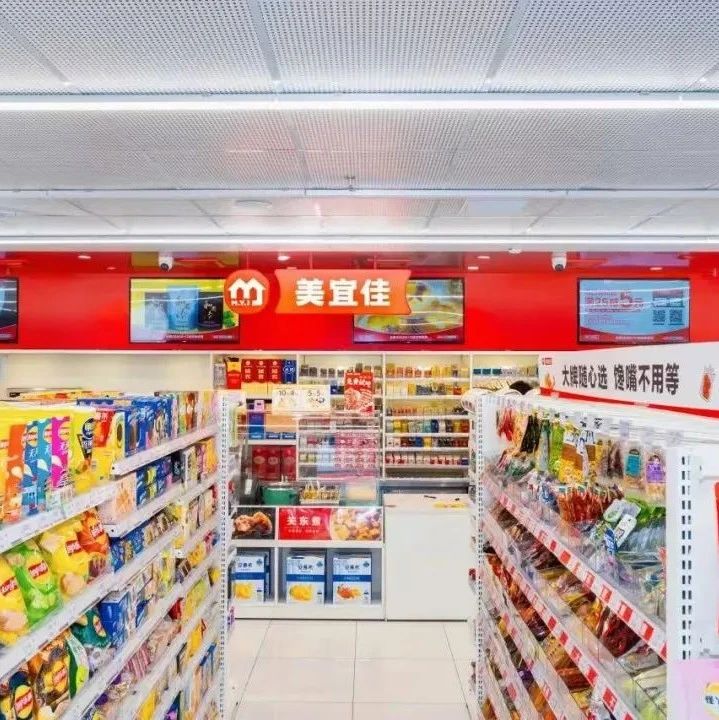
Core Viewpoint - Meiyijia, the leading convenience store chain in China, is aggressively expanding its store count and profitability, aiming for a target of 100,000 stores and 100 billion yuan in revenue by 2025 [3][4]. Group 1: Company Overview - Meiyijia has 37,943 stores, making it the largest convenience store chain in China, with a sales revenue of 54.2 billion yuan in 2023, reflecting a growth of over 20% [3][4]. - The company operates on a franchise model with low entry barriers, requiring a total investment of approximately 300,000 to 350,000 yuan for a 40-square-meter store [10][11]. Group 2: Business Strategy - Meiyijia's business model includes a focus on high-margin products, with an average gross margin of 25% on general merchandise, and a significant portion of revenue coming from franchise fees and supply chain profits [13][18]. - The company has been exploring new service models, such as "convenience store + community services," to attract more customers and enhance store traffic [11][16]. Group 3: Market Position and Challenges - Despite facing challenges from e-commerce and market saturation, Meiyijia has maintained steady growth, with annual sales growth in double digits since 2016 [14][16]. - The company is also adapting to market changes by introducing new store formats and digital technologies, such as smart temperature control and self-service cash registers, to improve operational efficiency [28]. Group 4: Future Outlook - Meiyijia's founder, Ye Zhijian, emphasizes a long-term vision of growth and innovation, encouraging franchisees to adapt to market demands and explore new opportunities [28].
始祖鸟Q1新增门店为零;亚瑟士单季首破百亿元;娃哈哈农夫山泉回应代工问题丨品牌周报
36氪未来消费· 2025-05-25 13:29
Group 1: Amer Sports Financial Performance - Amer Sports reported Q1 revenue of $1.473 billion, a 23% year-over-year increase, with a 26% increase at constant exchange rates [2] - Operating profit grew by 97% to $214 million, while adjusted operating profit increased by 79% to $232 million [2] - The Asia-Pacific region showed significant growth, with Greater China revenue up 43% to $446 million [2] Group 2: Brand Performance and Strategy - The three main business segments (outdoor, mountain, and ball sports equipment) all experienced growth, with increases of 28%, 25%, and 12% respectively [2] - The CEO highlighted the high-end technical brand portfolio's role in capturing market share in the global sports and outdoor market [2] - Arc'teryx, despite no net new store openings in Q1, plans to add approximately 25 stores globally this year [2] Group 3: Asics Financial Performance - Asics reported Q1 net sales of 203.8 billion yen (approximately $100 billion), a 20% year-over-year increase [5] - The Greater China region continued to be a growth engine, with sales up 21.5%, outpacing the overall group growth [5] - Asics has separated its professional sports line and retro trend line to target different audiences effectively [5] Group 4: Asics Brand Strategy - The sub-brand Onitsuka Tiger saw a 50% increase in global sales, primarily driven by the Chinese market [6] - Asics is expanding its channel network and engaging with local communities through events and collaborations [5] Group 5: Wahaha and Farmer Spring Controversy - Wahaha faced scrutiny over outsourcing its bottled water production to Jinmailang due to increased market demand [7] - The controversy raised concerns about brand trust and supply chain management in the beverage industry [8] Group 6: 52TOYS IPO and Market Position - 52TOYS submitted its IPO application to the Hong Kong Stock Exchange, focusing on IP toy products [15] - The company relies heavily on licensed IP products, which accounted for over 64% of total revenue in recent years [15][16] - 52TOYS struggles with brand recognition compared to competitors like Pop Mart, which has a more distinct IP strategy [16] Group 7: Convenience Store Market - Meiyijia leads the Chinese convenience store market with 37,943 stores and plans to add 4,000 more in 2024 [12] - The company has a low franchise threshold and focuses on community services to drive growth [12][13] - Meiyijia's supply chain capabilities contribute significantly to its profitability and market position [13] Group 8: Starbucks and Tea Market - Starbucks launched two tea latte products, marking its entry into the tea coffee market [22] - The company emphasizes local strategies and consumer preferences to enhance its market position in China [23] Group 9: Miniso Financial Performance - Miniso reported Q1 revenue of 4.427 billion yuan, an 18.9% year-over-year increase, but faced a 28.8% decline in net profit [25] - The company opened 978 new stores, increasing its total to 7,768 [25]

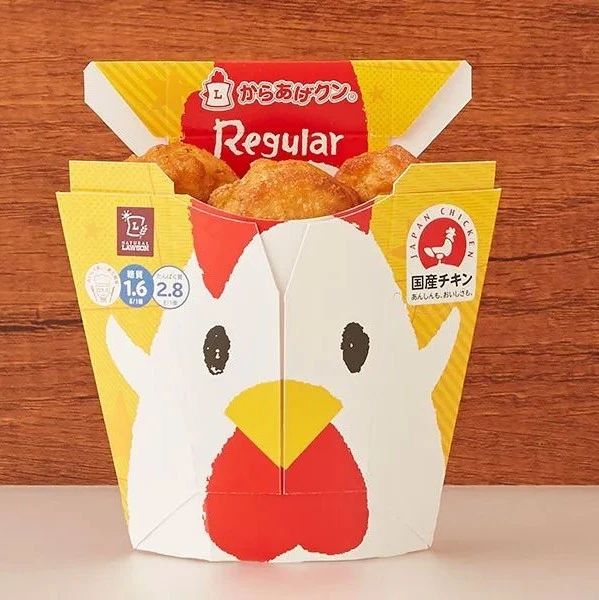
一块炸鸡火了39年,它为何是日本肯德基最大对手?
创业邦· 2025-05-24 10:33
Core Viewpoint - The article discusses the success story of Lawson's "Karaage-kun" fried chicken, highlighting its evolution from a simple snack to a national icon in Japan, emphasizing the importance of long-term product management and innovation in retail [5][27]. Group 1: Product Development and Market Strategy - The introduction of "Karaage-kun" in 1986 was a response to the underestimation of nighttime snack demands, leading to a successful product that quickly sold out during trials [7]. - The product's pricing strategy positioned it between snacks and bento, creating a new "third price tier" in hot food offerings [7]. - "Karaage-kun" has sold over 4.2 billion pieces in 39 years, with a total weight equivalent to 12 Tokyo Towers, showcasing its massive popularity [5]. Group 2: Management and Innovation - Lawson's management established "Karaage-kun" as a permanent core product, ensuring its visibility and availability in all stores [9]. - Technological innovations, such as liquid nitrogen freezing and low-oil batter, have improved product quality and consumer satisfaction [10]. - The sales contribution of "Karaage-kun" to Lawson's hot food revenue is between 25% and 28%, with a gross margin of 43% to 45%, significantly higher than other product categories [10]. Group 3: Consumer Engagement and Marketing - The brand employs data-driven decision-making for flavor innovation, utilizing customer feedback and social media trends to guide new product development [14]. - Collaborations with popular IPs, such as "Demon Slayer" and "Hatsune Miku," have driven sales and increased brand visibility [16][19]. - The introduction of limited-edition flavors and themed promotions has created a sense of urgency and excitement among consumers [16]. Group 4: Sustainability and Social Responsibility - Lawson has implemented eco-friendly packaging solutions, reducing plastic use by 1,600 tons annually [13]. - The brand engages in local collaborations and social responsibility initiatives, enhancing its community presence and brand image [19]. Group 5: Long-term Strategy and Future Outlook - The article emphasizes that long-termism in the convenience store industry is essential for survival, advocating for stable product offerings and continuous micro-innovations [27]. - The success of "Karaage-kun" illustrates the balance between product reliability, innovation, and emotional connection with consumers, positioning it as a staple in daily life [28].