
光伏

Search documents
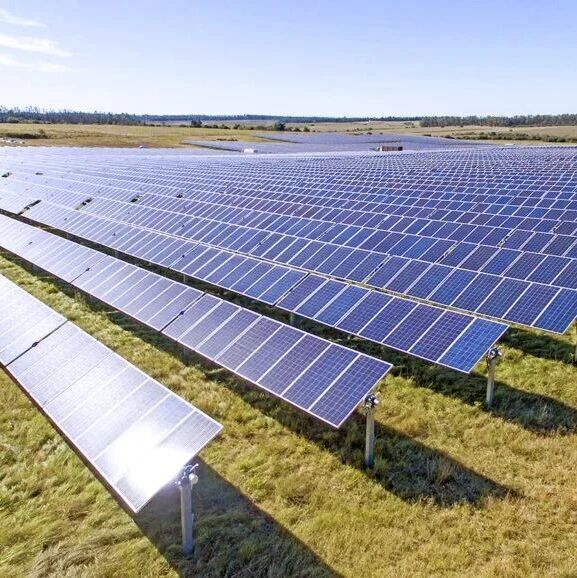
全球光伏度电成本十年内有望再降三成
中国能源报· 2026-03-04 13:23
Core Viewpoint - The photovoltaic industry will transition from a phase focused solely on manufacturing scale expansion to a new stage that emphasizes system optimization, hybrid collaboration, and financial structure improvement over the next decade [1][10]. Cost Trends and Projections - Bloomberg New Energy Finance reports that the levelized cost of electricity (LCOE) for typical utility-scale photovoltaic projects will increase by 6% year-on-year to $39 per megawatt-hour (MWh) by 2025, breaking a long-standing downward trend. However, the long-term downward trend in global photovoltaic generation costs remains intact, with an expected 30% decrease by 2035 [3][5]. - Despite the projected increase in LCOE for 2025, photovoltaic remains competitive compared to other green energy types, with onshore wind at $40/MWh and offshore wind at $100/MWh [5]. Regional Market Dynamics - The Middle East and Africa are expected to see the lowest LCOE for single-axis tracking photovoltaic systems at $37/MWh by 2025, a 10% decrease year-on-year. By 2060, this region's photovoltaic LCOE could drop to around $17/MWh [5]. - China leads globally with the lowest LCOE at $27/MWh, supported by manufacturing scale advantages, supply chain integrity, and continuous technological iteration [5]. Hybrid Projects and Cost Reduction - The integration of photovoltaic and energy storage technologies is seen as a key pathway for cost reduction in the next decade. Bloomberg forecasts that the LCOE for four-hour battery storage projects will drop by 27% to $78/MWh by 2025, marking the lowest level since tracking began in 2009 [7]. - The average LCOE for global "photovoltaic + storage" projects was $57/MWh last year, indicating improved economic viability due to declining storage costs [7]. System Optimization and Capital Expenditure - Research indicates that strategic adjustments in capital expenditure can lead to a potential 20% reduction in LCOE for utility-scale photovoltaic systems. Key areas for cost reduction include tracking optimization, system voltage upgrades, and advanced balance system design [10]. - The focus is shifting from incremental component innovations to system-level optimization and overall architecture upgrades, which will significantly impact financing conditions and cost structures [10][11]. Future Research Directions - Future research should move beyond standard efficiency metrics to analyze risks associated with energy generation, performance variability, and lifecycle uncertainties. Advanced monitoring and new clean technologies could enhance project financing environments [11].

信义能源:维持稳定派息,转向海外布局-20260304
Guoyuan Securities· 2026-03-04 10:25
Investment Rating - The report maintains a "Hold" rating for the company, with a target price of HKD 1.54 per share, indicating an expected upside of 18% from the current price of HKD 1.30 [6][12]. Core Insights - The company reported a net profit of HKD 1.01 billion for the year 2025, representing a year-on-year growth of 27.6%. The total revenue for the same period was HKD 2.45 billion, a slight increase of 0.5%. Excluding a one-time gain from the sale of the Tianjin power station, the operating profit was approximately HKD 913 million, reflecting a growth of around 15% [3][9]. - The company is shifting its focus from domestic project acquisitions to overseas expansion due to challenges in the domestic market, including power restrictions and declining market prices. A joint project in Malaysia of 100MW is already underway, with plans to establish local teams in Southeast Asia and the Asia-Pacific region [4][10]. - The company has successfully reduced its interest expenses, with the effective interest rate dropping to 2.53% in 2025. The operating cash flow improved significantly to approximately HKD 1.65 billion, largely due to accelerated government subsidy payments [5][11]. Financial Summary - For the fiscal year 2025, the company achieved a net profit of HKD 1.01 billion, with a net profit margin of 41%. The basic earnings per share were HKD 0.12, and the total dividend for the year was HKD 0.065, maintaining a stable payout ratio of about 49% [3][15]. - The company holds a total of 49 solar projects and 1 wind project, with a cumulative approved capacity of 4.8GW. The operational management scale is 6.2GW [4][10]. - The financial health of the company remains robust, with a current ratio of 1.9 and a net debt ratio of 47.9%, significantly lower than the industry average [5][11].
库存持续累积,多晶硅破位下行
Zhong Xin Qi Huo· 2026-03-04 07:57
1. Report Industry Investment Rating - Not provided in the given content 2. Core View of the Report - The polysilicon price has continued to decline after the Chinese New Year, and the market is cautious about the industry's "anti-involution" in the short term. The price is still under pressure and may continue to decline towards the cost support area. However, in the medium term, if the supply side gradually contracts, the supply - demand structure may improve marginally, and the polysilicon price is expected to gradually recover and stabilize. In the medium - long term, it may mainly show wide - range fluctuations [3][5] 3. Summary by Relevant Catalogs Latest Dynamics and Reasons - The polysilicon price has continued to fall after the Chinese New Year. Today, the best - performing main contract has fallen by more than 4% to around 42,000 yuan per ton. On one hand, due to antitrust concerns in January, the "anti - involution" expectation of polysilicon has been continuously shaken, and leading silicon wafer enterprises have planned to strengthen capacity integration and mergers. On the other hand, the demand in the first quarter has been weak, and the industry and warehouse receipt inventories have continued to accumulate, which has dragged down the spot price and in turn affected the futures price [3] Fundamental Situation - Supply side: Leading enterprises have stopped production to consume inventory, and the polysilicon supply in February has further declined. The production in February was 81,000 tons, a month - on - month decrease of 13.9% and a year - on - year decrease of 10%. The cumulative production from January to February was 116,000 tons, a year - on - year decrease of 5%. The production in March is expected to increase slightly, but the overall supply will still remain at a relatively low level of 80,000 - 90,000 tons. - Demand side: With the end of the previous off - season and the approaching window of the cancellation of the photovoltaic tax - refund policy, the production schedules of silicon wafers and battery cells in February after the festival are expected to increase. In the future, the inventory accumulated in the polysilicon industry is expected to be consumed under the pattern of continuous supply contraction [4] Summary and Strategy - Summary: The polysilicon price has broken through the cost support of 45,000 yuan per ton. In the short term, without clear policy positive signals, the market is cautious about the "anti - involution" of the industry, and the price is still under pressure. In the medium term, if the supply side contracts, the supply - demand structure may improve, and the price is expected to recover and stabilize. In the medium - long term, it may show wide - range fluctuations. - Strategy: Considering the short - term price pressure and the factor of concentrated cancellation of warehouse receipts in May, attention can be paid to the reverse arbitrage opportunity between the 06 contract and the far - month contract [5]
每日市场观察-20260304
Caida Securities· 2026-03-04 06:07
Market Performance - On March 3, the Shanghai Composite Index fell by 1.43%, the Shenzhen Component Index dropped by 3.07%, and the ChiNext Index decreased by 2.57%[2] - The total trading volume in the Shanghai and Shenzhen markets exceeded 3.1 trillion yuan, an increase of over 100 billion yuan compared to the previous day[1] Sector Analysis - The oil and petrochemical, shipping ports, and coal sectors showed resilience, while over 4,800 stocks in the market declined[1] - The top three sectors for capital inflow were refining and trade, shipping ports, and gas, while the semiconductor, industrial metals, and IT services sectors saw the largest outflows[3] Economic Indicators - China's economic output reached 140 trillion yuan, maintaining a leading growth rate among major economies[4] - The corporate credit index for January was reported at 161.79, indicating a stable credit environment with two-thirds of industries showing an increase[5] Consumer Trends - The 2026 National Consumption Promotion Month was launched to enhance consumer spending and optimize policies for replacing old goods[6] Fund Market Activity - The public fund issuance market showed signs of recovery, with 43 new funds planned for release this week, a 19.44% increase from the previous week[12]

持续关注能源上游价格波动
Hua Tai Qi Huo· 2026-03-04 05:11
Industry Overview Upstream - International crude oil and liquefied natural gas prices have rebounded; pork and nickel prices have declined [2] Midstream - PX and pig product processing rates have increased; coal consumption in power plants has risen [3] Downstream - Sales of commercial housing in first - and second - tier cities have seasonally declined; the number of domestic flights has decreased [3] Key Events Macro - event - The press conference of the 4th Session of the 14th National Committee of the Chinese People's Political Consultative Conference was held on March 3. The conference will be held from March 4 to March 11 [1] Industry - specific event - On March 3, six ministries and commissions including the Ministry of Industry and Information Technology issued the "Guiding Opinions on Promoting the Comprehensive Utilization of Photovoltaic Modules", supporting related enterprises to declare for honors and guiding financial institutions to provide credit support [1] - Due to the escalation of the Middle East situation, European natural gas prices soared on March 3. The Dutch TTF natural gas futures price for April delivery rose 29.9% to 57.840 euros per megawatt - hour, and the UK natural gas futures price rose 33.92% to 147.430 pence per thermal unit [1] Key Industry Price Indicators | Industry Name | Indicator Name | Price on 3/3 | Year - on - Year Change | | --- | --- | --- | --- | | Agriculture | Spot price of corn | 2298.6 yuan/ton | 0.94% | | | Spot price of eggs | 6.4 yuan/kg | 4.61% | | | Spot price of palm oil | 8950.0 yuan/ton | 1.70% | | | Spot price of cotton | 16594.7 yuan/ton | - 0.52% | | | Average wholesale price of pork | 17.2 yuan/kg | - 4.44% | | | Spot price of copper | 101821.7 yuan/ton | 0.22% | | | Spot price of zinc | 24386.0 yuan/ton | - 1.04% | | Non - ferrous metals | Spot price of aluminum | 23966.7 yuan/ton | 2.46% | | | Spot price of nickel | 139516.7 yuan/ton | - 3.94% | | | Spot price of aluminum | 16712.5 yuan/ton | 0.53% | | Black metals | Spot price of rebar | 3138.5 yuan/ton | 0.98% | | | Spot price of iron ore | 767.0 yuan/ton | - 0.38% | | | Spot price of wire rod | 3325.0 yuan/ton | 0.45% | | | Spot price of glass | 13.4 yuan/square meter | 0.00% | | Non - metals | Spot price of natural rubber | 16866.7 yuan/ton | 0.20% | | | China Plastic City price index | 809.2 | 3.14% | | Energy | Spot price of WTI crude oil | 71.2 dollars/barrel | 7.42% | | | Spot price of Brent crude oil | 77.7 dollars/barrel | 9.32% | | | Spot price of liquefied natural gas | 3386.0 yuan/ton | 11.90% | | | Coal price | 794.0 yuan/ton | - 0.87% | | Chemical | Spot price of PTA | 5396.3 yuan/ton | 1.35% | | | Spot price of polyethylene | 7125.0 yuan/ton | 6.21% | | | Spot price of urea | 1858.8 yuan/ton | 2.27% | | | Spot price of soda ash | 1202.9 yuan/ton | 0.00% | | Real estate | National cement price index | 128.0 | - 1.11% | | | Building materials composite index | 113.7 | - 0.03% | | | National concrete price index | 89.8 | 0.00% | [37]
交银国际每日晨报-20260304
BOCOM International· 2026-03-04 03:27
Group 1: Xinyi Energy (信义能源) - Core earnings for 2025 are expected to be 1.01 billion RMB, a year-on-year increase of 27.6%, but regular earnings of 910 million RMB are below expectations after excluding a one-time gain of 130 million RMB from the sale of power stations [1] - The company's power restriction rate is projected to exceed 10% in 2025, significantly up from approximately 4% in 2024, indicating that short-term improvements in photovoltaic power restrictions are unlikely [1] - Subsidy receipts are expected to reach 910 million RMB in 2025, a substantial increase of 87%, with management indicating that accelerated subsidy receipts may become a norm [1] - The target price has been adjusted to HKD 1.31 from HKD 1.28, reflecting a 2% and 5% downward revision in earnings for 2026 and 2027 respectively due to recent RMB appreciation [1] Group 2: Chow Tai Fook (周大福创建) - For the first half of the 2026 fiscal year, Chow Tai Fook reported a shareholder profit of 1.334 billion HKD, a year-on-year growth of 15%, with total revenue increasing by 5.9% to 12.827 billion HKD [2] - The financial services segment has emerged as a key growth driver, with operating profit increasing by 19% to 729 million HKD, while the road business showed stable performance with a slight profit increase of 1% to 771 million HKD [2] - Strategic investments saw a significant profit increase of 78% to 99.4 million HKD, although the logistics and construction segments faced economic challenges, resulting in profit declines of 14% and 21% respectively [2][3] - The net debt decreased by 6% to 13.8 billion HKD by the end of 2025, with the net debt ratio improving to 34% from 37% in June 2025 [3] - The target price has been raised to HKD 10.60, with projected adjusted EBITDA for FY26/27/28 estimated at approximately 7.39 billion, 7.75 billion, and 8.02 billion HKD respectively [3]
金元证券每日晨报-20260304
Jinyuan Securities· 2026-03-04 03:26
Core Insights - The report discusses the performance of various stock indices, highlighting a general downward trend across major markets, including A-shares, Asia-Pacific, European, and US markets [6][11]. - It emphasizes the impact of geopolitical tensions, particularly regarding Iran, on market sentiment and energy prices, which have reignited inflation concerns [10][12]. - The report notes the upcoming National People's Congress and its potential implications for economic policy and market outlook [13]. Market Review - A-shares: The Shanghai Composite Index closed at 4122.68, down 1.43%; the Shenzhen Component Index at 14022.39, down 3.07%; and the ChiNext Index at 3209.48, down 2.57% [11]. - Asia-Pacific: The Hang Seng Index fell 1.12% to 25768.08; the Hang Seng Tech Index dropped 2.26% to 4876.53; and the Nikkei 225 decreased by 3.06% to 56279.05 [11]. - European markets: The FTSE 100 declined 2.75% to 10484.13; the DAX 30 fell 3.44% to 23790.65; and the CAC 40 decreased by 3.46% to 8103.84 [11]. - US markets: The Dow Jones Industrial Average closed down 0.83% at 48501.27; the Nasdaq Composite fell 1.02% to 22516.69; and the S&P 500 dropped 0.94% to 6816.63 [11]. - Chinese concept stocks: The Nasdaq Golden Dragon China Index fell 3.34%, with significant declines in individual stocks such as Hesai Technology and Kingsoft Cloud [11]. International News - The report highlights President Trump's commitment to a hardline stance on Iran, which has led to increased market volatility and concerns over inflation due to rising energy prices [10][12]. - The Federal Reserve's officials indicated potential for further interest rate cuts if inflation continues to decline, influenced by geopolitical tensions [12]. Domestic News - The National People's Congress is set to convene, with key discussions expected on economic policies and the 15th Five-Year Plan [13]. - The State Administration for Market Regulation reported that China's enterprise credit index for January was 161.79, indicating stable credit conditions across various industries [13]. - The Ministry of Industry and Information Technology, along with other departments, released guidelines to promote the comprehensive utilization of photovoltaic components, aiming for significant improvements by 2027 [14]. - China's total primary energy production reached 5.13 billion tons of standard coal in 2025, marking a significant milestone in energy supply [14].
未知机构:上午盘面结构综述一盘面最强主线油气二连板结-20260304
未知机构· 2026-03-04 03:05
Summary of Key Points from Conference Call Industry Overview - The strongest sector in the market is the oil and gas industry, with multiple companies showing significant performance [1] - Key players in the oil and gas sector include: - Water Development Oil and Gas (3 boards) - Intercontinental Oil and Gas (2 boards) - Zhun Oil Co. (2 boards) - Sinopec Oilfield Services (2 boards) - China National Petroleum Corporation (2 boards) [1][1][1] Sector Analysis - **Oil and Gas**: - Major companies include Tongyuan Petroleum, Intercontinental Oil and Gas, Water Development Gas, Zhongman Petroleum, Zhun Oil Co., Sinopec Oilfield Services, Beiken Energy, Blue Flame Holdings, and China National Petroleum [1] - **Shipping**: - Key players are COSCO Shipping Energy Transportation, China Merchants Jinling Shipyard, Ningbo Shipping, China Merchants Industry, and Nanjing Port [1] - **Photovoltaic Energy Storage**: - Notable companies include Airo Energy, Deyue Co., Shouhang New Energy, GCL-Poly Energy, Oujing Technology, Goodwe, and Guosheng Technology [1] - **Optical Communication**: - Companies mentioned include Huasheng Chang, Huilv Ecology, Tongding Interconnection, Jufei Optoelectronics, Robotech, Tengjing Technology, Huagong Technology, and Yuanjie Technology [2] - **Coal Chemical**: - Key players are Jinniu Chemical, Luohua Technology, Chitianhua, Baofeng Energy, China Coal Energy, and Lutianhua [2] - **Gold**: - Companies include Xiaocheng Technology, Western Gold, and Mankalon [2] - **Agriculture**: - Notable companies are Yasheng Group, Qiule Seed Industry, Kangnong Seed Industry, Shennong Seed Industry, and Quanyin High-Tech [2] - **Electric Power**: - Specific companies were not detailed in the provided content [2] Additional Insights - The market shows a diverse range of sectors with significant activity, particularly in oil and gas, which is currently the strongest sector [1] - The presence of multiple companies across various sectors indicates a robust market environment with potential investment opportunities [1][2]



未知机构:3月3日复盘笔记油气天然气航运化工煤炭储能光伏光通信等-20260304
未知机构· 2026-03-04 02:55
Summary of Key Points from Conference Call Records Industry Overview - The records cover multiple industries including oil and gas, natural gas, shipping, chemicals, coal, energy storage, photovoltaic, and optical communication [1][2][4][6]. Core Insights and Arguments 1. **Photovoltaic Industry**: - The Ministry of Industry and Information Technology and five other departments released guidelines to promote the comprehensive utilization of photovoltaic components, emphasizing the need to accelerate the formulation of industry standards for the recycling of old photovoltaic components [1][6]. 2. **Oil and Gas Market**: - Qatar Energy, the world's largest natural gas producer, announced a halt in LNG production due to attacks on its facilities, leading to a 50% surge in European natural gas prices [2]. - Analysts predict that if the Strait of Hormuz remains blocked, Brent crude oil prices could exceed $120 per barrel [1][2]. - The Baltic Exchange reported record-high tanker freight rates due to Middle Eastern conflicts, with daily earnings for benchmark tankers reaching $424,000 [2]. 3. **Commodity Futures**: - Domestic commodity futures mostly closed higher, with significant gains in the energy and chemical sectors, including fuel oil, crude oil, methanol, and liquefied gas [4]. - The Shanghai Futures Exchange's main contract for European line shipping reached a limit increase, closing at 1644.8 points, up 18.0% [2][4]. 4. **Coal Industry**: - The rising oil prices due to geopolitical tensions are expected to increase the demand for alternative energy sources, particularly coal, which may benefit the domestic coal chemical industry [4]. 5. **Household Energy Storage**: - The outlook for the household energy storage industry in 2026 is optimistic, driven by subsidies in Australia, post-war reconstruction needs in Ukraine, and strong demand in Eastern Europe and other markets [5]. Additional Important Content - The Shanghai Composite Index fell by 1.43%, the Shenzhen Component Index by 3.07%, and the ChiNext Index by 2.57%, indicating a bearish market sentiment [1]. - The total trading volume in the Shanghai and Shenzhen markets reached 3.13 trillion yuan, an increase of 108.8 billion yuan compared to the previous trading day [1]. - Iran's significant role in the chemical raw materials market was highlighted, being the second-largest producer of methanol and a major exporter [2][3].
未知机构:东财策略每日复盘20260303一市场概况3月-20260304
未知机构· 2026-03-04 02:50
Summary of Conference Call Notes Industry Overview - The conference call discusses the A-share market performance on March 3, 2023, highlighting a significant decline across major indices. The Shanghai Composite Index fell by 1.43% to close at 4122 points, while the Shenzhen Component Index and the ChiNext Index dropped by 3.07% and 2.57%, respectively. The total trading volume reached 3.13 trillion yuan, an increase of over 100 billion yuan compared to the previous trading day [1][1][1]. Key Points on Industry Performance - **Top Performing Industries**: - Oil and Petrochemicals: +6.75% - Coal: +1.76% - Transportation: +1.13% - Banking: +1.07% - Public Utilities: +0.49% [1][1][1] - **Underperforming Industries**: - Defense and Military: -6.74% - Non-ferrous Metals: -5.61% - Electronics: -5.30% - Computers: -4.94% - Media: -4.29% [1][1][1] Market News - The Ministry of Industry and Information Technology, along with five other departments, released guidelines to promote the comprehensive utilization of photovoltaic components, aiming to enhance technology and equipment levels by 2030 [3][3][3]. - In the first week following new policies in the Shanghai real estate market, there was a rapid increase in demand-side activity, with online inquiries rising by 97.6% and conversion rates improving by 180% [3][3][3]. - Qatar Energy, the world's largest natural gas producer, announced a halt in liquefied natural gas exports due to military attacks on its facilities [3][3][3]. Market Outlook and Considerations - The Shanghai Composite Index's recent performance has created a situation of trapped capital and pessimism that will require time to resolve. If the intensity of the U.S.-Iran conflict continues, short-term risk aversion may persist. However, there is no need for excessive pessimism as the current economic resilience and cycle position have improved compared to 2022. The impact of war and high oil prices on inflation affecting AI hardware and other assets is expected to be limited [4][4][4]. - Despite the overall market decline, sectors with solid supply-demand dynamics, such as gas turbines, remain strong. Core assets with robust supply-demand support are crucial indicators. As the Two Sessions approach, the deeply corrected technology growth sector may see a rebound in funding due to policy catalysts [4][4][4]. Recommendations - It is advised to closely monitor the situation in the Middle East and oil price trends, while also paying attention to policy signals from the Two Sessions that may influence market risk appetite [5][5][5].