
半导体等

Search documents
比特币“囤积巨鲸”Strategy(MSTR.US)保住纳指100席位 MSCI仍警告1月或下剔除“裁决”
Zhi Tong Cai Jing· 2025-12-13 07:03
Group 1 - Strategy (MSTR.US) has maintained its position in the Nasdaq 100 index for over a year, despite ongoing skepticism about its business model [1][2] - The company's "buy and hold" Bitcoin strategy resembles that of an investment fund, leading to the emergence of numerous imitators in the market [1] - Concerns about the sustainability of crypto asset reserve companies are increasing, with Strategy's stock price being highly sensitive to Bitcoin's volatility [1] Group 2 - Nasdaq has removed several companies, including Biogen (BIIB.US) and CDW (CDW.US), from the Nasdaq 100 index, while adding new constituents like Alnylam Pharmaceuticals (ALNY.US) and Seagate Technology (STX.US) [1] - Initially a software company, Strategy shifted to Bitcoin investment in 2020 and was included in the Nasdaq 100 index in December of the previous year [2] - MSCI has expressed concerns about including digital asset reserve companies in its benchmark index and is expected to make a decision regarding Strategy in January [2]

陕西单只规模最大AIC股权基金落地
Shan Xi Ri Bao· 2025-12-11 23:41
Group 1 - The establishment of the 2 billion yuan Shaanxi Zhanxin Industry Development Fund marks the largest single AIC equity fund in Shaanxi since the expansion of the AIC pilot program [1] - The Shaanxi AIC equity investment pilot is part of a financial reform initiative aimed at guiding long-term bank capital to empower local hard technology and strategic emerging industries [1] - The fund focuses on eight strategic emerging industries, including new materials, hydrogen energy, new power, semiconductors, new energy vehicles, intelligent equipment, energy conservation and environmental protection, and aerospace [1] Group 2 - The Industrial and Commercial Bank of China (ICBC) Shaanxi Branch has established funds in cities like Xi'an, Xianyang, and Yulin to promote a positive interaction between technology, industry, and finance [2] - The bank leverages a comprehensive financial service model that includes equity, loans, bonds, guarantees, leasing, and consulting to support enterprises throughout their lifecycle [2] - The initiative aims to provide a full range of financial solutions to help enterprises connect with upstream and downstream partners, thereby enhancing the innovation development of Shaanxi's technology enterprises [2]
美股科技股,盘前集体下跌
Di Yi Cai Jing Zi Xun· 2025-12-11 11:48
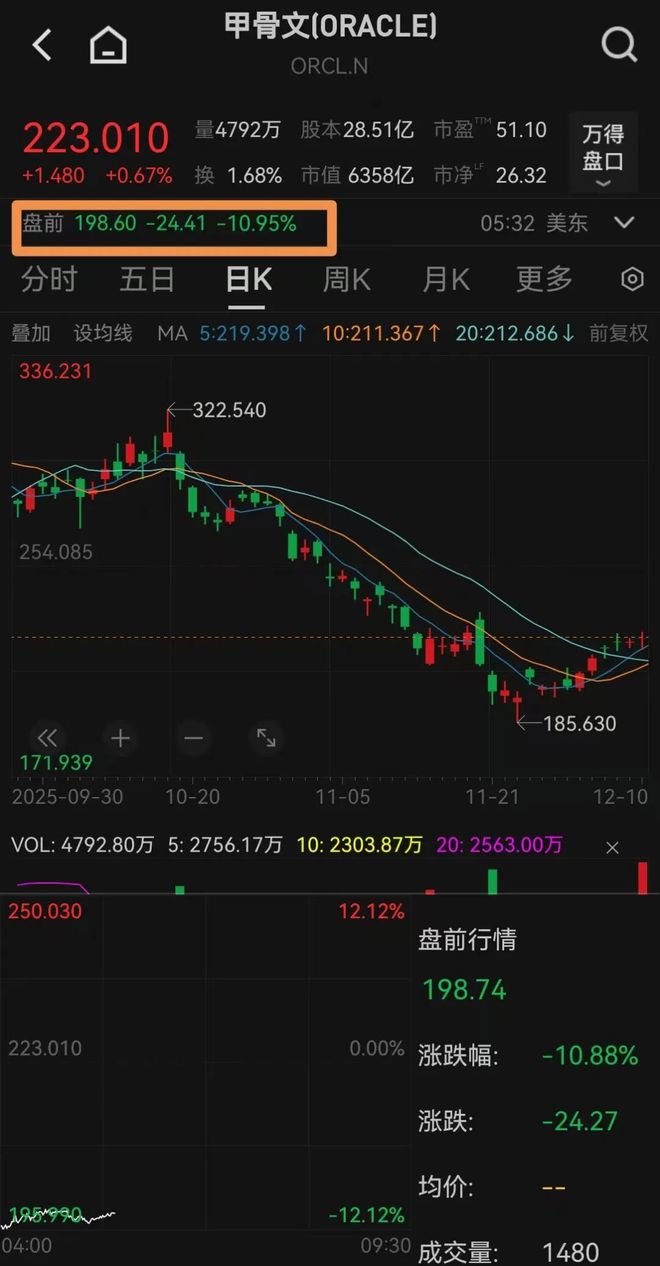
Group 1 - Oracle's stock dropped over 12% in pre-market trading, settling at a nearly 11% decline [1] - The company's Q2 FY2026 earnings report showed a 14% year-over-year revenue growth to $16.06 billion, which fell short of market expectations [2] - Cloud business revenue reached $7.98 billion, also below market expectations [2] - Remaining performance obligations surged by 438% to $523 billion, exceeding the market forecast of $501.8 billion [2] - Oracle executives indicated that annual capital expenditures are expected to exceed previous estimates by approximately $15 billion [2] Group 2 - The impact of Oracle's earnings report led to a collective decline in U.S. tech stocks, with TSMC down over 2%, NVIDIA down 1.8%, and Broadcom down 1.7% [2] - Other tech companies such as AMD, Micron Technology, and Intel saw declines of 1.5%, while Meta and Qualcomm dropped over 1% [2]

港交所科技100指数发布,腾讯、阿里、宁德时代等入选,指标详解⇒
Di Yi Cai Jing· 2025-12-09 06:38
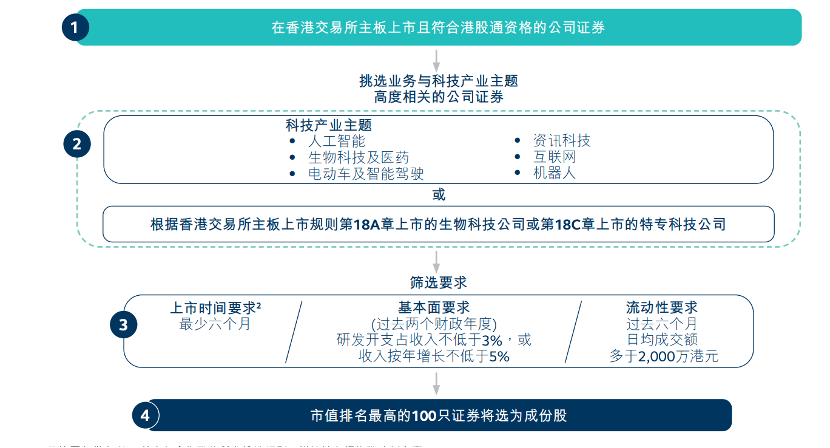
Core Viewpoint - The Hong Kong Stock Exchange has launched the Hang Seng Tech 100 Index, which aims to track the performance of the largest 100 technology companies listed in Hong Kong, incorporating strict liquidity and R&D growth criteria for inclusion [1][2]. Group 1: Index Composition and Criteria - The index requires constituent stocks to have an average daily trading volume of at least HKD 20 million over the past six months and either R&D expenditure accounting for over 3% of revenue or revenue growth exceeding 5% over the past two years [1][2]. - Notable companies included in the index are Tencent Holdings, Alibaba-W, CATL, Xiaomi Group-W, BYD Company, Meituan-W, SMIC, and WuXi AppTec [1][2]. - The index covers six major innovation themes: artificial intelligence, biotechnology and pharmaceuticals, electric vehicles and smart driving, information technology, internet, and robotics [2]. Group 2: Methodology and Adjustments - The index uses a free-float market capitalization weighting method, with a maximum weight of 12% for any single constituent [2]. - Constituents are reviewed and adjusted biannually, with data cut-off dates at the last trading day of April and October [2]. - Stocks with low liquidity or poor fundamentals, such as R&D spending below 3% or revenue growth below 5%, will be excluded [2]. Group 3: Market Dynamics and Investor Appeal - The index is designed to filter out technology stocks that combine market popularity with growth certainty, addressing investor demand for diversified technology investment options [3][11]. - The index includes only stocks eligible for the Stock Connect program, catering to both international and mainland Chinese investors [5]. - The introduction of the index is expected to enhance investment opportunities in the technology sector, particularly as the number of technology companies listed in Hong Kong has surged [9][11]. Group 4: Comparison with Existing Indices - The Hang Seng Tech 100 Index differs from the Hang Seng Tech Index by including a broader range of companies across various technology sectors, while the latter focuses more on internet and fintech giants [7][8]. - The total market capitalization of the Hang Seng Tech 100 Index constituents is approximately HKD 19.43 trillion, with major players like Tencent Holdings at HKD 5.53 trillion, Alibaba-W at HKD 2.93 trillion, and CATL at HKD 2.31 trillion [7]. - In contrast, the Hang Seng Tech Index has a total market capitalization of about HKD 12.65 trillion, primarily consisting of larger industry leaders [7]. Group 5: Future Developments - The launch of the index is closely tied to the recent surge in technology IPOs in Hong Kong, with 97 companies listed this year, raising a net amount of HKD 231.9 billion, a 237% increase from the previous year [9][11]. - The Hong Kong Stock Exchange has established a "Tech Company Fast Track" to facilitate the listing of specialized technology and biotech firms, further stimulating interest in the sector [11]. - An agreement has been reached with E Fund Management to launch an ETF tracking the Hang Seng Tech 100 Index, aimed at meeting the strong demand from mainland investors for technology investment opportunities [13].

麦肯锡报告:未来的18个风口行业
Sou Hu Cai Jing· 2025-12-09 00:43
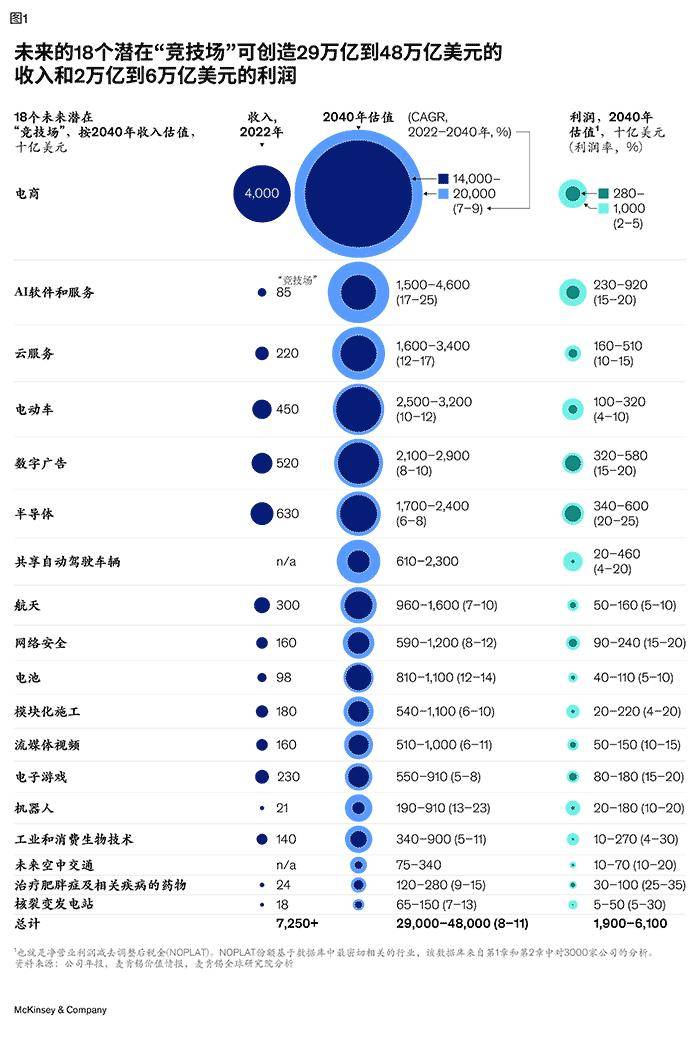
Core Insights - The article discusses the potential future opportunities in various industries, highlighting 18 sectors that could reshape the global economy by 2040, generating revenues between $29 trillion and $48 trillion, and contributing 18-34% to global GDP growth [5][8]. Industry Opportunities - The 18 identified sectors include e-commerce, electric vehicles, cloud services, digital advertising, semiconductors, AI software and services, shared autonomous vehicles, aerospace, cybersecurity, batteries, modular construction, streaming video, video games, robotics, industrial and consumer biotechnology, future air mobility, obesity treatment drugs, and nuclear fission power plants [7][8]. - E-commerce is projected to account for 27%-38% of global retail revenue by 2040, driven by market expansion in developing countries and new product categories in developed markets [36]. - Electric vehicles are expected to exceed 50% of global passenger car sales by 2040, influenced by advancements in battery technology and smart algorithms [38]. - Cloud services are anticipated to grow at a compound annual growth rate (CAGR) of approximately 17%, driven by increasing connectivity and the demand for computational power [40]. - The semiconductor industry is projected to maintain a CAGR of 6%-8%, fueled by demand across various sectors including computing, automotive, and industrial electronics [42]. - AI software and services are rapidly evolving, with increasing adoption of AI assistants and a competitive race among companies to develop advanced models and applications [43]. - Digital advertising is expanding as more middle-class individuals gain internet access, with platforms needing to invest heavily to attract user attention [44]. - Streaming video platforms are expected to innovate and seek new revenue streams due to rising customer acquisition and content production costs [46]. - Shared autonomous vehicles could capture 25%-51% of shared mobility revenue by 2040, although widespread adoption may take time [48]. - The aerospace sector is transitioning towards a space economy, with advancements in reusable rocket technology [49]. - Cybersecurity investments are increasing as businesses recognize the financial impact of cybercrime, which caused direct losses of approximately $950 billion in 2020 [50]. - Battery technology is advancing significantly, with electric vehicles projected to account for over 80% of the battery market by 2040 [51]. - The video game industry is expected to see 40% of the global population as players by 2030, driven by new gaming models and increased spending on high-quality games [52]. - Robotics is gaining attention as AI and robotics converge, with expectations for widespread personal robot ownership in the future [55]. - Biotechnology is accelerating in applications such as agriculture and alternative proteins due to technological breakthroughs [57]. - Modular construction is improving efficiency in building processes, addressing global housing shortages [58]. - Nuclear fission power is being considered as a supplement to renewable energy, with commitments from multiple countries to increase nuclear output by 2050 [59]. - Future air mobility is being explored through electric vertical takeoff and landing vehicles, although regulatory progress is needed [60]. - The market for obesity treatment drugs is expected to grow significantly as obesity rates rise globally [61].
国际社会看好中国经济发展前景:为全球市场注入增长动力
Yang Shi Wang· 2025-12-08 07:06
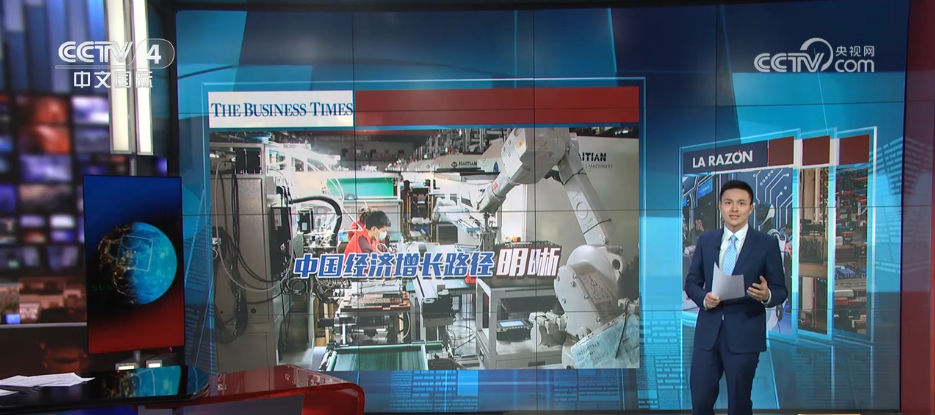
Group 1 - The OECD and other international organizations have raised China's economic growth forecasts, indicating a generally optimistic outlook for China's economic development [1] - China's economic growth path is becoming clearer, with expectations of steady growth by 2026 driven by structural transformation and policy adjustments [2] - China aims to enhance disposable income and boost consumption through measures focused on improving livelihoods and promoting income [2] Group 2 - China is implementing proactive fiscal policies and moderately easing monetary policies to address economic growth challenges, maintaining overall economic stability and long-term positive trends [4] - Technological innovation is positioned at the core of future growth, with investments focusing on artificial intelligence, digitalization, clean energy, and semiconductors [4] - The shift from scale advantages to innovation advantages is reshaping China's economic landscape, with cities exploring growth drivers through innovation and collaboration [7] Group 3 - The 20th Central Committee of the Communist Party of China has outlined the economic and social development direction for the 14th Five-Year Plan, emphasizing China's role as a key global growth engine [10] - China's economy accounts for a significant portion of the global economy, being the largest manufacturing country and an essential part of the global trade system [10] - China's vast domestic market capacity and its ability to lead in future technologies and industries contribute to its sustainable development and global market growth [10]
奥地利中资企业营商环境调查报告2024-奥地利中资企业协会
Sou Hu Cai Jing· 2025-12-07 18:33
Core Insights - The report titled "Austria's Business Environment Survey for Chinese Enterprises 2024" highlights that 80% of surveyed Chinese companies view Austria's business environment positively, citing advantages such as strategic location, strong industrial foundation, and comprehensive policy support [1][12][55]. Group 1: Business Environment Overview - 80% of surveyed Chinese enterprises rated Austria's business environment as "good" [12]. - Key advantages include Austria's strategic location as a gateway to Central and Eastern Europe, a solid industrial base in high-end manufacturing and green technology, and favorable policies for foreign investment [1][2]. - The report indicates that nearly half of the surveyed companies expect to achieve profitability in 2024 and plan to expand their operations in Austria [2][12]. Group 2: Cooperation Opportunities - By the end of 2024, bilateral investments between China and Austria are projected to exceed $3.6 billion, with over 40 Chinese companies operating in Austria and more than 600 Austrian companies investing in China [2]. - Opportunities for cooperation are concentrated in three main areas: green economy, digital economy, and advanced manufacturing [2]. - The green economy sector is particularly promising due to Austria's 2040 carbon neutrality goal, which creates demand for hydrogen infrastructure and energy-efficient building renovations [2]. Group 3: Challenges Faced - The report identifies four main challenges: regulatory hurdles, high operational costs, labor shortages, and lengthy processes for business registration [2][3]. - Regulatory challenges include a lowered threshold for foreign investment approval in sensitive sectors and stringent environmental assessments that can take 6-9 months [2]. - High operational costs are exacerbated by an average monthly wage of €2,906 and significant social security contributions of 37.65% [2]. Group 4: Recommendations for Improvement - The report suggests four key actions for Chinese enterprises: prioritize entry strategies through mergers and acquisitions, enhance compliance management, optimize operational structures, and leverage official resources for local support [3]. - Companies are encouraged to familiarize themselves with local regulations to mitigate policy risks and utilize Austria's tax treaties to reduce costs [3]. Group 5: Future Outlook - Despite challenges, the overall sentiment remains optimistic, with 53.3% of surveyed companies expressing a positive outlook for Austria's future business environment [12][55]. - The report emphasizes the importance of addressing compliance, cost, and talent challenges to fully leverage Austria's strategic advantages for Chinese enterprises [3].

“跨年行情”来了!听听券商们怎么说|热聊
Sou Hu Cai Jing· 2025-12-07 12:00
Group 1 - The core support logic for the year-end market rally is based on clear policy expectations, with the upcoming Central Political Bureau meeting and Central Economic Work Conference in December expected to set the economic development goals and macro policy tone for 2026, acting as a key catalyst for market consensus [3] - Multiple institutions believe that the cross-year market rally from late 2025 to early 2026 has a solid foundation due to the convergence of domestic policy window, global liquidity easing expectations, and continuous inflow of incremental funds [2][3] - The seasonal inflow of northbound funds is expected to be significant, with foreign capital likely to become an important source of incremental funds for A-shares during the cross-year period, as major foreign institutions express optimism about the Chinese market [3] Group 2 - Domestic funding dynamics are strengthening, with insurance funds showing notable demand for allocation, particularly as the first quarter is a key period for insurance "opening red" and new premium pressures lead to early positioning in equity assets [3] - Retail investors' willingness to enter the market has increased, with several equity funds issued since November exceeding 2.9 billion yuan, indicating rising expectations for the year-end market rally [3] - The consensus among brokerages is that the market will exhibit a "value foundation with growth leading" characteristic, with value sectors establishing a base followed by high-growth sectors driving breakthroughs [3] Group 3 - Four main lines of industry configuration have been identified for investment: 1. The technology growth sector is viewed as a "deciding factor," focusing on AI applications, software media, and domestic computing power supply chains [3] 2. Advantageous manufacturing and resource sectors are expected to benefit from "anti-involution" policies and price increase expectations, with sectors like chemicals, building materials, and metals recommended [3] 3. The structural recovery of domestic demand is highlighted, with new consumption and service sectors such as leisure food and travel gaining attention [3] 4. Investments related to the "14th Five-Year Plan," including commercial aerospace and semiconductor sectors, are seen as new highlights due to alignment with national strategic directions [3]
Nasdaq Gains 150 Points But Records Losses For November: Fear & Greed Index Remains In 'Extreme Fear' Zone - Intel (NASDAQ:INTC)
Benzinga· 2025-12-01 07:59
Market Overview - U.S. stocks closed higher on Friday, with the Nasdaq Composite gaining for the fifth consecutive session as rate cut hopes increased and risk appetite returned across technology, cryptocurrency, and commodities [2][4] - The Nasdaq recorded a nearly 2% decline in November, while the S&P 500 and Dow experienced slight gains during the same month [2] - The Dow rose over 3% last week, and the S&P 500 surged almost 4%, with the Nasdaq Composite climbing over 4% during the week [2] Federal Reserve Expectations - Traders now anticipate an 88% chance that the Federal Reserve will cut interest rates by 25 basis points at its December 10 meeting, a significant increase from a 50% chance the previous week [3] Sector Performance - Most sectors on the S&P 500 ended positively, with energy, communication services, and consumer discretionary stocks showing the largest gains on Friday [4] - Health care stocks, however, closed lower, bucking the overall market trend [4] Notable Company Movements - Intel Corp. led the S&P 500 with a jump of over 10%, as investors returned to buy beaten-down tech stocks in November [3] Upcoming Earnings - Investors are awaiting earnings results from MongoDB Inc., Vestis Corp., and Credo Technology Group Holding Ltd. [5]


精准服务双创领军人才 专场法治服务活动举行
Su Zhou Ri Bao· 2025-11-29 00:36
Core Insights - The event aims to enhance legal risk prevention capabilities for innovative and entrepreneurial talents in Suzhou, which are crucial for the city's high-quality development [1] - Suzhou has funded a total of 3,835 innovative and entrepreneurial talents over 18 years, and has introduced 62 major innovation teams and 10 top talents [1] Group 1: Legal Risks and Challenges - Recent research by Suzhou's procuratorial authorities indicates that innovative and entrepreneurial talents face various legal risks, primarily involving equity disputes, commercial secret infringements, and corporate governance [1] - These legal issues are prevalent in industries such as biomedicine, nanotechnology, and semiconductors, highlighting the need for improved risk awareness and compliance measures among enterprises [1] Group 2: Educational Initiatives and Resources - The event featured a legal risk prevention educational film aimed at raising awareness of the legal risks businesses face during their operations, using case studies to illustrate the importance of compliance [2] - Legal experts provided insights on internal corruption risks and offered legal advice on equity and financing, emphasizing the need for companies to establish robust internal controls [2] - The Suzhou Enterprise Inspection Service Center distributed "legal service packages" to innovative talents, which included promotional materials and guides on common legal issues and risk prevention [2]