半导体行业

Search documents
三攻资本市场!奥拉半导体再谋曲线上市,王成栋在急什么
Bei Jing Shang Bao· 2025-11-26 12:22
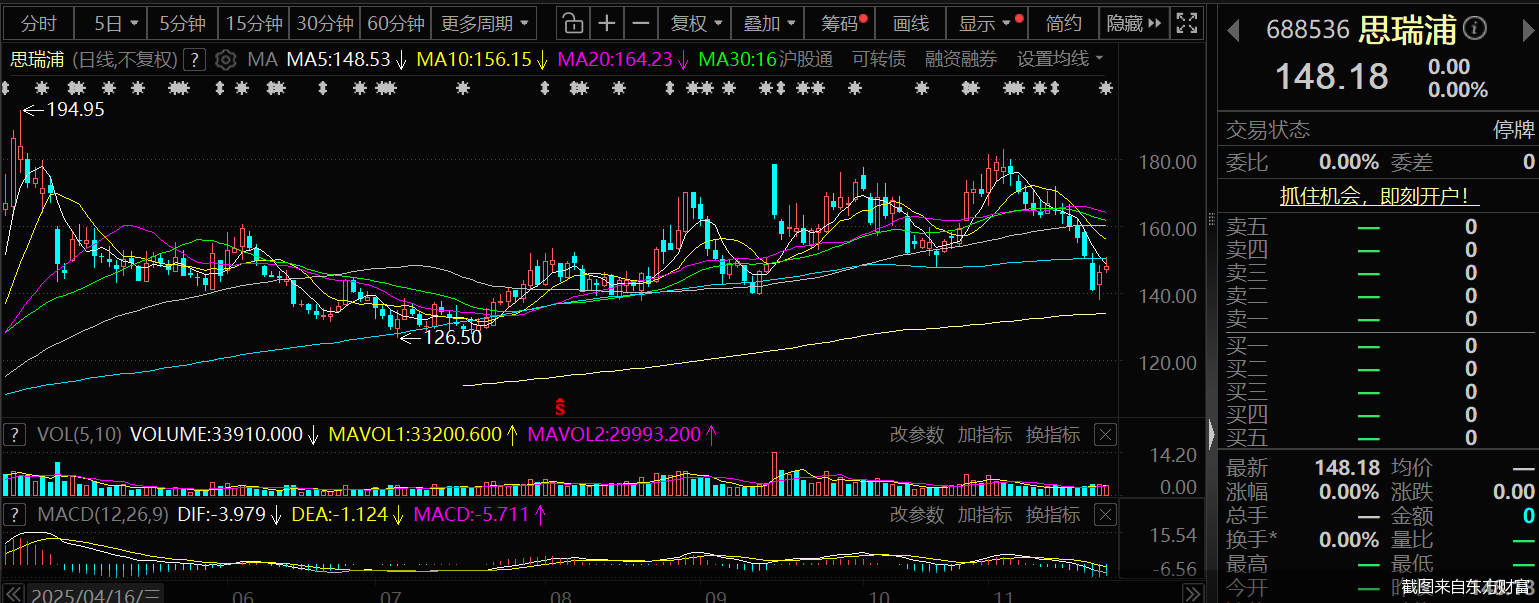
Core Viewpoint - The recent acquisition of Aura Semiconductor by SIRUI PU highlights the challenges faced by Aura Semiconductor, which has struggled with its IPO attempts and is now being absorbed by a competitor in the semiconductor industry [1][3][12]. Group 1: Acquisition Details - SIRUI PU announced on November 25 that it plans to acquire Aura Semiconductor through a combination of stock issuance and cash payments, with trading suspended for up to 10 days [3][4]. - Aura Semiconductor, established in 2018, specializes in the research, design, and sales of analog and mixed-signal chips, achieving rapid revenue growth in previous years [3][11]. - The acquisition is part of a broader trend of mergers and acquisitions within the semiconductor industry, as companies seek to consolidate and enhance their product offerings [3][4]. Group 2: Financial Performance - Aura Semiconductor's revenue for 2022 and 2023 was approximately 478 million and 472 million respectively, with net losses of 856 million and 962 million [11]. - In the first seven months of 2024, Aura Semiconductor reported a revenue of about 538 million and a net profit of approximately 307 million, indicating a turnaround [11]. - SIRUI PU's revenue for 2023 and 2024 was approximately 1.094 billion and 1.22 billion respectively, with net losses of 34.71 million and 197 million [11]. Group 3: Background of Key Individuals - Wang Chengdong, the controlling figure behind both Aura Semiconductor and the listed company Shuangcheng Pharmaceutical, has faced significant challenges in his capital strategy, including failed IPO attempts and acquisition plans [12][14]. - Wang's experience in the pharmaceutical industry and his ventures into the semiconductor sector reflect a strategic shift, but the recent developments suggest a retreat from his original plans [12][14][16]. Group 4: Market Context - The semiconductor industry has seen increased M&A activity, with companies like SIRUI PU looking to enhance their capabilities in high-growth areas such as data centers and AI servers through strategic acquisitions [5][11]. - The valuation of Aura Semiconductor remains a critical factor in the success of the acquisition, as previous attempts to merge with Shuangcheng Pharmaceutical were hindered by disagreements over pricing [6][9][10].


螺丝钉指数地图来啦:指数到底如何分类|2025年11月
银行螺丝钉· 2025-11-18 07:01
Core Viewpoint - The article presents an index map that includes various commonly used stock indices, their codes, selection rules, industry distribution, average and median market capitalization of constituent stocks, and the number of constituent stocks, which will be updated regularly for easy reference [1][2]. Group 1: Types of Indices - The index map includes several categories of stock indices: broad-based indices, strategy indices, industry indices, thematic indices, and overseas indices [4][2]. Group 2: Index Details - The article provides detailed information on specific indices, including: - CSI 300 Index (000300.SH): Average market cap of ¥214.64 billion, median market cap of ¥108.39 billion, consisting of 300 stocks [7]. - CSI 500 Index (000905.SH): Average market cap of ¥33.42 billion, median market cap of ¥29.64 billion, consisting of 500 stocks [7]. - CSI 800 Index (000906.SH): Average market cap of ¥101.38 billion, median market cap of ¥40.13 billion, consisting of 800 stocks [7]. - CSI 1000 Index (000852.SH): Average market cap of ¥14.66 billion, median market cap of ¥12.79 billion, consisting of 1000 stocks [7]. - CSI 2000 Index (932000.CSI): Average market cap of ¥6.06 billion, median market cap of ¥5.32 billion, consisting of 2000 stocks [7]. Group 3: Industry Distribution - The article outlines the industry distribution across various indices, highlighting the following: - Materials: 8.86% in broad-based indices, 18.14% in strategy indices, and 11.44% in industry indices [11]. - Real Estate: 0.65% in broad-based indices, 1.34% in strategy indices, and 0.83% in industry indices [11]. - Financials: 25.45% in broad-based indices, 33.98% in strategy indices, and 4.49% in industry indices [11].

8点1氪:银行App迎来关停潮;全国多地西贝门店闭店;李斌回应被网暴:无所谓,CEO有娱乐大家的责任
36氪· 2025-11-11 00:10
Group 1 - The banking industry is experiencing a wave of app shutdowns, particularly in the credit card and direct banking sectors, as banks begin to streamline their digital offerings [3][4] - Many independent banking apps, initially launched to attract users, have resulted in high download rates but low daily active users, leading to inefficiencies and increased compliance costs [4] - The credit card industry is entering a contraction phase due to weakened consumer spending, prompting some banks to close their credit card apps [4] Group 2 - The Chinese government has successfully launched a group of 13 low-orbit satellites for internet connectivity, marking a significant achievement in the country's space capabilities [9] - The film industry in China has seen a total box office revenue of 450 billion yuan as of November 10, 2025, indicating a strong performance in the market [8] - TSMC reported a 16.9% year-on-year increase in sales for October, with a total revenue of approximately 367.47 billion NTD [22]




商务部:中方将不断优化许可流程 促进出口管制物项合规贸易
Xin Hua She· 2025-11-06 10:46
Group 1 - The Chinese government is willing to enhance communication and cooperation with all parties, continuously optimizing the licensing process and actively applying general licenses to facilitate compliant trade of export-controlled items [1] - The spokesperson emphasized that rare earth elements have significant dual-use properties, and China conducts licensing reviews according to laws and regulations, granting licenses for applications that meet the criteria [1] - The Chinese government aims to ensure the stability and security of global industrial and supply chains through these measures [1] Group 2 - In response to issues related to Anshi Semiconductor, the Chinese government has approved export license applications from Chinese exporters in a timely manner and granted exemptions for eligible exports to promote the resumption of supply from Anshi Semiconductor [2] - The Chinese government hopes that the Netherlands will adopt a responsible attitude and stop interfering in corporate affairs to find constructive solutions regarding Anshi Semiconductor [2] - Discussions between China and the U.S. have led to official announcements regarding tariff adjustments and cooperation on various trade issues, including fentanyl tariffs and agricultural trade [2]
停牌!603216,重大资产重组
Zhong Guo Ji Jin Bao· 2025-11-05 23:53
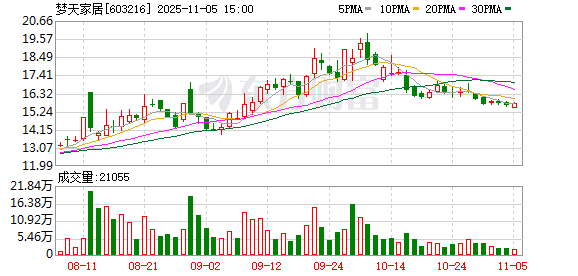
Core Viewpoint - Mengtian Home is planning a significant asset restructuring by acquiring control of ChuanTu Microelectronics through a combination of share issuance and cash payment, with the stock expected to be suspended for up to 10 trading days starting November 6, 2025 [1][2]. Group 1: Transaction Details - The transaction is currently in the planning stage, with Mengtian Home in discussions with potential counterparties, primarily the controlling team of ChuanTu Microelectronics led by Chen Dongpo, although the final list of counterparties is not yet confirmed [4]. - The valuation of ChuanTu Microelectronics has not been finalized as of the announcement date, and the transaction is expected to constitute a major asset restructuring under relevant regulations [4]. - Details regarding the audit evaluation, transaction amount, and the ratio of shares issued versus cash payment are still to be determined, and it is unclear whether this transaction will be classified as a related party transaction [4]. Group 2: Company Background - ChuanTu Microelectronics, established in 2016, specializes in the research, design, and sales of high-end analog chips, with products used in industrial control, power energy, communications, computing, and automotive electronics [5]. - Chen Dongpo, the founder of ChuanTu Microelectronics, holds a PhD in Circuit and System from Zhejiang University and has 15 years of experience in RF chip research and design [5]. - Notable shareholders of ChuanTu Microelectronics include well-known semiconductor investment firms and listed companies such as BYD [5]. Group 3: Market Information - As of November 5, 2025, Mengtian Home's stock closed at 15.7 yuan per share, giving it a market capitalization of 3.5 billion yuan [5].

陶冬:美联储利率政策转向模糊
Di Yi Cai Jing· 2025-11-03 03:28
Group 1 - The Federal Reserve has lowered the policy interest rate to 3.75%–4.0% and will stop quantitative tightening from December 1, indicating a focus on maintaining market liquidity [1][2] - There is significant internal disagreement within the Federal Reserve regarding future interest rate policies, with some members opposing further rate cuts [2] - The U.S. economy is growing at approximately 3.9%, but inflation remains a concern, complicating the decision-making process for interest rate adjustments [2] Group 2 - Silver has decoupled from gold recently, with silver prices rising while gold continues to decline, driven by a strong dollar and reduced geopolitical risks [3][4] - Silver's dual financial and industrial attributes make it particularly valuable in the context of the green energy transition, with significant demand from the solar and electric vehicle industries [4][5] - The historical gold-to-silver ratio is currently at 82, which is still high compared to the typical range of 50–70, suggesting potential for silver to catch up, although the primary drivers for precious metal price increases are financial rather than industrial [5][6]
【广发宏观贺骁束】高频数据下的10月经济:价格篇
郭磊宏观茶座· 2025-11-01 00:25
Core Viewpoint - The article discusses the mixed performance of various commodity prices in October, highlighting the resilience of the non-ferrous metals sector amid macroeconomic factors such as the Federal Reserve's interest rate cuts and supply disruptions from Indonesia [1][4]. Group 1: Commodity Price Trends - The BPI index recorded 870 points as of October 30, reflecting a 0.6% increase from the end of September, with energy prices down 0.6% and non-ferrous metal prices up 2.2% month-on-month [1][4]. - In the domestic market, prices of thermal coal and coking coal futures saw significant increases of 9.2% and 19.1% respectively, while chemical products, cement, and glass prices showed notable declines of -1.9%, -3.1%, and -10.6% respectively [8][10]. - The South China comprehensive index remained flat month-on-month, with a year-on-year average decrease of 0.3% compared to a previous increase of 6.0% [8]. Group 2: Real Estate Market - The second-hand housing price index in major cities continued to adjust, with declines of -1.2%, -0.7%, -1.7%, and -0.9% in Beijing, Shanghai, Guangzhou, and Shenzhen respectively as of October 20 [10]. Group 3: Emerging Industries - Prices in emerging sectors such as storage chips and lithium carbonate remained strong, while the photovoltaic industry saw a price decline, with the photovoltaic industry composite index (SPI) down 0.5% month-on-month [2][11]. - The DXI index, representing the semiconductor (DRAM) industry, surged by 93.5% month-on-month, indicating a robust outlook for the memory sector [2][11]. Group 4: Shipping and Logistics - In the export shipping sector, the China Container Freight Index (CCFI) fell by 6.1% month-on-month, while the WCID container freight indices for routes to Los Angeles and New York increased by 5.5% and 8.9% respectively [13]. - The average value of the road logistics price index showed a year-on-year decrease of 0.1%, indicating a gradual decline from the peak observed in June [15]. Group 5: Food Prices - Food prices exhibited mixed trends, with the average wholesale price of pork declining by 7.8% and key vegetable prices rising by 13.6% month-on-month [3][15].

无锡振华(605319):系列点评二:2025Q3业绩符合预期,电镀半导体双轮驱动
Minsheng Securities· 2025-10-31 06:58
Investment Rating - The report maintains a "Recommended" rating for the company [4][6]. Core Insights - The company reported a revenue of 2.0 billion yuan for the first three quarters of 2025, representing a year-on-year increase of 15.4%. The net profit attributable to shareholders was 320 million yuan, up 27.2% year-on-year [1]. - The third quarter of 2025 saw a revenue of 710 million yuan, a year-on-year increase of 15.7% and a quarter-on-quarter increase of 3.2%. The net profit for the same period was 120 million yuan, reflecting a year-on-year growth of 27.2% and a quarter-on-quarter growth of 9.4% [2]. - The company is benefiting from its strategic focus on the new energy transition, with significant sales growth from new clients like Xiaomi, which saw a year-on-year sales increase of 166.0% in Q3 2025 [2]. Summary by Sections Financial Performance - For Q3 2025, the gross profit margin was 27.4%, an increase of 1.8 percentage points year-on-year, while the net profit margin was 16.5%, up 1.5 percentage points year-on-year [2]. - The company’s operating expenses remained stable, with sales, management, R&D, and financial expense ratios showing minor fluctuations [2]. Business Strategy - The company has a strong national presence with production bases in multiple cities and has established deep partnerships with major automotive manufacturers, including SAIC Motor, Tesla, and Li Auto [3]. - The acquisition of the electroplating business is expected to create a second growth curve, with the company entering the power semiconductor market, which is valued at 32.3 billion USD [3]. Future Projections - Revenue projections for 2025-2027 are estimated at 3.52 billion yuan, 4.45 billion yuan, and 5.28 billion yuan, respectively. Net profit is projected to be 510 million yuan, 650 million yuan, and 800 million yuan for the same years [4][5]. - The earnings per share (EPS) are forecasted to be 1.44 yuan, 1.87 yuan, and 2.29 yuan for 2025, 2026, and 2027, respectively, with corresponding price-to-earnings (PE) ratios of 15, 12, and 10 [4][5].

倒计时1天,李在明或将签字,美逼韩国割土地,中国家门口生变
Sou Hu Cai Jing· 2025-10-29 04:08
Economic Impact - The U.S. demands South Korea to pay $350 billion, equivalent to South Korea's total foreign investment over the past five years, which poses a significant financial burden on the country [3] - South Korea's economy is heavily reliant on exports, with the automotive industry having a profit margin of only 5% to 8%, and a potential increase in tariffs from 15% to 25% could severely diminish competitiveness [3] - The South Korean government has indicated it can only allocate $15 to $20 billion annually from its budget, making it nearly impossible to meet the U.S. demands without long-term financial strain [3] Political and Social Reactions - A significant portion of the South Korean population, 62%, opposes any compromise with the U.S., viewing the potential agreement as unequal [7] - The political landscape in South Korea is increasingly polarized, with opposition parties criticizing the agreement as a betrayal of national interests [11] - Public sentiment is marked by anger and frustration, with protests occurring in major cities against perceived economic coercion and loss of sovereignty [9] Military and Sovereignty Concerns - The U.S. is not only seeking financial contributions but also land ownership for military bases, fundamentally altering the nature of the U.S.-South Korea relationship from "leased" to "occupied" [5][7] - There are fears that U.S. military expansion in South Korea could destabilize the regional military balance, particularly concerning China [22] - The potential for the U.S. to gain access to South Korea's core technologies in semiconductors and renewable energy raises concerns about technological sovereignty and economic implications for China [20][22] Regional Economic Relations - South Korea's trade with China is deeply intertwined, with bilateral trade expected to reach $360 billion in 2024, and a significant portion of South Korea's exports to China being in critical sectors like semiconductors [20] - A shift of $350 billion in investments from South Korea to the U.S. could disrupt supply chains and increase production costs for Chinese companies [20] - The dynamics of U.S.-South Korea relations could lead to a weakening of East Asia's overall economic competitiveness, as the U.S. aims to consolidate its influence in the region [24] Strategic Implications - The situation exemplifies the dangers of over-reliance on a single power, as highlighted by experts who warn of the erosion of soft power and strategic short-sightedness in U.S. foreign policy [26] - The case serves as a cautionary tale for smaller nations about the risks of dependency on a dominant power, with potential long-term consequences for sovereignty and economic stability [28]
潘功胜、吴清等重磅发声;油价年内第九次下调|南财早新闻
2 1 Shi Ji Jing Ji Bao Dao· 2025-10-27 23:25
Macro Economy - In the first nine months of 2025, the total profit of large-scale industrial enterprises in China reached 53,732 billion yuan, a year-on-year increase of 3.2%. In September alone, profits grew by 21.6% year-on-year [4] - The People's Bank of China plans to introduce nine new policy measures to expand the high-level opening of cross-border trade and optimize foreign exchange fund settlement for new trade formats [4] - The Financial Regulatory Bureau emphasizes the need to strengthen funding supply for major projects to boost consumption and ensure the stability of the financial system [4] - As of October 27, domestic gasoline and diesel prices were reduced by 265 yuan and 255 yuan per ton, respectively [4] - The average interest rate for three-year fixed deposits in September 2025 was 1.688%, while the five-year average was 1.519%, indicating a continued inversion [4] Investment News - The China Securities Regulatory Commission (CSRC) issued new guidelines to enhance the protection of small investors, addressing concerns over high pricing in new stock issuances [6] - The CSRC officially released a plan to optimize the Qualified Foreign Institutional Investor (QFII) system, allowing foreign public funds to have the same short-term trading rules as domestic funds [6] - On October 27, the Shanghai Stock Exchange announced the appointment of new members to its third Technology Innovation Advisory Committee [6] - The A-share market experienced a significant rise, with the Shanghai Composite Index increasing by over 1%, reaching a ten-year high [6] Company Movements - Guizhou Moutai announced the resignation of its chairman Zhang Deqin due to work adjustments, with Chen Hua being recommended as the new chairman [7] - Tongfu Microelectronics reported third-quarter revenue of 7.078 billion yuan, a year-on-year increase of 17.94%, and a net profit of 448 million yuan, up 95.08% [7] - Northern Rare Earth's revenue for the first three quarters was 30.292 billion yuan, a 40.50% increase year-on-year, with net profit rising by 280.27% [7] - He Yuan Bio, Xi'an Yicai, and Bibete will be listed on the Sci-Tech Innovation Board on October 28, marking the first batch of new stocks in the Sci-Tech growth sector [8]