可选消费零售

Search documents
证券时报:政策红利打开空间 中长期资金“压舱石”效应凸显
Zheng Quan Shi Bao· 2025-09-04 23:21
Group 1 - The core focus of the news is on the increasing participation of long-term funds, such as insurance and foreign capital, in the A-share market, driven by policy support and market conditions [1][2][3] - As of the end of Q2 this year, insurance companies held stocks worth 3.07 trillion yuan, an increase of 640.61 billion yuan or 26.38% from the end of last year [2] - The growth of index funds has been significant, with 719 new equity funds established this year, a year-on-year increase of 50.1%, and a total issuance scale of 353.64 billion yuan, up 173.12% [4][5] Group 2 - The increase in insurance capital investment in the stock market is driven by three main factors: improved macroeconomic recovery expectations, declining risk-free interest rates, and supportive policies encouraging long-term investments [3] - The number of stock ETFs reached 1,020, with a total scale of 3.53 trillion yuan, reflecting a growth of 644.89 billion yuan or 22.33% from the end of last year [4][6] - Foreign capital has also increased its holdings in A-shares, with a notable increase of 873.58 million yuan through the Stock Connect program in the first half of the year [6][7]
政策红利打开空间 中长期资金“压舱石”效应凸显
Zheng Quan Ri Bao· 2025-09-03 16:59
Group 1: Market Dynamics - The focus of the market is on promoting the entry of medium to long-term funds into the A-share market, with insurance funds and foreign capital providing significant support [1][2] - The number of newly established equity public funds has increased significantly this year, with over 70% being index funds, highlighting the "stabilizing" effect of medium to long-term funds [1][4] Group 2: Policy Support - A joint implementation plan was issued by six government departments in January to encourage medium to long-term funds to increase their equity investment ratio, establishing a long-term assessment mechanism [2][3] - By the end of Q2, insurance companies held stocks worth 3.07 trillion yuan, an increase of 640.61 billion yuan or 26.38% from the end of last year [2] Group 3: Investment Trends - Insurance funds have increased their equity investments due to three main factors: strengthened macroeconomic recovery expectations, declining risk-free interest rates, and supportive policies for long-term investments [3] - As of the end of Q2, insurance funds held 734 stocks with a total market value of 1.57 trillion yuan, with significant increases in sectors like construction, consumer retail, and transportation [3] Group 4: Growth of Index Funds - The scale and proportion of equity funds have steadily increased, with 719 new equity funds established this year, a year-on-year increase of 50.1%, totaling 353.64 billion yuan [4][5] - The number of stock ETFs reached 1,020, with a total scale of 3.53 trillion yuan, reflecting a growth of 22.33% from the end of last year [4] Group 5: Foreign Investment - Foreign investors have increased their holdings in A-shares, with a total value of 3.07 trillion yuan by the end of June, driven by technology innovation and valuation recovery [7] - Northbound capital has shown significant sectoral inflows, particularly in information technology and industrial sectors, indicating a shift in foreign investment focus [7]
“重估牛”系列之港股资金面:8月W4港股资金:南向流入互联网,外资加码硬科技
Changjiang Securities· 2025-09-01 13:13
Core Insights - The report highlights a net inflow of 146.23 billion HKD from southbound funds between August 25 and 29, 2025, primarily into sectors such as consumer discretionary retail, non-bank financials, media, software services, and non-ferrous metals [2][6][29] - The top five sectors receiving the most inflow were consumer discretionary retail (67.74 billion HKD), non-bank financials (43.74 billion HKD), media (32.92 billion HKD), software services (29.71 billion HKD), and non-ferrous metals (21.41 billion HKD) [2][6][29] - Conversely, significant outflows were observed in hardware equipment, semiconductors, oil and petrochemicals, banking, and telecommunications services [2][6][29] Sector Performance - The Hang Seng Index experienced a decline of 1.03%, while the Hang Seng Tech Index rose by 0.47% during the same period, indicating a divergence in sector performance [5][13] - The report attributes the Hang Seng Index's underperformance to the disappointing results of major weighted stocks and weaker performance in financial and real estate sectors [5][13] - Positive policy developments, such as the Chinese government's endorsement of "AI+" initiatives, provided support for technology stocks, contributing to the rise in the Hang Seng Tech Index [5][13] Foreign Capital Flow - Foreign intermediary institutions saw a net inflow of 21.25 billion HKD, with significant investments in semiconductors, biopharmaceuticals, automotive parts, hardware equipment, and consumer services [6][36] - The top five sectors for foreign intermediary inflows included semiconductors (18.07 billion HKD), biopharmaceuticals (17.44 billion HKD), automotive parts (16.21 billion HKD), hardware equipment (15.91 billion HKD), and consumer services (8.84 billion HKD) [6][36] - Notably, the sectors experiencing the largest outflows from foreign intermediaries were media (-20.03 billion HKD), consumer discretionary retail (-16.34 billion HKD), and non-bank financials (-9.35 billion HKD) [6][36]
行情切换一触即发,新消费与传统消费开启轮动行情
Mei Ri Jing Ji Xin Wen· 2025-08-26 05:47
Group 1 - The second quarter saw an influx of funds into the new consumption sector, driving an upward trend and raising market expectations for performance in this area. However, some high-growth stocks reported earnings below previous expectations, leading to a market adjustment before gradually stabilizing. The top companies continue to maintain stable high growth rates, and with the overall consumption market expected to bottom out, the relative growth advantage of new consumption, combined with fiscal year valuation shifts, is likely to usher in a new round of market activity [1] - Traditional consumption sectors are showing a high cost-performance ratio for rebound. From the perspective of the large consumption sector, the main industry increases since August are as follows: Automotive (12.05%), Home Appliances (9.37%), Light Industry Manufacturing (8.4%), Beauty and Personal Care (7.5%), Commercial Trade (7.44%), Agriculture, Forestry, Animal Husbandry and Fishery (7.38%), Food and Beverage (7.11%), Social Services (6.9%), Textile and Apparel (5.93%). Except for automotive, all sectors lagged behind the CSI 300 index (9.66%). Valuations are at the 79.06%, 39.29%, 75.06%, 59.51%, 89.37%, 12.11%, 11.80%, 46.13%, and 61.31% percentiles over the past decade, with Food and Beverage, Agriculture, Forestry, Animal Husbandry and Fishery, Home Appliances, and Social Services below their valuation midpoints. The expected profit growth rates for 2025E are 8.64%, 22.26%, 13.92%, and 45.35%, indicating good cost-performance ratios in the current industry rotation context [1] Group 2 - The Hong Kong Stock Consumption ETF (513230) tracks the CSI Hong Kong Stock Connect Consumption Theme Index, which selects 50 liquid and large-cap consumption-related securities from the Hong Kong Stock Connect range to reflect the overall performance of consumption-listed companies in Hong Kong. This index covers various sectors benefiting from policy stimulus, including discretionary retail (27%), automotive and parts (13.4%), food and beverage (6%), consumer services (5.7%), and home appliances (4.9%) [2] - The Food and Beverage ETF (515170) tracks the CSI Subsector Food and Beverage Industry Theme Index, reflecting the overall trend of food industry stocks in the Shanghai and Shenzhen markets. This index selects large-scale, liquid companies from the food manufacturing sector. According to the Shenwan三级行业 distribution, the index weight is concentrated in low-valuation areas such as liquor (56.8%), dairy products (14.1%), and seasoning and fermented products (9.9%) [2]
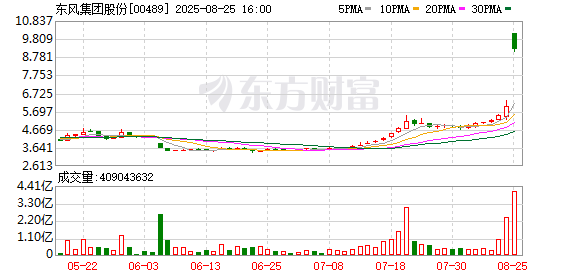
复牌狂飙 涨超54%
Zhong Guo Ji Jin Bao· 2025-08-25 12:00
| 恒生指数 | 恒生国企 | 恒生科技 | | --- | --- | --- | | 25829.91 9248.00 | | 5825.09 | | +490.77 +1.94% +168.07 +1.85% +177.41 +3.14% | | | 恒生指数成份股中72只上涨,12只下跌。其中,紫金矿业涨6.38%,百度集团涨6.25%,网易涨6.04%,领涨蓝筹。 【导读】东风集团股份复牌后狂飙,涨超54% 8月25日,香港三大股指均大涨:恒生指数涨1.94%,报25829.91点;恒生科技指数涨3.14%,报5825.09点;恒生中国企业指数涨1.85%,报9248.0点。市场 成交额达3696.98亿港元,较前一交易日的2855.84亿港元显著放大。 | 序号 | 名称 | 代码 | 现价 | 涨跌 | 涨跌幅 ▼ | 成交额 | 年初至今 | | --- | --- | --- | --- | --- | --- | --- | --- | | 1 | 紫金矿业 | 2899 | 24.340 c | 1.460 | 6.38% | 19.37亿 | 75.17% | | 2 | 目度集团-S ...

复牌狂飙,涨超54%
Zhong Guo Ji Jin Bao· 2025-08-25 11:52
Group 1 - Dongfeng Group's stock surged over 54% after resuming trading, reaching a high of 69.18% during the day, closing at 9.20 HKD per share [5] - The company announced that its high-end electric vehicle brand, Lantu, will be listed on the Hong Kong Stock Exchange through an introduction, while simultaneously initiating a privatization process [5] - Analysts view this as a textbook case of innovative capital operation by a state-owned enterprise, highlighting the strategic shift towards new energy vehicles [5] Group 2 - The overall automotive sector showed strength, with notable gains from companies such as NIO (up 15.17%), Brilliance China (up 10.34%), and GAC Group (up 8.45%) [6][7] - The Hong Kong stock market experienced significant activity, with the Hang Seng Index rising by 1.94% and a total market turnover of 369.7 billion HKD [2][3] Group 3 - According to the China Automobile Dealers Association, the sales of new energy vehicles in July reached 1.262 million units, a year-on-year increase of 27.3%, with a penetration rate of 48.7% [8] - The report indicates a continuous increase in the adoption of advanced driving assistance features, driving demand for high-performance chips in automotive electronic systems [11]
8月W3港股资金:南向流入非银软件,外资流
Changjiang Securities· 2025-08-25 09:17
Core Insights - The report highlights a net inflow of 306.13 billion HKD from southbound funds between August 18 and 21, 2025, primarily into non-bank financials, software services, and consumer discretionary sectors [2][7][34] - The top five sectors receiving inflows accounted for a total of 238.11 billion HKD, with non-bank financials leading at 85.1 billion HKD [2][7][34] - In contrast, foreign capital saw a net outflow of 145.99 billion HKD during the same period, with significant withdrawals from non-bank financials and consumer discretionary sectors [7][40] Sector Summaries Southbound Fund Inflows - Non-bank financials received the highest inflow of 85.1 billion HKD, followed by software services at 62.8 billion HKD, and consumer discretionary retail at 30.69 billion HKD [2][7][34] - Other notable inflows included pharmaceuticals and hardware equipment, each receiving 30.69 billion HKD and 28.85 billion HKD respectively [2][7][34] Foreign Capital Outflows - Foreign capital saw significant outflows from non-bank financials (-61.11 billion HKD), consumer discretionary retail (-47.58 billion HKD), and banking sectors [7][40] - The top sectors for foreign inflows included daily consumer retail (73.52 billion HKD) and medical equipment and services (31.31 billion HKD) [7][40] Market Performance - The Hang Seng Index increased by 0.27% and the Hang Seng Tech Index rose by 1.89% during the period from August 18 to 22, 2025 [6][12] - Key drivers for market performance included technological breakthroughs in semiconductor design and strong earnings reports from leading companies [6][12] Comparative Analysis - The report notes a divergence in fund flows, with southbound funds showing net inflows while foreign capital exhibited net outflows during the same timeframe [7][40] - The report also indicates that the southbound funds have been increasingly directed towards sectors like non-bank financials and software services, contrasting with the foreign capital's focus on consumer retail and medical sectors [7][40]
国际地缘冲突再起,港股避险情绪升温
Yin He Zheng Quan· 2025-06-15 11:40
Group 1 - The report highlights that the recent geopolitical tensions, particularly the conflict between Israel and Iran, have led to increased risk aversion in the market, resulting in a rise in oil prices and a boost in safe-haven assets like gold [2][4] - The Hong Kong stock market showed mixed performance, with the Hang Seng Index rising by 0.42%, while the Hang Seng Tech Index fell by 0.89% during the week from June 9 to June 13 [2][4] - Among the sectors, healthcare, materials, and energy industries performed well, with respective index increases of 7.52%, 5.91%, and 5.80%, while consumer discretionary and information technology sectors saw declines [7][12] Group 2 - The average daily trading volume on the Hong Kong Stock Exchange increased to HKD 254.2 billion, up by HKD 50.2 billion from the previous week, indicating improved liquidity [17] - Southbound capital saw a net inflow of HKD 15.5 billion, reflecting a positive sentiment towards certain stocks, including Meituan and BYD [17] - As of June 13, the price-to-earnings (PE) ratio of the Hang Seng Index was 10.6, placing it in the 72nd percentile since 2019, while the Hang Seng Tech Index had a PE ratio of 20.02, in the 8th percentile [19][23] Group 3 - The report suggests that the current valuation of the Hong Kong stock market is at a historical average level, with a focus on high-dividend sectors such as energy, finance, and precious metals, which are expected to attract investor interest amid geopolitical uncertainties [44] - The report also notes the potential benefits for export-oriented sectors due to improvements in US-China tariff policies, as well as opportunities in innovative pharmaceutical sectors and new consumer leaders with strong earnings growth [44][41]
盈利确认上行趋势 - 港股2024年年报点评
2025-05-07 15:20
Summary of Key Points from the Conference Call Industry Overview - The conference call discusses the performance of the Hong Kong stock market (港股) in 2024, highlighting a recovery trend in overall earnings growth with a 1.2% increase in revenue and a 9.8% year-on-year growth in net profit attributable to shareholders [1][3][6]. Core Insights and Arguments - **Earnings Growth**: The second half of 2024 saw a significant acceleration in earnings, with a year-on-year increase of 13.3% [1][6]. - **Key Sectors Driving Growth**: - The information technology sector benefited from breakthroughs in AI technology, with net profit growth of 77.4% in the software and services sub-sector and 76.4% in the technology hardware and equipment sub-sector [1][10]. - The financial sector, particularly the insurance industry, experienced a 70.8% increase in net profit, while diversified financial services saw a 20.5% growth [1][10]. - The healthcare sector, including pharmaceuticals, biotechnology, and life sciences, improved profitability by nearly 20 percentage points [1][10]. - **Struggling Sectors**: The consumer sector showed weak growth, with significant declines in return on equity (ROE) for household and personal products, and food retail. The optional consumer retail sub-sector's profit growth decreased by 36 percentage points, while media and consumer services saw declines of approximately 18% and 19% respectively [1][11]. Financial Metrics - **Return on Equity (ROE)**: The ROE for Hong Kong stocks rose to 7% in 2024, up from 6.7% in the first half of the year, but still below the average of around 10% since 2016. The DuPont analysis indicated that the increase in asset turnover was the primary driver of the ROE improvement [1][7][8]. - **Revenue Trends**: The revenue growth rate for Hong Kong stocks showed signs of bottoming out, with a 1.2% increase for the year, slightly down from 1.9% in the first half of 2024 [1][5]. Comparative Analysis - **Performance vs. A-shares**: The earnings recovery speed of Hong Kong stocks is superior to that of A-shares, which reported negative growth rates of -0.2% for the year and -0.5% for the first half of 2025 in terms of revenue and -2.7% for both periods in net profit [4][6]. Future Outlook - **Support Factors for 2025**: The global technology cycle is expected to rebound, with the AI-driven industrial revolution continuing to support the performance of the information technology sector. Additionally, macroeconomic policies aimed at stabilizing growth are anticipated to benefit mainland companies, which constitute over 60% of the market [4][12].
【广发策略】“反制关税”后,各类资金如何决策
晨明的策略深度思考· 2025-04-20 11:18
Group 1 - The core viewpoint of the article highlights the contrasting behaviors of different capital flows in response to recent tariff policies, with southbound funds maintaining a high-risk appetite while overseas funds exhibit stronger risk aversion [2][4][17] Group 2 - Southbound funds showed a significant increase in daily trading volume and net purchases during the first week after the announcement of "counter-tariffs," but this trend sharply declined in the following week [2][10] - The investment style of southbound funds indicates a preference for growth stocks, particularly in the semiconductor and discretionary consumption sectors, which have seen continuous increases in allocation [2][10] - The allocation ratios for growth stocks are currently at 1.86% and -4.06%, placing them in the 96.3% and 100.0% percentiles since 2022, respectively [2][10] Group 3 - Overseas capital has shown a trend of net outflows from both active and passive foreign investments in the A-share market, with a total outflow of $19.4 billion and $57.5 billion over two weeks [4][17] - The passive foreign capital outflow reached $52.5 billion in the last week, marking the largest outflow in the past six months [4][17] Group 4 - The core ETFs in the A-share market, particularly the CSI 300 ETFs, have experienced significant net inflows, indicating strong support for the market [5][20] - Since the announcement of "counter-tariffs," the cumulative net inflow into these ETFs has shown a noticeable increase, reflecting a faster pace of capital entry into the market [5][20] Group 5 - The southbound capital's net purchases for the week of April 14-18 amounted to HKD 232 million, a decrease of HKD 590 million from the previous week [24] - Key stocks with significant net purchases included Alibaba (HKD 105.82 million), Tencent (HKD 68.46 million), and Meituan (HKD 39.12 million) [24]