工业品

Search documents
“中国工业品不虚标”行动正式启动 京东工业以数智供应链守护行业品质
Zhong Jin Zai Xian· 2025-09-26 11:11
Core Viewpoint - The "China Industrial Products No False Marking" initiative aims to address the issue of misleading product labeling in the industrial sector, which has been detrimental to market order and safety [1][3][5] Group 1: Industry Challenges - The industrial products sector in China faces significant issues with product parameters, performance, materials, and specifications not matching their labels, leading to inefficiencies and safety hazards [3][4] - Misleading labeling practices, referred to as "false marking," harm the reputation and credibility of the industrial products industry, hindering technological innovation and industrial upgrades [3][4] - Some companies resort to false marking to compete on price, which distorts market mechanisms and impedes long-term industry development [3][4] Group 2: Initiative Details - The initiative, themed "Acting Towards Quality," was launched in Beijing and aims to recruit skilled engineers as evaluators to promote high-quality industrial products [1][5] - The initiative includes commitments from both China Industrial News and JD Industrial to implement strict quality control measures, including a tenfold compensation for false-marked products [5][6] - Activities planned under the initiative include public awareness campaigns, exposure of false-marked products, and the establishment of a transparent feedback mechanism for users [6] Group 3: Industry Collaboration - JD Industrial emphasizes the importance of collaboration with brand owners to avoid vicious price competition and ensure a fair quality-price ratio [4][5] - The initiative seeks to enhance the quality of industrial products through a digital and intelligent supply chain management system, improving overall industry efficiency [4][6] - The initiative encourages participation from various stakeholders, including government, media, and enterprises, to collectively combat false marking and promote high-quality industrial development [6]

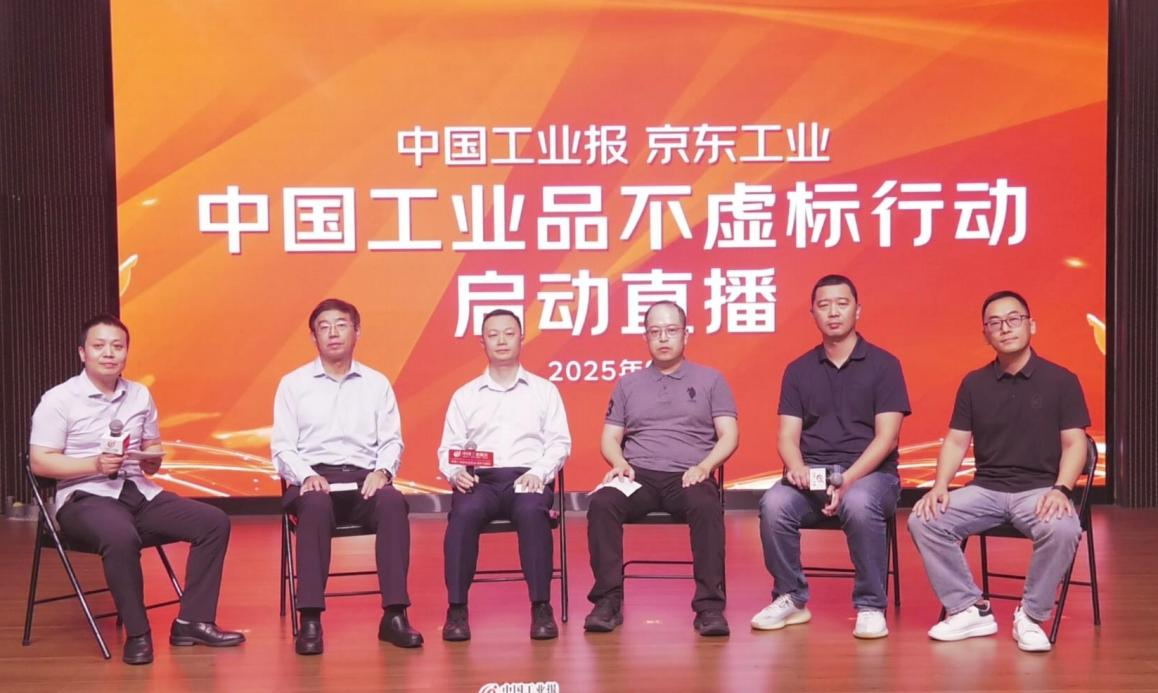
向质而行 中国工业报联合京东工业发起“中国工业品不虚标”行动
Zhong Guo Zhi Liang Xin Wen Wang· 2025-09-26 09:01
Group 1 - The "China Industrial Products No False Marking" initiative was launched on September 25, aiming to address the issue of false marking in the industrial products sector [1][4] - The initiative encourages collaboration among various stakeholders, including government, media, platforms, and enterprises, to combat false marking and promote high-quality industrial development [5] Group 2 - Zhou Pingjun, former deputy director of the Ministry of Industry and Information Technology's Small and Medium Enterprises Development Promotion Center, emphasized that false marking distorts market mechanisms and hinders long-term industry growth [3] - Liu Bin, deputy secretary-general of the China Electrical Equipment Industry Association, noted that while the overall quality of the wire and cable industry is internationally leading, some small and medium enterprises compromise quality for low-price competition [3] Group 3 - JD Industrial aims to enhance product quality and improve customer procurement experiences by establishing a win-win cooperation model with brand owners, avoiding vicious low-price competition [3][4] - JD Industrial has committed to implementing a comprehensive quality control system, including a tenfold compensation policy for false-marked products and strict supplier management [4] Group 4 - The initiative includes activities such as public education on false marking, exposure of false-marked products, and recognition of quality enterprises to foster a culture of authenticity in the industry [4][5] - The initiative also seeks to recruit professional engineers to participate in the identification of false-marked products and the recommendation of quality products, forming a "No False Marking Engineer Team" [4]
期货市场每日解析:美联储降息背后,黄金调整、原油波动,这些品种走势引爆市场!
Sou Hu Cai Jing· 2025-09-22 03:26
Market Overview - The futures market is experiencing widespread declines, with major contracts such as 20 rubber, glass, coking coal, and rubber all dropping over 2% [3] - The palm oil market has also seen a decline of 2%, while other commodities like silver, live pigs, and synthetic rubber have dropped nearly 2% [3] - The overall sentiment in the market remains unstable, with the recent interest rate cut by the Federal Reserve not providing the expected support [6] Financial Futures Sector - The stock index futures have shown volatility, with the CSI 300 index futures (IF) down 1.35% and the SSE 50 index futures (IH) down 1.40% [6] - The market is currently assessing the future interest rate path of the Federal Reserve, with a divergence in expectations among officials regarding future rate cuts [6] Precious Metals Market - The gold market is undergoing high-level adjustments, with limited upside potential due to fewer expected rate cuts from the Federal Reserve [7] - Geopolitical tensions and central banks' continued accumulation of gold support long-term demand, but rising nominal interest rates are exerting pressure on gold prices [7] Industrial Products Sector - The industrial products sector is under pressure, with copper prices declining due to less-than-expected support from the Federal Reserve's rate cut [8] - Aluminum prices have also retreated after a previous breakout, while nickel prices are finding support at lower ranges [8] Energy and Chemical Sector - The energy and chemical sector is generally weak, with methanol inventories remaining high and market sentiment declining [15] - PVC supply and demand remain weak, leading to a short-term stabilization followed by a downturn [16] Shipping and Container Market - The shipping market, particularly the European route, is experiencing significant declines, with the Shanghai export container settlement price index dropping 8.1% [19] - The current supply pressure is evident, with global container capacity exceeding 32.9 million TEU, a year-on-year increase of 8% [19] Key Focus Points for Next Week - Upcoming U.S. employment and inflation data will be critical in influencing the Federal Reserve's monetary policy direction [21] - Attention should also be given to geopolitical risks and the outcomes of other central banks' meetings [21]

广发证券:从加息周期步入降息周期 看好全球制造业投资上行
智通财经网· 2025-09-18 03:20
Group 1 - The global manufacturing investment is expected to rise, with a focus on overseas resource products, industrial goods, consumer goods in Europe and the US, and supply chain companies [1] - Resources with global pricing power include oil and gas, marine engineering, mining, and shipbuilding sectors [1] - Industrial goods with increasing overseas market share include engineering machinery, forklifts, and high-tech equipment [1] - Consumer goods, particularly hand tools in the US, showed significant performance during the last interest rate cut cycle [1] - Companies deeply involved in the global industrial supply chain are also highlighted as potential investment opportunities [1] Group 2 - The global PMI reached a 14-month high in August, with 18 out of 33 countries showing growth, particularly in Southeast Asia, Europe, and the US [2] - Germany's fiscal stimulus has significantly impacted its manufacturing sector, with the manufacturing PMI rising above the 50 mark for the first time in August [2] - The US is promoting manufacturing return through external tariffs and internal tax cuts, leading to increased construction spending, with a focus on traditional industries like metal manufacturing [2] Group 3 - US manufacturing inventory levels are at historical lows, initiating a replenishment cycle after 20 months of active destocking [3] - Retailers are leading the destocking process, which is now transitioning into a replenishment trend, positively affecting manufacturing and wholesale sectors [3] - Different sub-sectors of machinery are experiencing varying levels of expansion, with construction machinery showing the strongest recovery [3] - The recovery in industrial goods is expected to be resilient and sustainable, while consumer goods are more sensitive to interest rates and have a stronger recovery potential [3]

股市调整,债市反弹
Ge Lin Qi Huo· 2025-09-05 13:42
Report Information - Report Title: Stock Market Adjustment, Bond Market Rebound - Report Date: September 5, 2025 - Researcher: Liu Yang - Contact: liuyang18036@greendh.com - Futures Practitioner Qualification Number: F3063825 - Futures Trading Consultation Number: Z0016580 [3] Industry Investment Rating - Not provided Core Viewpoints - The overall trend of the main contracts of Treasury bond futures this week was to rise first and then fall. There is an obvious seesaw effect between stocks and bonds. The yield curve of Treasury bond cash bonds has changed little. The manufacturing PMI in August continued to be below the boom - bust line, with production expanding and demand being slightly weak. The non - manufacturing business activity index increased slightly. The export of South Korea in August showed a certain growth. The wholesale price of agricultural products continued to rise, and the inflation pressure was limited in the short term. If the stock market continues to be strong, it may suppress the bond market; if the stock index adjusts, it will be beneficial to bond bulls [5][7][12] Summary by Directory Treasury Bond Futures Weekly Market Review - The main contracts of Treasury bond futures showed a trend of rising first and then falling this week. On Monday, they refused to fall and rebounded to close a medium - positive line. On Tuesday, there was a small - scale fluctuation adjustment. On Wednesday, they attacked again and closed a medium - positive line. On Thursday, they rose and then fell slightly. On Friday, they fell sharply. For the whole week, the 30 - year Treasury bond fell 0.18%, the 10 - year Treasury bond rose 0.12%, the 5 - year Treasury bond rose 0.07%, and the 2 - year Treasury bond fell 0.03% [5] Stock - Bond Seesaw - The Wind All - A Index hit a new high on Monday this week, then fell for three consecutive days from Tuesday to Thursday, and rebounded sharply on Friday. Although the Treasury bond futures showed independence on some single days, the overall stock - bond seesaw effect was obvious [7] Changes in the Yield Curve of Treasury Bond Cash Bonds at Maturity - As of September 5, compared with August 29, the 2 - year Treasury bond yield rose 1 BP to 1.41%, the 5 - year Treasury bond yield fell 2 BP to 1.61%, the 10 - year Treasury bond yield fell 1 BP to 1.83%, and the 30 - year Treasury bond yield fell 3 BP to 2.11% [9] Manufacturing PMI in August - The official manufacturing PMI in August was 49.4%, remaining below the boom - bust line for the fifth consecutive month. Large - scale enterprises continued to expand in the boom range, medium - sized enterprises' prosperity declined, and small - scale enterprises hovered at a low level. The PMI of the equipment manufacturing industry and high - tech manufacturing industry increased. The procurement volume index increased, indicating that corporate procurement activities accelerated [12] Production and Demand in the Manufacturing Industry in August - The production index in August was 50.8%, showing continuous expansion. The new order index was 49.5%, indicating that market demand was still slightly weak. Industries such as medicine and computer communication electronics had rapid production and demand release, while industries such as textile and clothing and chemical raw materials had insufficient production and demand [14] New Export Orders and Import Index in the Manufacturing Industry in August - The new export order index in August was 47.2%, and the import index was 48.0%. The new export order index changed little compared with July. After the Sino - US economic and trade talks in Stockholm, the two sides agreed to suspend the implementation of 24% tariffs for 90 days, and China's export growth in August might be acceptable [17] Price Indexes in the Manufacturing Industry in August - The purchase price index of major raw materials in August was 53.3%, and the ex - factory price index was 49.1%. The purchase price index of raw materials continued to be in the expansion range, and the expansion amplitude increased in August. The prices of some industries rose, while those of some industries were below the critical point. The average value of the Nanhua Industrial Products Index in August was basically the same as that in July [19] Inventory Indexes in the Manufacturing Industry in August - The raw material inventory index in August was 48.0%, and the finished - product inventory index was 46.8%. The finished - product inventory index fell to a relatively low level again. From January to July, the cumulative year - on - year growth of manufacturing profits was 4.8%, and the year - on - year growth of finished - product inventory was 2.3%. Manufacturing enterprises were cautious about increasing inventory [22] Business Expectation Indexes in the Manufacturing Industry in August - The employment index in August was 47.9%, hovering at a relatively low level. The business activity expectation index was 53.7%, showing a slight rebound in the expectation of future prosperity [24] Non - Manufacturing Business Activity Index in August - The non - manufacturing business activity index in August was 50.3%. The construction industry business activity index was 49.1%, and the service industry business activity index was 50.5%. Some industries such as capital market services and transportation were in a high - level boom range, while industries such as retail and real estate had weak prosperity [26] Construction Industry Indexes in August - The new order index in August was 40.6%, and the employment index was 43.6%. The business activity expectation index was 51.7%. Affected by weather conditions, the prosperity of the construction industry slowed down [29] Service Industry Indexes in August - The new order index in August was 47.7%, and the employment index was 45.9%. The business activity expectation index was 57.0%, showing a slight upward trend [31] South Korea's Exports in August - South Korea's exports increased by 1.3% year - on - year in August. The daily average export amount calculated by working days increased by 5.8% year - on - year. The semiconductor export amount reached a record high, and the automobile export also showed strong momentum [34] Agricultural Product Price Index - The Agricultural Product Wholesale Price 200 Index on September 5 was 117.93, higher than that on August 31 but significantly lower than the same period last year, indicating that the price continued to rise but was still lower than last year [37] Nanhua Industrial Products Index - The Nanhua Industrial Products Index continued to decline after hitting a closing high on July 25. It declined slightly in August and fluctuated narrowly this week, indicating limited short - term inflation pressure [39] Capital Interest Rates - After the end of the month, the capital interest rates fell to a low level this week. The weighted average of DR001 was between 1.31% - 1.32%, and the weighted average of DR007 was around 1.44%. The average issuance interest rate of one - year AAA inter - bank certificates of deposit was around 1.66%. The central bank carried out a 100 - billion - yuan 3 - month (91 - day) repurchase operation on Friday, which fully offset the due amount [41] Market Logic and Trading Strategies - The manufacturing PMI in August continued to be below the boom - bust line, with economic downward pressure still obvious. The service industry business activity index expanded moderately. The strong rebound of the Wind All - A Index on Friday corresponded to the unilateral decline of Treasury bond futures. If the stock market continues to be strong, it may suppress the bond market; if the stock index adjusts, it will be beneficial to bond bulls. The trading - type investment should conduct band operations [44][45]
美国8月企业招聘意愿降至历史低位,裁员人数激增
Sou Hu Cai Jing· 2025-09-04 12:53
Group 1 - The recruitment plans of U.S. companies fell to a historical low in August, with only 1,494 new jobs announced, marking the lowest level for August since records began in 2009 [1][2] - Layoff announcements surged to nearly 85,980, the highest for August since 2020, indicating significant pressure on the labor market [1][2] - The data suggests a cooling trend in the labor market, with expectations that the upcoming government employment report will confirm the slowdown in hiring activity [1][2] Group 2 - Recruitment plans are primarily concentrated in the aerospace, defense, industrial goods, and retail sectors, indicating that most industries are delaying or reducing hiring [2] - The layoff figures, when excluding pandemic effects, represent the highest for any August since the 2008 recession, highlighting the severity of current labor market pressures [2] - The report supports the assessment that the labor market is slowing down, with a notable decline in recruitment activities observed in recent months [2]
国内高频 | 工业生产持续分化(申万宏观·赵伟团队)
赵伟宏观探索· 2025-09-02 16:36
Core Viewpoint - The article highlights the divergence in industrial production, the continued recovery in infrastructure construction, and the weakness in real estate transactions, indicating mixed signals in the economy [2][4][29]. Group 1: Industrial Production - Industrial production shows divergence, with the blast furnace operating rate increasing by 0.9 percentage points year-on-year to 6.8%, while the apparent consumption continues to weaken, down 1.9 percentage points to 0% [2][4]. - The chemical sector shows significant declines, with soda ash and PTA operating rates down 4.1 percentage points to 1.7% and 5.5 percentage points to 12.1%, respectively [11]. - The automotive sector also experiences weakness, with the semi-steel tire operating rate down 0.3 percentage points to 6.2% [11]. Group 2: Construction and Infrastructure - Infrastructure construction continues to recover, with the asphalt operating rate increasing by 0.1 percentage points to 9.2% [2][23]. - Cement production and demand show a decline, with the national grinding operating rate and cement shipment rate down 3.3 percentage points to 9% and 1.3 percentage points to 4.2%, respectively [17]. Group 3: Real Estate and Demand - Real estate transactions remain weak, with the average daily transaction area for new homes showing a year-on-year increase of 9.6% but still at a low level [2][29]. - The migration scale index shows a year-on-year decline of 7.6% to 12.8%, indicating reduced movement intensity [2][40]. Group 4: Price Trends - Agricultural product prices are declining, with pork, eggs, and fruit prices down by 0.2%, 0.2%, and 0.5% respectively, while vegetable prices have increased by 1.7% [56]. - Industrial product prices are rebounding, with the Nanhua Industrial Price Index up by 0.2%, and the metal price index also increasing by 0.2% [62].

欧盟:拟取消部分美国商品关税
财联社· 2025-08-28 15:44
Core Viewpoint - The European Commission has proposed two legislative measures to implement the joint statement between the EU and the US regarding tariff reductions, aiming to enhance transatlantic trade and investment stability and predictability [1][2] Group 1: Legislative Proposals - The proposals include the EU's plan to eliminate certain tariffs on US industrial products and provide preferential market access for some seafood and non-sensitive agricultural products, while extending zero-tariff treatment for shrimp [1] - The US has committed to reducing tariffs on EU automobiles and parts from 27.5% to 15%, and will implement zero or near-zero tariffs on several products including softwood, aircraft and parts, generic drugs, and chemical precursors starting September 1 [1] Group 2: Legislative Process - These proposals are necessary legislative steps to fulfill the first part of the commitments made in the EU-US joint statement, requiring approval from the European Parliament and the EU Council through the ordinary legislative procedure before the tariff measures can take effect [2]

报道:欧盟本周将提议削减美国关税,以满足特朗普的要求
Hua Er Jie Jian Wen· 2025-08-27 11:18
Group 1 - The EU aims to legislate the removal of tariffs on US industrial goods in exchange for the US reducing tariffs on automobile imports [1][2] - The current tariff on EU automobile exports to the US is 27.5%, significantly impacting EU exports, particularly from Germany, which exported $34.9 billion worth of cars and parts to the US in 2024 [1] - The agreement would lower US tariffs on nearly all European goods to 15%, but the reduction on automobiles is contingent upon the EU's legislative action to remove tariffs on US industrial products [1] Group 2 - To expedite the legislative process, the EU Commission will bypass the standard impact assessment procedure, aiming for a swift agreement to alleviate high tariffs on EU automobiles [2]
做好中国电力企业“背后的供应链管理专家” 京东工业助力行业新生态构建
Sou Hu Wang· 2025-08-25 09:08
Core Viewpoint - The conference on "Green Leading Smart Empowerment to Build a New Ecosystem for Supply Chain" highlighted the importance of green and smart supply chain management in the electricity sector, emphasizing the need for collaboration among state-owned enterprises and leading private companies to address challenges and seize opportunities in supply chain development [1][2]. Group 1: Industry Overview - The electricity sector is recognized as a crucial pillar of the national economy, with its supply chain being complex and strategically significant, necessitating a transition to digital, intelligent, and green supply chains [2]. - The supply chain in the electricity industry is facing challenges such as long chain links, data silos, complex demands, and regulatory difficulties, which have directed focus towards compliance, cost reduction, efficiency enhancement, and supply assurance [2][3]. Group 2: Company Initiatives - JD Industrial, as a subsidiary of JD Group, is committed to enhancing the electricity sector's supply chain through a comprehensive digital transformation, linking supply and demand to optimize matching and reduce collaboration costs [2][3]. - JD Industrial has aggregated over 120,000 manufacturers, distributors, and agents to create a robust supply chain, providing significant support for cost reduction, efficiency improvement, compliance, and supply assurance in the electricity industry [3]. Group 3: Standardization Efforts - The lack of standardization in the industrial products sector has led to increased communication and transaction costs, complicating procurement processes; JD Industrial is focusing on product standardization to facilitate supply chain upgrades [4]. - The consensus in the industrial sector is that standardization is key to maximizing procurement cost efficiency, with guidance from the State-owned Assets Supervision and Administration Commission (SASAC) emphasizing the need for data standardization and governance [4]. Group 4: Technological Advancements - JD Industrial is leveraging big data and AI algorithms to enhance data capabilities for electricity clients, implementing a three-step approach to standardization, digitalization, and intelligent application to build a standardized product library [4][6]. - The introduction of AI tools like "Gongpin Cha" aims to improve product standardization across the industry, enabling clients to manage product data more effectively and enhance operational efficiency [6].