
锌冶炼

Search documents
沪锌市场周报:炼厂减产延续去库,预计锌价震荡偏强-20251231
Rui Da Qi Huo· 2025-12-31 09:15
1. Report Industry Investment Rating - Not provided in the document 2. Core Viewpoints of the Report - The report anticipates that the Shanghai zinc futures will undergo a bullish adjustment, suggesting attention to the support level at 23000 yuan/ton, with potential upside targets between 23600 - 24000 yuan/ton [4] 3. Summary by Relevant Catalogs 3.1 Weekly Key Points Summary - **Market Review**: The main contract of Shanghai zinc futures rose this week, with a weekly increase of 0.45% and an amplitude of 2.03%. The closing price of the main contract was 23275 yuan/ton [4] - **Market Outlook**: Macroscopically, most Fed officials expect further rate cuts after December, and 62.5 billion yuan of ultra - long - term special treasury bonds for consumer goods replacement have been pre - allocated. Fundamentally, zinc ore imports have declined, domestic smelters' winter raw material reserves have started, and processing fees have dropped, squeezing smelter profits and potentially reducing production. The export window may close again. On the demand side, the downstream market is entering the off - season, but there are some bright spots in the automotive sector. Domestic inventories continue to decline while LME inventory accumulation is slowing [4] 3.2 Futures and Spot Market - **Price Changes**: As of December 31, 2025, the closing price of Shanghai zinc futures was 23275 yuan/ton, up 45 yuan/ton (0.19%) from December 24. As of December 30, 2025, the closing price of LME zinc was 3130 US dollars/ton, up 57.5 US dollars/ton (1.87%) from December 22 [9] - **Net Positions and Open Interest**: As of December 31, 2025, the net position of the top 20 in Shanghai zinc futures was 5416 lots, a decrease of 3131 lots from December 24. The open interest was 195442 lots, a decrease of 6438 lots (3.19%) from December 24 [11] - **Price Spreads**: As of December 31, 2025, the aluminum - zinc futures price spread was 350 yuan/ton, a decrease of 550 yuan/ton from December 24. The lead - zinc futures price spread was 5920 yuan/ton, a decrease of 85 yuan/ton from December 24 [16] - **Spot Premiums**: As of December 31, 2025, the spot price of 0 zinc ingot was 23360 yuan/ton, up 70 yuan/ton (0.3%) from December 24. The spot premium was 115 yuan/ton, up 30 yuan/ton from last week. As of December 30, 2025, the LME zinc near - month to 3 - month spread was - 32.22 US dollars/ton, a decrease of 1.61 US dollars/ton from December 19 [22] - **Inventory Changes**: As of December 30, 2025, the LME refined zinc inventory was 106325 tons, an increase of 6425 tons (6.43%) from December 19. As of December 31, 2025, the SHFE refined zinc inventory was 69793 tons, a decrease of 3170 tons (4.34%) from last week. As of December 29, 2025, the domestic refined zinc social inventory was 105500 tons, a decrease of 13700 tons (11.49%) from December 22 [25] 3.3 Industry Situation - **Upstream - Zinc Ore**: In October 2025, the global zinc ore output was 1.1009 million tons, a month - on - month increase of 1.21% and a year - on - year increase of 4.87%. In November 2025, the import of zinc ore concentrates was 519018.96 tons, a month - on - month increase of 52.31% and a year - on - year increase of 14.06% [31] - **Supply - Global Refined Zinc**: In October 2025, the global refined zinc output was 1.2187 million tons, a year - on - year increase of 108400 tons (9.76%); the consumption was 1.2193 million tons, a year - on - year increase of 44200 tons (3.76%); the supply gap was 600 tons, compared with a gap of 64800 tons in the same period last year. The WBMS report showed a supply - demand balance of - 35700 tons in September 2024 [36][37] - **Supply - Refined Zinc Output**: In November 2025, the domestic zinc output was 654000 tons, a year - on - year increase of 13.3%. From January to November, the cumulative zinc output was 6.842 million tons, a year - on - year increase of 9.5% [40] - **Supply - Refined Zinc Exports**: In November 2025, the import of refined zinc was 18229.93 tons, a year - on - year decrease of 48.15%; the export was 42815.55 tons, a year - on - year increase of 8748.45% [43] - **Downstream - Galvanized Sheets**: From January to November 2025, the inventory of galvanized sheets of major domestic enterprises was 942600 tons, a year - on - year increase of 9.06%. In November 2025, the import of galvanized sheets was 36700 tons, a year - on - year decrease of 19.91%; the export was 317900 tons, a year - on - year increase of 11% [46][47] - **Downstream - Real Estate**: From January to November 2025, the new housing construction area was 534.567 million square meters, a year - on - year decrease of 20.58%; the housing completion area was 394.5393 million square meters, a year - on - year decrease of 17.58%. The funds available to real estate development enterprises were 851.4519 billion yuan, a year - on - year decrease of 11.9%, among which personal mortgage loans were 117.86 billion yuan, a year - on - year decrease of 15.1% [52][53] - **Downstream - Infrastructure Investment**: From January to November 2025, infrastructure investment increased by 0.13% year - on - year. In November 2025, the real estate development climate index was 91.9, a decrease of 0.52 from last month and 0.61 from the same period last year [58][59] - **Downstream - Home Appliances**: In November 2025, the refrigerator output was 9.442 million units, a year - on - year increase of 5.6%. From January to November, the cumulative refrigerator output was 99.342 million units, a year - on - year increase of 1.2%. The air - conditioner output in November was 15.026 million units, a year - on - year decrease of 23.4%. From January to November, the cumulative air - conditioner output was 245.361 million units, a year - on - year increase of 1.6% [61] - **Downstream - Automobiles**: In November 2025, the sales volume of Chinese automobiles was 3428998 units, a year - on - year increase of 3.4%; the output was 3531579 units, a year - on - year increase of 2.76% [66]
证券代码:002114 证券简称:罗平锌电 公告编号:2025-079
Zhong Guo Zheng Quan Bao - Zhong Zheng Wang· 2025-12-30 08:05
Meeting Overview - The meeting was convened by the board of directors of Yunnan Luoping Zinc Electric Co., Ltd [3] - The meeting took place on December 29, 2025, at 10:00 AM, with both on-site and online voting options available [4][6] - The meeting was held at the company's office building in Longjiabian, Luoping County, Yunnan Province [5] Attendance - A total of 177 shareholders attended the meeting, representing 89,853,300 shares, which is 27.7844% of the total voting shares [8] - Among them, 2 shareholders attended in person, representing 88,597,600 shares (27.3961%), while 175 shareholders participated via online voting, representing 1,255,700 shares (0.3883%) [9][10] - 175 minority shareholders attended, representing 1,255,700 shares (0.3883%) through online voting [11] Proposal Voting Results - The proposal regarding the insurance for directors and senior management was approved with 89,594,200 shares in favor (99.7116%), 247,600 shares against (0.2756%), and 11,500 shares abstaining (0.0128%) [14] - Among minority shareholders, 996,600 shares voted in favor (79.3661%), 247,600 shares against (19.7181%), and 11,500 shares abstained (0.9158%) [15] Legal Opinion - The legal opinion was provided by Beijing Deheng (Kunming) Law Firm, confirming that the meeting's convening, attendance, voting procedures, and results complied with legal and regulatory requirements [17]

锌周报:市场交投偏暖,锌价震荡偏强-20251229
Tong Guan Jin Yuan Qi Huo· 2025-12-29 02:03
Report Industry Investment Rating - Not provided in the report Core Viewpoints - The market trading theme revolves around the overseas interest - rate cut cycle and the expectation of manufacturing recovery, with a warm risk preference. The fundamental situation is a mix of long and short factors. In the short term, zinc prices are expected to fluctuate strongly supported by macro - bullish sentiment and inventory reduction, but LME inventory accumulation and domestic supply recovery will limit the upside space [3][8][9] Summary by Sections Transaction Data - From December 19th to 26th, the SHFE zinc price rose from 23,065 yuan/ton to 23,170 yuan/ton, an increase of 105 yuan/ton; the LME zinc price rose from 3078 dollars/ton to 3086.5 dollars/ton, an increase of 8.5 dollars/ton. The SHFE - LME ratio rose from 7.49 to 7.51. The SHFE inventory decreased by 3054 tons to 72963 tons, while the LME inventory increased by 6975 tons to 106,875 tons. The social inventory decreased by 0.75 million tons to 11.47 million tons, and the spot premium decreased by 10 yuan/ton to 80 yuan/ton [4] Market Review - Last week, the main contract of SHFE zinc fluctuated narrowly, closing at 23170 yuan/ton with a weekly increase of 0.41%. LME zinc also had a narrow - range fluctuation, closing at 3086.5 dollars/ton with a weekly increase of 0.28%. In the spot market, as the year - end approached, traders sold more goods, and the spot premium decreased. The downstream's purchasing weakened in the second half of the week [5] Macroeconomic Situation - The US GDP in Q3 was stronger than expected, and the initial jobless claims data last week was better than expected, leading the market to slightly increase the expectation of a Fed rate cut in January next year. The domestic central bank's Q4 meeting pointed out to continue implementing a moderately loose monetary policy and strengthen counter - cyclical and cross - cyclical adjustments [3][6][8] Fundamental Analysis - **Supply**: In January 2026, the domestic and foreign zinc concentrate processing fees continued to decline month - on - month, but the SHFE - LME ratio has recovered to open the zinc concentrate import window, and the weekly processing fees have stopped falling. The supply of refined zinc in January 2026 is expected to increase by about 15,000 tons month - on - month, and the supply pressure has a marginal increase [3][8] - **Demand**: The lifting of environmental protection restrictions in the north and project rush in the south supported the increase in the operating rate of galvanizing enterprises. The operating rates of die - casting zinc alloy and zinc oxide enterprises also increased. However, the new round of environmental protection control in the north is approaching, and the enterprises' operations are still under pressure [3][8] Industry News - In January 2026, the average domestic and foreign zinc concentrate processing fees were 1400 yuan/metal ton and 79.04 dollars/dry ton respectively, showing a month - on - month decrease. In November, the zinc concentrate import volume increased year - on - year and month - on - month, the refined zinc import volume decreased year - on - year and month - on - month, and the refined zinc export volume led to a net export of 24,600 tons. GMI will continue to provide loans to Shuka to acquire LEM Mining and Kabwe Zinc Mine [10]
沪锌市场周报:内需持稳延续去库,预计锌价震荡偏强-20251226
Rui Da Qi Huo· 2025-12-26 08:56
1. Report Industry Investment Rating - Not provided in the document 2. Core View of the Report - The report predicts that Shanghai zinc will fluctuate and adjust, with support at 22,900 yuan/ton and resistance at 23,400 yuan/ton [5]. 3. Summary by Relevant Catalogs 3.1. Weekly Key Points Summary - **Market Review**: This week, the main contract of Shanghai zinc fluctuated strongly, with a weekly increase of 0.46% and an amplitude of 1.78%. As of the end of this week, the closing price of the main contract was 23,170 yuan/ton [5]. - **Market Outlook**: Macroscopically, the US has ended the previous administration's trade investigation on Chinese chips and will not impose additional tariffs on Chinese chips for the next 18 months. Fundamentally, upstream zinc ore imports have declined, and domestic smelters' production is expected to decrease significantly. The export window may close again. On the demand side, the downstream market is gradually entering the off - season, with the real - estate sector dragging down, and the infrastructure and home - appliance sectors weakening, while the automobile and other sectors have some policy - supported highlights. Domestic inventories continue to decline, while LME zinc inventories have increased significantly [5]. 3.2. Futures and Spot Market - **Price and Ratio**: As of December 26, 2025, the closing price of Shanghai zinc was 23,170 yuan/ton, up 105 yuan/ton or 0.46% from December 19, 2025. As of December 24, 2025, the closing price of LME zinc was 3,086.5 US dollars/ton, up 13 US dollars/ton or 0.42% from December 18, 2025. The Shanghai - London ratio has rebounded [10]. - **Net Position and Open Interest**: As of December 26, 2025, the net position of the top 20 in Shanghai zinc was 5,746 lots, an increase of 678 lots from December 19, 2025. The open interest was 200,417 lots, an increase of 6,815 lots or 3.52% from December 19, 2025 [16]. - **Price Spreads**: As of December 26, 2025, the aluminum - zinc futures spread was 765 yuan/ton, a decrease of 115 yuan/ton from December 19, 2025. The lead - zinc futures spread was 5,615 yuan/ton, a decrease of 570 yuan/ton from December 19, 2025 [19]. - **Spot Premiums**: As of December 26, 2025, the spot price of 0 zinc ingots was 23,230 yuan/ton, unchanged from December 19, 2025. The spot premium was 55 yuan/ton, a decrease of 100 yuan/ton from last week. As of December 24, 2025, the LME zinc near - month to 3 - month spread was - 28.26 US dollars/ton, a decrease of 6.69 US dollars/ton from December 17, 2025 [25][26]. - **Inventories**: As of December 24, 2025, LME refined zinc inventories were 106,875 tons, an increase of 9,175 tons or 9.39% from December 17, 2025. As of December 19, 2025, SHFE refined zinc inventories were 76,017 tons, a decrease of 4,560 tons or 5.66% from last week. As of December 25, 2025, domestic refined zinc social inventories were 111,400 tons, a decrease of 7,300 tons or 6.15% from December 18, 2025 [29]. 3.3. Industry Situation - **Upstream**: In October 2025, global zinc ore production was 1.1009 million tons, a month - on - month increase of 1.21% and a year - on - year increase of 4.87%. In November 2025, the import volume of zinc ore concentrates was 519,018.96 tons, a month - on - month increase of 52.31% and a year - on - year increase of 14.06% [35]. - **Supply - Side**: - **Global Supply Gap**: In October 2025, global refined zinc production was 1.2187 million tons, with a year - on - year increase of 108,400 tons or 9.76%. Consumption was 1.2193 million tons, a year - on - year increase of 44,200 tons or 3.76%. The global refined zinc gap was 600 tons, compared to a gap of 64,800 tons in the same period last year. The WBMS reported a global zinc market supply - demand balance of - 35,700 tons in September 2024 [40][41]. - **Production Forecast**: In November 2025, zinc production was 654,000 tons, a year - on - year increase of 13.3%. From January to November 2025, the cumulative zinc output was 6.842 million tons, a year - on - year increase of 9.5%. However, production is expected to decline [44]. - **Export Window**: In November 2025, the import volume of refined zinc was 18,229.93 tons, a year - on - year decrease of 48.15%. The export volume was 42,815.55 tons, a year - on - year increase of 8748.45% [47]. - **Downstream**: - **Galvanized Sheets**: From January to November 2025, the inventory of galvanized sheets (strips) of major domestic enterprises was 942,600 tons, a year - on - year increase of 9.06%. In November 2025, the import volume of galvanized sheets (strips) was 36,700 tons, a year - on - year decrease of 19.91%. The export volume was 317,900 tons, a year - on - year increase of 11% [50][51]. - **Real Estate**: From January to November 2025, the new housing construction area was 534.567 million square meters, a year - on - year decrease of 20.58%. The housing completion area was 394.5393 million square meters, a year - on - year decrease of 17.58%. The funds in place of real - estate development enterprises were 8.514519 trillion yuan, a year - on - year decrease of 11.9%. Personal mortgage loans were 1.1786 trillion yuan, a year - on - year decrease of 15.1% [56][57]. - **Infrastructure**: In November 2025, the real - estate development climate index was 91.9, a decrease of 0.52 from last month and 0.61 from the same period last year. From January to November 2025, infrastructure investment increased by 0.13% year - on - year [62][63]. - **Home Appliances**: In November 2025, the refrigerator production was 9.442 million units, a year - on - year increase of 5.6%. From January to November 2025, the cumulative refrigerator production was 99.342 million units, a year - on - year increase of 1.2%. In November 2025, the air - conditioner production was 15.026 million units, a year - on - year decrease of 23.4%. From January to November 2025, the cumulative air - conditioner production was 245.361 million units, a year - on - year increase of 1.6% [65]. - **Automobiles**: In November 2025, China's automobile sales volume was 3,428,998 units, a year - on - year increase of 3.4%. The automobile production volume was 3,531,579 units, a year - on - year increase of 2.76% [70].
长江有色:人民币强势升值提振风险情绪 26日锌价或上涨
Xin Lang Cai Jing· 2025-12-26 02:36
Group 1 - The core viewpoint of the articles highlights the positive impact of the strong appreciation of the Renminbi on market sentiment, leading to a rise in zinc prices [1][2] - The overnight Shanghai zinc price increased by 0.43%, closing at 23,105 yuan/ton, with a rise of 100 yuan [1] - The macroeconomic environment indicates expectations of looser monetary policy, which lowers the opportunity cost of non-interest-bearing assets, enhancing the investment attractiveness of industrial metals like zinc [1] Group 2 - The closure of the zinc export window and increased domestic refinery maintenance in December, along with a continuous decline in zinc ingot social inventory, support the current trading activities [2] - Downstream consumption shows resilience, and the consumption outlook for 2026 is not overly pessimistic, considering the low consumption base in 2025 [2] - The short-term price of Shanghai zinc is expected to fluctuate within the range of 22,800 to 23,800 yuan/ton [2]


云南罗平锌电股份有限公司第九届董事会第四次(临时)会议决议公告
Shang Hai Zheng Quan Bao· 2025-12-24 18:58
Meeting Overview - The fourth temporary meeting of the ninth board of directors of Yunnan Luoping Zinc Electric Co., Ltd. was held on December 24, 2025, with all six directors present, and the meeting was deemed legal and effective [2]. Resolutions Passed - The board approved a proposal for the company to borrow RMB 45 million from its controlling shareholder, Qujing Development Investment Group Co., Ltd., with a borrowing period of one year and an interest rate controlled within 5% [3][9]. - The board approved the establishment of a "Talent Introduction and Job Security Management Measures" to accelerate talent acquisition and ensure a high-quality workforce [3]. - The board approved the liquidation and cancellation of its wholly-owned subsidiary, Yunnan Chiwei Trading Co., Ltd. [4]. - The board approved the delegation of a third-party organization to publicly recruit a production vice president [5]. - The board approved the delegation of a third-party organization to publicly recruit a board secretary [5]. Related Transactions - The borrowing from the controlling shareholder is classified as a related party transaction, with the controlling shareholder holding 22.396% of the company's shares [10][14]. - The total amount of related transactions with the controlling shareholder since the beginning of the year is RMB 250,000 [20]. Financial and Operational Impact - The borrowed funds are intended to meet the company's daily operational needs and reduce financing costs, which is expected to have a positive impact on the company's development [18]. - The liquidation of the subsidiary is aimed at optimizing the management structure and reducing management costs, which will not significantly affect the overall business development [25]. Recruitment Initiatives - The company is seeking to recruit a production vice president with over 10 years of experience in the non-ferrous metal smelting industry and a strong background in zinc smelting processes [28][30]. - The company is also looking to recruit a board secretary with at least 5 years of experience in securities affairs, preferably with experience in IPOs and major asset restructurings [35].
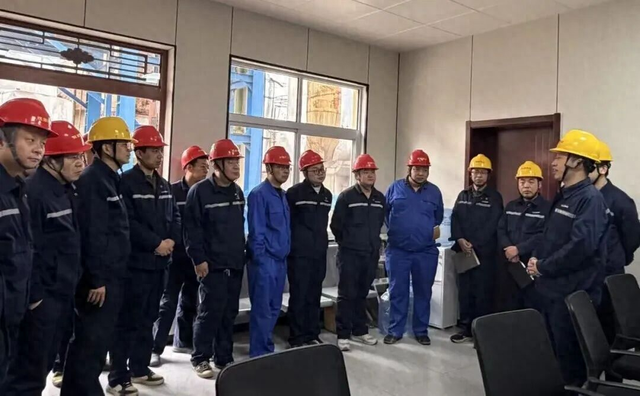
互学互鉴促提升 对标交流共进步——陕西锌业多车间开展对标学习交流活动
Xin Lang Cai Jing· 2025-12-24 08:29
Core Insights - The article highlights a collaborative benchmarking exchange activity conducted by Shaanxi Zinc Industry Co., Ltd., focusing on sharing management experiences and improving operational capabilities among different workshops [1][3]. Group 1: Activity Overview - The benchmarking exchange activity involved workshops for zinc powder, liquid production, mobile operations, and sulfuric acid, fostering a cooperative atmosphere for development [1]. - A specialized learning exchange meeting was held in the sulfuric acid workshop, where the workshop director welcomed participants and shared recent key work experiences [3]. Group 2: Key Practices and Discussions - The sulfuric acid workshop emphasized several practices, including stable and efficient management, quality cost optimization, performance assessment to enhance team vitality, safety management, and environmental protection [3]. - Participants engaged in in-depth discussions on topics such as process optimization, cost control, safety hazard management, and team building, fostering a vibrant exchange of ideas [3]. Group 3: Outcomes and Future Plans - The activity served as a demonstration of team cohesion and commitment to continuous improvement, with workshops expressing intentions to establish a regular communication platform [3]. - The goal is to transform learning outcomes into practical results, contributing to the safe and stable operation and high-quality development of Shaanxi Zinc Industry [3].
渊龙寻底,待势而升
Dong Zheng Qi Huo· 2025-12-24 06:48
1. Report Industry Investment Rating - Zinc: Bullish [1] 2. Core Viewpoints - In 2026, the growth rate of global zinc ore production will decline, and the increment will mainly concentrate in China. The overseas increment will be mainly non - standard ore. The import of zinc ore may be restricted by the price ratio. The mine - smelting balance will tighten, the TC operation center will be lower than in 2025, and the zinc price operation center will be higher [2][165]. - In 2026, domestic zinc smelters are expected to continue to release production capacity, while overseas smelters' resumption of production will be restricted. Domestic demand growth will slow down, with infrastructure still providing support and durable consumption under pressure. External demand, especially from emerging markets, is expected to perform well. The zinc price may maintain a pattern of domestic weakness and overseas strength, and the zinc ingot export window may open periodically [3][165]. - The decline in the TC center will support the zinc price in the long - term. The upper limit of the zinc price depends on demand and the macro - environment. In 2026, the zinc price is expected to rise, with the Shanghai zinc price in the range of 【21600, 25200】 and the LME zinc price in the range of 【2750, 3500】. It is recommended to buy on dips in the medium - term and focus on inter - period reverse arbitrage and internal - external positive arbitrage opportunities [4][170]. 3. Summary by Directory 3.1 Market Review - In 2025, due to the expectation of supply - demand surplus caused by the zinc ore loosening cycle, SHFE zinc became a short - position variety in most capital strategies. The annual shock center of SHFE zinc decreased slightly year - on - year, while that of LME zinc increased marginally. The core reason for the price differentiation between the two was the structural imbalance of the global supply chain [16]. - The cycle from loose zinc ore to loose zinc ingot in 2025 was only half - completed in China, and the overseas half remains to be completed. In 2026, the zinc market story may revolve around overseas smelters' resumption of production, price ratio repair, and improvement in domestic and overseas consumption [17]. 3.2 Supply Side 3.2.1 Mine End - In 2025, overseas mines had a smooth production, and the mine end continued to advance along the loose - cycle. The increment mainly came from overseas mines, and domestic smelters' production capacity release mainly relied on imported ores. The main reasons for the strong performance of overseas mines were the continuous output of resumption and production - increase projects, driven by factors such as the decline in energy prices, fewer extreme weather events, and improved interest - rate environment [20][22]. - From 2025 to 2030, the annual growth rate of zinc ore production is expected to gradually decline, and after 2030, the global zinc ore production will enter a downward channel. In 2026, overseas mines are expected to increase production by about 21.8 million tons, and the increment that can be realized with a high probability is about 12 million tons. In China, domestic zinc ore is expected to enter a production - increasing period, with an expected increment of 21.8 million tons without considering the implementation rate [30][31][37]. - In 2025, China's zinc concentrate import dependence was about 40%, an increase of about 5.8 percentage points compared with 2024. In 2026, domestic zinc concentrate supply may face the problem of import bottlenecks again. The TC center has shifted from a significant upward trend to a downward trend, indicating that the loosest point of zinc ore supply has passed [40][41]. 3.2.2 Smelting End - In 2025, the global zinc ingot production increased slightly year - on - year, showing a pattern of rising in the East and falling in the West. Domestic smelters fully released production capacity, while overseas smelters significantly reduced production. The reasons for overseas smelters' production reduction were the suppression of the benchmark processing fee and the extrusion of domestic smelters' production capacity [49][53]. - In 2026, overseas smelters will mainly focus on resuming production, but the resumption speed may be slow, and the actual zinc ingot increment may be lower than the theoretical calculation, with a neutral expected increment of about 140,000 tons. Domestic smelting production capacity is expected to continue to be released, but the production - increasing space will be relatively limited [59][61]. - In 2025, the proportion of domestic and global recycled zinc production decreased marginally. In 2026, the supply of recycled zinc raw materials may improve marginally, but the increase in recycled zinc production will be limited. In 2025, the import of zinc ingots decreased, and in 2026, the long - term import order volume of zinc ingots may decline significantly, and China may even become a net exporter in some months [67][73]. 3.2.3 Mine - Smelting Balance - In 2026, the overseas zinc ore increment will decline year - on - year, while domestic ore is expected to increase significantly. The mine - end increment is difficult to meet the joint release of domestic and overseas smelting production capacity, and the loosest stage of the mine end may have passed. The TC oscillation center at home and abroad will move down, supporting the zinc price. In the long - term, the resumption environment of overseas smelters in 2026 is still not optimistic [78]. 3.3 Demand Side 3.3.1 Initial - Stage Demand - In 2025, the initial - stage demand for zinc was mediocre, and the downstream operating rate was at a relatively low - to - neutral level. The galvanizing field mainly fluctuated with infrastructure and export demand, while the die - casting zinc alloy was affected by construction demand, and the zinc oxide field showed demand differentiation. The downstream replenishment willingness was still low, and the finished - product inventory was at a low level, indicating strong terminal consumption ability [83][85]. 3.3.2 Traditional Demand - In 2025, the zinc consumption in the infrastructure field improved limitedly. The issuance of new special bonds was relatively stable, but the funds allocated to actual infrastructure projects decreased. The actual operation of infrastructure investment was weak. In 2026, the infrastructure is expected to be optimistic, with an increase in new special bonds and more projects driven by the central government and policies, and the zinc consumption in the infrastructure field is expected to increase by 3.5% year - on - year [96][100][108]. - The real estate is still in the inventory clearance cycle, and the demand for zinc in the construction sector is expected to continue to be dragged down in 2026, but the drag amplitude will be weakened, with an expected zinc consumption growth rate of - 9% [111]. 3.3.3 Durable Consumption Demand - In 2025, the demand for durable consumer goods was strong, mainly driven by policies and exports. In 2026, the domestic demand for automobiles and home appliances may face growth pressure, with an expected growth rate of about 0.5% for automobile zinc consumption and - 2% for home appliance zinc consumption [114][125][127]. 3.3.4 Overseas Demand - In 2025, the export of zinc - processed products increased significantly, and the overseas zinc consumption gradually recovered. In 2026, the export of zinc - processed products is expected to maintain high - level growth, and the overall overseas zinc consumption is expected to grow by 2.8%, especially in emerging regions [135][143][157]. 3.4 Inventory Side - In 2025, the global zinc ingot visible inventory showed an oscillatory decline trend. The increase in domestic social inventory was not enough to offset the decline in LME inventory. The inventory in the industrial chain increased, and the accumulation of domestic social inventory was limited [158]. 3.5 Investment Suggestions - Fundamental Outlook: The mine - smelting balance will tighten, and the zinc price operation center may move up. The zinc ingot balance may show domestic surplus and overseas tightness, and the zinc price may maintain a pattern of domestic weakness and overseas strength [165]. - Trading and Price Outlook: The decline in the TC center will support the zinc price in the long - term. The zinc price is expected to rise in 2026, with the Shanghai zinc price in the range of 【21600, 25200】 and the LME zinc price in the range of 【2750, 3500】. It is recommended to buy on dips in the medium - term, focus on inter - period reverse arbitrage and internal - external positive arbitrage opportunities [170]. - Rhythm and Risk: Before the long - term mine - smelting order is finalized, the zinc price is still likely to rise. After April, the zinc price may be under pressure. There is a possibility of the market pre - trading the long - term shortage expectation of zinc elements. Risks include the progress of Huoshaoyun's production, tariff risks, domestic and overseas demand uncertainties [172].
韩媒:价值74亿美元的美韩合作标杆项目生变
Huan Qiu Shi Bao· 2025-12-23 23:06
Core Viewpoint - The restructuring plan for the critical mineral supply chain led by the U.S. is facing uncertainty due to legal disputes and management disagreements involving the Korean zinc smelting leader, Korea Zinc, and its Tennessee smelting project [1][2]. Group 1: Project Overview - The Tennessee smelting project, a flagship collaboration between Korea Zinc and the U.S. Department of Defense, is set to cost $7.4 billion and aims to address supply chain risks for key materials across various industries, including automotive and military [1]. - The project was recently confirmed by the U.S. Department of Defense, marking a significant development as it is the first large-scale zinc smelting plant to be built in the U.S. since the 1970s [1]. Group 2: Legal and Management Issues - The project is currently stalled due to internal disputes over equity and management rights, with a third-party capital increase plan scheduled for December 26 facing strong opposition from major shareholders [2]. - The current chairman of Korea Zinc, Choi Yoon-bum, plans to issue new shares to the joint venture, Crucible JV, to acquire a 10% stake in Korea Zinc, which has been challenged in court by the largest shareholder alliance [2]. - Ongoing legal disputes are expected to prolong, with investigations by the Korean Fair Trade Commission and prosecutors into the legality of the financing chain [2].
长江有色:23日锌价小跌 市场现货整体交投清淡
Xin Lang Cai Jing· 2025-12-23 08:47
Group 1 - Today's Shanghai zinc futures showed weak performance, with the main contract closing at 23,090 CNY/ton, up 15 CNY, a 0.07% increase from the previous settlement price of 23,075 CNY/ton [1] - The trading volume for the Shanghai zinc 2602 main contract was 133,845 lots, a decrease of 579 lots, while the open interest increased by 2,495 lots to 93,107 lots [1] - The latest price for London zinc was reported at 3,084.5 USD, an increase of 6.5 USD [1] Group 2 - Domestic spot zinc prices experienced a slight decline, with the average price for 0 zinc reported at 23,100 CNY/ton, down 40 CNY, and 1 zinc at 23,020 CNY/ton, also down 40 CNY [1][2] - The current domestic social inventory of zinc has decreased to 76,000 tons, marking a four-month low, which provides some support for zinc prices [3] - The demand side remains weak, particularly in the galvanizing industry, where operational levels are declining due to environmental restrictions and poor end-user demand, leading to a subdued market for zinc [3]