
家电

Search documents
惠而浦:2月24日召开董事会会议
Sou Hu Cai Jing· 2026-02-25 10:31
每经AI快讯,惠而浦2月25日晚间发布公告称,公司2026年第一次董事会临时会议于2026年2月24日以 通讯方式召开。会议审议了《关于开展外汇套期保值业务的议案》等文件。 每经头条(nbdtoutiao)——伤亡180万人!俄乌冲突四周年,陷入谈判死局、战场僵局、经济困局!谁 为战争买单 (记者 王瀚黎) 每日经济新闻 免责声明:本文内容与数据仅供参考,不构成投资建议,使用前请核实。据此操作,风险自担。 ...

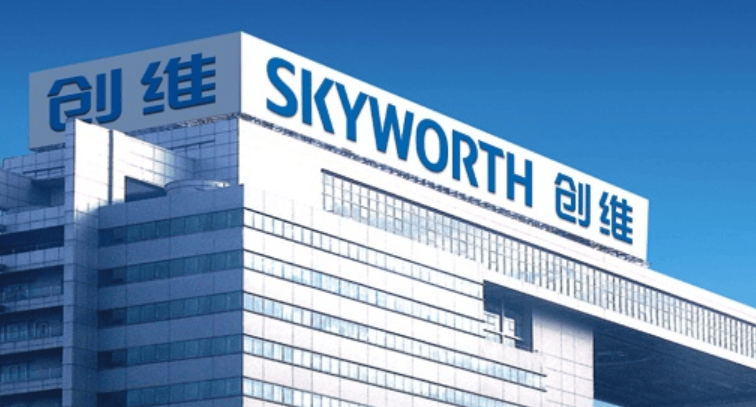
创维闯关:去年净利预跌30%,拟拆分光伏业务上市,绑定松下发力全球化?
Sou Hu Cai Jing· 2026-02-25 09:57
Core Viewpoint - Skyworth Group has announced a forecast for its 2025 annual performance, indicating a continued decline in profits following a downturn in 2024, primarily due to challenges in the real estate sector and setbacks in its smart systems technology business [2][3]. Group 1: Financial Performance - The forecast for 2025 shows a projected profit decline of approximately 30% year-on-year [3]. - In the first half of 2025, Skyworth reported total revenue of 36.264 billion yuan, a year-on-year increase of 20.27%, but a net profit attributable to shareholders of only 125 million yuan, down 67.45% [4]. - The modern service industry and other related businesses saw revenue drop to 2.861 billion yuan, a decline of 39.6% year-on-year [5]. Group 2: Real Estate Impact - The ongoing downturn in the real estate market has significantly affected Skyworth's performance, with the company citing "real estate downturn and sluggish sales" as a recurring reason for its profit declines [4][6]. - In 2025, the construction area for real estate development is expected to decrease by 10%, with new housing starts down by 20.4% [6]. Group 3: Smart Systems Technology Challenges - The smart systems technology segment has also faced challenges, with increased market competition leading to a decline in overall profitability and product gross margins [7]. - In the first half of 2025, revenue from smart systems technology was 2.642 billion yuan, a slight increase of 0.9% domestically but a 15.4% decline overseas [8]. Group 4: Business Developments and Strategic Moves - Skyworth is actively seeking to transform its business model, with plans to privatize and spin off its solar business for separate listing [17]. - The company is set to take over Panasonic's television business in North America and Europe, which is seen as a strategic move to enhance its market presence and leverage Panasonic's established sales channels [14][15]. - The solar business is projected to surpass traditional television revenue for the first time in 2025, indicating a shift in the company's growth trajectory [17].


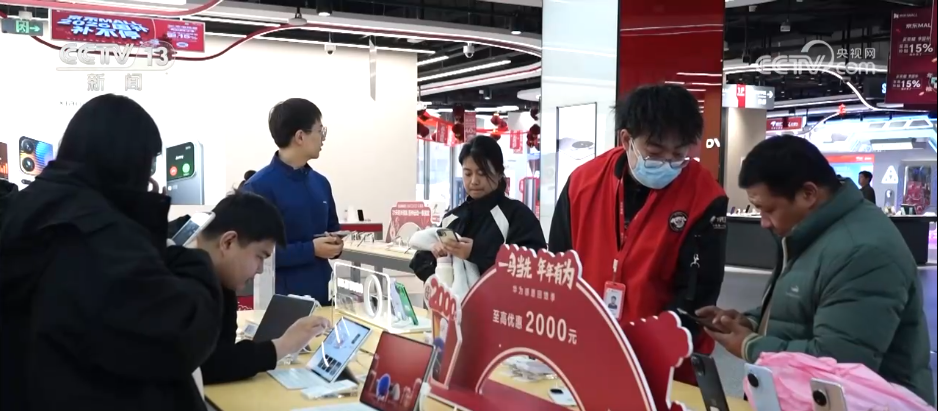
春节消费市场表现火热 “政策礼包”激发消费者“焕新”热情
Yang Shi Wang· 2026-02-25 09:49
Group 1 - The core viewpoint of the articles highlights a significant increase in consumer spending during the Spring Festival holiday, with an average daily sales revenue growth of 13.7% compared to the previous year [1] Group 2 - The "trade-in" and prize invoice policies have effectively stimulated consumer enthusiasm for upgrading to high-quality, high-tech smart products, leading to a 19% year-on-year increase in daily sales revenue for household appliances such as robotic vacuum cleaners and projection TVs [4] - The improvement of charging infrastructure has provided green services for residents' travel, resulting in a substantial 163.9% year-on-year increase in daily sales revenue from electric vehicle charging during the holiday [4] Group 3 - The tourism market experienced a surge, with a 39.6% year-on-year increase in daily sales revenue from tourism-related services, particularly in regions like Heilongjiang, Jilin, Liaoning, and Xinjiang, which saw a combined growth of 62.4% [6] - Hainan Free Trade Port attracted a large number of tourists for shopping and travel, leading to a remarkable 70.9% year-on-year increase in daily sales revenue from scenic area services [6] - There was a notable rise in entertainment consumption, with digital cultural services and performing arts venues seeing year-on-year revenue growth of 38.8% and 136.6%, respectively [6] Group 4 - The catering market continued to thrive, with many regions launching special dining activities, resulting in a 31.2% year-on-year increase in daily revenue from the catering sector [9] - The revenue from formal dining services grew by 26.5%, while snack services saw a significant increase of 42.1%, reflecting regional culinary characteristics [9] - Department store retail experienced a 39.3% year-on-year increase in daily sales, and internet retail grew by 10.4% year-on-year, providing convenience for New Year shopping [9]
春节消费,多地赢在了这两个字!
Jin Rong Shi Bao· 2026-02-25 08:35
Group 1 - The core viewpoint of the articles highlights the vibrant consumption market during the longest Spring Festival holiday, driven by innovative consumption scenarios that cater to diverse consumer needs [1][2][3] - Various cities, such as Guangzhou and Beijing, have successfully integrated traditional cultural elements with modern consumption experiences, creating unique festive shopping environments that enhance consumer engagement [1][2] - The Ministry of Commerce and other departments have launched the "2026 'Buy New Spring' Special Activity Plan," which emphasizes financial support and policies to stimulate consumption growth during the Spring Festival [3][4] Group 2 - Financial institutions are actively supporting the consumption upgrade by offering convenient financial services and promotional activities, such as higher-value rewards for consumers participating in exchange programs during the holiday [4] - The "Guangdong Quality Products Purchase" initiative has significantly boosted sales in various categories, with a reported 260 billion yuan in sales for home appliances and 47.6 billion yuan for the exchange program [3] - Continuous policy support, the creation of new consumption scenarios, and the provision of high-quality financial services are essential for sustaining the recovery and growth of the Chinese consumption market [4]
消费超631亿元 这个春节 成都吸睛又吸金
Si Chuan Ri Bao· 2026-02-25 08:05
Core Insights - Chengdu's consumer market experienced a strong performance during the recent Spring Festival, with total online and offline consumption reaching 631.7 billion yuan, a year-on-year increase of 10.3% [3] Group 1: Consumer Market Performance - All shopping districts in Chengdu achieved both an increase in foot traffic and sales during the Spring Festival, with the total foot traffic in 11 monitored districts reaching 20.9 million and total sales amounting to 4.88 billion yuan [5] - The iconic Chunxi Road shopping area attracted over 10 million visitors and generated sales of 2.68 billion yuan, driven by a unique event combining traditional customs and modern technology [5] - Chengdu's 215 featured commercial streets attracted a total of 37.875 million visitors and achieved sales of 6.51 billion yuan during the 9-day holiday [6] Group 2: Policy Impact on Consumption - The "old for new" vehicle and appliance replacement policies significantly boosted consumer activity, with applications for vehicle and appliance replacements reaching 25,600 and 1.181 million respectively, driving consumption of 4.396 billion yuan and 4.53 billion yuan [7] - Chengdu's new car purchase subsidies and the "old for new" program contributed to a 60% increase in foot traffic at participating stores during the holiday [7] - The city launched a prize invoice program with a total prize pool of 300 million yuan, attracting 1.139 million participants and leading to the submission of 2.417 million invoices [8]

青山区春节消费市场“马”力全开
Sou Hu Cai Jing· 2026-02-25 08:02
Core Insights - The consumer market in Qingshan District, Baotou City, is experiencing a significant surge during the Spring Festival, showcasing strong vitality and potential [1][2] - The district's strategic focus on promoting consumption and economic development is evident through various initiatives and events aimed at enhancing consumer engagement [2][5] Group 1: Consumer Market Performance - During the Spring Festival holiday (from the 28th day of the twelfth lunar month to the seventh day of the first lunar month), eight key monitored commercial enterprises in Qingshan conducted over 40 promotional activities, achieving sales exceeding 67 million yuan and attracting over 1 million visitors [1] - The market is characterized by abundant supply, vibrant consumer activity, and a stable operational environment, laying a solid foundation for high-quality commercial economic development throughout the year [2] Group 2: Integration of Commerce and Culture - The district is promoting deep integration of commerce, culture, tourism, and sports, transforming traditional shopping venues into comprehensive consumption spaces that combine social, leisure, and experiential elements [5] - Events such as the New Year Symphony Concert and cultural displays have been organized to drive consumer engagement and enhance the festive atmosphere, leading to significant sales increases in categories like gold jewelry, clothing, and traditional New Year goods [5] Group 3: Household Appliance Consumption Trends - The sales of major household appliances in Qingshan have accelerated, with two large appliance retailers reporting sales of nearly 6.3 million yuan during the holiday period, driven by government incentives for upgrading and exchanging old appliances [6] - High-quality and smart appliances, such as energy-efficient refrigerators and large-screen laser TVs, are increasingly favored by consumers, reflecting a shift in consumer spending from mere ownership to enhanced enjoyment [6] Group 4: Market Stability and Supply Assurance - The district has proactively ensured a stable supply of essential goods, with local agricultural markets maintaining sufficient stock and stable prices during the holiday, thereby supporting the community's festive celebrations [9] - The ongoing consumer enthusiasm during the Spring Festival highlights the public's aspirations for a better life and underscores the robust economic momentum in Qingshan District [9]

东兴证券晨报-20260225
Dongxing Securities· 2026-02-25 07:45
Core Insights - The report highlights the strategic initiatives of the company to expand its product lines in the refractory materials sector and emerging technologies, particularly through a planned capital increase of up to 1.034 billion RMB for new projects and overseas expansion [6][11]. Company Developments - Changxin Bochuang signed a letter of intent to acquire 93.81% of Shanghai Honghui Light Communication Technology Co., Ltd. for approximately 375 million RMB, aiming to enhance its product line in the optical communication field [5]. - Tongwei Co., Ltd. is planning to acquire 100% of Qinghai Lihua Qingneng Co., Ltd. through a combination of share issuance and cash payment, with the transaction expected to not alter the control of the company [5]. - Yutong Optical received acceptance from the Shenzhen Stock Exchange for its application to issue shares to specific investors, pending further approvals [5]. - Maoyan Entertainment forecasts a revenue of up to 4.7 billion RMB for the fiscal year 2025, representing a growth of approximately 15.1% compared to 2024 [5]. - Conch Cement's major shareholder plans to increase its stake in the company by investing between 700 million and 1.4 billion RMB within six months [5]. Industry Insights - The report emphasizes the resilience of small and medium-sized enterprises (SMEs) in China's industrial economy, with a 6.9% year-on-year increase in value added for SMEs in 2025, outperforming the overall industrial growth rate by 1.0 percentage points [2]. - The construction of a new production line for zirconia and zircon-based materials is expected to yield a post-tax internal rate of return of 29.35% and a payback period of 4.89 years, indicating strong potential for profitability [7][8]. - The establishment of a production base in Vietnam is part of the company's strategy to enhance its overseas operations, targeting the growing demand in Southeast Asia, particularly in Vietnam [9].



苏泊尔:2025 年业绩快报点评全年营收稳健收官,费用投放拖累业绩-20260225
Guolian Minsheng Securities· 2026-02-25 04:25
Investment Rating - The report maintains a "Recommended" rating for the company [2] Core Insights - The company achieved a stable revenue performance in 2025, with total revenue reaching 227.72 billion yuan, a year-on-year increase of 1.54%. However, the net profit attributable to shareholders decreased by 6.58% to 20.97 billion yuan [6] - Domestic sales showed resilience due to continuous innovation and strong channel competitiveness, while overseas sales faced pressure from fluctuating demand [6] - The company plans to sell goods worth 7.28 billion yuan to its parent company SEB Group in 2026, which is expected to contribute to stable growth [6] Financial Performance Summary - Revenue projections for 2024 to 2027 are as follows: 22,427 million yuan (2024), 22,772 million yuan (2025), 23,722 million yuan (2026), and 24,717 million yuan (2027) with growth rates of 5.3%, 1.5%, 4.2%, and 4.2% respectively [2][7] - Net profit attributable to shareholders is projected to be 2,244 million yuan (2024), 2,097 million yuan (2025), 2,197 million yuan (2026), and 2,281 million yuan (2027), reflecting a growth rate of 3.0%, -6.6%, 4.8%, and 3.8% respectively [2][7] - The company’s gross margin is expected to remain stable around 24.7% to 24.8% from 2024 to 2027 [7] Dividend and Valuation - The expected dividend yield for 2025 is 5.8%, which is considered attractive [6] - The price-to-earnings (P/E) ratio is projected to be 16 for 2024 and 2027, and 17 for 2025, indicating a stable valuation outlook [2][7]

“马”蹄奋进 躬身实干 新年企业发展一线见闻
Jin Rong Shi Bao· 2026-02-25 04:22
Group 1 - The article highlights the ongoing efforts across various industries in China to seize opportunities and drive economic growth in the new year, emphasizing the importance of technological innovation and project development [1] - Newan Co., a subsidiary of Transfar Group, has made significant advancements in the silicon-based liquid cooling sector, developing a cooling liquid that meets stringent requirements for data centers and energy storage [2][3] - The company aims to expand its product offerings and applications in the silicon-based material field, anticipating a key growth phase for the liquid cooling industry by 2026 [2] Group 2 - CIMC has successfully shipped modular buildings to Cameroon, marking its first modular construction project in Africa, which is expected to enhance construction efficiency and meet local needs [4][5] - The modular office building in Yaoundé, Cameroon, will provide a modern workspace for nearly 200 people and is designed with local cultural considerations in mind [4] - CIMC plans to leverage this project as a foundation for expanding its modular building solutions in Africa and globally, focusing on sustainable development [5] Group 3 - Yidong Technology has introduced a lightweight electric outboard motor designed for small boats, showcasing its commitment to innovation in the electric marine sector [6][7] - The company has established a robust global distribution network and aims to expand into emerging markets by 2026, with expectations of leading global sales in electric outboard motors [8] - The global electric ship market is projected to grow significantly, with a compound annual growth rate of 18.8% from 2024 to 2032, indicating a strong demand for electric marine solutions [8] Group 4 - Haier has achieved breakthroughs in food preservation technology and cell preparation systems, addressing long-standing industry challenges and enhancing user experience [9][10] - The company has integrated advanced magnetic control technology into its refrigeration products, transforming traditional food storage methods [10] - Haier's innovation ecosystem is designed to continuously evolve, fostering the development of disruptive technologies and new industries [11]


政策协同配合 激发消费市场新活力
Jin Rong Shi Bao· 2026-02-25 02:02
Group 1 - In 2025, China's total retail sales of consumer goods exceeded 50 trillion yuan for the first time, reaching 50.1 trillion yuan, with a year-on-year growth of 3.7% and a contribution rate of consumption to economic growth at 52%, an increase of 5 percentage points [1] - The central economic work conference emphasized the importance of domestic demand and building a strong domestic market as a key task for economic work in 2026, with various policies being implemented to boost consumption [1] - Experts suggest enhancing the coordination between monetary and fiscal policies to amplify policy effectiveness and guide social capital in supporting consumption and investment [1] Group 2 - The implementation of the old-for-new policy since 2025 has significantly boosted sales in related categories, with sales reaching 2.61 trillion yuan and benefiting 366 million people [2] - Retail sales of home appliances, communication equipment, and furniture saw increases of 11%, 20.9%, and 14.6% respectively, while passenger vehicle retail volume grew by 3.8% in 2025 [2] - A new notification for 2026 aims to enhance the effectiveness of the old-for-new policy by focusing on key consumer goods and expanding the scope of subsidies [2] Group 3 - The integration of consumer credit products with the old-for-new policy is expected to enhance the actual effects of the policy, with financial institutions collaborating with merchants to improve consumer convenience [3] - The focus on automotive, home appliance, and digital products in the old-for-new scenarios will promote the development of financial services in these areas [3] Group 4 - By the end of 2025, the balance of loans in key service consumption sectors reached 2.8 trillion yuan, with a year-on-year growth of 6%, indicating a steady recovery in consumer willingness and capacity [4] - The People's Bank of China established a 500 billion yuan re-loan facility for service consumption and elderly care, with a re-loan rate of 1.5%, to encourage financial support for key service sectors [4] Group 5 - In August 2025, the Ministry of Finance introduced a loan interest subsidy policy for service industry operators, providing a 1% subsidy for loans in various service sectors [5] - In January 2026, the People's Bank of China announced an expansion of the re-loan support areas and reduced the re-loan rate to 1.25%, while the Ministry of Finance optimized the subsidy policy to include digital, green, and retail sectors [5] - The combination of re-loan and interest subsidy policies reflects a deep integration of monetary and fiscal policies, aimed at reducing financing costs in the consumption sector [5]