
食品

Search documents
2025年国际食品价格基准指数同比上涨4.3%
Zhong Guo Xin Wen Wang· 2026-01-09 18:03
Core Insights - The Food Price Index by the Food and Agriculture Organization (FAO) is projected to average 127.2 points in 2025, representing a 4.3% increase from the average level in 2024, driven by rising prices of vegetable oils and dairy products offsetting declines in grains and sugar prices [1] Price Index Summary - The average price index for vegetable oils is expected to rise by 17.1% in 2025 compared to 2024, reaching a three-year high due to tight global supply [1] - The average price index for dairy products is projected to increase by 13.2% in 2025, supported by strong global import demand and limited export supply at the beginning of the year [1] - The average price index for meat is anticipated to rise by 5.1% in 2025, driven by robust global import demand and increased market uncertainty due to animal disease outbreaks and geopolitical tensions [1] - Conversely, the average price index for grains is expected to decline by 4.9% in 2025, marking the third consecutive year of decrease and reaching the lowest average since 2020 [1] - The average price index for rice is projected to drop by 35.2% in 2025 compared to 2024, reflecting ample export supply, intense competition, and reduced purchasing by some Asian importing countries [1] - The average price index for sugar is expected to decrease by 17.0% in 2025, reaching the lowest level since 2020 due to sufficient export supply [1]
专访玛士撒拉唐黎明:他如何让医院的“救命粮”变得好吃,并摆上年轻人的餐桌?
新消费智库· 2026-01-09 13:04
Core Viewpoint - The article discusses how Marsala, a company specializing in medical nutrition, has successfully transformed the perception of healthy food from being unappetizing to enjoyable, particularly for individuals with specific dietary needs such as pregnant women with gestational diabetes and the general population seeking healthier options [2][4][24]. Group 1: Understanding Nutritional Needs - The company emphasizes that nutrition is vital for life, especially in extreme situations like ICU patients and those undergoing severe medical treatments [5]. - The regulatory environment for special medical foods is stringent, akin to pharmaceuticals, requiring significant investment and time for product development [5][6]. - There are two main pain points identified: the need for enjoyable food among patients in hospitals and the general public's struggle to find tasty yet healthy options [8][9]. Group 2: Product Development Philosophy - The company adopts a philosophy that prioritizes taste as equally important as health benefits, challenging the traditional view that healthy food must be unpalatable [9][10]. - A unique "barrier technology" is developed to manage the metabolic response to carbohydrates, allowing for a pleasurable eating experience while maintaining low glycemic index (GI) standards [12][14]. - The company focuses on reconstructing flavors by enhancing the natural taste of ingredients rather than relying on additives, which is a complex engineering challenge [14][15]. Group 3: Supply Chain Collaboration - The company collaborates closely with suppliers to ensure that high nutritional standards are met, even if it means incurring higher costs for better processing methods [17][18]. - This collaboration translates medical-grade product concepts into actionable manufacturing processes, creating a "special supplier alliance" committed to quality [18][19]. Group 4: Market Strategy and Consumer Engagement - The company builds trust by first proving its products in clinical settings before expanding to high-end retail channels, ensuring a solid foundation of credibility [20][21]. - The approach is characterized by a focus on product quality and consumer loyalty rather than aggressive marketing tactics, leading to high repurchase rates [21][22]. - The company acknowledges the challenge of increasing public awareness and effectively communicating its product story to a broader audience [22].


年末通胀加速回升,什么信号?
HUAXI Securities· 2026-01-09 12:05
Inflation Data Summary - December 2025 CPI year-on-year increased to 0.8%, matching expectations and up from 0.7% in the previous month[1] - Month-on-month CPI rose by 0.2%, a significant improvement from -0.1% in the prior month, marking the largest increase for December since 2021[1] - Core CPI, excluding food and energy, remained stable at 1.2% year-on-year, with a month-on-month increase of 0.2%[1] Core CPI Analysis - Core CPI has shown resilience, supported mainly by industrial consumer goods, maintaining a 1.2% increase for four consecutive months[2] - Prices of industrial consumer goods rose by 0.6%, contributing approximately 0.16 percentage points to the CPI increase[2] - Notable contributors include household appliances (1.4% increase), other goods and services (2.8% increase), and communication tools (3.0% increase) in December[2] Food Price Trends - Food prices increased by 0.3% month-on-month, contributing about 0.05 percentage points to the CPI, slightly above the 2021-2024 average of 0.1%[3] - Fresh vegetables and fruits saw significant increases of 0.8% and 2.6%, respectively, while pork prices continued to decline by 1.2%[3] - As of January 8, 2026, pork wholesale prices have risen by 1.9% compared to December 2025, indicating potential stabilization[3] Housing and Energy Impact - Housing prices decreased by 0.1% month-on-month, negatively impacting CPI due to its high weight of approximately 22%[4] - Fuel prices for transportation fell by 1.1%, contributing to a 0.04 percentage point decrease in CPI[4] PPI Insights - December PPI increased by 0.2% month-on-month, indicating a recovery in industrial prices after a low period[4] - The mining sector saw a 0.8% increase, while raw materials rose by 0.6%, marking a 19-month high[5] - The overall PPI remains under pressure from declining oil prices, with the oil and gas extraction sector experiencing a 1.3% drop[6] Market Implications - Current inflation levels are moderate, suggesting no immediate constraints on "loose monetary policy" but limiting the downward space for long-term interest rates[8] - Industrial price recovery is a positive signal for improving profit expectations, although a broad-based price increase has not yet materialized[8] Risk Factors - Potential unexpected adjustments in monetary policy could arise from economic slowdowns or changes in overseas monetary policies[9] - Liquidity may also experience unexpected changes if domestic economic data continues to exceed expectations[9]
上海:到2028年,新增年产值10亿元以上制造业企业100家
Xin Lang Cai Jing· 2026-01-09 10:26
Core Viewpoint - The Shanghai Municipal Government has issued a three-year action plan (2026-2028) to support the transformation and upgrading of advanced manufacturing, aiming to enhance the modern industrial system and promote collaborative development among enterprises of various sizes [1]. Group 1: Main Goals - By 2028, the plan aims to add 100 manufacturing enterprises with an annual output value exceeding 1 billion yuan, totaling over 600 such enterprises, and to drive the addition of 500 industrial enterprises above designated size in the supply chain [2]. Group 2: Implementation Actions - **Optimizing Traditional Advantage Industries**: The plan encourages traditional industries like petrochemicals and steel to innovate and expand into new materials, with financial support for qualifying projects [3]. - **Accelerating Leading Industry Strategies**: Support for integrated circuit companies to achieve breakthroughs across the entire industry chain, fostering internationally competitive leading enterprises [3]. - **Promoting Key and Emerging Industries**: Focus on developing new electronic information, smart connected vehicles, and advanced materials, while encouraging investment in emerging fields like low-altitude economy and commercial aerospace [3]. Group 3: Innovation and Technology - **Releasing Innovation Vitality**: Financial incentives for companies increasing basic research investments, with varying levels of support based on annual research expenditure [4]. - **Accelerating Core Technology Research**: Support for enterprises focusing on cutting-edge technologies such as laser manufacturing and quantum technology [4]. Group 4: Quality and Efficiency Enhancement - **Promoting Technological Transformation**: Financial support for projects aimed at upgrading production and R&D processes, with a cap on total support [4]. - **Deepening Digital Transformation**: Initiatives to enhance AI applications in manufacturing, aiming for full coverage of smart factory applications by 2028 [4]. Group 5: Resource and Support Actions - **Strengthening Talent Development**: Support for attracting high-level talent in key sectors, with financial incentives for successful candidates [5]. - **Enhancing Financial Support**: Encouragement for financial institutions to offer favorable loan products for manufacturing, with interest subsidies for key components and materials [5]. - **Expanding Logistics Support**: Development of industrial logistics facilities to integrate with manufacturing needs, enhancing transportation infrastructure [5]. Group 6: Market Development and Services - **Expanding Domestic and International Markets**: Establishing platforms for supply chain connections and promoting internet marketing for industrial enterprises [5]. - **Optimizing Enterprise Services**: Coordinating to address enterprise needs and ensuring that policies are effectively communicated and implemented [5].
政企校协同发力 南京食品产业按下高质量发展“加速键”
Zheng Quan Ri Bao Wang· 2026-01-09 10:22
Core Insights - The "Ning Gong Pin Tui" consumer goods enterprise and university supply-demand matching conference was successfully held in Nanjing, focusing on the construction and investment opportunities of the Nanjing Urban Food Industry Park [1] Group 1: Event Overview - The event was co-hosted by the Nanjing Municipal Bureau of Industry and Information Technology and the Nanjing Gaochun District Government, with over 200 representatives from universities, food enterprises, trade unions, and communities in attendance [1] - The core focus of the event was on supply-demand matching and park construction, aiming to deepen collaboration between universities and enterprises [1] Group 2: Brand and Market Development - "Ning Gong Pin Tui" is a key industrial service brand developed by the Nanjing Municipal Bureau of Industry and Information Technology, targeting market expansion and order acquisition [2] - In 2025, the bureau organized 150 market supply-demand matching activities, serving over 4,000 enterprises and facilitating significant events such as the Jiangsu Province Food Industry High-Quality Development Seminar [2] - The bureau has initiated 17 community promotion activities involving 50 food enterprises, enhancing direct consumer access to quality local products [2] - At the 113th National Sugar and Wine Fair, the "Ning Gong Pin Tui" exhibition attracted nearly 40 enterprises and generated over 18 million yuan in cooperation intentions [2] Group 3: Digital Empowerment and Industry Upgrade - The Nanjing Municipal Bureau of Industry and Information Technology is leading the creation of the "Nanjing Smart Food Network" project to facilitate the transformation of the food industry towards a technology-intensive and intelligent manufacturing model [4] - The platform integrates advanced technologies such as big data, artificial intelligence, and blockchain to address industry pain points like information asymmetry and resource fragmentation [4] - The Nanjing Urban Food Industry Park, covering an area of 5.5 square kilometers, is highlighted as a key development area for food enterprises, combining food research, manufacturing, and cultural tourism [5] Group 4: Future Plans and Support - The Nanjing Municipal Bureau of Industry and Information Technology plans to continue enhancing the "Ning Gong Pin Tui" brand and regularly conduct online and offline supply-demand matching activities [5] - The bureau aims to support the development of the Nanjing Urban Food Industry Park through policy support, resource integration, and channel expansion, promoting local quality products to universities, communities, and national markets [5]
联合国粮农组织:12月全球食品价格小幅回落,2025年全年仍同比上涨
Xin Lang Cai Jing· 2026-01-09 10:17
Core Insights - The global food prices have decreased for the fourth consecutive month in December 2025, primarily due to falling prices of dairy products, meat, and vegetable oils, reaching the lowest average level since January 2025 [1][5]. Price Index Summary - The Food Price Index by FAO averaged 124.3 points in December 2025, down from 125.1 points in November, marking a year-on-year decline of 2.3% [1][5]. - The annual average for 2025 is projected at 127.2 points, reflecting a 4.3% increase compared to 2024, driven by higher prices of vegetable oils and dairy products, which offset declines in grains and sugar prices [1][5]. Dairy Products - The Dairy Price Index fell by 4.4% in December, mainly due to increased supply of cream in Europe leading to a significant drop in butter prices [1][5]. - Despite the December decline, the average dairy price for 2025 is expected to be 13.2% higher than in 2024, influenced by strong import demand and limited export supplies [1][5]. Meat Prices - The Meat Price Index decreased by 1.3% in December, with beef and poultry prices leading the decline [1][5]. - However, the annual average for 2025 is anticipated to be 5.1% higher than the previous year, supported by strong global demand and uncertainties from animal diseases and geopolitical tensions [1][5]. Vegetable Oils - The Vegetable Oil Price Index dropped by 0.2% in December, reaching a six-month low, as declines in soybean, canola, and sunflower oils offset gains in palm oil prices [2][6]. - The annual average for 2025 is expected to surge by 17.1% compared to 2024, marking the highest level in nearly three years due to tightening global supplies [2][6]. Grains - The Grain Price Index rose by 1.7% in December, driven by concerns over grain export conditions in the Black Sea region and strong ethanol production demand in Brazil and the U.S. supporting corn prices [2][7]. - However, the annual average for 2025 is projected to decline by 4.9% compared to 2024, marking the third consecutive year of decrease and the lowest annual average since 2020 [2][7]. Sugar Prices - Sugar prices rebounded by 2.4% in December after three months of decline, primarily due to reduced sugar production in southern Brazil [3][7]. - The annual average for sugar prices in 2025 is expected to drop by 17% year-on-year, reaching the lowest level in nearly five years due to ample global supply [4][7].
联合国粮农组织:2025 年 12 月全球食品价格小幅回落 但全年仍呈上涨态势
Xin Lang Cai Jing· 2026-01-09 10:12
Core Insights - Global food prices have declined for the fourth consecutive month in December, reaching the lowest average level since January 2025, primarily due to falling prices of dairy products, meat, and vegetable oils [2][5]. Group 1: Food Price Index - The Food Price Index averaged 124.3 points in December, down from 125.1 points in November, reflecting a year-on-year decrease of 2.3% [2][5]. - For the entire year of 2025, the index is projected to average 127.2 points, an increase of 4.3% compared to 2024, driven by rising prices of vegetable oils and dairy products, which offset declines in grain and sugar prices [2][5]. Group 2: Dairy Products - The dairy price index fell by 4.4% in December, mainly due to increased cream supply in Europe, leading to a significant drop in butter prices [2][5]. - Despite the December decline, the average dairy price for 2025 is expected to be 13.2% higher than in 2024, reflecting strong import demand and limited export supply early in the year [2][5]. Group 3: Meat Prices - The meat price index saw a slight decrease of 1.3% in December, with beef and poultry prices leading the decline [2][5]. - However, the annual average for the meat price index is still projected to be 5.1% higher than the previous year, supported by strong global demand, uncertainties related to animal diseases, and geopolitical tensions [2][5]. Group 4: Vegetable Oils - The vegetable oil price index decreased by 0.2% in December, reaching a six-month low, as declines in soybean oil, canola oil, and sunflower oil prices offset increases in palm oil prices [3][6]. - For 2025, the average vegetable oil price index is expected to rise by 17.1% compared to 2024, marking the highest level in three years due to tight global supply [3][6]. Group 5: Grain Prices - The grain price index increased by 1.7% in December, driven by renewed concerns over grain export flows from the Black Sea region, which boosted wheat prices, and strong ethanol production in Brazil and the U.S., raising corn prices [3][6]. - The average grain price index for 2025 is projected to decline by 4.9% compared to 2024, marking the third consecutive year of decline and the lowest annual average since 2020 [3][6]. Group 6: Sugar Prices - After three consecutive months of decline, sugar prices rose by 2.4% in December, primarily due to decreased production in southern Brazil [3][6]. - The sugar price index for 2025 is expected to drop to its lowest level in five years, down 17% from 2024, attributed to ample global sugar supply [3][6].
法国11月家庭消费意外环比下降0.3% 能源支出成主要拖累
Xin Hua Cai Jing· 2026-01-09 09:10
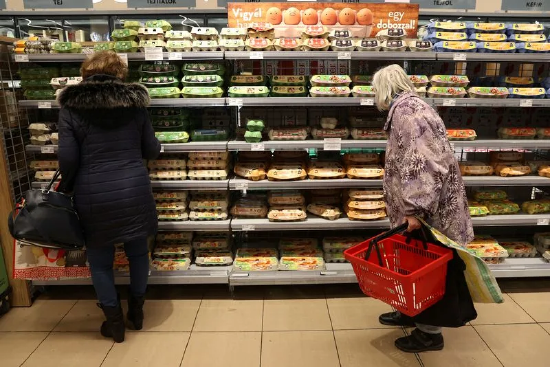
Core Insights - In November 2025, French household consumption unexpectedly declined by 0.3% month-on-month, contrary to market expectations of a 0.2% increase, marking the first monthly negative growth since July 2025 [1] Consumption Breakdown - The decline in consumption was primarily driven by a significant reduction in energy expenditures, which fell by 2.0% month-on-month due to decreased natural gas and electricity usage, as well as a drop in oil product purchases [1] - Food expenditures also saw a 0.2% month-on-month decrease, with some agricultural product consumption rising but being offset by a sharp decline in processed food products [1] - In contrast, spending on manufactured goods showed relative strength, increasing by 0.4% month-on-month, supported by higher expenditures on durable goods and a rebound in textiles and clothing [1] Yearly Perspective - Year-on-year, household consumption remained flat, indicating a stagnation in overall consumption momentum for the year [1] - Analysts noted that the cautious spending behavior of French households is influenced by ongoing inflationary pressures and limited real wage growth, particularly affecting non-essential categories in energy and food [1] Economic Implications - The unexpected decline in consumption data may pose downside risks to France's economic growth in the fourth quarter and has prompted a reassessment of the resilience of domestic demand [1]
0.2%!12月CPI环比由降转涨 年末促消费政策效应持续显现
Zhong Guo Jing Ying Bao· 2026-01-09 09:09
Core Insights - The Consumer Price Index (CPI) increased by 0.8% year-on-year and 0.2% month-on-month in December 2025, while the Producer Price Index (PPI) decreased by 1.9% year-on-year but increased by 0.2% month-on-month, indicating a mixed economic outlook [1][9]. CPI Analysis - The rise in CPI is attributed to three main factors: increased prices of vegetables and fruits due to prior rainy weather, the effectiveness of year-end consumption promotion policies leading to higher prices for appliances, mobile phones, and cars, and a significant increase in gold prices, which boosted industrial consumer goods prices [2][3]. - The month-on-month CPI increase was primarily driven by rising prices of industrial consumer goods excluding energy, which rose by 0.6%, contributing approximately 0.16 percentage points to the CPI increase [3]. - The core CPI, excluding food and energy, rose by 1.2% year-on-year, maintaining above 1% for four consecutive months, reflecting sustained consumer demand and effective consumption policies [3]. PPI Analysis - The PPI's month-on-month increase of 0.2% in December 2025 marks the third consecutive month of growth, driven by improved supply-demand dynamics in certain industries and rising prices in the non-ferrous metals sector [6][7]. - Key industries such as coal mining and processing, lithium-ion battery manufacturing, and new energy vehicle production showed price increases, indicating a positive trend in industrial pricing [7]. - Year-on-year, the PPI decreased by 1.9%, but the decline is narrowing, with macroeconomic policies positively impacting certain industry prices, particularly in the digital economy and green transition sectors [9].
12月物价数据解读:工业品涨价支撑通胀回升
Yin He Zheng Quan· 2026-01-09 08:48
CPI Insights - In December, the CPI increased by 0.2% month-on-month (previous value: -0.1%) and rose by 0.8% year-on-year (previous value: 0.7%) [1] - Core CPI also rose by 0.2% month-on-month (previous value: -0.1%) and maintained a year-on-year growth of 1.2% for four consecutive months [1] - The main driver for the food CPI was the seasonal increase in fresh fruit prices, while fresh vegetable prices saw a significant decrease in growth [5] PPI Insights - The PPI increased by 0.2% month-on-month (previous value: 0.1%) but showed a year-on-year decline of -1.9% (previous value: -2.2%) [13] - The structural characteristics of PPI indicate an improvement in overall economic conditions, with the PMI at 50.1% [13] - Rising prices in industrial goods are influenced by geopolitical risks and increased demand in sectors like new energy and AI [2] Market Outlook - The outlook for CPI in 2025 is cautiously optimistic, driven by the upward trend in consumer goods prices due to rising raw material costs [2] - The long-term forecast suggests that pig prices may gradually enter an upward trend in the second half of the year, impacting food CPI [5] - The overall improvement in industrial product prices reflects a recovery in market conditions, supported by various economic policies [13]