消费品

Search documents
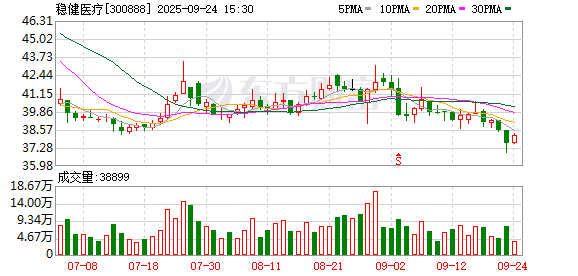
从代工到品牌出海 李建全解码稳健医疗“下一个五年”
2 1 Shi Ji Jing Ji Bao Dao· 2025-09-24 08:04
Core Viewpoint - The article discusses the operational and strategic developments of Shengjian Medical, highlighting its focus on automation, internationalization, and brand development in the medical and consumer sectors. Group 1: Company Operations - Shengjian Medical's Wuhan production base operates three production lines with a monthly capacity of 1,500-1,600 tons [4] - The company has achieved a high level of automation, resulting in a "dark factory" model where minimal staff is required [3] - The medical segment's revenue for the first half of 2025 reached 25.2 billion yuan, a year-on-year increase of 46.4% [6] Group 2: Financial Performance - In the first half of 2025, Shengjian Medical reported a revenue of 52.96 billion yuan and a net profit of 4.92 billion yuan, reflecting year-on-year growth of 31.31% and 28.07% respectively [6] - The consumer segment, represented by "Cotton Era," achieved a revenue of 27.5 billion yuan in the same period, growing by 20.3% [6] - The company's profit margin is currently around 9%, lower than the previous 12% level [7] Group 3: Strategic Goals - Shengjian Medical aims to increase its international brand presence, targeting a shift from 10% to 90% in self-owned brand sales in overseas markets over the next five years [4] - The company plans to enhance its product structure by focusing on high-end medical materials and expanding its consumer product lines [8] - Future growth points include expanding the "Cotton Era" brand into new product categories and international markets [10][14] Group 4: Market Expansion - Shengjian Medical's overseas sales revenue reached 14.3 billion yuan in the first half of 2025, marking an 81.3% increase [13] - The company has successfully penetrated markets in North America, Europe, and Asia, with its products gaining significant market share [13] - The company is cautious about overseas listings, focusing instead on domestic market growth and brand recognition [15]


迪拜连续八个半年度蝉联全球绿地投资项目数量第一
Shang Wu Bu Wang Zhan· 2025-09-24 04:10
Group 1 - Dubai has ranked first globally in the number of greenfield investment projects for eight consecutive half-year periods since the second half of 2021 [1] - In the first half of 2025, Dubai attracted 643 greenfield investment projects, surpassing the second-ranked city by 478 projects, marking a record high since 2003 [1] - The total amount of greenfield investment in Dubai rose to 40.4 billion dirhams (approximately 11 billion USD), representing a year-on-year increase of 62% [1] Group 2 - The total number of FDI projects in Dubai increased to 1,090, reflecting a year-on-year growth of 29% [1] - Headquarters-related FDI projects in Dubai saw significant growth, rising from 20 in the first half of 2024 to 32, ranking first globally [1] - Major sources of investment in Dubai include the United States (35%), the United Kingdom (10.6%), France (8.9%), India (8.9%), and Saudi Arabia (5.2%) [1] Group 3 - The primary sectors attracting investment in Dubai are business services (30.6%), hotel and tourism (21.3%), transportation and storage (7.2%), consumer goods (6.6%), and real estate (6.3%) [1]
投资策略研究|无惧市场波动,慢牛仍在进行——周观点20250922
Sou Hu Cai Jing· 2025-09-24 00:56
Core Viewpoint - The A-share market is experiencing a slow bull market despite short-term volatility, driven by active capital inflow and a focus on growth sectors, particularly technology [4][7]. Market Overview - From September 15 to September 19, the A-share market showed a mixed performance with major indices fluctuating. Growth sectors, represented by the ChiNext, performed strongly, while large financial and resource sectors faced significant pressure [4]. - The market is characterized by increased volatility in daily trading, with some investors taking profits following the Federal Reserve's 25 basis point rate cut, while others continue to invest in growth stocks [4][5]. Federal Reserve's Rate Cut - The Federal Reserve cut the federal funds rate target range by 25 basis points to 4.00%-4.25% on September 17, marking its first rate cut of 2025. This decision was anticipated by the market, leading to a preemptive rally in growth sectors such as AI and semiconductors [5]. - The Fed's overall tone was neutral, indicating a "preventive rate cut" to manage rising risks in the job market. Future rate cut expectations suggest an additional 50 basis points reduction within 2025 [5]. Domestic Economic Data - August economic data in China showed a steady but weak trend, with pressures across production, consumption, investment, and exports. Industrial production remained resilient but slowed, while traditional sectors like consumer goods faced declining growth [6]. - Fixed asset investment continued to weaken, significantly impacted by the real estate sector, with both manufacturing and infrastructure investment growth rates declining [6]. Market Dynamics - The "asset scarcity" phenomenon is driving residents to seek higher-yield investment products, contributing to the ongoing slow bull market. The risk appetite among investors has increased following the Fed's rate cut [7]. - Market trading volume concentration has increased, indicating a stronger focus on leading sectors. Although there are signs of potential market consolidation, the previous strong sectors remain robust [7]. Recommended Investment Directions - Growth technology sectors are expected to continue performing well, with opportunities emerging in AI computing, solid-state batteries, robotics, and biotechnology. The domestic storage chip industry is poised for growth due to the need for self-sufficiency [8]. - The Hong Kong stock market, lagging behind A-shares, is anticipated to rebound due to the Fed's rate cut and ongoing capital inflows. The current market trend shows a joint rise in technology and cyclical sectors [8].
进一步规范经营主体登记申请和代理行为|营商环境周报
2 1 Shi Ji Jing Ji Bao Dao· 2025-09-23 08:40
Group 1: Light Industry Growth Plan - The Ministry of Industry and Information Technology, along with other departments, has issued a "Light Industry Growth Work Plan (2025-2026)" to enhance the role of light industry in stabilizing economic growth [2][3] - The plan aims for stable growth in key industries, stable business performance, and rapid development of new growth points, with a focus on enhancing consumer capacity [2] - Five key tasks are outlined: optimizing supply, expanding consumption, maintaining international competitiveness, optimizing the industrial ecosystem, and enhancing high-quality development momentum [2][3] Group 2: Intellectual Property Asset Evaluation - The Ministry of Finance and other departments have released a notification to further standardize intellectual property asset evaluation, enhancing the management and protection of intellectual property [4][5] - The notification emphasizes the importance of accurately determining the value of intellectual property as a crucial step in its operation and transformation [4] - Asset evaluation institutions must possess professional competence and adhere to legal regulations, ensuring independent and objective evaluations [4][5][6] Group 3: Business Registration Regulation - The State Administration for Market Regulation has implemented a new management method for business registration applications and agency behaviors to prevent false registrations and improve registration quality [7][8] - The method establishes a new information management system for registration agents, enhancing the authenticity of registration applications [7][8] - It also strengthens the supervision of illegal registration behaviors and increases penalties for false registration [8] Group 4: Skills Training Initiatives in Shandong - Shandong Province has launched a "Vocational Skills Improvement Training Action Plan" to provide skills training for over 1.5 million people from 2025 to 2027 [10][11] - The plan includes ten training actions focusing on new productivity skills, rural revitalization, modern service industry skills, and youth skills enhancement [10][11] - It aims to support industries by cultivating a skilled workforce and enhancing training resources and employment linkages [11][12] Group 5: AI and Manufacturing Policies in Guangxi - Guangxi has introduced policies to support the integration of artificial intelligence and manufacturing, offering financial subsidies for qualifying projects [13][14] - The policies include funding for smart products and core components, as well as support for AI software development in industrial applications [13][14] - The initiative aims to promote high-end, intelligent, and green development in the manufacturing sector [13][14] Group 6: Statistical Reform in Jiaxing - Jiaxing City has implemented a "One-Click Reporting" reform to streamline statistical reporting for businesses, significantly reducing reporting time and improving data accuracy [16][17] - The reform utilizes digital technology to automate data collection and reporting processes, enhancing efficiency and reducing human error [16][17] - It establishes a comprehensive data management system to support accurate and timely statistical reporting [19][20]
1至8月成都规上工业增加值同比增长7.8%
Xin Hua Cai Jing· 2025-09-22 09:28
Economic Growth - Chengdu's industrial added value increased by 7.8% year-on-year from January to August [1] - The product sales rate of industrial enterprises above designated size in Chengdu was 96.4% during the first eight months [1] Industrial Performance - State-owned enterprises' added value grew by 5.0%, while private enterprises saw an increase of 11.1% [1] - Out of 37 major industries, 23 experienced growth in added value [1] - The automotive manufacturing industry grew by 20.9%, computer, communication, and other electronic equipment manufacturing increased by 15.8%, and electrical machinery and equipment manufacturing rose by 10.2% [1] Key Industrial Products - Production of new energy vehicles surged by 283.3%, smartwatches increased by 91.6%, and lithium-ion batteries grew by 38.6% [1] Fixed Asset Investment - Fixed asset investment in Chengdu (excluding rural households) increased by 3.3% year-on-year from January to August, with private investment growing by 6.6% [1] - Investment in the primary industry rose by 19.0%, while the secondary industry saw a growth of 21.3%, with industrial investment increasing by 21.7% [1] Consumer Market - Chengdu's total retail sales of consumer goods reached 739.28 billion yuan, a year-on-year increase of 6.2% [2] - Restaurant income was 90.42 billion yuan, growing by 4.9%, while commodity retail reached 648.86 billion yuan, increasing by 6.4% [2] - Notable growth in hot products included gold and silver jewelry at 42.9%, home appliances and audio-visual equipment at 23.7%, and sports and entertainment products at 25.9% [2] Foreign Trade - Chengdu's foreign trade import and export totaled 566.98 billion yuan, a year-on-year increase of 4.9% [2] - Exports amounted to 328.86 billion yuan, growing by 10.6%, while imports reached 238.12 billion yuan [2]
本周3家上市、11家递表,今年香港上市累计募资1465亿 | 香港IPO周报(截至20250919)
Xin Lang Cai Jing· 2025-09-22 05:37
Group 1 - The core viewpoint of the news highlights the recent IPO activities in Hong Kong, with a total of 293 companies having submitted applications this year, resulting in 64 listings, including 61 IPOs that raised a total of HKD 1,464.98 billion [2] - This week, three companies are set to be listed: He Meng (02525.HK) with a market capitalization of HKD 41.60 billion and a decline of 7.24%, Health 160 (02656.HK) raising HKD 4.00 billion with a significant increase of 138.69%, and Jingfang Pharmaceutical-B (02595.HK) with HKD 18.20 billion and a rise of 106.47% [1] - The companies that submitted applications this week include Xianweida Biotechnology-B, Shiyoupai, Ruoyuchen, Shimeite, Huqin Technology, Nuandong Insight, Aikemu Fa-B, Beijing Junzheng, Zhongrun Solar Energy, and New Element-B, all scheduled for submission on September 15-19 [3] Group 2 - The total amount raised through IPOs this year in Hong Kong is HKD 1,464.98 billion, indicating a robust market despite fluctuations in individual stock performances [2] - The significant percentage increases in the stock prices of Health 160 and Jingfang Pharmaceutical-B suggest strong investor interest and market confidence in these sectors [1] - The diverse range of industries represented in the recent applications, including biotechnology, consumer electronics, and insurance technology, reflects the dynamic nature of the Hong Kong IPO market [3]
反内卷牛市下的投资策略与市场展望
Xin Lang Cai Jing· 2025-09-21 16:52
Group 1: Policy Background and Market Dynamics - The central government emphasizes the importance of anti-involution policies to eliminate low-price and disorderly competition among enterprises, aiming to enhance the international influence of high-end manufacturing [1] - The shift from a liquidity-driven bull market to a physical re-inflation and anti-involution bull market indicates a change in market dynamics, with future PPI potentially rising, suggesting a focus on corporate profits and inflation recovery [1] Group 2: Market Stability and Investment Trends - Stabilizing the stock and real estate markets is crucial for improving residents' asset-liability balance, with a noticeable trend of residents converting savings into financial and physical investments as the stock market stabilizes [2] - Improved corporate cash flow and the activation of M1 provide liquidity support, laying the foundation for price recovery [2] Group 3: Investment Strategies and Sector Focus - In an environment of rising inflation expectations, the anti-leverage allocation strategy becomes increasingly important, favoring large-cap stocks over small-cap stocks and growth stocks over value stocks [3] - Cyclical sectors such as non-ferrous metals, chemicals, and consumer goods are benefiting significantly from the implementation of anti-involution policies, with notable increases in ETF holdings in these areas [3] - Investors should focus on cyclical industries like non-ferrous metals, steel, chemicals, and consumer goods, which are expected to benefit from improved supply-demand relationships under the anti-involution policy [4] - The technology sector, particularly in AI breakthroughs and US-China tech competition, presents significant investment opportunities, especially in consumer electronics and optical electronics with strong global competitive advantages [4]
8月份上海市进出口额同比实现两位数增长
Zhong Guo Xin Wen Wang· 2025-09-19 08:38
Core Insights - In August, Shanghai's import and export value reached 387.43 billion yuan, marking a year-on-year growth of 11.7%, continuing a growth streak for seven consecutive months since February [1] - Exports amounted to 183.08 billion yuan, surpassing 180 billion yuan for the first time in a single month, with a growth rate of 17.1%, while imports were 204.35 billion yuan, growing by 7.3% [1] - For the first eight months of the year, the total import and export value was 2.94 trillion yuan, reflecting a growth of 4.5%, with an acceleration of 1 percentage point compared to the previous seven months [1] Export Performance - In August, the export of mechanical and electrical products reached 125.39 billion yuan, growing by 19%, accounting for nearly 70% of the total exports [2] - Notable growth was observed in the exports of ships and high-end machine tools, which increased by 45.1% and 43.7% respectively [2] - The demand for green products surged, with exports of electric vehicles, lithium batteries, and photovoltaic products growing by 37.1%, 112.1%, and 39% respectively [2] Import Dynamics - The import of metal ores, unrefined copper, and copper products increased by 15% and 21% respectively, reflecting a recovery in raw material manufacturing [2] - The development of the semiconductor and artificial intelligence industries drove significant growth in imports of semiconductor manufacturing equipment and computer accessories, which surged by 105.5% and 55.2% respectively [2] - Consumer goods imports also saw growth, with beef, milk powder, perfume, and sports equipment increasing by 10.5%, 43.2%, 29.4%, and 35.8% respectively [2] Market Opportunities - The strong performance in August was significantly driven by private enterprises, which accounted for 166.85 billion yuan in imports and exports, growing by 31.5% and contributing 11.5 percentage points to the overall growth [1] - Emerging markets such as Africa, ASEAN, the Middle East, and India saw exports totaling 53.74 billion yuan, a year-on-year increase of 45%, contributing 10.7 percentage points to the overall export growth [1] - The export of shipbuilding and marine engineering equipment, along with engineering machinery, showed remarkable performance, with increases of 10.6 times and 72.8% respectively, contributing 16.5 percentage points to the growth in emerging markets [1]
上海外贸8月两位数强势增长,民企首次突破4成
Di Yi Cai Jing· 2025-09-19 08:38
Core Insights - Private enterprises are increasingly becoming a key force in stabilizing foreign trade due to their flexibility and market sensitivity [1] Group 1: Trade Performance - In August, Shanghai's total imports and exports grew by 11.7% year-on-year, marking the seventh consecutive month of growth since February [1] - Exports exceeded 180 billion yuan for the first time, with a growth rate of 17.1%, while imports reached 204.35 billion yuan, growing by 7.3% [1] - For the first eight months, Shanghai's total imports and exports increased by 4.5%, with the growth rate improving by 1 percentage point compared to the first seven months [1] Group 2: Role of Private Enterprises - In August, the import and export volume of private enterprises in Shanghai surged by 31.5%, maintaining a growth rate above 30% for three consecutive months [1] - The share of private enterprises in Shanghai's total foreign trade rose to 43.1%, surpassing 40% for the first time, contributing 11.5 percentage points to the city's overall trade growth [1] Group 3: Market Diversification - Exports to emerging markets such as Africa, ASEAN, the Middle East, and India grew by 45% in August, contributing 10.7 percentage points to the overall export growth [1] - Notable export performance was observed in shipbuilding and marine engineering equipment, which grew by 10.6 times, and engineering machinery, which increased by 72.8%, together driving a 16.5 percentage point increase in exports to these emerging markets [1] Group 4: High-End Manufacturing and Imports - In August, the export of electromechanical products grew by 19%, accounting for nearly 70% of the total export value, with significant growth in shipbuilding and high-end machine tools at 45.1% and 43.7% respectively [2] - The export of "new three samples" including electric vehicles, lithium batteries, and photovoltaic products saw growth rates of 37.1%, 112.1%, and 39% respectively [2] - Imports of raw materials such as metal ores and copper products increased by 15% and 21% respectively, driven by stable industrial and consumer demand [2] - The import of semiconductor manufacturing equipment and computer accessories surged by 105.5% and 55.2% respectively, supported by the development of the integrated circuit and artificial intelligence industries [2] - Consumption-related policies have led to significant growth in imports of consumer goods, with beef, milk powder, perfume, and sports equipment increasing by 10.5%, 43.2%, 29.4%, and 35.8% respectively [2]
江南春:消费企业真想反内卷,至少要做到十个“不要”
创业家· 2025-09-18 10:13
Core Viewpoint - The article emphasizes that consumer brands need to adopt ten "don'ts" to avoid internal competition and effectively market their products in a fragmented consumer landscape. Group 1: Key "Don'ts" for Consumer Brands - Don't chase after dividends anymore [2] - Don't use diligent traffic investment to cover the lack of core brand competitiveness [3] - Don't look for consumers anymore; instead, focus on penetrating consumer mindsets with concentrated efforts [6][8] - Don't add more products; focus on core products to ensure profitability [10][11] - Don't embrace change blindly; identify unchanging consumer needs and long-term sustainable practices [12][13] Group 2: Understanding Consumer Needs - Don't talk about products; instead, create scenarios that stimulate consumer purchasing desires [15][16] - Don't learn from leading brands; instead, differentiate and position against them [19][20] - Don't fantasize about winning through extraordinary means; the probability of success is low [22][23] - Don't believe in digital metrics alone; true brand value is recognized in real-world consumer perception [27][28] Group 3: Strategic Approaches - Don't follow trends blindly; consider taking the opposite approach during low peaks or off-seasons [31][32]