
创新药

Search documents
未知机构:华泰策略港股策略科技周期耗材主线回撤而非反转上周港股市场-20260202
未知机构· 2026-02-02 02:00
Summary of Key Points from the Conference Call Industry Overview - The focus is on the Hong Kong stock market, which recently reached a four-year high before experiencing a global market risk-off adjustment [1][2]. Core Insights and Arguments - The rapid rise in the Hong Kong market in January exceeded general expectations, particularly after a period of low investor interest during Q4 [1][2]. - Two critical questions arose post-adjustment: 1. Whether and when to add to positions 2. Whether the recovery will be led by recently underperforming sectors like technology and cyclical materials or if new leading sectors will emerge [2]. - The response to the first question indicates that adding to positions is advisable, as the adjustment is seen as healthy [2][3]. - External factors causing market adjustments have not fundamentally impacted the market; liquidity concerns regarding the Federal Reserve's hawkish stance are largely priced in [3]. - Active foreign capital has shown consistent net inflows for three weeks, and earnings expectations continue to be revised upwards [3]. - Seasonal trends around the Lunar New Year and catalysts like AI developments are expected to favor the Hong Kong market [3]. Additional Important Insights - The current high congestion in popular sectors, particularly in resource commodities, may lead to continued short-term volatility [4]. - A potential opportunity to build positions may arise if volatility indicators like VIX decrease and congestion levels drop before the Lunar New Year [5]. - The focus on technology and resource sectors is characterized as a technical pullback rather than a reversal, emphasizing the distinction between the "Hang Seng Tech" index and core stocks in AI hardware/software and innovative pharmaceuticals [5]. - The current hawkish stance of the Federal Reserve is not expected to fundamentally disrupt the narrative for technology and resource sectors [5]. - Insurance, local Hong Kong stocks, and high-quality consumer leaders are recommended as stable core holdings due to their robust fundamentals [6]. - The annual outlook emphasizes three major equilibria for the Hong Kong market: earnings valuation rebalancing, internal and external capital rebalancing, and sector rebalancing, advocating for a mid-term investment perspective focused on fundamentals rather than chasing rapid gains [6].
未知机构:存储芯片射频芯片AI编程轮胎药房创新药调研-20260202
未知机构· 2026-02-02 02:00
Summary of Conference Call Notes Industry: Storage Chips - HBF is expected to partially replace HBM in AI servers, balancing performance and cost, with mass production anticipated in Q4 2026 to Q1 2027 at a price of approximately $10–11 per GB [1][2] - HBF is beneficial for SanDisk and Kioxia as they do not engage in HBM business, allowing them to expand their market through HBF [1][2] - Current supply and demand for HBM are generally balanced [1][2] - Production capacity is planned to expand to 476,000 wafers per month by 2026, suggesting a stable to declining price for HBM in 2026 [2] Industry: RF Chips - The RF chip industry is expected to see moderate recovery in 2026, with intense price competition in the 4G sector, while the 5G sector's L-PAMiD modules maintain a profit margin exceeding 20% with relatively eased competition [2] - Satellite direct connection in mobile phones is emerging as a new growth area, with the Mate80 series supporting low-altitude direct connection, primarily in collaboration with Zhaoshengwei; Xiaomi, Vivo, OPPO, and Samsung are following suit [2] Industry: AI Programming - Current AI programming tools are categorized into three main types: plugin-based, AI-native IDEs, and Agent types, represented by GitHub Copilot, Cursor, and Claude Code respectively [2] - GitHub Copilot shows the fastest commercialization progress with a monthly active user payment rate exceeding 20%; Cursor's latest ARR has reached $1 billion; Claude Code's API call volume is approximately 60% of Anthropic's, indicating significant revenue potential [3] - Leading domestic programming models include DeepSeek, Zhipu, Alibaba Qianwen, and Kimi, with a focus on the B-end market, while C-end free IDE products are currently underperforming [3] Industry: Tires - The global demand for giant tires is expected to grow by 35% from 2025 to 2029, driven primarily by increased demand from overseas mining projects [3] - Foreign brands like Michelin, Bridgestone, and Goodyear plan to raise giant tire prices by over 10% in 2026, while domestic brands like Hai'an will not increase prices to capture market share [3] - Hai'an's overseas growth this year is primarily focused on markets in Russia, Northwest Africa, and South Africa, with other domestic brands like Sailun and Zhongce also accelerating their international expansion [3] Industry: Pharmacies - Recent policy documents appear macro in nature and lack specific measures, but they provide a framework and space for subsequent detailed regulations from various ministries [3] - The industry is still undergoing a natural clearance process, with an expected annual exit of 10,000 to 20,000 stores, predicting a dynamic balance when the total number of stores stabilizes around 600,000 [3] - The O2O average transaction value has increased from below 50 yuan to approximately 55 yuan, with future O2O growth expected to maintain over 20% [3] Industry: Innovative Drugs - Competition in the CXO sector from South Korea is intensifying, with Samsung entering the ADC and cell therapy production markets [4] - To address patent cliff issues, BMS has launched seven new core products, while Merck has engaged in extensive mergers and acquisitions to enter new disease areas [4] - Major pharmaceutical companies are actively investing in AI, but few have the capability for significant computational investment like Eli Lilly [4]
联博基金:关注中国经济转型升级 契机下的资本市场表现
Xin Lang Cai Jing· 2026-02-01 19:21
Group 1 - The core viewpoint of the article emphasizes the potential for the Chinese equity market to perform well by 2026, driven by economic transformation and factors such as "anti-involution," overseas expansion of enterprises, and AI, which are expected to support corporate profit improvement [1][2] - The transformation of the economic structure includes changes in consumption patterns, competition models ("anti-involution"), and business models, with government policies aimed at improving economic quality providing support to the capital market [1][2] - In the consumption sector, the increasing share of consumption in GDP and related initiatives may make new consumption an important investment direction, with younger consumers focusing on experience and emotional value, creating opportunities for small and medium-sized private enterprises [1][2] Group 2 - The article suggests that the impact of listed company profits on market performance may surpass that of economic policies, with measures like "anti-involution" likely to drive profit improvement [2] - The preference for a balanced asset allocation strategy is highlighted, as historical data shows that short-term style-switching strategies have underperformed compared to market benchmarks, indicating that a more balanced approach may reduce style volatility [2] - Specific sectors such as new consumption, innovative pharmaceuticals, and technology AI are identified as areas of significant potential, with breakthroughs expected in these fields [2] Group 3 - In the bond market, it is anticipated that a clear trend may be difficult to establish by 2026, with limited space for interest rate movements, likely resulting in a range-bound market [3] - Investors are advised to focus on short to medium-term durations and engage in flexible duration management to optimize returns in a fluctuating market [3] - The new regulations on public fund sales, which are more lenient regarding redemption fees, are expected to alleviate concerns about liquidity in bond funds [3]
华商基金张明昕:把握产业浪潮中的投资机会
Shang Hai Zheng Quan Bao· 2026-02-01 18:22
Core Viewpoint - The essence of investment lies in clarifying the source of profits and focusing on sustainable value creation, which is crucial for navigating market cycles and achieving long-term returns [1][2]. Investment Strategy - Investment should be based on a clear understanding of profit sources, whether from market fluctuations, industry beta, or individual stock alpha [2]. - A value-driven investment framework is emphasized, focusing on assessing asset values and constructing safety margins at reasonable prices [2]. - Identifying high-growth industries through systematic cross-industry comparisons is essential for uncovering investment opportunities [2][3]. Market Trends - The current market sentiment is optimistic, with limited downside risks and a notable trend of capital inflow into various sectors [4]. - The stock market is viewed as a voting machine in the short term but as a weighing machine in the long term, highlighting the importance of clear upward industry trends and performance realization [4]. Focus Areas - Key investment opportunities include AI and its derivatives, solid-state batteries, robotics, and innovative pharmaceuticals [5]. - The AI sector is expected to be a core area of focus for 2026, with significant potential for growth [4][5]. - The robotics industry is currently in the early investment stage, with attention on the mass production capabilities of T-chain robots [5]. - The innovative pharmaceuticals sector is anticipated to benefit from supportive policies, with potential for significant market growth and profitability [5].
港股周观点 | 科技+周期耗材主线回撤而非反转
Xin Lang Cai Jing· 2026-02-01 15:00
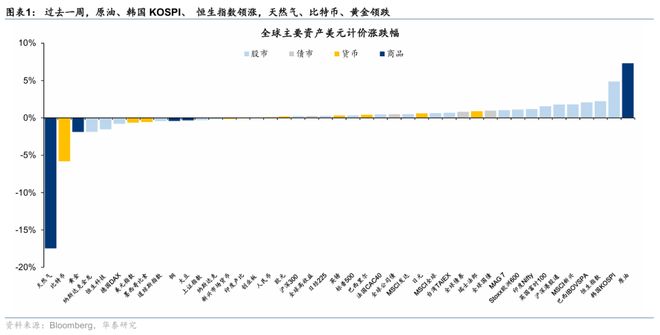
Market Overview - The Hang Seng Index reached a four-year high last week, but experienced a technical pullback due to a hawkish Federal Reserve chair nomination, indicating a risk-off sentiment in global equity markets [1] - The market sentiment index moved from panic to optimism within 16 days, suggesting a shift in investor sentiment [1] - Current market volatility is expected to persist, but it is more likely to be a correction rather than a reversal of market performance [1] Earnings and Revenue Expectations - Non-financial earnings expectations have been revised upward by 0.4% over the past four weeks, while revenue expectations have been slightly downgraded by 0.1% [2] - The sectors with the most significant upward revisions in earnings expectations include non-ferrous metals (7.7%), military industry (4.0%), and electric new energy (1.8%) [2] Capital Flow - Foreign capital continues to flow into Hong Kong stocks, with net inflows reaching $2.8 billion, up from $1.95 billion the previous week [3] - Active foreign capital has seen a continuous inflow for three weeks, with a record weekly inflow of $640 million [3] - The nomination of Kevin Warsh as the next Federal Reserve chair has led to short-term volatility, but the medium-term liquidity outlook remains accommodative [3] Market Sentiment - The market sentiment index has risen to 62.1, indicating an optimistic outlook [4] - Factors contributing to this optimism include strong net inflows from southbound capital and high buying intensity [4] Investment Recommendations - Companies with earnings certainty should be considered as core holdings, while opportunities to increase allocations in technology and cyclical materials should be explored during market corrections [5] - Focus on sectors showing upward trends, such as AI-related industries, semiconductor manufacturing, and innovative pharmaceuticals [5]

华源晨会精粹20260201-20260201
Hua Yuan Zheng Quan· 2026-02-01 13:59
Fixed Income - The report analyzes the new regulatory framework for insurance companies, highlighting five major changes aimed at improving asset-liability management [9][10] - The insurance industry's solvency indicators declined in Q3 2025, attributed to increased equity capital usage and dual pressure on liabilities [11] - Investment returns improved due to rising long-term bond yields and favorable A-share performance, reducing overall industry risk [12] - A selection of insurance subordinated bonds with specific criteria is recommended for investment, including those from major state-owned insurance companies [14] Pharmaceutical Industry - The pharmaceutical index fell by 3.31% recently, with a notable trend of Chinese innovative drugs expanding into international markets [15][17] - Companies like China Biopharmaceutical are enhancing their R&D capabilities through acquisitions and self-developed products, positioning themselves for potential overseas opportunities [18] - A focus on innovative drugs is recommended, with specific companies highlighted for their strong fundamentals and potential for stock price recovery [19] New Consumption - Ruoyu Chen and Wancheng Group are projected to see significant profit growth in 2025, driven by their proprietary brand business and operational efficiency improvements [21][23] - The government is promoting new service consumption growth points, aiming to enhance service supply and consumer experience [25][26] - The snack retail sector is evolving, with companies like Mingming Hen Mang rapidly expanding and innovating to meet consumer demands [24] North Exchange - The North Exchange indices saw over 6% growth in January 2026, indicating a market rebound and highlighting specific sectors for investment opportunities [28][29] - The overall market liquidity remains ample, with a focus on structural investment opportunities in specialized and innovative enterprises [29][30] Media - Alibaba's FY2026Q3 revenue is expected to reach 288.1 billion yuan, with cloud business growth anticipated despite a slowdown in e-commerce [32]
科技+周期耗材主线回撤而非反转
HTSC· 2026-02-01 11:27
Core Viewpoints - The recent market pullback is seen as a technical correction rather than a reversal, primarily driven by the rapid rise in stock prices and the hawkish stance of the newly nominated Federal Reserve Chair [2] - The current market sentiment has shifted to an optimistic zone, with the emotional index reaching 62.1, indicating a potential for continued volatility in the short term [5][49] - The three driving factors for market space in the first quarter remain intact: improved liquidity, resonance in the funding environment, and upward revisions in profit expectations [2] Fundamental Analysis - Non-financial profit expectations have been revised upward by 0.4% over the past four weeks, while revenue expectations have been slightly adjusted downward by 0.1% [3] - The sectors with the most significant upward revisions in profit expectations include non-ferrous metals (7.7%), military industry (4.0%), and new energy (1.8%) [3] - The official manufacturing PMI for January stands at 49.3, reflecting demand-side pressures, although there are positive signals in price recovery [3] Funding Environment - Foreign capital continues to flow into the Hong Kong stock market, with net inflows reaching $2.8 billion, up from $1.95 billion the previous week [4] - Active foreign capital has seen a continuous inflow for three weeks, with a record weekly inflow of $640 million, while passive foreign capital remains at a high level [4] - The nomination of Kevin Warsh as the next Federal Reserve Chair has led to short-term volatility, but the medium-term liquidity outlook remains relatively loose [4] Market Sentiment - The market sentiment has quickly transitioned into an optimistic zone, with the emotional index indicating a potential accumulation of short-term volatility risks [5][49] - The sentiment indicators, including net inflows from southbound funds and the AH premium score, remain high, suggesting strong market participation [5] Investment Recommendations - Emphasis on companies with earnings certainty as a core holding, with a focus on the technology and cyclical materials sectors for potential incremental investments [6] - Short-term attention should be given to leading companies' earnings reports and industry developments, particularly in the AI supply chain [6] - Mid-term strategies should continue to overweight resource stocks, insurance, and local Hong Kong stocks after stabilization [6]
西部证券新兴产业周报-20260201
Western Securities· 2026-02-01 11:26
Investment Rating - The report recommends an "Overweight" rating for solid-state batteries, innovative drugs, and new consumption sectors, while suggesting a "Neutral+" rating for humanoid robots and AI applications [5][10][21]. Core Insights - The report highlights a focus on solid-state batteries, innovative drugs, and new consumption as key investment themes, indicating a positive outlook for these sectors [5][10]. - The report notes that the overall emerging industry is showing a strong fundamental outlook with a neutral technical perspective, suggesting potential for growth despite recent fluctuations [16]. Summary by Relevant Sections Investment Themes - **Solid-State Batteries**: Rated "Overweight" with a strong technical outlook, indicating a recovery from a low position. The industry is moving towards commercialization with significant developments from companies like Geely [5][10]. - **Innovative Drugs**: Also rated "Overweight", with a stable outlook as the National Medical Products Administration has approved multiple innovative drugs, enhancing market confidence [5][10]. - **New Consumption**: Rated "Overweight", with initiatives in Beijing to promote new consumption landmarks, indicating a supportive environment for growth [5][10]. - **Humanoid Robots**: Rated "Neutral+", with a moderate technical outlook. The sector is experiencing a transition from prototypes to mass production, which could enhance market opportunities [5][10]. - **AI Applications**: Rated "Neutral+", with signs of recovery. The commercialization of AI applications is seen as a turning point, with significant investments from major companies [5][10]. Market Trends - The report indicates that the overall emerging industry has returned to below the mean plus two standard deviations, with moderate rotation intensity and average crowding levels, suggesting a potential for rebound in profitability expectations [16][18]. - Recent events, such as the launch of new products and approvals in the innovative drug sector, are expected to drive growth and investor interest [10][11].
医药行业周报(26/1/26-26/1/30):中国生物制药2026年有望迎来创新药出海元年-20260201
Hua Yuan Zheng Quan· 2026-02-01 10:43
Investment Rating - The report maintains a "Positive" investment rating for the pharmaceutical industry [4] Core Viewpoints - The Chinese biopharmaceutical sector is expected to enter a new era of innovative drug exports in 2026, with significant opportunities arising from strategic acquisitions and internal research and development [3][8] - The report emphasizes the importance of selecting strong fundamental innovative drug stocks that have undergone sufficient adjustments, as well as actively monitoring new medical technologies and companies poised for recovery in 2026 [4][41] Summary by Sections Industry Performance - From January 26 to January 30, the pharmaceutical index fell by 3.31%, underperforming the CSI 300 index by 3.39%. Notably, the market has seen a significant adjustment in the innovative drug sector since August 2025, with the lowest holdings in active funds since 2021 [5][21] - The report highlights that 58 stocks rose while 407 stocks fell during the week, with notable gainers including Cap Bio (+26.49%) and Hualan Biological (+12.80%) [5][22] Company Insights - China Biopharmaceutical is enhancing its core competitiveness through strategic acquisitions and self-research, which is expected to lead to more opportunities for international expansion. The acquisition of Hegia in January 2026 and Lixin Pharmaceutical in July 2025 are key moves to strengthen its pipeline in chronic diseases and oncology [8][13] - The report identifies Hegia's siRNA delivery technology as a significant advancement, allowing for long-lasting treatment options in chronic diseases, while Lixin's unique LM-TME platform is expected to enhance the company's capabilities in oncology [9][11][14] Investment Recommendations - The report suggests focusing on innovative drug companies such as Heng Rui Medicine, Xin Li Tai, and China Biopharmaceutical, as well as companies involved in new medical technologies like AI healthcare and brain-computer interfaces [41][43] - It also highlights the potential for recovery in the medical device and pharmaceutical manufacturing sectors in 2026, recommending stocks that are currently undervalued [41][42] Market Trends - The report notes that the Chinese pharmaceutical industry has completed a transition from generic to innovative drugs, with companies like Heng Rui Medicine and China Biopharmaceutical leading the way in innovation [41][42] - The aging population and increasing healthcare demands are expected to drive growth in the sector, supported by a stable increase in medical insurance revenues and the development of a multi-tiered payment system [41][42]

中国手术机器人行业近况更新:华创医药投资观点&研究专题周周谈·第161期
Huachuang Securities· 2026-02-01 00:25
Investment Rating - The report does not explicitly state an investment rating for the surgical robot industry, but it indicates a positive outlook for growth and development in the sector. Core Insights - The surgical robot industry in China is entering a rapid development phase, supported by national policies and capital investment, with significant advancements in technology and market demand [13]. - The report highlights the transition from a capital-driven to a value-driven model in the surgical robot sector, emphasizing the importance of clinical applications and technological integration [13]. - The approval process for surgical robots by the NMPA has accelerated, particularly for orthopedic surgical robots, which dominate the market in terms of the number of products approved [30][28]. Summary by Sections Market Overview - The surgical robot market in China is characterized by a growth in sales volume, with a total of 332 units sold in the first 11 months of 2025, reflecting a year-on-year increase of 3.75% [34]. - The sales revenue for surgical robots reached 2.973 billion yuan, showing a slight decline of 0.87% year-on-year, indicating a structural transition rather than a market downturn [34]. Technological Advancements - Innovations in remote operation, miniaturization, and AI assistance are driving the development of surgical robots, with products like the TUMAI® remote surgical robot achieving significant milestones in cross-border surgeries [16][19]. - The introduction of AI-assisted surgical robots is enhancing precision in surgeries, with products capable of 3D reconstruction and personalized surgical planning [16]. Regulatory Developments - The National Healthcare Security Administration has established a pricing framework for surgical robots, which is expected to facilitate market growth by clarifying reimbursement policies and pricing structures [27][26]. - The pricing guidelines categorize surgical robot services into navigation, participation in execution, and precision execution, linking them to main surgical procedures [27]. Market Segmentation - The orthopedic surgical robot segment holds the largest market share, accounting for 50% of the total NMPA-approved surgical robots from 2014 to 2024, followed by neurosurgical robots [30]. - The report indicates a significant potential for growth in emerging fields such as vascular surgery robots, with increasing demand and technological advancements [34]. Competitive Landscape - The report identifies key players in the surgical robot market, including domestic manufacturers that are rapidly gaining market share as regulatory barriers for imports increase [45]. - The competitive landscape is shifting as domestic products receive NMPA approval, challenging the previously dominant imported products [45].