
玩具

Search documents
美泰将推迟发布与OpenAI合作的首款玩具产品
Ge Long Hui· 2025-12-16 03:23
Core Insights - Mattel will not launch its first product in collaboration with OpenAI as initially planned for 2025, amid increasing scrutiny of AI interactions with youth and issues with other AI-driven toys in the market [1] Group 1: Product Development - The launch of the AI product is delayed, with no new timeline provided by Mattel [1] - The product will target older customers and families, aligning with OpenAI's developer interface, which only supports users aged 13 and above [1] Group 2: Company Positioning - Mattel views artificial intelligence as a complement to traditional play rather than a replacement [1] - The company assures that any future products will comply with safety and privacy regulations [1]

中国玩具“玩转”全球大市场:科技范儿、文化范儿、绿色范儿
Ren Min Ri Bao· 2025-12-16 02:29
Core Insights - China's toy industry is thriving globally, driven by technological innovation, cultural elements, and sustainable practices, with a notable increase in exports and market demand [2][3][4] Group 1: Technological Innovation - The integration of artificial intelligence in toys, such as interactive robots and smart toys, has significantly enhanced their appeal and functionality, leading to a 19.5% increase in toy exports from Yiwu [2][3] - The "K宝" robot and the upgraded "嘟比" dog toy exemplify the successful application of AI, with the former capable of communicating in over 60 languages and the latter achieving high sales on cross-border e-commerce platforms [3][4] Group 2: Cultural Elements - The toy designs from Shantou, particularly the "破晓航天系列" building blocks, reflect a blend of traditional Chinese culture and modern aesthetics, catering to international markets [5][6] - The incorporation of cultural themes in toys, such as traditional landmarks and folklore, has helped expand their appeal in Europe and other regions, with Shantou's exports to the EU growing by 11.4% [6][7] Group 3: Sustainable Practices - Companies like Yangzhou's 帝腾玩具 are focusing on eco-friendly materials, with a significant portion of their products made from recyclable materials, aligning with global sustainability trends [10][11] - The shift towards green production methods is evident in the growing market for environmentally friendly toys, which has attracted international clients seeking sustainable options [10][11] Group 4: Market Expansion - The toy industry in Pingxiang, known as "China's Children's Car Capital," has seen substantial growth, with an annual production of 155 million units and a revenue exceeding 30 billion RMB [8][9] - The establishment of industrial parks and innovation centers in Pingxiang is facilitating the development of high-end, intelligent products, enhancing the region's competitiveness in the global market [9]
中经评论:墨西哥提税或透支发展潜力
Jing Ji Ri Bao· 2025-12-16 00:05
Core Viewpoint - Mexico's recent proposal to increase import tariffs on products from countries without free trade agreements, including China, is seen as a short-term solution to economic pressures, potentially sacrificing long-term economic stability for immediate benefits [1][2][4]. Group 1: Economic Context - Mexico's economy is under increasing pressure, with the growth forecast for 2025 being revised down from positive to negative, and the central bank lowering the annual growth expectation from 0.6% to 0.3% [2]. - The proposed tariff increases are expected to generate an additional revenue of 70 billion pesos (approximately 3.76 billion USD) for the national treasury, addressing a fiscal deficit projected to reach 5.7% of GDP in 2024, the highest in decades [2]. Group 2: Tariff Details - The new tariffs will apply to approximately 1,400 product categories, including automobiles, toys, steel, textiles, and plastic products, with rates ranging from 10% to 50%, effective January 1, 2026 [1]. - Some adjustments were made to the initial proposal, reducing tariffs on certain automotive parts, light industrial products, and textiles, but the overall impact is expected to harm trade relations, particularly with China [1]. Group 3: Domestic Reactions - The proposal has sparked significant debate within Mexico, with supporters arguing it addresses unfair competition and reliance on imports, while opponents warn that increased tariffs will raise production costs and ultimately burden consumers [2][3]. Group 4: Long-term Implications - The reliance on tariffs as a solution is criticized for failing to address underlying economic issues, as Mexico's manufacturing sector is heavily dependent on global supply chains, which could be disrupted by increased costs [3][4]. - The shift in trade policy may deter foreign investment, undermining Mexico's image as a reliable production base and creating uncertainty for international capital [3][4]. - The approach of using protectionist measures to solve problems in an open economy may lead to Mexico's economic isolation, especially in the context of global supply chain restructuring [4].
中国玩具“玩转”全球大市场
Ren Min Ri Bao· 2025-12-15 22:52
Core Insights - The article highlights the growth and innovation in China's toy industry, particularly in smart toys and eco-friendly products, driven by advancements in technology and design [8][9][12][16]. Group 1: Smart Toys and Technology - Yiwu is recognized as the largest distribution center for small commodities globally, with one in four toys sold worldwide originating from there. In the first ten months of this year, Yiwu's toy exports reached 21.81 billion RMB, marking a 19.5% increase [8]. - The introduction of artificial intelligence in toys, such as the "K宝" robot, enhances interactivity and emotional value, with exports to countries like Myanmar and Spain [9]. - The rapid development of the low-altitude economy in China has led to a surge in drone sales in Yiwu, with shops increasing from a few to hundreds, catering to international demand [10]. Group 2: Creative Design and Cultural Elements - In Shantou, the toy industry focuses on creative designs that incorporate traditional Chinese culture, with products like the "Dawn Aerospace Series" building blocks gaining popularity in international markets [12]. - Shantou's toy exports reached 8.555 billion RMB in the first three quarters of this year, with the EU being the largest market, showing an 11.4% year-on-year growth [12]. - The integration of traditional cultural elements into toys, such as Peking opera masks and miniature dragon dance scenes, is expanding their appeal in global markets [12]. Group 3: Patent Innovations and Industry Upgrades - Pingxiang County, known as the "Capital of Children's Cars," has over 5,285 toy-related enterprises, producing 155 million units annually, with a revenue exceeding 30 billion RMB [13]. - Companies in Pingxiang are focusing on innovation, with one company holding over 20 patents for its children's bicycles, indicating a shift towards higher quality and smarter products [14]. - The establishment of a provincial industrial park in Pingxiang aims to enhance the development of the bicycle and children's car industry, promoting international trade [15]. Group 4: Eco-Friendly Initiatives - Yangzhou's toy industry is increasingly adopting recyclable materials, with a focus on reducing environmental impact while maintaining product quality [16]. - The annual sales of Yangzhou Di Teng Toy Gift Co. reached 200 million RMB, with a growing proportion of products made from sustainable materials [16]. - The Yangzhou plush toy industry, which has been developing since the 1960s, is moving towards high-end, eco-friendly products, aiming to provide unique childhood companions for global consumers [16].

墨西哥提税或透支发展潜力
Jing Ji Ri Bao· 2025-12-15 22:39
Core Viewpoint - Mexico's recent proposal to increase import tariffs on products from countries without free trade agreements, including China, is seen as a short-term solution to economic pressures, potentially sacrificing long-term economic stability for immediate benefits [1][4]. Group 1: Economic Context - Mexico's economy is under increasing pressure, with the growth forecast for Q3 2025 turning negative and the central bank lowering the annual growth expectation from 0.6% to 0.3% [2]. - The proposed tax increase is expected to generate an additional revenue of 700 billion pesos (approximately 37.6 billion USD) for the government, addressing a fiscal deficit projected to reach 5.7% of GDP in 2024, the highest in decades [2]. Group 2: Domestic Reactions - The proposal has sparked significant debate within Mexico, with supporters arguing it addresses unfair competition and reliance on imports, while opponents warn that increased tariffs will raise production costs and ultimately burden consumers [2][3]. Group 3: Supply Chain and Investment Risks - The reliance of Mexico's manufacturing sector on global supply chains means that increased tariffs could heighten the risk of supply chain disruptions, particularly given the limited domestic production capacity [3]. - The sudden shift in trade policy may deter foreign investment, undermining Mexico's image as a reliable production base and creating uncertainty for international capital [3][4]. Group 4: Long-term Implications - The protectionist measures are unlikely to enhance industrial competitiveness and may instead squeeze small and medium-sized enterprises due to rising raw material costs [4]. - Historical precedents indicate that short-term fiscal gains from tariffs may not compensate for long-term economic losses, as seen when Mexico had to retract tariffs on aluminum due to domestic production shortages shortly after their implementation [4].
实丰文化:蔡俊权及其一致行动人计划减持公司股份不超过504万股
Mei Ri Jing Ji Xin Wen· 2025-12-15 13:10
Group 1 - The core point of the article is that Shifeng Culture announced a share reduction plan by major shareholders, which may impact the company's stock performance and investor sentiment [1] - Major shareholder Cai Junquan, holding approximately 52.56 million shares (31.29% of total shares), and his concerted action person Cai Junsong, holding about 10.92 million shares (6.5% of total shares), plan to reduce their holdings by up to 5.04 million shares (3% of total shares) between January 9, 2026, and April 8, 2026 [1] - As of the report, Shifeng Culture has a market capitalization of 3.7 billion yuan [1] Group 2 - For the first half of 2025, Shifeng Culture's revenue composition is as follows: toy self-manufacturing accounts for 47.93%, gaming business for 35.58%, toy trading for 11.65%, photovoltaic business for 4.69%, and other businesses for 0.15% [1]

中国四线小城工厂,押注跨境电商
虎嗅APP· 2025-12-15 10:26
Core Viewpoint - The article discusses the transformation of manufacturing factories in China as they adapt to the challenges posed by global trade shifts and the rise of cross-border e-commerce, moving from traditional B2B models to more direct consumer engagement [3]. Group 1: Current Challenges - A toy factory owner in Chenghai faces difficulties due to tariff impacts, leading to reduced orders and uncertainty about future shipments [2]. - Many factories are increasingly participating in cross-border e-commerce events, indicating a shift in strategy to adapt to changing market conditions [2]. Group 2: Shift in Global Trade Paradigm - The article highlights a transition from "Globalization 1.0," dominated by a few giants focusing on standardization and cost efficiency, to "Globalization 2.0," characterized by individual creativity, content, and community trust [3]. Group 3: Need for New Strategies - There is a growing urgency for source factories to engage in cross-border e-commerce to improve profit margins by bypassing intermediaries, potentially increasing gross margins from single digits to over twenty percentage points [7][8]. - Factories aim to gather direct market feedback and data, which is challenging under traditional foreign trade models [9][10]. - Ambitious factories seek to build brand equity, moving from being mere manufacturers to recognized brands on platforms like TikTok and Amazon [12][13]. Group 4: Collective Challenges in New Pathways - Despite the growth of cross-border e-commerce, many factories still have a limited understanding of this model, facing challenges in talent acquisition and operational restructuring [15][16]. - The product management logic must shift from catering to a single client to creating diverse SKUs that appeal to end consumers [17][18]. - Factories need to adapt to a flexible supply chain capable of rapid content iteration, as evidenced by the demand for quick turnaround on small orders [19]. Group 5: Understanding Consumer Preferences - Factories often misinterpret consumer preferences, focusing on technical specifications rather than lifestyle-driven choices that resonate with overseas users [20]. - There is a gap in content creation and marketing capabilities among many factories, which platforms are beginning to address through various support initiatives [20].

东南亚国家陷入两难困境:很依赖中国供应链,但又怕被美国加征转运附加费
Sou Hu Cai Jing· 2025-12-15 10:09
Core Viewpoint - The article discusses the impact of U.S. tariffs on Southeast Asian manufacturers as they face pressure from the upcoming Christmas shopping season, leading to supply chain disruptions and increased retail prices in the U.S. [1][2] Group 1: Tariff Impact on Southeast Asia - U.S. tariffs have affected low-cost export countries in Southeast Asia, including Malaysia, Vietnam, Laos, and Indonesia, deepening their involvement in the U.S.-China structural competition [1] - The new tariff regime has established a "China+1 penalty mechanism," where exporters relying on Chinese components face an additional 40% transshipment surcharge [2] - Manufacturers are struggling with increased production and logistics costs due to tariffs, which have disrupted delivery schedules [4] Group 2: Export Trends and Adjustments - Malaysia's exports of knitted products to the U.S. increased from $39,000 in June to $148,000 in July, reflecting a trend of manufacturers rushing to ship goods before tariff deadlines [5] - In August, U.S. apparel imports peaked at $244,000, as importers sought to reduce reliance on traditional garment hubs facing higher tariffs [5] - Malaysia's exports of electrical and electronic products to the U.S. reached nearly $24 billion, largely driven by the semiconductor industry [5] Group 3: Strategic Shifts in Manufacturing - Southeast Asian manufacturers are beginning to relocate final assembly operations to Vietnam, Indonesia, and Thailand while still depending on China for design and high-tech components [9] - Malaysia and Thailand are attracting more strategic long-term investments due to their lower exposure to new tariffs [9] - The U.S. has pressured Malaysia and Cambodia to accept "poison pill" clauses in trade agreements, which could reshape future trade negotiations in the region [9]

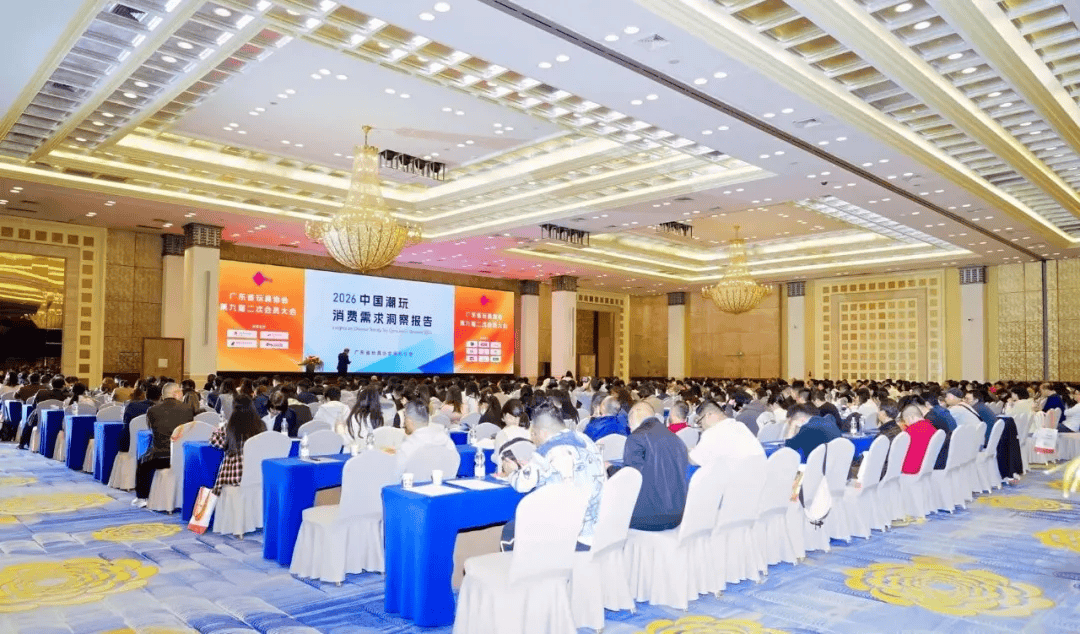
广东省玩具协会潮玩分会发布《2026中国潮玩消费需求洞察报告》
Sou Hu Cai Jing· 2025-12-15 08:19
Core Insights - The Guangdong Toy Association released the "2026 China Trend Report on潮玩消费需求" which highlights the rapid growth and challenges in the潮玩 market [1][5] - The潮玩 market in China is projected to grow from over 200 billion in 2020 to over 700 billion by 2024, with a compound annual growth rate exceeding 30% [5][15] - The report emphasizes the need for潮玩 companies to focus on consumer demand to navigate increasing competition and market challenges [5][10] Market Overview - The潮玩 market has transitioned from its nascent stage to a rapid growth phase, characterized by emotional connections and IP commercial value [15] - The market faces challenges such as intensified competition, IP homogenization, and difficulties in user retention [15] - The report outlines consumer motivations for purchasing潮玩, primarily driven by experience, emotional attachment, cultural identity, and stress relief [15][17] Consumer Insights - A comprehensive survey was conducted across 32 provinces, collecting 3,267 valid responses to understand潮玩 consumer behavior [7][10] - Key factors influencing潮玩 purchases include IP relevance, design innovation, type, and brand [15][17] - The report identifies 13 representative潮玩 categories, analyzing consumer preferences and feedback on each [15][17] IP and Marketing Strategies - The report discusses the significance of IP in潮玩, analyzing trends in original and content IP, as well as effective marketing strategies [17][23] - Six effective marketing modes are identified, including social media promotion, pop-up events, influencer marketing, and storytelling [17][23] - The report notes that physical stores dominate潮玩 sales, driven by experiential shopping, while e-commerce is emerging as a significant growth engine [17][23] Future Trends and Recommendations - The report suggests that the潮玩 market has substantial growth potential, with a positive outlook from both industry and consumers [23] - It proposes actionable recommendations based on current market challenges, focusing on product development, IP management, and consumer engagement strategies [23]
每周投资策略-20251215
citic securities· 2025-12-15 07:27
Group 1: Japan Market Focus - The expected policy interest rate in Japan is projected to rise to 1% by 2026, driven by inflation concerns and the need for fiscal sustainability [11][15][13] - Key stocks to focus on include Bandai Namco and Oracle Japan, with Bandai Namco showing resilience despite a 23% year-on-year decline in operating profit, and Oracle Japan benefiting from partnerships with major firms like SoftBank [19][18] - The iShares JPX-Nikkei 400 ETF is highlighted as a vehicle for investment, emphasizing quality management and financial stability in its constituent companies [22] Group 2: UK Market Focus - The UK economy faces downward risks, with GDP growth slowing and unemployment rising, leading to expectations of potential interest rate cuts by the Bank of England [30][31] - Key stocks to monitor include Rolls-Royce Holdings and Imperial Brands, with Rolls-Royce benefiting from increased defense spending and Imperial Brands offering stable returns as a defensive stock [36][35] - The iShares MSCI UK ETF is recommended for exposure to large and mid-cap UK companies, reflecting the overall market performance [38] Group 3: South Korea Market Focus - The Bank of Korea is expected to maintain its interest rate at 2.5% until at least April 2026, influenced by inflation and economic recovery [45][43] - Factors supporting further upward movement in the KOSPI index include improving economic conditions and specific stocks like Samyang Foods and SK Hynix [46][41] - The iShares MSCI Korea ETF is suggested for investment, reflecting the broader market trends [42]