
高端装备

Search documents
新股密集上市期来了!8只大肉签待发,中签良机别错过?
Sou Hu Cai Jing· 2025-12-10 23:33
新股密集上市期来了!8只大肉签待发,中签良机别错过? 最近股民圈的"打新热情"又被点燃了!前阵子还在吐槽"打新难中签",没想到2025年末直接迎来新 股"扎堆上架",8只优质新股排队待发,涵盖硬科技、新能源、生物医药等热门赛道。要知道今年打新 有多香——截至11月,年内上市新股首日平均涨幅超219%,平均单签盈利近1.9万元,更有矽电股份这 样的"超级肉签"中一签能赚5.24万元 。如今这8只新股带着政策红利和高成长预期而来,难怪不少股民 直言"年底的致富机会来了"。这8只大肉签到底有啥亮点?谁能精准拿捏中签机会? 政策红利:证监会力挺,打新环境更友好 这波新股密集上市,背后离不开政策的强力支持,2025年多项新规为优质企业上市和投资者打新保驾护 航: - 上市支持加码:2月7日证监会发布《关于资本市场做好金融"五篇大文章"的实施意见》,明确支持新 一代信息技术、人工智能、生物医药等八大战略性产业上市,允许优质未盈利科技型企业登陆科创板, 这也是必贝特、西安奕材等企业能顺利IPO的核心政策依据 。 - 打新规则优化:3月28日证监会修改《证券发行与承销管理办法》,将银行理财、保险资管产品纳入 IPO优先配售对 ...

江苏经济总量今年将突破14万亿元巨轮破浪,经济高质量发展成色足
Xin Hua Ri Bao· 2025-12-10 23:15
Economic Growth and Development - Jiangsu's economic total is projected to rise from 10.5 trillion yuan in 2020 to 13.7 trillion yuan in 2024, marking the crossing of the fourth trillion yuan milestone during the "14th Five-Year Plan" period [1][2] - The province's labor productivity increased from 213,000 yuan per person in 2020 to 284,000 yuan per person in 2024, with an average annual growth rate exceeding GDP growth by 0.5 percentage points from 2021 to 2024 [2] Structural Optimization and Innovation - Economic growth is increasingly driven by structural optimization, technological advancement, and efficiency improvements, with Jiangsu's social retail sales remaining among the top in the country [3] - Jiangsu has implemented over 1,600 major provincial projects in five years, enhancing its regional innovation capabilities to rank second nationally, with R&D investment intensity reaching the average level of innovative countries and regions [3] Environmental Sustainability and Quality of Life - Jiangsu has made significant strides in carbon neutrality initiatives, with renewable energy capacity surpassing coal power, and has maintained PM2.5 levels within national standards for four consecutive years [4] - The income disparity between urban and rural residents has narrowed to a ratio of 2.04:1, with urban employment growth consistently above 10% nationally [4] Consumer Market and Domestic Demand - Jiangsu has hosted over 12,000 consumer promotion events during the "14th Five-Year Plan," distributing approximately 2.54 billion yuan in consumption vouchers and digital currency [5][6] - The province has established a comprehensive network of commercial infrastructure, including 918 "quarter-hour" convenience living circles and 15 national e-commerce demonstration bases, leading the nation in these initiatives [6] Manufacturing and Industrial Strength - Jiangsu has maintained its position as the leading manufacturing province in China for four consecutive years, with manufacturing value added reaching 4.63 trillion yuan in 2024, accounting for 33.8% of GDP [8] - The province has developed a modern industrial system focused on advanced manufacturing, with 14 national-level advanced manufacturing clusters, the highest in the country [8][9] Future Industry and Technological Advancement - Jiangsu's strategic emerging industries have seen a 5 percentage point increase in their share of industrial output over four years, with sectors like new energy and high-end equipment exceeding one trillion yuan in revenue [9] - The province's artificial intelligence industry is estimated to be worth nearly 400 billion yuan, with significant advancements in technology innovation and application across various sectors [9]
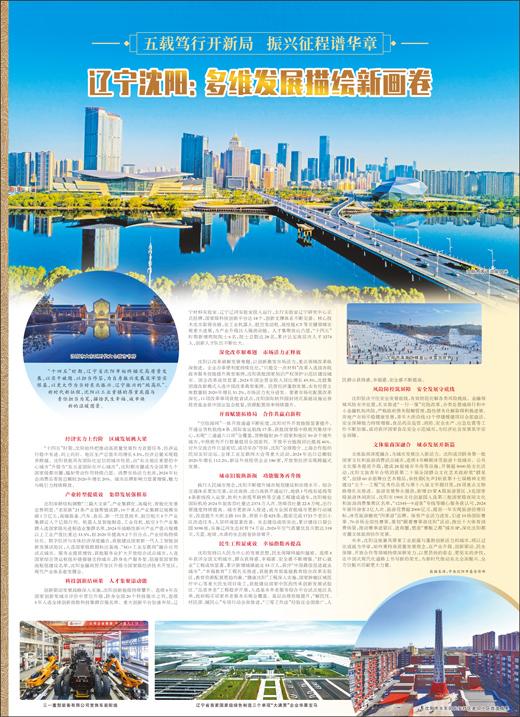
辽宁沈阳:多维发展描绘新画卷
Ren Min Ri Bao· 2025-12-10 06:16
Core Viewpoint - Shenyang is committed to high-quality development during the 14th Five-Year Plan period, focusing on practical actions and responsibilities to strengthen its foundation for revitalization and contribute significantly to the revitalization of Northeast China and Liaoning Province [2][3]. Economic Strength and Regional Development - Shenyang aims for high-quality development as its primary task, achieving an average annual GDP growth of 5.5% during the 14th Five-Year Plan period, with a steady increase in economic total [3]. - The city has been upgraded from an important center in Northeast China to an "International Center City in Northeast Asia," becoming the ninth national metropolitan area in China, enhancing its regional influence [3]. - The retail sales of social consumer goods are projected to grow by 20% in 2024 compared to 2020, indicating a vibrant consumer market [3]. Industrial Transformation and Cluster Development - Shenyang is focusing on industrial cluster development, with 10 key industrial clusters surpassing a total scale of 1 trillion yuan, and five clusters entering the billion-yuan level [5]. - The proportion of strategic emerging industries in the total industrial output value is expected to reach 33.5% in 2024, an increase of 9.2 percentage points from 2020, reflecting ongoing structural optimization [5]. Technological Innovation and Talent Attraction - Shenyang has been recognized as one of the top 20 technology cities in China, with significant advancements in key areas such as industrial robots and aviation engines [6]. - The city has added six academicians during the 14th Five-Year Plan period, bringing the total to 28, indicating a growing pool of high-level talent [6]. Reform and Market Vitality - Shenyang has made significant progress in reforming state-owned enterprises, with a 49.5% year-on-year increase in state-owned enterprise revenue in 2024 [7]. - The number of active business entities has increased by 51.2% compared to 2020, showcasing a robust growth in the private economy [7]. Open Economy and International Cooperation - Shenyang has expanded its international connectivity with eight all-cargo flight routes and 17 international passenger routes, enhancing its global trade capabilities [8]. - The city’s export volume is expected to grow by 112.2% in 2024 compared to 2020, reflecting a significant leap in its open economy [8]. Urban Development and Public Services - Shenyang has improved its urban infrastructure, with the airport expected to handle 23.74 million passengers and 228,000 tons of cargo in 2024 [9]. - The city has completed the renovation of 1,723 old residential communities, significantly enhancing the living environment [9]. Social Welfare and Quality of Life - Shenyang has created 550,000 new urban jobs, earning recognition as one of the best cities for promoting employment in China [11]. - The city has implemented various health and education initiatives, including the establishment of a national tumor regional medical center and a comprehensive reform pilot area for basic education [11]. Safety and Risk Management - Shenyang has effectively managed financial risks and improved safety measures across various sectors, contributing to a stable economic environment [12]. Cultural and Tourism Development - Shenyang has been recognized as a national cultural and tourism consumption pilot city, with significant growth in tourism, expecting to receive 200 million visitors and generate over 200 billion yuan in tourism revenue in 2024 [13].
结束访华才2天,马克龙就变脸了,要是中国不进口欧洲东西,或对华加税
Sou Hu Cai Jing· 2025-12-09 21:29
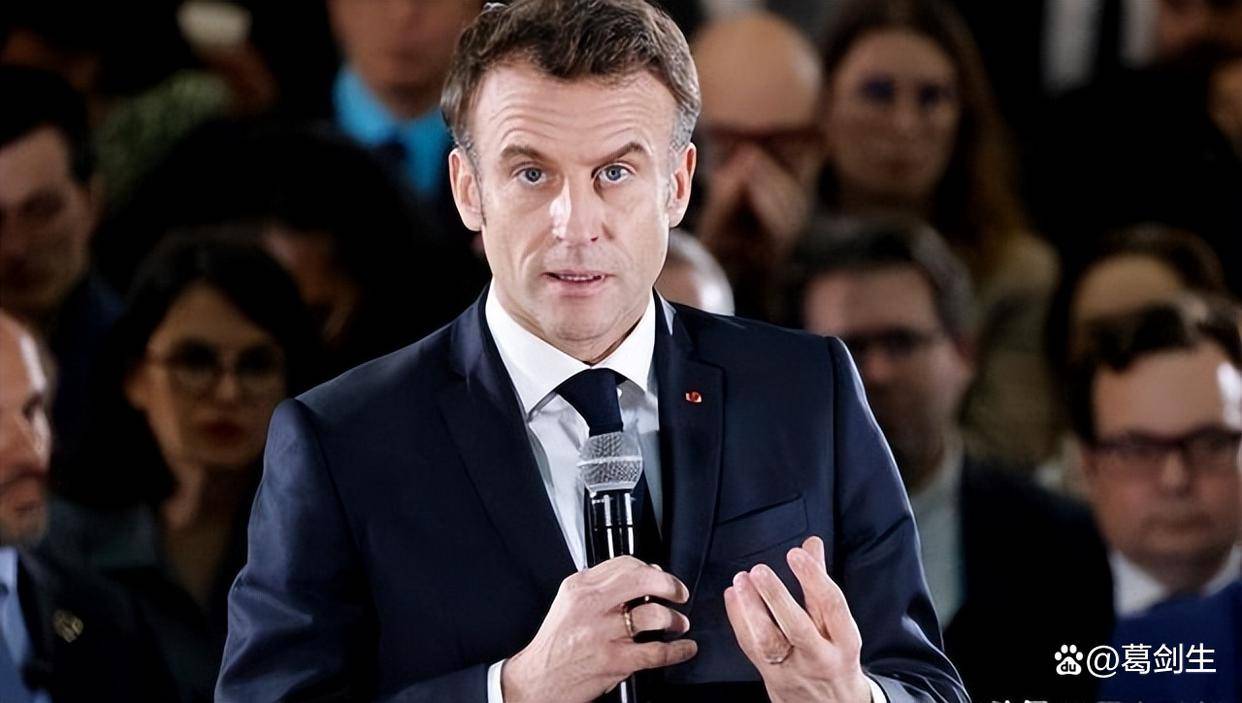
中欧贸易格局在全球经济复苏进程中显现出显著不平衡,欧盟对华逆差持续扩大,主要源于双方产业分工差异和出口结构调整。 中国制造业通过技术升级和供应链优化,提升了产品竞争力,如电动汽车和高端装备出口增速明显,而欧盟出口以传统优势领域为主,受内部管制影响,高 科技产品对华输出受限。 这种局面反映出欧洲经济体内部协调难题,法国作为欧盟重要成员,其对华贸易逆差已达数百亿欧元规模,凸显需通过对话寻求互惠路径。 马克龙访华后迅速转变立场,强调如果中国不增加从欧洲进口商品,欧盟可能征收关税,这暴露了法国对贸易失衡的焦虑。 欧盟内部对华政策分歧明显,德国作为对华贸易额最大的成员国,依赖中国市场深度投资,尤其在汽车和化工领域,通过本地化生产规避部分壁垒,与法国 单一出口模式形成对比。 德国企业在中国投资存量远超法国,这推动了技术转移和就业创造,贸易额突破2000亿美元,显示互利合作的可行性。 马克龙呼吁中国反向投资欧洲,类似于25年前欧洲对华投资模式,但当前中国企业在欧洲已设立多家工厂,涵盖新能源和制造业,投资规模逐年扩大,这种 双向流动有助于平衡逆差,却被法国视为威胁。 欧盟此前对中国电动汽车的反补贴调查虽征收关税,但中国出口仍 ...
天津:“十五五”打造“1+3+4”现代工业产业体系升级版
Zhong Guo Xin Wen Wang· 2025-12-09 17:26
"4"是突出做强做优,推动四个新兴产业成为新引擎、新支柱。生物医药产业,巩固提升化学药和现代 中药优势,培育壮大生物药、高端医疗器械,打造国内生物医药产业创新高地。新能源产业,打 造"风、光、锂、氢"全产业链条,壮大新型电池产业规模,加快技术迭代升级,推动行业由规模优势向 质量效益转型。新材料产业,重点发展新型无机非金属、新一代信息技术材料、先进化工材料、高端金 属材料等领域,更好满足重大战略及工程需求。航空航天产业,构建"机、箭、星、站"全产业链,提升 大飞机本地配套率,加快发展低空装备和商业航天,打造航空航天产业聚集区。 "同时,我们一方面加快冶金、轻纺等传统产业转型升级,加速结构调整和新品研发,打造消费名品方 阵;另一方面加速布局未来产业,聚焦未来制造、未来信息、生命科学、新型能源、未来材料、空天深 海六大领域,抢占新赛道、开拓新蓝海、塑造新优势。"夏青林说。(完) (文章来源:中国新闻网) 中新网天津12月9日电(记者周亚强)天津市政府新闻办9日举行高质量完成"十四五"规划系列主题新闻发 布会——市工业和信息化局专场。天津市工业和信息化局局长夏青林表示,面向"十五五",天津将立足 全国先进制造研发基地 ...
创业公司,要规避这2个现金流陷阱
创业家· 2025-12-09 10:10
Group 1 - The article emphasizes the cash flow traps that startups need to avoid, specifically low turnover leading to funding issues and the necessity for operational efficiency to cover the capital tied up due to low turnover [1] Group 2 - The article promotes an event led by Wu Shichun, focusing on learning and networking opportunities for entrepreneurs in the technology manufacturing sector, highlighting the potential of a trillion-dollar market [3][7] - Participants will engage in a three-day immersive learning experience, including deep discussions with industry leaders and practical case studies [9][10] - The event covers various sectors such as robotics, aerospace, high-end equipment, new materials, and renewable energy, indicating a broad interest in advanced technology and innovation [19][21][23]

最近,越来越多地区忙着“先投后股”
母基金研究中心· 2025-12-09 09:02
Core Viewpoint - The "first investment, then equity" model is emerging as a new tool for attracting investment and promoting the transformation of scientific and technological achievements across various regions [2][3]. Group 1: Model Overview - "First investment, then equity" is an innovative mechanism that adjusts the way fiscal funds support the transformation of scientific achievements and the growth of startup tech companies, focusing on those with technology but lacking funds [2]. - The model consists of two phases: "first investment," where fiscal funds support R&D and transformation through project grants, and "then equity," where funds convert to equity upon successful market financing or stable development [2][3]. Group 2: Efficiency and Management - This model enhances the efficiency of fiscal fund usage compared to traditional subsidies and strengthens the management of enterprises throughout their lifecycle, creating a sustainable mechanism for the circular use of fiscal funds [3]. - Unlike early-stage equity investment tools, "first investment, then equity" does not rigidly assess annual performance but instead tailors monitoring standards to the R&D pace of startups, embodying the concept of "patient capital" [3]. Group 3: Implementation and Impact - As of March 2025, 18 provinces (municipalities) in China are exploring the "first investment, then equity" model to support the transformation of scientific achievements, with a closed-loop management system covering project selection, fund allocation, performance evaluation, equity conversion, and exit [4]. - The model has been recognized as a crucial exploration to address funding shortages at key stages for hard-tech companies transitioning from laboratory to production [4]. Group 4: Project Examples - The first batch of projects supported by this model in Xi'an includes 17 projects with strong hard-tech attributes, covering fields such as artificial intelligence, new energy, and biomedicine [5]. - For instance, Shaanxi Longlin Nanofiber Material Technology Co., Ltd. received 1.4 million yuan in initial funding to expand application scenarios and enhance market recognition [6]. Group 5: Policy Context - Recent high-level meetings and policy documents emphasize the need for a unified approach to investment and the rectification of local investment irregularities, promoting high-quality investment models [7][8]. - The National Development and Reform Commission has called for a standardized list of local investment behaviors to guide and regulate investment practices [8].

上交所副总经理苑多然:高质量建设科创板 更好服务高水平科技自立自强
Shang Hai Zheng Quan Bao· 2025-12-09 03:01
Core Viewpoint - The Shanghai Stock Exchange (SSE) aims to enhance the quality of listed companies and support high-level technological self-reliance and modernization through the development of the Sci-Tech Innovation Board, which has become a key platform for "hard technology" enterprises [10][11]. Group 1: Development of the Sci-Tech Innovation Board - The SSE has introduced a five-level dynamic system to support the high-quality development of listed companies, focusing on optimizing the institutional framework to stimulate internal growth [11]. - Since the launch of the Sci-Tech Innovation Board, 381 new companies have been listed, raising a total of 640 billion yuan, establishing it as the preferred venue for "hard technology" enterprises [10][11]. - The SSE has actively supported the Anhui province's strategic initiatives, facilitating the listing of 21 local enterprises on the Shanghai market during the 14th Five-Year Plan period [10]. Group 2: Enhancing Innovation and Capital Supply - The SSE has implemented a multi-inclusive listing standard to enhance capital supply for "hard technology" companies, with 10 high-quality enterprises approved for refinancing, expected to raise 25 billion yuan [11][12]. - The board has disclosed over 150 industrial mergers and acquisitions since the introduction of the "Eight Articles of the Sci-Tech Innovation Board," promoting resource integration [12]. Group 3: Future Directions and Strategic Goals - The SSE plans to continue leveraging the Sci-Tech Innovation Board as a "testbed" for reforms, focusing on new quality productivity and enhancing the adaptability and attractiveness of the capital market [12][13]. - The SSE aims to strengthen lifecycle service offerings and coordinate investment development, particularly in the Sci-Tech sector, to foster a robust ecosystem for innovation and industry development [13].

十区联动,三产聚焦!看金洽会如何以“园区行”激活实体脉络?
Guo Ji Jin Rong Bao· 2025-12-08 23:59
Core Insights - The 19th Shanghai Financial Services for the Real Economy Fair (referred to as "Jinqiao Fair") successfully concluded on December 4, showcasing the effectiveness of its "Park Tour" activities aimed at enhancing financial services for enterprises [1][10] - The event emphasized a collaborative model involving government, parks, and financial institutions to directly connect financial services with businesses [1][2] Group 1: Event Overview - The "Park Tour" activities began on September 29, with the first stop in the Qingpu Industrial Park, setting a tone of "precise empowerment, direct reach to the real economy" [2] - The event spanned across ten administrative districts in Shanghai, engaging nearly 400 enterprises in key sectors such as artificial intelligence, integrated circuits, and biomedicine [1][10] Group 2: Financial Solutions and Support - At the Lin-gang Pujiang Park's biomedicine event, companies expressed specific financing needs, such as one company seeking to raise 20 million yuan by releasing 20% equity [3] - Financial advisory teams provided tailored solutions to address the unique financing challenges faced by enterprises, including suggestions for non-financial factors in credit assessments [2][3] Group 3: Institutional Support and Accessibility - Jing'an District established a "home-based" financial service system through two specialized events, transitioning from temporary connections to institutional guarantees [4][5] - The "Vision and Sound" event in Jing'an introduced five specialized platforms to support financial empowerment and innovation, addressing the financing needs of ultra-high-definition audiovisual enterprises [5] Group 4: Innovative Practices - The unique "Insurance+" service model was showcased in Changxing Island, where non-bank institutions extended financial services to meet the specific needs of the marine equipment industry [6] - Financial advisors from various institutions provided comprehensive financial services for enterprises, particularly focusing on initial-stage technology companies [6] Group 5: Community Engagement - The event in Huangpu District extended financial services to community-level small and micro enterprises, addressing their fragmented financing needs [8][9] - Financial institutions proposed a combination of financing solutions, including policy-based guarantees and flexible online financing products, to enhance funding efficiency for these enterprises [9] Group 6: Future Directions - The Jinqiao Fair aims to continue its role as a bridge for financial services, facilitating the flow of financial resources to small and micro enterprises in industrial parks [11] - An online platform for the Jinqiao Fair will remain operational until September 2026, providing ongoing access to financial products and advisory services [10]
五载笃行开新局 振兴征程谱华章 辽宁沈阳:多维发展描绘新画卷
Ren Min Ri Bao· 2025-12-08 22:48
沈阳深耕结构调整"三篇大文章",产业集群化、高端化、智能化发展态势明显。"老原新"21条产业链聚 链成群,10个重点产业集群总规模突破1万亿元,高端装备、汽车、食品、新一代信息技术、航空航天5 个产业集群迈入千亿级行列。机器人及智能制造、工业母机、航空3个产业集群入选国家级先进制造业 集群名单,2024年战略性新兴产业产值占规模以上工业产值比重达33.5%,较2020年提高9.2个百分点, 产业结构持续优化。数字经济与实体经济深度融合,获批建设国家新一代人工智能创新发展试验区,入 选国家级数据标注基地、"5G+工业互联网"融合应用试点城市。服务业提质增效,获批服务业扩大开放 综合试点城市,入选国家综合货运枢纽补链强链支持城市,跻身生产服务型、陆港型国家物流枢纽建设 名单,沈阳金融商贸开发区升级为国家级经济技术开发区,现代产业体系愈发健全。 科技创新结硕果人才集聚添动能 经济实力上台阶区域发展挑大梁 "十四五"时期,沈阳始终把推动高质量发展作为首要任务,经济运行稳中有进、向上向好。地区生产总 值年均增长5.5%,经济总量实现稳步跨越。沈阳获批具有国际化定位的城市性质,由"东北地区重要的 中心城市"升级为"东北亚 ...