科技行业

Search documents
高市早苗料接任日本首相 策略师:利好股市 利空日元
智通财经网· 2025-10-06 02:45
Core Viewpoint - The election of Sanae Takaichi as the new president of Japan's ruling Liberal Democratic Party (LDP) is expected to lead to her becoming Japan's first female Prime Minister, with a focus on fiscal expansion and maintaining loose monetary policy, which may positively impact the stock market while putting pressure on the yen [1][2]. Group 1: Market Reactions and Expectations - The Nikkei 225 index rose by 4.15% to 47,669.06 points, marking its first time above 47,000 points, while the Tokyo Stock Exchange index also saw significant gains [1]. - Analysts from Goldman Sachs noted that Takaichi's policies could refocus attention on defense spending and normalization of the Bank of Japan's policies, potentially leading to a positive market reaction and some weakening of the yen [2]. - Homin Lee from Lombard Odier highlighted that the Tokyo Stock Exchange index might experience positive price movements due to expectations of pro-growth policies under Takaichi's leadership [2]. Group 2: Sector Impacts - Donghoon Han from Matthews International Capital Management indicated that Takaichi's government may implement meaningful structural reforms, benefiting sectors such as technology, construction, and infrastructure, while the nuclear industry could gain from her support for restarting and building nuclear power plants [3]. - Analysts from Citigroup noted that the initial market reaction to Takaichi's preference for expansionary fiscal policy and continued monetary easing could lead to a weaker yen and bonds, while stock prices may have limited upside due to already high valuations [3][4]. Group 3: Indicators to Watch - Key indicators to monitor include negotiations with opposition parties, the new cabinet lineup, and initial cabinet approval ratings, as successful management in these areas could drive domestic demand expansion and entrenched inflation, supporting long-term growth in the Japanese stock market [4].
关税,传出大消息!
Zhong Guo Ji Jin Bao· 2025-10-04 00:26
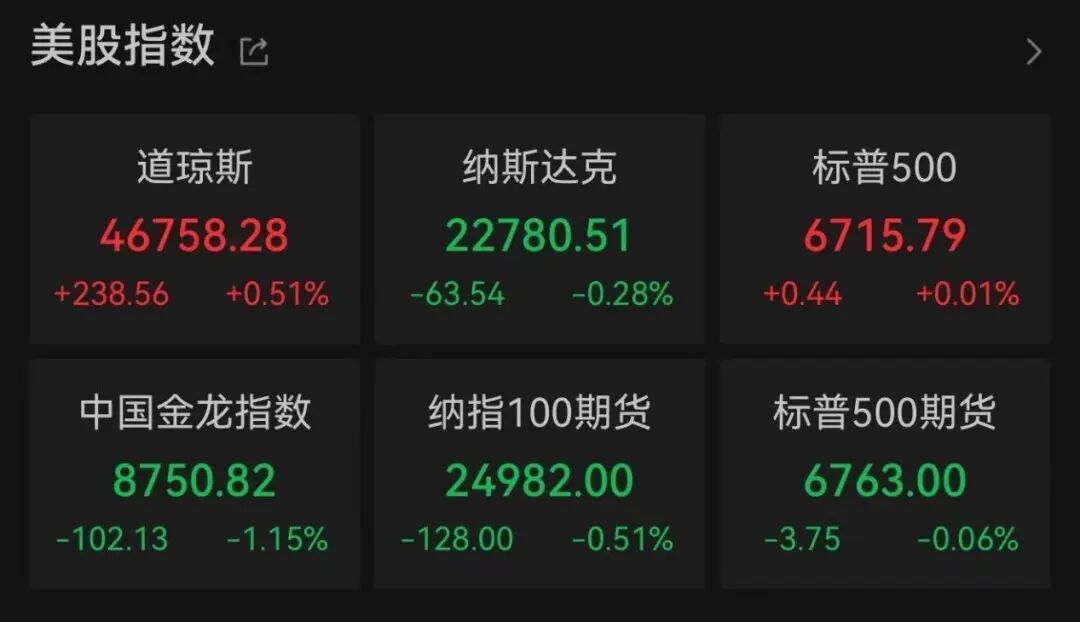
Market Overview - The U.S. stock market showed mixed results with the Dow Jones and S&P 500 indices reaching new highs, while the Nasdaq index declined due to a pullback in technology stocks [2][4] - As of the market close, the Dow Jones index rose by 0.51% to 46,758.28 points, and the S&P 500 index increased by 0.01% to 6,715.79 points, while the Nasdaq index fell by 0.28% to 22,780.51 points [2] Economic Factors - The U.S. Labor Department has paused nearly all economic activities, leading to the postponement of the September non-farm employment report [4] - The Senate rejected a bipartisan temporary funding bill, resulting in the continuation of the federal government shutdown [4] - Market expectations for a 25 basis point rate cut by the Federal Reserve this month are close to 95% according to the CME FedWatch Tool [4] Sector Performance - Technology giants experienced a decline, with Nvidia down by 0.67%, Amazon down by 1.30%, Tesla down by 1.42%, and Facebook down by 2.27% [4] - Conversely, Apple, Microsoft, and Google saw slight increases of 0.35%, 0.31%, and 0.01% respectively [4] Automotive Sector - Reports indicate that Trump is considering significant tariff reductions for cars assembled in the U.S., positively impacting automotive stocks [5][6] - Ford shares rose by 3.6%, Toyota increased by 2.10%, and General Motors gained 1.29% following the news [6] Chinese Market - The Nasdaq Golden Dragon China Index saw a cumulative increase of 2.58% this week, but experienced a decline of 1.15% on Friday [6] - Chinese electric vehicle manufacturers such as NIO, Xpeng, and Li Auto reported declines of 2.66%, 3.09%, and 3.99% respectively [6][7] Commodity Market - International gold prices rose by 1.14%, closing at $3,912.1 per ounce [8] - Oil prices ended a streak of declines, with NYMEX WTI crude oil increasing by 0.35% [8] Corporate Governance - Berkshire Hathaway has officially separated the roles of Chairman and CEO in preparation for Greg Abel to succeed Warren Buffett as CEO next year [12] - This change was approved by the board on September 30, marking a significant shift in the company's governance structure [12]

美银欧洲机构路演:对中国市场兴趣浓厚且情绪乐观 ,普遍看好“涨到年底”
Hua Er Jie Jian Wen· 2025-10-02 04:42
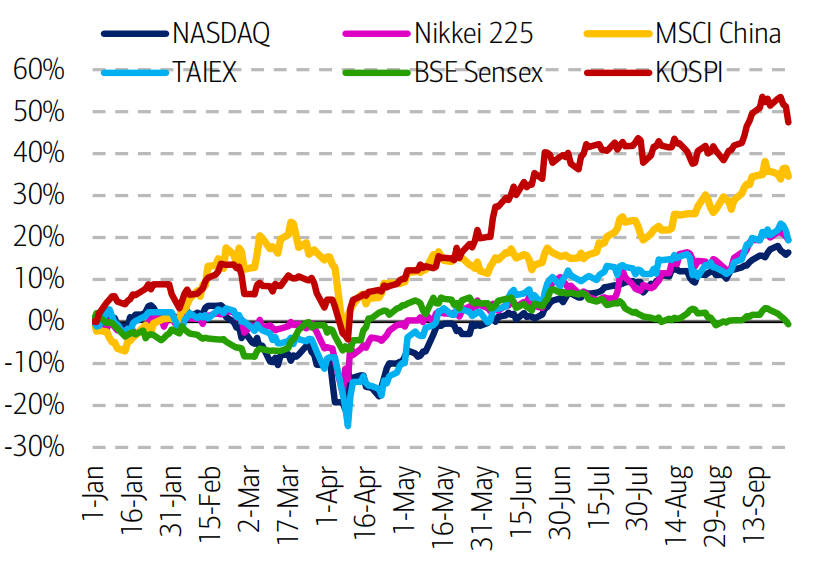
Group 1 - The core viewpoint is that the Chinese stock market has been one of the best-performing markets this year, with expectations of a continued rebound until the end of the year, as indicated by Bank of America during a recent European institutional roadshow [1] - A recent report from Merrill on September 29 shows a significant recovery in confidence among European investors towards the Chinese stock market, with nearly 70% of investors in Paris and nearly 100% in London expecting the rebound to persist [1] - New investors from Europe are optimistic about the relatively low valuations of the Chinese stock market, its ongoing innovation, and the risk buffer provided by "policy put options," suggesting a favorable opportunity for the market similar to the 2015 A-share rebound [1] Group 2 - Bank of America recommends that investors focus on the continuous inflow of household deposits into the stock market, which is driving market revaluation and positively affecting consumption and CPI, thereby boosting consumer stocks [3] - The investment strategy suggested by Bank of America includes increasing holdings in the Chinese stock market but advises against chasing high prices, emphasizing a "barbell strategy" that combines large tech stocks and high-dividend state-owned enterprises as defensive investments while also accumulating quality beta stocks in emerging sectors like AI and robotics [3]
持币、持股还是持金?国庆长假前投资攻略来了
Di Yi Cai Jing· 2025-09-30 08:04
Core Viewpoint - The article discusses the classic investment strategy dilemma of holding stocks versus holding cash as the National Day holiday approaches, highlighting historical trends and current market conditions that favor holding stocks over the holiday period [1][3][4]. Market Performance - On the last trading day before the National Day holiday, the Shanghai Composite Index experienced fluctuations around 3880 points, with a notable increase in trading volume, reaching a daily turnover of 2.18 trillion yuan [2][4]. - Historical data indicates that A-shares have a higher probability of rising after the National Day holiday, with a recorded 80% chance of an increase if trading volume expands in the last three trading days before the holiday [4]. Investment Strategies - Analysts suggest that investors should maintain a balanced asset allocation while considering their risk tolerance, with a focus on opportunities across different markets and asset classes [1][6]. - The "calendar effect" observed in A-shares suggests that holding stocks during the holiday may yield better returns, as evidenced by past performance trends [4][6]. Sector Focus - The technology sector remains a focal point for investors, particularly in the context of economic pressures, with expectations of policy catalysts following significant meetings in October [3][4]. - The recent surge in international gold prices, which reached a historical high of $3871.73 per ounce, has introduced "holding gold" as a new investment option for the holiday period [6][7]. Bond Market Outlook - The bond market is currently experiencing weak sentiment, with a neutral outlook from institutions, as the ten-year government bond yield rose above 1.83% before retreating due to central bank interventions [5][9]. - Despite short-term pressures from the stock market, long-term bond market trends are expected to align with economic fundamentals, indicating a potential decoupling from stock market movements [9].
"昂贵"就是新标准?华尔街开始接受股市估值"新常态"
Hua Er Jie Jian Wen· 2025-09-29 13:29
Core Viewpoint - The article discusses the shifting perception of stock market valuations, suggesting that high valuations should be viewed as a "new normal" rather than a temporary anomaly, driven by structural changes in the economy and market dynamics [1][2]. Group 1: Structural Changes in Valuation - The S&P 500 index's rolling average price-to-earnings (P/E) ratio has increased from approximately 14 times in the early 1990s to about 19.5 times today, indicating a significant upward shift in valuation norms [2]. - The frequency of economic recessions in the U.S. has decreased from about 42% historically to around 10% in the past 30 years, contributing to a more stable economic environment that supports higher valuations [2]. - The U.S. economy has transitioned from an industrial base to one dominated by technology and services, which tends to favor growth stocks that can sustain higher valuations [2]. Group 2: Support for High Valuations - Analysts from Bank of America argue that the intrinsic characteristics of current S&P 500 constituents, such as lower financial leverage and more stable profit margins, justify the elevated valuation multiples [3]. - The current index composition shows significant changes compared to the 1980s, 1990s, and early 2000s, suggesting that today's valuation multiples should be considered as a new benchmark rather than reverting to historical averages [3]. Group 3: Diverging Opinions on Valuation Trends - Some analysts, like Jonathan Golub from Seaport Research Partners, propose a more cautious view, suggesting that the market is not in a state of continuous upward valuation drift but rather "re-anchoring" at a higher level [4]. - Golub notes that high interest rates in the 1970s and 1980s contributed to lower valuations, and if borrowing costs were to rise significantly again, valuations could revert to historical averages, although he currently sees no such risk [4].
美联储警告美股泡沫危机,历史4次预言3次大跌!这次躲得掉吗?
Sou Hu Cai Jing· 2025-09-29 13:19
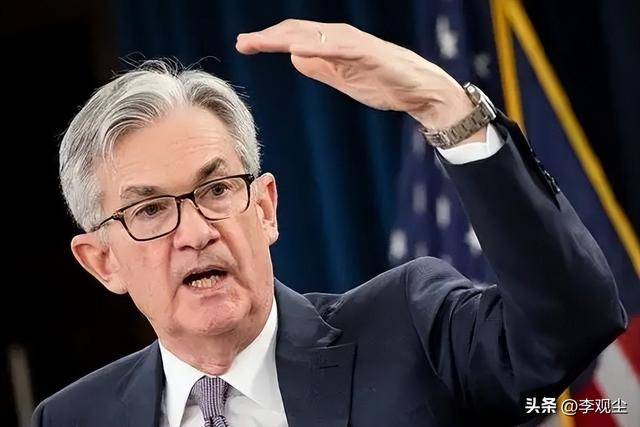
Group 1 - Powell's warning indicates that U.S. stock valuations are currently too high, which is a rare and significant statement from the Federal Reserve Chairman [4][5] - Historical context shows that similar warnings have often preceded significant market downturns, such as the 2000 internet bubble burst [7][9] - The warning serves as a "policy preventive measure," suggesting that subsequent interest rate hikes, rather than the warning itself, typically trigger market volatility [7][9] Group 2 - Powell's statement reflects a broader policy consideration, emphasizing the need to avoid excessive expectations of monetary easing amidst ongoing inflation concerns [9][12] - The relationship between Powell and Trump highlights a divergence in economic policy priorities, with Powell focusing on inflation control while Trump emphasizes economic growth [11][12] - The independence of the Federal Reserve is crucial, as it operates based on economic data rather than political pressures, contrasting with the approach of other central banks [16][18] Group 3 - Powell's warning underscores the ongoing tension between the Federal Reserve and the White House, reinforcing the Fed's commitment to its core responsibilities [18] - The potential for market volatility exists in the short term, but the long-term focus on inflation stability and economic fundamentals is beneficial for investors [18]
高盛集团:上调股票评级,标普500三月或涨2%
Sou Hu Cai Jing· 2025-09-29 13:08
Core Viewpoint - Goldman Sachs has upgraded its stock rating, predicting a continued rise in global stock markets by the end of the year due to strong U.S. performance, supportive valuations, and a dovish shift in Federal Reserve policy [1] Group 1: Stock Market Outlook - The strategist team, including Christian Müller-Gleissmann, has raised the stock holding rating to "overweight" for the next three months, indicating that stocks perform well during periods of policy support in the late cycle [1] - Strong earnings growth, Federal Reserve easing policies, and global fiscal loosening are expected to support the stock market, with a recommendation to buy on dips before year-end [1] - The team has downgraded the credit asset rating from "neutral" to "underweight" in the short term while maintaining a bullish outlook on stocks for the next 12 months [1] Group 2: Market Dynamics - Current market optimism regarding the Federal Reserve's interest rate cuts and avoidance of recession has driven global stock markets to new highs, with enthusiasm for artificial intelligence boosting tech giants' stock prices [1] - Many institutions have raised their target levels for the S&P 500 index, with Goldman Sachs' U.S. strategist team projecting a further 2% increase to 6800 points over the next three months [1] Group 3: Earnings and Risks - The U.S. labor market is cooling, shifting market focus to the upcoming earnings season, with analysts expecting a year-on-year earnings growth of 7.1% for S&P 500 constituents in Q3, marking the smallest increase in two years [1] - Goldman Sachs' strategist team warns of potential risks from growth falling short of expectations or interest rate volatility, maintaining a "neutral" rating across regional markets and emphasizing a preference for diversified international asset allocation [1]

美国家庭股票持仓创历史新高!股市一跌经济就“凉凉”?
Jin Shi Shu Ju· 2025-09-29 08:41
Core Viewpoint - The proportion of stocks held by American households has reached a historic high of 45%, raising concerns about potential financial risks in the event of a market downturn [2][5]. Group 1: Stock Market Trends - The S&P 500 index has seen a cumulative increase of 33% since its low on April 8, with a year-to-date rise of 13% and 28 record highs [5]. - The surge in stock prices is largely driven by the AI boom, with major tech companies like Nvidia significantly contributing to the index's performance [5][6]. - The "Big Seven" tech giants account for approximately 41% of the S&P 500 index's gains this year, with their market capitalization representing 34% of the index [6]. Group 2: Economic Implications - The high level of stock ownership among Americans is linked to a growing concentration of wealth, with the top 10% of earners contributing over 49% of consumer spending in Q2, the highest since 1989 [8]. - The current economic landscape reflects a "K-shaped economy," where the wealthy benefit from rising stock markets while lower-income individuals face increasing financial pressures [7][8]. - If the stock market experiences a downturn, it could lead to a significant reduction in consumer spending, particularly affecting high-wealth individuals who may feel psychological impacts from market volatility [8]. Group 3: Investment Risks - Historical data suggests that when stock ownership is at a high, the risk of market downturns increases, and future returns may be below average [6][7]. - Analysts warn that the current high concentration of stock ownership could lead to greater economic impacts from market fluctuations compared to the past decade [4][5].
“股神”的行动和他的“指标”都正发出警告:美股有点危险!
Jin Shi Shu Ju· 2025-09-29 05:46
Group 1 - The "Buffett Indicator," which measures the total value of publicly traded stocks in the U.S. against the country's GDP, has reached a historic high of 217%, raising concerns about market exuberance [1][2] - The S&P 500's price-to-sales ratio has also surged to a record high of 3.33, surpassing previous peaks during the 2000 internet bubble and the post-COVID boom [2] - Despite the high valuations, some analysts argue that the changing nature of the U.S. economy, driven more by technology and intellectual property rather than traditional asset-heavy industries, may justify higher stock valuations [2] Group 2 - Berkshire Hathaway, led by Warren Buffett, has built a significant cash reserve of $344.1 billion and has been a net seller of stocks for 11 consecutive quarters, indicating a cautious approach amid high valuations [2] - Buffett has not commented on the "Buffett Indicator" in recent years, but the current extreme level of the indicator, combined with Berkshire's cash position, draws attention [2]
【申万宏源策略】美股科技板块资金出现大幅流出——全球资产配置每周聚焦 (20250919-20250926)
申万宏源研究· 2025-09-29 01:56
Core Viewpoint - The article emphasizes the significant outflow of funds from the US technology sector and highlights the resilience of the US economy as indicated by the revised GDP growth rate, which has implications for global interest rate expectations [2][9]. Economic Data - The US Q2 GDP annualized growth rate was revised up to 3.8%, surpassing the previous 3.3% estimate, marking the strongest performance since Q3 2023 [2][9]. - Strong consumer spending and a decline in imports contributed to this upward revision, indicating economic resilience and cooling global rate cut expectations [2][9]. - The 10-year US Treasury yield rose by 6 basis points to 4.20%, while the US dollar index increased by 0.55% to 98.2, remaining below 100 [2][9]. Market Movements - The article notes that the Asia-Pacific stock markets, including the Hang Seng Index, KOSPI, and Sensex, experienced significant declines, while commodities saw gains, with Brent crude oil rising by 4.60% and COMEX gold increasing by 2.83% [2][9]. - In the past week, there was a notable inflow of both domestic and foreign capital into the Chinese stock market, with domestic inflows of $29.83 million and foreign inflows of $24.80 million [3][11]. Fund Flows - The article reports that US equity funds saw inflows into real estate, industrials, and healthcare, while experiencing outflows from financials, communications, and technology sectors. Conversely, Chinese equity markets saw inflows into technology, finance, and consumer sectors, with outflows from infrastructure, energy, and real estate [3][11]. - Specifically, the US technology sector experienced an outflow of $43.3 million, while the Chinese technology sector saw an inflow of $35.5 million [3][11]. Valuation Metrics - As of September 26, 2025, the PE ratio percentiles for the S&P 500 and DAX were at 93.0% and 89.5%, respectively, indicating high valuations compared to historical levels. In contrast, the Shanghai Composite Index and Hang Seng Index have recovered to above 50% but still have room for growth compared to US valuations [4][18]. - The article highlights that the equity risk premium (ERP) for the Shanghai Composite and other indices remains relatively high, suggesting better value in the Chinese stock market compared to global markets [4][18]. Risk Indicators - The S&P 500 index closed at 6643.70, above the 20-day moving average, with an increase in the put-call ratio indicating a more cautious market sentiment [5][9]. - The implied volatility for the Shanghai Composite options decreased significantly compared to the previous week, reflecting a stable outlook for the market [5][9]. Upcoming Economic Indicators - Key upcoming economic indicators include China's September manufacturing PMI and the US September non-farm payrolls and ISM services PMI [6][17].