科技
Search documents
特朗普火上浇油,黄金却开始回调!
Sou Hu Cai Jing· 2026-01-15 09:52
Group 1: Gold and Silver Market - Spot gold closed at $4626.41, up nearly 0.9%, with an intraday high of $4642.77, setting a new historical record [1] - Spot silver surged 7.2%, closing at $93.24, and reached a historical high of $93.48 [1] Group 2: U.S. Stock Market - U.S. stock indices fell for the second consecutive trading day, with the Dow down 0.09% at 49149.63 points, the Nasdaq down 1% at 23471.75 points, and the S&P 500 down 0.53% at 6926.6 points [2] Group 3: Inflation Data - The PPI unexpectedly rose, with November PPI year-on-year at 3%, above the expected 2.7%, and month-on-month at 0.2%, matching expectations [3] - Core PPI for November year-on-year was 3%, also above the expected 2.7%, while month-on-month core PPI was 0%, below the expected 0.2% [3] Group 4: Economic Outlook - The increase in PPI was primarily driven by the energy sector, with the final demand goods index rising 0.9%, marking the largest monthly increase since February 2024 [5] - The Federal Reserve's Beige Book indicated that 8 out of 12 Federal Reserve districts experienced slight to moderate economic growth, with a slightly optimistic outlook for future activity [8] Group 5: Tariff Policies - The U.S. government announced a 25% tariff on certain imported semiconductors and related products effective January 15 [9] - The Supreme Court has not yet ruled on the legality of the tariffs imposed by the Trump administration [10][11] Group 6: AI and Stock Market Projections - Analysts expect AI-driven growth to continue influencing the stock market positively, with a projected 12% increase in corporate earnings in 2026 [13] - Morgan Stanley set a target for the S&P 500 index at 7500 points by the end of 2026, with potential to exceed 8000 points if Fed policies are more accommodative than expected [13]
杨德龙:坚持正确的投资理念 把握我国经济转型带来的投资机会
Xin Lang Cai Jing· 2026-01-15 08:41
2026 年是大有可为的一年,也是机遇大于风险的一年。从投资机遇来看,经过连续多年的调整,很多 传统白马股已经逐步跌出了投资机会。例如消费白马股、新能源龙头股,以及保险、券商等板块,在过 去一年整体表现不佳,被市场戏称为"老白马""老银行"。但正是这些长期基本面扎实、估值处于低位的 板块,可能会孕育新的机会。 在 2025 年下半年,我在北京参加了一位被誉为"民间股神"的投资人新书发布会,并与他进行了一次对 话。他当时依然坚定看好传统消费和价值股,认为这些公司盈利能力强、品牌价值高,虽然短期处于低 谷,但长期投资价值依然很高。他认为,过几年回头来看,这些判断会被市场验证。我在一定程度上赞 同他的观点。这类传统消费股具备稳定的分红能力和较强的品牌护城河,长期来看仍然具备投资价值, 但也会出现明显分化,非龙头企业可能在行业低谷期被淘汰。 此外,包括新能源、保险、券商等板块,在 2026 年也有可能迎来一定程度的估值修复机会。但预计这 类修复更多是对前期超跌的修正,其涨幅和弹性可能不及科技股。科技股依然是 2026 年的重要投资主 线之一,但已经不再是唯一主线。2026 年将有更多板块轮动表现,包括军工、有色等板块 ...
ETF资产配置月报(2026年1月):全球权益看A股,黄金向上趋势延续-20260115
Orient Securities· 2026-01-15 05:16
Report Industry Investment Rating No relevant content provided. Core Viewpoints of the Report - The report captures global multi - asset investment opportunities (covering domestic assets such as A - shares, bonds, and gold, as well as overseas equity assets like US stocks, Japanese stocks, and Indian stocks) and designs corresponding allocation schemes according to common investment scenarios. All portfolios can be tracked through corresponding ETF/LOF products [7]. - In January 2026, the allocation suggestions are as follows: A - shares may have short - term momentum but also face callback risks, with a focus on cyclical mid - cap blue - chips led by chemicals, domestic AI, satellites, and semiconductors; the domestic bond market is neutral, and short - term varieties can be focused on; US stocks may maintain a neutral shock pattern; Japanese stocks may have a neutral shock pattern; Indian stocks may have a weak shock pattern; gold may remain strong in the short - term but also face volatility risks, and its medium - to - long - term allocation value is significant [7]. - A two - stage robust multi - asset portfolio design method based on "portfolio insurance + risk budget" is introduced, which is decision - making based on risk characteristics, does not rely on asset return forecasts, and has good robustness while considering both return elasticity and risk control [7]. Summary by Relevant Catalogs 1. Market Review and Allocation Outlook 1.1 Market Review - In 2025, gold performed outstandingly, global equity assets showed differentiation (A - shares, Japanese stocks, and US stocks were strong, while Indian stocks declined slightly), and the bond market was relatively sluggish. The return performance of underlying assets was: gold (58.57%) > CSI 800 (23.91%) > Nikkei 225 (22.26%) > Nasdaq 100 (17.50%) > short - term financing (1.78%) > 7 - 10 - year policy - financial bonds (0.22%) > S&P BSE Sensex ( - 0.40%) [16]. 1.2 Asset Allocation Outlook - **A - shares**: Economic prosperity and mild inflation recovery support the medium - to - long - term stock market trend, but there are short - term callback risks. Industry themes such as cyclical mid - cap blue - chips led by chemicals, domestic AI, satellites, and semiconductors can be focused on [18]. - **Domestic bond market**: Due to the risk preference of rising equities and the expectation of mild inflation recovery, bonds are neutral overall, and short - term varieties can be continuously focused on [20]. - **US stocks**: The US economy still has resilience, but due to the downward revision of interest - rate cut expectations and relatively high valuations, US stocks may maintain a neutral shock pattern in the short - term [22]. - **Japanese stocks**: Japan's economy is in a benign "wage - price spiral" and is moderately recovering, but with a marginal net outflow of foreign capital, Japanese stocks may have a neutral shock pattern in the short - term [31]. - **Indian stocks**: The economic prosperity has declined from its peak, and with a marginal net outflow of foreign capital, Indian stocks may have a weak shock pattern in the short - term [34]. - **Gold**: Geopolitical tensions have pushed gold to new highs. It may remain strong in the short - term but also face volatility risks, and its medium - to - long - term allocation value is significant [38]. 2. Robust Portfolio Design Idea: Two - Stage Method of "Portfolio Insurance + Risk Budget" 2.1 Dilemma of Asset Allocation Models in Domestic Investment Applications - The two classic multi - asset portfolio management methods, mean - variance optimization (MVO) and its derivative models, and risk - budget - based models (such as the risk - parity model), have limitations in domestic investment applications. MVO is highly sensitive to changes in returns and risks, and the risk - parity model may lead to an overly low proportion of equity assets in the portfolio [45]. 2.2 Optimization Idea 1: Using Portfolio Insurance Method to Optimize the Sharpe Ratio of High - Risk Assets - The portfolio insurance strategy can optimize the return - risk ratio of high - volatility assets such as A - shares in the medium - to - long - term. Taking the domestic stock - bond CPPI portfolio as an example, it can achieve better risk performance compared to corresponding portfolios [52]. 2.3 Optimization Idea 2: Integrating Target Allocation Central Risk Budget Strategy - By decomposing the risk budget, the target stock - bond allocation central can be integrated into the risk - budget configuration model, and the allocation weights can be dynamically adjusted according to the changes in asset volatility [59]. 2.4 "Portfolio Insurance + Risk Budget": Balancing Return Elasticity and Risk Control - The two - stage combination design method of "portfolio insurance + risk budget" first uses the CPPI method to optimize the Sharpe ratio of single risk assets and then constructs a risk - budget investment portfolio based on the risk characteristics of each sub - portfolio. It can effectively combine return elasticity and risk control and has good robustness [63]. 3. Stock - Bond Target Allocation Central Risk Budget Portfolio 3.1 Investment Scenarios and Scheme Design - In a low - interest - rate environment, the fixed - income plus strategy can alleviate the problem of declining returns of pure - bond assets. Two strategies are designed: the stock - bond target allocation central risk budget strategy (stock - bond RB) and the "CPPI + RB" two - stage stock - bond target allocation central strategy (stock - bond CPPI_RB), with three types of allocation central combinations of 1:9, 2:8, and 3:7 constructed respectively [67][68][69]. 3.2 Portfolio Performance Analysis - During the back - testing period (January 5, 2015 - December 31, 2025), the performance of the strategy integrating the stock - bond target allocation central risk budget is better than that of the fixed - allocation central stock - bond portfolio, and the two - stage stock - bond CPPI_RB portfolio is better than the stock - bond RB portfolio [70]. 3.3 Allocation Weights and Marginal Changes - The stock - bond allocation of the three types of allocation central portfolios meets the requirements of the target allocation central. At the end of December 2025, the stock - bond RB portfolio moderately increased the weight of A - shares and increased the weight of long - term bonds while reducing the weight of short - term bonds within the bond category [75]. 4. Low - Volatility "Fixed - Income Plus" Portfolio 4.1 Investment Scenarios and Scheme Design - To reduce the volatility risk of the stock - bond portfolio during extreme "stock - bond double - kill" market conditions, an appropriate amount of gold is added. The portfolio is designed using the two - stage method of "portfolio insurance (CPPI) + risk budget (RB)", with a target allocation central of stock:gold:bond = 1:1:4 [80][81]. 4.2 Portfolio Performance Analysis - During the back - testing period (January 1, 2015 - December 31, 2025), the low - volatility "fixed - income plus" strategy has an annualized return of 7.08%, an annualized volatility of 3.47%, a maximum drawdown of - 4.92%, a Sharpe ratio of 1.99, and a Calmar ratio of 1.44 [83]. 4.3 Allocation Weights and Marginal Changes - As of December 31, 2025, the latest weights of the strategy are: CSI 800 (10.78%), gold (5.99%), 7 - 10 - year policy - financial bonds (75.09%), and short - term financing (8.14%). In December 2025, the weight of short - term financing was increased, and the weights of other assets were decreased [90]. 4.4 Strategy Implementation: Tracking Based on ETF Assets - The low - volatility "fixed - income plus" strategy can be well tracked by corresponding ETF assets. As of December 31, 2025, the annualized return of the strategy since 2023 is 9.38%, and the annualized returns of the FOF_of_ETFs portfolio based on ETF net value and on - site price are 9.05% and 9.07% respectively [95]. 5. Global Asset Allocation Portfolio 5.1 Investment Scenarios and Scheme Design - In a volatile global situation, global asset allocation can effectively diversify risks and improve the return - risk ratio of the portfolio. A two - stage FOF portfolio design method of "portfolio insurance (CPPI) + risk parity (RP)" is used [102][104]. 5.2 Global Multi - Asset Allocation Strategy I: A - shares + Bonds + Gold + US Stocks - **Performance**: During the back - testing period (January 1, 2014 - December 31, 2025), the annualized return is 11.85%, the annualized volatility is 5.94%, the maximum drawdown is - 7.97%, the Sharpe ratio is 1.91, and the Calmar ratio is 1.49. In 2025, it recorded 20.94% [106]. - **Allocation Weights and Marginal Changes**: As of December 31, 2025, the model allocation weights are: CSI 800 (18.98%), Nasdaq 100 (17.84%), gold (13.66%), and 7 - 10 - year policy - financial bonds (49.51%). In December 2025, the weight of 7 - 10 - year policy - financial bonds was increased, and the weights of other assets were decreased [111]. - **Strategy Implementation**: The strategy can be well tracked by corresponding ETF/LOF assets. As of December 31, 2025, the annualized return of the strategy since 2023 is 16.92%, and the annualized returns of the FOF_of_ETFs portfolio based on ETF net value and on - site price are 16.53% and 17.04% respectively [119]. 5.3 Global Multi - Asset Allocation Strategy II: A - shares + Bonds + Gold + Cross - Border Equities - **Performance**: During the back - testing period (January 1, 2014 - December 31, 2025), the annualized return is 10.25%, the annualized volatility is 5.09%, the maximum drawdown is - 9.97%, the Sharpe ratio is 1.94, and the Calmar ratio is 1.03. In 2025, it recorded 13.56% [126]. - **Allocation Weights and Marginal Changes**: As of December 31, 2025, the model allocation weights are: CSI 800 (9.63%), Nasdaq 100 (9.65%), Nikkei 225 (6.17%), S&P BSE Sensex (17.87%), gold (7.16%), and 7 - 10 - year policy - financial bonds (49.51%). In December 2025, the weights of S&P BSE Sensex and 7 - 10 - year policy - financial bonds were increased, and the weights of other assets were decreased [133]. - **Strategy Implementation**: The strategy can be well tracked by corresponding ETF/LOF assets. As of December 31, 2025, the annualized return of the strategy since 2023 is 14.06%, and the annualized returns of the FOF_of_ETFs portfolio based on ETF net value and on - site price are 13.60% and 14.06% respectively [145].
《周末小结系列》: 美元难有大趋势,美股迎来考验,原油和日元在交易什么?
Xin Lang Cai Jing· 2026-01-15 00:17
Group 1 - The market appears stable with no significant volatility, but there are underlying changes that have not been fully priced in by the market [2][3] - The macroeconomic fundamentals show that while the manufacturing sector struggles, the service sector remains strong, indicating no acceleration in the U.S. economy but also no recession [3][4] - The "no firing, no hiring" trend is not detrimental to risk assets, as the Federal Reserve has reasons to maintain a loose monetary policy [4] Group 2 - The U.S. dollar has potential for short-term rebounds but is unlikely to experience significant trends, with the market's confidence remaining fragile [5][7] - The real risk for the dollar lies in changes within the Federal Reserve's structure rather than economic data [9][10] - The market is currently viewing the dollar as a trading asset rather than a long-term investment, with potential opportunities in the British pound [9][11] Group 3 - The U.S. stock market has shifted from defensive to cyclical stocks, with a focus on earnings realization rather than storytelling [13][15] - The upcoming earnings season is crucial, particularly for banks, with significant reports expected in late January and early February [18][21] - The market's low expectations for fourth-quarter earnings may reduce the risk of collective disappointments [21][23] Group 4 - Oil prices are facing underestimation of supply-side challenges, particularly regarding the recovery of production from Venezuela [29] - The difficulty in restoring production and geopolitical influences may alter supply-demand expectations, increasing the probability of a mid-term bottom for oil prices [29][31] Group 5 - In Japan, discussions about the central bank's interest rate policies are becoming less relevant as fiscal changes take precedence [32][33] - The market is pricing the yen in a manner similar to emerging markets, with short-term interest rates rising while the yen weakens [33][34]
从舌尖到指尖 年货选购指南来了
Xin Lang Cai Jing· 2026-01-14 18:39
Core Insights - The article highlights the vibrant atmosphere of the New Year shopping scene in Chengdu, showcasing a variety of traditional and innovative products available for purchase as the Spring Festival approaches [7][8]. Group 1: New Year Market Overview - Chengdu's New Year market has introduced over 500 types of local products, featuring food, gifts, and unique items from 11 districts and counties, as well as nearby cities [8][9]. - The "Chengdu Goodies New Year Gift Market" is a major event, featuring 17 pop-up stores and over 50 brands, providing a one-stop shopping experience for festive goods [8][9]. Group 2: Food and Culinary Offerings - The market offers a wide range of traditional Chengdu flavors, including local specialties like Xieshenglong sausages and various types of preserved meats, with prices for regular sausages ranging from 35 to 38 yuan per jin [11]. - The supply of fresh produce is robust, with the Shuangliu Baijia Agricultural Products Wholesale Market handling 80% of Chengdu's fresh vegetables and meats, selling around 4,000 tons of vegetables daily [10]. Group 3: Floral and Decorative Items - The Spring Flower Paradise in Pidu District is hosting a winter holly exhibition, showcasing thousands of festive plants, which has seen a significant increase in customer traffic since the New Year [12]. - The market is adorned with various decorations themed around the Year of the Horse, with items like red lanterns and horse-themed ornaments selling particularly well [12].
股指期货震荡整理,黄金、白银、锡期货再创上市以来新高白银、锡、燃料油、碳酸锂期货将震荡偏强
Guo Tai Jun An Qi Huo· 2026-01-14 09:42
Report Industry Investment Rating No relevant content provided. Core Viewpoints of the Report - Through macro - fundamental and technical analysis, the report predicts the trend, resistance levels, and support levels of various futures contracts on January 14, 2026, and the trend of the main (continuous) contracts in January 2026 [2][3]. Summary by Relevant Catalogs 1. Futures Market Overview - On January 13, 2026, the domestic commodity futures market showed a mixed trend. Precious metals led the gains with Shanghai silver up 5.9%, while shipping futures led the losses with the container shipping index (European line) down 5.45%. New energy materials also had a mixed performance, with polycrystalline silicon down 4.45% and lithium carbonate up 7.44% [9]. 2. Macro - economic Information - The World Bank raised its global economic growth forecast for 2026 to 2.6%, 0.2 percentage points higher than the previous forecast. It is expected that the US GDP growth rate will reach 2.2% in 2026, the Eurozone's economic growth rate will slow to 0.9%, and Japan's economic growth rate will slow to 0.8% [7]. - The US 2025 December budget deficit was $145 billion, a record high for the month. The US 2026 fiscal year - to - date deficit was $602 billion, compared with $711 billion in the same period of the 2025 fiscal year [8]. - The US CPI in December 2025 increased by 2.7% year - on - year, and the core CPI increased by 2.6%, both remaining flat compared with the previous value. The market expects the Fed to keep interest rates unchanged in January 2026, with a probability as high as 95% [8]. 3. Stock Index Futures - On January 13, 2026, the main stock index futures contracts such as IF2603, IH2603, IC2603, and IM2603 all showed a trend of rising and then falling. The short - term upward momentum weakened, and the downward pressure increased to some extent [12][13][14]. - It is expected that in January 2026, the main continuous contracts of stock index futures (IF, IH, IC, IM) will probably fluctuate strongly. On January 14, 2026, the stock index futures will fluctuate and consolidate [16][17]. 4. Precious Metal Futures - **Gold Futures**: On January 13, 2026, the main gold futures contract AU2602 rose slightly. It is expected that in January 2026, the main continuous contract will probably fluctuate strongly and will hit a record high. On January 14, 2026, the main contract AU2602 will probably fluctuate strongly and may hit a record high again [36][37]. - **Silver Futures**: On January 13, 2026, the main silver futures contract AG2604 rose slightly. It is expected that in January 2026, the main continuous contract will probably fluctuate strongly and will hit a record high. On January 14, 2026, the main contract AG2604 will probably fluctuate strongly and may hit a record high again [39][40]. - **Platinum Futures**: On January 13, 2026, the main platinum futures contract PT2606 fell. It is expected that in January 2026, the main continuous contract will probably fluctuate strongly. On January 14, 2026, the main contract PT2606 will probably fluctuate strongly [46][47]. - **Palladium Futures**: On January 13, 2026, the main palladium futures contract PD2606 fell. It is expected that in January 2026, the main continuous contract will probably fluctuate strongly. On January 14, 2026, the main contract PD2606 will probably fluctuate strongly [51]. 5. Base Metal Futures - **Copper Futures**: On January 13, 2026, the main copper futures contract CU2603 fell. It is expected that in January 2026, the main continuous contract will probably fluctuate strongly and will hit a record high. On January 14, 2026, the main contract CU2603 will probably fluctuate strongly [56]. - **Aluminum Futures**: On January 13, 2026, the main aluminum futures contract AL2603 fell. It is expected that in January 2026, the main continuous contract will probably fluctuate strongly and will hit a record high. On January 14, 2026, the main contract AL2603 will probably fluctuate strongly and may hit a record high again [59][60]. - **Nickel Futures**: On January 13, 2026, the main nickel futures contract NI2602 fell. It is expected that in January 2026, the main continuous contract will probably have a wide - range strong fluctuation. On January 14, 2026, the main contract NI2602 will probably fluctuate strongly [66]. - **Tin Futures**: On January 13, 2026, the main tin futures contract SN2602 rose. It is expected that in January 2026, the main continuous contract will probably fluctuate strongly and will hit a record high. On January 14, 2026, the main contract SN2602 will probably fluctuate strongly and may hit a record high again [69]. 6. Other Futures - **Lithium Carbonate Futures**: On January 13, 2026, the main lithium carbonate futures contract LC2605 rose sharply. It is expected that in January 2026, the main continuous contract will probably fluctuate strongly. On January 14, 2026, the main contract LC2605 will probably fluctuate strongly [75][76]. - **Rebar Futures**: On January 13, 2026, the main rebar futures contract RB2605 showed a slight decline. It is expected that in January 2026, the main contract RB2605 will probably fluctuate strongly. On January 14, 2026, the main contract RB2605 will probably fluctuate strongly [79]. - **Fuel Oil Futures**: On January 13, 2026, the main fuel oil futures contract FU2603 showed a slight increase. It is expected that on January 14, 2026, the main contract FU2603 will probably fluctuate strongly and will attack the resistance level and the daily limit [84].
摩根资产管理:人工智能支出和更有利的政策将成为推动中国科技股的关键催化剂
Xin Lang Cai Jing· 2026-01-14 08:32
来源:观点地产网 免责声明:本文内容与数据由观点根据公开信息整理,不构成投资建议,使用前请核实。 "我们确实认为中国在科技领域仍然有很多机会。"该公司的全球市场策略师Raisah Rasid表示:"你们将 会看到越来越多机器人技术的进步,以及更多DeepSeek时刻。" 展望未来,Rasid认为人工智能支出和更有利的政策将成为推动中国科技股的关键催化剂。 观点网讯:1月14日,摩根资产管理表示,随着中国加大力度创建更多类似DeepSeek的公司,中国科技 股将继续受益于技术突破。 ...
资产配置专题:美元资产定价模式的变与不变
Huachuang Securities· 2026-01-14 07:43
Group 1 - The report indicates that the U.S. economic cycle is marked by a shift in the pricing model of dollar assets, transitioning from economic growth to inflation levels following the inversion of the U.S. Treasury yield curve [2][5][12] - The imposition of tariffs in 2018 and 2025 has led to fluctuations in the dollar asset pricing model, with high tariffs impacting demand for U.S. Treasury bonds more significantly than the strength of the dollar [2][5][28] - The demand for U.S. Treasury bonds from overseas investors is driven by yield spreads and duration needs, while the demand for U.S. equities is influenced by differences in labor productivity due to intangible asset investments [2][6][28] Group 2 - Over the past 20 years, the demand for overseas dollar assets has shifted from risk diversification to a focus on labor productivity differences, which may lead to significant asset price bubbles [3][6] - The report highlights that the private sector's balance sheets and cash flows have improved, supporting actual consumption demand, which alters the macroeconomic risks faced by the U.S. economy [5][27] - The report emphasizes that the marginal risk switch is hindered, leading to a new pricing model for dollar assets that oscillates between unexpected inflation risks and unexpected economic growth downturn risks [5][27] Group 3 - The impact of tariffs on the pricing of dollar assets is significant, as they are seen as a demand shock that hinders the return of offshore dollars, particularly affecting the demand for long-term U.S. Treasury bonds [28][31] - The report notes that the structure of overseas demand for U.S. Treasury bonds has shifted from official institutions to the private sector, indicating a change in the dynamics of dollar asset demand [34][35] - The report also discusses how the imposition of tariffs has a more pronounced negative effect on the demand for U.S. equities compared to U.S. Treasury bonds, as it raises costs for the private sector and increases recession risks [42][44] Group 4 - The evolution of overseas dollar asset demand shows that private sector investors have increasingly replaced official institutions as the main holders of U.S. assets, driven by the pursuit of higher returns and duration supply [52][70] - The report highlights that the labor productivity differences between the U.S. and other developed economies have led to a sustained increase in overseas investment in U.S. equities, as U.S. companies benefit from higher profit margins [70][75] - The report concludes that the shift in overseas dollar asset demand reflects a correction of previous trends where emerging markets diversified away from dollar assets, returning to a focus on labor productivity differences [77][78]
九江柴桑区:这个赣北小城,企业来了就不想走……
新华网财经· 2026-01-14 06:30
Core Viewpoint - The article highlights the transformation of Chaisang District in Jiujiang City, Jiangxi Province, showcasing the successful "Phase II phenomenon" where companies are not only establishing operations but also reinvesting, driven by a supportive industrial strategy and improved business environment [1][6][22]. Investment and Growth - Jiangxi Rongyi Manufacturing Equipment Co., Ltd. moved from Ningbo to Chaisang and has seen significant growth, with a monthly increase in output value of over 40 million yuan after the full production of its second phase [1]. - Hualin Special Steel, after 22 years, upgraded its operations and is projected to reach 8.5 billion yuan in revenue by 2025, contributing to the formation of an industrial cluster with over 20 supporting enterprises [2]. - Vanda Building Materials has expanded five times since its establishment in 2016, achieving an average annual sales growth of over 28% [3]. Industrial Strategy - Chaisang District's "5310" action plan focuses on five major industrial chains, aiming for an annual growth of over 10% in industrial revenue [6]. - Since the 14th Five-Year Plan, the district has seen an average annual growth of 8.2% in industrial added value, with industrial investment accounting for 61% of total investment [6]. Digital Transformation - Jiangxi Liyuan Haina Technology Co., Ltd. has improved production efficiency by 40% through digital transformation, with a defect rate reduced to 0.3% [10]. - The district has implemented a comprehensive support system for digital transformation, including free diagnostics and financial incentives for companies achieving certain digital maturity levels [11]. Green Transformation - The district is also advancing green transformation, with initiatives like waste-to-energy projects that generate approximately 300 million kWh of electricity annually, significantly reducing carbon emissions [13]. Business Environment - The "Chai Business Talks" initiative facilitates direct communication between government officials and businesses, addressing challenges and improving satisfaction rates among enterprises [17][19]. - Since the 14th Five-Year Plan, 53 sessions have resolved 742 issues for 480 companies, achieving a 100% satisfaction rate [19]. Future Outlook - Chaisang District aims for a GDP growth of over 5.2% annually during the 15th Five-Year Plan, with plans to attract over 100 projects each year with investments exceeding 20 million yuan [6][22].
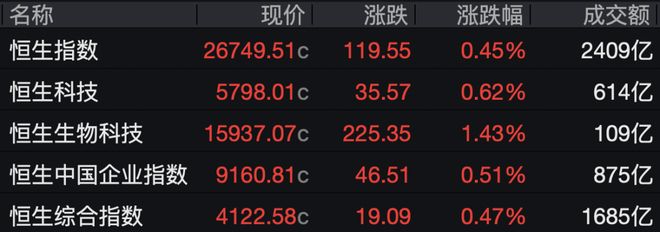
港股通50ETF(159712)盘中涨超1.2%,市场关注流动性及结构分化影响
Sou Hu Cai Jing· 2026-01-14 05:55
Group 1 - The core viewpoint is that Hong Kong stocks are expected to benefit from three driving forces by 2026: international capital, Chinese capital, and the Chinese economy [1] - International capital inflow into Hong Kong stocks will be driven by a weakening US dollar index [1] - The appreciation of the RMB is anticipated to attract Chinese capital that is currently overseas, allowing investors to avoid currency exchange costs and enjoy appreciation benefits [1] Group 2 - The recovery of inflation and potential debt restructuring policies in China are expected to improve the economic fundamentals, leading to a weak recovery in corporate profits [1] - The Hang Seng Technology Index is projected to experience a "Davis Triple Play," indicating favorable odds and a high long-term success rate in AI application sectors [1] - The dividend advantage of Hong Kong stocks, due to tax exemptions for insurance capital, is expected to continue outperforming A-share dividends [1] Group 3 - The innovative pharmaceutical sector and the convergence of price differences between China and the US are expected to create growth opportunities [1] - New consumption trends are likely to evolve from thematic trading to a mainline market, replicating the bull market of core assets [1] - The Hong Kong Stock Connect 50 ETF (159712) tracks the Hong Kong Stock Connect 50 Index (930931), which selects the 50 largest listed companies by market capitalization, covering sectors such as finance, discretionary consumption, and information technology [1]