家电

Search documents
625亿“国补”落地,以旧换新激活新春消费热潮
Sou Hu Cai Jing· 2026-02-16 07:00
Core Viewpoint - The "Lego New Year" special event initiated by the Ministry of Commerce and nine other departments aims to stimulate consumer spending during the Spring Festival, with a total of 625 billion yuan in national subsidies allocated to support this initiative [1][11]. Group 1: Consumer Behavior - Consumers are actively participating in the "trade-in" program, with a significant number opting to replace old appliances. For instance, one consumer saved nearly 4,000 yuan by trading in three old appliances and utilizing various subsidies and discounts [3]. - The trend of "one-stop" services for appliance replacement is gaining popularity, with retailers offering comprehensive services that include free delivery, installation, and removal of old appliances [5]. - The demand for energy-efficient and smart appliances is increasing, with consumers prioritizing these features when making purchases. The new policy supports subsidies for digital and smart products, enhancing their appeal [7]. Group 2: Market Impact - The automotive market is also experiencing a surge in interest, with consumers benefiting from multiple layers of subsidies when purchasing vehicles, leading to significant savings [9]. - The "Lego New Year" initiative is expected to reshape consumer spending patterns, with smart and green products becoming essential items on shopping lists for the Spring Festival [10]. - The initiative includes three major components: trade-in subsidies, a lottery for invoices, and financial support from banks and financial institutions to encourage spending across various sectors [11].

读懂春晚广告位:今年谁是赚钱顶流?
Xin Lang Cai Jing· 2026-02-16 06:27
Core Insights - The evolution of Spring Festival Gala sponsorship reflects the changing landscape of the Chinese economy, transitioning from a production-driven era to a technology-driven era [4] Group 1: Historical Sponsorship Trends - The first sponsor of the Spring Festival Gala in 1984 was Jinan Kangbasi Clock Factory, which exchanged 3,000 clocks for a 10-second ad slot, leading to significant brand recognition [1] - In the 1990s, liquor and pharmaceutical companies emerged as major sponsors, with Kongfu Banquet Wine spending 30.79 million yuan in 1995, resulting in a sales surge to 918 million yuan the following year [1] - From 2003 to 2019, Midea Group dominated the zero-point advertising space, with ad costs rising from millions to tens of millions [1] Group 2: The Rise of Internet Giants - In 2015, Tencent spent 53.03 million yuan for exclusive sponsorship, launching the "Shake to Grab Red Envelopes" feature, which led to over 8.1 billion interactions in one night and significantly increased WeChat payment users [3] - The competition among internet giants intensified, with Alibaba, Baidu, Kuaishou, Douyin, JD, and Pinduoduo all vying for attention through massive red envelope giveaways, focusing on user engagement and data acquisition rather than mere brand exposure [3] Group 3: The Current Landscape and Future Trends - In 2026, traditional internet companies are still present, but new players in hard technology, particularly AI and robotics, are taking center stage [4] - ByteDance's Volcano Engine became the exclusive AI cloud partner for the 2026 gala, showcasing AI's integration into interactive segments, while several top robotics companies also participated [4] - This shift signifies a broader transformation in the economy, aligning with the national strategy of promoting "new quality productivity" [4]
读懂春晚广告位:今年谁是赚钱顶流
21世纪经济报道· 2026-02-16 05:15
Core Viewpoint - The article discusses the evolution of sponsorship in the Chinese New Year Gala, highlighting how it reflects the changing landscape of the Chinese economy and advertising strategies over the years [1][2][3]. Group 1: Historical Sponsorship Trends - The first sponsor of the Spring Festival Gala was Jinan Kangbasi Clock Factory in 1984, which traded 3,000 clocks for a 10-second ad, leading to its rise as a major clock manufacturer [1]. - In the 1990s, brands like Kongfu Banquet Wine and Qinchuan Wine spent heavily on advertising, with Kongfu Banquet Wine's investment of 30.79 million yuan resulting in a revenue spike to 918 million yuan the following year [1]. - From 2003 to 2019, Midea Group dominated the zero-point advertising space, with ad costs increasing from millions to tens of millions [1]. Group 2: Shift to Internet Giants - The 2015 Spring Festival Gala marked a turning point with Tencent's 53.03 million yuan investment for exclusive rights, leading to a surge in WeChat payment registrations [2]. - Following this, various internet companies like Alibaba, Baidu, and Douyin engaged in fierce competition for sponsorship, focusing on user engagement and data acquisition rather than just brand exposure [2]. Group 3: Emergence of Hard Technology - In 2026, the Spring Festival Gala featured new players in the form of AI and robotics, with ByteDance's Volcano Engine as the exclusive AI cloud partner and several robotics companies participating [3]. - This shift signifies a transition from a focus on consumer needs and traffic to a new era emphasizing technological advancement and national competitiveness, aligning with the government's "new quality productivity" strategy [3][4].
美国若打击伊朗,后果更致命!中国能源与经济将迎三重挑战?
Sou Hu Cai Jing· 2026-02-16 04:54
Group 1: Conflict Overview - The Middle East situation has been escalating since 2025, particularly the tensions between the US and Iran, primarily due to Iran's nuclear program, which the US suspects involves secret weapon development [1] - The conflict began with Israel's airstrikes on Iranian nuclear facilities on June 13, 2025, leading to a twelve-day retaliatory war where Iran launched missiles at Israeli cities [1][3] - The US military actions included bombing three major Iranian nuclear facilities on June 21, 2025, which prompted Iran to retaliate with missile strikes on a US airbase in Qatar [3] Group 2: Economic Implications - The military actions have severely disrupted Iran's oil production and exports, impacting China, the largest importer of Iranian oil, which relies heavily on the Strait of Hormuz for energy supplies [7] - China's imports from the Middle East constitute a significant portion of its total imports, with a high dependency on oil transported through the Strait of Hormuz [7][12] - The conflict has led to fluctuations in chemical raw material prices in China, affecting industries such as home appliances and automotive manufacturing [7] Group 3: Geopolitical Dynamics - The US has increased military deployments in the Middle East, including aircraft carriers and strategic bombers, while Iran's parliament discussed the potential closure of the Strait of Hormuz as a countermeasure [5] - European nations have called for dialogue to prevent further escalation, while China has opposed unilateral actions and advocated for negotiations [5][12] - The US has warned countries trading with Iran of potential additional tariffs, complicating China's trade relations with Iran, which involve significant exports of machinery [9][10] Group 4: China's Position and Strategy - China has emphasized the importance of maintaining energy security and has accelerated efforts to diversify energy sources and strengthen reserves in response to potential disruptions [12][16] - China's assistance to Iran has been primarily economic and diplomatic, avoiding military involvement, while maintaining a balanced relationship with Gulf countries [14] - The Chinese government has actively promoted dialogue to resolve disputes and has facilitated talks aimed at restoring negotiations regarding Iran's nuclear issue [16]
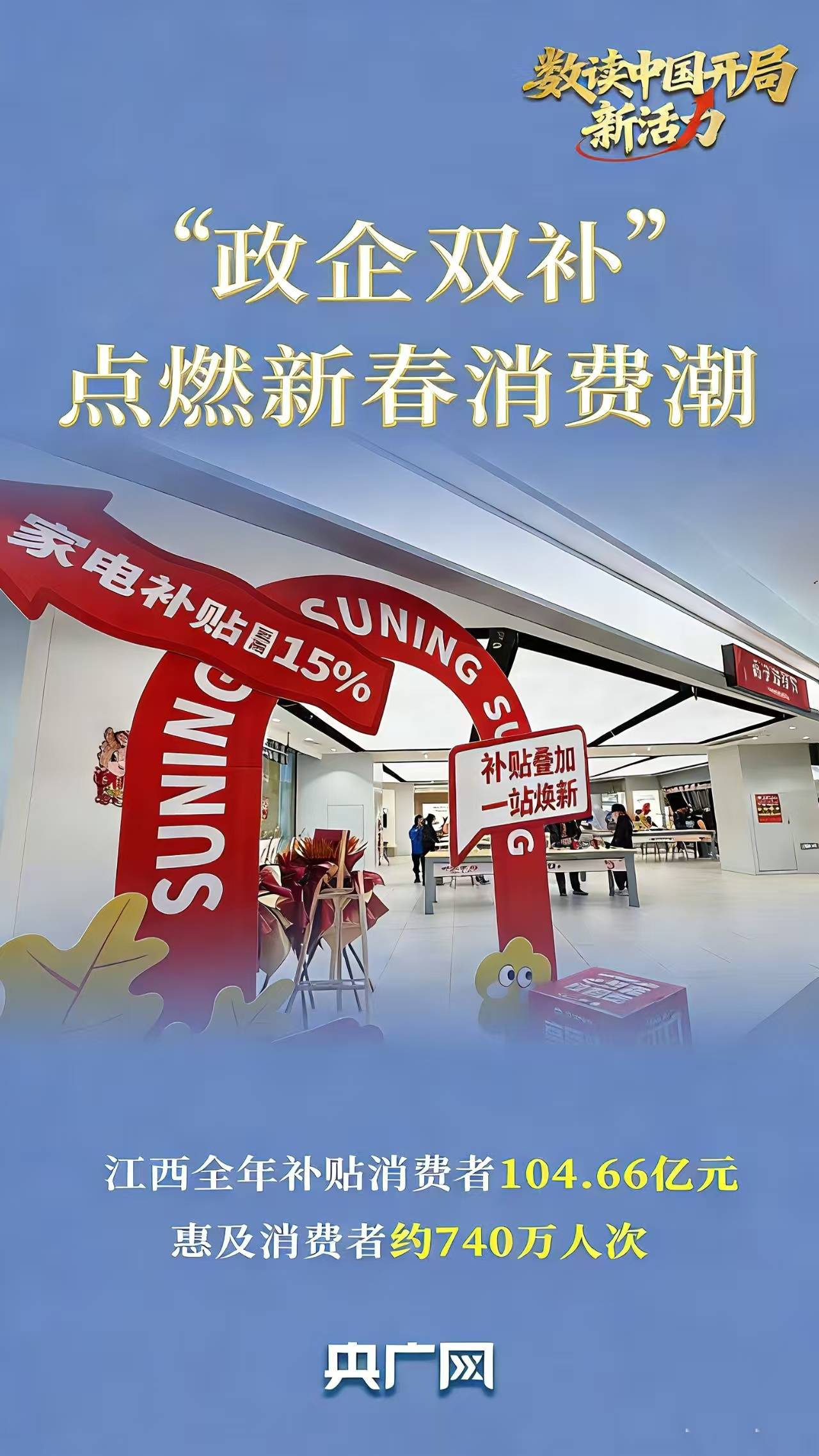
数读中国开局新活力|补贴超百亿元,惠及740万人次!“政企双补” 点燃新春消费潮
Sou Hu Cai Jing· 2026-02-16 03:53
Core Insights - The article highlights the positive impact of the new consumption policy in China, particularly in Jiangxi province, which has led to increased consumer spending and market activity across various sectors, including home appliances, digital products, and automobiles [5][9][12] Group 1: Consumer Behavior - Consumers are actively participating in the "old-for-new" policy, with significant savings reported, such as a consumer saving over 800 yuan on a new washing machine due to government and manufacturer subsidies [5] - The demand for digital products has surged, with approximately 40% of customers benefiting from both national subsidies and trade-in programs, leading to increased sales of mid-to-high-end devices [8] Group 2: Market Dynamics - The new consumption policy has resulted in a notable increase in sales figures, with one store reporting a jump from 30,000-40,000 yuan in monthly sales to nearly 200,000 yuan after the policy's implementation [8] - The automotive sector is also experiencing a boost, with local events showcasing new models and offering substantial discounts, such as up to 26,000 yuan off the purchase price [9] Group 3: Policy Impact - The government has shifted from fixed-amount subsidies to percentage-based subsidies, reducing consumer costs and promoting a shift towards greener and smarter consumption [9] - In 2025, Jiangxi province's retail sales reached 1,342.27 billion yuan, growing by 4.7%, with consumer subsidies totaling 10.466 billion yuan, driving sales of related goods by 74.38 billion yuan [12]
625亿“国补”落地春节市场,以旧换新激活新春消费热潮
Sou Hu Cai Jing· 2026-02-16 02:47
Core Insights - The "Happy Shopping Spring Festival" special event initiated by the Ministry of Commerce and nine other departments has officially started, with 625 billion yuan in national subsidy funds allocated to boost consumer spending during the holiday season [1][3][6] - The event has led to a surge in consumer interest in upgrading household appliances, with many consumers taking advantage of government subsidies and promotional offers to replace old appliances [1][4] Group 1: Consumer Behavior - Consumers are actively participating in the "trade-in" program, with a significant portion of sales coming from customers replacing old appliances, as seen in various regions like Hebei and Shaanxi [1][2] - The trend of upgrading to energy-efficient and smart appliances is becoming a priority for consumers, with many opting for products that meet green and intelligent standards [2][4] Group 2: Government Initiatives - The government is encouraging the trade-in program by providing substantial subsidies and ensuring that consumers can easily claim these benefits [3][6] - The "three major packages" offered to consumers include trade-in subsidies, a lottery for invoices, and financial support from banks and financial institutions to promote spending across various sectors [3][6] Group 3: Market Trends - The demand for smart and energy-efficient products is rising, with items like smart glasses and electric vehicles becoming popular choices among consumers during the Spring Festival [2][4] - The integration of various subsidies (national, factory, and store) is leading to significant savings for consumers, further driving the trend of upgrading household and personal electronics [2][4]
春节消费添利好 哈密以旧换新补贴加码惠民
Sou Hu Cai Jing· 2026-02-16 02:28
Core Insights - The Xinjiang Uygur Autonomous Region is enhancing consumer subsidies for the "old-for-new" policy during the Spring Festival to stimulate consumption and support the retail sector [1][2] - The initiative includes increased subsidies for various consumer goods, particularly in the automotive and home appliance sectors, to make new purchases more affordable for residents [1][2] Group 1: Policy Implementation - The local government is increasing the number of subsidies available for the "old-for-new" program, focusing on essential consumer goods [1][2] - Consumers can access subsidies through the Yunshanfu APP, where they can obtain qualification vouchers for automotive, home appliance, digital, and smart products [1][2] - The policy aims to lower the cost of upgrading household items and vehicles, thereby stimulating the local economy during the festive season [1] Group 2: Business Support - The government encourages automotive and home appliance companies to offer additional discounts and promotions alongside the subsidies [1][2] - The dual benefit of government subsidies and retailer discounts is expected to effectively activate the consumer market during the Spring Festival [1] - The local business bureau is committed to ensuring that the subsidies are delivered efficiently and that consumers are well-informed about the available benefits [2]
大和:重申对中国市场乐观展望 将老铺黄金(06181)与金山云(03896)纳入首选名单
智通财经网· 2026-02-16 01:42
Group 1 - The core viewpoint of the report is a positive outlook for the Chinese stock market in the first half of 2026, driven by potential gradual stimulus measures and strong policy assurances [1] - The report suggests that while large-scale stimulus policies are unlikely, incremental stimulus measures could boost investor sentiment in the short term [1] - The preferred stocks highlighted by the report include China Resources Land (01109) and Midea Group (000333.SZ), which are expected to benefit from the improved market conditions [1] Group 2 - The report includes Old Puhua Gold (06181) and Kingsoft Cloud (03896) in its preferred list due to strong downstream demand leading to price increase expectations [1]


读懂春晚广告位:今年谁是赚钱顶流?|财经早察
2 1 Shi Ji Jing Ji Bao Dao· 2026-02-15 23:05
Core Insights - The evolution of sponsorship in the Spring Festival Gala reflects the changing landscape of the Chinese economy, transitioning from a production-driven era to a technology-driven era [4] Group 1: Historical Sponsorship Trends - The first sponsor of the Spring Festival Gala in 1984 was Jinan Kangbasi Clock Factory, which used 3,000 clocks as payment for a 10-second ad, leading to significant brand recognition and production growth [1] - In the 1990s, liquor and pharmaceutical companies emerged as major sponsors, with Kongfu Banquet Wine spending 30.79 million yuan in 1995, resulting in a sales surge to 918 million yuan the following year [1] - From 2003 to 2019, Midea Group dominated the zero-point advertising space, with ad costs rising from millions to tens of millions [1] Group 2: The Rise of Internet Giants - In 2015, Tencent spent 53.03 million yuan for exclusive sponsorship, launching the "Shake to Grab Red Envelopes" feature, which led to over 8.1 billion interactions in one night and significantly increased WeChat payment adoption [3] - The competition among internet giants intensified, with Alibaba, Baidu, Kuaishou, Douyin, JD, and Pinduoduo all vying for attention through massive red envelope giveaways, focusing on user engagement and data acquisition rather than mere brand exposure [3] Group 3: The Current Landscape and Future Trends - In 2026, traditional internet companies are still present, but new players in hard technology, particularly AI and robotics, are taking center stage [4] - ByteDance's Volcano Engine became the exclusive AI cloud partner for the 2026 Spring Festival Gala, showcasing AI's integration into interactive experiences, while several top robotics companies also participated [4] - This shift signifies a broader transition in the economy towards a technology-driven era, aligning with the national strategy of promoting "new quality productivity" [4]



以旧换新购年货 乡村消费再升级
Sou Hu Cai Jing· 2026-02-15 13:18
Group 1 - The core viewpoint of the news is that the upgraded "National Subsidy" policy has been fully implemented, enhancing rural consumption during the Spring Festival [1] - The implementation of the "National Subsidy" policy has led to a significant increase in orders for home appliances, particularly in rural areas [3] - There has been a notable surge in sales of major home appliances, with sales of air conditioning sets and wall-mounted washing machines increasing by over 600% year-on-year [5] Group 2 - The logistics have improved, resulting in a higher volume of orders for trade-in products at the beginning of the year [3] - Remote rural areas in provinces like Heilongjiang, Hunan, and Guizhou have seen a substantial increase in orders for subsidized products such as televisions, air conditioners, and refrigerators [5]