
农业等

Search documents
一批重要国家标准发布 涉及新兴领域、交通和绿色低碳等方面
Zhong Guo Xin Wen Wang· 2025-11-07 06:23
Core Points - A batch of important national standards has been approved and released by the State Administration for Market Regulation, covering emerging fields, transportation, green low-carbon initiatives, safety production, and trade services [1][2][3][4] Emerging Fields - 167 national standards related to rare earth permanent magnet materials, fine ceramics, and carbon fiber composite materials have been published to promote the iteration and transformation of new material technologies [1] - 4 national standards concerning intelligent computing have been released, focusing on terminology, reference architecture, and testing methods to support industrial upgrades through artificial intelligence [1] - 14 national standards for semiconductor equipment and materials have been introduced, addressing electronic components and integrated circuit packaging testing to aid the healthy development of the semiconductor industry [1] Transportation and Green Low-Carbon - 3 national standards for urban rail transit vehicle alarm information and signal systems have been published to enhance public rail transport safety [2] - 30 national standards related to unmanned aerial vehicle registration, road traffic signs, and gas vehicles have been released to support safe transportation development [2] - 22 national standards for kitchen waste treatment equipment, waste incineration equipment, and greenhouse gas management systems have been introduced to improve the green low-carbon standard system [2] Safety Production - 22 national standards for gas transmission and distribution equipment, pressure pipelines, and small amusement facilities have been published to strengthen the safety and stability of infrastructure and public places [2] - Mandatory national standards for fireworks safety and quality have been released to enhance safety performance requirements [2] - 11 mandatory national standards for key fire-fighting products have been updated to improve performance and reliability through enhanced quality control [2] Trade Services - 3 national standards for cross-border e-commerce and e-commerce platform transaction information have been published to guide risk prevention and independent site construction [3] - 5 national standards for logistics documents and multi-modal transport have been introduced to enhance the standardization of logistics services [3] - National standards for the Chinese translation of geographical names from Sweden, Finland, Norway, Denmark, and Thailand have been released to support trade and cultural exchanges with Nordic and ASEAN countries [3] Agriculture and Rural Development - 30 national standards for feed, pesticides, animal health, fertilizers, and soil conditioners have been published to ensure agricultural production safety [3] - 46 national standards for grain, tobacco, and biomass materials have been introduced to support high-quality agricultural product supply [3] - 7 national standards for water-saving irrigation and agricultural product trading have been released to enhance agricultural production standardization [3] Daily Life - 10 national standards for smart home appliances and their materials have been published to promote the intelligence, greenness, and safety of home appliances [3] - 13 national standards for textiles and footwear have been introduced to guide production and enhance consumer experience [3] - 6 national standards for medical health, including iodine deficiency disease elimination, have been released to strengthen healthcare service guarantees [3] Additional Standards - The State Administration for Market Regulation has also released national standards in areas such as intelligent manufacturing, semiconductor equipment, and enterprise safety management [4]
兴业证券:明年哪些行业有望景气加速?哪些困境反转?
智通财经网· 2025-11-06 13:16
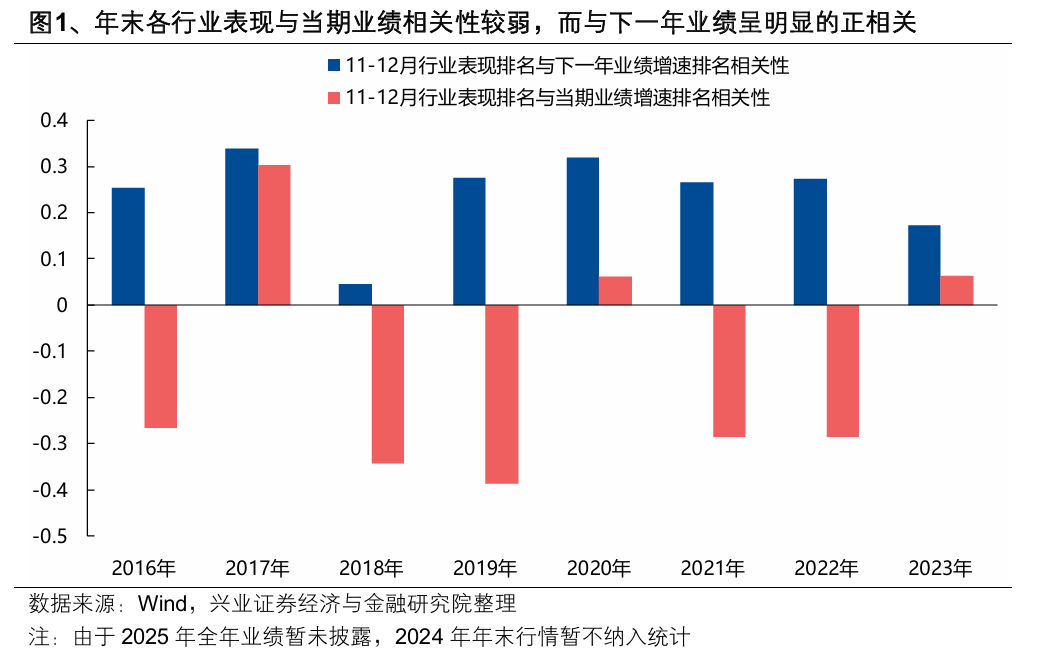
Core Viewpoint - The report from Industrial Securities indicates that as the year-end approaches, market participants are increasingly focused on next year's economic outlook, with current economic conditions having a diminished impact on stock prices. Historical analysis since 2016 shows a strong positive correlation between industry performance rankings in the year-end market and their earnings growth in the following year, while the correlation with current earnings growth is weak or even negative [1]. Group 1: High Prosperity Industries - High prosperity industries for the next year, expected to have a net profit growth rate of over 30%, include AI hardware (communication equipment, consumer electronics, semiconductors), new energy (batteries, wind power equipment), military industry (ground armaments), and IT services [4]. - Other high prosperity sectors include electronics (components, optical optoelectronics), downstream AI (gaming, software development), automotive (passenger and commercial vehicles), military (naval and aerospace equipment, military electronics), automation equipment, and photovoltaic equipment [4]. - Industries expected to see a net profit growth rate of 10%-30% with improving economic conditions include pharmaceuticals (chemical pharmaceuticals, medical devices, biological products), downstream AI (digital media, computer equipment), machinery (engineering machinery, specialized equipment, general equipment), and new energy (grid equipment, motors) [4]. Group 2: Cyclical Industries - Cyclical industries expected to have high prosperity next year, with a net profit growth rate of over 30%, include aviation airports, building materials (glass fiber, plastics, non-metallic materials), new metal materials, and agriculture (planting and breeding) [6]. - Other cyclical sectors anticipated to see high prosperity include energy metals, chemical fibers, rubber, retail, and leisure foods [7]. - Industries projected to achieve a net profit growth rate of 10%-30% with improving economic conditions include new consumption (beverages, dairy products, accessories, entertainment products, cosmetics, personal care products, small home appliances), service consumption (education, hotel catering, tourism), agriculture (feed), chemicals (chemical raw materials, chemical products), special steel, and renovation materials [7].


十五五规划建议全文
Sou Hu Cai Jing· 2025-11-04 04:35
Core Points - The "14th Five-Year Plan" has achieved significant accomplishments despite complex international and domestic challenges, laying a solid foundation for the "15th Five-Year Plan" [6][7] - The "15th Five-Year Plan" emphasizes high-quality development, innovation, and the establishment of a modern industrial system, focusing on intelligent and green upgrades of traditional industries and the growth of strategic emerging industries [1][18] - The plan aims to expand domestic demand and build a strong domestic market, with a focus on boosting consumption and effective investment [1][26] Group 1 - The "15th Five-Year Plan" is a critical period for achieving socialist modernization, requiring efforts to consolidate advantages and overcome bottlenecks [7][8] - The plan highlights the importance of a modern industrial system as the material and technical foundation for Chinese-style modernization, emphasizing the need for intelligent, green, and integrated development [18] - The plan outlines the necessity of enhancing the national innovation system and improving self-reliance in technology to drive new quality productivity [22][23] Group 2 - The plan stresses the importance of expanding domestic demand as a strategic foundation for building a new development pattern, focusing on consumer spending and effective investment [26][27] - It emphasizes the need for a high-level socialist market economy system to ensure sustainable high-quality development [29] - The plan includes measures to enhance the quality of life for citizens, improve income distribution, and strengthen social security systems [2][10] Group 3 - The plan aims to promote green development and national security, with specific targets for carbon peak and the establishment of a new energy system [2][17] - It outlines the importance of regional coordinated development and optimizing the economic layout to enhance overall national competitiveness [41][42] - The plan includes initiatives to foster cultural innovation and development, enhancing the influence of Chinese culture globally [45][47]

日照外事赋能“出海加速度”
Da Zhong Ri Bao· 2025-11-04 02:49
Group 1 - The APEC Business Travel Card is enhancing the ability of companies in Rizhao to expand into international markets, particularly in Asia-Pacific, with significant increases in orders reported by local businesses [1][2] - The card simplifies visa processes, reducing project connection times by 40% and lowering new customer acquisition costs by 25%, demonstrating its effectiveness in facilitating business operations [1] - The number of APEC Business Travel Cards issued in Rizhao has increased by 50% compared to the previous year, indicating a growing recognition of its benefits among local enterprises [1] Group 2 - Rizhao's foreign affairs office is extending its support to local enterprises throughout the entire process of going overseas, including training on project approvals and visa applications for international projects [2] - The office is fostering partnerships with cities in Europe, such as Nîmes in France and Kovačica in Serbia, to create a cooperative network that enhances business opportunities for local companies [3] - Collaborative initiatives are being organized to connect local businesses with international markets, including participation in agricultural cooperation dialogues with the UK and discussions with South Korean representatives [3] Group 3 - The Rizhao foreign affairs office is exploring new pathways for integrating foreign affairs resources with local industries, such as tourism, tea production, and low-altitude economy projects [4] - Joint efforts with tourism departments aim to attract international visitors, while collaborations in the tea industry focus on production and product development with Japanese and Korean cities [4] - Future plans include enhancing the APEC Business Travel Card's accessibility and expanding the application of "foreign affairs +" to support local economic development [4]
数说中国|从“十四五”成就看“十五五”经济社会发展主要目标
Xin Hua She· 2025-10-24 05:47
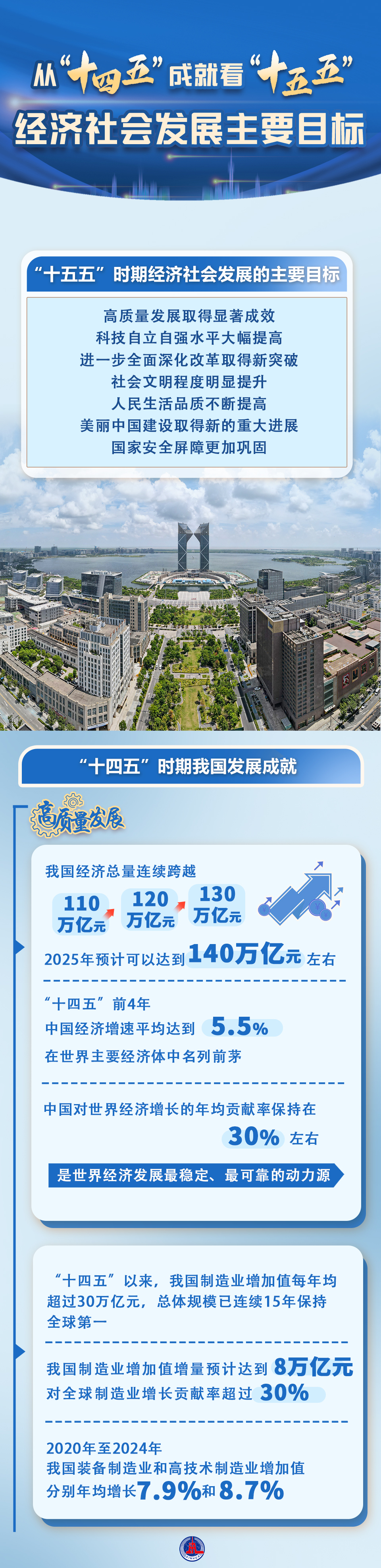
Core Points - The article highlights the significant achievements and goals of China's economic and social development during the "14th Five-Year Plan" period, emphasizing high-quality development and technological self-reliance [2][8][40] Economic Growth - China's GDP is projected to reach approximately 140 trillion yuan by 2025, with an average growth rate of 5.5% during the first four years of the "14th Five-Year Plan" [6] - The country has maintained a contribution rate of around 30% to global economic growth, positioning itself as a stable and reliable driver of world economic development [6] Manufacturing Sector - The added value of China's manufacturing industry has consistently exceeded 30 trillion yuan annually, maintaining its status as the world's largest manufacturing sector for 15 consecutive years [7] - The growth rates for equipment manufacturing and high-tech manufacturing sectors are projected at 9% and 8.7% respectively from 2020 to 2024 [7] Domestic Consumption - From 2021 to 2024, domestic demand contributed an average of 86.8% to economic growth, with final consumption expenditure accounting for 59.9% [19][20] - China remains the second-largest consumer market globally and the largest online retail market [20] Technological Innovation - The number of global top 100 technology innovation clusters has reached a leading position, with over 460,000 high-tech enterprises [13] - R&D expenditure is expected to increase by 12 billion yuan, with the intensity of R&D investment rising to 2.68%, nearing the OECD average [14] Social Development - By 2024, the per capita disposable income of rural residents is projected to reach 23,119 yuan, reflecting a steady increase in farmers' income [22] - The urban employment rate remains stable, with over 12 million new jobs created annually [34] Environmental Progress - Forest coverage has increased to over 25%, contributing significantly to global greening efforts [38] - The proportion of good water quality in surface water monitoring points is 90.4%, with air quality maintaining a favorable level [38]
【环球财经】土耳其公布三年经济规划 聚焦平衡增长与稳物价
Xin Hua Cai Jing· 2025-10-17 14:29
Core Points - Turkey's government has announced an economic plan for 2026-2028, focusing on balanced growth, price stability, resilience, and sustainable prosperity [1][3] - The GDP growth targets for the next three years are set at 3.8% for 2026, 4.3% for 2027, and 5% for 2028, with inflation expected to decrease from 16% in 2026 to 8% in 2028 [1][2] - The current account deficit as a percentage of GDP is projected to decline from 1.3% in 2026 to 1% in 2028, indicating a policy direction towards strengthening external balance [1] Economic Indicators - The economic growth rate for 2025 is estimated at 3.3%, with an inflation rate of 28.5% and a current account deficit of approximately 1.4% of GDP [1] - Tourism revenue is expected to rise from $64 billion in 2023 to $75 billion by 2028, while exports are projected to increase from $273.8 billion to $308.5 billion [1] Structural Reforms - The plan outlines key structural reforms, including digital transformation, development of high-value-added industries, green economy initiatives, and improved agricultural productivity [2] - Six financial and price stability reform measures will be implemented to create a more robust financial system, aligning price formation mechanisms with inflation levels [2] Inflation Control - The Turkish Vice President emphasized that combating inflation remains a primary goal, with significant progress noted since the implementation of tight monetary and fiscal policies [2] - The annual inflation rate has decreased by 42.5% since June 2024, with the latest data showing a decline to 32.95% in August, marking the 15th consecutive month of decline [2]
中信期货晨报:国内商品期货多数下跌,贵金属普遍上涨-20251014
Zhong Xin Qi Huo· 2025-10-14 02:19
1. Report Industry Investment Rating - The report does not explicitly mention the industry investment rating. 2. Core Viewpoints of the Report - This week, there is a risk of increased volatility in global major asset classes. Investors are advised to maintain a strategic allocation to precious metals such as gold and be relatively cautious about risk assets such as equities next week. In the medium - term of the fourth quarter, the basic allocation view of equities > commodities > bonds is still held, and attention can be paid to potential buying opportunities for equity assets after the turmoil subsides [6]. 3. Summary by Relevant Catalogs 3.1 Macro Highlights - **Overseas Macro**: This week, focus on the new tariff threats from Trump and the marginal changes in the US government shutdown. There is a risk of further escalation of conflicts before the APEC meeting at the end of October. If the US government shutdown exceeds 30 days, it will increase the recession risk [6]. - **Domestic Macro**: China will gradually enter the period of focusing on the "15th Five - Year Plan" and tracking incremental policies. The Fourth Plenary Session of the 20th Central Committee will be held from October 20th to 23rd, and the market may start to pay attention to medium - and long - term marginal changes in the next five years. The progress and effectiveness of a batch of incremental policies such as 500 billion new policy - based financial instruments are also worth tracking [6]. - **Asset Views**: Maintain a strategic allocation to precious metals such as gold. Be cautious about risk assets such as equities next week. In the fourth - quarter medium - term, hold the view of equities > commodities > bonds and watch for buying opportunities in equity assets after the turmoil [6]. 3.2 Viewpoint Highlights 3.2.1 Financial Sector - **Stock Index Futures**: Catalyzed by technology events, the growth style is active. With crowded funds in small - cap stocks, the short - term trend is expected to be a volatile upward movement [7]. - **Stock Index Options**: The overall market trading volume has slightly declined. With the risk of insufficient liquidity in the options market, the short - term trend is expected to be volatile [7]. - **Treasury Bond Futures**: The bond market continues to be weak. Affected by factors such as policy, fundamental repair, and tariffs, the short - term trend is expected to be volatile [7]. 3.2.2 Precious Metals Sector - **Gold/Silver**: Driven by dovish expectations, with the restart of the US interest - rate cut cycle in September and increased risks to the Fed's independence, the short - term trend is expected to be a volatile upward movement [7]. 3.2.3 Shipping Sector - **Container Shipping to Europe**: As the peak season in the third quarter fades, the load is under pressure and there is a lack of upward momentum. Pay attention to the rate of freight decline in September, and the short - term trend is expected to be volatile [7]. 3.2.4 Black Building Materials Sector - **Steel Products**: Poor demand and policy disturbances. The short - term trend is expected to be volatile, and factors such as special bond issuance progress, steel exports, and iron - water production need to be monitored [7]. - **Iron Ore**: The fundamentals are relatively stable, but macro disturbances are increasing. The short - term trend is expected to be volatile, and attention should be paid to factors such as overseas mine production and shipment, domestic iron - water production, and policy dynamics [7]. - **Coke**: The first round of price increases has been implemented, and the market is temporarily stable. The short - term trend is expected to be volatile, and factors such as steel - mill production, coking costs, and macro sentiment need to be watched [7]. - **Coking Coal**: Supply decreased during the holiday, and downstream replenishment slowed down. The short - term trend is expected to be volatile, and factors such as steel - mill production, coal - mine safety inspections, and macro sentiment should be monitored [7]. - **Silicon Iron**: Supply pressure is gradually accumulating, and cost support is strong. The short - term trend is expected to be volatile, and factors such as raw material costs and steel procurement need to be considered [7]. - **Manganese Silicon**: Cost support still exists, but supply and demand are loose, and prices are under pressure. The short - term trend is expected to be volatile, and factors such as cost prices and foreign quotes should be watched [7]. - **Glass**: Supply concerns have eased, and intermediate inventories are high. The short - term trend is expected to be volatile, and spot production and sales need to be monitored [7]. - **Soda Ash**: Production has slightly decreased, and inventories are continuously being transferred. The short - term trend is expected to be volatile, and soda - ash inventories should be watched [7]. 3.2.5 Non - ferrous Metals and New Materials Sector - **Copper**: The supply - side contraction logic continues to ferment, and copper prices continue to be strong. The short - term trend is expected to be a volatile upward movement, and factors such as supply disturbances, domestic policies, and Fed policies need to be monitored [7]. - **Alumina**: The fundamentals are still weak, and the upward price is under pressure. The short - term trend is expected to be volatile, and factors such as ore resumption and electrolytic - aluminum resumption need to be watched [7]. - **Aluminum**: Boosted by macro sentiment, aluminum prices are volatile and strong. The short - term trend is expected to be volatile, and factors such as macro risks and supply disturbances need to be monitored [7]. - **Zinc**: Inventory has returned to accumulation, and zinc prices rebound with non - ferrous metals. The short - term trend is expected to be volatile, and factors such as macro risks and zinc - ore supply need to be watched [7]. - **Lead**: With supply - side disturbances and slow battery exports, lead prices rebound with non - ferrous metals. The short - term trend is expected to be volatile, and factors such as supply - side disturbances and battery exports need to be monitored [7]. - **Nickel**: The expectation of loose supply and demand remains unchanged, and RKAB quota progress is fluctuating. Nickel prices are widely volatile. The short - term trend is expected to be volatile, and factors such as macro and geopolitical changes and Indonesian policies need to be watched [7]. - **Stainless Steel**: Driven by the rise in nickel prices, stainless steel prices are volatile and rising. The short - term trend is expected to be volatile, and factors such as Indonesian policies and demand growth need to be monitored [7]. - **Tin**: Supply disturbances continue, and tin prices are volatile at high levels. The short - term trend is expected to be volatile, and factors such as the resumption of production in Wa State and demand improvement need to be watched [7]. - **Industrial Silicon**: The restart rhythm of coal and northwest production is fluctuating, and industrial - silicon prices are volatile. The short - term trend is expected to be volatile, and factors such as supply - side over - reduction and photovoltaic installation need to be monitored [7]. - **Lithium Carbonate**: The expectation of production suspension has ended, and lithium - carbonate prices are under pressure and volatile. The short - term trend is expected to be volatile, and factors such as demand and supply disturbances need to be watched [7]. 3.2.6 Energy and Chemical Sector - **Crude Oil**: Affected by macro disturbances, the fundamentals are under continuous pressure. The short - term trend is expected to be a volatile downward movement, and factors such as OPEC+ production policies and Middle - East geopolitical situations need to be monitored [8]. - **LPG**: Supply is still in excess, and the low - valuation situation is difficult to change. The short - term trend is expected to be a volatile downward movement, and factors such as crude - oil and overseas propane costs need to be watched [8]. - **Asphalt**: Spot prices are continuously falling, and asphalt futures prices are also falling. The short - term trend is expected to be a downward movement, and factors such as sanctions and supply disturbances need to be monitored [8]. - **High - Sulfur Fuel Oil**: With the expectation of increased production and geopolitical cooling, high - sulfur fuel - oil futures prices are falling. The short - term trend is expected to be volatile, and factors such as geopolitics and crude - oil prices need to be watched [8]. - **Low - Sulfur Fuel Oil**: Low - sulfur fuel oil follows the decline of crude oil. The short - term trend is expected to be volatile, and crude - oil prices need to be monitored [8]. - **Methanol**: Affected by olefins but with Iranian disturbances still existing, pay attention to arbitrage opportunities between methanol and olefins. The short - term trend is expected to be volatile, and factors such as macro energy and upstream - downstream device dynamics need to be watched [8]. - **Urea**: After the holiday, there are insufficient positive factors, and the short - term weakness continues. The short - term trend is expected to be a volatile downward movement, and factors such as the improvement of Sino - Indian relations and export expectations need to be monitored [8]. - **Ethylene Glycol**: The fundamentals have weak support and the macro sentiment is pessimistic, so prices are under pressure. The short - term trend is expected to be a volatile downward movement, and factors such as coal and oil prices, port inventory rhythm, and Sino - US trade frictions need to be watched [8]. - **PX**: Cost collapse drags down the valuation of chemical products. In a situation where supply and demand are both strong, the benefits are mainly volatile. The short - term trend is expected to be a volatile downward movement, and factors such as large - scale fluctuations in crude oil, macro abnormalities, and PTA device restarts need to be monitored [8]. - **PTA**: The supply - demand expectation has slightly improved, but costs and macro sentiment have a significant drag, so prices are under pressure. The short - term trend is expected to be a volatile downward movement, and factors such as large - scale fluctuations in crude oil, macro abnormalities, and the peak - season performance need to be watched [8]. - **Short - Fiber**: Costs drag down the absolute price, but the processing fee remains stable under stable supply and demand. The short - term trend is expected to be a volatile downward movement, and factors such as downstream yarn - mill purchasing rhythm and peak - season demand need to be monitored [8]. - **Bottle Chip**: The raw - material cost support is weak, and the low - level speculative replenishment demand supports the bottle - chip processing - fee profit. The short - term trend is expected to be a volatile downward movement, and factors such as bottle - chip enterprise production - reduction target implementation and terminal demand need to be watched [8]. - **Propylene**: Cost decline and the resurgence of tariff games lead to a weak and volatile PL. The short - term trend is expected to be a volatile downward movement, and factors such as oil prices and domestic macro factors need to be monitored [8]. - **PP**: The raw - material end collapses and there are tariff disturbances, so PP prices are falling. The short - term trend is expected to be a volatile downward movement, and factors such as oil prices and domestic and foreign macro factors need to be watched [8]. - **Plastic**: Oil prices have significantly declined, and plastic prices are weak and volatile. The short - term trend is expected to be volatile, and factors such as oil prices and domestic and foreign macro factors need to be monitored [8]. - **Styrene**: Inventory pressure is still high, and styrene prices are weak and volatile. The short - term trend is expected to be a volatile downward movement, and factors such as oil prices, macro policies, and device dynamics need to be watched [8]. - **PVC**: There is still fundamental pressure, and PVC prices are volatile. The short - term trend is expected to be volatile, and factors such as expectations, costs, and supply need to be monitored [8]. - **Caustic Soda**: The spot price is stable, and the futures price can be stopped for profit at low levels. The short - term trend is expected to be volatile, and factors such as market sentiment, production start - up, and demand need to be watched [8]. 3.2.7 Agricultural Sector - **Oils and Fats**: Pay attention to the effectiveness of the lower - level technical support. The short - term trend is expected to be volatile, and factors such as US soybean weather and Malaysian palm oil production and demand data need to be monitored [8]. - **Protein Meal**: The sentiment boost is limited, and the market continues to be volatile at a low level. The short - term trend is expected to be volatile, and factors such as weather, domestic demand, and trade wars need to be watched [8]. - **Corn/Starch**: The pressure of selling new grain is coming, and the spot price drives the futures price to decline significantly. The short - term trend is expected to be a volatile downward movement, and factors such as demand, macro factors, and weather need to be monitored [8]. - **Pig**: The planned October slaughter volume is increasing, and pig prices are under pressure. The short - term trend is expected to be a volatile downward movement, and factors such as breeding sentiment, epidemics, and policies need to be watched [8]. - **Natural Rubber**: Although the negative factors have not been realized, the market sentiment remains weak. The short - term trend is expected to be volatile, and factors such as production - area weather, raw - material prices, and macro changes need to be monitored [8]. - **Synthetic Rubber**: The range - bound pattern remains unchanged. The short - term trend is expected to be volatile, and factors such as large - scale fluctuations in crude oil need to be watched [8]. - **Cotton**: The decline of cotton prices has slowed down. Pay attention to the purchase price. The short - term trend is expected to be volatile, and factors such as demand and inventory need to be monitored [8]. - **Sugar**: Both domestic and foreign sugar prices are weak. The short - term trend is expected to be volatile, and factors such as imports and Brazilian production need to be watched [8]. - **Pulp**: The game of the virtual - to - real ratio may cause intraday fluctuations, but the effectiveness needs to be observed. The short - term trend is expected to be a volatile downward movement, and factors such as macro - economic changes and US - dollar - denominated quotes need to be monitored [8]. - **Double - Glued Paper**: The spot price is stable, and the futures price is volatile. The short - term trend is expected to be volatile, and factors such as production and sales, education policies, and paper - mill production start - up need to be watched [8].
中信期货晨报:国内商品期货多数上涨,航运期货表现强劲-20250926
Zhong Xin Qi Huo· 2025-09-26 01:25
1. Report Industry Investment Rating No relevant content provided. 2. Core Views of the Report - After the overseas Federal Reserve's decision, a new round of global liquidity easing is expected, opening policy space for China's reserve - requirement ratio and interest - rate cuts. In the mid - term from the fourth quarter to the first half of next year, the expected order of asset performance is equities > commodities > bonds. In the short - term of the fourth quarter, the stock market is expected to be volatile, domestic commodities depend on policies, overseas commodities like gold and non - ferrous metals are favored, the weak US dollar trend continues but with a slower slope. The value of bond allocation increases after the rise of domestic interest rates, and it should be balanced with equities in the fourth quarter. Gold has long - term strategic allocation value, and the main logic in the fourth quarter is the interest - rate cut [6]. 3. Summary by Relevant Catalogs 3.1 Macro Highlights - **Overseas Macro**: After the Federal Reserve's decision, a new round of global liquidity easing is coming, providing policy space for China's reserve - requirement ratio and interest - rate cuts. The next FOMC meeting is on October 29, and the market fully expects a 25 - bps rate cut. Attention should be paid to the US September non - farm payrolls and inflation data to be released in early - mid October. Historically, it takes about 2 - 3 months for the Fed's preventive rate cuts to impact the US real economy [6]. - **Domestic Macro**: In the third quarter, China's economic growth slowed down. The funds of existing pro - growth policies are expected to be in place faster, and attention should be paid to the implementation of 500 billion yuan of financial policy tools and new directions in the "14th Five - Year Plan". Investment data in July - August slowed down significantly, especially infrastructure investment. There is a risk of insufficient infrastructure funds in the fourth quarter. However, the expected GDP growth rates in the third and fourth quarters are 4.9% and 4.7% respectively, and the annual 5% target can still be achieved. If investment and exports continue to decline in September, the probability of the implementation of existing funds and incremental policies in the fourth quarter will increase [6]. - **Asset Views**: After the decisions at home and abroad, risk assets may experience a short - term adjustment. In the next 1 - 2 quarters, the global loose liquidity and economic recovery expectations driven by fiscal leverage will support risk assets. In the mid - term from the fourth quarter to the first half of next year, equities > commodities > bonds. In the short - term of the fourth quarter, the stock market is expected to be volatile, domestic commodities depend on policies, overseas commodities like gold and non - ferrous metals are favored, the weak US dollar trend continues but with a slower slope. The value of bond allocation increases after the rise of domestic interest rates, and it should be balanced with equities in the fourth quarter. Gold has long - term strategic allocation value, and the main logic in the fourth quarter is the interest - rate cut [6]. 3.2 View Highlights 3.2.1 Financial Sector - **Stock Index Futures**: Catalyzed by technology events, the growth style is active. The short - term judgment is volatile upward, with the focus on the over - crowdedness of small - cap funds [7]. - **Stock Index Options**: The overall market trading volume declined slightly. The short - term judgment is volatile, with the focus on the insufficient liquidity in the options market [7]. - **Treasury Bond Futures**: The bond market continues to be weak. The short - term judgment is volatile, with the focus on policy surprises, better - than - expected fundamental recovery, and tariff factors [7]. 3.2.2 Precious Metals - **Gold/Silver**: In September, the US interest - rate cut cycle restarted, and the risk of the Fed's loss of independence increased. The short - term judgment is volatile upward, with the focus on the US fundamental performance, the Fed's monetary policy, and the global equity market trends [7]. 3.2.3 Shipping - **Container Shipping to Europe**: In the third quarter, the peak season turned to the off - season, and there is a lack of upward drivers. The short - term judgment is volatile, with the focus on the rate of freight decline in September, the changes in the market, and policy dynamics [7]. 3.2.4 Black Building Materials - **Steel and Iron Ore**: The effect of "anti - involution" still exists, the steel mills' restocking is obvious, and the prices are volatile. The short - term judgment is volatile, with the focus on the progress of special bond issuance, steel exports, iron - water production, overseas mine production and shipment, domestic iron - water production, weather factors, and port ore inventory changes [7]. - **Coke**: The cost support is strong, and the price is volatile. The short - term judgment is volatile, with the focus on steel mill production, coking costs, and macro sentiment [7]. - **Coking Coal**: The supply is stable, and the spot price is rising. The short - term judgment is volatile, with the focus on steel mill production, coal mine safety inspections, and macro sentiment [7]. - **Silicon Iron**: Supported by the peak - season expectation, the futures price recovers from the low level. The short - term judgment is volatile, with the focus on raw material costs and steel procurement [7]. - **Manganese Silicon**: The peak - season expectation is positive, and the price is volatile upward. The short - term judgment is volatile, with the focus on cost prices and overseas quotes [7]. - **Glass**: Driven by the "anti - involution" sentiment, the spot price will rise significantly. The short - term judgment is volatile, with the focus on spot sales [7]. - **Soda Ash**: The supply remains high, and the price is driven by the glass market. The short - term judgment is volatile, with the focus on soda ash inventory [7]. 3.2.5 Non - Ferrous Metals and New Materials - **Copper and Alumina**: There are new disturbances in copper ore supply, and the copper price is volatile upward. The alumina price is under pressure due to weak spot and inventory accumulation. The short - term judgment for copper is volatile upward and for alumina is volatile, with different focus points such as supply disturbances, domestic policies, Fed policies, and demand recovery [7]. - **Aluminum**: The inventory continues to accumulate, and the price is volatile. The short - term judgment is volatile, with the focus on macro risks, supply disturbances, and demand [7]. - **Zinc**: The inventory continues to accumulate, and the price is volatile. The short - term judgment is volatile, with the focus on macro changes and zinc ore supply [7]. - **Lead**: The supply of recycled lead decreases, and the price is volatile upward. The short - term judgment is volatile upward, with the focus on supply disturbances and battery exports [7]. - **Nickel**: Indonesia's crackdown on illegal mining makes the nickel price highly volatile. The short - term judgment is volatile, with the focus on macro and geopolitical changes, Indonesian policies, and supply [7]. - **Stainless Steel**: Supported by costs, the price rises significantly. The short - term judgment is volatile, with the focus on Indonesian policies and demand [7]. - **Tin**: The resumption of production in Wa State is slower than expected, and the price is high and volatile. The short - term judgment is volatile, with the focus on the resumption of production in Wa State and demand improvement [7]. - **Industrial Silicon**: The supply continues to increase, suppressing the price. The short - term judgment is volatile, with the focus on supply reduction and photovoltaic installation [7]. - **Lithium Carbonate**: The fundamental driving force is weak, and the price is volatile. The short - term judgment is volatile, with the focus on demand, supply, and new technologies [7]. 3.2.6 Energy and Chemicals - **Crude Oil**: Geopolitical concerns re - emerge, and supply pressure continues. The short - term judgment is volatile downward, with the focus on OPEC+ production policies and the Middle East geopolitical situation [9]. - **LPG**: The chemical demand weakens, and the price is weak. The short - term judgment is volatile, with the focus on cost factors such as crude oil and overseas propane [9]. - **Asphalt**: The asphalt - fuel oil spread declines rapidly. The short - term judgment is volatile downward, with the focus on sanctions and supply disturbances [9]. - **High - Sulfur Fuel Oil**: Driven by geopolitical factors, the price rises. The short - term judgment is volatile, with the focus on geopolitics and crude oil prices [9]. - **Low - Sulfur Fuel Oil**: It follows the upward trend of crude oil. The short - term judgment is volatile, with the focus on crude oil prices [9]. - **Methanol**: Affected by olefins and port inventory, the contradiction between near - and far - term contracts is large. The short - term judgment is volatile, with the focus on macro - energy and upstream - downstream device dynamics [9]. - **Urea**: The price is under cost pressure, and there is a risk of over - reaction. The short - term judgment is volatile, with the focus on export policies and the seventh Indian tender [9]. - **Ethylene Glycol**: The market sentiment is affected by long - term inventory accumulation. The short - term judgment is volatile, with the focus on coal and oil prices, port inventory, and device implementation [9]. - **PX**: Due to postponed device maintenance and capacity expansion, the supply - demand situation weakens. The short - term judgment is volatile, with the focus on crude oil price fluctuations, macro changes, and demand in the peak season [9]. - **PTA**: Low processing fees lead to more enterprise production cuts, but the long - term oversupply situation remains. The short - term judgment is volatile, with the focus on crude oil price fluctuations, macro changes, and demand in the peak season [9]. - **Short - Fiber**: Terminal orders improve slightly, but high supply poses risks. The short - term judgment is volatile, with the focus on downstream yarn mill purchasing and demand in the peak season [9]. - **Bottle - Chip**: There is short - term replenishment, but the medium - long - term demand recovery is uncertain. The short - term judgment is volatile, with the focus on enterprise production cuts and terminal demand [9]. - **Propylene**: The spread with PP fluctuates between 500 - 550. The short - term judgment is volatile, with the focus on oil prices and domestic macro factors [9]. - **PP**: There may be support near the previous low. The short - term judgment is volatile, with the focus on oil prices and domestic and overseas macro factors [9]. - **Plastic**: The support from maintenance is limited, and the price declines. The short - term judgment is volatile, with the focus on oil prices and domestic and overseas macro factors [9]. - **Styrene**: The commodity sentiment improves, and attention should be paid to policy details. The short - term judgment is volatile, with the focus on oil prices, macro policies, and device dynamics [9]. - **PVC**: With weak reality and strong expectation, the price is volatile. The short - term judgment is volatile, with the focus on expectations, costs, and supply [9]. - **Caustic Soda**: Driven by the expected alumina production increase, the price rebounds. The short - term judgment is volatile, with the focus on market sentiment, production, and demand [9]. - **Oils and Fats**: The risk of price fluctuations increases, and attention should be paid to trade policies. The short - term judgment is volatile, with the focus on US soybean weather and Malaysian palm oil production and demand data [9]. - **Protein Meal**: After the impact of Argentine soybean exports, the price rebounds from the low level. The short - term judgment is volatile, with the focus on US soybean weather, domestic demand, macro factors, and trade frictions [9]. - **Corn/Starch**: The arrival of raw materials at North China deep - processing plants hits a new low, and the price rebounds slightly. The short - term judgment is volatile, with the focus on demand, macro factors, and weather [9]. - **Pig**: The near - term is weak and the long - term is strong, and the reverse spread continues. The short - term judgment is volatile downward, with the focus on breeding sentiment, epidemics, and policies [9]. 3.2.7 Agriculture - **Rubber**: Positions are reduced before the holiday, and a wait - and - see attitude is maintained. The short - term judgment is volatile, with the focus on production area weather, raw material prices, and macro changes [9]. - **Synthetic Rubber**: The price fluctuates within a range. The short - term judgment is volatile, with the focus on crude oil price fluctuations [9]. - **Cotton**: The price continues to be weak, and attention should be paid to the purchase price. The short - term judgment is volatile, with the focus on demand and inventory [9]. - **Sugar**: The price fluctuates at a low level. The short - term judgment is volatile, with the focus on imports and Brazilian production [9]. - **Pulp**: The main contract of pulp is volatile, and the pressure on the 01 contract is more obvious. The short - term judgment is volatile, with the focus on macroeconomic changes and US dollar - based quotes [9]. - **Double - Glued Paper**: Downstream orders are weak, and market contradictions are not prominent. The short - term judgment is volatile, with the focus on production and sales, education policies, and paper mill production [9]. - **Log**: The spot price is stable, and the price is volatile. The short - term judgment is volatile, with the focus on shipment and delivery volumes [9].
国际锐评丨新疆何以成为越来越多人的“诗和远方”?
Yang Shi Xin Wen Ke Hu Duan· 2025-09-20 08:08
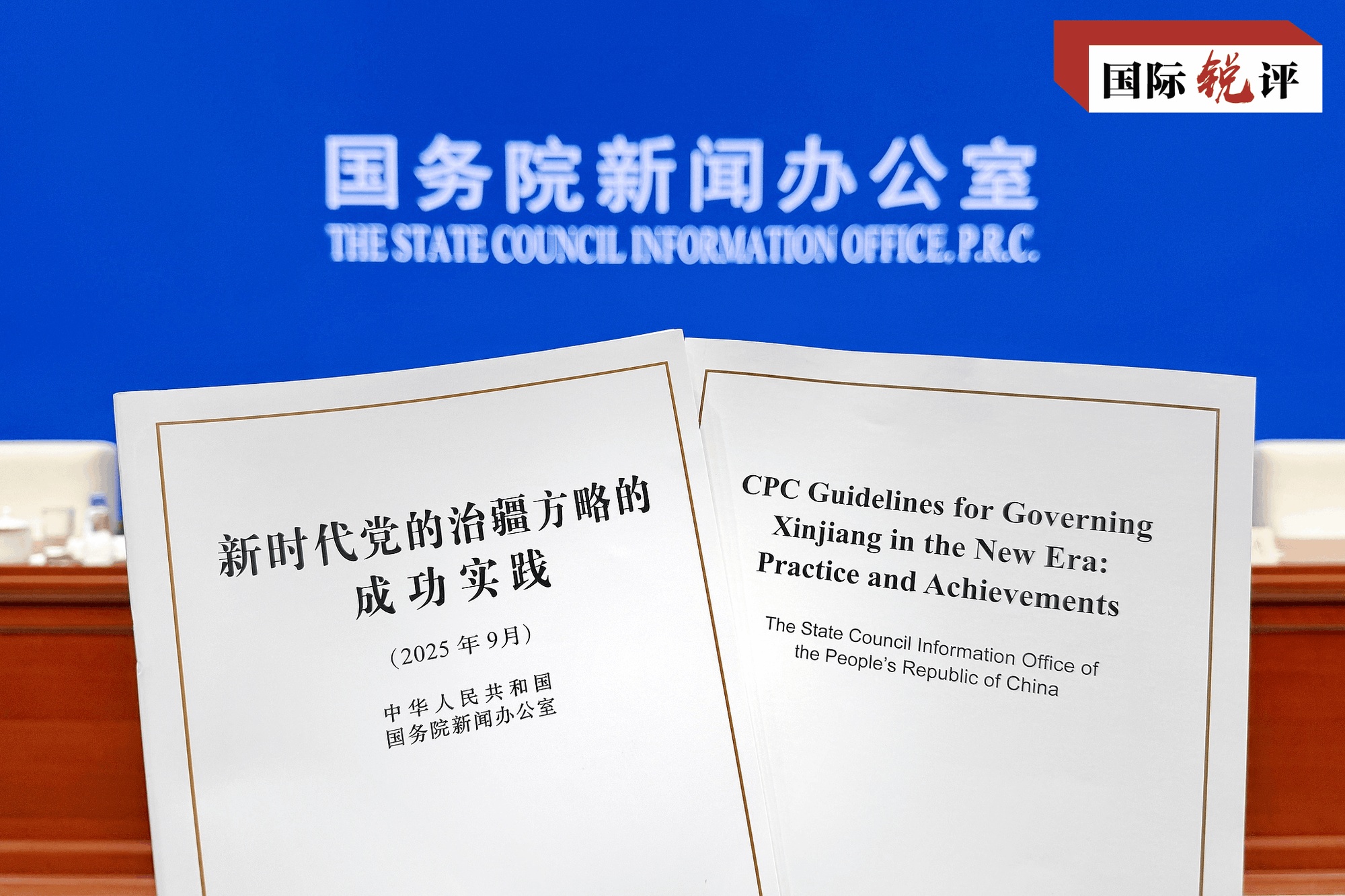
Core Insights - The article highlights the significant transformation and development in Xinjiang over the past 70 years, particularly in agriculture and economic growth, showcasing the region's potential as a vital area for China's modernization efforts [4][11]. Economic Development - Xinjiang has increased its arable land from desert to over 60,000 acres, contributing to a total increase of more than 12 million acres in grain planting area over the last decade [1]. - The economic output of Xinjiang has surged from 1.231 billion yuan in 1955 to over 2 trillion yuan in 2024, indicating rapid economic growth [5]. - The region's GDP growth has been bolstered by emerging industries such as low-altitude economy and new energy, achieving a "speed-up" in high-quality development [5]. Social Stability - Xinjiang has maintained social stability, with no violent terror incidents reported for several years, and a satisfaction rate for safety among residents exceeding 99% for five consecutive years [5]. - The region has successfully eradicated absolute poverty by the end of 2020, aligning with national goals to build a moderately prosperous society [5]. Quality of Life Improvements - Life expectancy in Xinjiang has increased from 30 years in 1949 to 77 years in 2024, reflecting significant improvements in healthcare and living standards [8]. - Employment has risen by 11.6% since 2012, reaching 13.91 million, while per capita disposable income has surpassed 30,000 yuan [8]. Trade and Connectivity - Xinjiang serves as a crucial gateway for China's westward opening, with 16,400 China-Europe (Central Asia) freight trains passing through in 2024, and trade volume reaching 434.1 billion yuan [8]. - The region has established trade relations with over 220 countries and regions, enhancing its role in the Silk Road Economic Belt [8]. Tourism Growth - In 2024, Xinjiang welcomed over 5 million international tourists, marking a 46% increase year-on-year, showcasing the region's appeal and positive image [10]. - Visitors have reported a stark contrast between the narratives presented in Western media and the actual experiences in Xinjiang, highlighting the region's stability and cultural richness [10].
拉丁组织在美推出商业促进行动计划以应对不利移民环境
Shang Wu Bu Wang Zhan· 2025-09-16 16:27
Core Insights - The initiative "Buy Latino" launched by the Latin organization ATAM aims to strengthen the economic power of Latino businesses in the U.S. amid a challenging immigration environment [1] - Latinos represent 20% of the U.S. population and contribute $4.1 trillion to the GDP, equivalent to the world's fifth-largest economy, yet Latino businesses receive less than 2% of venture capital and face higher loan rejection rates [1] - Latino entrepreneurs have created 36% of new businesses in the U.S. and have seen a 44% growth over the past decade, significantly outpacing the national average [1] - The recent arrest of thousands of Latino workers in California led to a 3.1% drop in private sector participation within a week, highlighting the U.S. economy's deep reliance on Latino labor and businesses [1] Economic Impact - The "Buy Latino" campaign is designed to mobilize consumers, institutions, and businesses to increase spending at Latino-owned businesses to address unequal access to capital [1] - The economic contributions of Latinos underscore the importance of supporting Latino entrepreneurship to enhance overall economic growth [1] Social Context - The initiative comes in response to a deteriorating immigration climate, which has implications for the Latino workforce and business landscape in the U.S. [1] - The campaign seeks to transform Hispanic Heritage Month into a platform for economic action, emphasizing the need for solidarity and support for Latino businesses [1]