
有色

Search documents
焦点复盘沪指时隔4个月再现日线8连阳,有色、锂电等涨价概念全线爆发
Sou Hu Cai Jing· 2025-12-26 11:10
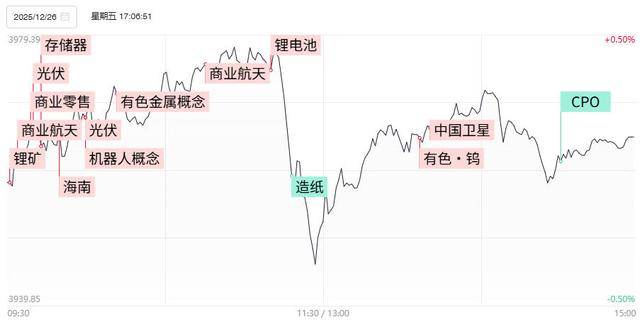
Core Viewpoint - The market shows a strong performance with 82 stocks hitting the daily limit up, while 20 stocks faced limit down, indicating a high level of volatility and rapid rotation of market hotspots [1][5] Market Performance - The Shanghai Composite Index rose by 0.1%, marking an 8-day consecutive increase, with a total trading volume of 2.16 trillion yuan, an increase of 235.7 billion yuan from the previous trading day [1] - The Shenzhen Component Index increased by 0.54%, and the ChiNext Index rose by 0.14% [1] Stock Analysis - The top-performing stocks included Shengtong Energy with 11 consecutive limit ups, Jiamei Packaging with 9 out of 11 days hitting the limit up, and Shenjian Co. with 7 consecutive limit ups [1][10] - The market saw a total of 3 stocks achieving a high-level consecutive limit up, while the 2-to-3 stock upgrade rate remained high at nearly 70% [3][4] Sector Performance - The active sectors included Hainan, lithium, and precious metals, while the paper and CPO concepts lagged behind [1] - The commercial aerospace sector remains strong, with significant interest in stocks like Shenjian Co. and China Satellite, which is nearing a market cap of 100 billion yuan [5] Lithium Battery Sector - The lithium battery sector experienced a surge due to tight supply and demand, with major companies like CATL signing long-term supply contracts, leading to a significant price increase in lithium carbonate [6] - The average price of lithium carbonate futures rose by 8%, surpassing 130,000 yuan per ton, indicating a doubling of new production capacity expected next year [6] Photovoltaic Industry - The photovoltaic sector is rebounding, driven by a significant increase in silicon prices, with major companies raising their quotes by over 20% [7] - The focus remains on the application of perovskite and heterojunction batteries in commercial aerospace rather than price fluctuations [7] Metal Market - The global metal futures market has seen a resurgence, with copper futures reaching historical highs, benefiting from tight supply conditions [8] - The copper mining sector is experiencing strong performance, with companies like Jiangxi Copper hitting new highs since 2008 [8] Market Outlook - Despite a slight pullback, the market remains optimistic with a high number of limit-up stocks, indicating sustained short-term speculative sentiment [9] - The market is expected to face potential corrections, particularly if the index falls below key support levels [9]

朝闻道 20251226:沪指七连阳,中盘蓝筹强者恒强
Orient Securities· 2025-12-26 08:02
Market Strategy - The Shanghai Composite Index has experienced seven consecutive days of gains, indicating a market that is entering a period of oscillation and upward movement, although the overall increase remains limited [2][7] - The report suggests a focus on structural investments rather than index-heavy strategies, recommending broad-based ETFs that reflect mid-cap blue-chip characteristics [7] - Key sectors identified for investment include advanced manufacturing, non-bank financials, technology, and cyclical industries, which are expected to attract incremental capital and serve as the backbone of the market during this upward trend [7] Industry Strategy - The coal industry is highlighted, with coking coal prices expected to rebound due to seasonal inventory replenishment by downstream steel and coking plants, which is anticipated to support prices in the short term [4][7] - The report emphasizes the importance of monitoring the coking coal sector for investment opportunities, particularly as downstream purchasing behavior shifts from a wait-and-see approach to active procurement [7] - Recommended stocks in the coal sector include Shaanxi Coal and Chemical Industry (601225) and Jincheng Anthracite Mining Group (601001), both rated for increased holdings [7] Thematic Strategy - The humanoid robot sector is noted for significant advancements in motion control technology, with mass production expected to accelerate in 2026 [5][7] - Recent demonstrations by Tesla and Yush Robot showcase rapid progress in humanoid robot capabilities, indicating a shift in market focus towards actual production rather than just technological advancements [7] - Companies with strong manufacturing and management capabilities in the components sector are expected to benefit from this trend, with Top Group (601689) recommended for purchase [7]


淘气天尊:市场试盘跳水,但仍强收八连阳!(12.26)
Jin Rong Jie· 2025-12-26 07:59
Market Overview - The market experienced a volatile session on Friday, with the Shanghai Composite Index opening at 3957 points and the ChiNext Index at 3232 points, both showing initial declines before rallying [1] - The Shanghai Composite Index closed up 4 points at 3963, marking an eight-day winning streak, while the ChiNext Index also rose by 4 points to 3243 [1] Stock Performance - A total of 1866 stocks rose, with 104 gaining over 9% and 438 over 3%, while 3413 stocks declined, including 7 that fell over 9% and 193 over 3% [1] - The ratio of declining to rising stocks was approximately 6:11, indicating a clear dominance of bearish sentiment in the market [1] Sector Analysis - Resource sectors, particularly metals and the Hainan region, continued to lead the market, drawing comparisons to past speculative trends [1] - The recent surge in large military, technology, and resource stocks has driven the market higher, although many other sectors saw minimal gains [1] Technical Analysis - The market's recent low at 3815 points triggered a short-term rebound, but the latest high at 3977 points faced resistance, leading to a minor pullback [1] - The market's ability to maintain an upward trend despite a significant number of declining stocks suggests potential for further adjustments in the near term [1] Future Outlook - Without any significant positive news over the weekend, the market may face further adjustments in the early part of next week [1] - Investors are advised to wait for clearer signals of market corrections or significant rebounds before making trading decisions [1]
刚刚!惊魂大逆转,背后原因是什么?
中国基金报· 2025-12-26 07:58
Market Overview - On December 26, A-shares experienced a significant intraday drop but managed to recover, with the three major indices closing slightly higher. The Shanghai Composite Index rose by 0.1%, the Shenzhen Component Index increased by 0.54%, and the ChiNext Index gained 0.14% [2]. Market Performance - A total of 1,866 stocks rose, with 92 hitting the daily limit up, while 3,414 stocks remained unchanged or fell [3][4]. - The total trading volume reached 21,811.04 billion, with a total turnover of 130,586.97 million shares [4]. Sector Highlights - The commercial aerospace sector continued to show strength, with companies like Shenjian Co. achieving a seven-day limit up. Other stocks such as China Satellite and China Satcom also hit the daily limit up [4]. - The Hainan Free Trade Zone remained active, with Hainan Mining and Hainan Airlines hitting the daily limit up [5]. - The lithium battery sector saw a surge, with stocks like Fengyuan Co. and Yongxing Materials reaching the daily limit up. This was influenced by a recent article from the National Development and Reform Commission emphasizing the importance of regulating competition in the new energy sectors [5]. Market Dynamics - The sudden drop in the market around 11 AM was attributed to two main factors: 1. The adjustment of the RMB to USD exchange rate, which was set at 7.0358, significantly lower than market expectations, indicating a potential strategy to manage the pace of RMB appreciation [12][13]. 2. The circulation of a commentary regarding the A500 ETF, which caused market disturbances [14]. Analyst Insights - Analysts from Huatai Research noted that the current environment of RMB appreciation could enhance foreign investment interest in RMB-denominated assets, potentially leading to a positive cycle of capital inflow and increased asset valuations [14]. - Industrial analysts from Industrial Securities suggested that the RMB appreciation might just be the beginning, with expectations of returning capital that had previously flowed out of China, further boosting market risk appetite [14].

市场监管总局:2026年推动完成1800余项传统产业标准制修订
Zhong Guo Xin Wen Wang· 2025-12-26 07:43
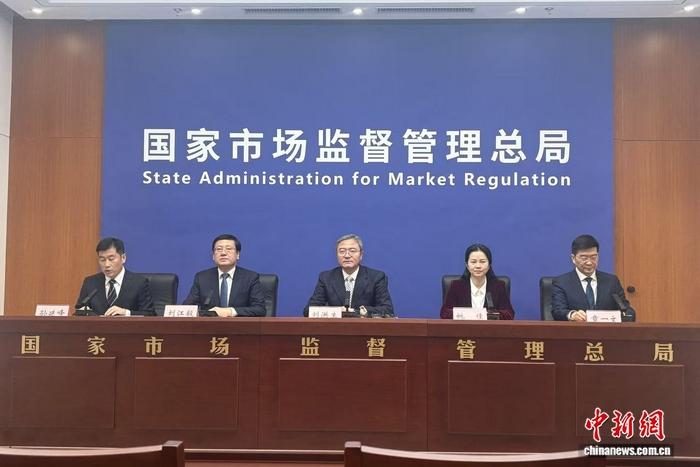
市场监管总局:2026年推动完成1800余项传统产业标准制修订 中新网12月26日电(记者 谢艺观)"市场监管总局聚焦优化提升传统产业、促进服务业优质高效发展、大 力提振消费等重点发力,正在布局开展一批新的专项行动,不断健全国家标准体系,更好以标准升级促 进经济高质量发展。"市场监管总局标准技术司司长刘洪生26日在新闻发布会上表示。 来源:中国新闻网 编辑:熊思怡 广告等商务合作,请点击这里 国家市场监管总局新闻发布会现场。 谢艺观 摄 据刘洪生介绍,2026年主要从四个方面开展工作:一是持续推动传统产业标准更新。围绕石化、机械、 轻工、钢铁、有色、建材、纺织、船舶、汽车、电力等十大传统产业高质量发展需求,坚持智能化、绿 色化、融合化方向,推动完成1800余项标准制修订,助力产业转型发展。 二是加快推进消费品标准升级。聚焦消费者对安全、质量、绿色、智能、健康等方面的新需求,研究制 定加快推进消费品国家标准升级工作方案,着力构建与高质量发展相适应的新型消费品标准体系,为增 加消费品供需适配性、激发消费潜力提供坚实支撑。 三是加强服务标准建设。研究出台加强服务标准建设指导意见,围绕生产性服务业、生活性服务业和公 ...
收评:沪指8连阳,锂电概念爆发,海南自贸概念等活跃
Zheng Quan Shi Bao Wang· 2025-12-26 07:41
Market Performance - The stock indices in both markets experienced fluctuations and rose, with the Shanghai Composite Index recording its eighth consecutive day of gains, and the total trading volume in the A-share market exceeding 2 trillion yuan [1] - As of the market close, the Shanghai Composite Index increased by 0.1% to 3963.68 points, the Shenzhen Component Index rose by 0.54%, the ChiNext Index gained 0.14%, and the SSE 50 Index was up by 0.41% [1] Sector Performance - Sectors such as paper, liquor, semiconductors, banks, and pharmaceuticals saw declines, while the non-ferrous metals sector surged, and steel, brokerage, and oil sectors also experienced gains [1] - Active sectors included Hainan Free Trade Zone, lithium batteries, and commercial aerospace concepts [1] Investment Outlook - Pacific Securities anticipates that the upcoming year-end market rally will commence with a broad-based increase, noting that the volatility of major stock index options remains at a low level, suggesting a steeper upward trend in the future [1] - Technology is expected to remain the main focus for generating excess returns due to its greater elasticity [1] - Recent trends indicate a shift towards bullish sentiment in commodities, with expectations for a rally in precious metals, non-ferrous metals, chemicals, steel, and pig farming [1] - Major financial sectors such as insurance and banking are projected to continue their upward trajectory as stabilizers [1] - The consumer sector is expected to become a new target for rebound as policy positioning deepens, with the Hainan Free Trade Zone anticipated to maintain its strong momentum as a key policy focus [1]
沪指8连阳,商业航天爆发,中国卫星3连板,贵金属期货猛拉,铂金涨近10%
21世纪经济报道· 2025-12-26 07:30
Market Overview - The A-share market saw a collective rise in the three major indices, with the Shanghai Composite Index recording an 8-day winning streak, closing up 0.1% [1] - The total trading volume in the Shanghai and Shenzhen markets reached 2.18 trillion yuan, an increase of 237.2 billion yuan compared to the previous trading day [1] Index Performance - Shanghai Composite Index: 3963.68 (+0.10%) - Shenzhen Component Index: 1463.04 (+0.54%) - ChiNext Index: 3243.88 (+0.14%) - CSI 300 Index: 4657.24 (+0.32%) [2] Sector Performance - The commercial aerospace sector showed strong performance, with China Satellite achieving a three-day consecutive rise, reaching a 10-year high market value of 94.6 billion yuan [2] - The non-ferrous metals sector experienced a surge, with Jiangxi Copper hitting the daily limit, and China Aluminum, Tongling Nonferrous Metals, and Western Mining rising over 7% [4] - The lithium battery supply chain remained strong, with several companies hitting the daily limit, including Tianji Co., which achieved three limit-ups in four days [4] Precious Metals Market - Precious metals futures continued to soar, with platinum futures reaching a daily increase of 9.99%, hitting a new high of 709.85 yuan per gram [7] - International spot platinum also rose nearly 10%, reaching 2445.6 USD per ounce, marking a historical high [7] - Other precious metals, including gold and silver, also saw significant increases, with spot gold fluctuating around 4520 USD per ounce and spot silver rising over 4% [7][8] Investment Insights - Despite the long-term positive outlook for precious metals, short-term price volatility remains high, and investors are advised to be cautious in a high-volatility environment [9]


收盘丨沪指放量涨0.1%录得8连阳,全市场成交额超2万亿元
Di Yi Cai Jing· 2025-12-26 07:17
Market Overview - A-shares recorded a total trading volume of 2.16 trillion yuan, marking a new monthly high [1][6] - The three major indices closed slightly higher, with the Shanghai Composite Index up 0.1%, Shenzhen Component Index up 0.54%, and ChiNext Index up 0.14% [1] Sector Performance - The non-ferrous metals sector experienced a significant surge, with lithium battery upstream materials seeing a wave of limit-up stocks [2][4] - The commercial aerospace concept remained active, while the AI industry chain collectively declined, with sectors like photolithography machines and OCS facing widespread losses [2] Notable Stocks - Several stocks in the Hainan Free Trade Zone saw limit-up performances, including Hainan Mining, Hainan Development, and Hainan Airlines [2] - Key gainers included Intercontinental Oil & Gas (+10.11%), Hainan Mining (+10.02%), and Hainan Development (+10.01%) [3] Capital Flow - Main capital inflows were observed in non-ferrous metals, photovoltaic equipment, and automotive sectors, while semiconductor, aerospace, and consumer electronics sectors saw net outflows [8] - Notable net inflows included Sunshine Power (+2.322 billion yuan), Aerospace Development (+2.048 billion yuan), and BYD (+1.473 billion yuan) [8] Institutional Insights - Guojin Securities indicated that the spring market has begun, emphasizing the importance of AI chain rotation opportunities [9] - Everbright Securities noted that the commercial aerospace theme continues to expand its profit-making effect, potentially attracting more capital and pushing the Shanghai Composite Index towards 4000 points before the year-end [10]



国贸期货日度策略参考-20251226
Guo Mao Qi Huo· 2025-12-26 07:10
Report Industry Investment Ratings - **Bullish**: Carbonate Lithium, BR Rubber, PTA [1] - **Bearish**: Palm Oil, Rapeseed Oil, Sugar [1] - **Neutral (Oscillating)**: Stock Index, Treasury Bonds, Copper, Aluminum, Alumina, Zinc, Nickel, Stainless Steel, Tin, Gold, Platinum, Industrial Silicon, Polysilicon, Rebar, Hot Rolled Coil, Iron Ore, Ferroalloy, Glass, Coke, Coking Coal, Lumber, Cotton, Live Pigs, Crude Oil, Bitumen, Ethylene Glycol, Short - Fiber, Benzene, Naphtha, Propylene, Butadiene, Container Shipping to Europe [1][2] Core Viewpoints - The market sentiment and liquidity are in a good state, with the short - term stock index breaking through the previous oscillation range and expected to remain strong. The bond futures are favored by the asset shortage and weak economy, but the central bank has recently warned of interest - rate risks. The prices of various commodities are affected by factors such as industry fundamentals, macro - sentiment, and policy changes [1]. Summaries by Categories Financial Products - **Stock Index**: The short - term stock index has broken through the previous oscillation range and is expected to remain strong as the market sentiment and liquidity are good [1]. - **Treasury Bonds**: Asset shortage and weak economy are beneficial for bond futures, but the central bank has warned of short - term interest - rate risks. Attention should be paid to the Bank of Japan's interest - rate decision [1]. Non - ferrous Metals - **Copper**: The industrial situation is weak recently, and the macro - sentiment is fluctuating, leading to high - level oscillations in copper prices [1]. - **Aluminum**: The driving force in the electrolytic aluminum industry is limited, and the macro - sentiment is fluctuating, resulting in oscillating aluminum prices [1]. - **Alumina**: The domestic fundamentals are weak, and the short - term price remains low [1]. - **Zinc**: The fundamentals of zinc have improved, with the cost center rising. Most of the recent negative factors have been realized, and the zinc price is expected to oscillate strongly as market risk appetite improves [1]. - **Nickel**: The global nickel inventory is high, but due to supply concerns, the Shanghai nickel has rebounded significantly recently. The Indonesian policy has not been implemented but is difficult to disprove in the short term. The short - term nickel price may oscillate strongly. In the long - term, the primary nickel market remains in an oversupply situation [1]. - **Stainless Steel**: The raw material nickel - iron price has stabilized, the social inventory of stainless steel has decreased slightly, and steel mills have increased production cuts in December. The stainless - steel futures are expected to oscillate strongly in the short term [1]. - **Tin**: The non - ferrous tin industry association has issued an initiative, causing the short - term tin price to oscillate weakly. Considering the tense situation in Congo and the improved market risk appetite, low - buying opportunities are recommended [1]. Precious Metals and New Energy - **Gold**: Overseas markets are in the Christmas holiday, and the strong US economic data has weakened the expectation of interest - rate cuts. After reaching a new historical high, the gold price may oscillate at a high level in the short term [1]. - **Platinum**: The domestic platinum futures price has a large premium over the spot price and foreign markets, with large expected fluctuations. Rational participation is recommended [1]. - **Industrial Silicon**: The production in the northwest has increased while that in the southwest has decreased. The production schedules of polysilicon and organic silicon have decreased in December [1]. - **Polysilicon**: A capacity storage platform company has been established, with a long - term expectation of capacity reduction. The terminal installation has increased marginally in the fourth quarter, large manufacturers are eager to maintain prices but reluctant to deliver goods, and the short - term speculative sentiment is high [1]. - **Carbonate Lithium**: It is the traditional peak season for new energy vehicles, the energy - storage demand is strong, the supply side has increased production resumption, and the price has exceeded the previous high. Short - term long - position operations are recommended [1]. Building Materials - **Rebar and Hot Rolled Coil**: The basis and production profit are not high, indicating that the price valuation is not high. Short - selling is not recommended. The near - term contracts are restricted by production cuts, but the far - term contracts still have upward potential [1]. - **Iron Ore**: The near - term contracts are restricted by production cuts, but with good commodity sentiment, the far - term contracts have upward opportunities [1]. - **Glass and Glass Products**: They follow the trend of glass, with acceptable supply - demand conditions and low valuation. The downward space is limited, and they may oscillate under pressure [1]. - **Coke and Coking Coal**: Affected by the domestic major meeting and export policy, the black - sector has declined. After the announcement of the steel - export licensing system, there are signs of stabilization. Attention should be paid to the spot situation this week and the winter - storage replenishment by downstream enterprises [1]. Agricultural Products - **Palm Oil**: Although the high - frequency data has improved, it is difficult to change the expectation of a loose supply in the producing areas. Rebound - shorting is recommended [1]. - **Soybean Oil**: It is affected by the decline in the CBOT market and other domestic oils, showing a weak trend [1]. - **Rapeseed Oil**: The short - term positive factors of raw - material shortage are expected to be exhausted, and there is an expectation of a good harvest in the global main producing areas. Short - selling the 05 contract is recommended [1]. - **Cotton**: There is support from the purchase price of seed cotton, but there is currently no driving force. Future attention should be paid to the government's policies, planting - area intentions, weather during the planting period, and peak - season demand [1]. - **Sugar**: There is a consensus among short - sellers due to the global surplus and increased domestic supply. If the price continues to fall, there is strong cost support, but there is a lack of continuous fundamental driving force in the short term [1]. - **Live Pigs**: Affected by snow and rain in the producing areas, the supply is affected, but the spot price is relatively stable. Farmers are reluctant to sell, and downstream enterprises are cautious. There is a certain replenishment demand before the Spring Festival [1]. - **Soybean Meal**: There is an expectation of a good harvest of soybeans, and the later discount is expected to face selling pressure. Recently, the market has oscillated following reserve - related rumors [1]. - **Paper Pulp**: The futures are fluctuating due to the contradiction between weak demand and strong supply expectations. It is recommended to wait and see for single - side operations and consider a 1 - 5 reverse spread for the spread [1]. - **Logs**: Affected by the decline in foreign - market quotes and spot prices, the 01 contract is under pressure as it approaches the delivery month and is expected to oscillate weakly [1]. Energy and Chemical Products - **Crude Oil**: OPEC+ has suspended production increases until the end of 2026, the uncertainty of the Russia - Ukraine peace agreement has an impact, and the US has imposed sanctions on Venezuelan crude - oil exports [1]. - **Bitumen**: The short - term supply - demand contradiction is not prominent, following the trend of crude oil. The cost of raw materials provides strong support, the futures - spot price difference is low, and the mid - stream inventory may start to accumulate [1]. - **BR Rubber**: The trading volume of butadiene has improved, the cost has increased, the operating rate of butadiene rubber is high, and there are rumors of a factory shutdown in South Korea, leading to a strong market sentiment [1]. - **PTA**: The PX price is strong, the PTA device is operating at a high load, the pre - festival stocking and sales of polyester have improved, and the consumption of PTA remains high [1]. - **Ethylene Glycol**: Two MEG plants in Taiwan, China, are planned to shut down next month. The ethylene - glycol price has rebounded rapidly due to supply - side news, and the demand from the polyester downstream is better than expected [1]. - **Benzene and Naphtha**: There is some support from the cost side, the spot - market sentiment has warmed up slightly, and the total inventory remains high without significant de - stocking [1]. - **Propylene**: The export sentiment has eased slightly, the upward space is limited due to insufficient domestic demand, and there is support from anti - involution and the cost side. The maintenance has decreased, the supply has increased, and the downstream demand has weakened. There is an expectation of oversupply in 2026 [2]. - **Butadiene**: The trading volume has improved, and the cost has increased, providing support for downstream products [1]. - **Container Shipping to Europe**: The price increase in December was lower than expected, the expectation of price increase in the peak season was priced in advance, and the shipping capacity supply was relatively loose in December [2].
市场监管总局:2026年将推动完成1800余项标准制修订
Yang Shi Xin Wen· 2025-12-26 07:06
Group 1 - The State Administration for Market Regulation will focus on optimizing traditional industries, promoting high-quality development in the service sector, and boosting consumption in 2026 [1] - A total of over 1,800 standards will be revised and developed to support the high-quality development needs of ten traditional industries, including petrochemicals, machinery, light industry, steel, non-ferrous metals, building materials, textiles, shipbuilding, automotive, and electric power [1] - The implementation of a special action for updating and upgrading mandatory national standards will be promoted, particularly in areas related to life and property safety [1] Group 2 - The agency will collaborate with relevant departments to accelerate the development of standards in critical areas such as thermal insulation materials, hazardous chemicals, special equipment, and the recycling of power batteries [1] - Important recommended national standards in relevant fields will be timely converted into mandatory national standards to strengthen safety standards [1]