
高端制造

Search documents
9月份超81%混基正收益 嘉实新优选混合涨30.17%
Zhong Guo Jing Ji Wang· 2025-10-09 23:10
Core Insights - In September, 81.81% of the 8627 mixed funds with comparable performance saw an increase in net value, while 1549 funds experienced a decline [1] - Fourteen mixed funds achieved a monthly increase of over 25%, with the top performers being 嘉实新优选混合, 东方新能源汽车主题混合, and others, showing returns between 27.03% and 30.17% [1][2] - 嘉实新优选混合 fund, established in April 2016, reported a year-to-date return of 54.33% and a cumulative net value of 1.4440 yuan as of September 30, 2025 [1][2] Fund Performance - 嘉实新优选混合 increased its allocation to leading lithium battery equipment companies, with top holdings including 宁德时代 and 星宇股份 as of June 30 [2] - 泉果旭源三年持有期混合A, the largest fund by size, had a monthly increase of 26.02% and a year-to-date return of 48.80%, with a cumulative net value of 1.1172 yuan [3] - The top holdings of 泉果旭源三年持有期混合A include 科达利 and 腾讯控股, focusing on sectors like high-end manufacturing and internet companies [3] Declining Funds - Eight mixed funds experienced a decline of over 10% in September, with five belonging to 广发基金, showing declines ranging from 10.10% to 11.53% [4]
2025年四季度A股投资策略:行情换挡,由流动性叙事迈向盈利驱动
Yintai Securities· 2025-10-09 12:04
Group 1 - The core viewpoint of the report indicates that the A-share market is transitioning from a liquidity-driven narrative to one driven by earnings, with the market expected to face increased macro constraints in the fourth quarter of 2025 [4][8][63] - In the third quarter of 2025, the A-share market strengthened significantly, with the Shanghai Composite Index closing at 3882.78, reflecting a quarterly increase of 12.7%, while the Shenzhen Component Index rose by 29.3% [15][4] - The TMT sector was a major contributor to the index's rise, with notable increases in electronic, communication, and media sectors, which rose by 47.6%, 48.6%, and 20.3% respectively [16][4] Group 2 - Domestic economic growth momentum has slowed, with GDP growth in the third quarter expected to be around 4.8%, influenced by factors such as declining export growth and adjustments in the real estate market [5][29] - The report anticipates that the policy support for economic growth will strengthen, with measures including loan interest subsidies and early issuance of local government debt limits [5][39] - A-share earnings are stabilizing, with overall earnings growth expected to achieve mid-single-digit growth in 2025, supported by enhanced policy measures and resilient exports [7][41] Group 3 - The influx of incremental capital is expected to continue supporting the A-share market, driven by improved investor confidence and favorable economic conditions [48][7] - The "15th Five-Year Plan" is set to provide new guidance for the capital market, focusing on industrial development, economic structure adjustments, and fiscal reforms [53][56] - The report suggests that investment strategies should focus on structural opportunities, particularly those related to the "15th Five-Year Plan," core asset value reassessment, and various thematic opportunities [66][66]
港股科技指数持续攀升 投资机会显现
Xin Lang Cai Jing· 2025-10-09 03:13
Core Viewpoint - The recent performance of the Hang Seng Tech Index has attracted market attention, reaching a new high since November 2021 without the injection of southbound funds, prompting discussions among investors about potential opportunities in the Hong Kong stock market, especially for those who missed the A-share rebound [1] Group 1: Valuation Advantage - The valuation of the Hang Seng Tech Index remains significantly lower compared to its peak in 2021, with a current P/E ratio of approximately 24 times, which is about 40% lower than the 70 times seen at its peak [2] - Historical data indicates that the current valuation is at the 33rd percentile, suggesting that two-thirds of the time, valuations have been higher than the current level [2] - In comparison, the A-share Sci-Tech 50 Index has a P/E ratio exceeding 180 times, while the Nasdaq Index's valuation is at the 95th percentile, highlighting the relative attractiveness of Hong Kong tech stocks [2] Group 2: Performance Recovery - The fundamentals of Hong Kong tech companies are showing signs of recovery, with major firms like Alibaba, Tencent, and Meituan reporting better-than-expected earnings in Q1 2023 [4] - These companies are increasing investments in AI, with Alibaba announcing additional capital expenditures beyond the previously planned 380 billion, aiming to establish a strong position in the AI sector [4] - Market expectations indicate that the earnings growth rate for Hang Seng Tech constituents will remain between 15% and 25% over the next three years, which is considered substantial in the current market environment [4] Group 3: Investment Opportunities in ETFs - The recent launch of the Tianhong Hang Seng Tech ETF (520920) provides a new tool for investing in Hong Kong tech, with top holdings including Tencent, Alibaba, and BYD, which together account for nearly 70% of the ETF [5] - The presence of high-quality tech companies in the Hong Kong market, combined with their low valuations, suggests that a valuation recovery could significantly boost the Hang Seng Tech Index [5] Group 4: Long-term Investment Value - The long-term investment value of Hong Kong tech stocks is reaffirmed by the ongoing growth trend of the Chinese economy and the central role of technological innovation in economic development [7] - The internationalization of the Hong Kong market and the maturity of its valuation system imply a high likelihood of valuation recovery once market sentiment improves [7] - Current domestic policies aimed at stabilizing growth and the onset of a U.S. interest rate cut cycle are improving the external environment for Hong Kong stocks, making it a potentially opportune time for investors to enter the market [7]




一线私募把脉A股后市 多元配置实现攻守兼备
Zhong Guo Zheng Quan Bao· 2025-10-08 22:34
Core Viewpoint - The A-share market is expected to perform positively in the fourth quarter, supported by favorable external conditions from overseas markets and resilient domestic consumption data during the recent holiday [1][2]. Group 1: Overseas Market Influence - The overall performance of overseas markets during the holiday has boosted investor sentiment in the A-share market, with private equity firms noting a positive emotional momentum [2]. - Factors such as the U.S. government shutdown, geopolitical developments, and record-high gold prices are seen as having a generally positive impact on the A-share market [2][3]. Group 2: Domestic Economic Indicators - The recent Golden Week holiday showcased strong consumer resilience, with impressive travel and consumption data, which adds warmth to the economic fundamentals [1][2]. - The stable release of domestic policies and economic data around the holiday is expected to lack major variables that could significantly impact the market [2]. Group 3: Investment Strategies - Private equity firms are adopting a balanced approach to stock selection, emphasizing the importance of both aggressive and defensive strategies [4]. - Some firms are increasing their positions and optimizing their portfolios, anticipating a recovery in market sentiment post-holiday [4][5]. Group 4: Focus on Technology and Growth Sectors - The technology growth sector remains a focal point for many private equity firms, with expectations for significant opportunities in areas such as artificial intelligence and high-end manufacturing [5][6]. - The upcoming third-quarter earnings reports are anticipated to present opportunities for stocks that performed well [5][6]. Group 5: Market Trends and Opportunities - The market is expected to maintain its focus on key themes such as the internet, domestic semiconductor industry, and innovative pharmaceuticals [6]. - There is a belief that both technology growth and value stocks will perform well, with potential for revaluation in consumer and cyclical sectors [6][7].
北交所策略专题报告:“920”代码切换迎新机,历史规律与海外科技映射下的节后小盘股机遇
KAIYUAN SECURITIES· 2025-10-08 04:14
Group 1 - The report highlights the transition to the "920" code era for the Beijing Stock Exchange (BSE), which is expected to enhance market recognition and attract high-quality innovative small and medium enterprises [2][10][17] - Historical data indicates a significant increase in the performance of small-cap stocks after the National Day holiday, with a winning rate of 70%-80% in the first three trading days post-holiday [2][12][13] - The report emphasizes the alignment of the BSE's focus on "specialized, refined, distinctive, and innovative" companies with recent technological advancements and strong performances in overseas markets, particularly in the AI and high-end manufacturing sectors [2][20][21] Group 2 - The BSE's current market performance shows a decline in the BSE 50 index to 1,528.63 points, with a PE TTM of 71.79X, while the specialized and innovative index dropped to 2,617.83 points with a PE TTM of 80.89X [3][31] - The average PE TTM for various sectors on the BSE includes high-end equipment at 42.42X, information technology at 100.12X, and chemical new materials at 47.99X, indicating a diverse valuation landscape [3][36] - The report suggests focusing on sectors such as technology growth, self-sufficiency, anti-involution, and energy storage for future investment opportunities, particularly in companies that represent new productive forces [3][43]
A股开市倒计时 五大私募火线解盘
Zhong Guo Zheng Quan Bao· 2025-10-08 02:19
Core Viewpoint - The A-share market is expected to perform positively after the National Day and Mid-Autumn Festival holidays, supported by favorable external markets and domestic consumption recovery [1] Market Outlook: External Factors Boost Confidence - The overall positive performance of external markets during the holiday period creates a favorable environment for the A-share market [2] - The Hong Kong stock market, particularly the semiconductor sector, has shown strong performance, providing emotional support for A-shares [2] - Improved trading sentiment is anticipated as global asset classes have generally risen, reducing uncertainties affecting Chinese assets [2] - Domestic macroeconomic stability and high service consumption during the holiday are expected to attract risk-averse funds back to the A-share market [2] - Collaborations in the tech sector, such as OpenAI and AMD, may catalyze related A-share sectors like computing power and AI applications [2] Strategic Response: Balanced and Selective Investment - Multiple private equity firms emphasize the importance of balanced allocation and selective stock picking in the upcoming trading period [3] - A proactive investment strategy is recommended, with an increase in positions and optimization of portfolios, as historical data suggests a recovery in A-share sentiment post-holiday [3] - The trend of household savings flowing into equity markets is expected to continue, indicating significant long-term upside potential for A-shares [3] - A combination of high-position operations and balanced holdings is advised, focusing on technology growth and high-end manufacturing while also including low P/B and high dividend assets for risk mitigation [3] Investment Themes: Consensus on Tech Growth - The technology growth sector is unanimously favored by five private equity firms, alongside opportunities in consumer recovery and undervalued sectors [5] - Continued optimism for technology stocks is noted, particularly in computing power, storage, and AI infrastructure-related sectors [5] - The upcoming third-quarter earnings reports are expected to present opportunities for well-performing sectors [5] - Specific areas of interest include internet giants, domestic semiconductor supply chains, and innovative pharmaceuticals [5] - Focus areas post-holiday include AI, humanoid robotics, high-end manufacturing, and potential recovery in financial and cyclical sectors [5] - Market style is expected to become more balanced, with investment opportunities across various asset classes, including technology, consumer, and cyclical sectors [5] Key Sectors of Interest - Emphasis on graphics processors and humanoid robotics, along with identifying oversold weight sectors for investment [6]
A股利好来了!130家公司获得大股东增持,49家公司获超千万股买入
Sou Hu Cai Jing· 2025-10-07 23:57
Group 1 - A significant wave of major shareholder buybacks in the A-share market is observed in the second half of 2025, indicating a renewed assessment of market value by industrial capital [1] - A total of 130 listed companies received substantial investments from major shareholders, with 49 companies seeing buybacks exceeding 10 million shares [1] - The top 15 companies in terms of buyback volume each exceeded 40 million shares, showcasing the strong confidence and financial capability of major shareholders [1] Group 2 - The banking, energy, and high-end manufacturing sectors are the main contributors to this buyback trend, with notable actions from executives at Suzhou Bank and Huaxia Bank expressing optimism about their companies' futures [1] - The buyback amounts have significantly increased compared to the same period in 2024, reflecting industrial capital's recognition of the current valuation levels in the A-share market [1] Group 3 - Major shareholder buybacks are often interpreted as a "confidence declaration," with undervaluation being a primary driver for these actions [2] - Enhancing control is another important consideration for major shareholders, as seen with Hengyi Petrochemical increasing its holding percentage to strengthen governance [4] Group 4 - Buybacks that meet certain criteria, such as significant percentage increases and management's personal investments, tend to show more stable subsequent stock price performance [6] - Companies in the energy and chemical sectors that receive buybacks during industry recovery periods often indicate a turning point in performance [6] Group 5 - Investors should focus on companies with low price-to-book ratios and high dividend yields, as these often yield long-term returns post-buyback [8] - Attention should also be given to high-end manufacturing and new energy companies that benefit from policy incentives, as their buybacks align with fundamental improvements [9] Group 6 - The current buyback wave is seen as a potential market bottom indicator, but it also raises questions about the motivations behind these actions, particularly regarding state-owned and private enterprises [9] - The distinction between buybacks as a tool for value discovery versus a means of market value management is crucial for investors to understand [9]




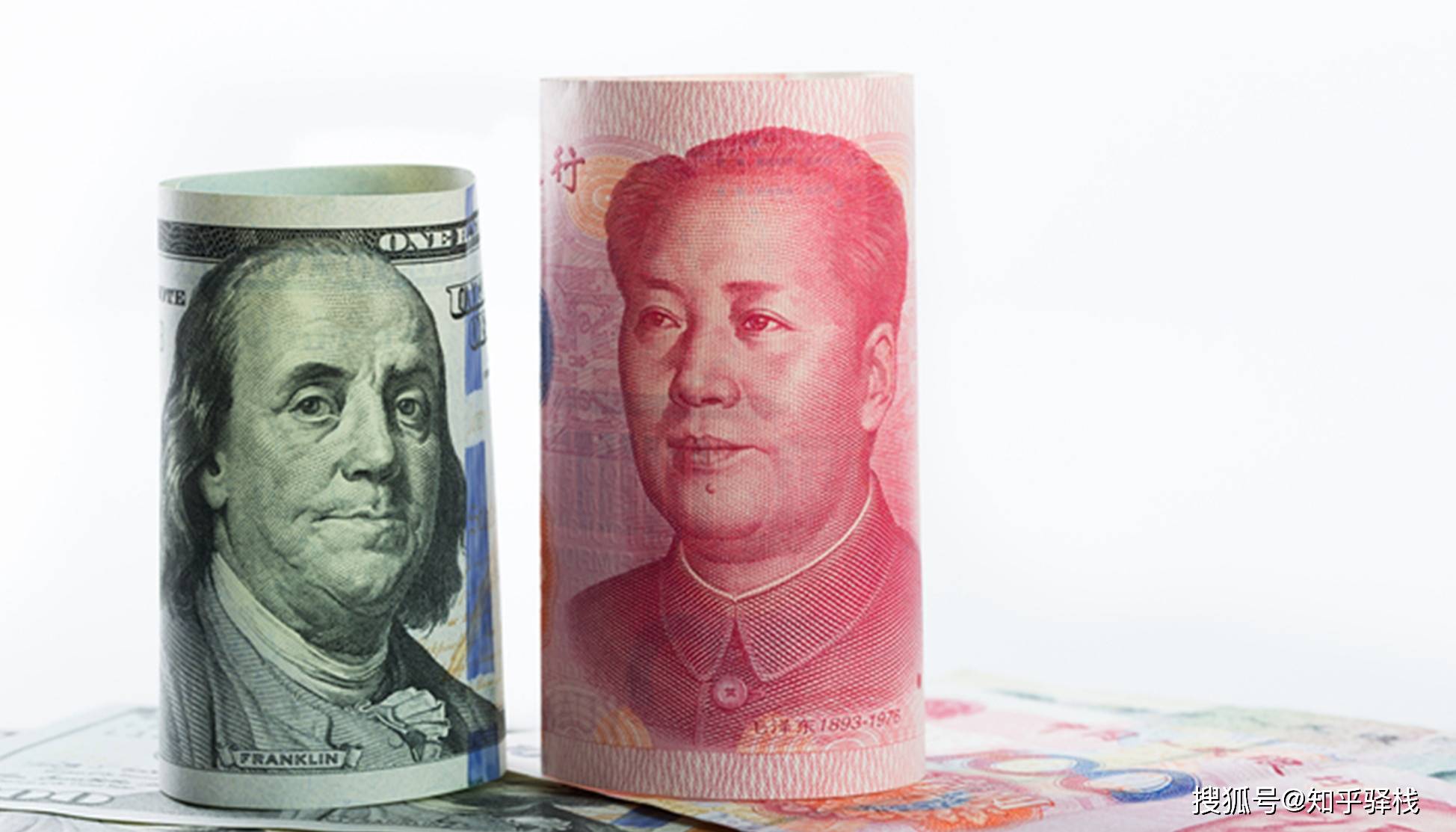
去美元化比想象中更快!除了黄金,这3类资产正在悄悄涨
Sou Hu Cai Jing· 2025-10-06 02:17
Group 1 - The Federal Reserve unexpectedly cut interest rates by 25 basis points in September, leading to a 0.5% drop in the US dollar index, while foreign investors reduced their holdings of US Treasuries from 35% to 23%, with China selling off $25.7 billion [1] - 95% of global central banks are increasing their gold reserves, with spot gold prices rising to $3,840 per ounce, a 41% increase over the year, indicating a shift towards de-dollarization [1] - The share of the US dollar in global foreign exchange reserves has fallen to 38%, while the share of BRICS countries' local currency settlements has increased to 4.6%, highlighting a significant trend in currency diversification [1] Group 2 - Silver is being recognized as an undervalued asset, with Russia investing $535 million in silver and Saudi Arabia entering the silver trust market, while the US Mint has faced a six-year shortage of silver coins, with a gap of 117.6 million ounces this year [3] - Silver's dual attributes as a safe-haven asset and its industrial demand, particularly in solar panels and electric vehicles, are driving its price up to $44.98, surpassing gold's price increase by 8% [3] - Investors are advised to focus on physical silver bars rather than commemorative coins due to lower premiums, making it more accessible for ordinary investors [3] Group 3 - The internationalization of the Renminbi (RMB) is gaining momentum, with Shanghai piloting digital RMB for cross-border payments and supporting 400 export-oriented enterprises in sectors like renewable energy and high-end manufacturing [5] - Two types of companies are expected to benefit: cross-border financial service providers involved in digital currency projects and high-end manufacturing firms that can save on exchange rate costs by using RMB for transactions [5] - An investor reported a 22% gain from a cross-border payment-themed ETF, reflecting the positive outlook on RMB internationalization [5] Group 4 - Commodity funds are expected to rise as the US dollar depreciates, with ordinary investors advised to buy corresponding funds instead of directly trading futures [7] - For example, copper funds are anticipated to perform well due to high demand from the electric vehicle and power grid sectors, while oil funds can hedge against dollar depreciation [7] - A diversified investment strategy is recommended, allocating portions to gold, silver, and RMB internationalization funds to mitigate risks [7] Group 5 - Long-term holding of silver and commodities is advised, as the process of de-dollarization is gradual, and short-term volatility should not deter investors from the long-term trend [8] - The trend of de-dollarization is difficult to reverse once established, and assets like gold, silver, and RMB-related stocks can provide dual protection against dollar depreciation and benefit from industry growth [8] - The current market presents an opportunity for investors to diversify beyond gold, as many are still focused solely on it, potentially missing out on other valuable assets [8]
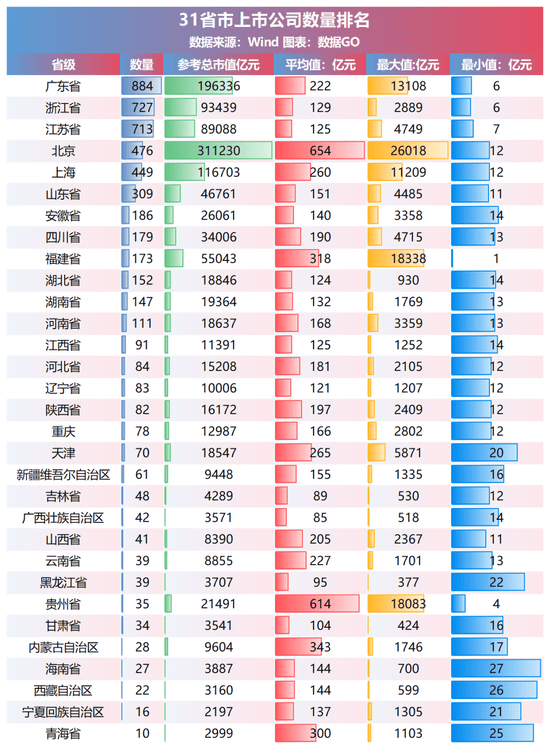
31省市上市公司数量排名:广东884家居首 头部企业带动效应显著
Sou Hu Cai Jing· 2025-10-05 00:15
Core Insights - The article highlights the significant disparities in the development of capital markets and company sizes across different regions in China, with coastal areas leading in the number of listed companies and total market capitalization [1][2][6]. Group 1: Number of Listed Companies - Guangdong (884), Zhejiang (727), and Jiangsu (713) are the top three provinces in terms of the number of listed companies, indicating a high level of economic activity and capital market participation in these eastern coastal regions [1]. - Western regions such as Qinghai (10), Ningxia (16), and Tibet (22) have significantly fewer listed companies, reflecting a gap in economic foundation and capital market engagement [1]. Group 2: Total Market Capitalization - Beijing leads with a total market capitalization of 311,230 billion, supported by numerous state-owned enterprises and leading tech companies, while Guangdong follows with nearly 200,000 billion, benefiting from a large base of companies [2][6]. - The presence of "super-large" listed companies in regions like Beijing (26,018 billion), Fujian (18,338 billion), and Guizhou (18,083 billion) significantly boosts regional total market capitalization [4]. Group 3: Average Market Value - Beijing (654 billion) and Guizhou (614 billion) have the highest average market values, indicating larger overall company sizes, while cities like Jilin (89 billion) and Guangxi (85 billion) show lower averages, suggesting smaller company sizes [3][9]. - The average values in municipalities such as Shanghai (260 billion) and Tianjin (265 billion) also reflect higher overall company quality [3]. Group 4: Extremes in Market Values - The maximum market value in Beijing (26,000 billion) and Shenzhen (13,000 billion) highlights the dominance of leading companies, while the minimum value in Fujian (1 billion) indicates the presence of very small companies [4][9]. - Regions like Hainan (27 billion) and Qinghai (25 billion) have relatively higher minimum values, suggesting a more stable lower limit for listed companies in these areas [4]. Group 5: Regional Disparities and City Effects - Major cities like Beijing, Shanghai, and Shenzhen dominate both the number of listed companies and total market capitalization, showcasing a "siphoning effect" where first-tier cities attract significant capital and industry resources [5][9]. - Emerging cities in the Yangtze River Delta and Pearl River Delta, such as Hangzhou (232) and Suzhou (225), are also performing well, indicating a trend of capital market growth driven by manufacturing and new industries [5][9]. Group 6: District-Level Insights - Core districts like Haidian (167), Pudong (158), and Nanshan (143) show a high concentration of listed companies, driven by technology and financial resources [10][12]. - Districts in the Yangtze River Delta and Pearl River Delta are forming clusters of listed companies due to industrial upgrades, while areas like Beijing's Xicheng and Dongcheng benefit from the presence of state-owned enterprises and financial institutions [12][15].
高市早苗接棒自民党 日本将迎首位女首相! “安倍经济学2.0”蓄势待发?
智通财经网· 2025-10-04 07:42
Group 1 - The election of Sanna Takai as the new leader of the ruling Liberal Democratic Party (LDP) paves the way for her to become Japan's first female Prime Minister, following her victory over Shinjiro Koizumi with 185 votes to 156 [1] - Takai, a conservative nationalist and ally of former Prime Minister Shinzo Abe, is expected to continue the "Abenomics" policies, which focus on aggressive fiscal expansion and a cautious stance on monetary tightening [2] - The LDP remains the largest party in the Japanese parliament, increasing the likelihood of Takai's appointment as Prime Minister in the upcoming vote [1] Group 2 - Economists predict that Takai will maintain the trajectory of "Abenomics," which may lead to a long-term depreciation of the yen, while benefiting the Japanese stock market in the short term [2] - The potential for rising long-term Japanese government bond yields is anticipated, particularly for bonds with maturities of 10 years or more, due to the expected fiscal policies [2] - If Takai's administration focuses on tax cuts, cash subsidies, and significant fiscal expansion, it could catalyze a bull market for the Nikkei 225 and TSE indices, particularly benefiting sectors like AI, semiconductors, and defense [3]