
外卖

Search documents
烧掉300亿后,阿里又新开战场
首席商业评论· 2025-12-04 04:16
外卖大战没有绝对赢家 | | | 截至9月30日止三個月 | | | 截至9月30日止六個月 | | | --- | --- | --- | --- | --- | --- | --- | | | 2024 | 2025 | | 2024 | 2025 | | | | 人民幣 | 人民幣 | 美元 | 人民幣 | 人民幣 | 美元 | | | | (以百萬計) | | | (以百萬計) | | | 經營活動產生的現金流量淨額 | 31.438 | 10.099 | 1.419 | 65.074 | 30.771 | 4.322 | | 投資活動產生(所用)的現金流量淨 | | | | | | | | 額 | 964 | (69,652) | (9.784) | (34.865) | (51.324) | (7,209) | | 融資活動(所用)產生的現金流量淨 | | | | | | | | 額 | (66,782) | 10.902 | 1.531 | (86,364) | 8.171 | 1.148 | | 匯率參動對現金及現金等價物、受限 | | | | | | | | 制現金及應收託管資金的影響 | ...



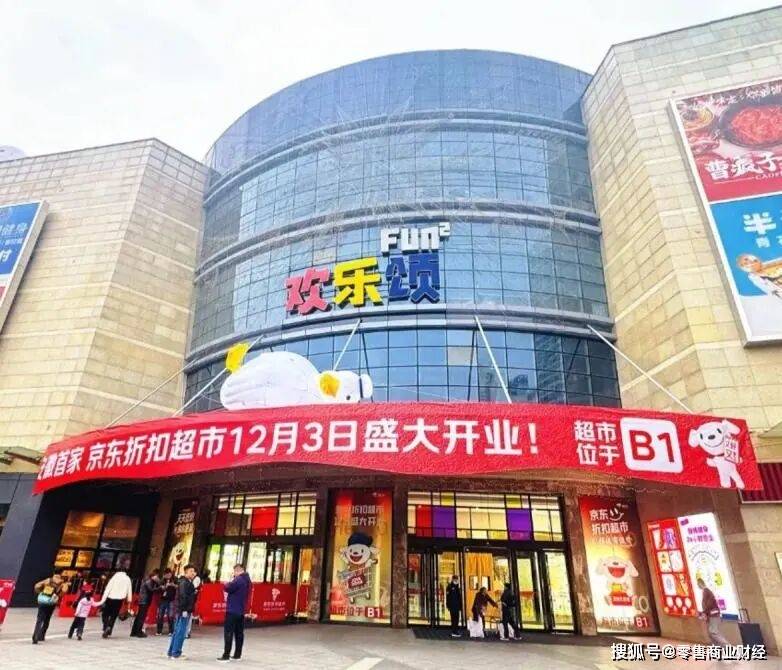
京东折扣超市安徽首店开业;林清轩再次递表港交所
Sou Hu Cai Jing· 2025-12-04 00:18
Group 1: JD Discount Supermarket - JD Discount Supermarket opened its first store in Anhui, located in Hefei, with long queues on the opening day [1] - The store follows JD's "large store, multiple SKUs" model, utilizing a self-built warehouse of 14,000 square meters for efficient delivery within a 25-kilometer radius [1] - The product selection focuses on high-cost performance nationwide goods while incorporating local Anhui specialties [1] Group 2: Dingdong Maicai - Dingdong Maicai launched a seafood processing service nationwide, offering various processing options for popular fish types [3] - In Jiangsu, over 70% of users opted for processing services when purchasing black fish, with sliced processing accounting for 60% of those choices [3] Group 3: Meituan and Starbucks - Meituan Longzhu's founder revealed that they exited the first round of bidding for Starbucks China due to failed verification [5] - The founder predicts a slowdown in the tea beverage market growth after reaching a scale of 400 billion yuan, while the coffee market is expected to grow to 600 billion yuan [5] Group 4: Walmart - Walmart announced a $350 million investment to build a second milk processing plant in Valdosta, Georgia, to strengthen its supply chain [12] - The new facility will create over 400 jobs and supply milk to more than 650 Walmart and Sam's Club locations in the southeastern U.S. [12] Group 5: Alibaba Foundation - Alibaba Foundation released a report on its progress in assisting people with disabilities, highlighting the increasing role of AI in creating accessible environments [13] - The foundation's initiatives have helped over 18,000 disabled individuals earn income through various projects [13] Group 6: Cainiao - Cainiao's unmanned vehicle delivery network has expanded to over 30 cities in China, enhancing supply chain efficiency [14] - The solution allows for real-time replenishment and dynamic route planning, upgrading the traditional delivery model [14] Group 7: KFC Expansion - KFC plans to double the number of its restaurants in Europe over the next five years, marking a significant expansion [15] Group 8: Lin Qingxuan - Lin Qingxuan submitted a new application for listing on the Hong Kong Stock Exchange, planning to issue up to 16.06 million shares [17] Group 9: Tianjin Snack Growth - Tianjin's Le Ba potato chips saw a tenfold increase in sales on Pinduoduo, leveraging innovative flavors and nostalgic appeal [18] Group 10: New Store Openings - Sushi Lang will open two new stores in Shanghai, marking its first locations in the city [20] - Beijing added over 960 new stores in the first 11 months of 2025, highlighting the growth of the first-store economy [22]

半年超700亿元的资本灰烬里,外卖大战无人获胜
Mei Ri Jing Ji Xin Wen· 2025-12-03 13:28
Core Insights - The article highlights the rapid decline in the aggressive subsidy war among major food delivery platforms in China, with a significant reduction in order volumes and income for delivery riders and merchants [1][2][6] - The intense competition has led to a combined expenditure of over 700 billion yuan by Meituan, Alibaba, and JD.com in the second and third quarters of the year, resulting in substantial losses for these companies [2][3][4] Expenditure Analysis - In the second quarter, the spending by the three platforms exceeded 300 billion yuan, with total expenditures in the second and third quarters estimated at around 750 billion yuan [2] - Meituan's sales and marketing expenses surged by 90.9% year-on-year to 343 billion yuan, primarily due to increased promotional and user incentive costs [2][4] - JD.com's marketing expenses doubled from 100 billion yuan to 211 billion yuan, with approximately 111 billion yuan allocated to the food delivery sector [3] - Alibaba's sales and marketing expenses increased by over 340 billion yuan, with at least half directed towards its "Taobao Flash Purchase" initiative [3] Strategic Approaches - Meituan's investment is characterized as defensive, aimed at maintaining market share and network effects, with expectations of continued significant losses in the fourth quarter [4][5] - Alibaba's strategy is seen as a breakthrough approach, leveraging its vast user base to penetrate the instant retail market, with a forecasted reduction in spending [4][5] - JD.com focuses on strategic positioning and efficiency, emphasizing a rational approach to spending while optimizing its economic model [4][5] Market Dynamics - The market landscape has shifted, with Meituan holding a 47.1% share of the instant transaction market, followed by Alibaba at 42.3% and JD.com at 8.4% as of the third quarter of 2025 [6] - The average order value has increased, with non-tea drink orders now accounting for 75% of total orders on Alibaba's platform [6][7] - Despite the reduction in subsidies, promotional activities and discounts continue, indicating that competition remains active [9][10] Future Outlook - The future core battleground for food delivery is expected to shift towards non-food instant retail and in-store services, with competition likely to intensify as new players enter the market [11] - The article suggests that while the subsidy war may be cooling, the competition will evolve from price wars to a focus on operational efficiency and customer experience [11]
年底小作文
Datayes· 2025-12-03 11:43
Core Viewpoint - The article discusses the current state of the A-share market, highlighting the negative consumer sentiment and its impact on retail sales growth, as well as the performance of various sectors including commercial aerospace and energy [3][16]. Consumer Sentiment and Retail Sales - As of September 2025, consumer capability and willingness to spend have contributed 4.98% and -0.48% respectively to retail sales growth, indicating that subsidy policies have not effectively improved consumer sentiment [3]. - The contribution of subsidized goods to retail sales has increased significantly, with subsidized goods accounting for 57.0% of retail sales in the first ten months of 2025, compared to 48.9% in 2024 [3]. Market Performance - On December 3, 2025, the A-share market saw a collective decline, with the Shanghai Composite Index down 0.51%, Shenzhen Component down 0.78%, and ChiNext down 1.12% [16]. - The total trading volume across the three markets reached 168.37 billion yuan, an increase of 76.3 billion yuan from the previous day, with over 3,800 stocks declining [16]. Sector Analysis - The coal sector showed strength, with companies like Dayou Energy and Antai Group hitting the daily limit due to increased seasonal demand amid cold weather [16]. - The commercial aerospace sector experienced mixed performance following the ZQ-3 rocket's successful launch but failed first-stage recovery, leading to volatility in related stocks [10][16]. Investment Recommendations - The article suggests focusing on the commercial aerospace sector, particularly companies involved in rocket propulsion, satellite internet applications, and satellite manufacturing, as the industry is expected to accelerate due to favorable policies and technological advancements [11].


外卖大战收尾:烧光千亿,没有赢家
商业洞察· 2025-12-03 10:10
Core Viewpoint - The fierce competition in the food delivery sector among Meituan, Alibaba, and JD has shown signs of winding down as they face significant financial pressures and begin to reassess their strategies [4][12][21]. Group 1: What the Companies Gained - Alibaba's investment in instant retail has led to substantial growth, with daily order peaks reaching 120 million in Q2 and 300 million monthly active buyers [6][7]. - The collaboration between instant retail and Alibaba's ecosystem has resulted in a 20% increase in daily active users (DAU) for Taobao, enhancing commission and advertising revenues [7]. - Meituan has solidified its market position, with record high daily active users and increased transaction frequency, indicating strong consumer loyalty despite the competitive environment [8][9]. - JD has found a new narrative for its e-commerce business through its food delivery efforts, which have shown synergy with its core retail operations [9][11]. Group 2: What the Companies Paid - Alibaba's Q3 operating profit plummeted 85% to 5.4 billion yuan, with a net profit drop of 72% to 10.4 billion yuan, primarily due to high spending on food delivery subsidies [16][17]. - Meituan reported a revenue of 95.5 billion yuan in Q3, with a net loss of 16 billion yuan, marking a significant decline from a profit of 12.8 billion yuan in the previous year [17][18]. - JD's revenue grew 15% to 299.1 billion yuan in Q3, but its adjusted net profit fell by 74 million yuan, reflecting the costs associated with its food delivery operations [19][20]. Group 3: Market Dynamics and Future Outlook - The competitive landscape has stabilized, with Meituan holding a 50% market share in food delivery, while Alibaba and JD have 42% and 8% respectively [25][26]. - The diminishing returns from subsidy strategies have prompted companies to reconsider their growth narratives, as evidenced by a shift in Alibaba's investment strategy [27][28]. - Experts suggest that while the immediate competition may have cooled, the focus will shift towards non-food instant retail and enhancing in-store service capabilities as the next battleground [28][29].

美团-W(03690.HK)2025Q3业绩点评:业绩低于预期 继续关注竞争动态变化
Ge Long Hui· 2025-12-03 05:49
Core Insights - Meituan's Q3 2025 revenue reached 95.5 billion yuan, a year-on-year increase of 2.0%, but adjusted net profit was a loss of 16.009 billion yuan, falling short of Bloomberg consensus expectations [1] - The core local business turned from profit to loss due to intensified competition, while new business losses improved [1] Local Business Performance - Q3 revenue for the core local business was 67.4 billion yuan, down 3% year-on-year, with an operating loss of 14.1 billion yuan, resulting in an operating loss margin of 20.9%, which was lower than market expectations due to ongoing competition in the food delivery sector [1][2] - The company increased delivery subsidies and user incentives to combat competition, leading to significant losses in the food delivery business, but it maintained market share and user engagement [2] - Daily active users and monthly transaction users for restaurant delivery reached historical highs, with a steady growth in core user base and an increase in high-frequency users [2] New Business Developments - Q3 revenue for new businesses was 28 billion yuan, up 16% year-on-year, with an operating loss of 1.3 billion yuan, and the operating loss margin improved by 2.5 percentage points to 4.6%, better than market expectations [1][3] - The company is expanding its grocery retail business, including Xiaoxiang Supermarket and Keta, which are showing strong growth and improving operational efficiency [3] - Keta has accelerated its global expansion, achieving profitability in the Hong Kong market and steady market share growth in Saudi Arabia, with plans to enter Kuwait, UAE, and Brazil [3] Future Outlook - The company anticipates that Q4 losses will marginally improve compared to Q3, although competitive strategies from rivals need to be monitored [2] - The upgraded membership system is expected to enhance user engagement and transaction frequency, supporting growth across various business areas [2] - Profit forecasts for 2025-2027 have been adjusted downward due to the impact of food delivery competition, with expected adjusted profits of -14.2 billion, 1.2 billion, and 24.6 billion yuan respectively [3]

受“外卖大战”拖累 美团第三季度净亏损160亿元
Xi Niu Cai Jing· 2025-12-03 03:28
Core Insights - Meituan reported a significant net loss in Q3 2025, marking the first operational loss in its core business in three years, with adjusted net loss reaching 16.01 billion RMB compared to a profit of 12.83 billion RMB in the same period last year [2][5][7] Financial Performance - Total revenue for Q3 2025 was 95.49 billion RMB, a year-on-year growth of only 2.0% [2][4] - The net profit margin fell to -16.75%, with a substantial decline from the previous year's profit [2] - The core local commerce segment generated revenue of 67.45 billion RMB, down 2.8% year-on-year, resulting in an operational loss of 14.07 billion RMB [4][5] Segment Analysis - Meituan's delivery service revenue decreased by 17.1% to 23.02 billion RMB, while commission revenue grew by only 1.1% to 26.38 billion RMB [5] - Online marketing services revenue increased by 5.7% to 14.19 billion RMB, and other services saw a significant growth of 84.9% to 3.86 billion RMB [5] Cost Structure - Sales costs surged by 23.7% to 70.31 billion RMB, accounting for 73.6% of total revenue, an increase of 12.9 percentage points year-on-year [5][6] - Sales and marketing expenses rose by 91% to 34.27 billion RMB, representing 35.9% of total revenue, up from 19.2% [5][6] Market Position - Despite the losses, Meituan maintained a leading market share in high-value orders, capturing over two-thirds of the market for orders above 15 RMB and over 70% for orders above 30 RMB [7] - Meituan's market share in instant transactions was 47.1%, with a reported loss of 20% market share compared to previous periods [7] User Metrics - The number of monthly transaction users for Meituan's food delivery service reached a historical high, with total transaction users exceeding 800 million in the past 12 months [7] New Business Developments - The new business segment reported a revenue increase of 15.9% to 28.04 billion RMB, although operating losses increased by 24.5% to 1.3 billion RMB [8] - Meituan's Keeta business is expanding globally, with operations in Hong Kong and Saudi Arabia showing steady growth and improved operational efficiency [8] Cash Reserves - As of September 30, 2025, Meituan held cash and cash equivalents of 99.2 billion RMB, along with short-term investments totaling 42.1 billion RMB, amounting to a total cash reserve of 141.3 billion RMB [8]

外卖大战,美团度过行业竞争的“极限测试”
3 6 Ke· 2025-12-03 01:29
Core Viewpoint - Meituan's Q3 2025 financial report reflects the intense competition in the food delivery industry, with significant sales expenses impacting profitability, yet the company demonstrates resilience and maintains market leadership despite challenges [1][2][10]. Financial Performance - Meituan reported Q3 revenue of 95.5 billion yuan, a year-on-year increase of 2%, with an adjusted net loss of 16 billion yuan, primarily due to a core local business loss of 14.1 billion yuan [1][3]. - The overall sales expenses in the food delivery sector increased by 61.4 billion yuan, nearly equivalent to the net profit of Q3 2024 [1]. Market Position - Meituan retains its leading position in the market, with an estimated GTV ratio of 6:4 compared to major competitors, and dominates high-value segments with over two-thirds market share in orders above 15 yuan and 70% in orders above 30 yuan [2][3]. Operational Metrics - Key operational metrics show strong performance: peak daily orders exceeded 150 million in July, daily active users (DAU) grew over 20% year-on-year, and the number of transaction users surpassed 800 million [3]. - Despite a strong order volume, revenue growth was only 2% year-on-year, attributed to accounting treatment differences where a portion of subsidies offset revenue [3]. Competitive Landscape - The third quarter was characterized by high competition and significant investment in flash purchase services, with expectations of reduced subsidy intensity in subsequent quarters, indicating a potential improvement in Meituan's performance [4][5]. Strategic Developments - Meituan continues to execute its strategic plans, including the launch of the "Brand Flagship Flash Warehouse" project, which aims to enhance supply chain efficiency and expand its reach across various product categories [6][7]. - The company reported that its international delivery brand Keeta achieved profitability in Hong Kong within 29 months of launch, ahead of schedule [7]. Ecosystem and Social Responsibility - Meituan emphasizes an "ecosystem win-win" approach, providing comprehensive support for riders, including insurance and housing initiatives, while also investing in merchant support programs [8][9]. - The company is committed to enhancing consumer trust through initiatives like the "Bright Kitchen" program, which encourages transparency in food preparation [9]. Long-term Growth Potential - Meituan's focus on technological investment, including AI and drone delivery, underpins its long-term growth strategy, with significant R&D spending of 6.9 billion yuan in Q3, a 31% increase year-on-year [9][10]. - The financial report indicates that Meituan has successfully navigated extreme market conditions, positioning itself for future growth as competition stabilizes and new revenue streams materialize [10].
烧掉1000亿后,外卖往何处去?
3 6 Ke· 2025-12-03 00:27
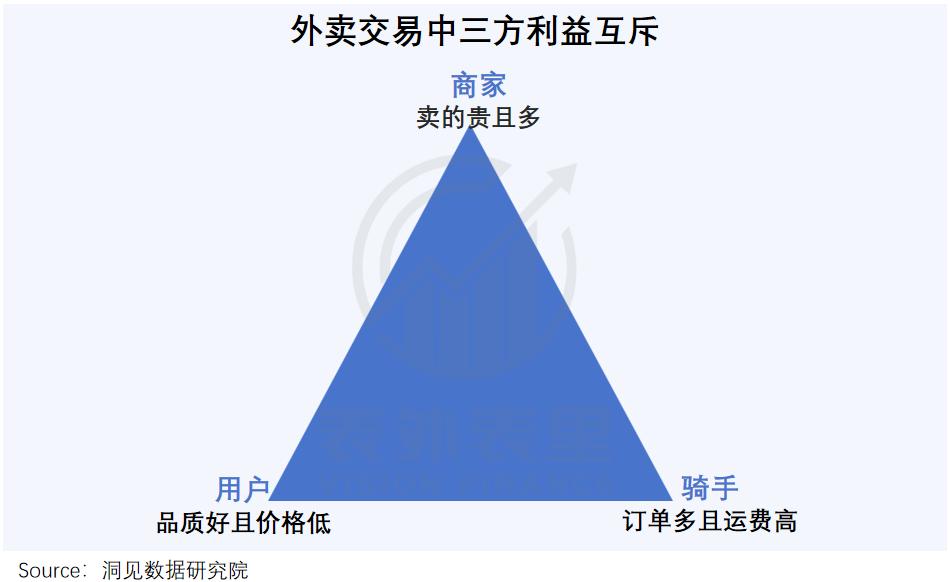
Core Insights - The three major food delivery platforms have collectively burned approximately 100 billion yuan, yet they show no signs of slowing down in their competition [1] - Alibaba's Taobao Flash Purchase has surpassed 100 million daily active users and aims for over 1 trillion yuan in transactions within three years, while JD.com plans to make its delivery business self-sustainable [1] - Meituan has regained market share in the food delivery sector, capturing over two-thirds of orders priced above 15 yuan and over 70% of orders above 30 yuan, while increasing investments in high-net-worth users [1] Group 1: Competitive Landscape - The competition among the three platforms is characterized by a "three-way consumption" of order acquisition, with significant costs incurred for rider incentives [2] - In Q3, Meituan's sales costs increased by 13.5 billion yuan year-on-year, largely due to rider subsidies [2] - On a peak day, the three platforms spent approximately 2.5 billion yuan on delivery subsidies alone, highlighting the financial stakes involved in attracting riders [2] Group 2: Consumer Behavior and Market Dynamics - 75% of new food delivery orders this year come from the low-price segment below 15 yuan, indicating consumer preference for affordable options [3] - The competitive nature of the market leads to a cycle of defensive actions among platforms, resulting in large-scale subsidy campaigns [3] - The reliance on subsidies creates a volatile environment where platforms must continuously invest to maintain market share [4] Group 3: Operational Strategies - Platforms are not only competing for users but are also engaging in comprehensive competition on the supply side by offering subsidies and benefits to attract riders and merchants [6] - The ongoing subsidy wars have led to rising costs and eroded profits, with many players entering a state of "losing money on every order" [8] - Despite low profit margins, platforms aim to improve unit economics through operational efficiency [9] Group 4: Targeting High-Value Users - The latest subsidy strategies are shifting towards high-net-worth users, with platforms offering exclusive benefits to attract this demographic [10] - For instance, Meituan's black diamond members enjoy significant perks, while Taobao Flash Purchase focuses on high-ticket restaurants [11] - The overlap of merchants among platforms has increased, as high-net-worth consumers seek quality and variety [11] Group 5: Infrastructure and Delivery Efficiency - The stability of rider capacity is crucial, with recent seasonal fluctuations causing delivery shortages [16] - Platforms are investing in optimizing their dispatch systems and improving delivery efficiency to meet high-net-worth user demands [15] - Meituan's experience in building a stable delivery service over ten years gives it an edge in operational capabilities compared to newer players [16] Group 6: Future Directions and Market Trends - The competitive landscape is evolving, with platforms focusing on internal operational efficiency and collaboration with e-commerce [19] - As the market stabilizes, optimizing recommendation algorithms and enhancing user habits in e-commerce will be key to improving conversion rates [21] - The future of the food delivery market will not be solely about burning cash but will require a focus on operational precision and user insights [26]
中经评论:千亿元级别的竞争改变了啥
Jing Ji Ri Bao· 2025-12-03 00:01
风物长宜放眼量。如果仅凭一两个季度的得失,来评价平台企业千亿元级别的战略性投入,有点太 早了,等几年再看比较合适。这就像播种,今天埋下的种子,可能几年后开花结果,也可能被证明是走 了弯路,但这份不确定性,本就是企业经营必须承担的代价。 对于这场外卖大战,各平台态度很不一样。美团毫不客气地称外卖价格战是"低质量的恶性竞争", 并强调这种投入"无法为行业创造价值,且不可持续"。阿里巴巴则态度积极,管理层在电话会上肯定了 过去一个季度的投入效果。京东也有收获,至少现在盘点外卖业务的时候,它成了"外卖三巨头"之一, 与淘宝闪购一起取代了原先的饿了么。 半年多时间,约1000亿元投入,即使在见惯了补贴大战的中国互联网领域,这样的力度也是不多见 的。有很多人在替平台企业算账,讨论这种投入值不值得,分析哪家扛住了至暗时刻,哪家已经偃旗息 鼓,哪家护城河没了,哪家后院起火了,说什么的都有。 然而抛开单纯的财务数据,这场竞争本身也带来了一些积极变化:服务质量提升了,企业的精气神 被激活了,为了争夺运力,骑手的待遇和保障也在竞争中水涨船高。不是说没有外卖大战就不会做这些 事情,但激烈的角逐无疑加速了这一系列良性变革。不管最终结果 ...