
纺织

Search documents
行业景气度系列八:制造业供需回落,非制造业需求增加
Hua Tai Qi Huo· 2025-11-03 05:21
Report Summary 1. Report Industry Investment Rating No information regarding the report industry investment rating is provided in the content. 2. Core Viewpoints - **Manufacturing**: In October, the manufacturing PMI's five - year percentile was at 6.7%, with a change of - 44.1%. Supply contracted (3 - month average: the production index was 50.8, down 0.3 percentage points month - on - month), demand declined (new orders were 49.3, down 0.2 percentage points month - on - month), and inventory increased (finished - product inventory up 0.2 percentage points to 47.7, raw - material inventory down 0.1 percentage points to 47.9) [3]. - **Non - manufacturing**: In October, the non - manufacturing PMI's five - year percentile was at 16.9%, with a change of 5.1%. Supply slowed (3 - month average: the employee index was 45.3, down 0.1 percentage points month - on - month), demand increased (new orders were 46.2, up 0.1 percentage points month - on - month), and inventory increased (inventory was 45.5, up 0.2 percentage points month - on - month) [4]. 3. Summary According to the Table of Contents 3.1 Overview - Manufacturing PMI: In October, the five - year percentile was 6.7%, with a change of - 44.1%. Eight industries were in the expansion range, unchanged month - on - month and 3 less year - on - year [9]. - Non - manufacturing PMI: In October, the five - year percentile was 16.9%, with a change of 5.1%. Thirteen industries were in the expansion range, 5 more month - on - month and 1 more year - on - year [9]. 3.2 Demand: Focus on the Improvement of Automobile and Textile Industries - Manufacturing: The 3 - month average of new orders in October was 49.3, down 0.2 percentage points month - on - month. Eight industries improved month - on - month, and 7 declined [16]. - Non - manufacturing: The 3 - month average of new orders in October was 46.2, up 0.1 percentage points month - on - month. Service new orders decreased 0.1 percentage points month - on - month, while construction new orders increased 1.1 percentage points month - on - month. Nine industries improved month - on - month, and 6 declined [16]. 3.3 Supply: Focus on the Decline of Civil Engineering and the Improvement of Automobile and Pharmaceutical Industries - Manufacturing: The 3 - month average of the production index in October was 50.8, down 0.3 percentage points month - on - month. Seven industries improved month - on - month, and 8 declined. The employee index was 48.2, up 0.1 percentage points month - on - month. Eleven industries improved month - on - month, and 4 declined [24]. - Non - manufacturing: The 3 - month average of the employee index in October was 45.3, down 0.1 percentage points month - on - month. Service decreased 0.1 percentage points month - on - month, and construction decreased 0.3 percentage points month - on - month. Ten industries improved month - on - month, and 3 declined [24]. 3.4 Price: Focus on the Decline of Ferrous Metals and the Improvement of Aviation - Manufacturing: The 3 - month average of the ex - factory price index in October was 48.3, down 0.3 percentage points month - on - month. Nine industries' ex - factory prices improved month - on - month, and 6 declined. The profit trend in March decreased 0.5 percentage points month - on - month, continuing to converge [32]. - Non - manufacturing: The 3 - month average of the non - manufacturing charge price index in October was 47.9, unchanged month - on - month. Service was unchanged, and construction decreased 0.3 percentage points month - on - month. Ten industries improved month - on - month, and 5 declined. The profit in March increased 0.4 percentage points month - on - month, with service unchanged and construction increasing 2.7 percentage points month - on - month [32]. 3.5 Inventory: Focus on the De - stocking of Non - ferrous Metals, Postal, and Construction Decoration Industries - Manufacturing: The 3 - month average of the finished - product inventory in October increased 0.2 percentage points to 47.7. Nine industries' inventory increased month - on - month, and 6 declined. The raw - material inventory decreased 0.1 percentage points to 47.9. Eight industries' inventory increased month - on - month, and 6 declined [39]. - Non - manufacturing: The 3 - month average of the non - manufacturing inventory in October was 45.5, up 0.2 percentage points month - on - month. Service increased 0.2 percentage points month - on - month, and construction increased 0.5 percentage points month - on - month. Four industries' inventory increased month - on - month, and 11 declined [39]. 3.6 Main Manufacturing Industry PMI Charts The report provides detailed data on various manufacturing industries' PMI, including specific values, month - on - month, year - on - year, and three - year average changes for multiple indicators such as new orders, production, and inventory in industries like special equipment, general equipment, automobiles, computers, and others [47][49][54].
采购团直奔车间!广交会从现场“火热”到工厂
Yang Shi Xin Wen Ke Hu Duan· 2025-11-03 03:17
广交会期间,轻纺城通过线上加线下的方式,为城内商户对接广交会资源拓展商机。此外,该轻纺 城还专门为广交会设置了线下服务点,准备多语言服务人员,给来到这里的客商提供及时的指引和对 接。 广州国际轻纺城公共关系与企业传讯部高级经理 盛倩玉:对于海外客商来说,他只需要提出他的 采购需求我们就可以非常精准地给他匹配到相应的客户或者产品,帮助他们去实现精准找布。 来广交会移动端 让商机"握在手心" 第138届广交会分三期举办。今天,本届广交会的第三期线下展也拉开帷幕。广交会展出期间,不 止展馆内热闹非凡,不少企业生产一线也迎来了境外采购商参观调研、洽谈合作。从现场到工厂,这一 路收获不小。 抓住机遇主动出击 专业市场收获大批订单 为了抓住广交会期间海外客商云集的好机遇,广东多地的专业市场以"早筹备、精对接、强服务"策 略主动出击,收获了大批订单。 位于广州市海珠区的广州国际轻纺城,汇聚近3000家国内名列前茅的服装面辅料品牌供应商,是当 下众多国内外服装采购商、时装设计师和服装买手观察时尚潮流趋势的窗口。 在广州的一家纺织企业展厅,业务员和设计师正在为广交会的线下展览和线上平台挑选样品。广交 会第三期展览期间,这家企业 ...
从大师的 “错题本”中,投资者能得到很多经验和教训
雪球· 2025-11-02 05:32
Core Insights - The article emphasizes the importance of learning from investment failures of renowned investors, highlighting that even experts can fall into common traps that lead to losses [18]. Group 1: Investment Failures - High-tech stocks have historically led to significant losses for investors, with examples including a $25 million loss in data processing companies and other notable tech stocks like Tandem and Motorola [3][4]. - Warren Buffett and Charlie Munger have also experienced failures, such as the investment in a Baltimore department store, which they later recognized as a poor decision due to their lack of understanding of the retail business [5][6][7]. - The article discusses the case of Loyal Insurance Company, which missed out on a bull market in the early 1960s due to conservative investments and later made poor decisions during a bear market, leading to further losses [9][10]. Group 2: Common Investment Traps - The first major trap is investing in areas outside one's understanding, as illustrated by Peter Lynch's losses in high-tech stocks despite acknowledging his lack of knowledge in that sector [18][21]. - Misjudging the nature of a business can lead to investing in "bad businesses" with fierce competition, as seen in Buffett's experiences with the textile industry and jewelry stores, which ultimately failed to generate profits [20][21]. - Emotional reactions to market fluctuations can disrupt long-term strategies, exemplified by Loyal Insurance's erratic decisions during market volatility [21]. - Trusting financial data from companies with low transparency can result in significant losses, as demonstrated by Munger's investment in an Irish bank, which he later regretted due to the ease of financial manipulation in the banking sector [14][21]. - Ignoring industry realities and competitive dynamics can lead to poor investment choices, as seen in Buffett's delayed exit from unprofitable textile operations [20][21].


宏源期货农产品早报-20251102
Hong Yuan Qi Huo· 2025-11-02 04:17
1. Report Industry Investment Rating - No relevant content found 2. Core View of the Report - The market shows fluctuations, with the polyester market around 488 - 493. The market is weak, and investors are cautious. The supply - demand relationship in the industry is complex, with supply being relatively weak and demand also showing a narrow range of changes. There are factors such as macro - economic conditions and raw material prices affecting the market [2] 3. Summary According to Relevant Contents Market Conditions - The market is in a state of shock. For example, the polyester market has fluctuations, and the price range is around 488 - 493. The market is relatively weak, and trading is not active [2] Supply - Demand Relationship - Supply is relatively weak, with factors like low production volume and limited supply of raw materials. Demand also shows a narrow - range change, and the overall supply - demand gap is relatively small [2] Price Changes - Prices are in a state of shock and adjustment. For example, the price of ethylene glycol has certain fluctuations, and the price range is relatively narrow [2] Investor Sentiment - Investors are cautious. The market is affected by macro - economic data and other factors, and investors are waiting and observing [2]
浙江新澳纺织股份有限公司关于召开2025年第三季度业绩说明会的公告
Shang Hai Zheng Quan Bao· 2025-10-31 19:08
Core Viewpoint - Zhejiang Xinao Textile Co., Ltd. is set to hold a Q3 2025 performance briefing on November 11, 2025, to discuss its operational results and financial status with investors [2][3]. Group 1: Meeting Details - The performance briefing will take place on November 11, 2025, from 10:00 to 11:00 AM [5]. - The meeting will be held at the Shanghai Stock Exchange Roadshow Center and will be conducted in an interactive online format [4][5]. - Investors can submit questions from November 4 to November 10, 2025, via the Roadshow Center website or through the company's email [6]. Group 2: Company Communication - The company aims to provide a comprehensive understanding of its Q3 2025 operational results and financial indicators during the briefing [3]. - The company will address commonly raised questions from investors within the scope of information disclosure [3].

深圳市纺织(集团)股份有限公司2025年第三次临时股东会决议公告
Shang Hai Zheng Quan Bao· 2025-10-31 18:45
Core Viewpoint - The Shenzhen Textile (Group) Co., Ltd. held its third extraordinary general meeting of shareholders in 2025, where the meeting's legality and the resolutions passed were confirmed [1][4]. Meeting Details - The meeting was attended by a total of 280 shareholders and authorized representatives, representing 257,955,978 shares, which accounts for 50.9269% of the total voting shares [2][3]. - Of the attendees, 2 were present at the venue, representing 250,198,468 shares (49.3954%), while 278 participated via online voting, representing 7,757,510 shares (1.5315%) [2][4]. - No B-share shareholders attended or voted in the meeting [4]. Voting and Resolutions - The meeting adopted a combination of on-site and online voting methods [4]. - The resolution regarding the subsidiary's equipment purchase and related transactions was approved [4]. Legal Opinions - The legal opinion provided by Guangdong Huashang Law Firm confirmed that the meeting's procedures complied with relevant laws and regulations, and the qualifications of the conveners and attendees were valid [4]. Documentation - The resolutions from the third extraordinary general meeting and the legal opinion from Guangdong Huashang Law Firm are available for review [5]. Announcement - The announcement regarding the meeting was made by the Board of Directors of Shenzhen Textile (Group) Co., Ltd. on November 1, 2025 [6].

月度市场策略:短期关注风格切换,中期布局“十五五”结构性机遇-20251031
SPDB International· 2025-10-31 12:53
Group 1 - The report highlights a short-term focus on style switching in the market, with large-cap value stocks expected to outperform [1] - The investment strategy suggests a return to dividend stock allocation, while AI concept stocks in Hong Kong remain a key focus for technology investments [1][4] - The report emphasizes structural investment opportunities arising from the "14th Five-Year Plan," particularly in sectors like artificial intelligence, quantum science, and green energy [1][4] Group 2 - The report notes that the MSCI China Index and the Shanghai Composite Index have seen increases of 2.0% and 2.7% respectively in October, while the Hang Seng Index has decreased by 2.1% [4] - It indicates that the valuation of the Hang Seng Technology Index remains below its five-year average, highlighting its investment value [4][25] - The report mentions that the forward P/E ratios for the Shanghai Composite Index and the Hang Seng Index are 14.4x and 11.6x, respectively, indicating they are near their historical averages [4][25] Group 3 - The report discusses the impact of recent U.S.-China trade negotiations, noting that agreements reached have improved market sentiment and may lead to increased foreign investment in Chinese assets [10][11] - It highlights that sectors such as consumer electronics and technology are expected to benefit from reduced tariffs and improved export competitiveness [10][11] - The report also points out that the overall market sentiment remains optimistic, which could sustain the upward momentum in the Hong Kong stock market despite potential short-term profit-taking [4][10] Group 4 - The report identifies structural investment opportunities in key industries supported by the "14th Five-Year Plan," including high-end manufacturing and digital economy sectors [1][8] - It emphasizes the importance of focusing on sectors that are likely to benefit from government policies aimed at enhancing competitiveness and innovation [8] - The report suggests that the ongoing economic stimulus measures will be crucial for maintaining growth in these sectors [41]
南山智尚(300918) - 2025年10月31日投资者关系活动记录表
2025-10-31 08:52
Group 1: Collaboration and Product Development - The collaboration with Junsheng Electronics focuses on the development of key components for humanoid robots and the supply of high-performance new materials [1][2] - The company is currently producing fabric materials for robot heads, meeting various performance requirements such as tensile strength, temperature resistance, and aesthetics [2] Group 2: Future Applications of Data Gloves - Data gloves are expected to be used in three main scenarios: remote operation of industrial robots, skill learning for robots, and virtual assembly testing in VR environments [3] Group 3: Market Outlook for Tendon Solutions - The company has received small batch orders from leading domestic and international robot manufacturers for tendon products, which are applicable in various humanoid robot parts [4] - Future focus will be on key products like tendons, smart gloves, and PA66 coating materials, aiming for lightweight, functional, and scalable developments [4] Group 4: Nylon Project and Industry Trends - The nylon fiber market is expected to grow due to the increasing popularity of outdoor and sports apparel, with a focus on sustainable and high-end products [5] - The company aims to integrate technology innovation with sustainable development to enhance the value chain in the nylon industry [5] Group 5: AI Integration in Fashion Design - The company is incorporating AI design systems into its high-end fashion business to meet customized client needs and enhance product differentiation [6] Group 6: Growth Points in Nylon Business - Future growth in the nylon sector will focus on differentiated functional fibers and applications in new consumer markets and humanoid robot coverings [7] Group 7: Financial Performance - In the first three quarters of 2025, the revenue from ultra-high fibers increased by 11.56% year-on-year, with a gross profit increase of 175.24% and a net profit growth of 212% [8] - The company’s foreign trade revenue for ultra-high fibers surged by 256.16% compared to the same period in 2024 [9] Group 8: Employee Stock Ownership Plan - The employee stock ownership plan will not significantly alter the company's equity structure, with a maximum of 10% of the total share capital held by all employees [10] Group 9: Cash Flow and Investment - The decrease in operating cash flow is attributed to increased cash outflows for the 80,000-ton nylon filament project [11] Group 10: Dual-Drive Strategy - The company is implementing a dual-drive strategy of "traditional wool spinning + new materials" to enhance its product matrix and accelerate the development of new materials [12] Group 11: Core Advantages of Nylon Project - The 80,000-ton high-performance differentiated nylon filament project has a total investment of approximately 1.5 billion yuan, focusing on advanced production systems and market positioning [11] Group 12: New Application Areas for Ultra-High Business - The ultra-high business is expanding into new markets such as fishing lines, civilian textiles, and robot tendons, with a focus on high-performance product development [12] Group 13: Performance Standards for Tendon Materials - The lifespan of tendon materials is targeted to reach 100,000 cycles for household use and 1,000,000 cycles for industrial applications, with plans for further development [13]
绿色贸易领域首个!多部门最新解读
Shang Hai Zheng Quan Bao· 2025-10-31 06:28
Core Viewpoint - The Ministry of Commerce has issued the "Implementation Opinions on Expanding Green Trade," marking the first specialized policy document in the field of green trade in China, emphasizing innovation-driven characteristics [1][3]. Group 1: Green Trade Development - The "Implementation Opinions" focus on addressing weaknesses in China's green trade development, including the shortcomings in enterprises' green low-carbon development capabilities and the need to explore carbon reduction potential in logistics [3]. - The document outlines four key measures: enhancing the green low-carbon development capabilities of foreign trade enterprises, expanding the import and export of green low-carbon products and technologies, creating a favorable international environment for green trade, and establishing a robust support system for green trade [3]. Group 2: Market Potential and Performance - Green low-carbon products are identified as a new driving force for foreign trade development, with international institutions predicting that the global market for electric vehicles, solar energy, and wind energy will reach $2.1 trillion by 2030, five times the current scale [6]. - In recent years, China's exports of green low-carbon products have shown significant growth, with wind turbine components increasing by over 30% in the first three quarters of this year, and photovoltaic products exceeding 200 billion yuan in export value for four consecutive years [6]. Group 3: Support for SMEs - The Ministry of Commerce aims to assist small and medium-sized enterprises (SMEs) in overcoming challenges related to green low-carbon transformation, focusing on enhancing their green competitiveness through improved services, market expansion platforms, and promoting best practices [7][9]. Group 4: Green Manufacturing and Design - The Ministry of Industry and Information Technology has created 451 green design enterprises and over 4,000 green products, with plans to increase the output value of national, provincial, and municipal green factories to 40% by 2030 [11][13]. - The strategy includes promoting green design, building green factories, cultivating green supply chains, and developing green industrial parks to support the green trade ecosystem [13]. Group 5: Financial Support for Green Trade - The People's Bank of China is focusing on supporting green service trade development through green finance, including green credit, bonds, and equity funds, while lowering financing barriers for light-asset and green service trade enterprises [15][17]. - The bank plans to enhance sustainable finance standards and encourage financial institutions to provide targeted financial services to support green trade [17]. Group 6: Green Product Certification - The State Administration for Market Regulation will advance the green product certification system to support foreign trade enterprises in their green development efforts [19][21]. - The approach includes expanding certification to cover industry chains and supply chains, strengthening regulatory measures, promoting green product certification, and enhancing international cooperation for mutual recognition of green product certifications [21].
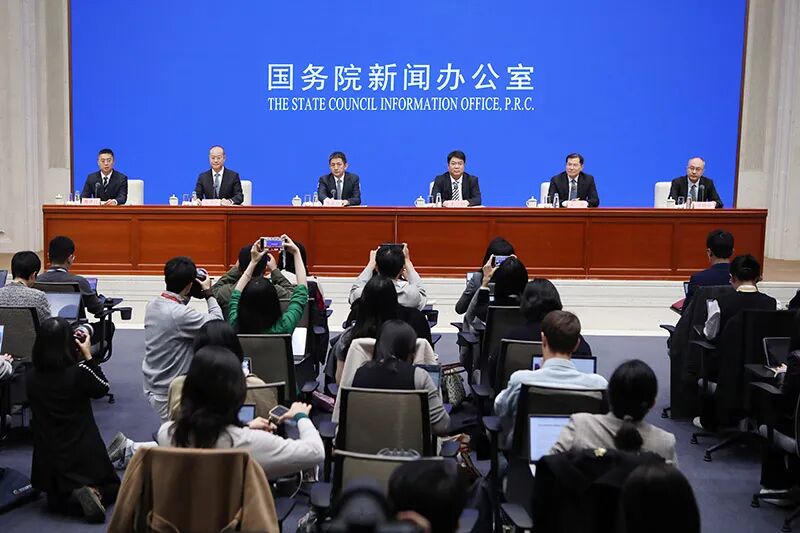
宏观策略联合解读:中美元首会晤取得阶段性成果,有望提振短期市场情绪
SPDB International· 2025-10-31 05:52
Macro Strategy - The meeting between Chinese President Xi Jinping and US President Trump on October 30 resulted in a series of agreements aimed at easing trade tensions, which is expected to boost short-term market sentiment [2][3]. - Key outcomes include the cancellation of the 10% "fentanyl tariff" by the US and a one-year suspension of the 24% "reciprocal tariff" on Chinese goods, with corresponding adjustments from China [2][3]. - The US will also pause the implementation of its export control rules for one year, while China will suspend its related measures, indicating a temporary easing of restrictions [2][3]. - The meeting lasted approximately 1 hour and 40 minutes, shorter than the market's expectation of 3-4 hours, which may indicate ongoing uncertainties in the trade relationship [3][5]. Market Impact Analysis - The agreements are expected to enhance market risk appetite and attract global capital to reallocate into Chinese assets, particularly benefiting sectors with high export ratios to the US, such as consumer electronics, home appliances, and textiles [6]. - The technology sector, especially semiconductors and AI, may see valuation recovery due to the suspension of export controls, while the shipping and shipbuilding sectors will benefit from the pause in the US's 301 investigations [6]. - The overall improvement in the economic environment is likely to boost confidence in US-listed Chinese companies, particularly in relation to the TikTok issue [6][7]. Key Areas of Focus - Tariff adjustments are expected to directly benefit export industries, leading to reduced costs and improved profit margins for companies with significant US export business [7]. - The suspension of export controls will positively impact high-tech industries, reducing uncertainties in the global semiconductor and electric vehicle supply chains [7]. - The pause in the 301 investigations will alleviate pressure on China's shipping, port machinery, and logistics companies, stabilizing global shipping prices and supply chains [7].