
创新药

Search documents
机构:聚焦创新药三大投资主线
Zheng Quan Shi Bao Wang· 2026-01-19 00:31
Core Viewpoint - The Shanghai Municipal Committee emphasizes the importance of strengthening the research and development of innovative drugs and medical devices, focusing on new drug targets, accelerated results transformation, improved clinical trial efficiency, and innovative payment methods to promote the high-end and efficient development of the biopharmaceutical industry [1] Group 1: Investment Opportunities - Jianghai Securities predicts that 2026 will see a surge in BD transactions and mergers in the innovative drug sector, highlighting three main investment themes: focusing on ADC, bispecific antibodies, and RDC tracks, selecting globally competitive innovative drug companies, and paying attention to the commercialization and BD progress of late-stage pipelines [1] - The second investment theme involves closely following cutting-edge fields like small nucleic acids, targeting leading companies with proprietary delivery platforms and chronic disease pipelines [1] - The third theme looks favorably on supporting companies in the innovative drug industry chain, such as CXO firms that will benefit from increased R&D investment and accelerated international expansion, as well as niche companies deeply engaged in industry chain integration that hold long-term value [1] Group 2: Market Trends - Guosen Securities notes that the Chinese innovative drug industry has shown a long-term positive development trend, particularly evident in the explosive growth of BD transactions in recent years [1] - It is important to recognize that for most domestic innovative drugs, external licensing is often just the starting point for global development, with the progress of partners in overseas development and subsequent global clinical data readings further enhancing the certainty of product commercialization in the global market [1]
渤海证券研究所晨会纪要(2026.01.19)-20260119
BOHAI SECURITIES· 2026-01-19 00:26
晨会纪要(2026/01/19) 编辑人 崔健 022-28451618 SAC NO:S1150511010016 cuijian@bhzq.com 渤海证券研究所晨会纪要(2026.01.19) 宏观及策略研究 海外降息趋弱,国内定调积极——宏观经济周报 固定收益研究 结构化降息落地——利率债周报 行业研究 荣昌生物与艾伯维签署授权许可协议,关注创新药产业链机遇——医药生物 行业周报 证 券 研 究 报 告 晨 会 纪 要 请务必阅读正文之后的声明 渤海证券股份有限公司具备证券投资咨询业务资格 1 of 6 晨会纪要(2026/01/19) 宏观及策略研究 海外降息趋弱,国内定调积极——宏观经济周报 周 喜(证券分析师,SAC NO:S1150511010017) 宋亦威(证券分析师,SAC NO:S1150514080001) 严佩佩(证券分析师,SAC NO:S1150520110001) 靳沛芃(研究助理,SAC NO:S1150124030005) 1、外围环境而言 美国方面,2025 年 12 月非农就业数据低于预期,其中以休闲酒店和教育健康为代表的服务业保持韧性,而 对利率更为敏感的传统周期性 ...
银华智享混合型基金拟任基金经理方建:以绝对收益策略进击科技成长股投资
Zhong Guo Ji Jin Bao· 2026-01-19 00:22
Group 1 - The A-share market has initiated a "spring rally" in 2026, with sectors such as commercial aerospace, brain-computer interfaces, and semiconductors showing significant activity, while humanoid robots and innovative drug concept stocks remain vibrant [1] - In this active market environment, investment strategies should include both high-risk, high-reward instruments and those that control drawdowns and reduce volatility, focusing on stable returns and expert-managed thematic funds in sectors like integrated circuits [1][2] - The new fund, Silver Hua Smart Mixed Fund, aims to balance aggressive growth in technology sectors with absolute return strategies, emphasizing risk control and investor experience [3][4] Group 2 - The investment philosophy of the fund manager, Fang Jian, is to buy good companies with growth potential at reasonable prices and hold them long-term, aiming to share in the growth dividends of these companies [2] - Fang Jian emphasizes the importance of selecting growth stocks with strong performance and certainty over the next 3 to 5 years, focusing on core leading companies that have room for growth [2][3] - The fund manager believes that the AI sector represents a significant long-term investment opportunity, driven by the need for technological advancements to address core human challenges [6][7] Group 3 - The AI revolution is seen as a major industrial opportunity, with essential tasks involving efficient data processing reliant on semiconductors and integrated circuits, which are crucial for computational power [7] - Fang Jian identifies robotics and automotive applications as secondary growth industries benefiting from AI, with a particular focus on innovative drug development in China, which has seen significant advancements [8] - The fund manager expresses concerns about potential risks in 2026, particularly regarding the commercialization of AI technology in the U.S. and geopolitical uncertainties that could impact market confidence [8]
银华基金方建: 芒格信徒的“变”与“不变”
Zhong Guo Zheng Quan Bao· 2026-01-18 21:27
Core Viewpoint - The article highlights the investment philosophy of Fang Jian, a fund manager at Yinhua Fund, emphasizing a balance between maintaining a steadfast investment framework and adapting to market realities to enhance investor experience [1][2]. Investment Philosophy - Fang Jian's investment framework remains unchanged, focusing on buying high-quality growth companies at reasonable prices and holding them long-term to benefit from company performance rather than valuation fluctuations [2][3]. - His investment style is characterized by seeking companies with strong growth potential, high market cap ceilings, and excellent management, while emphasizing long-term holding and minimizing short-term speculation [2][3]. Performance Metrics - As of September 30, 2025, the net value growth rate of the Yinhua Zhi Hui fund managed by Fang Jian reached 149.04%, significantly outperforming the benchmark of 32.89% [2]. - The Yinhua Integrated Circuit Fund, managed by Fang Jian, reported a net value growth rate of 73.69% over the past year, with an excess return of 15.05% relative to its benchmark [3]. Product Development - Fang Jian has introduced a new product, Yinhua Hui Xiang Three-Year Open-End Fund, aimed at achieving long-term absolute returns while improving the holding experience for investors [4]. - The focus of this product is on steady growth and consistent profitability for clients, with an emphasis on controlling volatility and drawdowns [5]. Risk Management Strategies - Fang Jian employs three key strategies for managing volatility and controlling drawdowns: 1. Conducting deep research for valuation judgments to identify potential bubbles [5]. 2. Actively responding to market sentiment to take profits when necessary [5]. 3. Establishing clear risk control standards for new investments and reassessing existing holdings to avoid emotional decision-making [5]. AI and Technology Investment - Fang Jian views the AI revolution as an inevitable transformation, addressing fundamental human productivity challenges and believes that AI's overall development does not exhibit a bubble despite localized overvaluation [7][8]. - He outlines a clear investment framework for AI, emphasizing the importance of semiconductors, data storage, and efficient communication technologies as critical components of the AI ecosystem [7]. Robotics and Pharmaceutical Sector - The robotics industry is seen as a significant physical manifestation of AI, with potential for explosive growth as leading companies achieve production breakthroughs [9]. - Fang Jian expresses optimism about China's position in the global innovative pharmaceutical industry, citing advantages in engineering talent and clinical cost efficiency, predicting substantial growth potential post-adjustment [9].
上行趋势下的震荡,耐心掘金结构
Haitong Securities International· 2026-01-18 12:03
Investment Focus - Since the beginning of 2026, the Shanghai Composite Index has broken above the 4,000 and 4,100 thresholds and is approaching 4,200, indicating signs of market overheating with significant inflows into commercial aerospace and AI application sectors, leading to a record turnover of RMB 3.6 trillion [1][26] - Margin financing inflows reached RMB 91.2 billion over the first four trading days of the week, with outstanding margin balances exceeding RMB 2.7 trillion, reflecting a strong inflow intensity comparable to the cyclical highs of August-September 2025 [1][26] - Retail investor inflows have been consistently rising, indicating increased participation from individual investors [1][26] Regulatory Environment - On January 15, 2026, the China Securities Regulatory Commission emphasized a "stability-first" approach to consolidate market momentum and prevent extreme fluctuations, including raising the minimum margin financing collateral ratio from 80% to 100% [2][27] - A significant net outflow of RMB 66.809 billion was recorded in broad-based A-share ETFs on January 15, marking the highest outflow on record, with the Huatai-PineBridge CSI300 ETF experiencing a net outflow of RMB 20.157 billion [2][27] - The relocation of high-frequency traders' servers is expected to enhance trading fairness and curb excessive speculation, which may dampen short-term speculative sentiment but not alter the medium-term market trend [2][27] Market Outlook - The market may enter a phase of consolidation as regulatory cooling measures take effect, particularly affecting previously leading sectors like commercial aerospace, which saw significant declines [3][28] - Despite short-term fluctuations, a slow-bull trend remains a common goal for both regulators and long-term capital, suggesting that the spring rally is not over but may require a "washout" for a healthier uptrend [3][28] Investment Strategy - During the consolidation phase, it is recommended to remain patient while maintaining a medium-term bullish outlook, focusing on identifying Chinese assets with strong medium-to-long-term value [3][29] - A-shares and Hong Kong equities are expected to complement each other, with Hong Kong tech stocks likely to outperform A-shares in the near term due to upcoming AI product launches [3][29] - Investors are advised to align with regulatory intentions to curb speculative trading and focus on structural opportunities in sectors such as semiconductors, innovative drugs, and Hong Kong tech leaders [3][30] Sector Highlights - **Semiconductors**: TSMC's 2026 capex guidance is set at USD 52-56 billion, exceeding 100% of its previous year's operating cash flow, indicating strong demand driven by AI [3][30] - **Innovative Drugs**: The healthcare sector has seen a net outflow of RMB 4.3 billion over the past four months, contrasting sharply with previous inflows, while remaining in a favorable policy environment with new drug listings [3][32] - **Hong Kong Tech Leaders**: Companies like Alibaba and Tencent are integrating AI into their ecosystems, with strong growth in overseas business for Alibaba Cloud and potential upgrades for Baidu's listing status [3][33] - **Optical Modules**: Following significant gains, the sector is now in a consolidation phase, with a shift towards earnings certainty as A-shares enter the annual results pre-announcement window [3][34]
沪指收涨1.2%突破3600点,两市成交额连续五日破万亿
Sou Hu Cai Jing· 2026-01-18 08:09
Core Drivers Analysis - Recent policies from the China Securities Regulatory Commission (CSRC) aim to standardize the capital market, including the implementation of the "Derivatives Trading Supervision Management Measures (Trial)" and "Regulations on the Supervision of Secretaries of Listed Companies" [2] - The Central Huijin Investment Ltd. is playing a stabilizing role in the market, with six departments promoting long-term capital inflow to enhance market confidence [2] - Fiscal and monetary policies are working in tandem, with 1.5 trillion yuan in new special bonds allocated to support manufacturing equipment upgrades and new infrastructure, alongside a 10 basis point expected reduction in LPR rates to support liquidity for the real economy and capital markets [2] - January 2026 macro data shows a 0.8% year-on-year increase in CPI and a narrowing year-on-year decline in PPI to -1.9%, indicating improved industrial demand and marginal profit recovery in upstream sectors like black metals and chemicals [2] - Foreign exchange reserves reached $3.358 trillion, the highest since May 2024, with a resilient trade surplus supporting the stability of the RMB and enhancing foreign investor confidence in Chinese assets [2] Market Sentiment and Capital Flow - The trading volume in both markets has exceeded 1 trillion yuan for five consecutive days, indicating a significant increase in market activity and optimistic investor sentiment [2] - Foreign capital is accelerating its inflow, with international investors, including South Korean capital, increasingly allocating to high-quality A-share assets, while domestic savings are shifting towards capital markets [2] - Sectors such as technology, pharmaceuticals, and cyclical stocks are performing well, with AI computing chains, innovative drugs, and rare earth chemicals driving index growth; low-valuation, high-dividend sectors like banks and liquor are favored by institutions, creating a dual support of "technology growth + stable dividends" [2] Future Outlook and Strategic Recommendations - The Shanghai Composite Index's breakthrough of 3600 points and the trading volume exceeding 1 trillion yuan reflect a collective result of policies, economic conditions, capital flows, and international environments, indicating market confidence in economic recovery and long-term positive expectations [9] - In the short term, the market is expected to maintain a fluctuating upward trend, with potential for the Shanghai Composite Index to surpass 4000 points, necessitating attention to mid-year report expectations in sectors like AI, new manufacturing, and new consumption, as well as the pace of policy implementation [10] - In the medium to long term, the upward trend of A-shares remains intact, with structural opportunities arising from industry trends such as humanoid robots, semiconductors, and innovative drugs; investors are advised to shift from trading strategies to holding strategies, focusing on domestic consumption, technological independence, and dividend stocks while diversifying investments to mitigate concentration risks [10]


华创医药周观点:隐形正畸行业近况更新 2026/01/17
华创医药组公众平台· 2026-01-17 13:49
Core Viewpoint - The invisible orthodontics industry in China is experiencing a significant transformation, with leading manufacturers maintaining steady growth while smaller players face pressure due to pricing challenges. The market penetration of invisible orthodontics is expected to increase significantly in the coming years, driven by rising consumer awareness and demand for aesthetic solutions [12][25][31]. Market Overview - The CITIC Medical Index decreased by 0.72%, underperforming the CSI 300 Index by 0.15 percentage points, ranking 16th among 30 primary industries [7]. - The top ten stocks by growth this week included Baolait, Hualan, and Tianzhihang, while the bottom ten included Xiangrikui and 51 Changyao [7]. Industry and Stock Events - The invisible orthodontics market in China is projected to grow, with the penetration rate increasing from 11% in 2020 to an estimated 25% by 2030. The penetration rate for adults was 38.9% in 2020, while for children and adolescents, it was only 4.5% [17][24]. - The average selling price (ASP) of invisible orthodontics is under pressure due to increased competition and price wars among manufacturers, leading to a decline in market revenue growth compared to the number of cases [24][25]. - The leading companies, such as Times Angel and Invisalign, hold over 70% of the market share, with Times Angel maintaining growth in case numbers despite industry challenges [25][31]. Domestic Market Dynamics - The demand for invisible orthodontics is expanding in lower-tier cities, with the proportion of cases in third-tier and below cities rising from 22% in 2021 to 29% in 2023 [18]. - The market is witnessing a shift towards head manufacturers as smaller firms struggle to compete, leading to an accelerated market consolidation [25]. International Market Trends - The global invisible orthodontics market is expected to reach $4.8 billion by 2024, with North America dominating the market share at 56.9% [31][32]. - Chinese manufacturers are increasingly entering international markets, with Times Angel reporting a significant increase in overseas cases, which accounted for 39% of its total cases by 2024 [32]. Future Outlook - The invisible orthodontics industry is anticipated to continue its growth trajectory, with increasing consumer awareness and a shift towards aesthetic dental solutions. The market is expected to see further consolidation as smaller players exit due to competitive pressures [25][31].
华创医药投资观点&研究专题周周谈·第159期:隐形正畸行业近况更新-20260117
Huachuang Securities· 2026-01-17 12:20
Investment Rating - The report maintains a "Recommended" rating for the innovative drug sector, highlighting the potential for value re-evaluation as the proportion of innovative products increases [44]. Core Insights - The report emphasizes the transition of the innovative drug industry from quantity to quality, with a focus on differentiated and internationalized pipelines by 2025 [10]. - The medical device sector is experiencing a recovery in bidding volumes for imaging equipment, with a notable increase in home medical device markets due to subsidy policies [10]. - The report identifies a significant growth opportunity in the invisible orthodontics market, with penetration rates expected to rise from 14% in 2023 to 25% by 2030 [18]. Summary by Sections Market Overview - The report notes a 0.72% decline in the CITIC Medical Index, underperforming the CSI 300 Index by 0.15 percentage points, ranking 16th among 30 primary industries [6]. - The top ten performing stocks include Baolait, Hualan, and Tianzhihang, while the bottom ten include Xiangrikui and *ST Changyao [6]. Innovative Drugs - The innovative drug sector is expected to see a significant increase in the number of products, with projections of 30 products by 2027, including over 20 innovative drugs [44]. - The revenue share from innovative products is anticipated to exceed 50% by 2025, indicating a successful transition from generic to innovative products [44]. Medical Devices - The report highlights a recovery in bidding for imaging devices, with a projected significant increase in market size from Q4 2024 onwards [48]. - Home medical devices are benefiting from government subsidies, with companies like Yiyue expected to see sustained growth [48]. Invisible Orthodontics - The penetration rate of invisible orthodontics in China is significantly lower than in the U.S., with expectations for rapid growth due to rising economic levels and aesthetic demands [18]. - The market size for invisible orthodontics is projected to grow from 70 billion to 130 billion yuan from 2018 to 2023, with a CAGR of 13.4% [27]. Market Dynamics - The report indicates that the competitive landscape in the invisible orthodontics market is shifting towards leading manufacturers, with a focus on product differentiation and cost optimization [32]. - The report also notes that the domestic market is experiencing a consolidation phase, with smaller manufacturers facing challenges due to price competition [32].
深度|外企高管转型中国创新药“推销员”,黄仁勋也来共享顶级资本盛宴
Di Yi Cai Jing· 2026-01-17 12:12
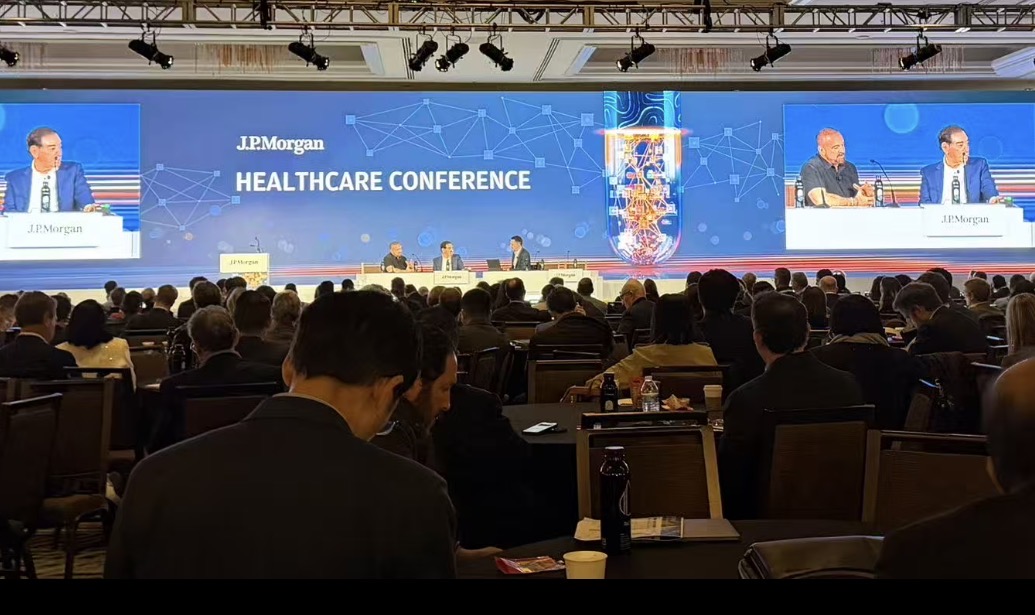
Group 1: JPM Conference Overview - The JPMorgan Healthcare Conference, known as the "Spring Festival of the Pharmaceutical Industry," concluded this weekend, highlighting its status as a premier global healthcare investment event and a barometer for investment trends [1] - This year's conference saw a significant presence of Chinese investors and biopharmaceutical companies, with discussions frequently focusing on China, covering innovation pipelines, collaboration opportunities, and global competition [1][8] - The conference signaled a positive outlook for Chinese innovative drugs, indicating a transition from dawn to dawn, with advancements in AI technology expected to significantly shorten drug development cycles [1] Group 2: Executive Insights - Josh Smiley, President of Zai Lab, participated in the JPM conference, emphasizing the increased effort required to keep pace with the event's demands, having held 14 meetings in one day [3][4] - Smiley noted the shift from a multinational pharmaceutical executive to leading a smaller Chinese company, highlighting the need for more effort in "selling" the company's story to investors [6] - Chen Feng, CEO of Boying Capital, also attended the conference, bringing nearly 20 projects from Chinese companies to connect with multinational pharmaceutical firms and global capital [7] Group 3: Chinese Innovation and Global Perception - The term "China" emerged as a key theme at the conference, with major pharmaceutical companies actively seeking to incorporate Chinese innovative assets into their research pipelines [8][9] - There is a growing recognition of Chinese biotechnology companies as equal partners in global competition, with many multinational firms viewing Chinese innovation as a vital source for their pipelines [9] - The conference featured closed-door sessions specifically for Chinese innovation, organized by companies like Pfizer and Roche, indicating a strong interest in Chinese projects [7] Group 4: Market Dynamics and Opportunities - The acquisition of a new dual-antibody drug by AbbVie for up to $5.6 billion from Rongchang Biotech marked a significant transaction, reflecting the increasing momentum of Chinese innovative drugs in global markets [10] - Over one-third of the announced innovative drug licensing agreements in 2025 are expected to originate from China, indicating a robust trend in international collaborations [10] - Despite the enthusiasm in the biopharmaceutical capital market, challenges remain, particularly regarding geopolitical risks and regulatory uncertainties that could impact investment decisions [12] Group 5: AI in Drug Development - AI technology has become a focal point at the conference, with companies increasingly leveraging AI to enhance drug discovery and development processes [17] - A partnership between Nvidia and Eli Lilly was announced, involving a $1 billion investment to establish a joint research lab aimed at accelerating AI-driven drug development [17][18] - The global AI pharmaceutical market exceeded $1 billion in 2022 and is projected to approach $3 billion by 2026, highlighting the rapid growth and potential of AI in the industry [21] Group 6: Future Trends and Challenges - The success rate of AI-generated drug molecules in Phase I clinical trials is projected to reach 80-90% by 2025, surpassing historical averages, indicating a significant breakthrough in drug development [21] - The transition of AI pharmaceutical development from early research to clinical validation is seen as a critical milestone for the industry [22] - Companies are increasingly focused on generating high-quality data and building robust AI models to maintain a competitive edge in drug development [20]

A股关键时刻,赵军罕见发声!信息量很大
Zhong Guo Ji Jin Bao· 2026-01-17 06:50
Group 1: Market Outlook - Liquidity is identified as the most certain positive factor for the stock market in 2026, supported by increased domestic capital allocation, improved foreign investment sentiment, and the appreciation of the RMB [1][3] - Investor sentiment towards Chinese assets is warming, with a new narrative forming around "Chinese assets" and expectations for a "slow bull" market, reflecting a shift from valuation recovery to profit-driven focus [2][3] - The market logic is expected to transition from valuation recovery to a more detailed assessment of industry performance, necessitating careful differentiation among sectors [2] Group 2: Investment Opportunities - The core opportunity in the next 6-12 months lies in identifying "expectation gaps" in low-attention assets that the market has not fully recognized [4] - AI-related opportunities are highlighted as a global trend, with significant potential in traditional industries adapting to AI applications, particularly in automation and robotics [5][6] - The innovative drug sector is expected to continue showing strong opportunities due to China's talent pool and high efficiency in clinical drug development [6] Group 3: Commodity Market Insights - The current commodity bull market is driven by various factors, including monetary narratives and the AI technology wave, with a focus on identifying more certain and cost-effective investment solutions rather than following mainstream trends [7] - Potential opportunities in the post-cycle investment phase, such as mining and exploration, are anticipated to yield significant returns, especially for strong Chinese companies [7] Group 4: Risk Awareness - The presence of crowded or highly consensual investments is viewed as a risk, necessitating vigilance in the face of market consensus that may lead to volatility [8] - The importance of preparing investment plans for various market scenarios is emphasized, advocating for proactive rather than reactive strategies [9] Group 5: Investment Philosophy - The company adopts a contrarian investment philosophy, focusing on uncovering opportunities that the market has yet to recognize, with an emphasis on understanding catalysts that may bring these opportunities to light [10][11] - A collaborative team structure is believed to enhance adaptability to complex market conditions, with a mechanism in place for continuous iteration and research [11]