服务业

Search documents
专访商务部原副部长魏建国:中国经济下一步的增长红利是服务业升级和国际化 要扩大新型消费比重
Mei Ri Jing Ji Xin Wen· 2025-11-17 14:55
Core Viewpoint - The "15th Five-Year Plan" emphasizes significantly increasing the resident consumption rate as a primary goal, focusing on expanding domestic demand and promoting consumption through various new proposals [1]. Group 1: Economic Growth and Consumption - The reasonable growth range for China's economy during the "15th Five-Year Plan" is estimated to be between 4.5% and 5.5%, considering the current economic scale and potential growth rate [2][3]. - The plan highlights the need for a flexible approach to economic growth, with a lower limit to ensure employment and a higher limit to prevent inflation and promote structural adjustments [3]. Group 2: Enhancing Resident Consumption Rate - To address the low resident consumption rate, solutions should be sought from both the income and supply sides, including expanding the middle-income group and increasing public service spending [3][4]. - Three key actions are necessary to enhance resident consumption: increasing the share of new consumption types, enriching consumption scenarios, and ensuring the implementation of national policies to stimulate consumption [4]. Group 3: Real Estate and Automotive Markets - The plan proposes removing unreasonable restrictions on automotive and housing consumption, as both sectors have significant economic impacts and can stimulate related industries [5][6]. - The real estate market is expected to see slight growth over the next five years, with its stability being crucial for consumer confidence and financial system stability [7]. Group 4: Role of Consumption, Investment, and Exports - Consumption is projected to play a dual role as both a "ballast" and a "main engine" for economic growth, with expectations that its contribution to GDP growth will exceed 60% [12][13]. - Investment will shift focus from total volume to structural optimization, supporting high-quality development in sectors like high-end manufacturing and technology [13]. - Exports will serve as a stabilizer, maintaining their importance due to China's comprehensive industrial system, despite potential fluctuations [12][14]. Group 5: Service Industry and Market Opening - The emphasis on expanding the service industry as a key area for market opening indicates a strategic shift towards enhancing service sector competitiveness and internationalization [20][21]. - The growing middle-income group and the increasing share of services in GDP highlight the need for improved service quality and management practices to meet consumer demands [21].

德新科技:股东新疆国投计划减持公司股份不超过约234万股
Mei Ri Jing Ji Xin Wen· 2025-11-17 10:17
Group 1 - The major shareholder, Xinjiang State-owned Assets Investment and Operation Co., Ltd., holds approximately 12.48 million shares of De Xin Technology, accounting for 5.35% of the total share capital [1] - The shareholder plans to reduce its holdings by up to 2.34 million shares (1% of total share capital) within three months, starting 15 trading days after the announcement [1] - The revenue composition for De Xin Technology in 2024 is as follows: manufacturing accounts for 80.17%, services for 9.49%, trade for 6.0%, and other businesses for 4.34% [1] Group 2 - The current market capitalization of De Xin Technology is 5.6 billion yuan [2]

宏观经济周度高频前瞻报告:经济周周看:本周经济景气度延续回落-20251116
ZHESHANG SECURITIES· 2025-11-16 14:17
Economic Indicators - The GDP weekly high-frequency prosperity index as of November 15 is 4.7%, slightly down from the revised 4.8% of the previous week, indicating a slowdown in economic growth[1] - The industrial weekly prosperity index is at 8.1%, down from 8.2% the previous week, while the service industry index is at 3.0%, down from 3.1%[9] Production Sector - Both service and industrial high-frequency indicators have declined compared to the previous week[12] - The average daily output of key iron-making enterprises has increased, indicating some recovery in industrial production[12] Demand Side - Domestic demand remains weak, while external demand shows resilience, with container throughput for exports increasing to 680.9 thousand TEUs, up from 671.8 thousand TEUs the previous week[53] - The consumer high-frequency index has slightly risen to 2.9%, up from 2.6% the previous week, reflecting a modest recovery in consumer activity[9] Real Estate Market - The weekly sales of commercial housing in 30 major cities increased to 146 million square meters, a 7% rise from the previous week, but down 34% year-on-year[45] - The land transaction area decreased significantly, with 631 million square meters sold, down 195.3 million square meters from the previous week[45] Price Trends - Consumer goods prices remained stable, while industrial goods prices showed signs of recovery, with the agricultural wholesale price index rising by 0.37% week-on-week[57] - The average price of pork decreased by 0.19% week-on-week, while the prices of key vegetables and fruits saw slight increases of 0.14% and 0.54%, respectively[63]
长春高新:总计回购约389万股
Mei Ri Jing Ji Xin Wen· 2025-11-14 12:05
Summary of Key Points Core Viewpoint - Changchun High-tech (SZ 000661) announced a share buyback program, completing the repurchase of approximately 3.89 million shares, which is 0.95% of the total share capital, with a total transaction amount of around 400 million RMB [1]. Company Financials - As of the first half of 2025, the revenue composition of Changchun High-tech is as follows: pharmaceutical industry accounts for 92.83%, real estate for 6.81%, and service industry for 0.36% [1]. - The highest transaction price during the buyback was 112.25 RMB per share, while the lowest was 84 RMB per share [1]. - The current market capitalization of Changchun High-tech is 42.6 billion RMB [1].

宏观点评:10月经济全面降温的背后-20251114
GOLDEN SUN SECURITIES· 2025-11-14 11:40
Economic Overview - In October, industrial added value increased by 4.9% year-on-year, down from 6.5% in the previous period[1] - Retail sales grew by 2.9% year-on-year, slightly lower than the previous value of 3.0%[1] - From January to October, fixed asset investment decreased by 1.7%, compared to a decrease of 0.5% previously[1] External Demand - October export growth significantly declined, marking the lowest level since March due to base disturbances and falling export prices[2] - The decline in external demand is exacerbated by the misalignment of new consumer electronics product launches[3] Internal Demand - Real estate investment fell by 14.7% year-on-year, worsening from a previous decline of 13.9%[1] - Infrastructure investment showed a slight increase of 1.5%, down from 3.3% previously, while narrow infrastructure investment fell by 0.1%[1] Investment Trends - Manufacturing investment decreased by 2.7% year-on-year, down from 4.0% previously, with October showing a significant drop of 6.7%[1] - The overall investment landscape indicates a broad decline across real estate, infrastructure, and manufacturing sectors[3] Consumption Patterns - Consumer spending continues to decline, with retail sales growth at 2.9%, marking five consecutive months of decline[5] - The impact of the "trade-in" policy is diminishing, particularly in sectors like home appliances and automobiles[5] Policy Outlook - Achieving the annual GDP growth target of 5% is deemed feasible, with a required growth rate of 4.4% in Q4[4] - Short-term policies are expected to intensify, focusing on accelerating existing measures and preparing for next year's economic layout[4] Employment Situation - The urban survey unemployment rate slightly decreased to 5.1%, down by 0.1 percentage points from the previous value[44] Risks - Potential risks include changes in policy strength, overseas economic conditions, and geopolitical conflicts, which could lead to unexpected outcomes[8]
宏观经济月报:10月经济放缓,消费显现韧性-20251114
Guoxin Securities· 2025-11-14 09:46
Economic Performance - In October, China's GDP growth rate slowed to 4.2% year-on-year, down 1.1 percentage points from September, significantly below the annual growth target[1] - Industrial added value dropped to 4.9% year-on-year, while the service production index fell to 4.6%, marking a new low for the year[1] - Fixed asset investment saw a sharp decline of 11.0% year-on-year, with real estate, infrastructure, and manufacturing investments continuing to decrease[1] Consumer Market Insights - Total retail sales of consumer goods slightly decreased to 2.9% year-on-year, but excluding automobiles, the growth rate rebounded to 4.0%[1] - Restaurant consumption growth significantly increased to 3.8%, indicating a recovery in the service sector[1] - The unemployment rate remained stable at 5.1%, reflecting a seasonal decline of 0.1 percentage points[1] Future Outlook - Positive factors are accumulating, with signs of structural recovery in consumption and a steady decline in the unemployment rate, suggesting sustained consumer demand[2] - Fiscal space remains ample, with fiscal deposits exceeding the average of the past three years by approximately 1.2 trillion yuan, providing strong support for counter-cyclical adjustments[2] - The implementation of 500 billion yuan in policy financial tools has been completed, focusing on new economic sectors such as digital economy and artificial intelligence[2] Risks and Challenges - There are risks associated with potential weakening of policy stimulus and uncertainties in overseas economic policies[2]
中国企业新型全球化报告发布:以“中国人经济”拓展价值链新边界
Xin Lang Cai Jing· 2025-11-13 13:07
Core Insights - The report titled "Developing the 'Chinese Economy' and Sharing Opportunities for High-Level Opening Up - 2025 China Enterprises 'New Globalization' Special Report" was released during the 16th Caixin Summit, highlighting new trends and challenges for Chinese companies going global from the perspective of the "Chinese Economy" [1] - It advocates for a "China + N" strategic layout for Chinese enterprises, aiming to leverage China's manufacturing and industrial chain advantages to connect with global markets and elevate from product to brand, low value to high value, and individual enterprises to industrial chain ecosystems [1] Group 1: Trends in Chinese Enterprises Going Global - The report identifies four major trends in Chinese enterprises going global: the enrichment of the concept of going global from "product export" to "brand export," "industrial chain export," and "ecosystem export" [1] - It notes the diversification of foreign investment fields, with manufacturing as a key focus and a growing diversification in the service sector [1] - The "Global South Market," represented by the Belt and Road Initiative, is highlighted as a new growth engine, with Asia remaining the primary destination for Chinese foreign investment [1] - The report emphasizes the "capability output" of Chinese enterprises going global [1] Group 2: Policy and Industry Recommendations - From a policy support system perspective, the report suggests constructing a comprehensive institutional guarantee, establishing an overseas comprehensive service system, deepening international cooperation, and upgrading the value connotation of "going global" [2] - It recommends that Chinese enterprises focus on strategic positioning and compliance risk control, promote localized operations and ecosystem integration, and deepen ecological collaboration and value co-creation for better global engagement [2]
社融重要信号!新增贷款占比不到一半,政府债替代效应明显
2 1 Shi Ji Jing Ji Bao Dao· 2025-11-13 10:57
Core Viewpoint - The report indicates that the rapid issuance of government bonds is substituting for loans, reflecting a shift in financing structure and supporting economic demand expansion [1][3]. Financing Structure - As of October 2025, the total social financing scale was 437.72 trillion yuan, with a year-on-year growth of 8.5%. The balance of RMB loans to the real economy was 267.01 trillion yuan, growing by 6.3% year-on-year. The balance of corporate bonds was 33.68 trillion yuan, up 4.9%, while government bonds reached 93.03 trillion yuan, marking a 19.2% increase [1]. - The proportion of RMB loans to the real economy in the total social financing scale was 61%, down 1.3 percentage points year-on-year. Corporate bonds accounted for 7.7%, down 0.3 percentage points, while government bonds made up 21.3%, up 2 percentage points [1]. Economic Indicators - The broad money supply (M2) was 335.13 trillion yuan, with an 8.2% year-on-year increase. The narrow money supply (M1) was 112 trillion yuan, growing by 6.2%, showing a significant recovery from previous lows [3][4]. - The manufacturing purchasing managers' index (PMI) was at 50.0%, indicating stable economic activity, while the non-manufacturing business activity index was at 50.1%, suggesting expansion [4]. Government Policy and Support - The increase in government bond issuance is aimed at supporting major projects and national strategies, helping to expand demand and stabilize the economy [3]. - The government is also using bonds to replace financing platform debts and clear overdue payments to enterprises, which aids in alleviating financial pressure on businesses and households [3]. Long-term Economic Outlook - The "14th Five-Year Plan" emphasizes the importance of stimulating social initiative and creativity, providing a solid foundation for high-quality economic development [6]. - The central bank's monetary policy is supportive, with expectations for inflation to stabilize around 2%, reflecting a balanced approach to economic growth and price stability [7][8].

先导基电:11月13日召开董事会会议
Mei Ri Jing Ji Xin Wen· 2025-11-13 09:27
Group 1 - The company Xian Dao Ji Dian (SH 600641) held a temporary board meeting on November 13, 2025, to discuss the proposal for the third temporary shareholders' meeting of 2025 [1] - For the year 2024, the revenue composition of Xian Dao Ji Dian is as follows: real estate accounts for 48.34%, manufacturing accounts for 41.44%, services account for 8.72%, and other businesses account for 1.49% [1] - As of the report date, the market capitalization of Xian Dao Ji Dian is 17.1 billion yuan [1] Group 2 - There is a notable trend in the banking sector where banks are selling previously owned properties at significantly reduced prices, with some properties being sold at half price [1] - The demand for these bank-owned properties is high, with reports of individuals bidding an additional 1 million yuan to secure a purchase [1]

我省持续加强普惠性、基础性、兜底性民生建设,解决好人民群众“急难愁盼”
Hai Nan Ri Bao· 2025-11-13 02:01
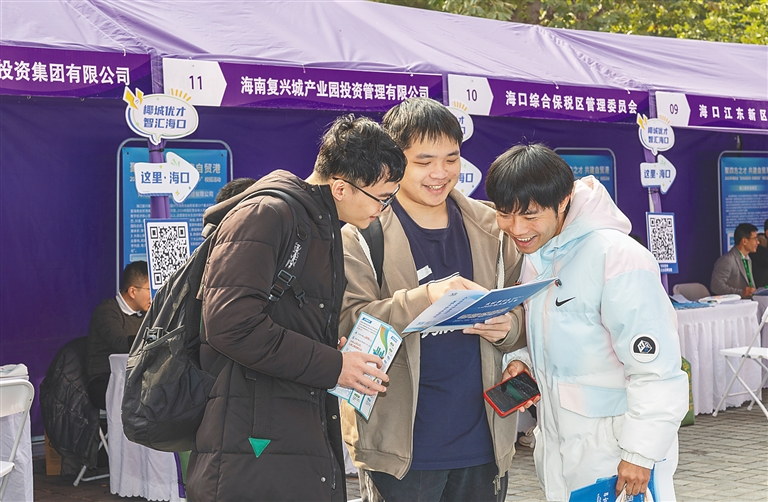
Core Viewpoint - The article emphasizes the continuous efforts of Hainan Province to strengthen inclusive, foundational, and safety net social welfare initiatives, addressing the urgent needs of the populace and advancing the goal of common prosperity [6][9][12]. Group 1: Economic Development and Income Growth - In the first three quarters of this year, the per capita disposable income in Hainan reached 26,930 yuan, marking a year-on-year increase of 4.5%. Notably, rural residents experienced a 5.5% increase, outpacing urban growth by 1.8 percentage points, leading to a narrowing urban-rural income ratio of 1.94:1 [5][9]. - The province has unified the urban and rural minimum living standards to 850 yuan per person per month and raised the basic living guarantee for the severely disabled to 1,110 yuan, achieving a significant milestone in social assistance [9][10]. Group 2: Social Welfare and Support Systems - Hainan has established a comprehensive social assistance system, ensuring that no one is left behind in the pursuit of common prosperity. This includes a synchronized adjustment mechanism for minimum living standards and welfare subsidies for disabled individuals and children [10][11]. - The province has allocated 20 million yuan for community rehabilitation services for individuals with mental disorders, establishing 39 rehabilitation service stations that have served over 190,000 people [11]. Group 3: Elderly and Child Welfare - Hainan is focusing on the needs of the elderly and children, enhancing services from elderly care to child welfare, and ensuring a robust support network for these vulnerable groups [12][16]. - The province has implemented a comprehensive funding system for disadvantaged children, ensuring equal access to education and establishing numerous support centers for minors [16][17]. Group 4: Employment and Industry Development - Hainan is driving employment growth through industrial development and skill enhancement, with initiatives like the "Coconut Brand" labor initiative, which has created 656,000 jobs [20][21]. - The province is promoting diverse employment guidance and targeted skills training for rural surplus labor, helping many families regain confidence and achieve stable incomes [20][22]. Group 5: Tourism and Agricultural Integration - The integration of tourism and agriculture is exemplified by the success of local tea businesses, which have become significant sources of income for rural residents, with tourism revenue exceeding 40 million yuan in 2024 [18][19]. - Hainan is fostering a unique industrial development model, encouraging the growth of local specialties and enhancing the income of farmers through effective policy support and technical services [19].