
公用事业

Search documents
国泰海通晨报-20260323
国泰海通· 2026-03-23 03:04
Macroeconomic Research - Geopolitical factors are driving stronger imported inflation, with external demand showing resilience while internal demand remains to be boosted, leading to a persistent divergence [1][2] - The policy focus is on long-term special government bond issuance and the construction of a unified national market to promote high-quality economic recovery through precise investment and institutional optimization [2][18] Strategy Research - The mid-level economic landscape shows differentiation, with increased disruptions in oil supply leading to a continuous rise in prices along the oil and chemical chain; emerging technologies are seeing an upward shift in their economic center [1][4] - The first quarter saw bright growth in travel and consumer goods consumption, indicating a potential recovery in these sectors [4][24] Banking Research - The commercial banking sector is exhibiting a clear trend of "leading banks," with state-owned banks acting as a credit stabilizer; regional city commercial banks are achieving differentiated breakthroughs, particularly in economically strong provinces like Jiangsu, Zhejiang, Sichuan, and Shandong [1][7] - The market share of state-owned banks is expected to increase, with their asset proportion rising to 43.3% by the end of 2025, while city commercial banks are also gaining market share due to regional economic resilience [8][10] Transportation Research - The demand for highway passage is resilient, with stable dividends and cash flow expected; the revision of the highway management regulations is anticipated to optimize policies [1][12] - The highway sector is expected to see steady growth in traffic volume in 2026, supported by favorable location advantages and ongoing expansion projects [12][25]
——策略周聚焦:布局良机,结构胜仓位
Huachuang Securities· 2026-03-23 00:55
Market Trends - Recent increase in U.S. Treasury yields due to rising oil prices has pressured liquidity-sensitive assets like gold and the tech sector[1] - The current market adjustment reflects a contraction in risk appetite rather than a deterioration in fundamentals[10] PPI and Earnings Outlook - PPI turning positive is expected to boost A-share earnings, with a projected increase in non-financial net profit growth from 11% under neutral assumptions to 17% under optimistic scenarios for 2026[2] - The contribution of cyclical resources and manufacturing to overall A-share profits is significant, accounting for 45% of non-financial profits over the past five years[2] Index and Valuation - The Shanghai Composite Index has retraced approximately 64% from its peak, nearing historical pullback levels seen in previous bull markets[3] - Current valuations remain high, with the Shanghai Composite PE-TTM at 16.6x and the overall A-share market at 22.6x, both around the 75th percentile of the last 20 years[3] Key Influencing Factors - Geopolitical risks and oil price trends are critical, with three scenarios outlined: easing, maintaining, and escalating tensions in the Middle East affecting market liquidity and asset prices[4] - Changes in domestic and external demand are crucial, with recent data indicating a shift towards stronger domestic demand, particularly in real estate[4] Investment Strategy - Short-term focus on low-volatility assets, while maintaining a strategic emphasis on cyclical resources throughout the year[9] - Structural opportunities in inflation-benefiting sectors, particularly upstream industries, are highlighted as key areas for investment[4]
【十大券商一周策略】A股下行空间相对有限,决断看4月!聚焦景气确定性
券商中国· 2026-03-22 14:41
Group 1 - The core viewpoint is that the market is currently facing significant uncertainty due to geopolitical tensions and economic conditions, with a decisive direction expected to emerge around April [2] - The article discusses three key unresolved questions regarding the Iran conflict, U.S. Federal Reserve's focus, and China's economic situation, which are crucial for market predictions [2] - The market has seen some short-term reduction in positions, particularly in previously high-performing sectors, but overall returns have reverted to the starting line since the beginning of the year [2] Group 2 - The article identifies sectors that may maintain independent high prosperity despite geopolitical tensions and high oil prices, highlighting the importance of sectors like optical communication and energy storage [3] - It suggests that sectors with upward trends and less sensitivity to oil prices, such as energy storage and domestic AIDC chains, should be prioritized for investment [3] Group 3 - The current phase is described as potentially the most pressured stage due to the ongoing U.S.-Iran conflict, with a focus on the divergence between stable policy and absolute return strategies [4] - The article emphasizes that the mid-term variables are underestimated, particularly regarding inflation tolerance and the resilience of the U.S. and Chinese economies [4][5] Group 4 - A-shares are expected to have limited downside potential, with the market likely to experience oscillation and structural rotation as it absorbs external pressures [6] - Key sectors to watch include energy-related industries, defensive assets, and technology innovation sectors, with a focus on undervalued consumer segments [6] Group 5 - The market is anticipated to undergo a prolonged period of consolidation due to the impact of the U.S.-Iran conflict and changing expectations regarding interest rates [7] - The article highlights three investment directions: industries benefiting from high oil prices, stable cash flow defensive stocks, and certain growth sectors that may be undervalued [7] Group 6 - China's manufacturing sector is positioned for a value reassessment, with leading industries in coal chemical and power equipment showing resilience and potential for growth [8] - The article notes that China's energy system's completeness reduces vulnerability to external shocks and enhances its role in global energy supply [8] Group 7 - The narrative around the rise of physical assets remains intact, with a focus on energy security and the potential for China's manufacturing sector to serve as a stabilizing force in the global economy [9] - Investment recommendations include sectors related to energy, manufacturing, and consumer goods that are expected to benefit from structural changes in the market [9] Group 8 - The current market adjustment is attributed to concerns over economic stagnation and escalating conflict risks, with a potential for market recovery when sentiment is at its lowest [11] - Investment strategies should focus on sectors that benefit from rising oil prices and those with clear growth prospects, particularly in technology and renewable energy [11] Group 9 - The market is expected to remain under pressure from external factors, but there are positive indicators such as proactive monetary policy and strong early economic data [12] - The article suggests a dual focus on growth and cyclical sectors, with an emphasis on clean energy and resource-related investments [12] Group 10 - The outlook for the market suggests a gradual stabilization post-mid-March, with a focus on both growth and value sectors, particularly in energy and technology [13] - The article encourages investment in sectors that are likely to benefit from ongoing trends in AI and traditional industries undergoing value reassessment [13] Group 11 - The ongoing U.S.-Iran conflict and shifting interest rate expectations are impacting global markets, with a focus on stable domestic policies providing a clearer investment environment [14] - Recommended sectors include defensive strategies, energy independence, and high-growth areas such as AI and energy storage [14]

北交所策略周报:情绪进入冰点期,静待反弹时间窗口-20260322
Shenwan Hongyuan Securities· 2026-03-22 13:42
Group 1 - The market sentiment has reached a freezing point, with the North Exchange 50 index dropping by 5.76% and average daily trading volume decreasing by 19.37% [11][16][27] - The North Exchange ERP indicator has returned to within -1 standard deviation, and the proportion of strong stocks has fallen to a historical low of 5.6% [11][12][16] - The market's overall risk appetite continues to decline, with small-cap, low-price, and loss-making indices leading the decline, while high-quality indices show slight gains [11][12] Group 2 - The North Exchange has entered a high-quality expansion phase, with 16 new stocks issued since the beginning of 2026, maintaining a weekly issuance pace of about 2 stocks [13] - The report highlights investment opportunities in new and newly listed stocks, with a projected total issuance of 60 stocks for the year [13] - Key stocks to watch include those in the energy and power equipment supply chain, semiconductor self-control, and technology sectors such as AI and commercial aerospace [13] Group 3 - The North Exchange's PE (TTM) average is 82.21 times, with a median of 41.60 times, indicating a decline compared to previous periods [28][26] - The trading volume for the week was 3.584 billion shares, with a trading value of 79.534 billion yuan, both showing a decrease from the previous week [27][16] - The North Exchange has seen 11 stocks rise and 289 stocks fall, with a rise-to-fall ratio of 0.04 [41]
配置银行等板块,静待更多“稳市场”政策出台
HUAXI Securities· 2026-03-22 12:01
Market Review - The global stock markets mostly declined this week, with A-shares and European markets experiencing the largest drops. The geopolitical situation between the US and Iran remains uncertain, leading to increased risks of economic stagflation and volatility in oil prices and inflation. The Federal Reserve's decision to maintain interest rates in March, coupled with a hawkish statement, has raised concerns about a tightening dollar, suppressing market risk appetite. Consequently, A-shares have seen a general pullback, with trading volumes continuing to shrink, indicating a cooling of investor sentiment in a rapidly rotating sector environment. Defensive sectors such as food and beverage, banking, and high-growth areas like storage and AI computing have performed relatively better [1][2][3]. Market Outlook - The report suggests focusing on banking and other defensive sectors while awaiting more "stabilizing market" policies. The ongoing US-Iran conflict and delayed expectations for overseas interest rate cuts are likely to continue suppressing global risk appetite. In contrast, the domestic policy environment appears more certain, with regulators signaling a commitment to stabilize the capital market. Anticipated policies include the establishment of a "stabilization fund," optimization of structural tools for the capital market, and measures to encourage medium- to long-term capital inflows [2][4]. Geopolitical Risks - The trajectory of geopolitical events remains highly uncertain, and the market must remain vigilant regarding extreme tail risks associated with oil supply disruptions. The recent three-week period of the US-Iran conflict has seen global stock indices decline, but the drops have been less than 10%, indicating a more optimistic pricing of the conflict compared to the significant declines seen during the 2022 Russia-Ukraine conflict. If oil shipping disruptions persist or the conflict spreads, there could be further spikes in oil prices and supply chain interruptions, reminiscent of the oil crises in the 1970s [3][4]. Domestic Policy Environment - The domestic regulatory framework continues to emphasize stabilizing the capital market and promoting medium- to long-term capital inflows. The People's Bank of China has indicated a commitment to maintaining the stability of financial markets, with potential policies including a "stabilization fund" mechanism supported by liquidity from the central bank, optimization of structural monetary policy tools, and enhancements to the A-share investment environment [4][5]. Monetary Policy and Economic Outlook - Input-driven inflation is expected to have limited constraints on China's monetary policy, with a continued focus on maintaining a loose liquidity environment. The central bank aims to promote stable economic growth and reasonable price recovery, with a commitment to using various monetary policy tools to ensure ample liquidity. Fiscal policies are also expected to become more proactive, focusing on improving public services and increasing government investment in livelihood projects, which could help enhance consumer expectations and create a positive inflation-wage cycle [5][6]. Sector Allocation - The report recommends a defensive strategy, focusing on sectors such as banking, public utilities, and essential consumer goods. Additionally, there is an emphasis on energy independence through investments in new energy and electricity sectors, as well as high-growth areas like AI computing and energy storage [5][6].
投资策略周报:滞胀与俄乌的配置经验-20260322
CAITONG SECURITIES· 2026-03-22 08:29
Core Insights - The report emphasizes that the Russia-Ukraine conflict has significantly impacted global inflation and economic conditions, extending the duration of high inflation rather than initiating a new round of global reflation [5] - The liquidity environment has tightened due to the conflict, increasing pressure on monetary policy across major economies, which has affected asset pricing through interest rates and stock market performance [5] - The report suggests a "HALO PLUS" strategy for asset allocation, focusing on defensive cash flow and offensive low-crowding growth sectors, particularly in coal, utilities, and construction for defense, while targeting commercial aerospace, batteries, and military themes for growth [6] Group 1: Impact of the Russia-Ukraine Conflict - The conflict has pushed inflation in Europe and the U.S. from around 6% to approximately 10% over six months, maintaining a high inflation rate of over 3% for nearly two years [19][20] - Japan's inflation, initially low, has risen due to energy price shocks, with CPI remaining above 2% for an extended period, indicating a different inflationary dynamic compared to the U.S. and Europe [20] - China's CPI has been less affected, primarily driven by structural price disturbances rather than a sustained inflationary trend [20] Group 2: Historical Inflation Experiences - Historical periods of stagflation in China, such as from June 2007 to February 2008 and January 2010 to July 2011, show that early stagflation phases are characterized by high commodity prices and resilient growth, with a shift to valuation and earnings certainty logic as tightening occurs [11][14] - In the 2007-2008 period, upstream cyclical sectors significantly outperformed, with coal prices rising by 49%, chemicals by 46%, and non-ferrous metals by 44%, reflecting strong demand and price increases [15][16] - The 2010-2011 period saw a market shift where defensive consumption sectors and small-cap growth stocks outperformed as inflationary pressures peaked and monetary tightening began [17][18]
香港中华煤气(00003.HK)2025年度业绩:业务核心利润升4% 纯利持平 全年派息维持35港仙
Ge Long Hui· 2026-03-20 09:18
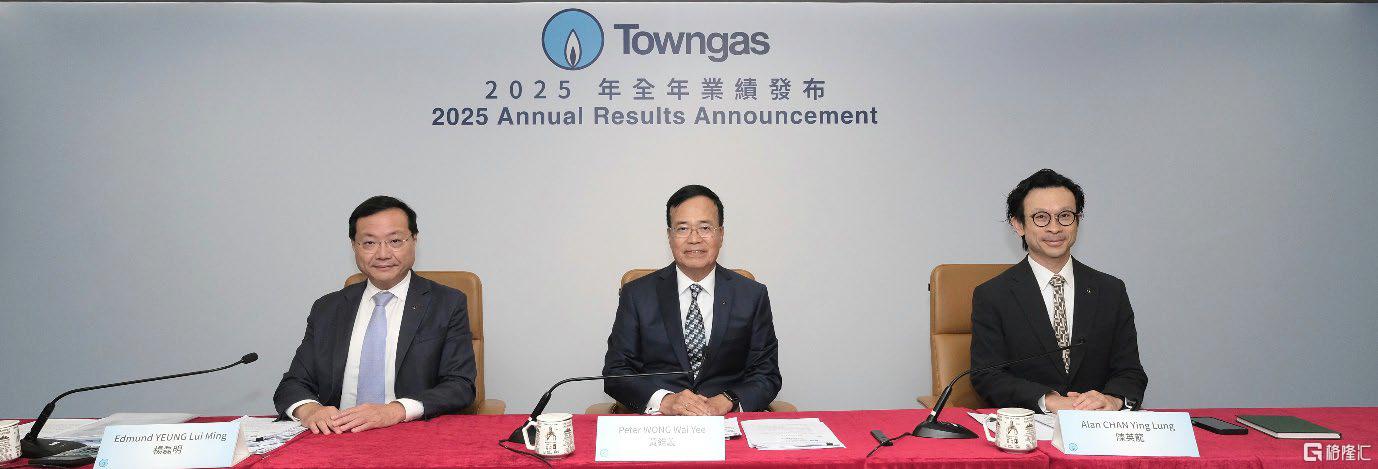
Core Viewpoint - Hong Kong and China Gas Company Limited reported a stable performance for the fiscal year 2025, focusing on quality improvement, business restructuring, and diversification in energy business, with a robust business framework established [1] Financial Performance - The company's after-tax operating profit and core business profit were HKD 7.5 billion and HKD 6 billion, representing increases of 2% and 4% respectively [1] - Shareholders' profit attributable was HKD 5.7 billion, remaining similar to the previous year [1] - The board proposed a final dividend of HKD 0.23 per share, totaling HKD 0.35 per share for the year, including an interim dividend [5] Business Development - In the Hong Kong public utility sector, the company provided gas and energy management solutions to mainland restaurant brands and emerging food service operators, maintaining overall gas sales [3] - The company introduced the first integrated hydrogen power generator for the 15th National Games golf event, promoting green energy [3] - In mainland China, gas sales volume was 36.35 billion cubic meters, remaining stable, with a slight increase in urban gas pricing [3] Renewable Energy Initiatives - The company is expanding its sustainable aviation fuel (SAF) production, with a new facility in Malaysia expected to increase annual capacity from 350,000 tons to 770,000 tons by the end of 2025 [3] - A joint venture with Foshan Energy for green methanol production is underway, with an initial capacity of 200,000 tons expected by 2028 [4] - Distributed solar photovoltaic capacity increased by 500 megawatts, reaching a total of 2.8 gigawatts, with a 36% rise in solar power generation to 2.48 billion kWh [4] Strategic Initiatives - The company aims to leverage opportunities in green and low-carbon development, participating in the establishment of national zero-carbon parks as part of the national "14th Five-Year Plan" [4] - The establishment of a smart living service platform, "Mingqi Home," has aggregated a customer base of 46 million gas users across Hong Kong and mainland China [4]

北交所日报:加速下跌,中长期布局窗口开始显现-20260320
Western Securities· 2026-03-20 09:05
Investment Rating - The report indicates a focus on the hard technology sector and specialized enterprises, aligning with national strategies for technological innovation and new production capabilities [3][4]. Core Insights - The market is experiencing extreme differentiation, with nearly 5000 stocks declining, while energy sectors like oil and gas, coal, and electricity are performing well due to geopolitical tensions and policy catalysts [3][4]. - The North Exchange's core focus on hard technology and specialized enterprises is expected to provide valuation recovery opportunities as market sentiment stabilizes [3][4]. - The report highlights a significant increase in trading volume, with the North Exchange A-shares reaching a transaction amount of 165.0 billion, up by 13.49 billion from the previous trading day [7][12]. Summary by Sections Market Review - On March 19, the North Exchange A-shares transaction amount reached 165.0 billion, with the North Exchange 50 index closing at 1,329.56, down 3.33%, and the PE_TTM at 56.40 times [7][12]. - Among 299 companies on the North Exchange, 13 saw an increase, while 286 experienced declines, with notable gainers including KaiTian Gas (19.7%) and Tress (13.3%) [14][15]. Important News - Alibaba has commenced large-scale production of its self-developed Pingtouge GPU, supporting end-to-end AI workloads [16]. - The Ministry of Industry and Information Technology is exploring applications of AI in material development and production to enhance the competitiveness of key materials [17]. Key Company Announcements - Jinsai Technology reported a revenue of 577 million for 2025, up 9.83% year-on-year, with a net profit of 10 million, up 63.47% [18]. - Minshida announced a revenue of 445 million for 2025, up 9.16% year-on-year, with a net profit of 127 million, up 26.70% [19].
鑫新闻:研究所日报-20260320
Yintai Securities· 2026-03-20 05:45
Report Summary 1. Report Industry Investment Rating No information is provided regarding the report industry investment rating. 2. Core Viewpoints - The central bank will continue to implement a moderately loose monetary policy, use various monetary policy tools to maintain liquidity, guide interest rates, and support the resolution of debt risks in financing platforms while ensuring the stable operation of financial markets [2]. - In January - February this year, China's fiscal revenue was 4.42 trillion yuan, with a year - on - year increase of 0.7%, and fiscal expenditure was 4.67 trillion yuan, with a year - on - year increase of 3.6%, showing a front - loaded spending pattern. Tax revenue was 3.64 trillion yuan, with a 0.1% increase, and securities transaction stamp duty increased by 1.1 times [2]. - The US is taking measures to maintain oil price stability. Trump has informed Israel to stop attacking Iranian energy facilities, the US Treasury Secretary may lift sanctions on Iranian oil at sea in the next few days and release strategic oil reserves, and the White House said the US will not impose an oil export ban [2]. 3. Summary by Related Catalogs A - share Market - The major A - share market indexes fell across the board, with the Shanghai Composite Index down 1.39%, the Shenzhen Component Index down 2.02%, and the ChiNext Index down 1.11%. The market turnover was about 2.13 trillion yuan, an increase of 66.3 billion yuan from the previous trading day [3]. - The A - share market's total market capitalization was 111.76 trillion yuan, an increase of 3.01 trillion yuan from the beginning of the year. The PE (TTM) was 22.83x, and the PB (MRQ) was 5.87x. The margin trading balance decreased by 25.72379 billion yuan compared to a month ago [9]. Industry Performance - The top - rising sectors were coal, petroleum and petrochemical, and public utilities, with the coal sector rising 1.82%. The top - falling sectors were non - ferrous metals, steel, and building materials, with the non - ferrous metals sector dropping 6.10% [3]. - The top three sectors in terms of daily net inflow of funds were public utilities, non - banking finance, and coal. The top three sectors in terms of net inflow of funds at the end of the trading day were petroleum and petrochemical, non - ferrous metals, and light industry manufacturing [15]. Global Market - The major stock indexes in the Asia - Pacific, European, and US markets all declined. The Nikkei 225 index tumbled 3.38%, the KOSPI index fell 2.73%, the German DAX index dropped 2.82%, and the UK FTSE 100 index declined 2.35%. In the US stock market, the Dow Jones Industrial Average fell 0.44%, the S&P 500 index dropped 0.27%, and the Nasdaq index declined 0.28% [3]. Interest Rate and Exchange Rate Market - The US dollar index closed at 99.18, down 1.11%. The offshore US dollar to RMB exchange rate closed at 6.8824, down 0.28%. The 10 - year Treasury bond yield was 1.815%, down 0.54BP, and DR007 was 1.427%, down 0.61BP [3][5]
每日市场观察-20260320
Caida Securities· 2026-03-20 04:10
Market Overview - On March 19, the three major indices fell over 1%, with the Shanghai Composite Index dropping 1.39% and briefly falling below the 4000-point mark[3] - The total trading volume reached 2.13 trillion yuan, an increase of approximately 70 billion yuan compared to the previous trading day[1] Sector Performance - All sectors except for oil, coal, banking, and utilities experienced declines, with non-ferrous metals, chemicals, and steel leading the losses[1] - The leading stocks in the communication and new energy sectors showed high volatility, while the leading stocks in the non-ferrous and chemical sectors exhibited weaker performance[2] Monetary Policy - The People's Bank of China emphasized the continuation of a moderately loose monetary policy to promote stable economic growth and reasonable price recovery[4] - The central bank aims to maintain liquidity and ensure that the growth of social financing aligns with economic growth and price expectations[4] Industry Dynamics - In February 2026, 75.49% of the green certificates issued were related to renewable energy projects, with a total of 1.98 billion certificates issued[7] - Over 30 production companies have increased the specifications and prices of rebar by 20-50 yuan per ton, with some regions seeing increases of up to 80 yuan per ton[9] Fundraising Trends - On March 18, 11 new funds exceeded 1 billion yuan in size, with active equity funds and FOFs making up 7 of these funds[12] - The total scale of FOFs has surpassed 300 billion yuan for the first time, driven by high demand and rapid sales[12]