宠物经济

Search documents
宠物经济板块12月29日跌0.37%,德艺文创领跌,主力资金净流出3.31亿元
Sou Hu Cai Jing· 2025-12-29 09:27
Core Viewpoint - The pet economy sector experienced a decline of 0.37% on December 29, with De Yi Culture leading the drop, while the overall market showed mixed results with the Shanghai Composite Index slightly up by 0.04% and the Shenzhen Component Index down by 0.49% [1] Group 1: Market Performance - The Shanghai Composite Index closed at 3965.28, reflecting a minor increase of 0.04% [1] - The Shenzhen Component Index closed at 13537.1, showing a decrease of 0.49% [1] Group 2: Capital Flow - The pet economy sector saw a net outflow of 331 million yuan from main funds, while retail investors contributed a net inflow of 301 million yuan [1] - Speculative funds recorded a net inflow of approximately 29.59 million yuan into the pet economy sector [1]



Z世代重塑消费新逻辑 公募“掘金”赛道新机遇
Zheng Quan Shi Bao· 2025-12-28 17:56
Core Insights - The public fund investment methodology in the consumer sector is undergoing a significant transformation, moving away from traditional frameworks centered on leading brands to a focus on emerging consumer demands driven by the Z generation [1][2][3] Group 1: Consumer Trends - The Z generation, comprising over 260 million individuals in China, represents 20% of the total population but contributes 40% of consumer spending, driving a market worth over 5 trillion yuan [3] - This demographic prioritizes emotional value and product quality over price-performance ratio, leading to a rise in niche markets such as health products, pet care, and experiential consumption [2][3] - The shift in consumer behavior indicates a dual-track new normal in the consumption industry, characterized by rational material consumption and luxurious spiritual consumption [2][5] Group 2: Investment Opportunities - Investment strategies should focus on high-growth sectors that align with the preferences of the Z generation, such as health food, beauty services, and innovative wellness products [4][6] - The recovery of high-end consumption is expected to accelerate, with a focus on sectors that require less capital investment and have optimized competitive landscapes [4][5] - Companies that possess strong local brand barriers and align closely with the new generation's consumption needs are likely to stand out in the evolving market landscape [3][6] Group 3: Market Dynamics - The consumer confidence index in China is showing signs of recovery, with a K-shaped recovery pattern emerging, where high-end consumption is rebounding faster than mid-to-low-end consumption [4][5] - The supply-demand dynamics in various sectors are shifting, with some areas experiencing oversupply while others are stabilizing, leading to a concentration of competition among leading brands [5][6] - The investment landscape is expected to benefit from the ongoing structural changes in consumer behavior, necessitating a reevaluation of traditional investment frameworks [7][8]

今年,消费彻底变了
Ge Long Hui A P P· 2025-12-28 08:57
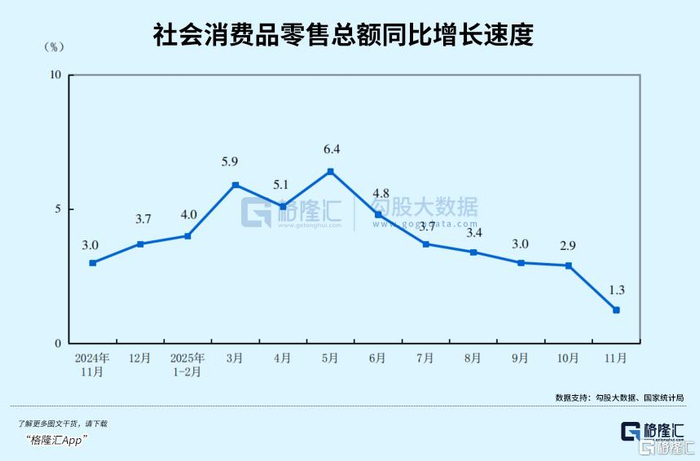
Core Insights - The consumption industry has undergone significant changes over the past year, with a shift in focus from traditional products like liquor to new consumption trends driven by emotional and social factors [1][10]. Group 1: Consumption Trends - Despite perceptions of a cooling consumption market, consumer demand has shown stability, with retail sales growing by 4.0% year-on-year in the first 11 months of this year, surpassing the 3.5% growth expected for the entire year of 2024 [4][5]. - The contribution of final consumption expenditure to economic growth reached 53.5% in the first three quarters of 2025, an increase of 9 percentage points compared to the entire year of 2024 [4]. - The concept of "new consumption" has emerged, characterized by emotional and social attributes, as seen in the popularity of brands like Bubble Mart and the rise of "self-reward" consumption [8][9]. Group 2: Consumer Behavior - Young consumers, particularly those from the Z generation, are becoming the main drivers of consumption, with 56.3% of them willing to spend on emotional value and interests, a 16.2 percentage point increase from 2024 [10][9]. - The trend of "rational consumption" is also evident, where consumers are increasingly focused on quality and value, with 47% of respondents indicating they only purchase essentials to avoid waste, while 68% are willing to spend more on products that help relieve stress [11][10]. Group 3: Market Opportunities - The second-hand economy is thriving, with platforms like Xianyu seeing a 30% year-on-year increase in transaction volume, reflecting young consumers' acceptance of "recycled consumption" [12]. - The health and wellness industry is benefiting from consumers' desire to invest in personal growth, with products like smart home devices and effective skincare gaining traction [14][13]. - The pet economy is emerging as a significant market, driven by the emotional support pets provide, with a wide range of related products and services [24]. Group 4: Future Outlook - The emotional consumption market in China is projected to reach 2.3 trillion yuan in 2024, with expectations to exceed 4.5 trillion yuan by 2029, indicating substantial growth potential [16]. - The consumption landscape is evolving into a complex ecosystem where rational and emotional consumption coexist, reshaping investment strategies and market dynamics [27].
萌宠邂逅“果王” 解锁消费新场景
Xin Lang Cai Jing· 2025-12-28 01:58
Core Insights - The event "Pet Love Jiangnan · Durian Unforgettable" launched in Nanning's Jiangnan District focuses on the integration of the pet economy and the durian industry, aiming to stimulate consumption and create a unique consumer IP [5][6] - The event features various interactive experiences, including a "Cute Pet Durian Fashion Show" and multiple themed zones for pet products and durian tasting, enhancing consumer engagement [5][6] Group 1: Event Overview - The event commenced on December 27, 2025, at the Pavilion Pier, showcasing a blend of pet and durian elements [5] - It includes over 50 themed booths, clearly divided into areas for pet food tasting, smart pet products, and durian deep-processing experiences [5] Group 2: Consumer Engagement - The "Pet Love Durian Live Broadcast Room" allows consumers to shop online in real-time, enhancing the shopping experience by breaking spatial limitations [5] - A fun obstacle course for pets, aimed at engaging pet owners and their pets, was a popular attraction, promoting interaction and enjoyment [5] Group 3: Business Impact - Participating vendors reported positive feedback, highlighting the value of face-to-face interactions for product recommendations and increased sales conversion rates [6] - The event facilitated connections between Southeast Asian durian products and the pet economy consumer base, effectively broadening sales channels for businesses [6] - The event's organizers aim to create a unique consumer IP through the innovative crossover of pet and local agricultural products, enhancing the city's modern and inclusive image [6]

2025中国新消费发展洞察暨品牌力榜单
Sou Hu Cai Jing· 2025-12-27 05:30
Core Insights - The report highlights the resilience and vitality of the Chinese consumer market amidst global economic slowdown and uncertainty, indicating a shift from being the "world's factory" to a global leader in innovation and trends [1][5] - The concept of "new consumption" is redefined, driven by digital technology, online-offline integration, and new consumer relationships based on social networks, emphasizing digitalization, personalization, socialization, and quality [2][5] Market Overview - China's consumption structure is transitioning from material-based to service-oriented, with rapid growth in service consumption expenditures becoming a new engine for market growth [1][5] - Government policies are aimed at boosting consumption and expanding domestic demand through income distribution reforms and enhanced social security [1][5] Industry Insights - The restaurant industry is experiencing structural adjustments with increased chain rates and the rise of "satellite stores" due to the importance of delivery channels [3] - In the food and beverage sector, health and emotional value are key themes, with consumers becoming more rational about ingredient research and emotional value driving purchasing decisions [3] - The retail sector is facing disruption from "hard discount" models, while immersive experiences and business model integration are crucial for attracting foot traffic [3] - The consumer electronics industry is leveraging AI advancements, with rapid growth in AI smartphone penetration and the AI toy market driven by lower technology costs and educational upgrades [3] Brand Strategy - New consumption brands must focus on "adaptability" and "community" to enhance operational resilience and build deep relationships with consumers based on shared values [2][5] - The report introduces the "VIG Compass" brand strength evaluation model, assessing brands across three dimensions: brand voice, core strength, and growth potential [4][30] Future Outlook - The Chinese new consumption market is characterized by a continuous reshaping of rules, with growth logic shifting from external dividends to internal innovation and value creation [5] - Future winners will be those brands that deeply understand and integrate into local cultural dynamics while optimizing operational efficiency and establishing emotional connections with users [5]
远望谷:公司的宠物经济业务目前尚处于起步阶段
Zheng Quan Shi Bao Wang· 2025-12-26 04:16
Core Viewpoint - The company, Yuanwanggu (002161), is in the early stages of its pet economy business, focusing on solidifying its market position and validating its business model, with a long-term goal of establishing it as a second growth curve for the company [1] Group 1: Business Growth Drivers - The growth of the company's pet business is driven by two main factors: the natural growth dividend of the pet economy industry, as societal demand for pet companionship continues to rise, leading to a steady expansion of the overall pet economy market size [1] - The penetration rate and market share of smart pet devices in the pet economy sector are gradually increasing, indicating a positive industry development trend [1] Group 2: Product Line and Future Outlook - The company's product line is gradually becoming more diverse, which is expected to facilitate rapid growth in the pet economy segment [1]

未来10年,最挣钱的凭什么一定是这群人?
创业家· 2025-12-23 10:10
Group 1 - The core viewpoint of the article is that Amazon's report on global e-commerce trends highlights emerging consumer demands and market opportunities driven by technology and emotional needs [1][2][39]. Group 2 - Trend 1: AI Quality Space - Consumers are willing to spend more on smart home products that enhance emotional interaction and comfort, with over 65% of consumers in Europe and the US expressing this willingness [4][6]. - Trend 2: Sleep Economy - 37% of American adults reported a decline in sleep quality in 2023, indicating a growing market for sleep-related products and services [10][11]. - Trend 3: Happy Office - There is an increasing demand for ergonomic office furniture and environments that enhance comfort and productivity [13][14]. - Trend 4: Subtle Technology - Consumers are seeking technology that seamlessly integrates into their lives, enhancing quality without being intrusive [15]. - Trend 5: Pet Economy - The global pet industry is expected to grow by 45% over the next six years, with 55% of pet owners in developed markets willing to invest more in pet health and wellness [16][17][19]. - Trend 6: Outdoor Cooking - The rise of camping and outdoor cooking reflects a demand for products that enhance social experiences and lifestyle [20][22]. - Trend 7: Mobile Treasure Chest - Vehicles are evolving into multifunctional spaces, with consumers looking for comfort and efficiency in their car environments [23][27]. - Trend 8: Generation Z Consumers - This demographic values sustainability, personalization, and emotional connection in their purchasing decisions [28][29]. - Trend 9: Fitness Pioneers - There is a growing focus on personalized and efficient fitness solutions, supported by technology [31][34]. - Trend 10: E-sports Enthusiasts - Emerging markets are seeing rapid growth in e-sports, with consumers seeking high-performance equipment and immersive experiences [35][37].

长城基金曲少杰:Z世代撬动新消费市场 六大领域增长势头强劲
Zheng Quan Shi Bao Wang· 2025-12-23 08:12
Core Viewpoint - The Z generation is leading a new wave of consumption in China, shifting the market from mass consumption to personalized and rational consumption [1] Group 1: Market Trends - China's consumer market is transitioning towards individualistic and rational consumption patterns, driven by a large young population and a complete domestic industrial chain [1] - The emerging consumption sectors are showing strong growth momentum, particularly in six key areas: pet economy, trendy toys, ready-to-drink beverages, health consumption, smart wearables, and smart driving vehicles [1]
看懂这些关键领域,在2026年捡回「上行」信心
36氪· 2025-12-20 10:27
Core Insights - The article discusses the impact of AI on the workplace by 2025, highlighting both opportunities and challenges for job seekers and employers [5][6]. Group 1: AI and Job Market Dynamics - AI is expected to revolutionize job roles, but it also poses risks of job displacement, particularly for those in roles that can be automated [5]. - The emergence of "super individuals" in the workforce may lead to reduced job opportunities for others, as increased productivity from these individuals can displace multiple workers [5]. Group 2: Employer Branding and Recruitment Trends - There is a lack of investment in employer branding among companies, as many prioritize product performance over employee satisfaction [6]. - Companies are increasingly seeking "versatile talents" by expanding job descriptions, which may undermine the value of teamwork and specialized roles [6]. Group 3: Industry-Specific Insights - The advanced manufacturing sector is experiencing a surge in investment, particularly in robotics and 3D printing, with significant growth in talent demand [9]. - The chip manufacturing industry is accelerating its domestic production capabilities, with a reported 90% yield rate for new processes, indicating a strong push towards self-sufficiency [9]. Group 4: Employment Trends and Challenges - The article notes a structural talent shortage in various sectors, including robotics and chip manufacturing, with a reported talent gap exceeding 300,000 in the semiconductor industry [9]. - The article emphasizes the need for companies to adapt to changing market demands and invest in employee development to remain competitive [6][9].

2025年职场红利盘点:在这些赛道里,捡回“上行”信心(全文版)
3 6 Ke· 2025-12-19 06:47
Group 1 - The article discusses the impact of AI on the workplace, highlighting both the potential benefits and the challenges faced by employees as AI technologies evolve [2][3] - It notes that many companies are still hesitant to invest in employer branding, focusing instead on product performance and financial results, which diminishes the importance of employee relations [3] - The trend of seeking "versatile talents" in job descriptions is increasing, while the concept of "one-person companies" emerges as a response to workforce reductions, raising questions about the value of teamwork [3] Group 2 - The article reflects on the struggles of an AI startup team, emphasizing the challenges of navigating the AI landscape and the impact of rising price sensitivity among consumers [3][4] - It mentions the organization of various events, including AI talent salons and recruitment fairs, aimed at fostering community and industry engagement [4] - The publication aims to maintain high content standards and neutrality while exploring monetization strategies through paid content, indicating a shift in the media landscape [4] Group 3 - The article presents a list of the top 50 employers in the workplace bonus category, showcasing companies that have excelled in employer branding and employee engagement [8][15] - It highlights the importance of adapting to changing market demands and the emergence of new job roles in sectors like IP management and overseas market promotion due to the globalization of brands [11] - The narrative emphasizes the need for companies to innovate and adapt to the evolving economic landscape, particularly in the context of AI and automation [11]