
运动服装

Search documents
大行评级丨里昂:列出安踏、裕元集团及新秀丽为中国消费板块三大首选股
Ge Long Hui· 2025-12-01 05:48
Core Viewpoint - The report from Credit Lyonnais highlights the focus on opportunities in the segmented development of the Chinese consumer sector, with high-end consumption benefiting from monetary policy easing, stock market improvements, and increased offshore financing [1] Group 1: Consumer Sector Outlook - The Chinese retail sales of sports apparel are expected to grow by 3% to 4% year-on-year in the coming year, with major brands optimizing retail channels and enhancing product functionality [1] - The cosmetics industry in China is projected to achieve low to mid-single-digit growth next year [1] Group 2: Specific Company Recommendations - Credit Lyonnais identifies Anta Sports, Yue Yuen Industrial, and Samsonite as the top three stock picks in the consumer sector [1] Group 3: Jewelry Market Insights - In the gold and jewelry sector, gold prices are expected to fluctuate in the second half of 2025, and while price increases may offset VAT cost pressures, retail jewelers' sales may still be impacted [1]

致命漏洞被戳穿!特朗普关税违法实锤,要退万亿税,美国扛得住?
Sou Hu Cai Jing· 2025-11-22 08:07
Core Points - The Supreme Court hearing on November 5, 2025, posed significant challenges to Trump's tariff policies, with conservative justices questioning the legality of his actions [1][3] - The outcome of the hearing could lead to substantial financial implications for the U.S., potentially resulting in a refund of $750 billion to $1 trillion in tariffs [4][6] - The tariffs have adversely affected U.S. businesses, with companies reporting significant financial losses due to increased costs [6][8] Group 1: Legal and Political Implications - Chief Justice Roberts emphasized that the power to levy taxes belongs to Congress, not the President, highlighting the constitutional principle regarding taxation [3] - Justices appointed by Trump, including Gorsuch and Barrett, raised critical questions about the extent of presidential power in declaring emergencies to impose tariffs [3] - The hearing has shifted market expectations regarding the likelihood of Trump's tariff policies being upheld, dropping from 40% to 27% [3] Group 2: Economic Impact on Businesses - Companies like Learning Resources and Terry Precision Cycling reported significant financial losses due to tariffs, with the latter expecting a loss of $1.2 million by 2026 [4][6] - The tariffs have led to increased costs for major corporations, including Nike, which warned of a potential $1.5 billion loss due to tariffs [6][8] - The Senate passed a resolution to terminate Trump's global tariff policy, signaling a shift towards anti-tariff sentiment [6] Group 3: Global Trade Dynamics - The tariffs have prompted retaliatory measures from other countries, including Canada and Mexico, which have imposed their own tariffs on U.S. goods [8] - The WTO expressed concerns about the potential for a trade war to have catastrophic effects on the global economy, reminiscent of the 1930s [8] - Companies are adjusting their strategies to mitigate the impact of tariffs, with some committing to increased investments in the U.S. to secure tariff exemptions [8]


安德玛推进业务重组,计划分离旗下库里品牌
Ge Long Hui A P P· 2025-11-14 07:19
Core Viewpoint - Under Armour plans to separate its Curry brand, ending a partnership with NBA star Stephen Curry that has lasted over a decade. The Curry brand will operate independently from Under Armour, which will focus on its core brand. The company expects that this separation will not have a significant impact on its consolidated financial performance or profitability [1]. Group 1 - Under Armour is ending its long-term collaboration with Stephen Curry [1] - The Curry brand will operate independently from Under Armour [1] - Under Armour will concentrate on its core brand following the separation [1] Group 2 - The company anticipates that the separation will not materially affect its financial results or profitability [1]

“小登”受伤,“老登”上位,美股“成长—价值”的轮动信号?
Hua Er Jie Jian Wen· 2025-11-12 07:53
Core Viewpoint - The U.S. stock market is experiencing a clear style shift, with traditional blue-chip stocks rising as technology stocks show signs of fatigue [1][4]. Group 1: Market Performance - The Dow Jones Industrial Average (DJIA) closed up 559.33 points, nearly 1.2%, reaching a record high of 47,927.96 points, marking its 16th record close of the year [1]. - In contrast, the Nasdaq Composite Index fell by 58.87 points, a decline of 0.3%, closing at 23,468.30 points [1]. - The S&P 500 index saw a slight increase of 0.2%, closing up 14.18 points, driven by sectors such as healthcare, energy, and consumer staples [4]. Group 2: Investor Sentiment - Investor sentiment is shifting from growth stocks to value stocks, driven by concerns over growth stock valuations and recognition of the appeal of undervalued stocks [4][5]. - The rotation from "pure growth stocks" to "pure value stocks" has been ongoing since August and is currently accelerating [4]. Group 3: Rotation Logic - The divergence in performance between the DJIA and the Nasdaq is attributed to the DJIA's lower exposure to technology stocks compared to the latter two indices [5]. - Investors are actively seeking new investment opportunities, moving from high-valuation sectors like communication services and technology to more attractive value stocks [5]. Group 4: Macroeconomic Context - Weak macroeconomic data has not negatively impacted the market; instead, it has provided more room for the Federal Reserve's easing path, creating a favorable environment for the rotation towards value stocks [6][7]. - Recent reports indicate that the U.S. private sector has seen an average weekly job loss of 11,250 jobs over the past four weeks, which some analysts view as a necessary condition for continued Federal Reserve easing [7]. Group 5: Political and Economic Factors - The resolution of short-term political risks, such as the government shutdown, has allowed the market to refocus on economic fundamentals and monetary policy expectations [7]. - The Senate has approved a funding bill that is expected to end the longest government shutdown in U.S. history, which has alleviated market concerns [7].

在小红书,国际品牌学会了“听劝”
Sou Hu Cai Jing· 2025-11-07 17:15
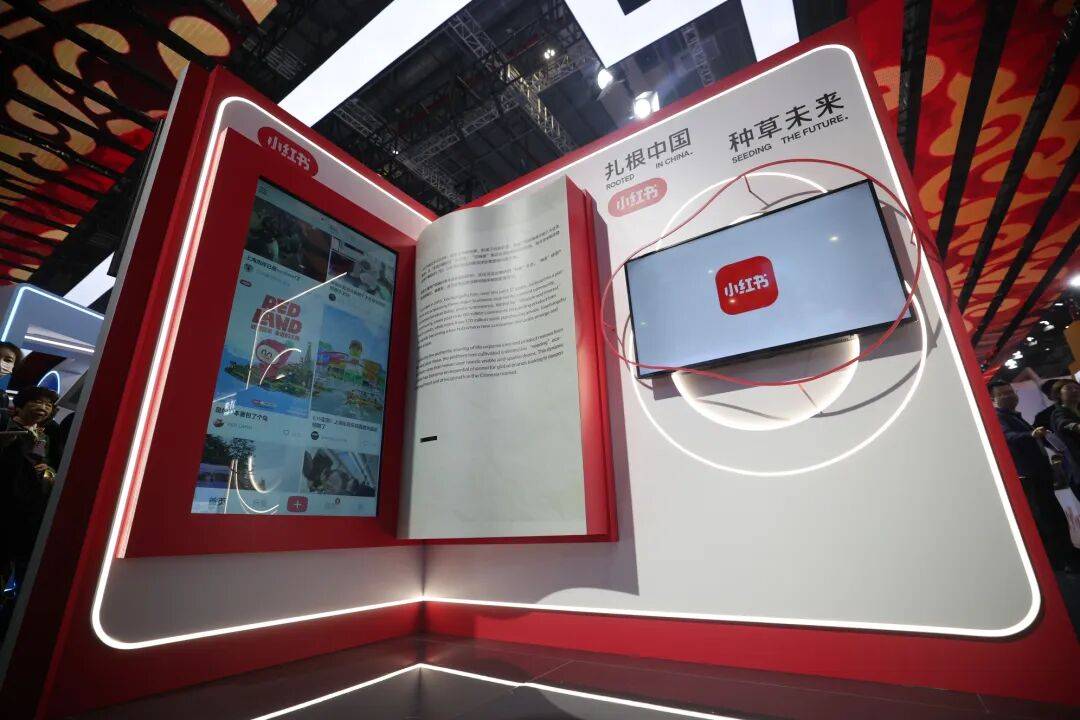
Core Insights - The China International Import Expo (CIIE) serves as a significant platform for showcasing China's high-level openness and connecting global markets, with the eighth edition scheduled for November 5-10, 2025, featuring over 430,000 square meters of exhibition space and participation from 155 countries and regions, along with over 4,100 foreign enterprises [1][7]. Group 1: Brand Engagement and Marketing Strategies - Overseas brands are increasingly utilizing platforms like Xiaohongshu (Little Red Book) to engage with Chinese consumers, employing interactive activities such as QR code scanning to attract visitors [3][9]. - Adidas has leveraged Xiaohongshu to tap into the preferences of Chinese consumers, launching products that resonate with local aesthetics and trends, resulting in significant sales growth [5][9]. - Airbnb has identified emerging travel trends among Chinese youth through Xiaohongshu, leading to tailored offerings that cater to specific interests, such as concert-related accommodations, which have proven successful [6][9]. Group 2: Cultural Exchange and Market Insights - The "grass planting" culture on Xiaohongshu is facilitating a deeper understanding of Chinese consumer behavior among international brands, allowing them to adapt their products and strategies accordingly [7][9]. - The influx of overseas users into Xiaohongshu is fostering cultural exchange, with shared interests in pets, fashion, and food, highlighting the platform's role in bridging cultural gaps [7][10]. - Xiaohongshu's unique platform characteristics and user-driven influence are reshaping marketing dynamics, transforming traditional consumer-brand interactions into more engaging and personalized experiences [9][10].
机构评级调高至“买入”
Shen Zhen Shang Bao· 2025-11-03 07:19
Core Viewpoint - Daiwa Capital upgraded Li Ning's stock rating from "Hold" to "Buy" and raised the target price to HKD 24, citing attractive risk-reward conditions for the company amid low market expectations, improving fundamentals, and upcoming major sports events [1] Company Summary - Li Ning's stock price increased by 2.64% on the day it became a partner of the Chinese Olympic Committee [1] - The company is expected to face higher demands in R&D and innovation as it collaborates with the Chinese Olympic Committee, requiring more human and financial resources [1] - The competitive landscape for Chinese sports brands has entered a new phase, with intensified competition across branding, products, and channels [1] Industry Summary - Guosen Securities reported that the sports and outdoor industry is expected to show superior growth by Q3 2025, with Q4 entering a peak season due to holiday promotions and new product launches [1]
探路者涨2.03%,成交额2.15亿元,主力资金净流出567.48万元
Xin Lang Zheng Quan· 2025-11-03 05:46
Core Viewpoint - The company, Ternua, has experienced a significant increase in stock price and trading activity, indicating potential investor interest and market dynamics [1][2]. Group 1: Stock Performance - Ternua's stock price has increased by 36.45% year-to-date, with a 9.39% rise in the last five trading days, 11.83% in the last 20 days, and 11.31% in the last 60 days [2]. - As of November 3, the stock was trading at 9.55 CNY per share, with a market capitalization of 8.439 billion CNY [1]. Group 2: Trading Activity - The trading volume on November 3 reached 215 million CNY, with a turnover rate of 2.59% [1]. - There was a net outflow of 5.6748 million CNY from main funds, while large orders accounted for 22.75% of purchases and 26.99% of sales [1]. Group 3: Company Overview - Ternua was established on January 11, 1999, and went public on October 30, 2009. The company is based in Beijing and operates in the outdoor products and semiconductor sectors [2]. - The revenue composition includes outdoor clothing (63.31%), chip business (17.13%), outdoor footwear (13.29%), outdoor equipment (3.71%), and other services (2.56%) [2]. Group 4: Financial Performance - For the period from January to September 2025, Ternua reported a revenue of 953 million CNY, a decrease of 13.98% year-on-year, and a net profit of 33.037 million CNY, down 67.53% year-on-year [3]. - The company has distributed a total of 509 million CNY in dividends since its A-share listing, with 30.4177 million CNY distributed in the last three years [4]. Group 5: Shareholder Information - As of September 30, Ternua had 41,100 shareholders, a decrease of 29.16% from the previous period, with an average of 21,485 circulating shares per shareholder, an increase of 41.16% [3].

三夫户外涨2.06%,成交额5439.34万元,主力资金净流入369.66万元
Xin Lang Cai Jing· 2025-11-03 03:42
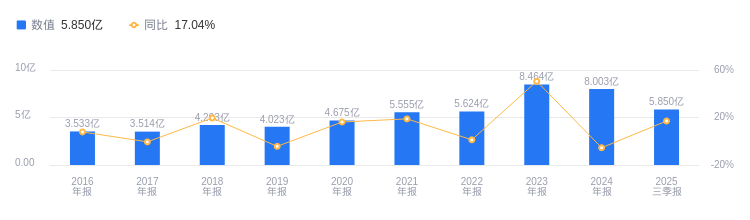
Core Viewpoint - Sanfo Outdoor's stock price has shown a significant increase this year, with a 17.23% rise, indicating positive market sentiment and potential growth in the outdoor sports industry [2] Company Overview - Sanfo Outdoor, established on June 22, 2001, and listed on December 9, 2015, is based in Beijing and specializes in the research and sales of high-quality outdoor sports products, as well as organizing outdoor events and activities [2] - The company's revenue composition includes 59.21% from apparel, 25.95% from footwear and socks, 10.77% from equipment, and 4.07% from outdoor services [2] - As of September 30, 2025, the company had 16,600 shareholders, a decrease of 9.04% from the previous period, with an average of 7,850 circulating shares per person, an increase of 9.94% [2] Financial Performance - For the period from January to September 2025, Sanfo Outdoor achieved a revenue of 585 million yuan, representing a year-on-year growth of 17.04%, while the net profit attributable to shareholders was 21.21 million yuan, up 147.77% year-on-year [2] - The company has distributed a total of 12.99 million yuan in dividends since its A-share listing, with no dividends paid in the last three years [3] Shareholder Structure - As of September 30, 2025, the top ten circulating shareholders included notable funds such as Yinhua Shengshi Flexible Allocation Mixed Fund and Nuon An Multi-Strategy Mixed Fund, with some shareholders reducing their stakes [3]

三夫户外的前世今生:2025年三季度营收5.85亿行业排名第4,净利润1853.49万行业排名第3
Xin Lang Cai Jing· 2025-10-31 13:06
Core Viewpoint - Sanfu Outdoor is a well-known comprehensive service provider in the outdoor sports industry in China, with a strong market presence and brand resources [1] Group 1: Business Overview - Sanfu Outdoor was established on June 22, 2001, and listed on the Shenzhen Stock Exchange on December 9, 2015 [1] - The company specializes in the research and sales of high-quality outdoor sports products, operates the X-BIONIC luxury sports brand, organizes outdoor events, and designs educational projects for children and youth [1] Group 2: Financial Performance - In Q3 2025, Sanfu Outdoor reported revenue of 585 million yuan, ranking 4th among 4 companies in the industry, with the industry leader, Tanshan, generating 953 million yuan [2] - The net profit for the same period was 18.53 million yuan, ranking 3rd in the industry, with the top performer, Jialinjie, reporting a net profit of 56.84 million yuan [2] - The company's revenue for the first three quarters of 2025 increased by 17.04% year-on-year, while the net profit grew by 147.77% [6] Group 3: Financial Ratios - As of Q3 2025, Sanfu Outdoor's asset-liability ratio was 44.96%, up from 40.81% in the previous year, exceeding the industry average of 27.29% [3] - The gross profit margin for Q3 2025 was 55.54%, slightly down from 56.23% year-on-year, but still above the industry average of 36.29% [3] Group 4: Shareholder Information - As of September 30, 2025, the number of A-share shareholders decreased by 9.04% to 16,600, while the average number of shares held per shareholder increased by 9.94% to 7,850.31 [5] - Notable changes among the top ten circulating shareholders included a significant reduction in holdings by some funds and the entry of new shareholders [5] Group 5: Management Compensation - The chairman, Zhang Heng, received a salary of 1.023 million yuan in 2024, an increase of 378,000 yuan from the previous year [4] Group 6: Future Outlook - Analysts expect Sanfu Outdoor to achieve net profits of 46 million yuan, 68 million yuan, and 85 million yuan in 2025, 2026, and 2027, respectively, with significant year-on-year growth [6][7] - The company is optimistic about its growth prospects due to the expansion of its brand matrix and the introduction of new products [7]
彪马将再裁员900人;“绝味鸭脖们”越来越难卖了|消费早参
Mei Ri Jing Ji Xin Wen· 2025-10-30 23:54
Group 1 - Puma reported a 10.4% decline in sales to €1.9557 billion for Q3 2025, with a net loss of €62.3 million and earnings per share of -€0.42 [1] - The company plans to cut approximately 900 white-collar jobs globally by the end of 2026 due to anticipated significant sales declines and high operational costs [1] - Puma is facing challenges such as weak brand momentum, high inventory levels, and low distribution quality, but still has potential to rank among the top three global sports brands if reforms are executed effectively [1] Group 2 - Douyin announced ongoing efforts to combat the improper use of minors' images for profit, having removed 37,000 videos and penalized 3,651 accounts in the past month [2] - The platform's actions highlight the ongoing challenges in protecting minors online, emphasizing the need for continuous legal and technological improvements [2] Group 3 - The snack industry, particularly the braised food sector, is experiencing a slowdown, with major players like ST Juewei and Huang Shanghuang reporting revenue declines [3] - Experts indicate that high prices and insufficient value for money are significant challenges for the braised food industry amid changing consumer willingness and confidence [3] Group 4 - Starbucks reported a revenue of $3.105 billion in China for the 2025 fiscal year, marking a 5% year-over-year increase, with consistent growth in operating income and same-store sales [4] - The company's performance indicates a successful strategy in product differentiation, creating a competitive advantage in the highly competitive Chinese coffee market [4]
