创新药

Search documents
华商基金权益投资部总经理张明昕 市场波动或加大 可关注AI产业链
Shen Zhen Shang Bao· 2026-01-15 17:43
Core Viewpoint - The overall upward trend of the market is expected to continue in 2026, with increased volatility and significant structural opportunities, particularly in the AI industry chain, robotics, innovative pharmaceuticals, and solid-state batteries [2][3][4]. Market Performance - A-shares have shown strong performance at the beginning of 2026, with the Shanghai Composite Index rising above 4100 points, although there has been some recent adjustment [3][4]. - The market has been active, with trading volumes exceeding 3 trillion yuan for four consecutive trading days [3]. Investment Strategy - Investors are advised to broaden their perspectives and not limit themselves to specific sectors. The focus should be on tracking industry trends and identifying sectors with upward momentum [4][5]. - The investment approach will continue to emphasize systematic tracking and evaluation of industry conditions to identify the best opportunities [4]. Key Sectors to Watch - The AI industry chain is highlighted as a core investment direction, with ongoing developments in AI applications such as software and healthcare [5]. - Robotics is in the early investment stage, with attention on Tesla's supply chain and the potential for large-scale production [5]. - The innovative pharmaceuticals sector is expected to benefit from supportive policies, with significant market potential and profitability anticipated [5]. - Solid-state batteries are on the verge of commercialization, presenting ongoing investment opportunities once technological breakthroughs occur [6]. Economic Context - The macroeconomic environment is expected to foster a relatively loose liquidity situation in the first quarter of 2026, supporting the market's positive outlook [4]. - The dual support of policy and industry-driven growth is seen as crucial for the healthy and high-quality development of the capital market [4][6].


“几乎每场讨论都会谈到中国”!秀管线、谈合作、见投资人,从医药行业“春晚”看中国创新药产业跃迁
证券时报· 2026-01-15 15:55
Core Viewpoint - The 44th JPMorgan Global Healthcare Conference reflects a shift in focus for Chinese innovative drug companies from local innovation to building global competitiveness, emphasizing global development strategies and commercialization [1][7]. Group 1: Conference Highlights - The conference attracted numerous Hong Kong biopharmaceutical companies, showcasing their pipelines and engaging with investors [1]. - Companies reported a busy schedule with extensive meetings, indicating a high level of interest from multinational pharmaceutical executives and top fund managers in Chinese innovative drugs [4]. - The participation of Chinese companies has become more organized and active, with discussions shifting from early concepts to solid clinical data and international collaboration cases [7][8]. Group 2: Company Strategies and Goals - Companies like InSilico Medicine and Eucure Biopharma focused on showcasing their unique technologies and clinical data, aiming to establish deep collaborations with multinational firms and investors [5][11]. - The emphasis was on demonstrating the differentiation and international competitiveness of their platforms, with a shift from merely presenting pipeline quantity to highlighting unique advantages [8]. - Companies are increasingly adopting global strategies, including licensing and overseas clinical trials, reflecting a transition from "fast-follow" to "global synchronous innovation" [8]. Group 3: Key Messages for Global Market - Chinese innovative drug companies need to convey their scientific rigor and innovation capabilities through high-quality clinical data and advanced technology platforms [11][12]. - The importance of global cooperation and a long-term sustainable development approach was highlighted, aiming to reshape international perceptions of Chinese innovation from cost advantages to innovation-driven value [12]. - The rapid growth of Chinese biotech firms is seen as a microcosm of the industry's evolution, with expectations for the emergence of globally influential pharmaceutical giants from China [12].

2026抓好这些主线!博道基金张建胜:AI硬件的下半场或在存力和互联,重视AI应用!
Zhong Guo Zheng Quan Bao· 2026-01-15 08:20
Core Viewpoint - The current market equates "investing in technology" with "buying AI," with light modules being seen as entry tickets to the AI market. However, some fund managers, like Zhang Jiansheng from Bodao Fund, adopt a different approach by focusing on early-stage investments in various hot sectors without chasing extreme trends, achieving significant returns instead [1]. Investment Strategy - Zhang Jiansheng's investment framework emphasizes a "bottom-up, moderately diversified, and balanced growth" approach, with a strong focus on valuation and drawdown control. His cautious risk preference stems from his early career experiences during market volatility [2]. - His investment style features distinct left-side trading characteristics, where he sets target market values for companies and gradually sells once prices reach those levels, avoiding high premium purchases [2]. - The core selection logic revolves around three dimensions: competitive barriers, industry prosperity, and valuation, with a higher weight on competitive barriers outside the TMT sector and a greater emphasis on industry prosperity within TMT [2]. Market Insights - Zhang believes that to earn excess returns from highly valued leading companies, one must possess deep industry knowledge. He prefers to identify "left-side" targets with lower market attention and reasonable valuations, which allows for manageable downside risks [3]. - His portfolio construction strategy involves limiting single industry holdings to no more than 25% and maintaining a balanced allocation across high-end manufacturing, TMT, and consumer sectors, resulting in effective drawdown control [3]. Portfolio Construction - Zhang's focus on valuation enables him to uncover opportunities in less popular market segments, such as his early 2024 positioning in the Hong Kong stock market and the 2025 focus on innovative pharmaceuticals, where valuations had reached attractive historical lows [4]. - He aims to capitalize on valuation recovery in innovative pharmaceuticals, gradually realizing profits as valuations improve, while also recognizing that low valuations do not guarantee price increases [4]. - His investment in the semiconductor storage sector in 2025 was based on a dual assessment of valuation and industry trends, identifying low valuations alongside positive industry signals as a favorable investment combination [5]. 2026 Market Outlook - Zhang holds an optimistic view of the A-share market, supported by three key factors: a significant decrease in risk premiums, ongoing regulatory support for the capital market, and signs of corporate earnings recovery [6]. - In terms of investment focus for 2026, he highlights three areas: AI, particularly in storage and connectivity, with an emphasis on the shift from "technology-first" to "product-first" among leading companies; resource sectors benefiting from "re-industrialization" and "re-globalization," with a particular interest in silver; and valuation recovery opportunities in traditional industries like chemicals and consumer sectors [6][7].
超73亿资金,“跑了”
Zhong Guo Ji Jin Bao· 2026-01-15 05:55
Group 1 - On January 14, the A-share market experienced a significant drop, with the three major indices showing mixed results, and the ChiNext index falling nearly 2% [2] - The total net outflow of funds from the stock ETFs exceeded 7.3 billion yuan, indicating a cooling market as some investors chose to cash out [5] - Despite the overall outflow, 49 stock ETFs saw net inflows of over 100 million yuan, with the software ETF, satellite ETF, and non-ferrous metals ETF leading the inflows [5][8] Group 2 - As of January 14, the total scale of stock ETFs reached 5.07 trillion yuan, marking the first time it surpassed the 5 trillion yuan threshold [3] - The total trading volume of stock ETFs on that day was 387.15 billion yuan, an increase of over 76 billion yuan compared to the previous trading day [3] - The software, big data, and cloud computing sectors led the gains among stock ETFs, while sectors like electric grid and innovative pharmaceuticals performed poorly [3][4] Group 3 - The top three stock ETFs by net inflow included the software ETF with 31.67 billion yuan, the D-star ETF with 26.48 billion yuan, and the non-ferrous metals ETF with 13.52 billion yuan [6] - Conversely, the top three stock ETFs by net outflow were the ChiNext ETF with 35.60 million yuan, the CSI 300 ETF with 28.26 million yuan, and the STAR 50 ETF with 15.42 million yuan [7] - Head fund companies like E Fund and Huaxia Fund saw significant inflows into their ETFs, with E Fund's software ETF and artificial intelligence ETF attracting 3.76 billion yuan and 3.73 billion yuan respectively [8]

华商基金张明昕:市场波动或加大 AI产业链仍可关注
Sou Hu Cai Jing· 2026-01-15 03:19
Core Viewpoint - The A-share market is expected to maintain an upward trend in 2026, with significant structural opportunities in sectors such as AI, robotics, innovative pharmaceuticals, solid-state batteries, and new consumption [1][4]. Market Performance - The A-share market has shown strong performance at the beginning of 2026, with the Shanghai Composite Index rising above 4100 points and trading volume exceeding 3 trillion yuan for four consecutive trading days [1][4]. - Despite some adjustments in the market, the overall bullish sentiment remains, supported by a relatively loose liquidity environment and strong expectations for market performance [4]. Investment Strategy - The investment strategy for 2026 will focus on systematic tracking and assessment of industry trends, identifying sectors with upward momentum and explosive potential [4][5]. - Investors are encouraged to maintain a broad perspective and avoid being fixated on specific sectors, emphasizing the importance of evaluating future industry trends and making decisions based on comparative analysis [4][5]. Sector Focus - Key sectors to watch include: - **AI Industry**: The AI sector is expected to continue its growth, with applications in AI software and healthcare showing significant gains [5]. - **Robotics**: The robotics sector is in the early investment stage, with a focus on the mass production capabilities of Tesla's robotics supply chain [5]. - **Innovative Pharmaceuticals**: This sector is anticipated to benefit from supportive policies, with potential for significant market growth and profitability [5]. - **Solid-State Batteries**: Positioned on the brink of commercialization, breakthroughs in this technology could present ongoing investment opportunities [5]. - **New Consumption**: Expected to gain traction as the macroeconomic environment stabilizes, this sector is also a key area of focus [5]. Economic Context - The macroeconomic environment in 2026 is characterized by supportive policies and a focus on high-quality development, which is crucial for the healthy growth of the capital market [4][6]. - The ongoing transformation of external pressures into opportunities for comprehensive reform is seen as a driving force for the capital market's development [4][6].

中国2026年经济展望:开门红之后?
2026-01-15 02:51
Summary of Key Points from the Conference Call Industry Overview - The report focuses on the **China** market, particularly in the context of **economic outlook** and **technological innovation** within various sectors, including AI, robotics, and pharmaceuticals [2][6][34][45]. Core Insights and Arguments 1. **Economic Growth Projections**: - China's GDP growth is projected to be around **4.8% in 2026** and **4.6% in 2027**, indicating a slow recovery and re-inflation process [85][90]. - The government aims to maintain a growth target of around **5%** for the upcoming year [104]. 2. **AI and Technological Innovation**: - AI capital expenditure among major tech companies is expected to grow by **11%**, reaching **RMB 445 billion** in 2026 [20]. - The self-sufficiency rate of GPUs in China is projected to increase to **50% by 2027** [23]. - AI is anticipated to have limited impact on labor productivity in 2026, with significant improvements expected from 2027 onwards [18]. 3. **Robotics Market**: - China is expected to hold approximately **40% of the global robotics market by 2024**, with potential for further growth [34]. - The cumulative application scale of humanoid robots is projected to reach **1 billion units by 2050**, with about **30%** of these expected to come from China [40]. 4. **Pharmaceutical Sector**: - The share of original drugs from China in new drug approvals by the US FDA is expected to reach **35% by 2040** [45]. - The rise in original drug development is partly driven by the expiration of global drug patents [47]. 5. **Supply Chain Competitiveness**: - China is noted for its strong supply chain capabilities, being one of the few economies with low import complexity but high export complexity [50]. - The country is expected to maintain its leading position in global manufacturing exports, with its share projected to rise from **15% to 16.5% by 2030** [55]. 6. **Consumer Market Dynamics**: - Consumer spending remains weak, with high youth unemployment and diminishing effects from trade-in programs for consumer goods [86][91]. - The government plans to implement a smoother subsidy program for consumer goods in 2026, with adjustments in the scope and amount of subsidies [91]. 7. **Real Estate Market**: - The real estate sector is still in a phase of adjustment, with new construction levels stabilizing but price adjustments remaining uncertain [92]. - A significant amount of funding, estimated at **RMB 3 trillion**, is needed to reduce new housing inventory to healthy levels [96]. 8. **Policy Directions**: - The government is expected to maintain a moderate fiscal expansion, focusing on supply-side policies in 2026, with a gradual shift towards consumer-oriented policies in 2027 [101]. - There is a need for structural reforms to address deep-seated economic imbalances, particularly in social security and income distribution [110][116]. Other Important Insights - The report highlights the importance of **social security reforms** as a key to economic rebalancing, aiming to improve welfare and increase consumption among low-income households [116]. - The **high savings rate** in China reflects structural imbalances in the economy, with a significant portion of savings coming from households [110][113]. - The **global trade imbalance** is noted as a widespread issue, with China being a significant part of the puzzle [128]. This summary encapsulates the critical insights and projections regarding China's economic landscape, technological advancements, and policy directions as discussed in the conference call.
A股开盘速递 | A股低开高走 创指翻红此前一度跌近1% 旅游板块集体反弹
智通财经网· 2026-01-15 01:56
Market Overview - On January 15, A-shares opened lower, with the ChiNext index turning positive after a near 1% drop, while the Shenzhen Component index turned red. By the time of reporting, the Shanghai Composite index was down 0.2%, the Shenzhen Component index was up 0.21%, and the ChiNext index was up 0.23% [1] Sector Performance - The tourism sector rebounded collectively, with Zhongxin Tourism achieving a second consecutive limit-up. Other stocks such as Junting Hotel, Shaanxi Tourism, China Youth Travel, Jinjiang Hotel, and ShouLai Hotel also saw gains [2] - The photovoltaic sector opened low but recovered, with Tuori New Energy also achieving a second consecutive limit-up [1] Focus Stocks - Sunflower faced a significant drop, hitting a 20% limit down due to negative impacts from a terminated restructuring, with a sealed order amounting to approximately 250 million yuan [1] Institutional Insights - CITIC Securities indicated that despite recent regulatory measures to cool the market and prevent overheating risks, the overall trading activity in the equity market remains at historically high levels. Key indicators such as average daily trading volume and margin financing balances are above long-term averages, suggesting that securities firms are likely to continue benefiting [4] - CITIC Jiantou noted that the global interest rate cut cycle is entering its second half in 2026, with macro liquidity characterized by "internal and external easing resonance." The depreciation of the dollar and appreciation of the yuan are expected to support A-share strength [5] - Huatai Securities reported that the innovative drug sector is experiencing a liquidity recovery, with significant growth in BD transactions compared to the same period last year, indicating a potential bullish trend in the innovative drug market [6] -招商证券 suggested that the chemical industry may see marginal improvements in profitability as outdated production capacity is expected to be eliminated, following a period of price declines in chemical products [7]




超预期创新药BD带动医药板块共振 | 券商晨会
Mei Ri Jing Ji Xin Wen· 2026-01-15 01:26
Group 1 - Huatai Securities reports that the Hong Kong innovative drug sector has seen significant liquidity recovery since the beginning of 2026, with BD transactions exceeding expectations compared to the same period last year [1] - The report anticipates a clear innovative drug beta market driven by liquidity recovery, with expectations for breakthroughs beyond previous highs [1] - External demand-driven CXO performance continues to exceed expectations, likely resonating with the innovative drug sector [1] Group 2 - CITIC Construction Investment indicates that the global interest rate cut cycle is entering its second half in 2026, characterized by "internal and external easing resonance" and a shift from abnormal to normal conditions [2] - The report highlights that the depreciation of the US dollar and appreciation of the RMB support a strong A-share market [2] - The "stock-bond seesaw" effect is expected to further support A-share performance, with a notable increase in demand for reallocation of household deposits [2] Group 3 - China Merchants Securities states that the slight recovery of sow production capacity in 2024 will lead to a downward trend in pig prices in 2025, although there may still be slight profits for the year [3] - The industry is experiencing both passive and active capacity reduction due to price drops below cash costs, with sow production capacity entering an accelerated reduction phase from October [3] - The report predicts a gradual recovery in pig prices in the second half of 2026, with quality pig enterprises continuing to expand their cost advantages and improve cash flow [3]
创新药盛世的“隐形赢家”
Xin Lang Cai Jing· 2026-01-15 01:02
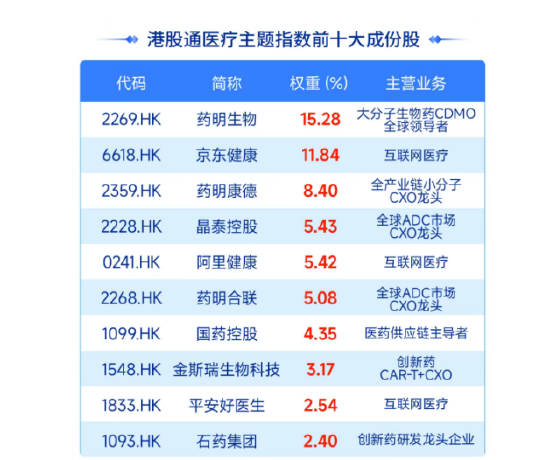
Core Insights - The Chinese innovative drug industry is entering a new prosperous era characterized by significant BD transactions and a focus on source innovation [1][10] - This revival not only leads to valuation recovery for innovative drug companies but also reshapes the entire innovative drug industry chain [1][10] - The CXO industry and internet distribution platforms are expected to benefit from this growth cycle, emerging as "invisible winners" in the innovative drug boom [1][10] CXO Industry - WuXi AppTec, as a leader in the CXO industry, possesses a unique logic of beta and alpha resonance during this innovative drug prosperity cycle [2][11] - WuXi AppTec is projected to achieve approximately 45.456 billion yuan in revenue for 2025, a year-on-year increase of about 15.84%, with adjusted net profit expected to reach approximately 14.957 billion yuan, up 41.33% [3][12] - The company's growth is attributed to its integrated CRDMO (Contract Research, Development, and Manufacturing) business model, which significantly reduces R&D costs and complexity [3][12] Innovative Drug Commercialization - The number and quality of innovative drugs approved in China are experiencing explosive growth, with 76 innovative drugs approved in 2025, a 58.3% increase from 48 in 2024 [5][15] - New commercial channels, particularly internet platforms like JD Health and Alibaba Health, are emerging as core strategic channels for innovative drug commercialization [5][15] - JD Health has established itself as the "first station for new specialty drugs," allowing innovative drugs to be launched online immediately after approval, enhancing accessibility for patients [5][15][16] Investment Opportunities - The industry’s growth is expanding from solely innovative drug R&D companies to the entire supply chain, creating significant investment opportunities [17] - Index theme funds are suggested as a means for ordinary investors to access the overall sector, with the Hong Kong Stock Connect Medical ETF (159137) covering about 70% of the core assets in the innovative drug supply chain [17][19] - The ETF includes leading companies in the medical AI sector and high-end medical devices, effectively covering industry hotspots [18][19]
利空也砸不下大A
虎嗅APP· 2026-01-15 00:29
Core Viewpoint - The A-share market is experiencing extreme enthusiasm, prompting regulatory measures to cool down the market, indicating a shift towards a "slow bull" market rather than a "crazy bull" market, emphasizing the need for investors to focus on fundamentals rather than emotions [5][6]. Market Sentiment and Regulatory Response - On January 14, the exchange announced an increase in the minimum margin ratio for financing from 80% to 100%, leading to an immediate market downturn [5]. - The regulatory stance is clear: the market can rise, but it should not be driven solely by emotions, and investors must return to fundamentals [6]. Investment Opportunities and Risks - The focus should be on identifying key sectors that are likely to perform well while avoiding those that may pose risks [7][8]. - The analysis will cover 13 high-interest sectors to provide insights on potential investment opportunities [9]. AI Computing Power - The rise of AI infrastructure is supported by increased investments from cloud vendors, with companies like "易中天" (New Yizhong, Zhongji Xuchuang, Tianfu Communication) showing significant stock price increases [11]. - However, the current high valuations may be unsustainable, and without new positive developments, there is a risk of a bubble burst in this sector [11]. Space Computing Industry - The space computing industry is expected to emerge as a significant market, with technologies deploying data centers in space to address ground-based limitations [13][15]. - China's advancements in space computing are supported by government initiatives, with plans for a comprehensive deployment strategy by 2025 [17][18]. Humanoid Robots - The humanoid robot sector is anticipated to see differentiation by 2026, with industrial applications being the primary focus, while household robots remain underdeveloped [20][22]. - Companies like 优必选 (UBTECH) are ramping up production, with expectations of significant output increases in the coming years [22][23]. Semiconductor Equipment - Domestic wafer fabs are planning expansions to meet AI chip demand and enhance production capacity, which will benefit semiconductor equipment suppliers [25][26]. Controlled Nuclear Fusion - The commercialization of controlled nuclear fusion is accelerating, with multiple technological pathways being explored [28][30]. - China is making significant strides in fusion energy, with projects like EAST and BEST expected to lead to practical applications by 2027 [32][33]. Commercial Aerospace - The commercial aerospace sector is experiencing a surge, driven by fears of missing out on investment opportunities, although there are concerns about the sustainability of this growth [41][42]. - China's satellite deployment is rapidly increasing, positioning the country as a major player in the global space race [44]. Photovoltaics - The photovoltaic sector is expected to reach a turning point in 2026, driven by supply-side adjustments and improved fundamentals [47][51]. - The cancellation of export tax rebates is likely to increase costs for exporters, benefiting larger firms with economies of scale [51][52]. Consumer Sector - The consumer sector is seen as a safe haven during market volatility, with specific focus areas including media, service consumption, and premium goods like liquor [66][70]. - The overall consumer demand is expected to recover gradually, but structural changes may lead to a lack of strong support for broad-based growth [67]. Banking Sector - The banking sector has shown resilience despite fundamental pressures, with attractive dividend yields drawing in long-term investors [72][73]. - However, the sector is unlikely to lead the market due to its lower growth potential compared to technology and growth stocks [74]. Insurance Sector - The insurance sector has outperformed banks, benefiting from stock market recovery and expected growth in both asset and liability sides [76]. - The aging population is likely to increase the importance of insurance companies in key areas like healthcare and retirement [76]. Brokerage Firms - Brokerage firms have seen strong earnings growth but face challenges in maintaining investor interest due to perceived volatility and lack of long-term growth [77].