生猪养殖

Search documents
2026年农业投资策略:生猪养殖行业再次去化,中国宠物粮黄金时代已来
2025-12-24 12:57
Summary of Key Points from Conference Call Records Industry Overview - The swine breeding industry is currently facing low prices and losses, but policy adjustments are accelerating capacity reduction, with expectations for a price rebound in the second half of 2026 [1][2] - The white feather chicken market is experiencing oversupply, with a cautious outlook for 2026 prices due to a significant decline in breeding stock updates [1][7] - The yellow feather chicken industry is expected to have flat profitability in 2026, with high breeding stock levels [1][8] - The global pet food market is steadily growing, with significant contributions from Chinese brands through premiumization and branding strategies [1][9] Core Insights and Arguments - The number of breeding sows has decreased to 39.9 million, indicating relatively low production capacity but improved efficiency [2] - The Ministry of Agriculture and the National Development and Reform Commission have initiated multiple discussions to implement production capacity control policies, with an expected elimination of 1 million breeding sows by January 2026 [2] - Despite a potential increase in the overall output of listed pig companies in 2026, this will not hinder the emergence of a new cycle due to limited growth in output [6] - Major companies like Muyuan and Dekang have successfully controlled costs, with Muyuan achieving a cost of 11.3 yuan/kg and Dekang at 11.9 yuan/kg [4] Company-Specific Developments - TianKang Bio's acquisition of 51% of Jiangdu Livestock is expected to significantly enhance its output and competitiveness, with production costs potentially dropping to 11.5 yuan or lower [5] - The average ROE for Muyuan is 37.5% since 2018, while Dekang's is 12.3%, indicating strong long-term profitability and capital return [4] Market Dynamics - The overall output of pigs is expected to increase in 2026, but the growth will be limited due to ongoing policy adjustments [6] - The white feather chicken market is projected to see a cautious price outlook for 2026, with a significant drop in breeding stock updates [7] - The yellow feather chicken industry is likely to experience similar profitability challenges as in the current year, with potential losses in several quarters [8] Pet Food Market Trends - The global pet food market is projected to reach $207.4 billion in retail sales by 2024, with significant growth rates across various segments [9] - Chinese brands are gaining market share, with companies like MaiFuDi and GuaiBao showing substantial growth in e-commerce sales [10][11] - GuaiBao's market share is approaching 10%, and it is expected to become one of the top two domestic brands [12] Challenges in the Beef Industry - The beef industry faces challenges such as long breeding cycles and difficulties in replenishment, with a notable decline in the number of breeding cows and calves [14] - The price of beef has seen a significant drop since 2023, but a potential increase in prices is anticipated due to reduced production capacity and government investigations into beef imports [14] This summary encapsulates the critical insights and developments within the swine breeding, poultry, and pet food industries, as well as the challenges faced by the beef sector, providing a comprehensive overview for potential investment considerations.
东兴证券晨报-20251224
Dongxing Securities· 2025-12-24 12:14
Economic News - The State-owned Assets Supervision and Administration Commission emphasized the need for central enterprises to enhance budget management and cost control across all aspects of operations [2] - The National Development and Reform Commission and the National Energy Administration aim for a total installed capacity of 15 million kilowatts for solar thermal power by 2030, with costs comparable to coal power [2] - The Ministry of Housing and Urban-Rural Development proposed measures to promote the sale of existing homes and optimize affordable housing supply [2] - The General Administration of Customs conducted research on cutting-edge technology development and technology transfer [2] - The Hainan Free Trade Port has begun exporting self-produced goods with a value of 32,000 yuan, benefiting from over 12% cost savings [2] - The Shanghai Municipal Finance Bureau announced a subsidy for pig income insurance, with the municipal government covering 50% of the premium [2] - The U.S. economy showed a revised annualized GDP growth of 4.3% in Q3, exceeding expectations [2] - Japan reported a leak of radioactive water from a new reactor, with ongoing investigations into external radiation exposure [2] - Brazil confirmed anti-dumping duties on automotive glass from China, with specific rates for Malaysian producers [2] - South Korea's BC Card completed a pilot project for stablecoin payments, allowing foreign users to pay local merchants [2] Company Insights - Haibo Technology plans to invest 2 billion yuan in a smart green energy storage factory, expected to be completed by December 2028 [6] - Zhenyu Technology's subsidiary signed a strategic cooperation agreement to invest at least 1 billion yuan in projects related to new energy vehicle components and humanoid robots [6] - Huaxin Cement's major shareholder plans to increase its stake in the company by 200 million to 400 million yuan within six months [6] - Biological Shares' major shareholder intends to increase its stake by 50 million to 100 million yuan over the next year [6] Industry Strategy Agriculture Sector - The report suggests focusing on three main investment lines for the agriculture sector in 2026, with an emphasis on pig farming, feed, and pet food [7][9][10] - The pig farming industry is expected to see a gradual improvement in supply-demand dynamics, with a focus on cost management as a key factor for long-term growth [7] - The report highlights the potential for leading companies like Muyuan Foods to benefit from improved valuations and market conditions [8] Feed and Veterinary Medicine - The veterinary medicine sector is shifting towards innovation, with companies that prioritize R&D expected to thrive [9] - The feed industry is anticipated to see stable demand supported by high livestock inventory, with leading companies likely to gain market share [9] Pet Food Market - The domestic pet food market is projected to grow, with local brands gaining market share despite tariff disruptions [10][11]






农林牧渔行业:11月猪价降幅收窄,出栏量下行
Dongxing Securities· 2025-12-24 12:13
Investment Rating - The industry investment rating is "Positive" [2] Core Insights - In November, the average price of live pigs continued to decline, but the rate of decline narrowed. The average prices for piglets, live pigs, and pork were 24.25 CNY/kg, 12.55 CNY/kg, and 23.05 CNY/kg respectively, with month-on-month changes of -5.99%, -0.20%, and -1.54% [3][18] - The supply side showed active slaughtering, with competitive pressure on large-scale enterprises. The overall supply was loose, while the demand side lacked strong support, leading to a decrease in the slaughtering rate [21] - The production capacity is on a downward trend, with the number of breeding sows decreasing to 39.90 million heads by the end of October, a month-on-month decline of 1.10% [4][27] - The industry is expected to see accelerated capacity reduction due to policy adjustments and ongoing losses in breeding operations, with a potential price rebound anticipated in the second half of 2026 [5][31] Summary by Sections Supply and Demand Performance - In November, the slaughtering rate of live pigs decreased by 0.30 percentage points to 34.12%, indicating a lack of strong demand support [21] - The average slaughter weight of pigs slightly declined, with the average post-slaughter weight around 88 kg [21] Capacity Changes - The number of breeding sows has been decreasing, with a reported 39.90 million heads by the end of October, reflecting a trend of capacity reduction [4][27] - The policy environment is focused on capacity control, which is expected to accelerate the reduction of less efficient production capacity [5][27] Market Outlook - The industry is expected to experience a turning point in prices in the second half of 2026, with leading companies like Muyuan Foods expected to benefit from cost advantages [5][32] - The industry index price-to-book ratio (PB) has shown some recovery but remains below historical median levels, indicating a safety margin for valuations [5][32] Sales Data - In November, major companies reported mixed sales performance, with Muyuan Foods, Wens Foodstuffs, and others showing slight month-on-month changes in sales prices [34][37] - The total sales volume for listed pig companies in November decreased by 2.90% month-on-month but increased by 27.01% year-on-year [43]
应对周期变化,猪业巨头“新五丰”打出提质增效组合拳
Chang Sha Wan Bao· 2025-12-24 10:03
创新驱动"增长极":模式革新与产业链协同,激活发展动能 在筑牢养殖根基的同时,新五丰积极探索创新路径,通过模式革新激发员工活力,依托产业链协同释放 发展势能,为企业高质量发展注入新动力。 创新推行的"模拟代养"模式,让员工从"打工者"转变为"经营者"。鼓励员工经营管理基地后,大家更主 动关注成本控制、生产效率与猪只健康,在实现个人收入提升的同时,也推动了企业效益增长,实现个 人与企业的双赢。 长沙晚报全媒体记者 曹开阳 周期性变化历来就是生猪产业必须破解的难题。2025年,湖南新五丰股份有限公司(以下简称"新五 丰")及其旗下子公司迎难而上,从养殖端的精耕细作到模式上的创新突破,再到全链条的成本管控, 以一系列提质增效的"组合拳",书写生猪产业发展的新篇章。 深耕养殖"基本盘":双轮驱动,筑牢产业根基 母猪是生猪养殖的"核心芯片",仔猪则是未来利润的"希望种子"。2025年以来,新五丰将提升母猪生产 效率与优化仔猪成本作为重中之重,通过科学管理与技术赋能,实现了养殖端的质效双升。 在母猪效率提升方面,新五丰多管齐下挖掘生产潜力:通过科学淘汰老龄低产母猪、引入健康高产后备 母猪,优化胎龄结构打造活力母猪群;广东 ...

东兴证券2026年农林牧渔策略:静待生猪周期拐点 饲料动保后周期属性弱化
智通财经网· 2025-12-24 07:15
Group 1: Pig Farming Industry - The supply-demand structure of the pig farming industry is improving, but short-term oversupply will continue to pressure pig prices in the first half of 2026, leading to ongoing industry losses [2][3] - Cost is a core factor for pig companies to achieve excess returns and long-term growth, especially significant during the down cycle [2] - The industry is experiencing a shift towards larger-scale farming, which is reshaping the market dynamics and reducing the volatility of pig prices [2][3] Group 2: Feed and Animal Health - The animal health sector is seeing a weakening of its cyclical attributes, with research and innovation becoming the core competitive advantage for long-term growth [4] - The feed industry is expected to benefit from high livestock inventory supporting demand, while the aquatic feed sector is expected to operate steadily under rational farming behavior [5] - Domestic market competition is fierce, with leading feed companies expected to enhance their competitiveness through cost control and refined management [5] Group 3: Pet Food Market - The pet food market is experiencing a reshaping of global supply-demand dynamics due to tariff disturbances, but domestic consumption remains robust [6] - There is a clear trend of domestic brands rising in the pet food sector, with companies adapting to health and refinement trends in consumer preferences [6] - Recommended stocks in the pet food industry include Zhongchong Co., Ltd. (002891.SZ) and Petty Co., Ltd. (300673.SZ) [6]

招商证券2026年农林牧渔业投资策略:聚焦于周期与成长两大维度
Zhi Tong Cai Jing· 2025-12-24 06:44
Core Viewpoint - The investment opportunities in the agriculture, forestry, animal husbandry, and fishery sector are expected to focus on both cyclical and growth dimensions by 2026, with a gradual recovery in pig prices anticipated in the second half of 2026 due to the reduction of sow capacity and industry losses [1] Group 1: Pig Farming - The recovery of sow capacity is expected to lead to a gradual increase in pig prices in the second half of 2026, despite a downward trend in prices throughout 2025 [2] - The industry is experiencing both passive and active capacity reductions due to price drops below cash costs, with a significant acceleration in capacity reduction starting in October [2] - High-quality pig farming companies are expected to continue improving cash flow and asset-liability ratios, enhancing their intrinsic value [2] Group 2: Feed Industry - The domestic feed industry is entering a phase of accelerated consolidation, with leading companies gaining market share and improving profitability [3] - The peak capital expenditure period for leading feed companies has passed, and improved feed sales are expected to enhance profitability [3] - Leading feed companies are likely to replicate successful domestic competition models in overseas markets, creating new growth opportunities [3] Group 3: Poultry Farming - The supply of quality parent stock for white feather chickens is expected to be tight in 2026 due to a significant decline in overseas breeding and performance issues [4] - The supply contraction in yellow feather chickens, combined with low breeding costs, is anticipated to set the stage for price increases and significant profit recovery [4] Group 4: Seed Industry - The focus on food security has heightened the importance of the seed industry, with expectations of a favorable environment for planting and seed production [5] - The supply of hybrid rice seeds is expected to be sufficient in 2025, while high-quality varieties remain scarce [5] - The corn seed industry is projected to see price increases and sustained planting enthusiasm, with a notable decline in hybrid corn seed production area and ongoing inventory reduction [5]

建信期货生猪日报-20251224
Jian Xin Qi Huo· 2025-12-24 05:42
Group 1: Report Overview - Report on the daily situation of the pig industry dated December 24, 2025 [1][2] Group 2: Market Review and Operational Suggestions Futures and Spot Market Conditions - On the 23rd, the main 2603 contract of live pigs opened slightly higher and fluctuated upward, closing with a positive line. The highest was 11,435 yuan/ton, the lowest was 11,335 yuan/ton, and the closing price was 11,415 yuan/ton, up 0.71% from the previous day. The total open interest of the index decreased by 2,251 lots to 344,624 lots [7] - On the 23rd, the national average price of external ternary pigs was 11.50 yuan/kg, up 0.07 yuan/kg from the previous day [7] Supply - Side Analysis - In the long - term, pig slaughter is expected to maintain a slight increase until the first half of next year. The proportion of second - fattening and hog retention was high in October, and the utilization rate of second - fattening pens is slightly higher than the same period last year, increasing the supply pressure before the Spring Festival [8] - According to Yongyi data, the planned slaughter volume of sample breeding enterprises in December is 27.72 million heads, a monthly increase of 4.64%, and the overall slaughter rhythm of the breeding side is normal [8] Demand - Side Analysis - Currently, second - fattening is mainly in a wait - and - see state, and there may still be a small amount of rolling restocking demand in December [8] - With the continuous drop in temperature, the demand for curing and sausage - making has increased successively, and the terminal consumer demand has continued to rise. The orders of slaughtering enterprises remain high, but after the Winter Solstice stocking, the operating rate and slaughter volume of slaughtering enterprises have decreased slightly. On December 23rd, the slaughter volume of sample slaughtering enterprises was 195,400 heads, a decrease of 1,900 heads from the previous day, an increase of 4,500 heads week - on - week, and an increase of 21,000 heads month - on - month [8] Policy - Side Analysis - China imposes anti - dumping duties on imported related pork and pork by - products from the EU, but the impact is very limited due to the extremely low proportion compared with domestic consumption [8] Overall Market Outlook - In the spot market, supply and demand are both increasing. After the Winter Solstice stocking, demand has weakened, and the spot market is expected to fluctuate [8] - In the futures market, pig supply is expected to maintain a slight increase. The demand elasticity before the Spring Festival is strong, but the relatively concentrated second - fattening and hog retention in October, combined with the continuous release of production capacity, form double supply pressure, continuing to put pressure on the 01 and 03 contracts. However, the price decline compared with the same period last year is already large, and the recent epidemic situation in the north is more severe year - on - year, increasing the frequency of bottom - range fluctuations [8] Group 3: Industry News - No specific industry news content is provided in the text Group 4: Data Overview - The actual slaughter volume of Yongyi sample enterprises in November was 26.49 million heads, with a completion rate of 99.36%. The planned slaughter volume in December is 27.72 million heads, a monthly increase of 4.64% and a daily average increase of 1.27% [13] - The average market sales price of 15 - kg piglets is 306 yuan/head, up 1 yuan/head from last week [13] - As of December 18th, the average profit per head of self - breeding and self - raising pigs was - 119.8 yuan/head, a week - on - week increase of 26.7 yuan/head; the average profit per head of purchasing piglets for breeding was - 238.2 yuan/head, a week - on - week increase of 26.2 yuan/head. The expected cost of self - breeding and self - raising is 12.09 yuan/kg, remaining flat week - on - week. The cost of fattening with purchased piglets is affected by both feed prices and piglet prices, and the expected cost of fattening purchased piglets to 125 kg for slaughter is 11.42 yuan/kg, a week - on - week increase of 0.01 yuan/kg [13] - As of the week of December 18th, the average slaughter weight of live pigs was 130.18 kg, an increase of 0.55 kg from last week, a week - on - week increase of 0.42%, an increase of 1.37 kg from last month, a month - on - month increase of 1.06%, and a decrease of 0.50 kg compared with the same period last year, a year - on - year decrease of 0.38% [13]
西部证券晨会纪要-20251224
Western Securities· 2025-12-24 03:32
Group 1: Core Conclusions - The core conclusion of the report indicates that the pig farming industry is experiencing a significant increase in the number of pigs marketed in November 2025, with a year-on-year increase of 26.67% but a month-on-month decrease of 2.96% [1][4] - The revenue of listed pig companies in November 2025 was 22.556 billion yuan, reflecting a year-on-year decrease of 17.03% and a month-on-month decrease of 4.94% [1][5] Group 2: Industry Dynamics - In November 2025, the total number of pigs marketed by listed companies reached 18.2581 million, with leading companies such as Muyuan, Wens, and New Hope reporting respective sales of 6.602 million, 4.3535 million, and 1.5675 million pigs, showing year-on-year increases of 11.80%, 49.71%, and 24.44% [4][5] - The cumulative number of pigs marketed from January to November 2025 was 176 million, with a stable year-on-year growth rate of approximately 21.42% [4] - The average selling price of pigs in November 2025 increased by 1.60% month-on-month but decreased by 30.05% year-on-year, indicating a significant drop in prices due to oversupply and weak demand during the peak season [6][5] Group 3: Investment Recommendations - The report suggests seizing opportunities in the pig farming sector, focusing on companies with strong growth in marketing and stable operations, recommending companies such as Muyuan, Wens, Tangrenshen, Huadong, and Juxing Agriculture [7]
高瞻远“猪”:2025年猪价震荡下滑 2026年能否有起色?
Xin Lang Cai Jing· 2025-12-24 03:17
热点栏目 自选股 数据中心 行情中心 资金流向 模拟交易 客户端 卓创资讯生猪行业分析师邹莹吉 【导语】2025年猪价呈震荡下滑态势,年内产能释放推高出栏量,而需求增幅有限,难以形成有效支 撑。展望2026年,生猪供应仍较充裕,需求变动相对被动,预计猪价前低后高,二季度有望出现重要转 折点。 2025年猪价震荡下滑 截至12月22日,卓创资讯监测2025年全国瘦肉型生猪均价平均为13.80元/公斤,同比降低17.66%,年内 呈降后横盘稳定再震荡下滑态势。其中,最高价为1月4日的16.36元/公斤,最低价为10月13日的10.72 元/公斤。2025年产能释放,生猪出栏量增加,需求增幅有限,导致猪价同比下跌。其中,一、二季度 肥标价差高位,养殖端压栏挺价,猪价降后横盘稳定。二季度末之后,肥标价差缩小、养殖端产能释 放,同时政策层面降体重、禁二育、减产能等要求,养殖端出栏节奏加快,猪价震荡下滑。 2025年生猪出栏量增加 利空猪价 按照生猪繁育周期推算,2025年1-11月的生猪出栏量是由2024年3月到2025年1月份的能繁母猪存栏量决 定的,卓创资讯监测此阶段内196家样本企业能繁母猪平均为852.64万头 ...


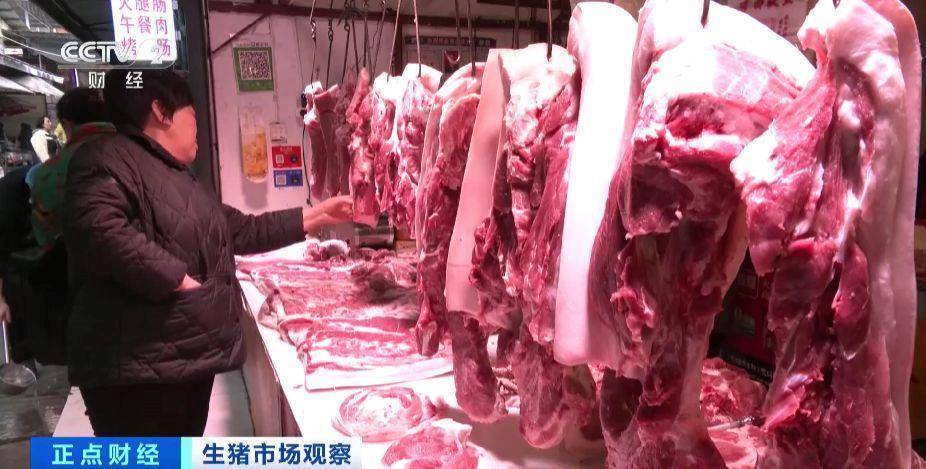
生猪行情旺季不旺 猪价为何承压?记者调查→
Sou Hu Cai Jing· 2025-12-23 23:36
Core Viewpoint - The pork market is experiencing an unusual situation where the expected seasonal demand during winter is not materializing, leading to downward pressure on prices. Group 1: Consumer Demand - In southern markets, consumer purchasing volume for pork has significantly decreased despite the season being ideal for producing cured meats like sausages and preserved pork [3] - Current prices for pork cuts are lower than last year, with prices for pork belly at 9 yuan per jin and leg meat at 8 yuan per jin, down by 3 to 4 yuan per jin compared to the same period last year, yet sales volume remains below last year's levels [5] Group 2: Seasonal Factors - The slow decline in temperatures in southern regions has resulted in lower-than-expected demand for cured meats, impacting overall consumption [7] - The timing of the upcoming Spring Festival, which is relatively late next year, has delayed some concentrated purchasing demand, further limiting support for pork prices [7] Group 3: Supply Side Pressure - The pork supply remains high due to previous years of profitable pig farming, leading to an expansion in industry capacity. As of the end of Q3 2025, the national pig stock is at 437 million heads, a year-on-year increase of 2.3% [10] - The average daily slaughter volume for monitored enterprises in December is 211,200 heads, a year-on-year increase of 0.37%, indicating that supply remains ample due to high levels of breeding sows and increased production efforts as the year ends [12]