
快餐

Search documents
从供应链到消费端构建绿色闭环
2 1 Shi Ji Jing Ji Bao Dao· 2025-08-29 23:13
Core Insights - The forum discussed the exploration and core challenges of leading enterprises in the green transformation of supply chains, industrial chains, and value chains [1] - The emphasis is on how to turn consumers' green choices into sustainable lifestyles and collective practices among enterprises [1] Group 1: Supply Chain and Sustainability - The supply chain is extensive, covering everything from ingredient cultivation to waste management, with upstream agriculture being a significant challenge for carbon reduction [1] - McDonald's is actively exploring the concept of regenerative agriculture to maintain food quality while reducing environmental pollution [1] - Mars Asia Pacific highlighted that only 5% to 10% of food packaging in China is truly recyclable, indicating a bottleneck in the recycling system [1] Group 2: Technological Innovations and Practices - Mars has invested over $100 million in R&D to improve packaging recycling issues, transitioning MM chocolate beans to paper packaging [2] - McDonald's implemented a data collection system to monitor electricity usage, leading to nearly double-digit energy savings and effective emissions reduction [2] - Huazhu Group adopted modular design in its latest hotel version, achieving a 15% cost reduction, 30% shorter construction time, and 40% less construction waste [2] Group 3: Consumer Engagement and ESG Initiatives - Transforming corporate green commitments into consumer understanding and action is crucial for completing the green loop [3] - Huazhu launched a "Green Stay" product on its app, encouraging guests to bring their own toiletries and opt for no cleaning, rewarding them with green points [3] - The initiative has been well-received, particularly among younger guests who actively embrace ESG initiatives [3]
七夕相约享浪漫美味,肯德基湖南第500家餐厅落户长沙
Sou Hu Cai Jing· 2025-08-29 18:48
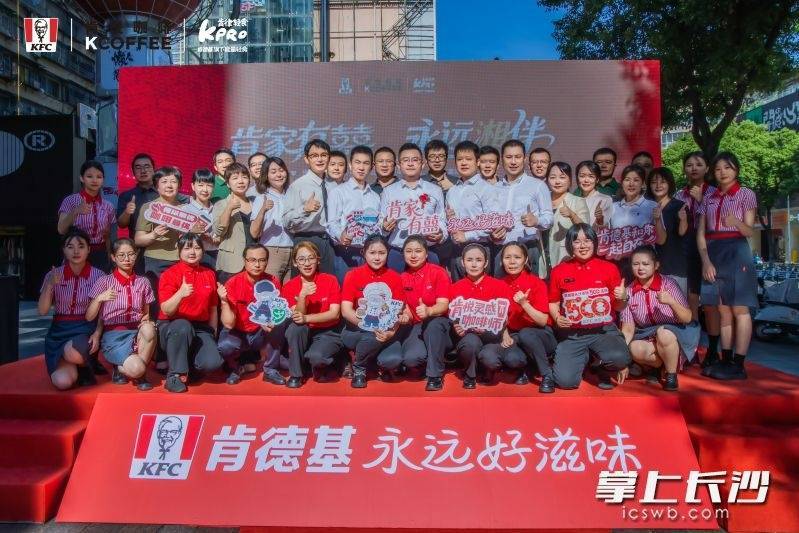
Core Insights - KFC has opened its 500th restaurant in Hunan, marking a significant milestone in its expansion within the region, alongside the launch of its 100th KFC Coffee outlet and the first KPRO restaurant in Hunan, reflecting a shift towards diversified consumption scenarios [1][3] Group 1: Business Expansion - The opening of the 500th KFC restaurant and the 100th KFC Coffee outlet in Changsha demonstrates KFC's agile response to evolving consumer demands, transitioning from traditional fast food to a more diversified offering that includes coffee and healthy light meals [1][3] - The KPRO restaurant, which focuses on healthy eating, aims to meet the growing consumer interest in nutritious food options, featuring a menu that includes energy bowls and healthy wraps, catering specifically to young urban consumers [3] Group 2: Market Trends - The coffee market in China is expanding rapidly, growing at over 15% annually, which KFC has capitalized on through its KFC Coffee brand, receiving positive market feedback [3] - The light meal market is also experiencing significant growth, prompting KFC to introduce its KPRO brand to provide balanced nutrition and cater to health-conscious consumers [3] Group 3: Community Engagement - KFC organized a "KFC Family Joy" event across 14 restaurants in Hunan to celebrate the Qixi Festival, promoting social interaction and engagement through themed activities [5] - The company has established 100 food stations in Hunan to combat food waste, providing surplus food to those in need, demonstrating its commitment to social responsibility [8] - KFC has initiated the "Angel Restaurant" model to support employment opportunities for people with disabilities, with six such restaurants operating in Hunan, fostering an inclusive work environment [8]


知名品牌被指抄袭,“几乎一样,只去掉了署名和日期”
Nan Fang Du Shi Bao· 2025-08-29 13:37
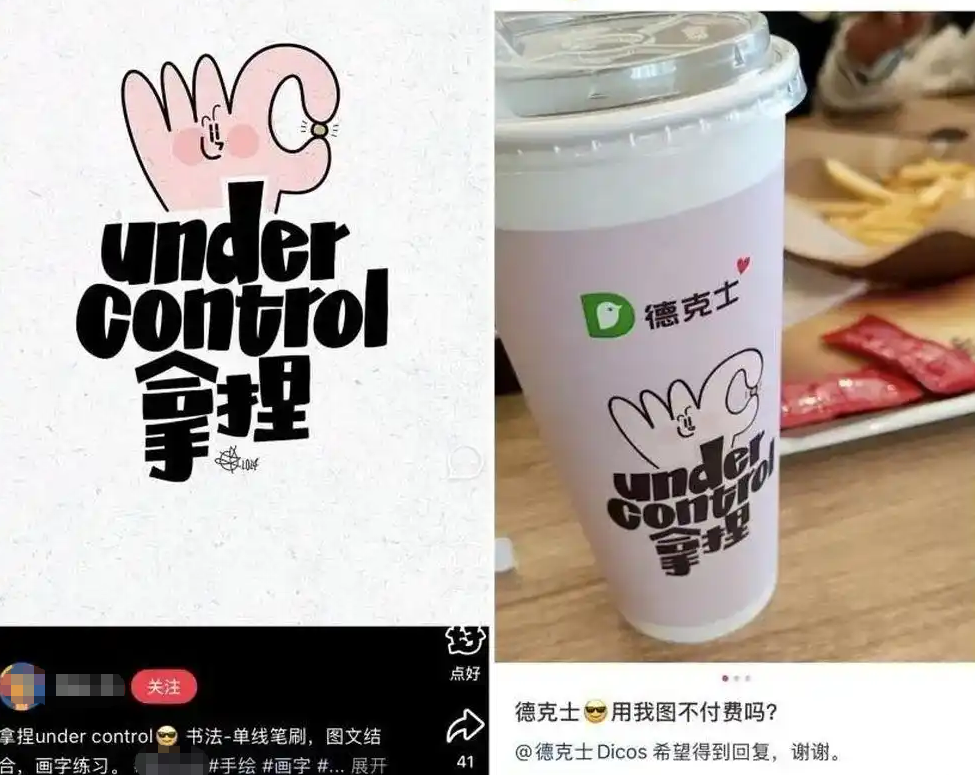
Core Viewpoint - A social media illustrator accused Dicos of copyright infringement regarding a drink cup design that closely resembles the illustrator's original work created in June 2024 [1] Group 1 - The illustrator has over ten years of experience and claims that the disputed design was used without authorization [1] - The illustrator's student discovered the similar design while visiting a Dicos outlet on August 26 [1] - Dicos has acknowledged the issue and stated that it has been resolved, although specific details were not disclosed by either party [1]
上海星巴克最丑陋的一幕:人若得理不饶人,内心到底攒了多少对他人的恶意
洞见· 2025-08-29 12:35
Core Viewpoint - The article discusses the negative impact of people who, despite being in the right, choose to relentlessly pursue others for minor mistakes, highlighting a lack of empathy and understanding in human interactions [3][19][22]. Group 1: Examples of "得理不饶人" - A Starbucks incident in Shanghai illustrates a customer berating a staff member for a minor mistake, despite the staff's prompt apology and compensation offer [3][23]. - A young nurse faced harassment from a patient after a minor error, leading to her being forced to kneel for forgiveness [8][12]. - A customer in a supermarket insisted on a complaint against a cashier who followed protocol, leading to the cashier begging for forgiveness [10][12]. - An elderly man demanded compensation from a renowned doctor for an accidental mark left during a consultation, despite the doctor's immediate apology [14][19]. - A woman at a restaurant demanded a large sum in compensation after a minor spill, showcasing a lack of compassion [16][19]. Group 2: The Nature of Human Behavior - The article categorizes people into two types: those who show understanding and those who exploit their position of being right to demean others [14][19]. - It emphasizes that true character is revealed in how one treats others, especially when in a position of power or correctness [20][21]. - The narrative suggests that a lack of empathy leads to a cycle of cruelty, where individuals feel justified in their harsh treatment of others [22][26]. Group 3: The Importance of Empathy - The article advocates for a more compassionate approach, encouraging individuals to consider the struggles of others and to respond with kindness rather than harshness [24][27]. - It concludes that understanding and empathy are essential qualities that should guide interactions, even when one is in the right [25][28].

逆势增长、首店引爆、年轻基因:达美乐中国2025中期业绩的三大密钥
Jing Ji Guan Cha Wang· 2025-08-29 11:54
Core Viewpoint - Domino's China has achieved remarkable financial performance in the first half of 2025, with significant growth in revenue and profit despite a slowdown in the overall restaurant industry in China [1][2]. Financial Performance - In the first half of 2025, Domino's China reported a revenue increase of 27% to 2.593 billion RMB, maintaining double-digit growth for several years [1][2]. - Adjusted net profit reached 91.42 million RMB, a substantial increase of 79.6% year-on-year, while group net profit soared by 504.4% to 65.92 million RMB [1][2]. - The company's EBITDA grew by 27.7% to 503 million RMB, and operating profit increased by 28% to 379 million RMB [3]. Store Expansion - As of June 30, 2025, Domino's China had opened 1,198 stores across 48 cities, with plans to open an additional 300 stores by the end of 2025 [2][3]. - The company has demonstrated a strong performance in new markets, with new stores showing robust sales figures [5][6]. Market Strategy - Domino's China is focusing on both deepening its presence in existing markets and expanding into new ones, aiming to enhance brand awareness and national influence [2][3]. - The "first store" phenomenon has generated significant consumer interest, with new openings often leading to long queues and high sales [5][6]. Product Innovation - The company emphasizes product innovation, launching new items approximately every 6 to 8 weeks to cater to diverse consumer tastes [7]. - Recent product launches, such as the "volcano" pizza and various new side dishes, have attracted attention on social media, enhancing brand engagement [7][8]. Marketing and Brand Engagement - Domino's China employs a youthful and diverse marketing strategy, including collaborations with popular IPs and digital marketing initiatives on platforms like Douyin [9]. - The brand's innovative marketing approaches, such as interactive experiences and promotional events, have successfully increased customer participation and brand visibility [9].
知名品牌被指抄袭!最新回应
Nan Fang Du Shi Bao· 2025-08-29 03:31
Group 1 - The illustrator accused Dicos of copyright infringement regarding a drink cup design that closely resembles his artwork created in June 2024 [1][3] - The illustrator's student discovered the alleged infringement while visiting a Dicos outlet on August 26, 2024 [3] - Dicos confirmed that the issue has been resolved but did not provide further details [3] Group 2 - Dicos is a Western fast-food brand originating from the United States and is part of the Ting Hsin International Group [3] - As of August 15, 2024, Dicos operates 2,436 stores in China, down from over 3,000 stores reported in 2021 [3] - There are plans for Dicos to potentially list in Hong Kong, although no specific timeline has been provided [3]
“行走南京·环城健步70里”公益活动即将启动
Nan Jing Ri Bao· 2025-08-29 00:41
Core Points - The "Walking Nanjing" public welfare event will officially launch on October 19, 2025, at the Zhonghua Gate, aiming to promote public fitness and showcase the cultural heritage of Nanjing's Ming City Wall [1][2] - The event features two routes: a 35-kilometer full challenge and a 3-kilometer fun short course, allowing participants to enjoy the unique landscapes of Nanjing [1] - This year, a creative design call has been issued for works themed around "walking," "city wall," and "plum blossom," encouraging community engagement [1] Company and Industry Insights - Nanjing Bank has been the title sponsor of the "Walking Nanjing" event for nine consecutive years, with all registration fees donated for the protection and restoration of the city wall [2] - The event has consistently attracted over 2,000 participants each year, highlighting its popularity and community involvement [2] - The organizers emphasize the importance of connecting citizens with history and promoting a green travel concept through this initiative [2]

百胜中国8月27日斥资624.54万港元回购1.76万股
Zhi Tong Cai Jing· 2025-08-28 09:56
Core Viewpoint - Yum China (09987) announced a share buyback plan, indicating confidence in its financial health and future growth potential [1] Summary by Category Share Buyback Details - The company plans to repurchase 17,600 shares at a cost of HKD 6.2454 million [1] - Additionally, it will buy back 71,300 shares for USD 3.2 million [1]
达势股份(01405)公布中期业绩 经调整净利润为9142万元 同比增长79.6%
智通财经网· 2025-08-28 09:34
Group 1 - The core viewpoint of the articles highlights the strong financial performance of the company, with a significant increase in revenue and profit for the first half of 2025 [1][2] - The company's revenue reached approximately 2.593 billion yuan, representing a year-on-year growth of 27% [1] - The profit attributable to the company's owners for the period was 65.924 million yuan, showing a remarkable year-on-year increase of 504.4% [1] - Adjusted net profit was reported at 91.42 million yuan, reflecting a year-on-year growth of 79.6% [1] - Basic earnings per share were recorded at 0.5 yuan [1] Group 2 - Revenue growth was primarily driven by the continuous expansion of the store network across the country, along with strong sales from new stores in new markets and positive sales trends in existing markets [1] - In Beijing and Shanghai, total revenue increased by 6.0% to 844 million yuan, supported by positive same-store sales growth and the addition of 8 new stores [1] - The company operated a total of 515 stores in first-tier cities, accounting for 43% of the total store count, generating sales of 1.0847 billion yuan, which contributed 41.8% to total revenue, with a year-on-year growth of 7.2% [1] - The new growth markets (non-first-tier cities excluding Shenzhen and Guangzhou) saw a revenue increase of 46.6% to 1.5087 billion yuan, driven by the opening of 184 new stores [2] - The contribution of revenue from non-first-tier new growth markets increased from 50.4% to 58.2% over the reported periods [2] Group 3 - The company plans to open 300 new stores in 2025, having already net opened 190 new stores in the first half of 2025 [2] - As of August 15, 2025, the company had net opened an additional 43 stores, with 27 stores under construction and 35 stores signed, aiming to achieve the target of 300 new stores for the year [2]
达势股份(01405.HK)公布中期业绩 经调整净利润大幅增长79.6% 计划于2025年开设300家门店
Ge Long Hui· 2025-08-28 09:34
Core Viewpoint - The company has demonstrated significant revenue growth and profitability improvements due to its ongoing expansion strategy and strong performance in new markets [1][2][3][4] Financial Performance - Total revenue for the first half of 2025 reached RMB 2,593.4 million, a 27.0% increase from RMB 2,041.5 million in the same period of 2024 [1] - EBITDA at the store level increased by 27.7% to RMB 502.8 million, with an EBITDA margin of 19.4% compared to 19.3% in 2024 [1] - Adjusted EBITDA for the group rose by 38.3% to RMB 322.9 million, with a profit margin increase from 11.4% to 12.4% [2] - Adjusted net profit grew by 79.6% to RMB 91.4 million, with a profit margin increase from 2.5% to 3.5% [2] Market Expansion - The company opened 190 new stores during the reporting period, bringing the total to 1,198 stores across 48 cities in China [3] - Revenue from new growth markets (non-first-tier cities) increased by 46.6% to RMB 1,508.7 million, contributing 58.2% of total revenue [2][3] - The company plans to open 300 new stores in 2025, with 43 additional stores opened by mid-August 2025 [4] Customer Growth - Membership numbers reached 30.1 million, up from 19.4 million a year earlier, indicating effective customer recruitment [3] - In the past 12 months, 13.2 million new customers placed their first orders, showcasing the company's successful marketing efforts [3]