
家电

Search documents
新思想引领新征程丨消费补贴精准发力绿色智能产品引领消费新热潮
Yang Guang Wang· 2026-02-09 05:28
Group 1 - Consumption is identified as the "main engine" of economic growth and a "barometer" of people's well-being, with a focus on establishing a long-term mechanism to expand resident consumption [1] - Local governments and departments are actively working on both supply and demand sides to stimulate consumption through new scenarios, new formats, and new supplies, enhancing both industrial upgrades and quality of life [1] - The "National Subsidy" policy for smart glasses and other digital products is expected to boost consumer spending, with a reported 200% increase in sales for new interactive electronic products [2][4] Group 2 - The automotive industry is accelerating the integration of electrification, intelligence, and connectivity, with Chinese brands capturing nearly 70% of the passenger car market [4] - The government emphasizes green consumption and aims to promote a lifestyle that is resource-saving, low-carbon, and healthy, with policies designed to stimulate demand for high-efficiency green appliances and vehicles [4] - The "14th Five-Year Plan" suggests a focus on improving consumer sentiment and enhancing quality supply to activate the consumption "main engine" [5]
港股午评:恒指收涨1.44% 大市一度再上两万七关口
Jin Rong Jie· 2026-02-09 04:28
上周五美股三大股指全线造好,港股今日高开高走,恒指高开422点报26982点后,升幅一度收窄至319 点,低见26879点,盘中重整旗鼓再度拉升514点高见27074点,再度升穿两万七关口。截至收盘,恒指 早盘收涨1.17%,科指早盘收涨1.02%,恒指大市成交额1362.5亿港元。盘面上,光通讯、光伏设备、风 电股涨幅居前,内房股异动拉升,半导体股延续强势;新消费概念、电信、家电、石油股走势疲软。个 股方面,信达生物(01801.HK)涨近6%,泡泡玛特(09992.HK)涨超5.7%,中国人寿(02628.HK)、龙湖集团 (00960.HK)、紫金矿业(02899.HK)、华虹半导体(01347.HK)涨超5%,快手(01024.HK)跌超4.2%,中国电 信(00728.HK)、中国移动(00941.HK)均跌超1.5%。 本文源自:金融界AI电报 ...
菏泽:打造多元化消费新生态
Qi Lu Wan Bao· 2026-02-09 03:23
Core Viewpoint - The city of Heze is actively implementing measures to boost consumption, achieving significant growth in retail sales and planning further initiatives to enhance consumer engagement and economic development [3][4]. Group 1: Consumption Growth and Achievements - In the past year, Heze's retail sales reached 258.6 billion yuan, with a year-on-year growth of 5.6%, surpassing national and provincial averages by 1.9 and 0.5 percentage points respectively [3]. - The city organized over 720 promotional activities across various sectors, attracting more than 30 million visitors and involving over 41,000 participating businesses [3]. - The "Hui Xiang Heze" consumption brand has gained recognition and influence, supported by over 1.2 billion yuan in subsidies benefiting 800,000 consumers, which stimulated an additional 8.4 billion yuan in consumption [3]. Group 2: Future Plans and Strategies - Heze plans to host over 800 promotional activities in 2026, ensuring continuous engagement throughout the year with seasonal themes [4]. - The city aims to collaborate with well-known domestic IPs to attract tourists through large-scale events such as music festivals and sports events, enhancing the city's appeal [4]. - The goal is to achieve retail sales growth that exceeds the provincial average, contributing to high-quality economic development [4]. Group 3: Policy and Action Initiatives - The city is focusing on implementing ten key actions to boost consumption, emphasizing a collaborative approach across various sectors including health, agriculture, and housing [5]. - The "old-for-new" policy is being expanded, with a focus on automobiles and home appliances, to stimulate market demand and enhance consumer experience [5]. - New consumption models are being developed, including pet economy and silver economy, to cater to diverse consumer needs [6]. Group 4: Integrated Support and Activities - The government is enhancing policy support for various sectors, including automotive and home appliance upgrades, to improve consumer satisfaction and safety [7]. - Major promotional activities are planned around key holidays, with over 70 events already initiated for the Spring Festival, covering various sectors such as food and tourism [7]. - Financial support measures are being coordinated to promote consumption, including the issuance of vouchers and collaboration with financial institutions [8].

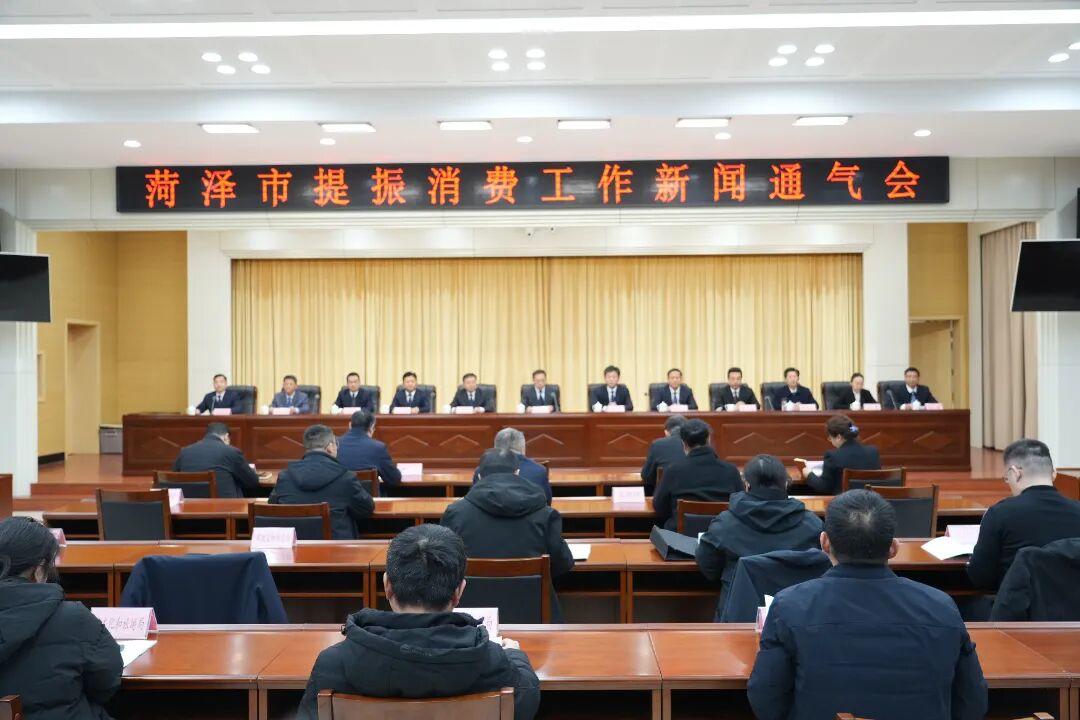
菏泽市市场监管局:优化消费环境,激发消费活力
Qi Lu Wan Bao· 2026-02-09 03:23
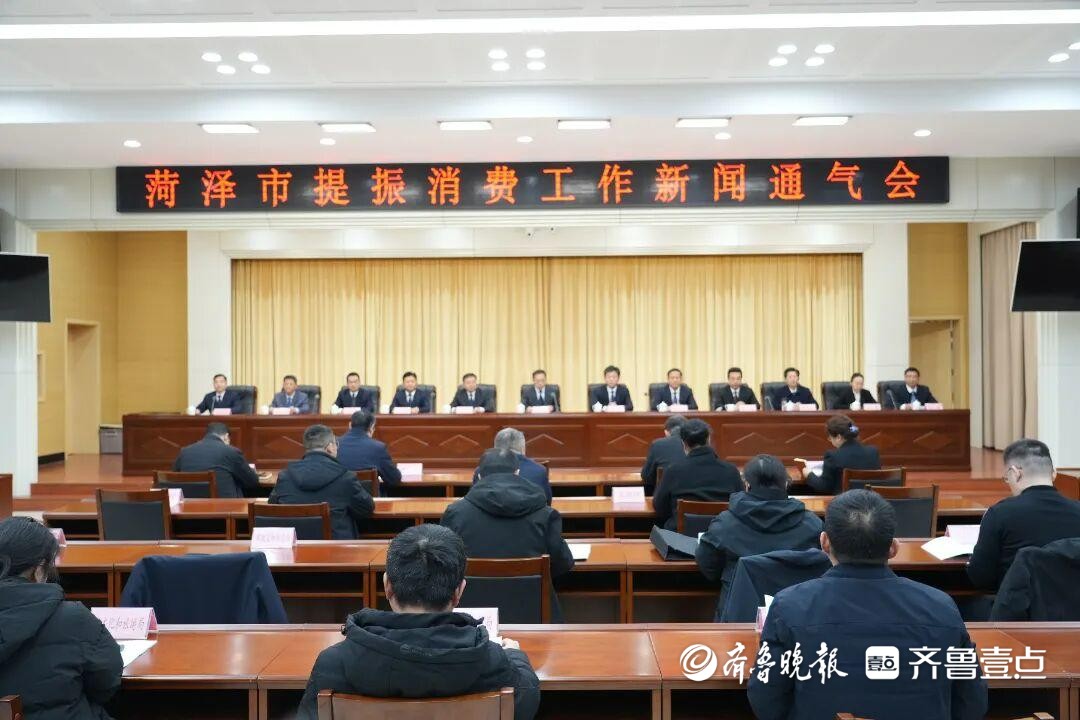
会上,菏泽市市场监管局党组书记、局长王敏介绍,2025年以来,全市市场监管系统深入推进"放心消费在山东"行动,多措并举优化消费环境,千方百计 激发消费活力,助推经济社会高质量发展,取得显著成效。 消费供给提档升级。全市"好品山东"企业发展到11家、"泰山品质"认证3家,新提报原创技术标准2项、标准创新型企业3家、省级标准化试点10个、国家 级标准化试点3项,制定发布汉服、牡丹产业等地方标准27项;新增地理标志产品新增3个,获得绿色产品认证证书19张,绿色食品认证证书76张,有机产 品认证证书34张。 齐鲁晚报.齐鲁壹点尹婷 2月6日,菏泽市提振消费工作新闻通气会召开,副市长张鹏全面通报全市提振消费工作成效及2026年重点部署,市商务、文旅、住建等10个部门分别就各 自领域工作举措作系统解读。 消费基础更加坚实。全市共开展"你点我检"系列活动60余场,监督抽检食品16012批次、电动车105批次,检查电子称8900余台,办结虚假宣传等不正当竞 争案件32起。民生领域计量监管经验在全省系统会上作典型发言,"5.20世界计量日"全省主场活动在菏泽举办。 2026年,全市系统将认真按照市委市政府"促消费"的部署要求, ...
金鹰基金:上游资源品回调后或仍有中期配置机会 短期关注科技+制造主线
Xin Lang Cai Jing· 2026-02-09 02:49
Market Overview - A-shares experienced a wide fluctuation with a significant drop followed by stabilization, influenced by volatile commodity prices [1][4] - Daily trading volume decreased to 2.41 trillion yuan, indicating reduced market activity [1][4] - The transportation sector attracted main funds due to low valuations and performance certainty amidst overall market adjustments [1][4] Sector Performance - The market style reflected a preference for consumption over cyclical, financial, and growth sectors [1][4] - Sectors such as electric grid equipment, petrochemicals, and chemicals showed favorable conditions due to saturated orders or price increases [1][4] Future Outlook - The period from the week before the Spring Festival to two weeks after is historically a high win-rate phase for the market [5] - Short-term, large-cap value and defensive attributes remain significant for allocation; post-festival, small-cap growth and AI-related industries may see recovery [5][6] Investment Recommendations - Focus on technology and manufacturing sectors, particularly overseas computing power, semiconductor storage, consumer electronics, and wind energy storage, which have not reached high trading congestion [6] - Low-position innovative drugs and gaming sectors may rotate into focus due to expected performance improvements in Q1 [6] - Consider early-stage investment opportunities in solid-state batteries, AI applications, smart driving, and robotics for 2026 [6] Global Manufacturing Trends - Global manufacturing is expected to resonate positively next year, with a focus on export-related manufacturing sectors such as non-ferrous metals, electric grid equipment, and engineering machinery [6] - Real estate and automotive sectors related to emerging markets are also of interest, alongside non-bank financial sectors benefiting from liquidity-driven growth [6]
沪深300股指期权 买入跨式策略正当时
Qi Huo Ri Bao Wang· 2026-02-09 01:20
Core Viewpoint - The expectation for consumer recovery is rising as the Chinese New Year approaches, suggesting potential upward momentum for the CSI 300 index, which may benefit from a "catch-up" rally [1][12]. Group 1: Market Indicators - The PCR (Put-Call Ratio) for CSI 300 options has decreased to 63.47%, indicating a weakening risk appetite among investors, with the current level at the 43.8th percentile for 2023 [2]. - The implied volatility for at-the-money options has dropped to 14.79%, positioned at the 39.9th percentile for 2023, reflecting a decline in the premium investors are willing to pay for volatility [3]. Group 2: Economic and Policy Context - The manufacturing PMI for January was reported at 49.3, down 0.8 percentage points from the previous month, indicating a contraction in market demand compared to production [5]. - The government is focusing on expanding domestic demand and supporting technology and consumption sectors to stabilize economic growth and improve market confidence [7][8]. Group 3: Investment Strategy - A straddle strategy, involving buying equal amounts of call and put options at the same strike price, is recommended to capitalize on potential market movements as consumer recovery expectations rise [12].
十年来 中央一号文件关注了哪些能源事儿?
Zhong Guo Dian Li Bao· 2026-02-09 00:37
Core Viewpoint - The 2026 Central Document No. 1 emphasizes the modernization of agriculture and rural areas, focusing on comprehensive rural revitalization and sustainable development initiatives. Group 1: Energy Initiatives - Support for the introduction of new energy vehicles, smart home appliances, and green building materials in rural areas, along with the establishment of a recycling system for old household appliances and furniture [3] - Enhancement of rural power supply security and capacity, with an expansion of charging facilities for electric vehicles [3][4] - Promotion of green production and water-saving irrigation technologies, as well as the development of low-carbon ecological agriculture [3] Group 2: Agricultural Practices - Improvement of straw utilization capabilities and the implementation of comprehensive management of agricultural non-point source pollution [9][20] - Encouragement of the development of distributed renewable energy in rural areas and the construction of public charging facilities where conditions permit [4][8] - Support for the comprehensive utilization of straw and the establishment of a subsidy mechanism for diversified straw utilization [22] Group 3: Safety and Risk Management - Coordination of disaster risk assessment and management in rural areas, focusing on safety risks in transportation, gas, fire, and housing [3] - Strengthening of safety hazard governance in key areas such as rural road traffic and gas safety [8][20] Group 4: Infrastructure Development - Continued investment in rural infrastructure, including roads, water supply, gas, and electricity, to promote connectivity between urban and rural areas [20] - Implementation of a new round of rural power grid upgrades to enhance electricity supply reliability [22]
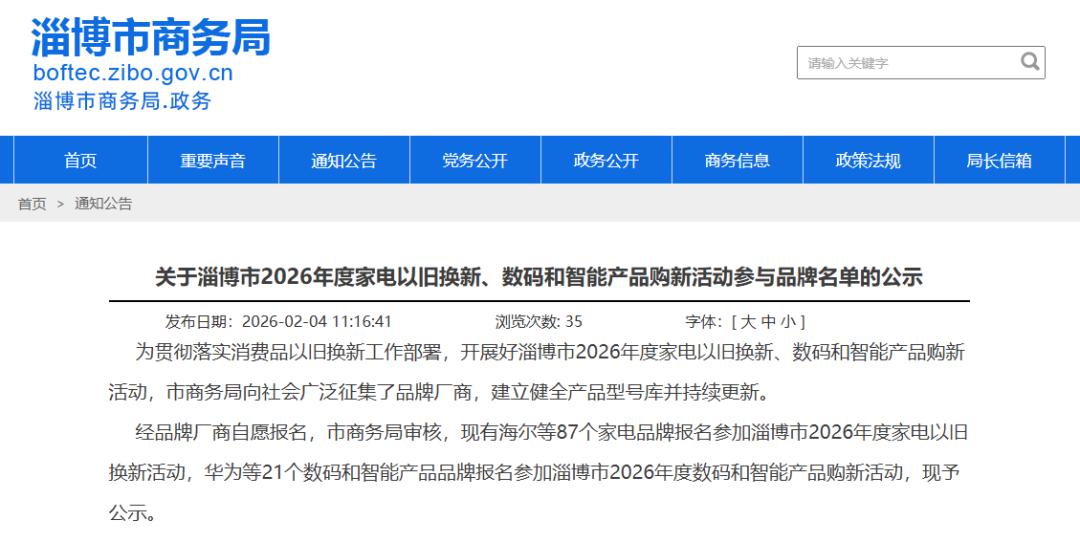
淄博市2026年度家电以旧换新、数码和智能产品购新活动参与品牌名单公示
Feng Huang Wang Cai Jing· 2026-02-09 00:14
Core Viewpoint - The Zibo Municipal Bureau of Commerce has announced the list of participating brands for the 2026 appliance recycling and new purchase activities, aiming to promote consumer goods recycling and stimulate local consumption [1][4]. Group 1: Appliance Recycling Program - The Zibo Municipal Bureau of Commerce has collected applications from brand manufacturers to establish a product model database for the 2026 appliance recycling program [4]. - A total of 87 home appliance brands, including Haier, Midea, and Gree, have registered to participate in the 2026 appliance recycling initiative [4][5]. - The participating brands cover various categories such as refrigerators, washing machines, air conditioners, and televisions [5][6]. Group 2: Digital and Smart Products Purchase Program - The program also includes a new purchase initiative for digital and smart products, with 21 brands, including Huawei and Apple, participating [4][8]. - The participating brands in the digital and smart products category offer a range of items including smartphones, tablets, and smartwatches [8].



焕新热潮!“新国补”落地首月 点燃消费升级新活力
Sou Hu Cai Jing· 2026-02-08 23:24
Core Insights - The implementation of the "New National Subsidy" policy in January 2026 has sparked a consumption upgrade trend, benefiting 16.13 million people and generating sales of 92.56 billion yuan in various sectors including automobiles, home appliances, and digital products [1] Group 1: Policy Impact - The "New National Subsidy" policy offers significant financial incentives for consumers, such as up to 20,000 yuan for trading in old vehicles for new energy vehicles, and 15,000 yuan for fuel-efficient cars [2] - The policy includes two types of subsidies: "scrap and update" for those who scrap old cars and buy new ones, and "trade-in update" for selling old cars to purchase new ones [2] Group 2: Market Dynamics - The timing of the policy's implementation coincides with the pre-Spring Festival shopping season, creating a favorable market environment for consumption upgrades [3] - The combination of consumer demand and supportive policies is expected to release significant consumption potential and promote the adoption of green and intelligent products [3] Group 3: Consumer Behavior - The new subsidy policy encourages consumers to purchase energy-efficient and smart appliances, leading to a shift in consumer preferences towards more advanced products [4] - The policy aims to enhance consumer experience by providing a seamless service process for exchanging old products for new ones, thereby increasing consumer satisfaction [3] Group 4: Regulatory Environment - Authorities are intensifying scrutiny to prevent fraudulent practices such as price inflation before subsidies, ensuring market order and compliance with the new policy [4] - The government is committed to cracking down on illegal activities related to the subsidy program, which will help maintain a fair market environment [4]
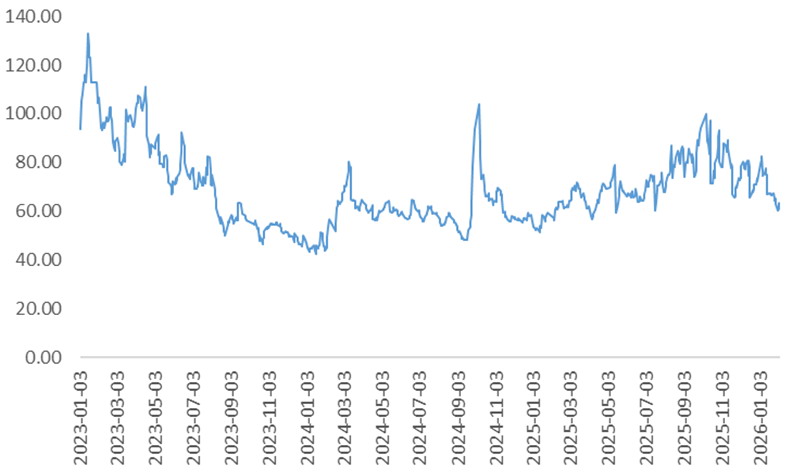
中国宏观周报(2026年2月第1周):二手房挂牌价恢复-20260208
Ping An Securities· 2026-02-08 14:50
Industrial Sector - Industrial production showed seasonal weakness this week, with a decline in the industrial price index[2] - Daily average pig iron output increased, while cement clinker capacity utilization and glass production rates fell[2] - Steel construction material demand decreased, while steel plate demand saw a slight increase[7] Real Estate - Second-hand housing listing prices rose by 0.10% week-on-week, an increase of 0.55 percentage points from the previous value[25] - New housing sales in 30 major cities saw a year-on-year increase, with a 19.5 percentage point improvement from December 2025[2] Domestic Demand - Retail sales of major home appliances fell by 22.4% year-on-year, but improved by 5.5 percentage points from the previous value[32] - Passenger car retail sales dropped by 28% year-on-year in January, with a 13% decline in December 2025[32] External Demand - Port cargo throughput increased by 15.4% year-on-year, up by 11.1 percentage points from the previous value[38] - Vietnam's export value rose by 34.3% year-on-year, while South Korea's exports increased by 33.9% year-on-year[38] Price Trends - The Nanhua Industrial Price Index fell by 2.3%, with declines in various industrial sectors including black materials and non-ferrous metals[41] - The agricultural product wholesale price index decreased by 0.7% week-on-week, reversing previous gains[43]