畜牧业

Search documents
益生股份:预计2025年净利润同比下降62.29%-70.23%
Xin Lang Cai Jing· 2026-01-26 09:00
Core Viewpoint - The company expects a significant decline in net profit for the fiscal year 2025, projecting a range of 150 million to 190 million yuan, which represents a year-on-year decrease of 62.29% to 70.23% [1] Group 1: Sales Performance - The company reported a more than 10% year-on-year increase in the sales volume of commodity broiler chicks [1] - Despite the increase in sales volume, the average selling price of commodity broiler chicks saw a significant decline due to low prices of chicken and live chickens, leading to a temporary loss in this business segment [1] Group 2: Market Conditions - Starting from the second half of the year, the market supply and demand dynamics began to improve, resulting in a quarterly price recovery for commodity broiler chicks, particularly a substantial increase in prices in the fourth quarter [1] - However, the average selling price for the entire year remained lower than the previous year [1] Group 3: Profitability Analysis - The parent company’s broiler chick segment performed well in terms of profitability, but the decline in selling prices year-on-year caused a significant drop in the overall performance of the white feather broiler segment for the year [1]

*ST天山:预计2025年归母净利润亏损1600万元–2300万元
Xin Lang Cai Jing· 2026-01-26 08:46
*ST天山公告,预计2025年度归属于上市公司股东的净利润亏损1600万元–2300万元,上年同期亏损 6594.79万元。预计营业收入1.7亿元–2.2亿元,上年同期1.38亿元。预计扣除非经常性损益后的净利润亏 损2200万元–2900万元,上年同期亏损6754.59万元。 ...

天康生物:拟12.75亿元收购新疆羌都畜牧51%股权获进展
Xin Lang Cai Jing· 2026-01-26 08:17
天康生物公告称,2025年12月29日公司股东大会审议通过以12.75亿元现金收购新疆七星羌都集团农牧 等八家股东持有的新疆羌都畜牧科技有限公司51%股权。近日,公司收到国家市场监督管理总局决定, 对此次收购案不实施进一步审查,可即日起实施集中。后续双方将办理股权交割等工商变更手续,并披 露进展。此次交易存在业绩波动等风险,提醒投资者注意。 ...

进入春节备货消费旺季,猪肉价或温和回升
Feng Huang Wang Cai Jing· 2026-01-26 07:14
当前,猪价在进入消费旺季后,在阶段性供需趋紧推动下连续上涨。山东省畜牧局日前发布的最新统计 数据显示,上周全省猪肉均价为23.17元/公斤,同比降低19.52%,环比回升1.94%。此外,全省蛋鸡养 殖的完全成本约为6.8-7.0元/公斤左右,蛋价持续回升,养殖场再次实现全部盈利。 消费旺季推动鸡蛋价格继续回升。上周,全省鸡蛋周销售均价为7.51元/公斤,同比降低23.45%,环比 升高6.83%。蛋雏鸡价格小幅回升,当前为2.86元/只,同比降低26.29%,环比升高1.78%。行情回暖, 养殖端补栏积极性回升,蛋雏鸡价格小幅走高。 此外,上周羊肉均价76.05元/公斤,同比升高4.12%,环比升高0.36%。当前羊肉价格震荡回升,主要是 供求关系阶段性市场供需调整。一方面气温走低,羊肉消费进入冬春火锅消费旺季;另一方面肉羊出栏 逐步收窄,市场供给有所减少。 (济南时报.新黄河) 从需求端看,随着气温走低,需求释放,南方腌腊及北方猪肉制作香肠现象增多,猪肉需求量增加,屠 宰场备货需求转强,带动企业提价收猪。据监测,上周我省17家猪肉市场交易量同比降低9.22%,环比 回升2.31%。 后市来看,1月下旬至春 ...

国投期货综合晨报-20260126
Guo Tou Qi Huo· 2026-01-26 05:27
Report Industry Investment Ratings No relevant content provided. Core Views of the Report - Geopolitical conflicts and supply disruptions are major factors affecting the prices of commodities such as crude oil, precious metals, and base metals [2][3]. - The supply - demand relationship and seasonal factors have significant impacts on various commodities, including metals, energy, and agricultural products [15][16][35]. - Macroeconomic factors, such as interest rate policies and geopolitical events, influence the performance of financial markets, including stocks and bonds [47][48]. Summary by Categories Energy - **Crude Oil**: US sanctions on Iran and the fire at Tengiz oilfield have raised concerns about supply disruptions, leading to a recent rebound in oil prices. However, the high inventory pressure in Q1 2026 restricts the upward space of oil prices [2]. - **Fuel Oil & Low - Sulfur Fuel Oil**: Low - sulfur fuel oil is回调 due to the fading of cold wave speculation and EIA's unexpected inventory build - up. High - sulfur fuel oil remains strong due to geopolitical tensions in the Middle East [22]. - **Natural Gas**: The cold wave in the US has caused a sharp rise in natural gas prices, which also boosts the demand for crude oil as heating oil [2]. - **Coal (Coking Coal and Coke)**: The supply of carbon elements is abundant, and the downstream iron - making is in the off - season. The prices of coking coal and coke are likely to fluctuate within a range, with the market having certain expectations for "anti - involution" policies [17][18]. - **Liquefied Natural Gas**: No relevant content provided. - **Petroleum Products (e.g., Asphalt)**: The cost of asphalt is still supported, but the terminal demand is weak, and high - priced resources have poor sales. In the short term, asphalt is expected to fluctuate strongly [23]. Metals - **Precious Metals (Gold and Silver)**: Geopolitical risks have pushed up the prices of gold and silver. After breaking through key integer levels, there may be fluctuations due to profit - taking, and it is advisable to wait for a stable period before participating [3]. - **Base Metals**: - **Copper**: The price of Shanghai copper has been boosted by the trading sentiment of precious metals and the weak US dollar. Attention should be paid to the impact of strikes in small Chilean copper mines and road blockades on large - scale copper mines [4]. - **Aluminum**: Shanghai aluminum rebounded on Friday. Geopolitical games have made the financial market sentiment volatile, and the price of Shanghai aluminum is in a high - level shock. Attention should be paid to the direction change of gold and silver after breaking through integer levels [5]. - **Zinc**: The road blockage at NEXA's Atacocha mine has little impact on zinc prices. The weakening of the US dollar index supports the strong operation of non - ferrous metals. High zinc prices have a negative impact on the consumption side, and the price of Shanghai zinc is expected to fluctuate within the range of 24,000 - 25,000 yuan/ton [8]. - **Lead**: The resumption of production of primary lead smelters has increased, and the profit of secondary lead smelters is under pressure. The price of Shanghai lead is expected to fluctuate within the range of 17,000 - 17,800 yuan/ton [9]. - **Nickel and Stainless Steel**: Shanghai nickel has risen sharply, and the market trading is active. The high - price resistance of downstream stainless steel consumption is increasing, and the negative feedback risk is accumulating. In the short term, it is still dominated by policy sentiment [10]. - **Tin**: The price of tin has been rising, driven by investment funds. The LME spot discount has widened, and the domestic social inventory has increased [11]. - **Alumina**: The domestic alumina production capacity is in a state of significant surplus, and the price is under pressure. Before large - scale production cuts, the weakness is difficult to change, and the upward space of the futures price is limited [7]. - **Silicon (Industrial Silicon)**: The supply - demand pattern of industrial silicon has an improvement expectation, but it is restricted by the weak supply - demand situation, and the inventory removal process is restricted. In the short term, the futures price is running strongly, and attention should be paid to the breakthrough of the 9,000 yuan/ton mark [14]. - **Manganese (Silicon Manganese)**: The manganese ore port inventory has a structural problem. The iron - making production has decreased seasonally. The weekly output of silicon manganese has decreased slightly, and the inventory has also decreased slightly. It is recommended to short on rebounds [19]. - **Ferrosilicon**: Affected by relevant policy documents, the price is relatively strong. The demand has certain resilience, the supply has decreased significantly, and the inventory has decreased slightly. It is recommended to short on rebounds [20]. Chemicals - **Carbonate Lithium**: The price of carbonate lithium has reached a new high, but the downstream acceptance of high prices is weak, and the market is in a high - level shock. Short - term uncertainty is extremely high [12]. - **Polysilicon**: The spot trading of polysilicon is weak, and the market expects the price to weaken. The futures price still faces pressure to rise [13]. - **Methanol**: Geopolitical situations have increased the volatility of methanol futures. Although there is a strong expectation of a significant reduction in imports in the first quarter and the macro - environment is favorable, the high port inventory may suppress the market [25]. - **Pure Benzene**: The upward momentum of pure benzene has weakened, but the short - term market is in a strong shock due to improved supply - demand and macro - sentiment [26]. - **Styrene**: The price of styrene has risen rapidly, but the downstream's fear of high prices may restrict its upward space, and the supply - demand game may intensify [27]. - **Polypropylene, Plastic, and Propylene**: The supply of propylene has no obvious pressure, and the demand of polyethylene and polypropylene is weak. The supply of polypropylene has some support, but the overall demand is weak [28]. - **PVC and Caustic Soda**: PVC is running strongly, and there is still inventory pressure. Caustic soda is in a shock trend, and the chlor - alkali integrated profit may continue to be compressed [29]. - **PX and PTA**: In the short term, the chemical sentiment has improved, and PX and PTA have increased in price. In the second quarter, there are opportunities for long - positions based on PX maintenance and polyester load - increasing expectations [30]. - **Ethylene Glycol**: The supply and demand of ethylene glycol are both decreasing, and there is an expectation of inventory build - up around the Spring Festival. In the second quarter, there is an expectation of supply - demand improvement, but the long - term pressure still exists [31]. - **Short - Fiber and Bottle Chip**: The short - fiber price has risen with the raw materials, and the bottle - chip price has risen with the market sentiment. However, the long - term capacity pressure still exists [32]. Agricultural Products - **Soybeans and Soybean Meal**: The South American soybean harvest is affected by weather, and the progress is slow. The import of Canadian rapeseed and rapeseed meal may impact the domestic soybean meal price [35]. - **Edible Oils (Soybean Oil and Palm Oil)**: The prices of domestic soybean oil and palm oil are strong. The US biomass diesel policy is favorable, and the supply - demand structure of Malaysian palm oil has improved marginally [36]. - **Rapeseed and Rapeseed Oil**: The supply of Canadian rapeseed is abundant, but the export is sluggish. The supply of rapeseed oil may be slightly more tense than that of rapeseed meal. The overall trend of the rapeseed sector is expected to be in a bottom - level shock [37]. - **Soybean No. 1**: The price of domestic soybean futures has rebounded from a low level. Attention should be paid to policy and spot guidance [38]. - **Corn**: The price of corn is relatively strong due to the reduction of available grain sources and pre - holiday inventory replenishment demand. It is expected to fluctuate in the short term [39]. - **Livestock (Pigs)**: The spot price of pigs has strengthened recently. Before the Spring Festival, the supply and demand are both strong, but after the Spring Festival, the price is expected to be weak. The industry still needs to reduce production capacity [40]. - **Poultry (Eggs)**: The price of eggs is strong due to pre - holiday stocking and a decrease in supply. In the long - term, the fundamentals are improving, and the strategy is to go long at low prices [41]. - **Cotton**: The US cotton price has fallen back, and the Zhengzhou cotton price is in a high - level shock. The demand is stable, and the impact of the reduction in Xinjiang's planting area is uncertain [42]. - **Sugar**: The international sugar production situation varies, and the domestic sugar price is under pressure in the short term. Attention should be paid to the production progress [43]. - **Apples**: The futures price of apples is in a shock. The market focus has shifted to demand, and the high - price and low - quality situation may affect the inventory removal speed [44]. - **Timber**: The futures price of timber is at a low level. The low inventory provides some support, and it is advisable to wait and see [45]. - **Pulp**: The pulp futures price is in a shock. The downstream demand is weak, and the port inventory has increased. Attention should be paid to the price increase of downstream base paper [46]. Financial Products - **Stock Index**: The A - share market is generally strong, and the index may change from a rapid upward trend to a shock - strong trend. Attention should be paid to the Fed's interest - rate meeting and geopolitical issues [47]. - **Treasury Bonds**: The bond market has been strong recently. In the short term, the medium - and long - term yields are likely to fluctuate, and the short - term yields are more certain to rise. Attention should be paid to the curve - steepening and flattening opportunities [48]. Shipping - **Container Shipping Index (European Line)**: The market is in a shock pattern. The "weak reality" suppresses the futures price, and the suspension of CMA CGM's service provides short - term upward momentum. The market is expected to be in a shock - weak trend in the future [21].
期货市场交易指引2026年01月26日-20260126
Chang Jiang Qi Huo· 2026-01-26 02:44
Report Industry Investment Ratings - **Macro Finance**: Bullish on stock indices in the medium to long term, suggesting buying on dips; expecting government bonds to trade in a range [1] - **Black Building Materials**: Short - term trading for coking coal, range trading for rebar, and waiting and seeing for glass [1] - **Non - ferrous Metals**: Waiting and seeing or holding long positions lightly and rolling for copper; strengthening waiting and seeing for aluminum; waiting and seeing for nickel; range trading or taking profit on previous long positions for tin; range trading for gold; bullish trend for silver; range - bound oscillation for lithium carbonate [1] - **Energy and Chemicals**: Range trading for PVC, caustic soda, benzene, rubber, urea, methanol; weak oscillation for polyolefins; waiting and seeing for soda ash [1] - **Cotton Textile Industry Chain**: Oscillatory adjustment for cotton and cotton yarn; weak oscillation for apples and jujubes [1] - **Agriculture and Animal Husbandry**: Short - selling opportunities on rebounds for hogs; not advisable to chase short positions in the short term for eggs; being cautious about chasing high prices and waiting for rebounds to hedge at high prices for corn; shorting on rallies for soybean meal; weak oscillation for rapeseed oil, limited rebounds for soybean oil and palm oil [1] Core Views - Geopolitical disturbances are increasing, which strengthens the precious metals sector. Stock indices may trade in a range, and government bonds are expected to oscillate. The coal market has a wait - and - see sentiment due to weak fundamentals. Rebar is in a short - term range - bound state. Glass is expected to oscillate weakly. Copper is affected by the game between macro - level support and weak fundamentals. Aluminum may continue high - level adjustments. Nickel is affected by various factors and is recommended to be observed. Tin supply is tight, and it is recommended for range trading. Silver and gold are affected by geopolitical and economic factors, with their medium - term price centers moving up. Lithium carbonate is expected to oscillate strongly. PVC may have bottomed out. Caustic soda has short - term delivery pressure. Benzene styrene has a high valuation and is recommended to be cautious about chasing up. Rubber has cost support and may continue to rise. Urea supply is increasing, and prices are expected to oscillate. Methanol is affected by supply and demand and geopolitical factors. Polyolefins are expected to oscillate weakly. Soda ash has supply - demand contradictions, and it is recommended to wait and see. Cotton and cotton yarn have long - term optimistic expectations. Apples and jujubes are in a weak oscillation state. Hogs are in a bottom - building stage, with different strategies for different periods. Eggs are not advisable to chase short positions in the short term. Corn is in a short - term balance and has a loose supply - demand pattern in the medium to long term. Soybean meal has different trends for different contracts. Oils have different trends, with rapeseed oil being weak and soybean and palm oil having limited rebounds [1][5][6][8][10][11][13][14][15][16][17][19][20][21][22][24][25][26][27][30][33][34][35][36][37][43][44] Summary by Directory Macro Finance - **Stock Indices**: Medium - to long - term bullish, suggesting buying on dips. Geopolitical disturbances increase, and the precious metals sector strengthens, causing stock indices to potentially trade in a range [1][5] - **Government Bonds**: Expected to trade in a range. The long - end and ultra - long - end of government bonds face resistance in further decline, while short - end varieties have strong allocation enthusiasm [1][6] Black Building Materials - **Coking Coal**: Short - term trading. The coal market has a wait - and - see sentiment due to weak fundamentals, with supply disturbances potentially limiting the downside, but demand weakness is the dominant factor [8] - **Rebar**: Range trading. The price rebounded on Friday, with a slightly low static valuation. In the short term, it is in a range - bound state due to a short - term policy vacuum and small supply - demand contradictions [8] - **Glass**: Waiting and seeing. The price is expected to oscillate weakly within the range of 1050 - 1070. The manufacturer's shipping speed slows down, and the market lacks upward momentum [9][10] Non - ferrous Metals - **Copper**: Waiting and seeing or holding long positions lightly and rolling. The price is in a high - level oscillation, with strong macro - level support but weak fundamentals. It is necessary to be vigilant against the risk of long - position profit - taking before the Spring Festival [11] - **Aluminum**: Strengthening waiting and seeing. The price may continue high - level adjustments due to factors such as changes in supply and demand and macro - level sentiment [13] - **Nickel**: Waiting and seeing. Affected by factors such as Indonesia's quota reduction and weak fundamentals, the price has risen, but it is recommended to wait and see as the market has fully priced in [14] - **Tin**: Range trading or taking profit on previous long positions. The supply is tight, and the downstream maintains rigid demand. It is recommended to pay attention to supply resumption and downstream demand [15][16] - **Silver**: Bullish trend. Affected by geopolitical and economic factors, the medium - term price center moves up, and it is recommended to hold long positions and be cautious about opening new positions [16] - **Gold**: Range trading. Affected by geopolitical and economic factors, the medium - term price center moves up, and it is recommended to trade in a range and be cautious about chasing high prices [16][17] - **Lithium Carbonate**: Range - bound oscillation. The supply and demand are both strong, and the price is expected to oscillate strongly. It is necessary to pay attention to the disturbance of Yichun's mining end [17] Energy and Chemicals - **PVC**: Range trading. The bottom may have been reached. The supply - demand situation is still weak, but there are opportunities for structural upgrading. It is recommended to take a long - term low - buying approach [17][19] - **Caustic Soda**: Waiting and seeing. There is short - term delivery pressure, and the upside is limited. It is necessary to pay attention to supply - side adjustments and other factors [19] - **Benzene Styrene**: Range trading. The price has rebounded, but the valuation is high. It is recommended to be cautious about chasing up and pay attention to cost and supply - demand changes [20][21] - **Rubber**: Range trading. The cost support is strong, and the price may continue to rise. It is necessary to pay attention to inventory and downstream demand [20][21] - **Urea**: Range trading. The supply is increasing, and the price is expected to oscillate within the range of 1730 - 1830. It is necessary to pay attention to factors such as compound fertilizer production and export policies [22][23] - **Methanol**: Range trading. The supply in the inland area recovers, and the demand is mixed. The price in some areas is strong due to geopolitical and supply factors [24] - **Polyolefins**: Weak oscillation. The cost support is strengthened, but the supply increases and the demand is weak. It is recommended to short on rallies [24][25] - **Soda Ash**: Waiting and seeing. The supply - demand contradiction is relieved, and the downside is limited. It is recommended to wait and see [26] Cotton Textile Industry Chain - **Cotton and Cotton Yarn**: Oscillatory adjustment. The long - term expectation is optimistic, but it is recommended to be cautious in the short term [27] - **Apples**: Weak oscillation. The Spring Festival stocking is in progress, but the trading of farmers' goods is slow, and the prices in some areas are loose [27] - **Jujubes**: Weak oscillation. The acquisition in Xinjiang is almost over, and the market trading is stable [29][30] Agriculture and Animal Husbandry - **Hogs**: Short - selling opportunities on rebounds. The supply pressure is large in the short term, and the price is expected to oscillate weakly. In the long term, the production capacity is being reduced, but it is still above the equilibrium level, and it is recommended to hedge at high prices [30][31][33] - **Eggs**: Not advisable to chase short positions in the short term. The short - term price may rise seasonally, but the supply is sufficient. In the long term, the production capacity needs time to clear, and it is necessary to pay attention to external factors [33][34] - **Corn**: Being cautious about chasing high prices and waiting for rebounds to hedge at high prices. The short - term supply - demand is balanced, and the medium - to long - term supply - demand pattern is loose [35][36] - **Soybean Meal**: Shorting on rallies. The short - term support is strong, but the long - term price is under pressure. Different strategies are recommended for different contracts [36] - **Oils**: Weak oscillation for rapeseed oil, limited rebounds for soybean and palm oil. It is recommended to be cautious about chasing up for soybean and palm oil and pay attention to spread trading [37][43][44]
中国改革现场丨可以抵押的猪牛羊
Yang Guang Wang· 2026-01-26 01:57
Core Viewpoint - The recent policy by the People's Bank of China and other authorities to allow livestock and agricultural facilities as collateral for loans aims to unlock the financial potential of rural assets, addressing long-standing financing challenges in agriculture [1][8]. Group 1: Policy Changes - The People's Bank of China, Ministry of Agriculture and Rural Affairs, and National Financial Regulatory Administration issued a notice to promote the use of agricultural facilities and livestock as legal collateral for loans [1][8]. - The policy aims to resolve issues related to the difficulty of asset valuation and the lack of liquidity in rural financing [8][16]. Group 2: Case Study - Livestock Financing - In Mengcheng County, Anhui Province, a cattle farm successfully obtained a loan of 2 million yuan by using livestock as collateral, a process previously deemed impossible [1][5]. - The local bank introduced an "insurance + credit" model, allowing farmers to use livestock insurance as collateral, thus reducing financing difficulties [5][7]. - The bank provided loans totaling 35 million yuan to approximately 35 livestock farmers in Mengcheng County, demonstrating the effectiveness of the new financing model [7][12]. Group 3: Challenges in Agricultural Financing - Traditional financing methods for agriculture have been limited, relying on credit loans and government guarantees, which are not sustainable for new agricultural entities [4][8]. - The risk associated with livestock financing, such as disease outbreaks, has made banks hesitant to accept live animals as collateral [4][8]. Group 4: Technological Innovations - The new policy encourages the use of digital technologies like electronic ear tags and biometric identification to establish ownership and value for livestock, addressing the challenges of asset identification and valuation [8][16]. - A comprehensive system combining technology and regulation is proposed to facilitate the identification, tracking, and risk management of agricultural assets [13][16]. Group 5: Case Study - Flower Farming Financing - In Kunming, Yunnan Province, flower farmers face high costs for greenhouse construction, which cannot be used as collateral due to lack of ownership documentation [9][10]. - Local financial institutions have begun to accept land use rights and attached structures as collateral, enabling flower farmers to secure loans [14][15]. - By 2025, the Kunming Rural Credit Cooperative provided 717 million yuan in loans to flower farmers, showcasing the potential of the new financing model [14][16].
能繁去化不及预期,供应压制磨底延续
Hua Long Qi Huo· 2026-01-26 01:41
研究报告 能繁去化不及预期 供应压制磨底延续 华龙期货投资咨询部 研究员:刘维新 期货从业资格证号:F3073404 投资咨询资格证号:Z0020700 电话:0931-8894545 邮箱:305127042@qq.com 的免责声明。 摘要: 【行情复盘】 投资咨询业务资格: 证监许可【2012】1087 号 市场对上半年生猪出栏压力延续的担忧持续升温,引发盘面 集中抛压,上周生猪期货盘面震荡走弱,截至上周五收盘,生猪 期货主力 LH2603 合约报 11565 元/吨,涨 0.26%。 【基本面分析】 报告日期:2026 年 1 月 26 日星期一 上周猪价先涨后跌,周均价重心上移,全国生猪出栏均价报 12.87 元/公斤,环比上涨 1.42%;仔猪周均价 343.33 元/头,环 比涨 11.09%,养殖户节前提前补栏控成本、集团场刚性补栏及部 分区域产能去化共同提振需求;二元母猪市场交投清淡,二元母 猪均价 1431 元/头,后备养殖户补栏积极性偏低;淘汰母猪价格 随猪价回暖上行,全国均价 9.77 元/公斤,环比涨 2.84%,养殖 端惜淘情绪浓厚;标肥价差环比走扩至-0.75 元/公斤,气温走低 ...
特色农业绘丰景 湟中沃野谱新篇
Xin Lang Cai Jing· 2026-01-25 21:22
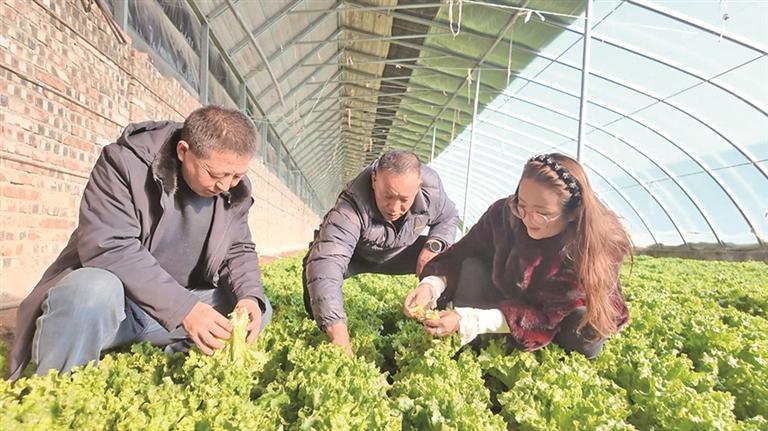
Core Viewpoint - During the "14th Five-Year Plan" period, Huangzhong District of Xining City focuses on building a center for green organic agricultural and livestock products, emphasizing the development of specialty industries such as cool-season vegetables, ecological yaks, and disease-free potatoes, aiming to become a national benchmark for modern agriculture [2] Group 1: Agricultural Development - The district has established a modern agricultural industry system characterized by regional, specialized, and scaled development, with over 3 large-scale vegetable bases and 34 medium-sized bases, achieving a stable vegetable planting area of 130,800 acres and an annual output exceeding 340,000 tons, accounting for one-fifth of the province's total output [3] - The introduction of over 20 high-quality vegetable varieties and the promotion of 12 green production technologies have led to a 96% standardization rate in production technology, significantly increasing yields in various crops [3] Group 2: Value Chain Enhancement - The district aims to elevate specialty agriculture from production to processing, sales, and branding, achieving a total industrial output value exceeding 100 million yuan in the strawberry industry, with 6 million seedlings exported annually [4] - A 180 million yuan deep processing project for potatoes has commenced operations, enhancing the value chain of traditional bulk agricultural products [4] Group 3: Brand Development - A total of 23 vegetable trademarks have been registered, with 91 products certified as green food, forming a multi-layered brand matrix that includes regional public brands and enterprise brands, with nearly 50% of vegetable products sold outside the province [5] - The total output value of the entire vegetable industry chain exceeds 1.2 billion yuan, contributing to a significant increase in rural residents' disposable income from 12,655 yuan in 2020 to 18,472 yuan by 2025 [5] Group 4: Organizational Strengthening - The district has strengthened rural grassroots party organization construction, establishing 23 functional party organizations in agricultural cooperatives and industry chains, enhancing organizational cohesion and development leadership [6] - A talent policy has been implemented to attract 581 university graduates to rural areas, providing fresh expertise and support for agricultural upgrades [6]
科技农业绘出新风景
Xin Lang Cai Jing· 2026-01-25 18:15
Core Insights - The article highlights the transformative impact of agricultural technology in Chengdu, showcasing how innovations are redefining traditional farming practices and enhancing food diversity in winter [4][6][7]. Group 1: Agricultural Innovations - Chengdu's agricultural landscape is evolving with the introduction of "black technology," allowing for year-round production of crops like strawberries and oilseed rape, even in winter [4][6][7]. - The use of advanced techniques such as double haploid induction and controlled environment agriculture has led to the development of cold-resistant, early-blooming crop varieties [4][7][8]. - Facilities like vertical farms and smart greenhouses are enabling the cultivation of crops without reliance on traditional seasonal constraints, thus ensuring a steady supply of fresh produce [9][12]. Group 2: Seafood Production in Xinjiang - Xinjiang is emerging as a significant player in the seafood industry, producing species like salmon and shrimp through innovative inland aquaculture techniques [10][11]. - The use of saline-alkaline water for aquaculture has been optimized to create environments suitable for marine species, showcasing a breakthrough in resource utilization [10][11]. - Advanced closed-loop water recycling systems are being implemented to ensure sustainable and efficient fish farming practices in arid regions [11][12]. Group 3: Solar-Agriculture Integration - The "agriculture-photovoltaics" model is gaining traction, where solar panels not only generate electricity but also create favorable microclimates for crop growth beneath them [13][14]. - This dual-use approach is enhancing agricultural productivity in arid regions by improving soil conditions and reducing water evaporation [13][14]. - Projects like "fishing-solar" and "pasture-solar" are demonstrating the potential for synergistic benefits, leading to increased yields and diversified income streams for farmers [14][15]. Group 4: Global Agricultural Technology Trends - The global agricultural sector is witnessing a shift towards data-driven practices, moving away from traditional methods to more scientific approaches [16][17]. - Technologies such as IoT, AI, and autonomous machinery are being integrated into farming operations worldwide, enhancing efficiency and sustainability [16][17]. - China's advancements in agricultural technology are not only improving domestic production but also contributing to global agricultural practices, showcasing a blend of local innovation and international collaboration [17].