纺织

Search documents
申万宏源证券晨会报告-20251016
Shenwan Hongyuan Securities· 2025-10-16 00:45
Market Overview - The credit bond market is expected to experience continued fluctuations in credit spreads during the fourth quarter, with greater potential pressure on long-term bonds [2][10][11] - Short-term recovery of the bond market may still be influenced by the overdrawn performance from earlier in the year, while mid-term shifts in market logic may occur [10][11] Credit Strategy - It is recommended to maintain a shorter duration in credit bonds, with a focus on mid-to-short-term strategies and interest rate arbitrage being favored [3][11] - The liquidity remains ample, making short-term bonds more certain, while the interest rate arbitrage opportunities are relatively high compared to earlier in the year [3][11] Financial Bonds - Attention should be paid to the pricing discovery opportunities in new financial bonds, as the difficulty in trading perpetual bonds is increasing [4][11] - After the new VAT regulations, the pricing of new financial bonds may still be in a discovery phase, with older bonds potentially offering better value [4][11] Credit Bond Market Dynamics - The behavior of institutions is shifting, with public funds facing significant challenges on the liability side, leading to a restructuring of credit bond demand [10][11] - The expansion of credit bond ETFs is being driven by policy, although the pace may slow down in the short term due to the recent introduction of new products [10][11] Inflation Insights - The Producer Price Index (PPI) improved in September, primarily due to rising commodity prices, particularly copper, which saw a month-on-month increase of 2.1% [15] - The Consumer Price Index (CPI) is also showing upward trends, with core CPI rising to 1.1%, driven by significant increases in gold and platinum jewelry prices [15] Industry Performance - The textile and apparel industry is expected to see a recovery in domestic demand, with retail sales of clothing and textiles reaching 940 billion yuan, a year-on-year increase of 2.9% [15] - The cosmetics and beauty industry is projected to maintain strong growth, with retail sales expected to rise significantly in the fourth quarter due to promotional events [17][18] Company-Specific Insights - Xiaogoods City (600415.SH) reported a net profit growth that exceeded expectations, driven by the successful launch of a new global trade center [23] - The company achieved a revenue of 5.348 billion yuan in Q3, a year-on-year increase of 39.02%, with net profit doubling [23]

国内高频 | 生产回落、出行走强 (申万宏观·赵伟团队)
赵伟宏观探索· 2025-10-15 16:03
Group 1: Industrial Production Trends - The industrial production has shown a slight decline, with high furnace operation rates remaining high but experiencing a week-on-week stability at 84.3%, and a year-on-year decrease of 1.2 percentage points to 83.4% [2] - The apparent consumption of steel has decreased significantly, with a week-on-week drop of 18.7% and a year-on-year decline of 29.8% to 17.6% [2] - The inventory of steel has increased by 6.5% week-on-week [2] Group 2: Midstream Production Insights - The operating rates in the petrochemical and automotive sectors have declined, with the soda ash operating rate decreasing by 0.8% week-on-week to 88.4%, and a year-on-year drop of 1.5 percentage points to 0.6% [7] - The textile industry has also seen a decrease, with PTA operating rates increasing by 1% to 77.5% week-on-week but down 2.9 percentage points year-on-year to 5.6% [7] - The operating rate for automotive semi-steel tires has dropped significantly, down 27.1% week-on-week to 46.5%, and down 22.9 percentage points year-on-year to 28.5% [7] Group 3: Construction Industry Performance - Cement demand has decreased, with the cement shipment rate falling by 3% week-on-week to 44.3%, and a year-on-year decline of 4.9 percentage points to 9.1% [14] - The cement inventory ratio has slightly increased, with a year-on-year rise of 1.4 percentage points to 1.4% [14] - The average price of cement has seen a slight increase during the week [14] Group 4: Demand Tracking - The transaction volume of commercial housing has improved, with the average daily transaction area in 30 major cities decreasing by 55.7% week-on-week but increasing by 21.3 percentage points year-on-year to 0.3% [30] - The freight volume related to domestic demand has shown weakness, with road freight volume down 25.6% year-on-year to 15.9% [37] - Passenger travel remains high, with the migration scale index at a high level, increasing by 37.2 percentage points year-on-year to 62.4% [46] Group 5: Price Trends - Agricultural product prices have generally declined, with prices for eggs, vegetables, and pork decreasing by 3.4%, 2.4%, and 0.3% respectively [65] - The industrial product price index has shown a mixed trend, with the Nanhua industrial product price index down 0.2% week-on-week, while the energy and chemical price index decreased by 2% [75]


鲁泰纺织股份有限公司 2025年前三季度业绩预告
Zhong Guo Zheng Quan Bao - Zhong Zheng Wang· 2025-10-15 15:46
Group 1 - The company expects a positive net profit for the first three quarters of 2025, indicating an upward trend [2][3] - The preliminary estimate of net profit increase is approximately 16 million yuan, primarily due to gains from the sale of trading financial assets and fair value changes of held trading financial assets, which are classified as non-recurring gains [4] - The financial data presented is based on initial calculations by the company's finance department and has not been audited by an external accounting firm [5] Group 2 - The specific financial data for the first three quarters of 2025 will be disclosed in the company's quarterly report [5] - The company emphasizes its commitment to timely information disclosure in accordance with relevant laws and regulations [5]

四中全会前,消费买什么?
2025-10-15 14:57
Summary of Key Points from Conference Call Industry Overview - The conference call discusses the consumer sector in China, particularly focusing on the implications of macroeconomic factors such as the narrowing of the China-US interest rate differential and the strengthening of the RMB, which provide a favorable environment for consumer policies and investments in the upcoming quarters [1][4][3]. Key Investment Opportunities - **Consumer Sector**: The fourth quarter is highlighted as a critical time for investing in the consumer sector, driven by events like the Fourth Plenary Session and the Lunar New Year consumption peak [1][4]. - **Specific Sectors**: - **New Consumption, Beauty Care, and Pet Food** are identified as promising investment areas, particularly during the Double Eleven shopping festival [1][5]. - **Cosmetics**: Brands like Han Shu (by Shangmei Group) and Feicui (by Ruoyu Chen) are expected to see rapid growth, while Mao Geping is noted for its long-term growth potential [1][7]. - **Pet Sector**: Leading companies such as Zhongchong Co. and Guai Bao Co. are highlighted, with significant revenue growth and expansion plans [12][13]. - **Sports Sector**: Lisheng Sports is projected to have significant growth potential, benefiting from policy support for domestic demand and sports-related consumption [14][19]. Company Performance Insights - **Shanghai Jahwa and Shuiyang**: These companies are noted for their turnaround success, with Shanghai Jahwa seeing significant growth in brand engagement and sales post-management changes [8][9]. - **Lepu Medical**: The company is experiencing strong demand for its cosmetic products, with projected sales exceeding 200,000 units for its popular product [11]. - **Lisheng Company**: Expected to achieve a profit of approximately 40 million yuan in 2025, with potential for doubling profits in 2026 [19]. Market Dynamics - **Gold and Jewelry Sector**: The industry is experiencing a divergence between average prices and stock prices, with high-margin products and effective expansion strategies being key drivers [20][21]. Brands like Laopai are performing well, but face risks of slowing sales due to rising prices [22][23]. - **Home Appliances**: Midea is highlighted as a defensive investment with a projected compound annual growth rate of 15% for its B2B business [32][33]. The company is also benefiting from overseas market growth, particularly in emerging regions [34]. Future Trends and Expectations - **Consumer Market Trends**: The consumer market is expected to oscillate between strong expectations and weak realities, influenced by policy changes and economic fundamentals [3][4]. - **Investment Strategy**: A rotation strategy is recommended, focusing on different sectors as they peak, with an emphasis on companies with strong data and event-driven catalysts [6]. - **Long-term Outlook**: The upcoming release of the 15th Five-Year Plan details is anticipated to further support the growth of the consumer sector [6]. Conclusion - The conference call emphasizes the importance of strategic investments in the consumer sector, particularly in beauty, pet care, and sports, while also highlighting the challenges and opportunities within the gold and jewelry market. Companies demonstrating strong fundamentals and growth potential are positioned favorably for future investment.
以金融为“帆”,嘉兴外向型企业行稳致远
Sou Hu Cai Jing· 2025-10-14 12:46
Core Insights - The foreign trade economy plays a crucial role in connecting domestic and international dual circulation, driving economic growth and promoting industrial upgrades [1] - Financial institutions in Jiaxing are focusing on the pain points of foreign trade enterprises, such as cross-border financing, risk prevention, and market expansion, to provide innovative products and services [1][2] Cross-Border Financing - Jiaxing financial institutions are addressing the urgent cross-border financing needs of foreign trade enterprises as they expand overseas [2] - For instance, China Construction Bank's Pinghu branch provided 20 international letters of credit totaling $923.2 million to Zhejiang Jingxing Paper Industry, alleviating funding pressures for their Malaysian factory [2] - The Industrial and Commercial Bank of China designed a financing guarantee scheme for Treton Furniture Co., enabling them to secure a loan of 31.48 million yuan to support their operations in Vietnam [2] Precision Support for Enterprises - Financial support is critical for foreign trade enterprises, especially during periods of order surges and tariff fluctuations [4] - For example, a loan of 1 million yuan was approved for Haining Shitian Knitting Co. within two days to address their cash flow gap due to increased sock export orders [4] - Everbright Bank's Haining branch facilitated a seamless renewal of a 20 million yuan loan for Zhejiang Wanjie Textile New Materials Co., supporting their operational needs [4] Risk Prevention Innovations - Jiaxing financial institutions are utilizing foreign exchange derivatives and insurance collaborations to create tailored risk prevention solutions for enterprises [6] - Zhejiang Aino Textile Technology Co. received a combination loan of $185,000 and a foreign exchange swap to mitigate exchange rate risks, reducing their financing costs to 2.06% [6] - The Industrial and Commercial Bank of China introduced a low-cost option for foreign exchange transactions, helping companies stabilize profits amid currency fluctuations [7] Expanding International Reach - Jiaxing financial institutions are enhancing market access for foreign trade enterprises through platform building and technological empowerment [8] - The Cross-Border Trade Club platform by Bank of China has improved client acquisition efficiency for local businesses, allowing them to connect with global trade partners more effectively [8] - Ningbo Bank's "Export Extreme Loan" product has provided quick credit access for companies with significant export volumes, addressing their financing challenges [11] Future Directions - Jiaxing financial institutions plan to deepen cross-border financial innovations and optimize financing products to support the diverse needs of foreign trade enterprises [12] - The focus will be on stabilizing the scale, optimizing the structure, and enhancing the resilience of the foreign trade economy [12]
中资企业为柬埔寨妇女创造多元成长空间
Zhong Guo Xin Wen Wang· 2025-10-14 08:31
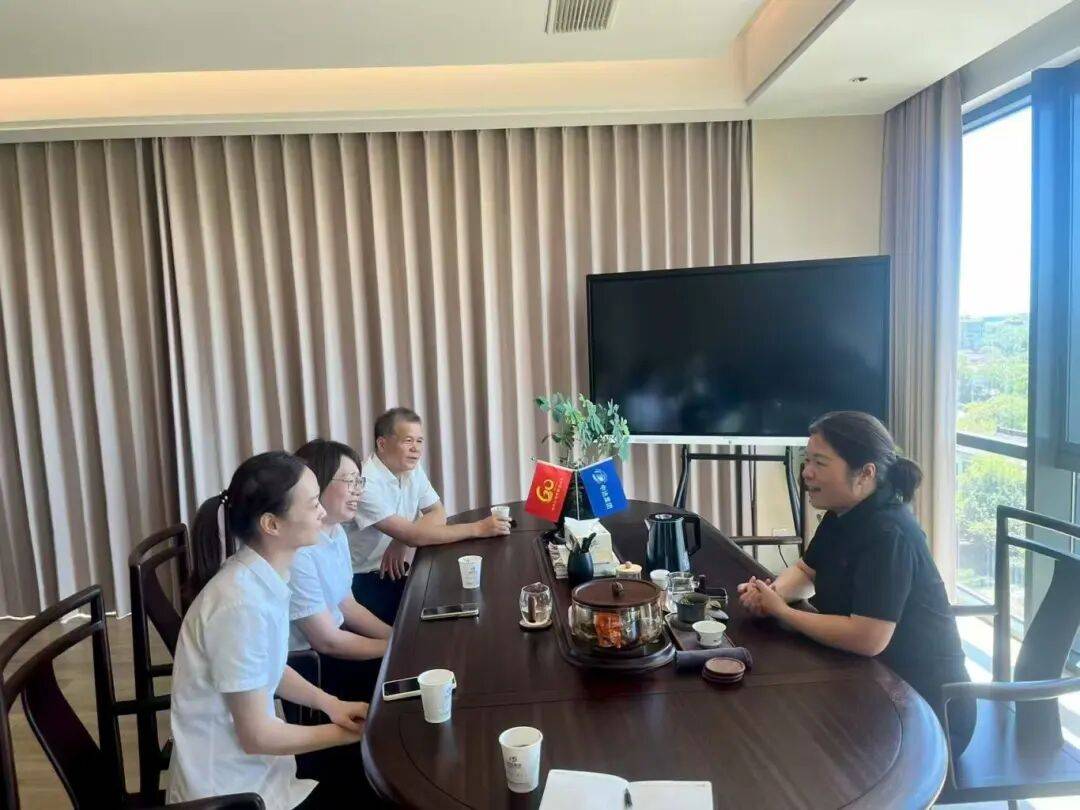
Group 1 - Chinese enterprises in Cambodia are creating diverse growth opportunities for local women, exemplified by female employees like Chieb Chanthol and Tang Houygech who have advanced in their careers within Chinese companies [1][2] - Chieb Chanthol, a chemical inspection officer at China Huadian Corporation's Sihanoukville Power Plant, has gained significant skills and recognition, being promoted to team leader after two years of training [1] - Tang Houygech, who joined Cambodia Jin Gang Expressway Co., has progressed to the position of assistant general manager and manager of business outreach, highlighting the career development opportunities available in Chinese firms [2] Group 2 - The textile industry plays a crucial role in Cambodia's economic and social development, employing approximately 400,000 female workers in Chinese textile enterprises [4] - The Cambodian Chinese Chamber of Commerce emphasizes the significant contribution of Cambodian women in various sectors, with female employees making up over half of the workforce in member companies [4] - Chinese enterprises are committed to empowering female employees by offering salaries above the local average and creating diverse growth spaces, leading many women to become department heads or technical backbones [4]


【质量强国】中国消费者报——加强全面质量管理 促进质量强国建设
Sou Hu Cai Jing· 2025-10-14 05:38
Core Points - The articles emphasize the importance of quality management in enhancing the entire industrial chain and promoting economic development, with various regions implementing initiatives to strengthen quality awareness and management [2][3][6][8][15]. Group 1: Quality Awareness and Management Initiatives - Beijing is focusing on enhancing quality awareness through over a hundred activities, integrating online and offline methods to promote quality education and support traditional industries in digital transformation [3][4]. - Shanghai is conducting quality awareness campaigns and has published a quality status report, promoting quality craftsmanship and organizing various quality improvement activities [6][7]. - Guangxi is launching six major actions to support high-quality economic development, focusing on standardization and quality management across key industries [8][9]. Group 2: Quality Safety and Consumer Protection - Guangxi is enhancing quality safety measures by implementing strict regulations on industrial products and consumer goods, ensuring consumer rights protection through various initiatives [9][12]. - Jiangxi is focusing on quality regulatory governance, conducting special actions to ensure product safety and consumer protection, while promoting quality awareness through public engagement activities [11][12]. Group 3: Regional Quality Improvement Activities - Fujian is implementing targeted quality services to enhance industrial quality, including certification initiatives and industry-specific training programs [13][14]. - Hunan is organizing a series of quality improvement activities across various sectors, emphasizing government support and community involvement in quality enhancement [15][16][17].

国家发改委发布通知!
中国能源报· 2025-10-14 03:08
Core Viewpoint - The article discusses the implementation of the "Central Budget Investment Management Measures for Energy Conservation and Carbon Reduction," which aims to support key industries in energy conservation and carbon reduction projects, focusing on sectors such as electricity, steel, non-ferrous metals, building materials, petrochemicals, chemicals, and machinery [1][3][4]. Group 1: Investment Focus Areas - The measures support energy conservation and carbon reduction projects in key industries, including electricity, steel, non-ferrous metals, building materials, petrochemicals, chemicals, and machinery [10][11]. - Projects for clean replacement of coal consumption are supported, including low-carbon transformation of coal power units and coal chemical projects, as well as clean energy alternatives for coal-fired boilers in various industries [10][11]. - The initiative promotes circular economy projects, including the construction and transformation of resource recycling bases and the utilization of agricultural and forestry waste [11][12]. Group 2: Support Standards and Funding - The support ratio for energy conservation and carbon reduction projects in key industries, clean coal consumption replacement projects, and circular economy projects is set at 20% of the approved total investment [12]. - For local government investment projects focused on carbon peak and carbon neutrality capacity building, the support ratios vary by region, with eastern, central, western, and northeastern regions receiving 60%, 70%, 80%, and 80% respectively [12]. Group 3: Project Application and Management - Provincial development and reform departments are responsible for project application and must establish a dynamic project reserve mechanism to ensure quality and compliance with national standards [14][15]. - The application for investment funds must include detailed project information, including basic conditions, construction scale, total investment, and expected economic and social benefits [16][17]. - Projects must adhere to strict management and reporting requirements, including performance evaluation and compliance with national laws and regulations [18][19].

国家发改委:支持煤电机组和煤化工项目低碳化改造
Zheng Quan Shi Bao Wang· 2025-10-14 02:03
Core Viewpoint - The National Development and Reform Commission has issued a management approach to support low-carbon transformation in coal power and coal chemical projects, as well as promoting clean energy alternatives in various industries [1] Group 1: Policy Support - The new management approach emphasizes support for the low-carbon transformation of coal power units and coal chemical projects [1] - It encourages the replacement of coal-fired boilers and industrial kilns in industries such as food, tobacco, textiles, paper, and dyeing with clean energy solutions [1] - The initiative also supports urban and rural residents in adopting geothermal and biomass energy for heating purposes [1]
中美经贸再生波澜,前三季度出口逆增7.1%
Sou Hu Cai Jing· 2025-10-13 09:22
Core Points - Despite complex international circumstances, China's exports achieved a growth rate of 7.1% in the first three quarters, marking eight consecutive quarters of growth [2][3] - The U.S. announced a new round of tariffs on Chinese imports, potentially raising average tariffs to over 150% [2][8] Group 1: Export Performance - In the first three quarters, China's total goods trade reached 33.61 trillion yuan, with exports at 19.95 trillion yuan and imports at 13.66 trillion yuan [2] - High-tech product exports amounted to 3.75 trillion yuan, growing by 11.9% and contributing over 30% to overall export growth [3] - Mechanical and electrical products accounted for 60.5% of total exports, with a growth of 9.6% [3] Group 2: Product Composition - Exports of industrial robots surged by 54.9%, while wind power equipment exports grew by 23.9% [4] - Traditional cultural products like dragon boats and paper-cutting crafts have gained popularity in international markets [4] - Exports of holiday goods and toys exceeded 50 billion yuan, showcasing the influence of Chinese traditional culture [4] Group 3: Regional Performance - The western region of China saw significant export growth, with traditional manufacturing products like home appliances and motorcycles growing over 20% [4] - High-tech product exports from the western region exceeded 450 billion yuan, growing by 26.4% [4] Group 4: E-commerce and Market Diversification - Cross-border e-commerce exports reached 1.09 trillion yuan, growing by 11.6% [5] - Trade with Belt and Road Initiative countries totaled 17.37 trillion yuan, growing by 6.2% and accounting for 51.7% of total trade [5][6] - ASEAN remains China's largest trading partner, with trade volume reaching 5.57 trillion yuan, a 9.6% increase [6] Group 5: Business Confidence and Market Expansion - Export enterprise confidence index has risen for five consecutive months, indicating a positive outlook for future trade [7] - The number of foreign trade entities exceeded 700,000 for the first time, with private enterprises leading in market expansion [7] - Private enterprises accounted for 54.2% of high-tech product exports, highlighting their significant role in the export sector [7]