
电子

Search documents
中国用一年时间向全球证明,特朗普关税大棒,全砸在美国人头上了
Sou Hu Cai Jing· 2026-02-15 11:01
Group 1 - The article highlights that despite the implementation of U.S. tariffs, Chinese manufacturing has not been significantly impacted, with factories and ports in China experiencing increased activity and order volumes ahead of the Spring Festival [1][8][30] - U.S. tariffs, initially intended to reduce trade deficits and bring manufacturing back to the U.S., have instead resulted in increased costs for American consumers and businesses, with nearly 90% of the tariff burden falling on them [12][15][32] - The Chinese manufacturing sector has shown resilience, maintaining export levels and even experiencing growth due to strong demand and a diversified market strategy, countering the expected negative effects of tariffs [26][28][30] Group 2 - The article discusses the political and legal challenges faced by the Trump administration's tariff policies, including internal dissent within the Republican Party and court rulings questioning the legality of the tariffs [18][22][20] - There is a growing sentiment of "tariff fatigue" among U.S. retailers, importers, and consumers, with many businesses seeking to recover paid tariffs and expressing dissatisfaction with the ongoing trade policies [25][32] - The article concludes that the U.S. approach of unilateral protectionism through tariffs has not only failed to achieve its goals but has also led to negative repercussions for the U.S. economy, highlighting the importance of respecting market dynamics and pursuing mutually beneficial trade relationships [33][35][38]


扎堆调研!外资机构盯上中国科技股(附表格)
券商中国· 2026-02-15 10:28
Core Viewpoint - China's technological innovation capabilities are increasingly attracting global capital attention [1] Group 1: Foreign Investment Research - Since 2026, foreign institutions have conducted research on 189 A-share listed companies, focusing on hard technology sectors such as power equipment, electronics, and machinery [2][3] - The most popular companies among foreign investors include Huaming Equipment, Yingshi Innovation, and Huichuan Technology, each receiving over 50 foreign institution inquiries [3][4] Group 2: Company-Specific Insights - Huaming Equipment has been a focal point for foreign investors, with 59 institutions including Morgan Asset and BlackRock showing interest. The company's global business development and plans for an H-share listing in Hong Kong are key discussion points [5] - Yingshi Innovation has attracted attention from 58 foreign institutions, focusing on its new product developments in cameras and wearable technology [6] - Huichuan Technology is also under scrutiny from 53 foreign institutions, with aspirations to enhance its international business presence [6] Group 3: Industry Focus - The power equipment, electronics, and machinery sectors are receiving the highest levels of international attention this year [7][8] - Notable companies in the power equipment sector include Huaming Equipment, Huichuan Technology, and Dajin Heavy Industry, while the electronics sector features Yingshi Innovation and Aobi Zhongguang [8][9] Group 4: Future Economic Outlook - Foreign institutions believe that China's large technology sector, domestic demand, innovation, and high-tech investment will be key drivers of economic growth in 2026 [9] - The FTSE Russell's global investment research head indicates that technology will constitute 27.1% of the FTSE China Index by the end of 2025, suggesting a diversified industry composition that could benefit Chinese stocks [9] - UBS's China equity strategy head notes that potential inflows of $16 billion could occur if foreign funds reallocate to include Chinese stocks in their portfolios [9]






多个重要指数涨幅超50%!农历蛇年A股完美收官,马年如何走?
天天基金网· 2026-02-15 07:30
Core Viewpoint - The A-share market in the lunar year of the Snake has shown a strong performance, with major indices experiencing significant increases, indicating a bullish trend in the market [3][5]. Market Performance - The A-share market recorded a cumulative increase of 25.58% for the Shanghai Composite Index, 38.84% for the Shenzhen Component Index, and a remarkable 58.73% for the ChiNext Index during the trading period from February 5, 2025, to February 13, 2026 [3]. - The CSI 2000 Index, which includes 2000 smaller-cap stocks, saw a cumulative increase of 50.39%, while the CSI 500 and CSI 1000 indices rose by 48.49% and 40.35%, respectively [3]. Sector Performance - The performance across various sectors was generally positive, with the non-ferrous metals sector leading with a cumulative increase of over 100%. The defense and military industry followed with an increase of nearly 80% [5]. - Other sectors such as telecommunications, electrical equipment, electronics, machinery, construction materials, basic chemicals, light industry manufacturing, and construction decoration also performed well, each with cumulative increases exceeding 50% [5]. - The banking sector lagged behind, with a cumulative increase of less than 10%, while sectors like food and beverage, non-bank financials, transportation, social services, and retail showed relatively weak performance [5]. Individual Stock Performance - Over 4600 A-shares increased in value during the trading period, accounting for nearly 90% of all A-shares, with more than 700 stocks doubling in value [7]. - Notable stocks that saw increases exceeding 500% include Upwind New Materials, Tianpu Co., and others, while stocks like *ST Aowei and *ST Yanshi experienced declines exceeding 50%, highlighting structural risks even in a bullish market [8]. Future Outlook - The market is expected to maintain a positive long-term trend due to reasonable valuations, ongoing supportive policies, and a solidifying macroeconomic recovery [8]. - Looking ahead to the Year of the Horse, it is anticipated that the A-share market will gradually stabilize and recover, with recommendations for investors to adopt a balanced and rational investment strategy focusing on fundamentally strong assets and growth sectors [9][10].

欧洲工业危机,美法中是三大赢家
Sou Hu Cai Jing· 2026-02-15 06:57
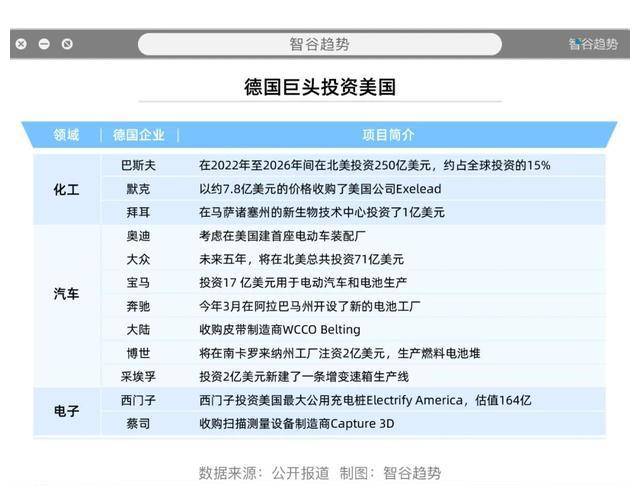
Core Viewpoint - German companies are increasingly investing in the United States due to energy crises and inflation in Germany, leading to a shift in production capacity to regions with more favorable conditions, particularly the U.S. and China [1] Group 1: Investment in the U.S. - BMW Group announced an investment of $1.7 billion (approximately 12.3 billion RMB) in electric vehicle and battery production in the U.S. [1] - Volkswagen plans to invest $7.1 billion (approximately 51.4 billion RMB) in the U.S. over the next five years [1] - BASF will invest $25 billion (approximately 181.1 billion RMB) in North America over four years [1] - Other German companies like Mercedes, Bosch, Siemens, and Bayer are also increasing their investments in the U.S. [1] - The U.S. offers cheap energy, a large consumer market, and attractive business policies, making it an appealing destination for German manufacturers [1] Group 2: Investment in China - BASF plans to invest €10 billion in China, while Audi, Volkswagen, and Merck have significant investment plans in the country [3] - Investments are concentrated in coastal cities, particularly Shanghai, which is favored for its strong infrastructure and business environment [3] - French companies are also looking to benefit from the situation, as Germany's energy crisis creates market opportunities for them [3] Group 3: Industry Trends - The shift of German industries is focused on high-value sectors such as organic chemicals, electronic devices, and automotive components [1] - The historical trend of industrial transfer shows a movement from advanced regions to less developed areas, but current conditions favor the U.S. and China for advanced manufacturing [1][3] - Germany's reliance on natural gas, particularly from Russia, has exacerbated its energy crisis, while France's energy strategy positions it to capitalize on Germany's challenges [3]

开年私募调研热情高涨 百亿私募扎堆布局这些赛道
Huan Qiu Wang· 2026-02-15 01:02
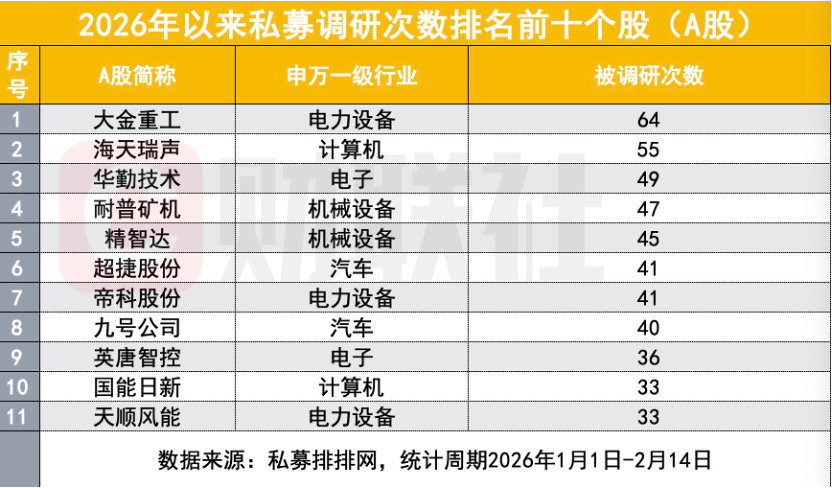
Group 1 - A total of 874 private equity firms have participated in A-share market research as of February 14, 2026, covering 28 Shenwan first-level industries and 501 stocks, with a cumulative research count of 2845 times, indicating an accelerated investment pace in the new year [1] - Major private equity firms such as Freshwater Spring, Gao Yi Asset, Panjing Investment, and Harmony Huiyi Asset are focusing their research on strategic emerging industries including new energy, high-end manufacturing, artificial intelligence, and semiconductors [1] Group 2 - Among the stocks that have received at least 10 private equity research visits this year, 84 stocks are identified, with Dajin Heavy Industry in the power equipment sector leading with 64 visits, making it the most researched stock [3] - Other notable stocks include Dike Co. and Tiensun Wind Power, which received 41 and 33 research visits respectively, attracting attention from multiple private equity firms [3] - The research focus is concentrated in sectors such as power equipment, computers, electronics, machinery, and automobiles, with a preference for leading companies and high-growth stocks [3] - A total of 61 private equity firms have conducted at least 10 research visits this year, including 20 billion-level private equity firms, with prominent names like Zhengyuan Investment, Freshwater Spring, and Gao Yi Asset leading the way [3]




2026年私募调研十大个股出炉
财联社· 2026-02-14 12:19
Core Insights - The article highlights the increasing enthusiasm of private equity firms in conducting research on A-share companies, particularly in strategic emerging industries such as new energy, high-end manufacturing, artificial intelligence, and semiconductors as the 2026 Spring Festival approaches [1] Group 1: Private Equity Research Trends - A total of 874 private equity firms have participated in A-share market research, covering 501 stocks across 28 industries, with a total of 2,845 research instances recorded as of February 14, 2026, indicating strong research interest at the beginning of the year [1] - Notable private equity giants, including Freshwater Spring, Gao Yi Asset, and Panjing Investment, have collectively focused their research efforts on sectors like new energy and high-end manufacturing [1] Group 2: Focused Research on Specific Stocks - 84 stocks have received at least 10 research instances from private equity firms, with Dajin Heavy Industry leading the list with 64 instances, making it the most researched A-share [2] - Other notable companies include Dike Co. and Tian Shun Wind Power, which received 41 and 33 research instances respectively, focusing on topics such as European offshore wind power growth and the impact of rising silver prices on performance [2][3] Group 3: Industry Distribution of Research - The mechanical equipment industry leads with 452 research instances, followed closely by the computer industry with 432 instances, indicating a strong interest in technology and high-end manufacturing sectors [5] - The electrical equipment, pharmaceutical, automotive, and basic chemical industries also received significant attention, each with over 100 research instances, reflecting a diversified investment approach with a focus on technology and manufacturing [5] Group 4: Active Private Equity Firms - 61 private equity firms have conducted at least 10 research instances, with 20 of them being large-scale firms, showcasing active engagement in the market [6] - Zhengyuan Investment leads with 53 research instances, focusing heavily on the computer industry, while other firms like Freshwater Spring and Gao Yi Asset have also shown significant research activity [7][8] Group 5: Market Outlook from Private Equity Firms - Several large private equity firms have expressed cautious optimism regarding the 2026 market outlook, emphasizing the importance of structural and performance-driven opportunities [9] - Freshwater Spring noted the strong performance of precious metals and industrial metals in 2025, suggesting that related industries may present investment opportunities in the current market [10] - Star Stone Investment anticipates a systemic revaluation of core Chinese assets, focusing on high-growth sectors such as artificial intelligence and high-end equipment manufacturing [11]

“十五五”规划,科技关注三条主线
Shanghai Securities· 2026-02-14 11:32
Investment Rating - The industry investment rating is "Hold" [2] Core Viewpoints - The report emphasizes three main lines of focus in technology as outlined in the "14th Five-Year Plan": computing power, self-control, and AI applications [6][14] - The computing power revolution is expected to create opportunities across the industry chain, with significant capital expenditure growth from North American cloud providers [16][20] - The domestic production of analog chips is accelerating, with China being the largest consumer market, accounting for over 40% of the global market [7][24] - AI is driving potential growth in consumer electronics, with System on Chip (SoC) technology becoming increasingly integrated into various applications [26][27] Summary by Sections 1. "14th Five-Year Plan" and Technology Focus - The "14th Five-Year Plan" suggests fostering emerging industries and accelerating technological self-reliance, focusing on three main lines: computing power, self-control, and AI applications [6][14] 2. Computing Power: Opportunities from the Revolution - North American cloud providers are significantly increasing capital expenditures, with Google expected to double its spending to between $175 billion and $185 billion in 2026 [16] - Microsoft reported a record capital expenditure of $37.5 billion in a single quarter, primarily to enhance AI capabilities [16] - Amazon's capital expenditure is projected to reach $200 billion in 2026, driven by strong demand in AI and related technologies [17] 3. Self-Control: Acceleration of Domestic Analog Chip Production - The global market for analog chips is steadily expanding, with China being the largest consumer market [7][24] - The current domestic production rate for analog chips is about 20%, indicating significant room for growth [24] 4. AI Applications: Empowering Consumer Electronics Growth - AI technology is becoming a crucial component of SoC architecture, enhancing smart processing capabilities across various sectors [26] - The demand for CMOS Image Sensors (CIS) is recovering, with potential for domestic alternatives to emerge [27] - ODM manufacturers are gaining competitive advantages by leveraging capital investments and technological advancements in various fields [27]
2026年私募调研十大个股出炉,淡水泉、高毅资产等百亿私募密集出动
Xin Lang Cai Jing· 2026-02-14 10:14
Group 1 - The core focus of private equity institutions is on sectors such as technology, manufacturing, and new energy, reflecting a strong research enthusiasm at the beginning of 2026 [1][2][6] - A total of 874 private equity securities institutions have participated in A-share market research, covering 501 stocks across 28 primary industries, with a cumulative research frequency of 2845 times [1][6] - The most researched stock is Dajin Heavy Industry, which has been surveyed 64 times, indicating its prominence among private equity interests [2][4] Group 2 - The mechanical equipment industry leads with 452 research instances, followed closely by the computer industry with 432 instances, showcasing a strong preference for these sectors [5][6] - The top ten stocks by research frequency include Dajin Heavy Industry, Haida Ruisheng, and Huajin Technology, all of which are leaders in their respective fields [4][6] - Private equity institutions are particularly focused on companies with strong growth potential and technological barriers, especially in the context of China's push for new industrialization [6][9] Group 3 - Notable private equity firms such as Zhengyuan Investment and Dazhuo Asset have been actively involved in research, with Zhengyuan leading with 53 research instances [7][8] - The research focus of major private equity firms includes sectors like machinery, electronics, and biomedicine, indicating a broad interest in technology and healthcare [8][9] - The overall sentiment among private equity firms is cautiously optimistic, emphasizing the importance of structural and performance-driven investment opportunities for 2026 [9][10]
华尔街想不通:美元潮汐割遍世界,怎么到中国就不灵了?
Sou Hu Cai Jing· 2026-02-14 07:05
Core Viewpoint - The article discusses the historical pattern of the United States using its monetary policy to extract wealth from other nations, particularly focusing on the experiences of South Korea and Japan, and contrasts this with China's recent resilience against similar tactics. Group 1: Historical Context of U.S. Financial Practices - The U.S. has employed a "harvesting" strategy for nearly fifty years, successfully extracting wealth from various countries, including the Asian Tigers and Latin America [3][14]. - South Korea's financial crisis in 1997 exemplifies this strategy, where external debt and capital flight led to a significant economic downturn, resulting in U.S. capital taking control of major banks and corporations [4][7]. - Japan faced a similar fate in the late 1980s, where U.S. monetary policy changes led to a massive economic bubble and subsequent crash, resulting in a long-term economic stagnation known as the "Lost Decade" [8][12]. Group 2: China's Response to U.S. Financial Tactics - In 2015, the U.S. attempted to apply the same financial pressure on China, leading to significant capital outflows and stock market volatility [15][18]. - China responded by actively defending its currency and financial sovereignty, utilizing its substantial foreign exchange reserves to stabilize the yuan and prevent a systemic crisis [16][20]. - The measures taken by China, including capital controls and maintaining a robust industrial base, thwarted the U.S. strategy, marking the first failure of the U.S. "harvesting" script in four decades [19][21]. Group 3: Implications for Ordinary Individuals - The article emphasizes the importance of understanding the broader financial landscape, as individual investments and savings are influenced by global capital flows and currency stability [23][28]. - It highlights the lessons learned from past financial crises, urging individuals to recognize the risks associated with market fluctuations driven by external forces [24][29]. - The narrative suggests that the collective efforts of ordinary people in China have contributed to maintaining financial stability and resisting external pressures [30].

安洁科技机构评级中性,电子皮肤技术布局引关注
Jing Ji Guan Cha Wang· 2026-02-14 05:07
Core Viewpoint - Anjie Technology (002635) currently has a neutral market sentiment with no significant positive or negative news affecting its outlook [1] Institutional Insights - As of February 13, 2026, Anjie Technology is developing electronic skin technology for potential applications in humanoid robots, but has not secured any mass production orders yet [2] - The automotive sector experienced a general rise on February 10, 2026, with favorable policy signals from the Ministry of Commerce regarding the optimization of vehicle trade-in policies, which may indirectly benefit Anjie Technology's electric vehicle business [2] Stock Performance - As of February 13, 2026, Anjie Technology's stock price closed at 14.32 yuan, with a daily increase of 0.21% and a cumulative rise of 2.95% over the past five days, outperforming the market [3] - The stock is currently in a bullish trend, with a 20-day resistance level at 14.83 yuan and a support level at 13.62 yuan [3] - On that day, there was a net outflow of 7.46 million yuan from institutional investors, while retail investors showed a net inflow [3] Financial Report Analysis - For the first three quarters of 2025, Anjie Technology reported revenue of 3.483 billion yuan, a year-on-year decline of 3.06%, and a net profit attributable to shareholders of 101 million yuan, down 54.62% year-on-year [4] - The gross margin was 19.54%, and the net margin was 2.79%. In the third quarter, revenue increased by 9.87% year-on-year, but net profit decreased by 17.2% [4] - The high proportion of accounts receivable raises concerns about cash flow risks, although the current stock price is considered to be within a reasonable range [4]
