光刻机

Search documents
ETF午评 | 锂电池产业链领涨,锂电池ETF、电池ETF景顺分别涨2.7%和2.52%
Ge Long Hui· 2025-10-30 04:00
Market Overview - The Shanghai Composite Index rose by 0.06% while the ChiNext Index fell by 0.23% [1] - The lithium battery industry chain led the market, with sectors such as cybersecurity, quantum technology, energy storage, and AI applications showing strength [1] - Conversely, computing hardware concepts experienced a pullback, with the CPO sector leading the decline [1] ETF Performance - Lithium battery sector ETFs saw significant gains, with ICBC Credit Suisse Lithium Battery ETF, Invesco Battery ETF, and CCB Fund Battery ETF rising by 2.71%, 2.52%, and 2.49% respectively [1] - The rare metals sector also performed well, with ICBC Credit Suisse Rare Metals ETF increasing by 2.36% [1] - International oil prices rose, leading to a 2.25% increase in the Huatai-PB Oil and Gas Resources ETF [1] Sector Performance - The gaming sector continued to decline, with both the Gaming ETF and Huatai-PB Gaming ETF dropping over 2% [1] - The innovative drug sector also saw a downturn, with the Innovative Drug ETF for Shanghai-Hong Kong-Shenzhen and the Biomedicine ETF falling by 2.3% and 2.24% respectively [1] - The CPO sector weakened, with the Communication Equipment ETF and 5G ETF declining by 2.04% and 1.92% respectively [1]
光刻机拆解传闻:逆向工程思维应休矣,自主创新需夯实
Tai Mei Ti A P P· 2025-10-30 03:37
Core Insights - A recent incident involving a failed reverse engineering attempt of ASML's DUV lithography machine has sparked significant discussion in the domestic semiconductor industry, highlighting the challenges faced by China's lithography machine sector [1][12] - The complexity of high-end industrial equipment has shifted from mere part replication to a focus on "implicit knowledge" and "system synergy," making reverse engineering increasingly ineffective [2][4] Industry Challenges - The failure of the reverse engineering attempt illustrates the systemic barriers in high-precision industrial equipment, where even precise measurements cannot recreate the necessary stress balance due to design tolerances and assembly dynamics [3][4] - ASML's latest EUV systems contain around 100,000 components sourced from over 5,000 suppliers, indicating the high level of complexity and integration required in such systems [5][7] Dependency on ASML - Despite the restrictions imposed by the US and its allies on the sale of advanced lithography machines to China, ASML remains a crucial supplier, with China accounting for 41% of ASML's revenue last year [12][14] - The limitations on maintenance and parts replacement for existing DUV machines have begun to impact Chinese manufacturers, as evidenced by declining yield rates at major foundries like SMIC [14][15] Need for Innovation - The current state of China's lithography machine industry reveals a systemic deadlock, necessitating a focus on foundational scientific research and the establishment of a complete ecosystem to achieve breakthroughs [16][17] - Companies must prioritize overcoming core technological monopolies, particularly in light sources and optical systems, to reduce reliance on foreign suppliers [17][20] Caution Against Prototype Thinking - The industry must be wary of "prototype thinking," which emphasizes the creation of functional prototypes at the expense of mass production, stability, and cost control [21][22] - Genuine progress in the lithography machine sector requires collaborative innovation across the entire supply chain to avoid superficial achievements and enhance the manufacturing capabilities of China's semiconductor industry [21][22]


A股沸腾,什么促成了这场集体狂欢?
Sou Hu Cai Jing· 2025-10-27 14:43
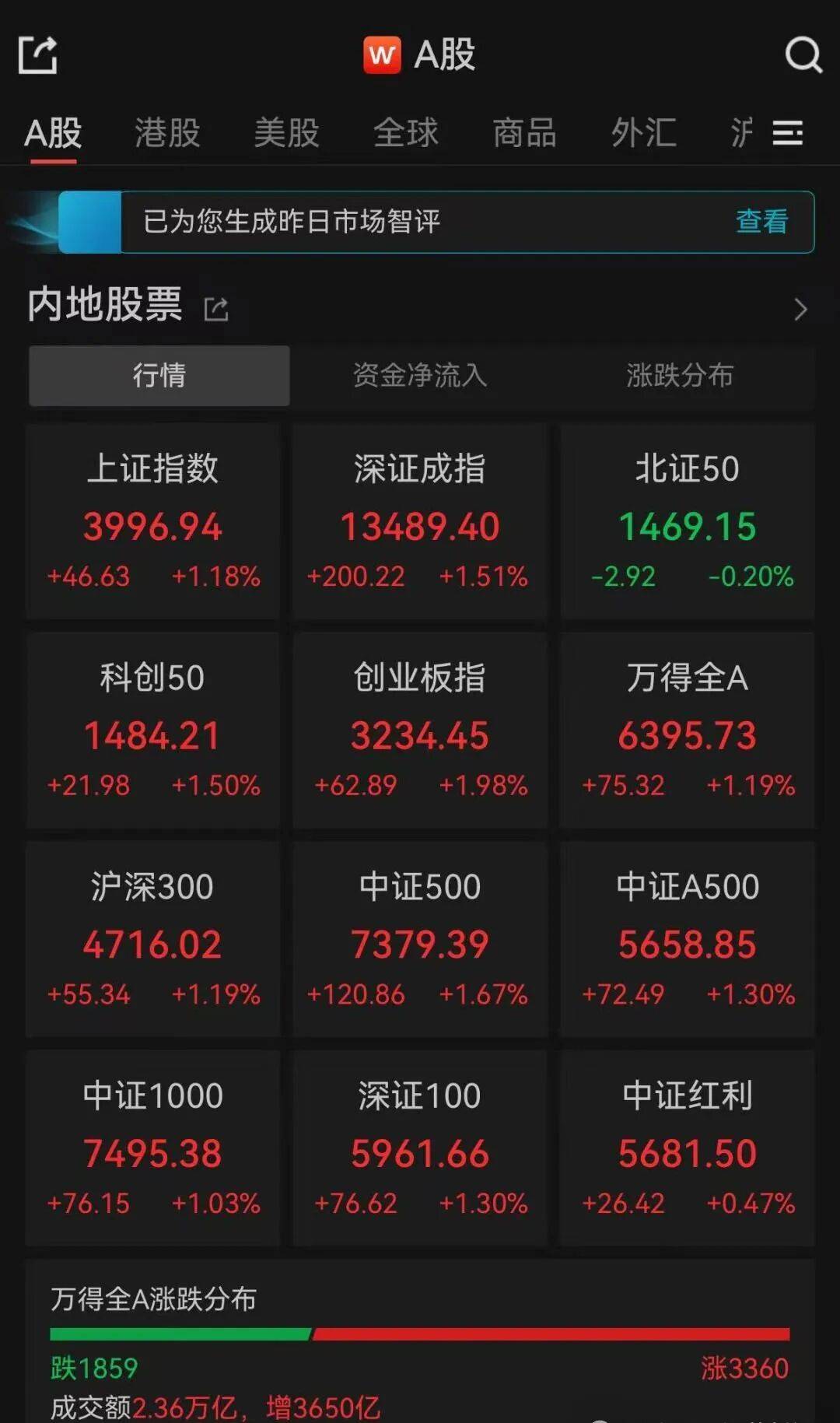
Core Viewpoint - The A-share market experienced a significant rally, with the Shanghai Composite Index approaching the 4000-point mark, closing at 3996.94 points, a rise of 1.18%, marking a nearly ten-year high [1][4]. Market Performance - The Shanghai Composite Index rose by 46.63 points, or 1.18%, while the Shenzhen Component Index increased by 200.22 points, or 1.51% [2]. - Other indices such as the ChiNext Index and the STAR Market also saw gains, with the ChiNext Index up by 62.89 points, or 1.98% [2]. Sector Performance - A broad-based rally was observed across major sectors, including traditional cyclical sectors like steel, electricity, coal, and non-ferrous metals, which all saw significant gains [4]. - Financial sectors, including brokerage and insurance, also showed strong upward movement [4]. - In the technology sector, cutting-edge themes such as lithography machines, storage chips, and CPO concepts performed notably well [4]. Catalysts for Market Rally - The rally was primarily driven by easing tensions between the U.S. and China, with significant progress reported in trade negotiations [4][6]. - U.S. Treasury Secretary Scott Behnke indicated that the U.S. would no longer consider imposing a 100% tariff on China, while China suspended its planned expansion of rare earth export controls [6][9]. - The market reacted positively to these developments, with increased capital inflow boosting market sentiment and valuations [10]. Economic Indicators - China's industrial profits for the first nine months of the year grew by 3.2% year-on-year, with a notable increase of 21.6% in September alone, indicating strong internal resilience and growth potential [14][17]. - The Chinese economy's robust performance is seen as a strong foundation for navigating global uncertainties, providing a significant boost to market confidence [18]. Strategic Importance of Rare Earths - China holds approximately 35% of the world's rare earth reserves, making it a critical player in the global supply chain for high-tech and defense industries [19]. - The U.S. faces significant challenges in establishing an independent rare earth supply chain, which could take years and substantial investment [21]. External Factors Influencing Market - Anticipation of a potential interest rate cut by the U.S. Federal Reserve, with a 98% probability of a 25 basis point cut, is expected to weaken the dollar and provide more room for China's monetary policy [24]. - The downgrade of the U.S. sovereign credit rating by a European agency reflects growing concerns over U.S. fiscal and political risks, further influencing market dynamics [24]. Conclusion - The recent surge in the A-share market is attributed to both internal strengths and external catalysts, highlighting the interplay between domestic economic performance and international trade relations [25].
历史新高,A股盘中集体拉升
Zheng Quan Shi Bao· 2025-10-27 06:04
Group 1: CPO Concept Stocks Performance - CPO index experienced a significant rise, with an intraday increase of over 4.70% on October 27, following a previous gain of 5% [1][2] - Several CPO-related stocks reached historical highs, including New Yisheng, Shengyi Technology, and Dongtian Micro, among others [1][2] - The overall A-share market showed strength, with the Shanghai Composite Index nearing the 4000-point mark, reflecting a robust trading environment [1] Group 2: Government Support for AI and Technology - The Chinese government emphasized the importance of artificial intelligence (AI) and innovation during a press conference on October 24, highlighting plans for continued support and development in this area [2] - The Ministry of Science and Technology aims to enhance the foundational research and key technology breakthroughs in AI, focusing on high-performance computing chips and new model algorithms [2] Group 3: Light Machine Sector Activity - The light machine sector also saw substantial gains, with the index rising over 5% and individual stocks like Wanrun and Jingrui Materials experiencing significant increases [4] - A new EUV photoresist standard was announced, indicating ongoing advancements in the semiconductor manufacturing process [5] Group 4: Advances in Photoresist Technology - Recent research revealed the micro-structural behavior of photoresist molecules, which could lead to improved manufacturing processes and reduced defects in chip production [5][6] - The development of photoresist technology is crucial for the semiconductor industry, impacting the performance and yield of chips [6]


A股开盘速递 | 三大指数集体高开 存储芯片板块涨幅居前
智通财经网· 2025-10-27 02:50
Core Viewpoint - The A-share market is experiencing a positive trend, with major indices opening higher, driven by sectors such as storage chips, CPO, and photolithography machines [1]. Group 1: Market Outlook - Huaxi Securities indicates that short-term risk appetite is expected to boost the A-share market, maintaining a "slow bull" trend, with "big technology" as the long-term focus [2]. - CITIC Securities suggests that the market is returning to an earnings-driven structure, with recent adjustments in active funds and a shift in understanding trade disputes [3]. - Zhongtai Securities notes that important meeting announcements are overall favorable for A-shares, particularly in technology, manufacturing, and consumption sectors, with potential for unexpected policies [4]. Group 2: Sector Focus - Huaxi Securities highlights that the upcoming earnings reports from A-share companies and US tech giants will be crucial, especially in the context of the global AI arms race [2]. - CITIC Securities identifies two emerging trends: the safety of industrial chains benefiting Chinese manufacturing firms and the expansion of AI from cloud to edge [3]. - Zhongtai Securities emphasizes the importance of focusing on technology stocks, particularly in AI and sectors related to "anti-involution" such as polysilicon and photovoltaic components [4].

300502、300308,盘中创新高
Shang Hai Zheng Quan Bao· 2025-10-27 02:41
Market Overview - A-shares opened higher with all three major indices rising: Shanghai Composite Index up 0.48%, Shenzhen Component Index up 1.2%, and ChiNext Index up 1.75% [1] - As of the report, Shanghai Composite Index increased by 0.87% to 3984.67 points, Shenzhen Component Index rose by 1.23% to 13452.37 points, and ChiNext Index gained 1.59% to 3221.87 points [1] - The total trading volume in Shanghai, Shenzhen, and Beijing exceeded 1 trillion yuan, an increase of 246.7 billion yuan compared to the previous trading day, with over 2800 stocks rising across the market [1] Sector Performance - Key sectors with significant gains included electronic chemicals, minor metals, co-packaged optics (CPO), photolithography machines, and storage chips [3] - The electronic chemicals sector led with a rise of 3.11%, followed by minor metals at 3.04%, and co-packaged optics (CPO) at 2.26% [4] Notable Stocks - New Yisheng (300502) reached a historical high with a price increase of 9.52% to 408.47 yuan per share and a trading volume exceeding 13 billion yuan, with a total market capitalization surpassing 400 billion yuan [5] - Zhongji Xuchuang (300308) also saw its stock price break the 500 yuan mark for the first time, rising 4.15% to 514.49 yuan per share with a trading volume over 10 billion yuan [5] - Zhihua Technology, a commercial aerospace concept stock, hit the daily limit with a price of 53.74 yuan per share [5] Leading Stocks - Notable stocks that reached their daily limit included China First Heavy Industries and China Western Power, both hitting the limit up [6] - China Nuclear Engineering and China Electric Research also experienced significant gains, contributing to the upward trend in the market [6]
F35停产、光刻机断供,中国稀土出手直击命门,特朗普制裁成笑话
Sou Hu Cai Jing· 2025-10-25 08:18
Core Viewpoint - China's Ministry of Commerce announced stricter export controls on rare earth-related items and technologies, impacting the entire industry chain from mining to manufacturing, including foreign rare earth products with over 0.1% Chinese components [1][10] Group 1: Impact on Global Supply Chain - The new regulations are described as "almost unprecedented" by the Wall Street Journal, indicating the significant impact on global supply chains [1] - China accounts for 69% of the global rare earth production, but its real leverage lies in its control over refining and separation technologies [3] - The U.S. military's F35 program has faced supply risks due to reliance on Chinese rare earth materials, highlighting the critical nature of these resources [3][5] Group 2: Effects on Specific Companies - ASML, a key player in the semiconductor industry, may face delivery uncertainties for its EUV lithography machines due to the new regulations affecting essential rare earth materials [5] - MP Materials, the largest U.S. rare earth producer, is unable to provide a complete supply chain, as the U.S. lacks the necessary refining and separation capabilities [7][8] Group 3: Strategic Timing and Broader Implications - The timing of China's announcement coincided with U.S. actions against Chinese companies, suggesting a strategic response to regain control in trade negotiations [10] - China's export control measures are framed as a standard international practice aimed at safeguarding national security and interests [10][12] - The establishment of an export licensing system allows for continued commercial use while restricting military applications, creating uncertainty for foreign companies [12] Group 4: Long-term Industry Development - China's rare earth industry has developed a complete supply chain over decades, emphasizing the importance of technological accumulation and industry resilience [14] - The recent export controls underscore the significance of resource control in modern technological competition, where both technological advancement and supply chain integrity are crucial [14]


FICC日报:“停摆”裁员暂缓,降息路径分歧加剧-20251017
Hua Tai Qi Huo· 2025-10-17 06:10
Report Industry Investment Rating - Not provided in the content Core Viewpoints - Domestic economic situation shows a split between strong expectations and weak reality, with increased economic pressure in August and recent frequent mentions of growth - stabilizing policies, new policy - based financial tools worth 500 billion yuan, and attention to policy expectations and the correction of the off - season - like peak season expectations. China's September economic data such as exports, imports, new social financing, and CPI showed positive trends [1]. - Sino - US tariff frictions have intensified, and there is a need to be vigilant about the risk impact of tariff escalation on the market before the South Korea APEC Summit from October 28th to November 1st [2]. - Attention should be paid to the duration of the US government shutdown, and there are differences within the Federal Reserve regarding the pace of interest rate cuts [3]. - In the commodity market, focus on gold, non - ferrous metals and other sectors, and consider multi - allocating industrial products and precious metals at low prices [4][5]. Summary by Related Catalogs Market Analysis - China's economic data in August showed characteristics of "slow industry, weak investment, and dull consumption", and external tariff pressure increased. In September, exports and imports exceeded expectations, new social financing and new RMB loans increased, and the decline in CPI and PPI narrowed [1]. - On October 16th, the A - share market fluctuated, with the coal sector rising, the shipping and port sector pulling up, and the storage chip concept remaining active [1][6]. Tariff Friction - Sino - US tariff frictions have escalated, with the US adding tariffs on Chinese products and listing Chinese companies on the entity list, and China taking counter - measures such as export controls on rare earths and charging special port fees for US ships [2]. US Government Shutdown - The US Republican temporary appropriation bill failed to advance in the Senate, and the US judge temporarily blocked the Trump administration from laying off employees during the "shutdown". Multiple US economic data releases were delayed, and there are differences within the Federal Reserve regarding interest rate cuts [3]. Commodity Market - In the commodity market, focus on gold, non - ferrous metals and other sectors. The black sector is dragged down by downstream demand expectations, the non - ferrous sector is boosted by global easing expectations, the energy supply is considered to be moderately loose in the medium - term, and the "anti - involution" space of some chemical products is worthy of attention. Agricultural products are driven by tariff and inflation expectations, and gold is expected to continue to strengthen [4]. Strategy - For commodities and stock index futures, multi - allocate industrial products and precious metals at low prices [5]. A - Share Market - On October 16th, the A - share market fluctuated, with more stocks falling than rising, and sectors such as coal, shipping and ports, and storage chips performing actively, while some concept stocks such as lithography machines and controllable nuclear fusion adjusted [6].
A股:大盘精准收在3916.23点,不出意外的话,周五的剧本是这样的
Sou Hu Cai Jing· 2025-10-16 22:22
Market Overview - The Shanghai Composite Index closed at 3916.23 points, slightly up by 0.10%, while the Shenzhen Component fell by 0.25%, and the ChiNext Index rose by 0.38% [1] - The trading day exhibited a typical bottom-rebound pattern, with early gains but weak buying pressure, resulting in a trading volume of less than 2 trillion yuan, a decrease of approximately 7% from the previous trading day [1] - Over four thousand stocks closed in the red, indicating a notable decline in market activity, with funds concentrated in a few heavyweight sectors such as banking, coal, and liquor, while technology and resource sectors faced adjustments [1] Sector Performance - Banking stocks continued their steady rise, with CITIC Bank leading the gains [1] - Liquor stocks saw a late surge, with Shanxi Fenjiu taking the lead [1] - The coal sector maintained strong performance, with multiple related companies hitting the upper limit [1] - Conversely, sectors such as small metals, photolithography machines, and rare earth permanent magnets faced significant pressure, showing considerable declines [1] - Although there was some capital involvement in sectors like chips and solid-state batteries, the sustainability of this interest was weak, leading to rapid rotation of funds and increased short-term trading risks [1] Market Sentiment - The reduced trading volume reflects market sentiment, with both bulls and bears awaiting clearer signals [3] - The upcoming third-quarter earnings reports and the Federal Reserve's monetary policy meeting are contributing to the uncertainty, causing both institutions and retail investors to hesitate in increasing positions [3] - The APEC meeting's interactions between China and the U.S. may also release new information regarding trade and tariffs, influencing market dynamics [3] Strategic Recommendations - In the current transitional market state characterized by reduced volume and weak sustainability of hot sectors, maintaining a defensive position is advisable [3] - Short-term funds should control the impulse to chase highs, especially in the absence of a clear trend in hot sectors, while keeping flexible positions to respond to potential sudden opportunities [3] - Mid-term funds can focus on sectors with clear long-term logic, such as domestic substitution and new energy, waiting for policy or earnings-driven market expansions [3] - Overall, the market does not exhibit systemic risks but is experiencing temporary volume contraction due to multiple approaching events [3]

持仓观望?
第一财经· 2025-10-16 10:31
Core Viewpoint - The A-share market is experiencing a divergence with defensive sectors like coal, banking, and insurance showing strength, while cyclical sectors such as small metals and steel are undergoing corrections [4][8]. Market Performance - The market fluctuated around the 3900-point mark, closing slightly up by 0.10% [4]. - The Shenzhen Component Index was dragged down by a pullback in the technology sector, while the ChiNext Index was driven up by growth in tech stocks [4]. Trading Volume - The total trading volume of the two markets decreased by 6.83%, indicating a shift to a "wait-and-see" defensive mode [6]. - The Shanghai market saw a larger decrease in volume compared to the Shenzhen market, suggesting a pause in the flow of funds towards small and mid-cap stocks [6]. Fund Flow - Institutional investors are cautiously reallocating funds, withdrawing from previously high-performing sectors like small metals and steel, and moving towards defensive sectors supported by policies, such as coal and insurance [8]. - Retail investors are also showing caution, preferring low-valuation, high-dividend stocks over high-volatility, high-valuation ones [8]. Investor Sentiment - The sentiment among retail investors is cautious, with 75.85% indicating a defensive stance [9]. - The overall market saw 4168 stocks decline, reflecting a bearish sentiment [10]. Positioning - As of October 16, 26.26% of investors increased their positions, while 15.50% reduced their holdings, with 58.24% remaining unchanged [13].